How to navigate market volatility: understanding investment portfolios
Mastering portfolios to navigate turbulent markets
As we entered July, market volatility spiked and U.S. stocks experienced significant sell-offs. Investors with concentrated positions in AI-related stocks have likely experienced a rollercoaster ride.
In turbulent markets, the saying 'Don't put all your eggs in one basket' holds true. A well-designed investment portfolio helps you ride out market ups and downs.
This article offers a guide for investors on building investment portfolios.
What is an investment portfolio?
An investment portfolio collects financial assets such as stocks, bonds, and commodities. By diversifying investments across different types of assets, investors aim to minimize risk while maximizing returns.
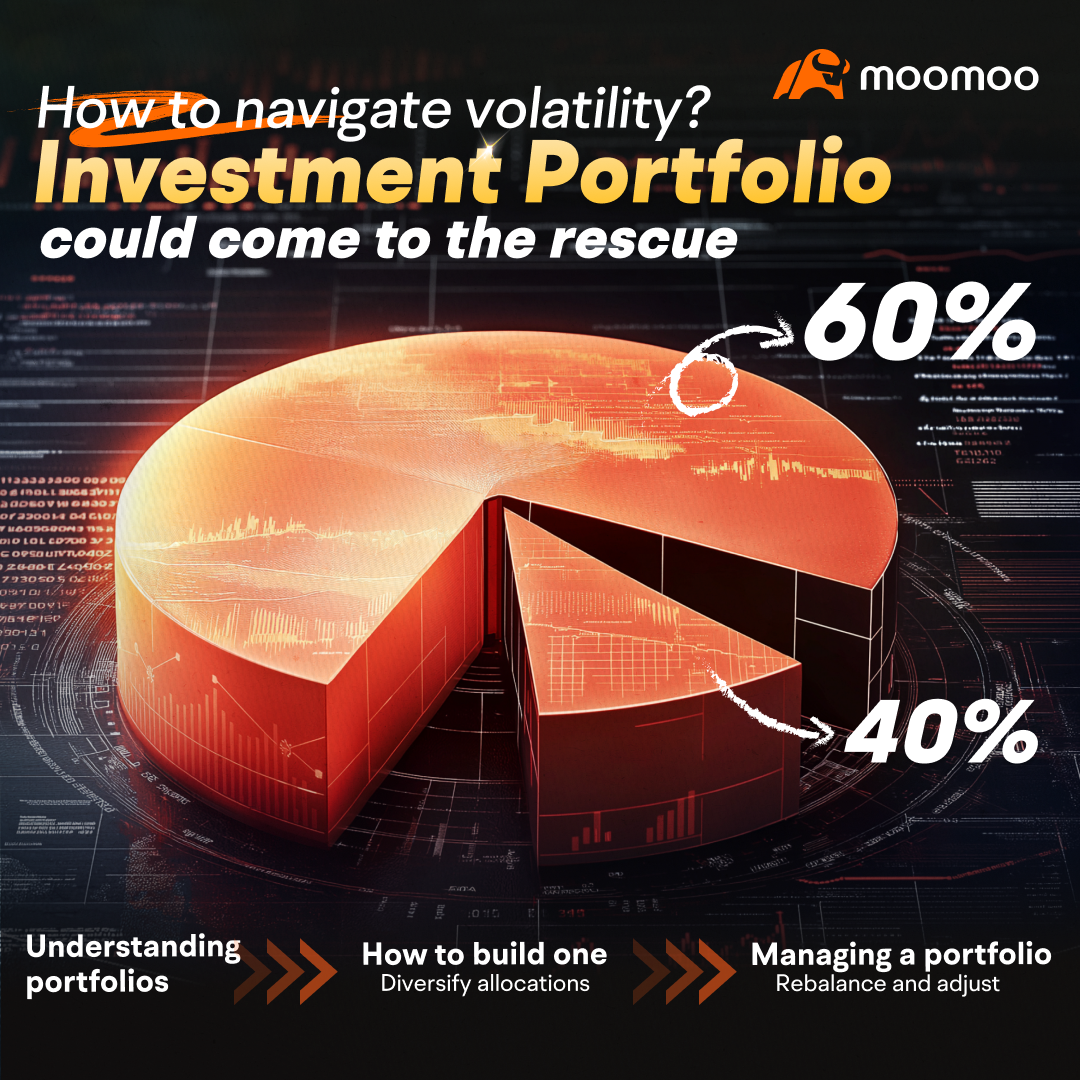
One of the most renowned investment portfolios is the 60/40 portfolio. This strategy involves allocating 60% of assets to stocks and 40% to bonds.
It is a classic investment strategy with a history spanning over sixty years. When the economy performs well, company profits rise, and the primary returns of the portfolio come from stocks.
Conversely, when the economic cycle weakens, the Federal Reserve often lowers policy rates, boosting the bond market and partially offsetting stock losses.
In the long term, the 60/40 investment portfolio, despite its simplicity, has delivered impressive returns while smoothing out market volatility. According to Nasdaq, since its inception in 1961, the 60/40 portfolio has achieved an annualized return of over 9%, with gains in most years.
Ray Dalio's Bridgewater Associates also constructed a successful investment portfolio. The "All Weather" strategy is known for its stable and low-risk style. It has successfully navigated multiple market shocks, earning Bridgewater a noted reputation.
Constructing an investment portfolio: the example of J.D. Vance
During the recent Republican convention, James David Vance (J.D. Vance) was nominated as Donald Trump's vice-presidential running mate, drawing attention to his holdings. This provides an opportunity to examine how an investment portfolio is constructed:
Large-cap index funds as the "ballast":
According to Morningstar research, U.S. large-cap stock funds are a key foundation for nearly every investor’s portfolio. They’ve produced outstanding total returns over time and are one of the best ways to generate wealth for long-term financial goals. And they could make up the majority of a portfolio’s equity exposure.
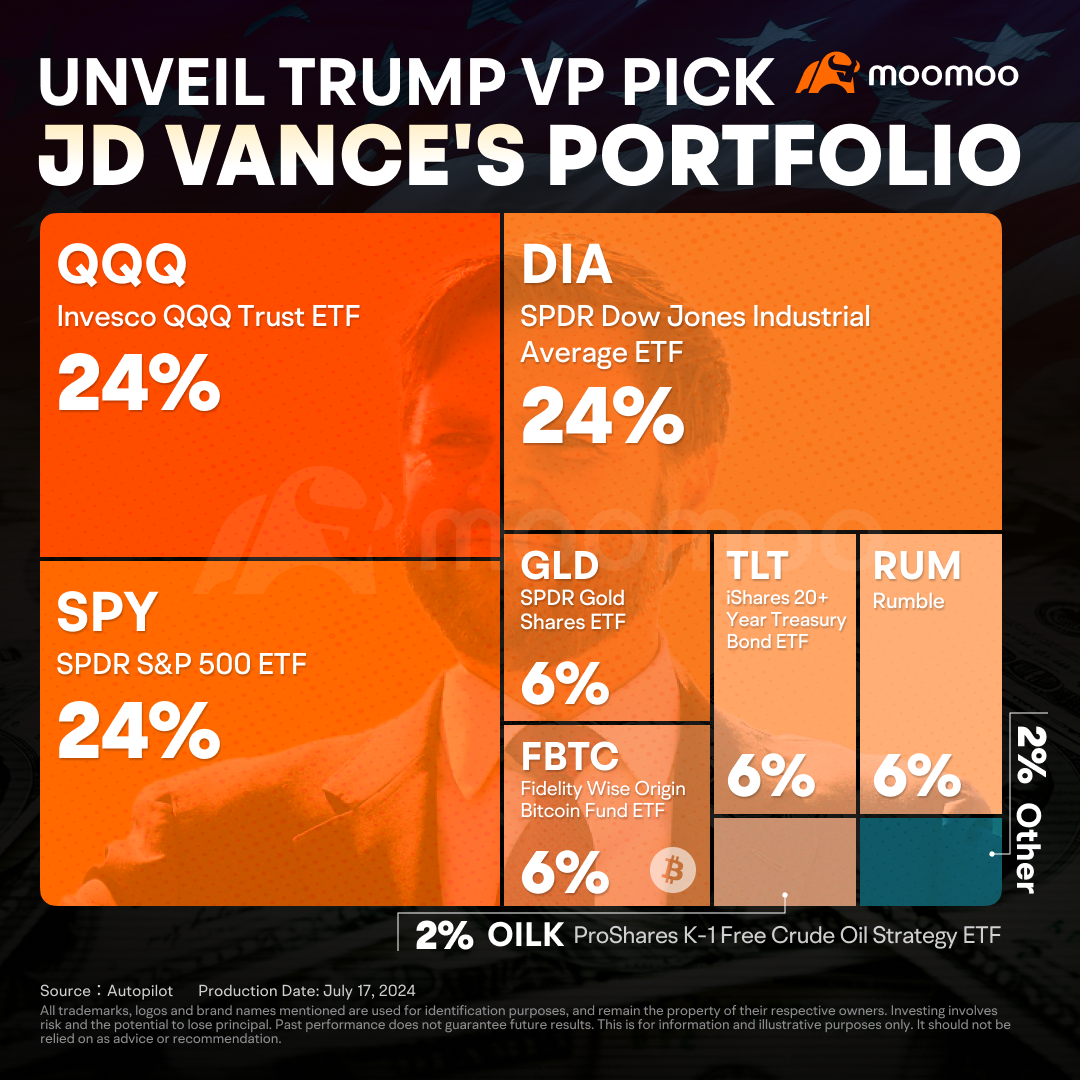
Vance's investment portfolio follows this principle: the highest allocations are in $SPDR Dow Jones Industrial Average Trust (DIA.US)$, $Invesco QQQ Trust (QQQ.US)$, and $SPDR S&P 500 ETF (SPY.US)$, which track the Dow Jones, Nasdaq 100, and S&P 500 indices respectively. Each holds a balanced 24%, forming the foundation of the portfolio.
The Dow Jones Index comprises 30 large blue-chip companies, leaning towards industrial, financial, and consumer sectors.
The Nasdaq 100 Index consists of the largest 100 non-financial companies listed on Nasdaq, with a focus on technology and biopharmaceuticals.
The S&P 500 Index is made up of 500 large companies listed on major U.S. exchanges, covering virtually all economic sectors.
ETFs that track major indices typically have large scales, high liquidity, and relatively low fees.
For example, SPY, the largest among them, had an asset size of $531.3 billion and a trading volume of over $33 billion as of July 25. It has an annual expense ratio of 0.09% and pays dividends quarterly.
Diverse asset allocation:
Major asset classes are generally categorized into four types: stocks, bonds, commodities, and currencies.
Vance’s holdings include a 6% allocation to SPDR Gold ETF ($SPDR Gold ETF (GLD.US)$), a 2% to an oil strategy ETF ($Proshares K-1 Free Crude Oil Strategy Etf (OILK.US)$) in the commodities category; and a 6% allocation to a long-term U.S. Treasury bond ETF ($iShares 20+ Year Treasury Bond ETF (TLT.US)$) in the bonds category.
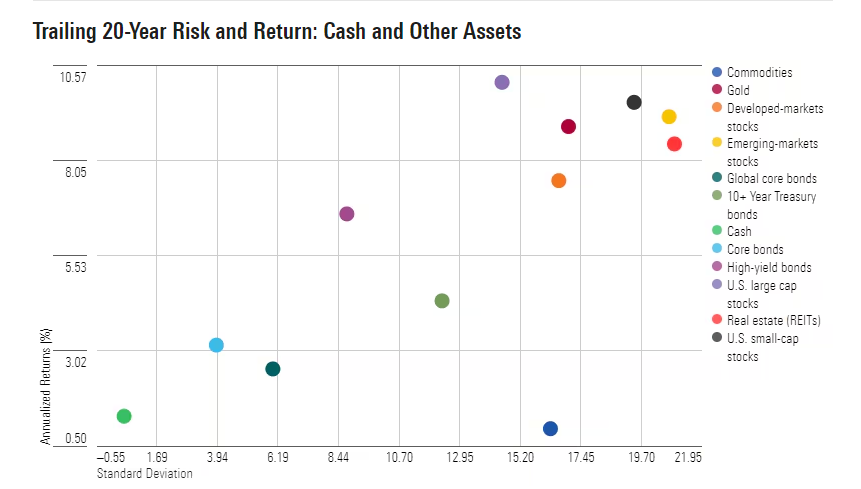
Different assets generally have risk and return profiles that are positively correlated. For instance, cash has the lowest risk and return; stocks and commodities have higher risks but higher returns; bonds fall somewhere in between.
Diversifying investments across different asset classes in a portfolio can help smooth market volatility.
Although commodities and stocks have similar risk-return traits, their inherently different characteristics can provide hedging functions.
Gold and oil usually rise among high inflation and geopolitical risks, whereas stock markets might experience turbulence.
Commodity ETFs offer investors convenient access to the commodity markets without the need to buy and hold directly.
For example, GLD tracks the price of gold, with each share representing a certain amount of physical gold. It is listed on the NYSE, has high trading volume and liquidity, and can be bought and sold during trading hours.
Source: MorningstarInvesting involves risk and the potential to lose principal. Past performance does not guarantee future results. This is for information and illustrative purposes only. It should not be relied on as advice or recommendation.
Bonds can also be invested via ETFs. Vance holds TLT, which tracks U.S. Treasury bonds with maturities over 20 years. If the Fed enters a rate-cutting cycle, the bond market, sensitive to interest rates, should perform well.
The U.S. stock market offers Treasury ETFs with varying durations, from short-term bonds of less than a year to long-term bonds of over 20 years.
Vance also holds a 6% allocation in Bitcoin ETF ($Fidelity Wise Origin Bitcoin Fund (FBTC.US)$). Given the volatility of cryptocurrencies far exceeds that of traditional assets, Morningstar suggests that a portfolio of 5% or less seems prudent, and many investors may want to skip cryptocurrency altogether.
Low allocation to individual stocks
Vance's portfolio includes only one individual stock: a 6% allocation to Rumble (RUM), a right-wing social platform associated with Trump.
The portfolio primarily consists of passive index funds, dominated by large-cap indices, and includes exposure to other major asset classes. This configuration is relatively easy for novice investors to manage.
Investment portfolios are personal and should be tailored to individual risk tolerance and return objectives.
For instance, Nancy Pelosi's portfolio is more aggressive, favoring large tech stocks like Broadcom and Nvidia and using options to boost potential returns, which entails higher volatility.
Managing an investment portfolio
To prevent excessive drift in portfolio assets, it's important to regularly review and rebalance the portfolio.
For instance, in a 60/40 portfolio, if the stock market performs well while the bond market remains stable, the stock proportion may increase.
If the ratio shifts to 75/25, the portfolio's exposure to stocks might be high. Investors could use new funds to buy bonds, increasing their proportion to 40%.
If no new funds are available, they could sell stocks to buy bonds, rebalancing the asset allocation. Rebalancing might help to avoid the risk of "buying high and selling low."
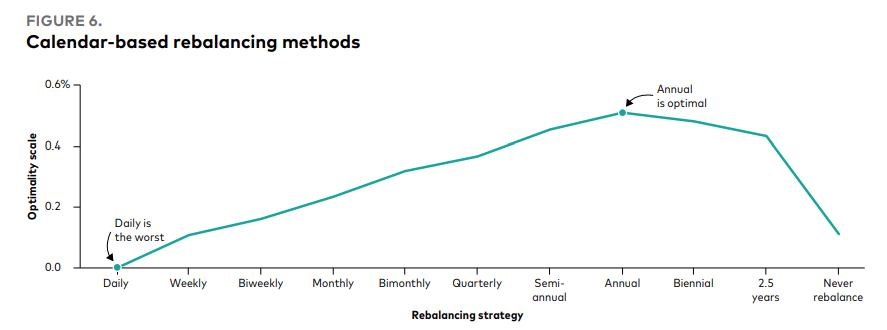
Vanguard research indicates that for investors not strictly tracking a benchmark investment portfolio (such as those mainly investing in passive funds), annual rebalancing might be the best strategy.
Most of the efficiency comes from capturing the equity risk premium while allowing for reasonable portfolio drifts.
High-frequency adjustments can lead to trading losses, while never rebalancing can cause excessive style drift, both of which can negatively impact performance.
Source: VanguardThis is for information and illustrative purposes only. It should not be relied on as advice or recommendation.
Potential risks
While investment portfolios can mitigate market risks, they do not guarantee "easy money."
Even the established and well-performing 60/40 portfolio experienced significant drawdowns in 2022. Rapid rate hikes by the Federal Reserve led to simultaneous declines in stocks and bonds, with bond assets in the portfolio failing to provide protection and instead falling alongside stocks.
Investors could monitor their portfolios, stay informed about market conditions, and adjust strategies as needed to align with their goals and circumstances.
Additional Disclosures: This content is also not a research report and is not intended to serve as the basis for any investment decision. The information contained in this article does not purport to be a complete description of the securities, markets, or developments referred to in this material. The information has been obtained from sources considered to be reliable, but we do not guarantee that the foregoing material is accurate or complete. Furthermore, there is no guarantee that any statements, opinions or forecasts provided herein will prove to be correct.
This presentation is for informational and educational use only and is not a recommendation or endorsement of any particular investment or investment strategy. Investment information provided in this content is general in nature, strictly for illustrative purposes, and may not be appropriate for all investors. Read more