[November.2024]Understanding Alibaba's earnings: Will the Chinese e-commerce giant turn things aroun
Alibaba and Tencent were once China's tech giants, each valued at over $700 billion at their peak. Today, while Tencent's market cap is still above $400 billion, Alibaba's has dropped below $200 billion, even falling behind Pinduoduo at times. Can Alibaba bounce back? Much depends on its upcoming performance.
Alibaba is set to release its latest financial report soon. Each earnings release may signal a potential investment opportunity, but before diving in, investors need to understand how to interpret their financial statements. Here are three key areas to watch in Alibaba's earnings report: revenue growth, profitability, and share buybacks.
1. Revenue growth
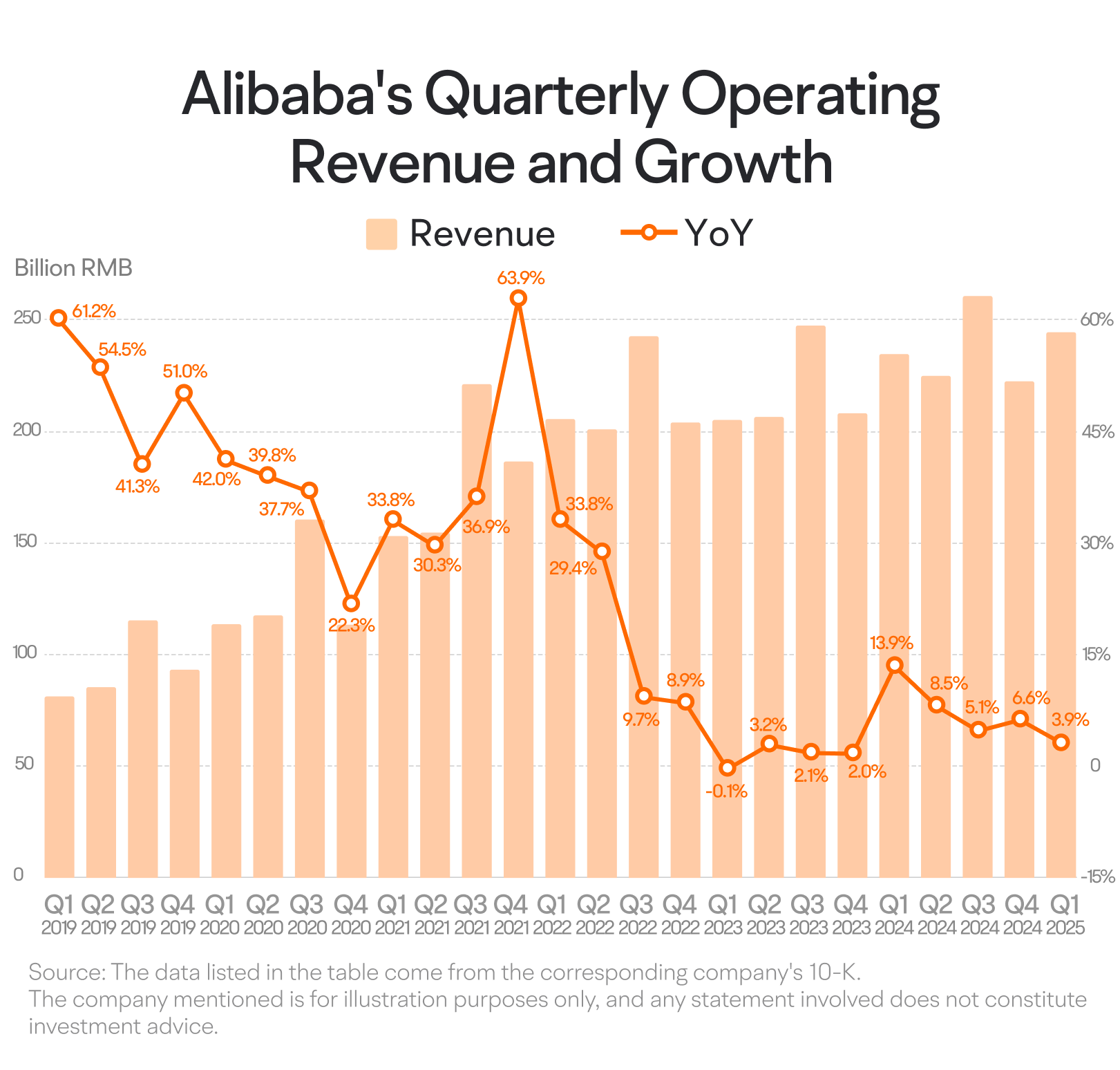
Alibaba needs its revenue growth to stabilize and rebound. Before Q3 FY2022, Alibaba enjoyed revenue growth of over 30%. However, growth dipped to 9.7% in Q3 FY2022 and has struggled to stay above 10% since. So, can Alibaba's revenue stabilize and rebound to double-digit growth? Let's break it down by its different business segments.
The company's business is now divided into several segments, starting Q1 FY2024:
TaoTian Group (domestic e-commerce)
Alibaba International (cross-border e-commerce)
Cloud Intelligence Group
Cainiao Group (logistics)
Local Services Group (food delivery and local services)
Entertainment (video and film production)
Other ventures
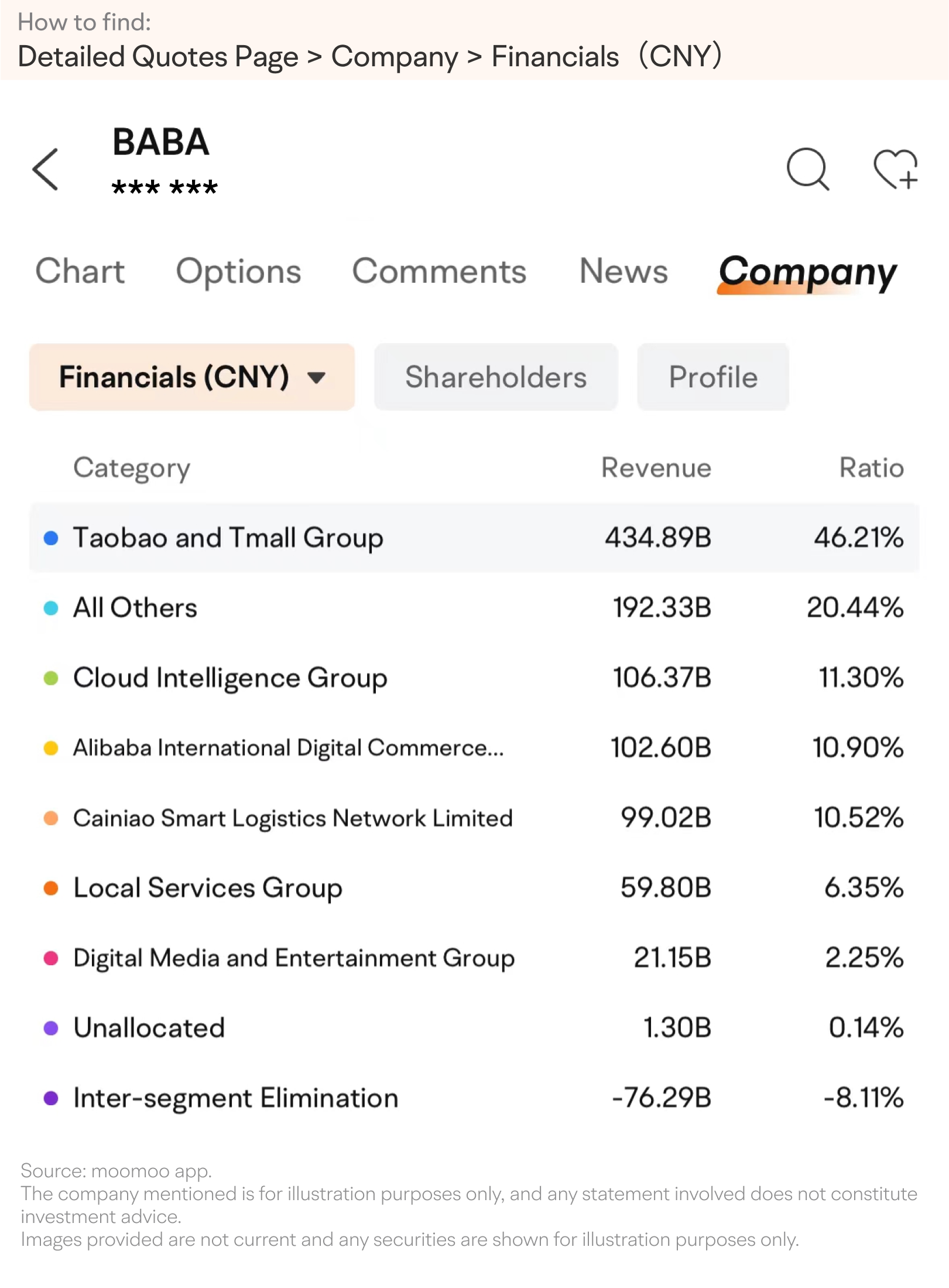
Among them, three segments are key.
The first is the Taotian Group, which includes Taobao and Tmall. This is Alibaba’s core business and largest revenue source, making up nearly half of FY2024's revenue. The decline in Alibaba’s overall revenue growth is largely due to the sluggish performance of its domestic e-commerce sector.
Alibaba's e-commerce growth has stalled, not only due to the domestic economic environment but also because of intense competition from Pinduoduo. Over the past five quarters following Alibaba's business reorganization, Taotian Group's revenue growth has been below 5% for four consecutive quarters, indicating stagnation. In contrast, Pinduoduo’s revenue growth has been accelerating, even nearly doubling in the last several quarters. This competitive pressure has significantly impacted Alibaba's domestic e-commerce business.
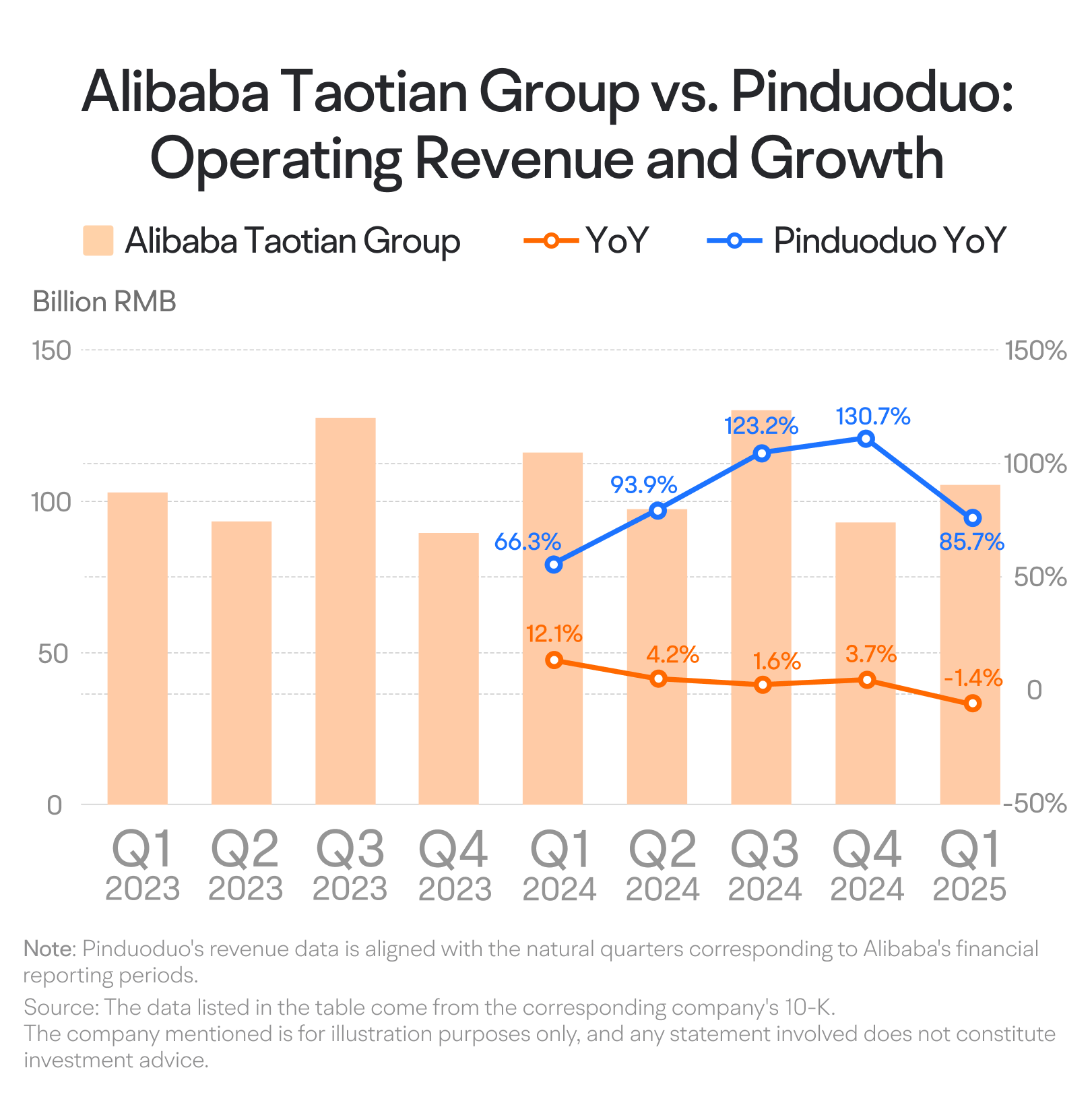
Joining the competition to regain market share, Alibaba has started emulating its rivals by offering more consumer discounts and supporting small and medium-sized businesses. This strategy has shown some positive results. Alibaba's GMV has returned to double-digit growth, but its revenue growth rate declined in Q1 2025.
The second key segment is Alibaba’s international business, which includes Lazada, AliExpress, and Alibaba.com. With the domestic market becoming increasingly competitive, many companies are focusing on overseas markets. Although Alibaba has been in the cross-border e-commerce business for over a decade, it has lagged behind newer competitors. Pinduoduo’s Temu and TikTok have been particularly dominant, with Temu achieving exponential growth that has left other competitors trailing.
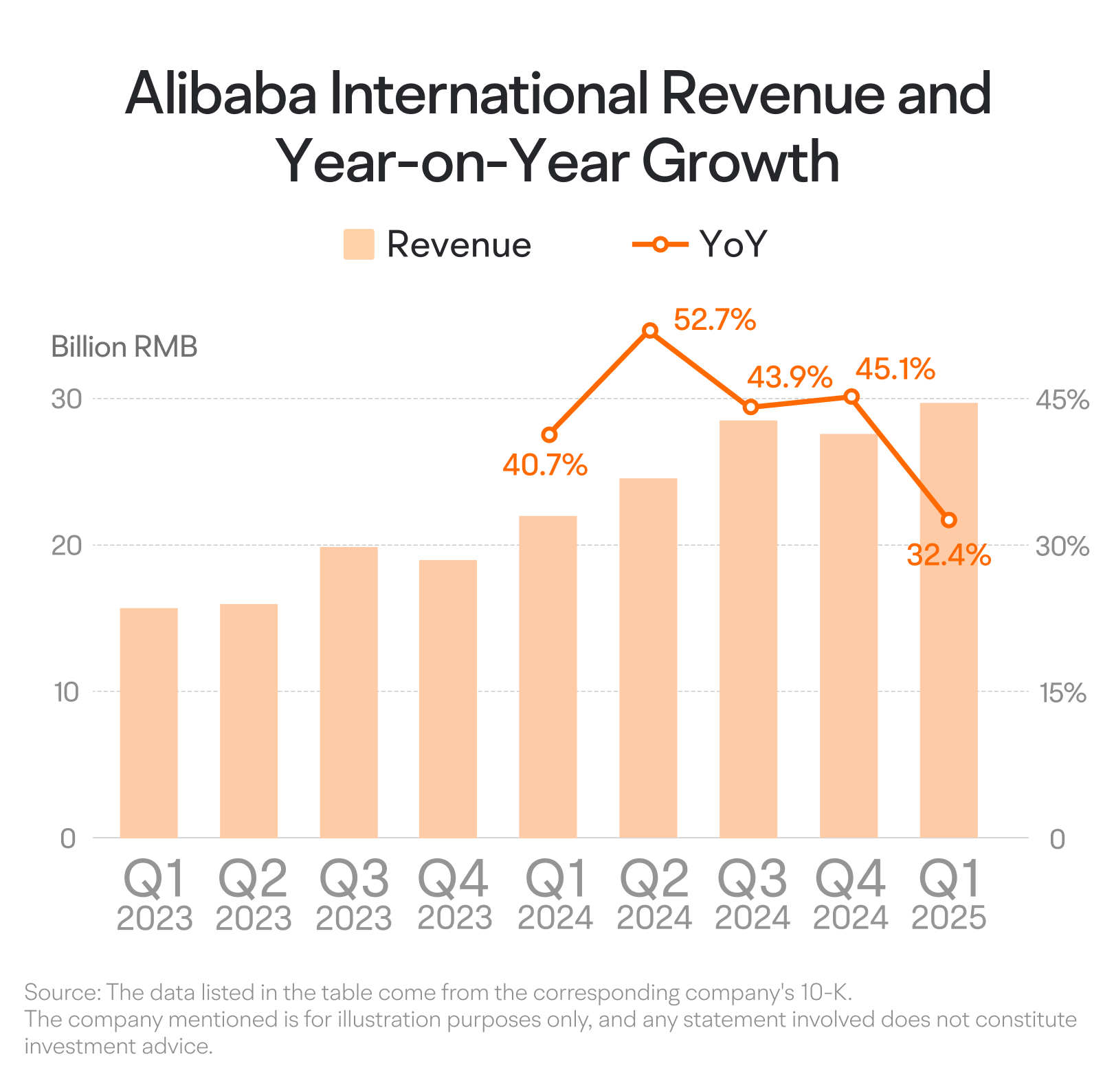
However, due to the vast potential of the cross-border e-commerce market, Alibaba’s international business has maintained strong growth. Over the past five quarters, revenue growth has exceeded 30%, making it Alibaba’s fastest-growing segment. Additionally, Cainiao, which handles logistics for cross-border e-commerce, has seen revenue growth of over 15% in recent quarters, making it the second-fastest-growing segment.
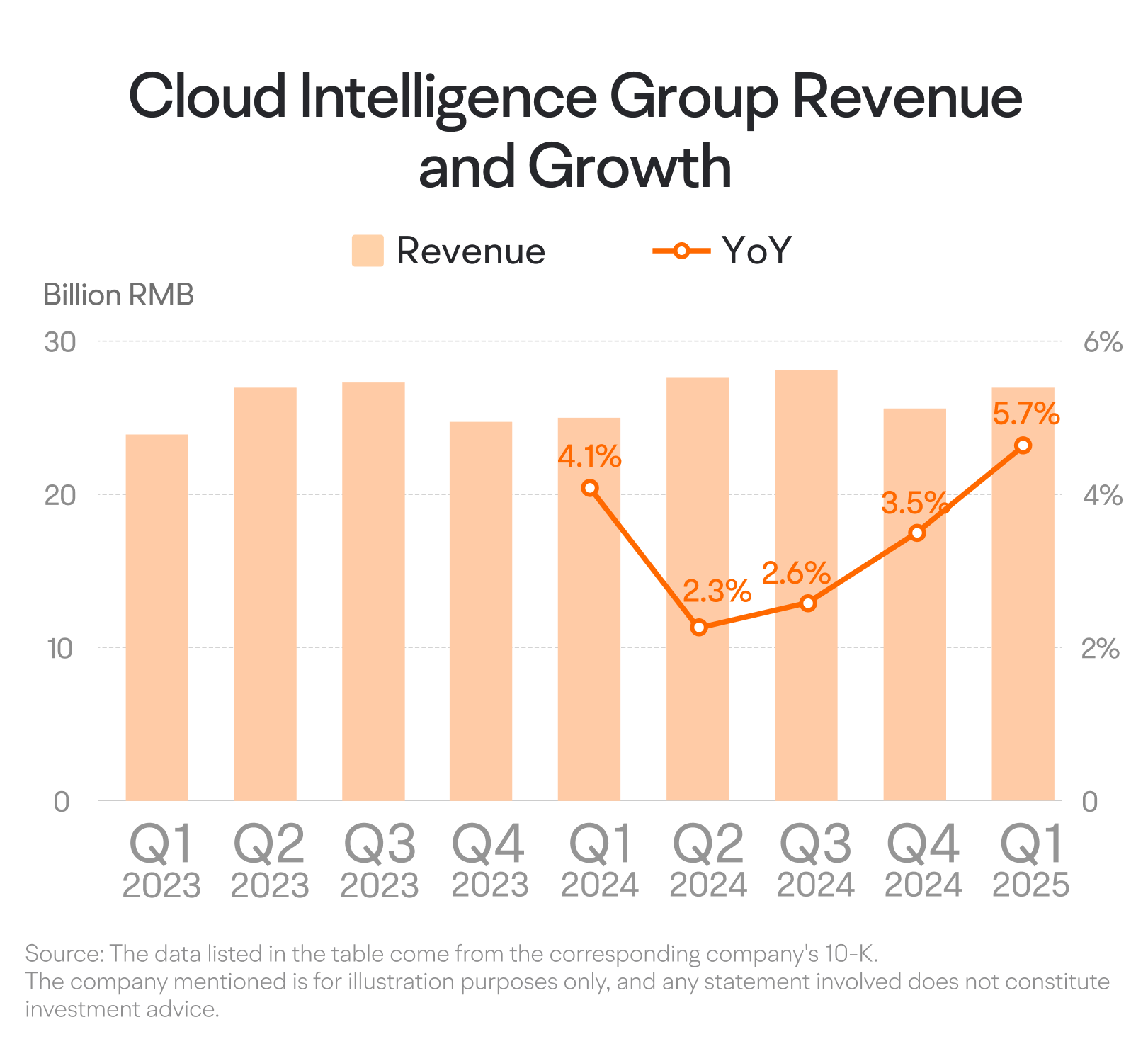
The third key segment is Intelligence Cloud Group. Once a star performer with annual growth rates exceeding 50% before FY2022, Alibaba Cloud's growth has stalled over the past two fiscal years, with quarterly revenue growth below 10%.
This slowdown is partly due to Alibaba’s strategic decision to cut less efficient project-based private and hybrid cloud services, which has dragged down overall growth. However, core public cloud services have shown over 10% revenue growth. Future performance will depend on whether Alibaba Cloud can accelerate growth after optimizing its revenue structure.
Beyond these three key segments, Alibaba's other ventures include local services like Ele.me and Amap, entertainment businesses such as Youku and Alibaba Pictures, and other diversified operations like Alibaba Health, Freshippo, and Sun Art Retail. These segments contribute a smaller portion of revenue and generally attract less market attention due to their modest growth.
For future financial reports, key points to watch may be whether Alibaba’s domestic e-commerce can accelerate growth and reclaim market share, if its cross-border e-commerce can sustain growth above 30%, and whether Alibaba Cloud can return to double-digit growth after optimizing its revenue structure.
2. Profitability
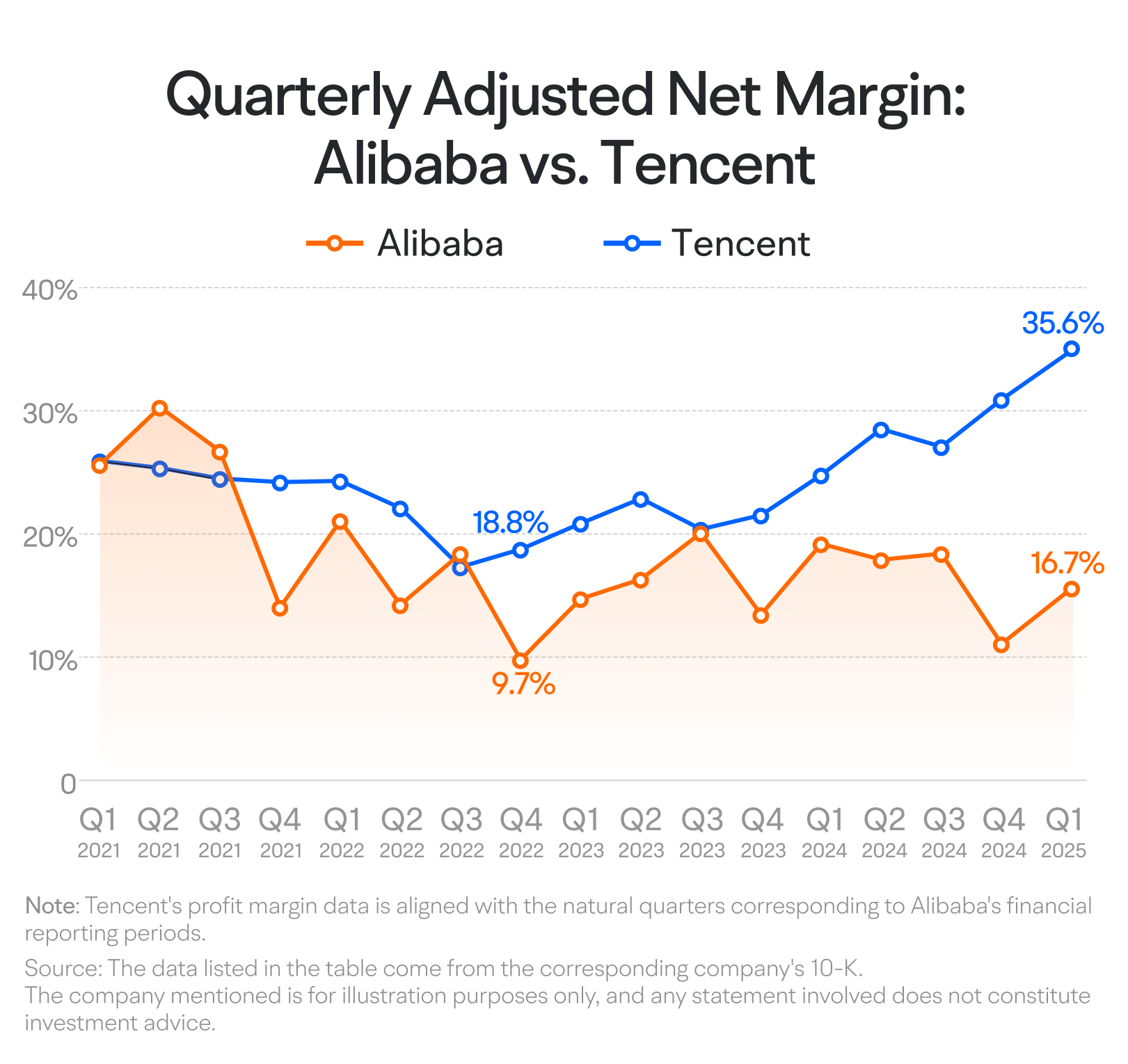
During the recent downturn, both Alibaba and Tencent experienced sharp revenue growth declines. However, Alibaba's stock price has fallen more significantly than Tencent's, primarily due to differing profitability trends.
While Tencent’s adjusted net margin has rebounded to new highs after a temporary dip, Alibaba's net margin has remained below 20% in recent quarters and has not returned to its peak levels.
Specifically, Alibaba discloses the adjusted EBITA for each business segment. The Taotian Group is the primary profit driver, whereas the other segments combined are still operating at a loss.
The first key point is that Taotian Group's adjusted EBITA margin has been on a declining trend over the past few quarters. Additionally, the growth rate of its adjusted EBITA has also sharply fallen, dropping from 9.1% and even showing negative growth projected for Q4 2024 to Q1 2025.
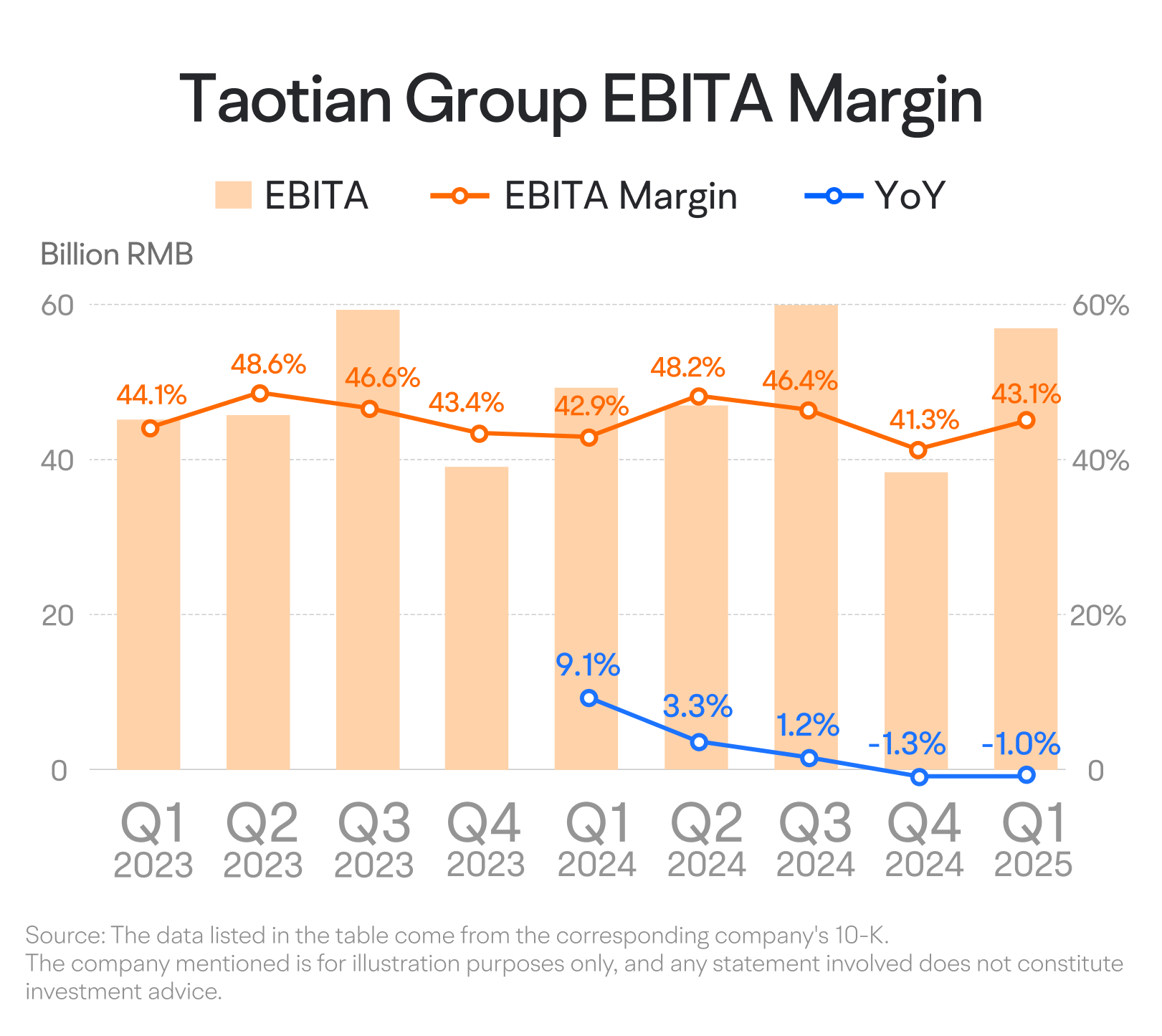
The decline in Taotian Group's profitability is mainly due to fierce competition in the domestic e-commerce market. To regain market share, Alibaba has increased investments and reduced monetization rates, which pressures profitability. Taotian Group's profit margins might stabilize and recover only when the market competition eases.
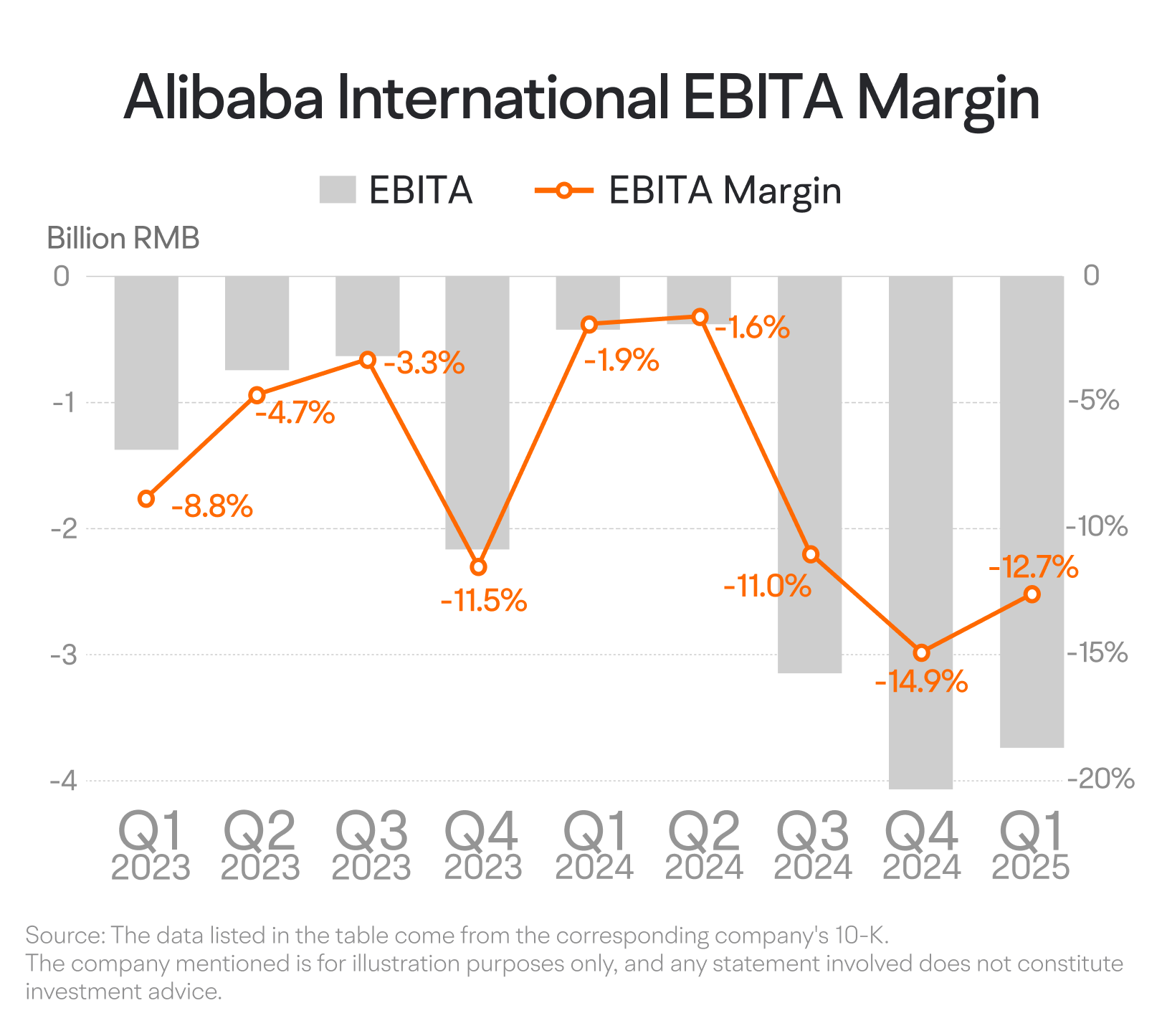
Alibaba's international business, along with Cainiao Group, remains loss-making, with losses widening. However, given its high-growth phase, these losses may be acceptable for now. The focus should be on whether Alibaba’s international segment can reduce its loss rate while maintaining rapid revenue growth and eventually turn profitable. If revenue growth slows and losses remain high, the potential for this segment could be significantly reduced.
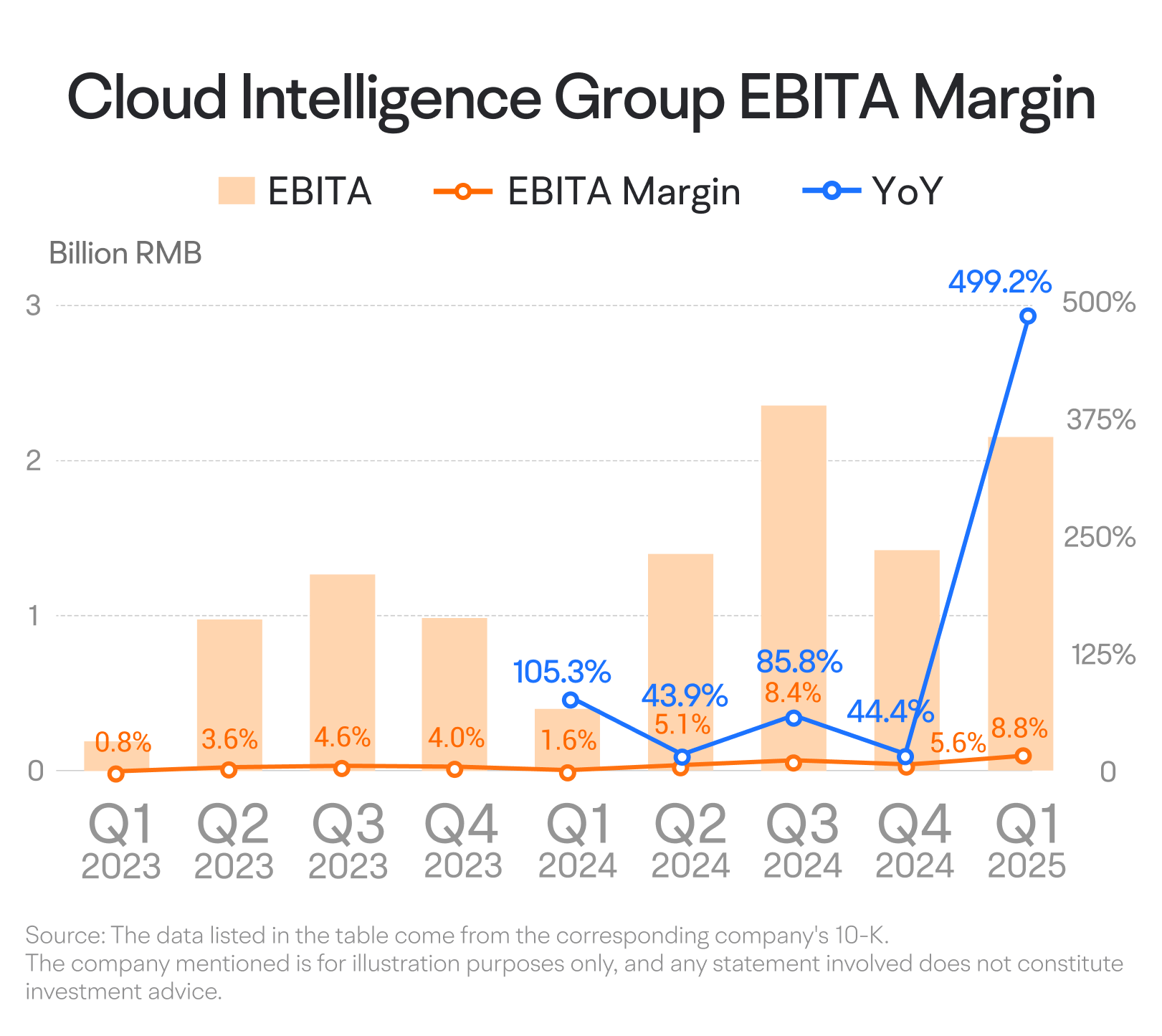
The third key segment, Intelligence Cloud, is in a relatively positive state. Its EBITA margin has improved year-over-year for the past five quarters, with EBITA profits growing by over 40% each quarter.
By cutting inefficient project-based services and focusing on standardized public cloud offerings, Intelligence Cloud has significantly boosted its profitability. Looking ahead, we'll need to see if ongoing optimization can further enhance profit margins, driving overall profit growth and making a notable contribution to Alibaba's overall earnings.
Beyond these three key segments, Alibaba's local services business is working to reduce its losses. However, its digital media and entertainment, as well as the "other" business segments, are struggling with slowing revenue growth and seem far from turning profitable. These segments could be considered liabilities, and it remains to be seen whether Alibaba will decide to divest these continuously loss-making businesses in the future.
3. Share buybacks
Alibaba's revenue growth has hit a snag, and its profitability has been lackluster, which has drawn criticism from some investors and kept its stock price under pressure. However, it's undeniable that Alibaba's cash flow remains robust. Even in the past two fiscal years, Alibaba generated around 150 billion yuan in free cash flow annually, with cash reserves nearing 600 billion yuan.
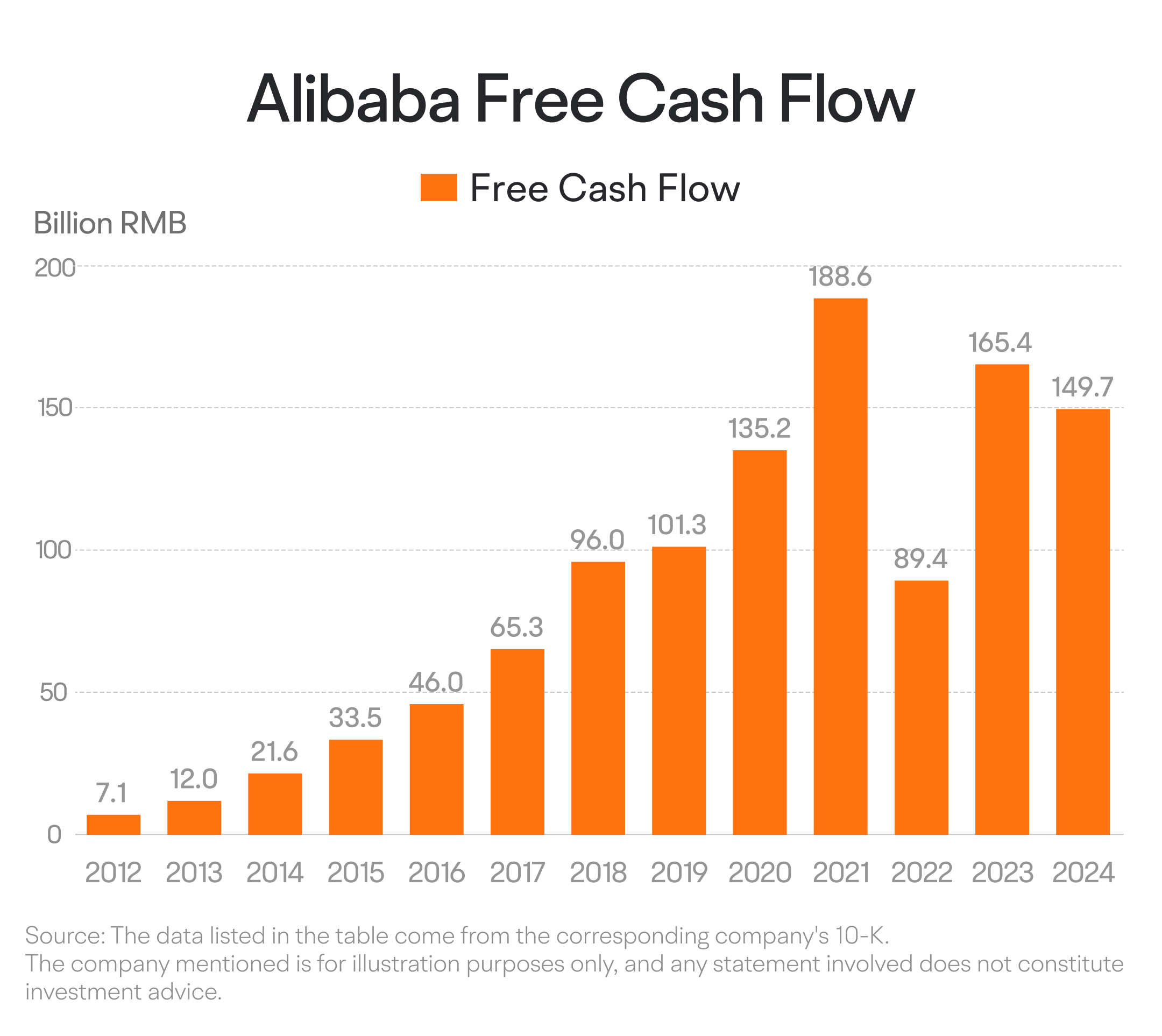
This strong cash position and robust cash flow generation mean Alibaba has the capacity to conduct stock buybacks, which are crucial for boosting investor confidence, especially when the stock price is low. After all, actual buybacks are the most direct and powerful way for management to show confidence in the company's future.
Alibaba has been conducting buybacks for the past five fiscal years, with a significant increase in the last two years. In fiscal year 2024, Alibaba's buyback totaled $12.5 billion, and it announced dividends of $4 billion, bringing the total shareholder return to $16.5 billion, corresponding to a return rate of over 8% of its market cap.
In Q3 FY2024, Alibaba expanded its total buyback program to $65 billion, to be completed by the end of fiscal year 2027. After accounting for historical buybacks, nearly $30 billion remains in the plan, which means an average of $10 billion in buybacks each year for the next three fiscal years. Combined with regular dividends, the annual return rate exceeds 5%. If Alibaba continues to expand its buyback program or increase dividends, the return rate may be even higher, assuming a constant market cap.
Going forward, we should monitor the execution of Alibaba's buyback plans and its dividend schedule, as well as any potential increases in the buyback program. In these challenging times when Alibaba's performance is struggling and awaiting a turnaround, buybacks are undoubtedly a crucial support for its stock price.
Summary
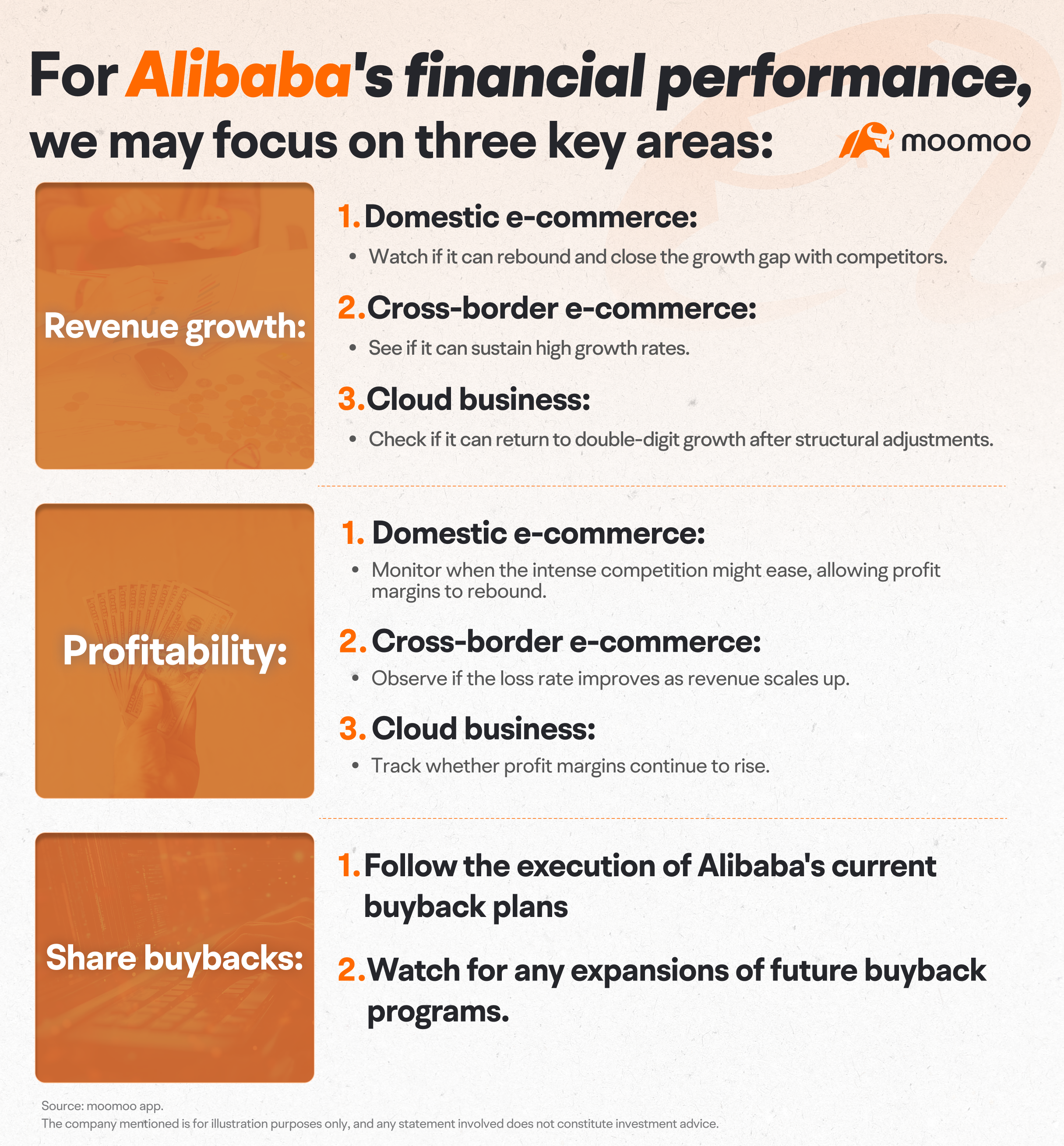
For Alibaba's financial performance, we may focus on three key areas: revenue growth, profitability, and stock buybacks.
Revenue growth:
Domestic e-commerce: Watch if it can rebound and close the growth gap with competitors.
Cross-border e-commerce: See if it can sustain high growth rates.
Cloud business: Check if it can return to double-digit growth after structural adjustments.
Profitability:
Domestic e-commerce: Monitor when the intense competition might ease, allowing profit margins to rebound.
Cross-border e-commerce: Observe if the loss rate improves as revenue scales up.
Cloud business: Track whether profit margins continue to rise.
Share buybacks:
Follow the execution of Alibaba's current buyback plans.
Watch for any expansions of future buyback programs.
This presentation is for informational and educational use only and is not a recommendation or endorsement of any particular investment or investment strategy. Investment information provided in this content is general in nature, strictly for illustrative purposes, and may not be appropriate for all investors. Read more