Artificial intelligence is on the rise again as major stock indices hit historic highs (0226-0301)
Weekly Overview of Global Markets
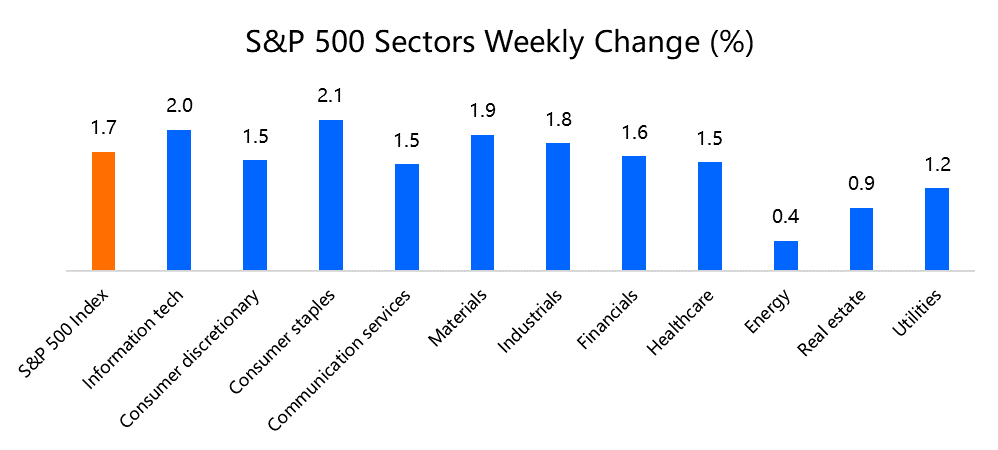
Market Review and Outlook
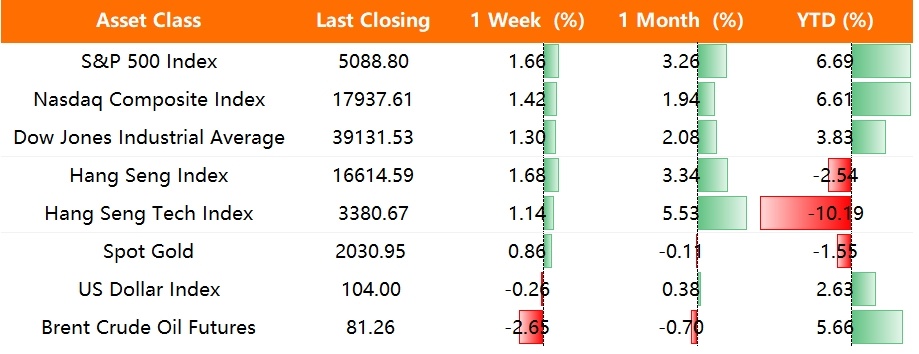
Weekly performance of major asset classes: Hong Kong stocks> US stocks> Gold> Crude oil> US bonds> US dollar
Stocks: Following the closure on Monday, US stocks were uneasy on Tuesday due to the impact of the earnings season, with the tech-heavy Nasdaq falling by almost 1%. On Wednesday, Nvidia's earnings report revealed its revenue more than tripled in the latest quarter, causing its stock price to skyrocket and driving the overall trend of chip stocks. On Thursday, Nvidia's performance reignited confidence in investors, who are betting on the breakthrough of artificial intelligence to increase the company's profits and provide further upward momentum for its stock price. As a result, all three major US stock indices surged to historic highs. However, the current enthusiasm for investing in the AI theme also means investors may subjectively evaluate the "fair value" of relevant stocks, and should be wary of short-term risks of a pullback.
Bonds: The 20-year US bond auction performed poorly last Wednesday. Coupled with the FOMC meeting minutes showing the Federal Reserve's cautious attitude towards interest rate cuts, traders sold US bonds, causing the yield to rise again. Currently, traders are bracing for the risk of a renewed selloff, driving a surge of trading in options targeting higher yields.
US Dollar: Following the FOMC meeting minutes last Wednesday, which showed the US economy's strong resilience and the market pushing back the expectation of interest rate cuts to June, the US dollar fell after the release of hawkish meeting minutes. From a technical analysis perspective, the negative slope of the RSI indicates that the US dollar is weak among the bulls, but the SMA shows that, despite bearish pressure, the bulls have managed to keep the US dollar above the 20-day and 200-day SMAs.
Crude Oil: Since the beginning of 2024, crude oil prices have been steadily climbing due to the intensification of geopolitical tensions. However, on Tuesday last week, US crude oil and global benchmarks fell by more than 1% due to traders taking profits in the recent rebound of the oil market after renewed conflicts in the Middle East. However, in the short term, geopolitical tensions may keep oil prices on the rise.
Gold: The short-term price trend of gold will mainly depend on the Federal Reserve's monetary policy signals, as well as global economic conditions and geopolitical developments. Last Thursday, supported by safe-haven demand amid intensifying geopolitical tensions in the Middle East and a weaker US dollar, gold prices rose slightly. However, after the FOMC meeting minutes hinted at delaying or reducing interest rate cuts, the yield soared, which could weaken the appeal of gold. According to technical indicators, the current resistance level may be around 2,031 points.
Note: The weekly performance of major asset classes is ranked based on the weekly change in the asset class as shown in the table above, with ">" indicating the ranking from highest to lowest. US bonds are ranked based on the change in futures prices. Past returns do not guarantee future returns.
Data source: Bloomberg.
Weekly Hot Topic
Interpreting the FOMC Meeting Minutes: Why the Hawkish Stance?
Last Thursday's release of the January Federal Reserve meeting minutes once again caused disruption in the market's trend. Let's briefly summarize the key points in the minutes.
1. The Federal Reserve remains cautious about rate cuts
Although Federal Reserve officials have all suggested that the policy rate may have reached its peak, they remain uncertain as to how long it should stay at the peak. Jerome Powell, in an interview on February 4th, stated that inflation may not fall as quickly as it did in the previous six months, and the risk of cutting rates too early is that inflation may fail to return to 2%.
The latest CPI data indicates that inflation is showing signs of an upward trend. With rates still not cut, the downward trend of inflation has already slowed, and a too-quick relaxation of policy stance would greatly increase the risk of inflation stagnation. Therefore, caution is still necessary.
2. No urgent need for balance sheet reduction, to be discussed further in March
In addition to discussing interest rates, the committee also raised the issue of bond holdings on the Fed's balance sheet.
The minutes noted that balance sheet reduction is an important component of the Federal Reserve's goals and that it is appropriate to discuss relevant issues more deeply at the next meeting. Slowing down balance sheet reduction may help smooth the transition to abundant reserve levels, or it may continue for a longer period. However, balance sheet reduction may continue for some time even after rate cuts have begun.
3. When is the earliest possible time for a rate cut?
After the release of the February 21st meeting minutes, the market's expectation of a rate cut remained dampened. CME data shows that the probability of a rate cut in March is around 3%, while the probability of a rate cut in May and June is 36.9% and 46%, respectively, with the probability of more than three rate cuts in a year dropping from 60.1% to 50.1%.
Currently, the mainstream expectation in the CME rate futures market is for three to four rate cuts throughout the year. The Fed's March meeting is a key observation window. If the new employment and inflation data show a cooling trend and the Fed's latest economic forecast further clarifies the path of rate cuts, the market trend may return to "loose trading."
The stock market may have already digested the expectation of no rate cut in March. Since February, the stock market's performance has gradually stopped reflecting the "soft landing" and hawkish statements of the Fed. Driven by the earnings season, the stock market remained strong even as US bond yields rose significantly.
Important Events Outlook for This Week
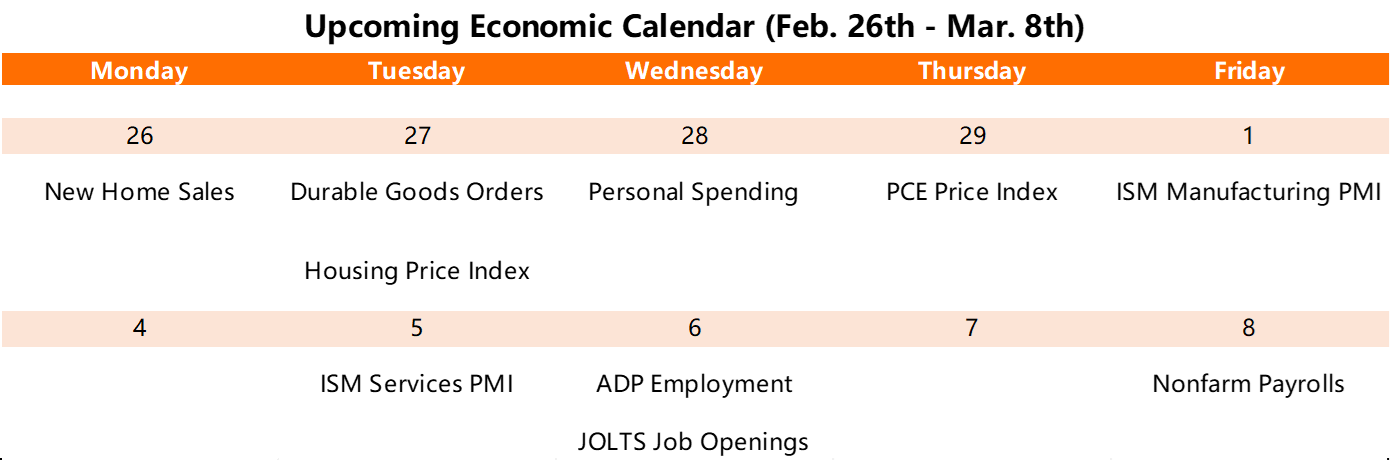
Note: The Upcoming Economic Calendar is selected from moomoo Financial Calendar.
Market Focus Shifts to Fed's Preferred PCE Index
The recent CPI report has dealt a blow to rate cuts, and now changes in the PCE index may play a crucial role in determining institutional funding decisions.
The Fed estimates that the PCE price index increased by 2.4% year-on-year in January, which is a decrease from December's 2.6% and significantly lower than the 5.5% in the same period last year. Excluding energy and food prices, the core PCE is also expected to rise by 2.8% year-on-year, which is lower than the 4.9% in the same period last year.
The slowdown in core inflation has been particularly evident in recent months, especially in core commodity prices. However, the dotted line in the chart below shows that inflation in the service sector, including housing and non-housing, remains strong with a smaller slowdown. Federal Reserve Board Member Phillip Jefferson believes that as the labor market continues to cool, core service prices will also slow down in the future.
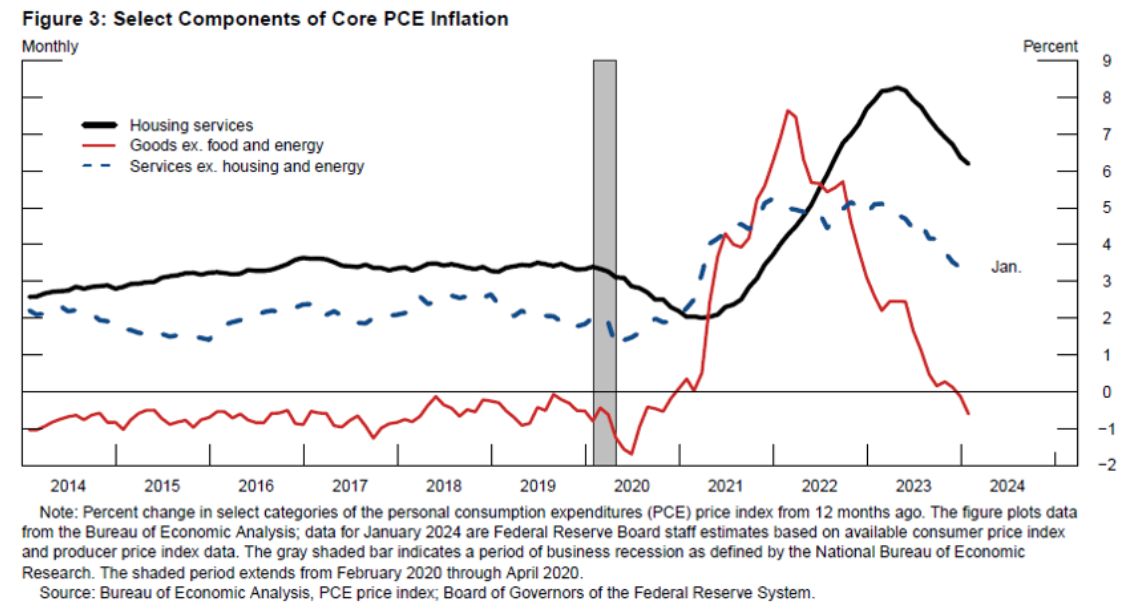
The January data is the Fed's estimated value, which also includes slightly higher CPI growth than what we have seen. The disappointing CPI data actually indicates that the process of cooling inflation may fluctuate at any time. Jefferson emphasized the importance for the Fed to remain vigilant and flexible and not be surprised by unexpected shocks. He remains cautiously optimistic about progress on inflation and believes that it may be appropriate to start lowering policy rates later this year.
This presentation is for informational and educational use only and is not a recommendation or endorsement of any particular investment or investment strategy. Investment information provided in this content is general in nature, strictly for illustrative purposes, and may not be appropriate for all investors. Read more