Could CVS be Considered a Value Stock?
CVS Pharmacy is a prominent brand in America, recognized for its iconic red pharmacy sign which attracts customers looking to purchase both medicine and daily necessities. But what exactly does CVS sell, and how does its business model operate?
In this article, we will explore CVS's competitive advantages, as well as potential opportunities and risks that may impact the company moving forward.
Pharmacy or retail store: what does CVS sell?
CVS Health Corporation (NYSE: CVS), together with its subsidiaries, is a diversified health solutions company. The Company's segments include Health Care Benefits, Pharmacy Services, Retail/LTC and Corporate and Other.
Health care benefits: CVS provides health insurance products and related services such as medical subsidies, pharmacies, dental, Medicare Advantage, and more.
Pharmacy services: CVS offers clinical and disease management services, pharmacy benefit management (PBM), and more.
Retail and long-term care: CVS sells prescription drugs, various health products, and daily goods, with additional healthcare services like medical diagnostic testing, vaccination, and many more.
Despite operating primarily as a pharmacy, many customers view CVS as a convenience store due to the wide range of products it offers.
One of the key distinguishing features of CVS stores is that they offer both pharmaceuticals and daily necessities, such as groceries and household items. This unique combination allows customers to conveniently purchase medicines while browsing for everyday essentials, or quickly buy over-the-counter medicines while shopping for groceries. The integration of healthcare service operations and retail pharmacies has become one of CVS's competitive advantages.
Competition landscape: How does CVS make money?
1. PBM department cost reduction
As a well-known healthcare company in the United States, one of CVS's key businesses is pharmacy benefits management (PBM). For those unfamiliar with this term, you may wonder what is PBM.
Simply put, pharmacy benefits managers serve as intermediaries between drug manufacturers, insurance companies, and pharmacies. PBMs secure lower drug costs for insurers and insurance companies by negotiating with pharmacies and drug manufacturers.
The PBM market is highly concentrated, with just a few players dominating the industry. CVS's subsidiary, Caremark, holds the largest market share among them.
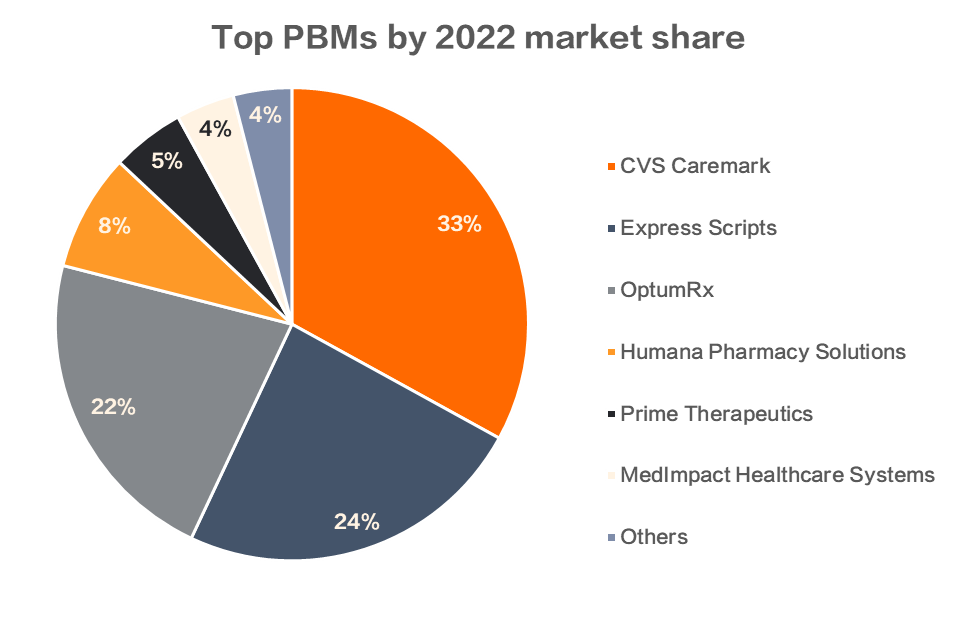
As the leader of PBW in 2022, how does CVS make money?
In the PBM market, insurance companies play a vital role. For CVS, owning an insurance company could be the key to maximizing profits from this direction. That's why in 2018, CVS merged with insurance giant Aetna. This move could not only potentially allow CVS to reduce costs through Aetna's medical insurance advantage plan but also give it access to pricing data from its competitors through Aetna. Ultimately, CVS could use this data advantage to further reduce costs and increase profits.
As a retail pharmacy, CVS benefits from its leading market share in the oligopoly market structure when dealing with pharmaceutical companies. This gives it bargaining power, allowing for better price negotiations and cost savings, ultimately contributing to profit generation.
According to Trefis analysis, the PBM business will continue to account for an increasing proportion of CVS's revenue in the future, becoming the most important component of CVS's overall income.
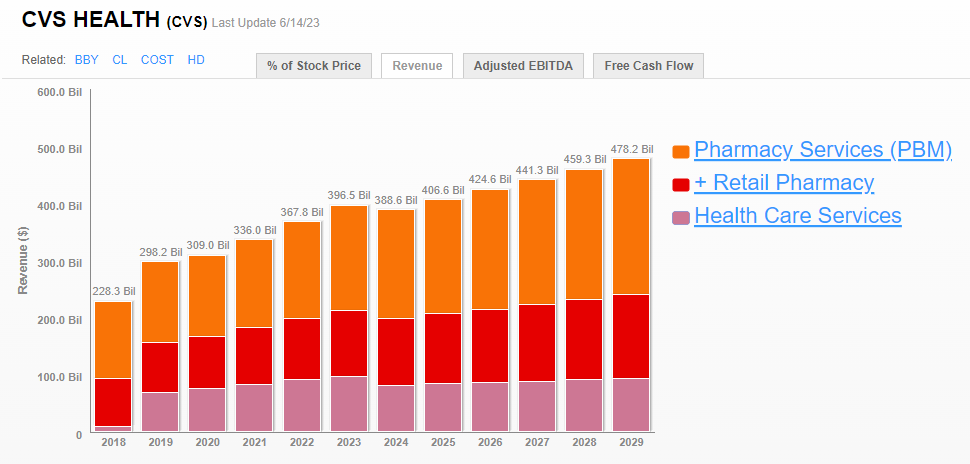
2. Retail pharmacies nationwide
There is no doubt that CVS is the largest pharmacy chain in the United States, with 9,551 pharmacy locations across 52 states and regions as of July 2023. At its peak in 2017, the density of CVS's pharmacies was so high that "eight out of 10 Americans were within 10 miles of a CVS."
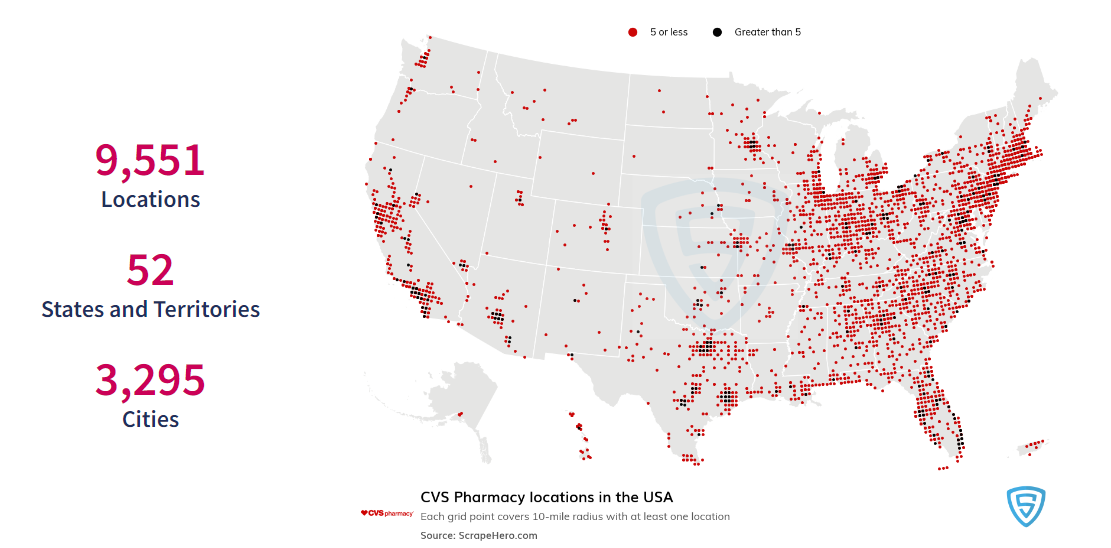
According to Rancord Society, CVS's primary growth strategy is market penetration, which aims to maximize the company's reach in both healthcare and retail pharmacy markets. This is reflected in the thousands of retail pharmacy stores and MinuteClinic locations throughout the US, in efforts to dissuade customers from visiting competitors.
Furthermore, as brick-and-mortar stores face challenges in the digital economy, CVS has been able to survive using its bricks-and-clicks business model. By integrating traditional pharmacies with e-commerce websites, CVS has achieved increased market coverage. This allows CVS to offer consumers convenient services online, generally serving to improve its competitive advantage and operational efficiency.
CVS stock performance review: Struggling in 2023
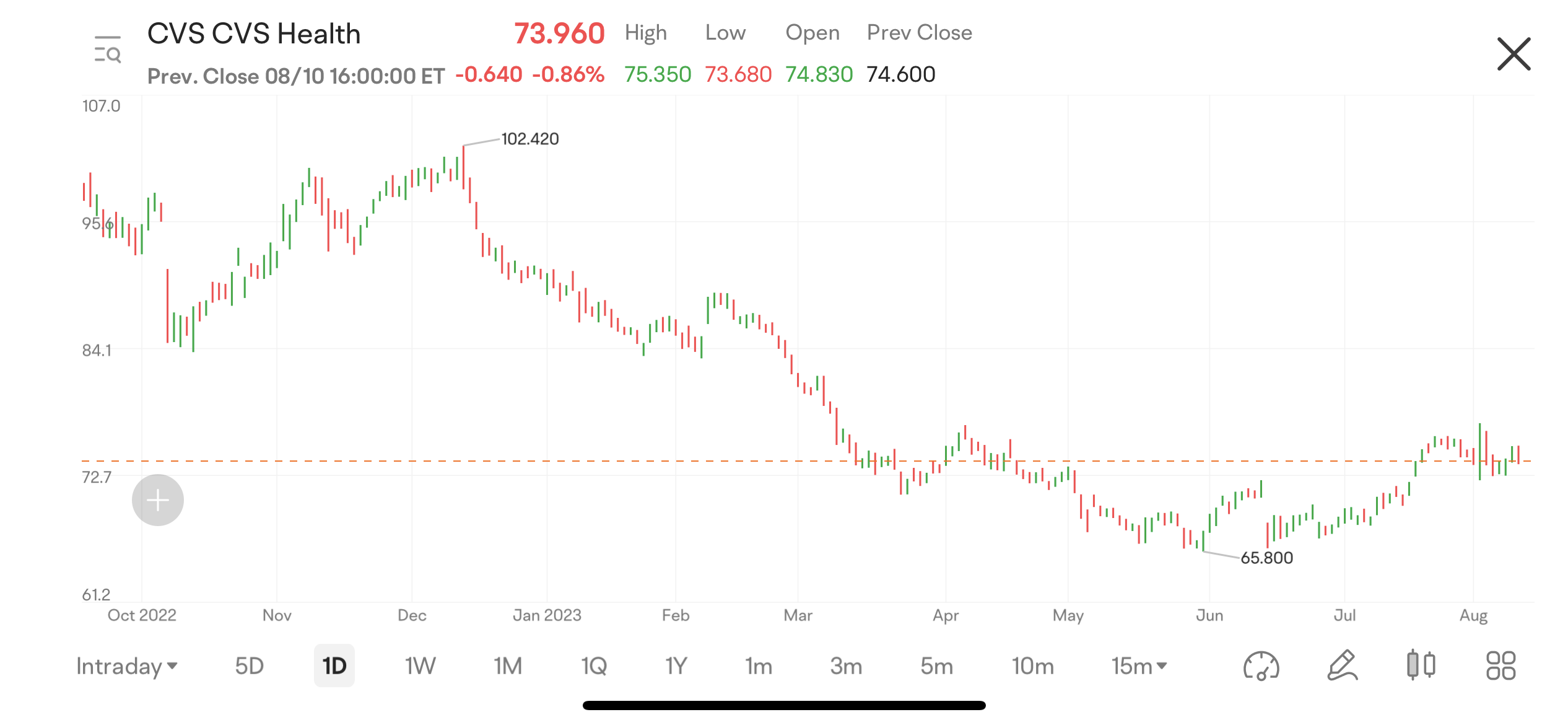
Source: moomoo | Note: Any app images provided in the content are not current and any securities shown are for illustrative purposes only and is not a recommendation.
According to research by analysts at The Motley Fool, the rating of CVS's Medicare Advantage business, which had maintained a 4-star rating for 10 years, dropped to 3.5 stars by the end of 2022. As the company is shifting its focus toward medical services in recent years, factors that affect Medicare payments are expected to have a greater impact on CVS's bottom line.
Subsequently, CVS Caremark lost out on a $35 billion PBM contract for 2024, partially due to the aforementioned drop in ratings. CVS executives stated that losing the PBM contract would result in a loss of $2 billion in 2024.
Financhill's analysis revealed that CVS faced staffing issues due to a shortage of skilled labor, leading the company to reduce pharmacy operating hours in around two-thirds of its stores.
Taken together, these factors may have contributed to CVS's declining stock price during the bull market.
Future opportunities and risks
Bloomberg analysts have pointed out that CVS has postponed its timeline to achieve double-digit EPS growth, withdrawing its 2024 and 2025 targets in the Q2 2023 earnings report. This delay comes as higher medical costs in its Medicare Advantage unit extend into 2024, adding another headwind to the obstacles stemming from the Centene contract loss and Medicare Star rating decline.
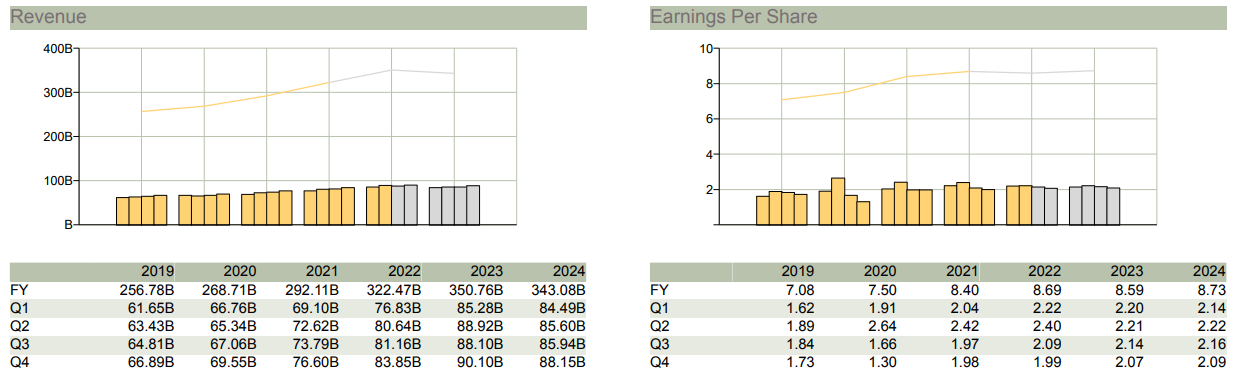
Despite the obstacles, CVS did not sit idly by. According to Bloomberg, In 2023, CVS completed two key acquisitions - Signify Health in March and Oak Street in May. Oak Street, which was acquired for $10.6 billion, focuses on the Medicare Advantage field and has many advantages, such as economies of scale and technology orientation. CVS hopes that the latest acquisition will provide a broader range of healthcare solutions in the future. However, realizing the full value of the transaction will take time.
The Motley Fool's analysts believe that CVS's significant investment in acquisitions to support its transformation is unsurprising, given the company's robust free cash flow, which typically exceeds $10 billion annually. Even after subtracting approximately $3 billion in dividends, CVS still has sufficient funds to pursue additional acquisitions, which appear to be a key part of its growth strategy. As such, the company is expected to continue making more acquisitions over the next five years, and investors should not anticipate a significant deceleration in its growth rate.
However, it is worth noting that over the past decade, including dividends, CVS's stock price has only increased by 45%, whereas the S&P 500 rose by 228% during the same period.
This presentation is for informational and educational use only and is not a recommendation or endorsement of any particular investment or investment strategy. Investment information provided in this content is general in nature, strictly for illustrative purposes, and may not be appropriate for all investors. Read more