[October.2024]A century-old giant in the consumer goods industry: interpreting P&G's financial repor
In the U.S. stock market, Procter & Gamble (P&G) stands out as one of the century-old stalwarts. With nearly 200 years of history, this consumer goods giant boasts a portfolio of globally renowned brands such as OLAY, SK-II, Tide, Crest, Head & Shoulders, Safeguard, and Gillette.
A company that has survived for centuries in a fiercely competitive market is likely to have extremely stable operations. P&G exemplifies this stability, with its stock price and earnings showing remarkable resilience. While its recent stock price performance hasn't delivered major surprises, it has kept pace with the S&P 500 index.
P&G will release its Q1 FY2025 report on October 18. Each earnings release may signal a potential investment opportunity, but before diving in, investors need to understand how to interpret their financial statements.
How can investors focus on P&G's financial reports? Given its status as a traditional industry titan with over $100 billion in annual revenue, rapid growth isn't the main draw. Instead, the market is likely interested in its consistency. Therefore, the key aspects to watch may be the stability of its earnings, profitability, and shareholder returns.
1. Consistent earnings
The first point of P&G's stable operations may be the consistency of its revenue and profits. As a diversified consumer goods giant, P&G's broad portfolio of brands and revenue sources has helped smooth out performance fluctuations.
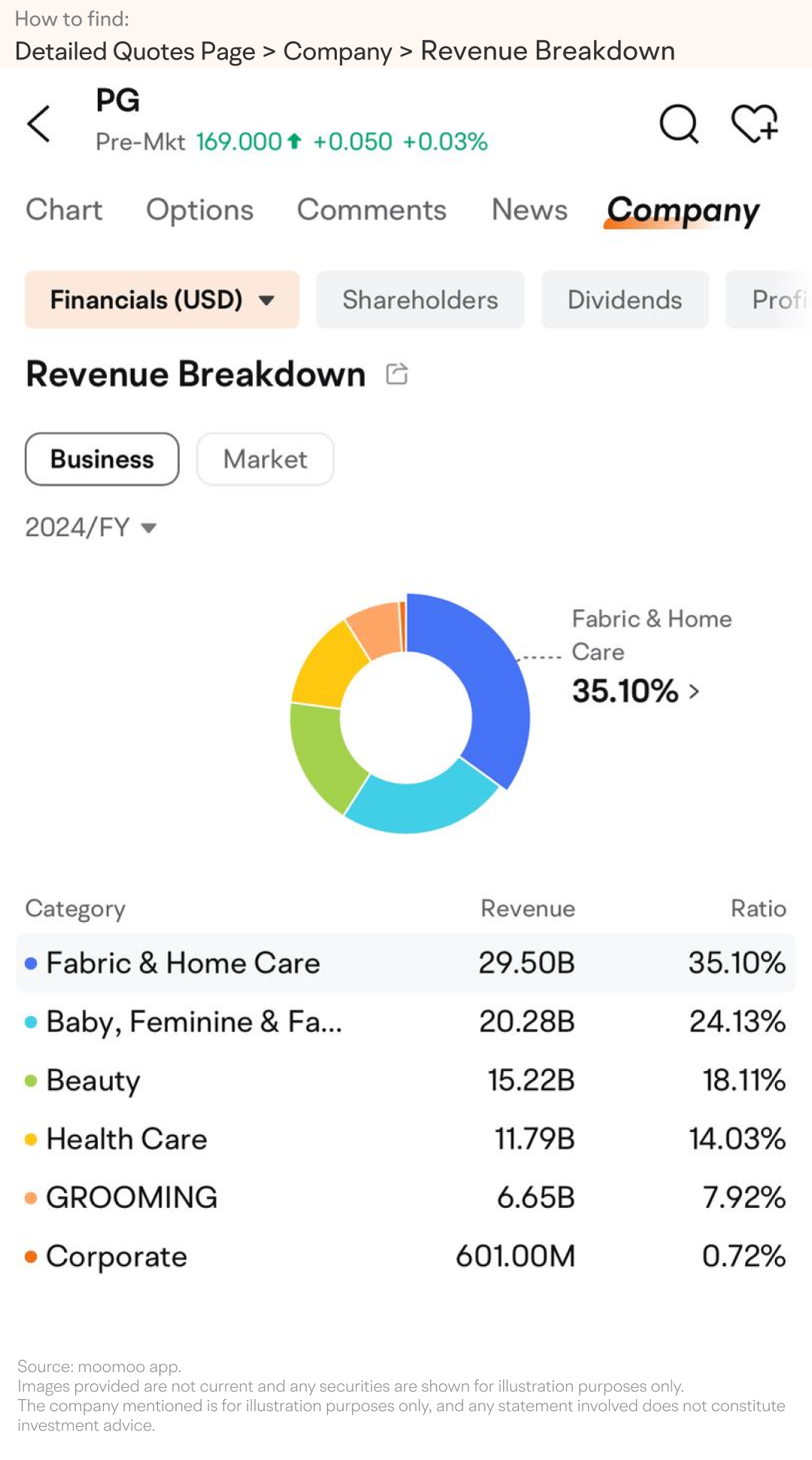
P&G's business spans several segments, including fabric and home care, baby, feminine, and family care, beauty, and health care. This balanced revenue distribution helps mitigate the risk of significant fluctuations in any one segment.
Since fiscal year 2011, P&G's revenue has seen periods of growth, decline, and recovery, but overall, the fluctuations have been moderate. From 2014, due to issues such as slow adaptation to international market changes and the impact of the internet, P&G experienced three consecutive years of accelerated revenue decline, with a cumulative drop of over 20%.
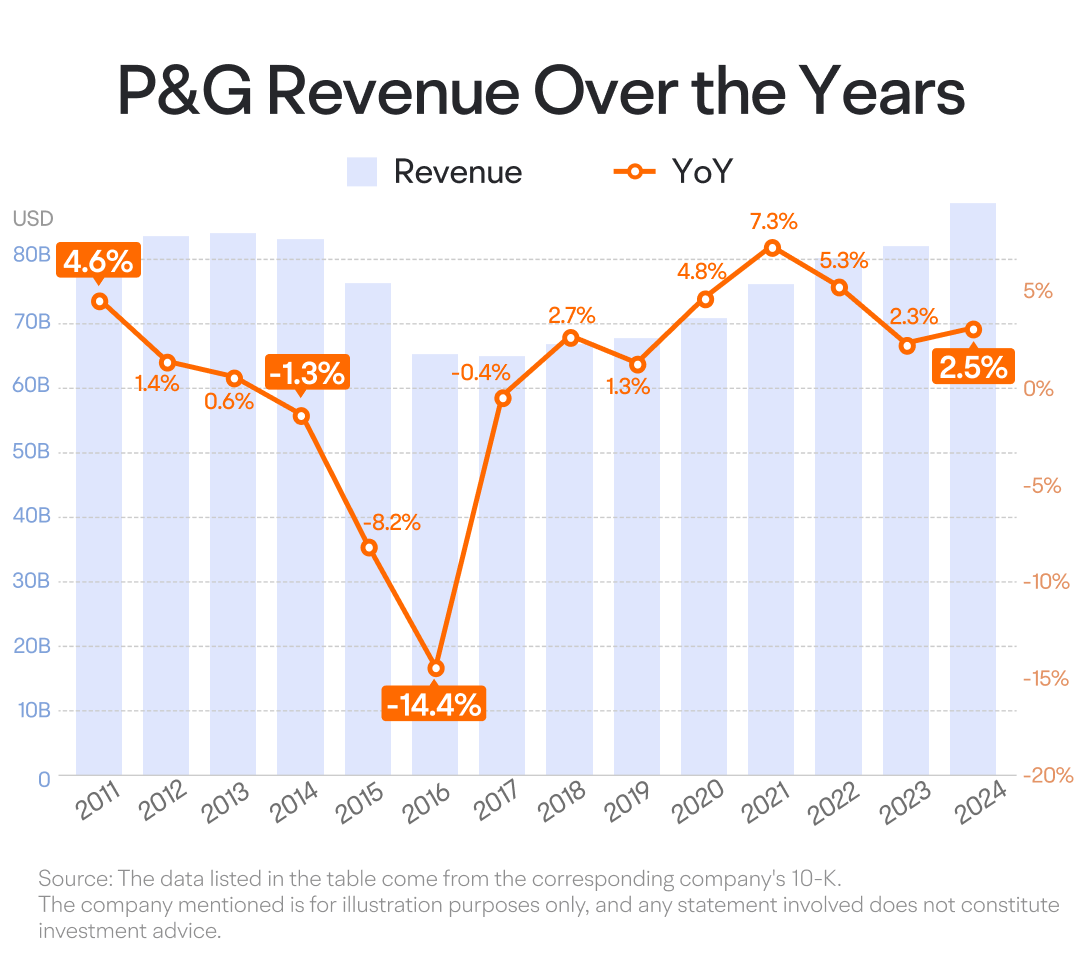
However, after a few challenging years, P&G implemented measures like streamlining its brand portfolio, increasing digital marketing efforts, and targeting the premium market. These actions helped reverse the downward trend, bringing revenue back to growth, with fiscal year 2024 revenue returning to peak levels. This resilience in operations and stability in performance highlights P&G's robust management.
In terms of profit, P&G's net income often fluctuates due to one-time factors, so it may be more insightful to focus on operating profit trends. Since 2011, while P&G's operating profit has experienced declines, the drops have never exceeded 10%, and in recent years, it has generally increased. In FY2024, operating profit was approximately $19.9 billion, about 26% higher than in 2011. Although growth has been modest, the consistency is notable.
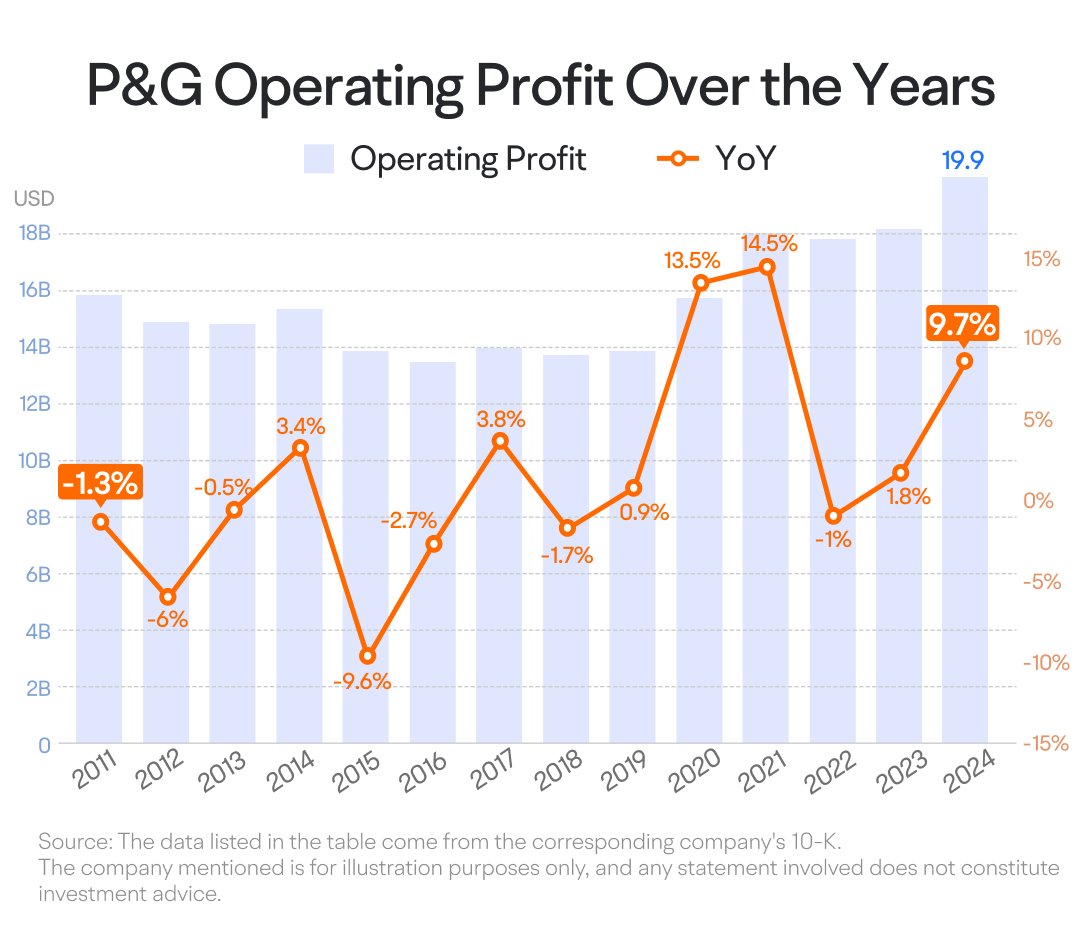
Overall, P&G's historical performance shows resilience and stability, even if not spectacular. Some fluctuations are inevitable in future earnings reports, but significant and sustained declines could undermine its long-term investment value.
2. Stable profitability
The second point of P&G's stable operations is the consistency of its profitability, which we can assess using three important metrics: gross margin, operating margin, and return on equity (ROE).
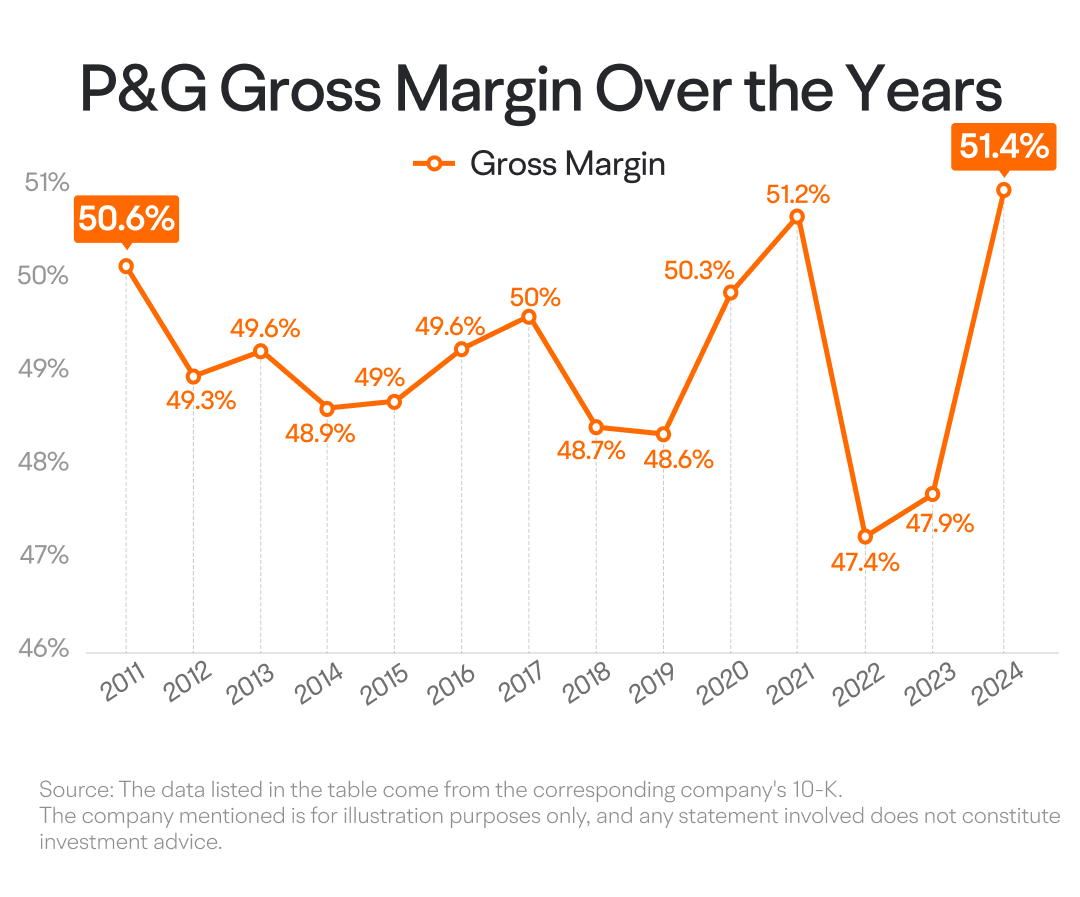
P&G's gross margin was 50.6% in FY2011. Since then, it has experienced minor fluctuations, settling at around 51.4% in fiscal year 2024. This remains relatively stable compared to a decade ago.
P&G's operating margin was approximately 19.2% in fiscal year 2011. After a slight decline over the next two years, it has shown a rising trend, reaching about 23.7% in fiscal year 2024—an improvement of 4.5 percentage points.
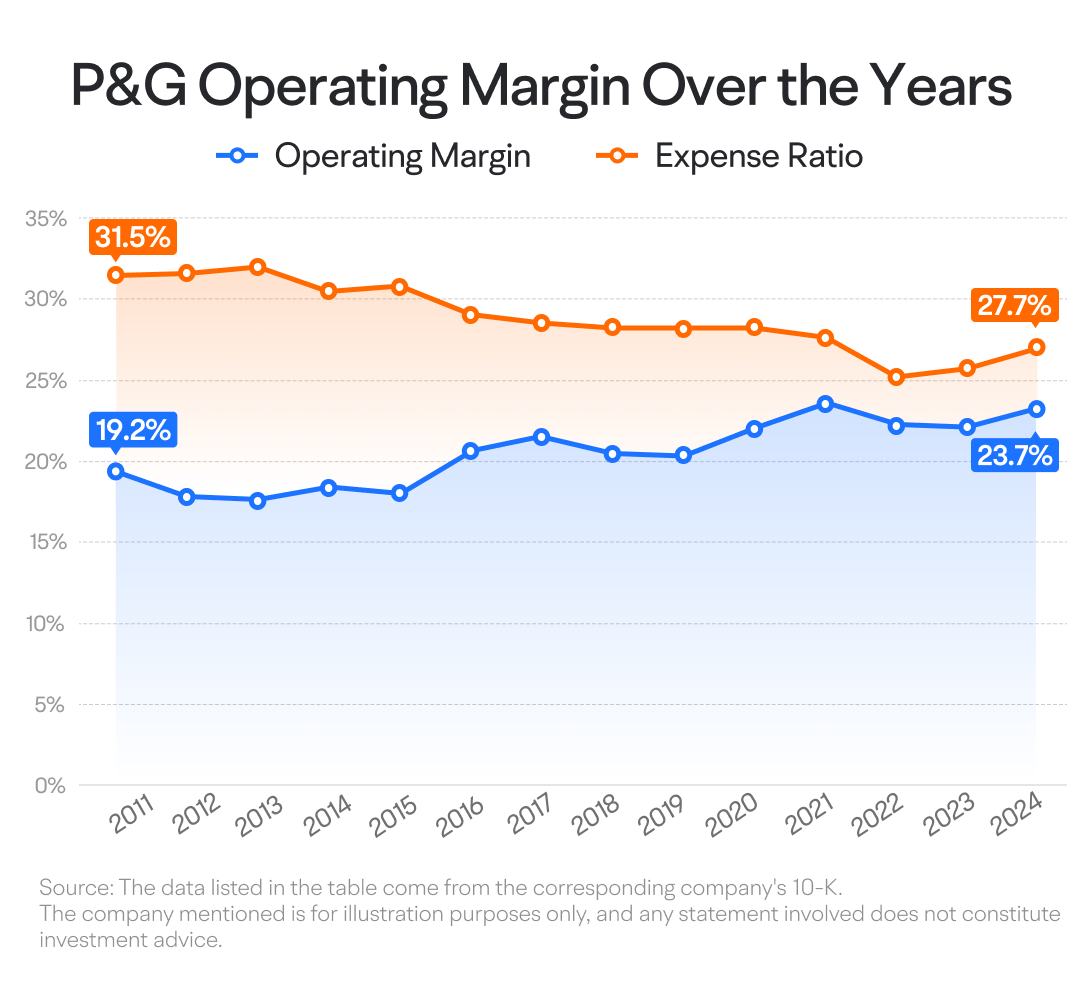
This stability is noteworthy, especially given the decline in gross margin. The increase in operating margin is largely due to the optimization of expense ratios. P&G's selling, general, and administrative (SG&A) expenses dropped from 31.5% in 2011 to 27.7% in fiscal year 2024, a drop of nearly 4 percentage points, which has boosted operating profit.
P&G's ROE has seen significant improvement, rising from 18.3% in 2011 to 30.7% in 2024. Apart from anomalies caused by one-time expenses in fiscal years 2015 and 2019, P&G's ROE has consistently remained above 15%.
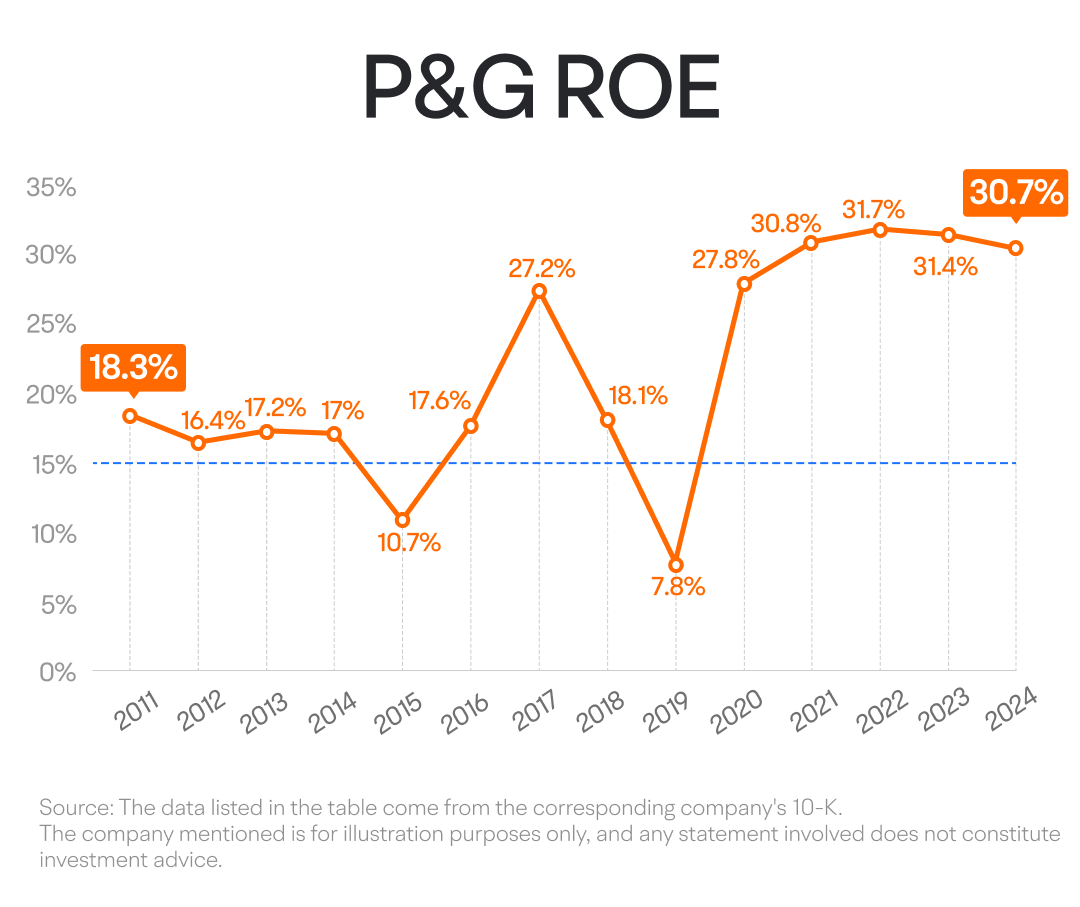
As Charlie Munger once said, in the long run, stock returns tend to align with a company's ROE. Thus, companies with consistently high ROE levels may offer higher long-term returns to investors.
While P&G's earnings growth may not be spectacular, its stock price has kept pace with the S&P 500, likely due to its steadily increasing ROE. Therefore, in future earnings reports, it's important to monitor the stability of P&G's profitability metrics, especially its ability to maintain a high ROE.
3. Consistent shareholder return
In the U.S. stock market, many companies may have mediocre earnings growth but are generous in returning value to shareholders through dividends and share buybacks. P&G is a prime example of this approach.
From fiscal year 2021 to fiscal year 2024, despite fluctuations in net income, P&G's combined amount of buybacks and dividends exceeded $10 billion annually, approaching $20 billion at the peak.
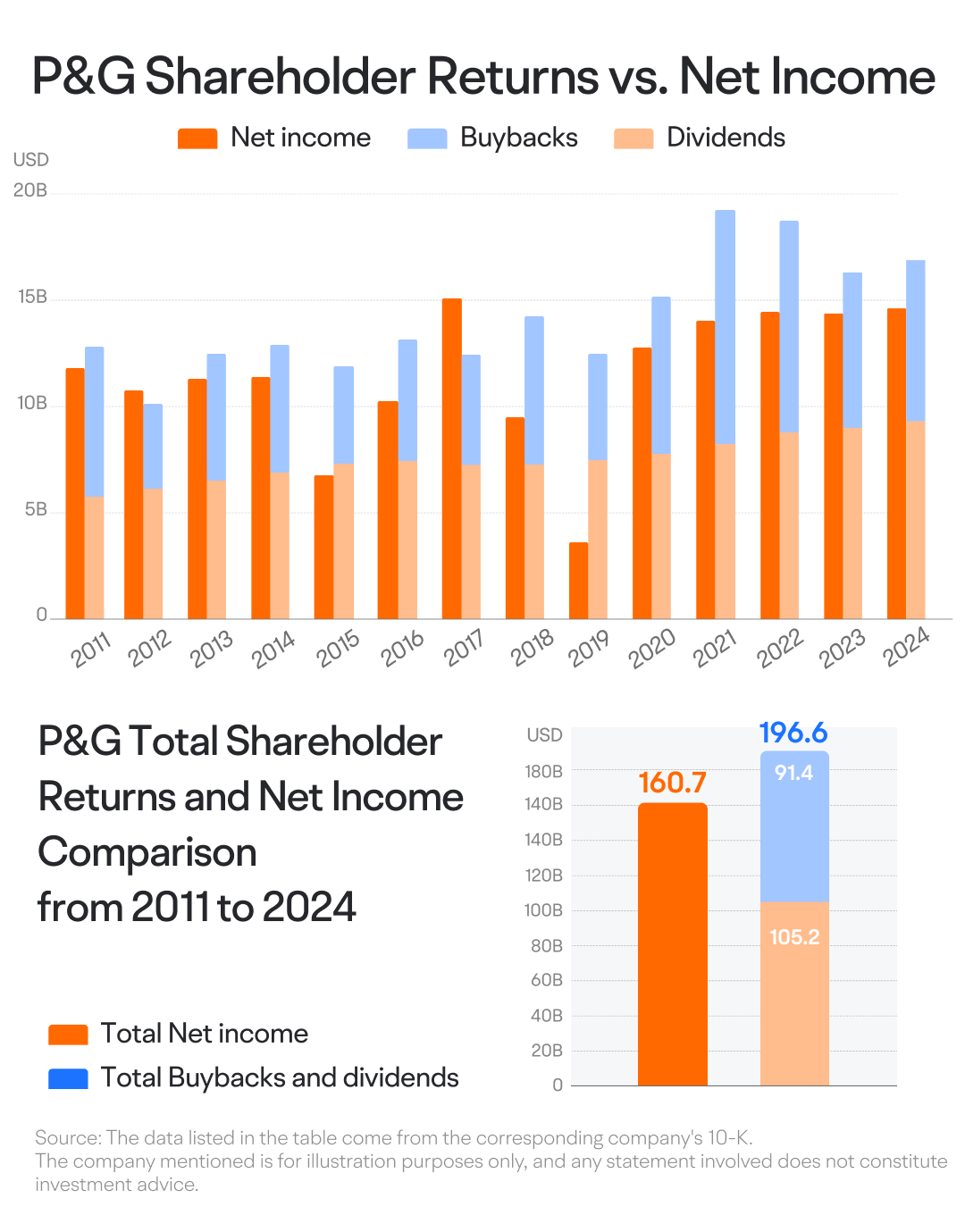
Over the last 14 years, P&G has returned approximately $196.6 billion to shareholders through buybacks and dividends, surpassing its net income of around $160.7 billion during the same period. This demonstrates the company's unwavering commitment to rewarding its shareholders.
By repurchasing shares and paying dividends, P&G effectively utilizes its excess cash, keeping shareholder equity at a relatively low level. This strategy has contributed to maintaining the company's ROE at high levels—a core reason for its consistent performance in this metric.
In future earnings reports, it may be important to monitor whether P&G can sustain its high levels of shareholder returns. Maintaining these returns could help keep ROE elevated and attract investor interest.
Having read this far, you may now have a deeper understanding of how to interpret P&G's financial reports. It's noteworthy that the release of earnings reports from prominent companies may present unique trading opportunities for different types of investors.
For instance, if an investor, after analyzing past reports and considering recent developments, believes a company's latest earnings will send positive signals and boost the short-term stock price, they might consider taking a long position. This could involve buying the underlying stock or purchasing call options.
Conversely, if the investor expects the earnings to be unfavorable and potentially pressure the stock price, they might consider taking a short position, either through short selling or buying put options.
If the report's outcome is unclear but volatility is expected, they might use a straddle strategy, buying both calls and puts.
However, investors should carefully assess their risk tolerance, particularly when considering high-risk trades like short selling or options, before making any trading decisions.
Summary
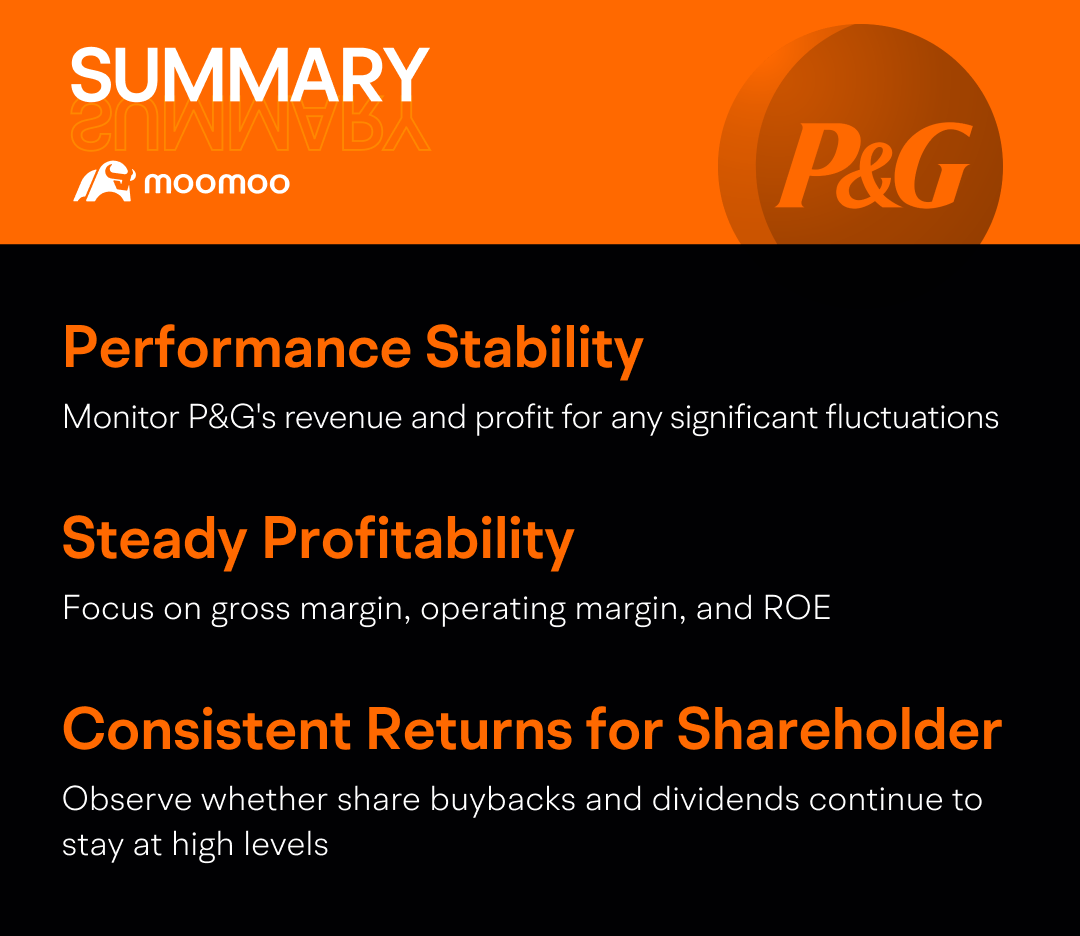
When evaluating P&G's earnings report, consider focusing on stability in three key areas: performance, profitability, and shareholder returns.
Performance Stability:
Monitor P&G's revenue and profit for any significant fluctuations. If there are substantial declines, it might be a cause for concern.
Steady Profitability:
Keep an eye on key metrics like gross margin, operating margin, and ROE. Pay special attention to whether ROE remains at a high level.
Shareholder Returns Consistency:
Observe whether the combined amount of share buybacks and dividends continues to stay at high levels, promoting consistent shareholder returns.
This presentation is for informational and educational use only and is not a recommendation or endorsement of any particular investment or investment strategy. Investment information provided in this content is general in nature, strictly for illustrative purposes, and may not be appropriate for all investors. Read more