Investing Bitcoin with ETFs
Bitcoin, the largest cryptocurrency by market cap and one of the most actively traded (as of January 2024), has long been a challenging investment for many due to its lack of regulation
Yet, on January 11, 2024, the U.S. Securities and Exchange Commission (SEC) took a historic step by approving the first 11 spot Bitcoin ETFs for exchange trading, signaling a milestone for the crypto market and offering a new avenue for investors who prefer not to hold Bitcoin directly but still want exposure to its performance.
Exchange-listed ETFs are under SEC regulation, offering a less risky way to invest in Bitcoin. This factor contributes to the keen interest in spot Bitcoin ETFs.
While investing in digital currencies through ETFs isn't new—there are already several Bitcoin-related ETFs available—the freshly approved spot Bitcoin ETFs differ in that they are directly tied to the current price of Bitcoin.
If you're keen on these ETFs, it's wise to get a solid grasp of the essential information before trading.
What is Bitcoin?
Bitcoin operates on a blockchain, a decentralized ledger, and unlike conventional currency, it's not issued or regulated by any central entity, leading to ongoing debates about its value.
As of July 22, 2024, there are nearly 10,000 cryptocurrencies, with Bitcoin being the most valuable and one of the most traded.
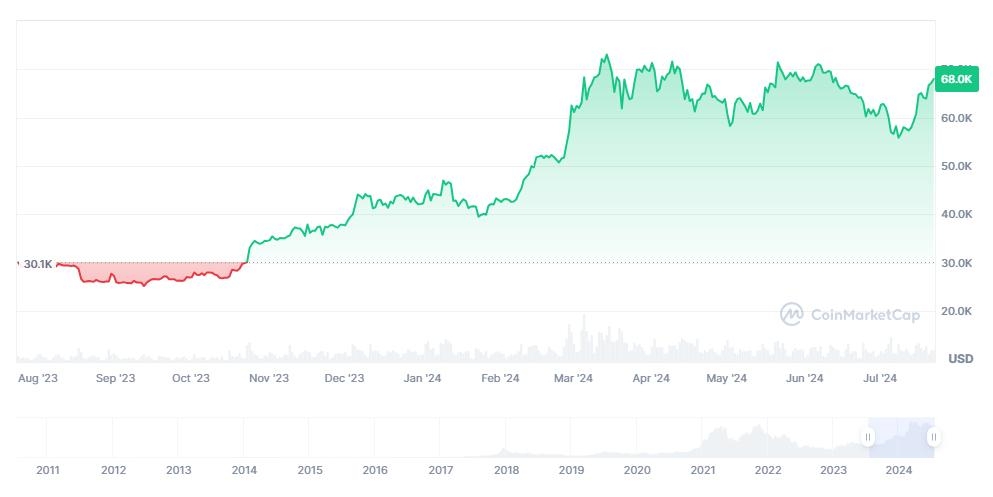
Its price is highly volatile, having fluctuated between $24,930.30 and $73,750.07 over the past year, making it a high-risk investment.
*See attached for Bitcoin's price trend from July 24, 2023, to July 22, 2024.
What's the difference between investing in Bitcoin through ETFs and directly investing in Bitcoin?
The main differences lie in two aspects:
1. Risk Level
Cryptocurrencies are considered riskier than traditional assets like stocks and bonds mainly because any government or institution does not control them. This means investors face the risk of price manipulation and fraud without regulatory protection. SEC Chairman Gary Gensler has warned, "Investors should remain cautious about the myriad risks associated with Bitcoin and products whose value is tied to crypto."
However, Bitcoin ETFs under SEC regulation are considered lower risk. If an ETF issuer goes bankrupt or encounters other credit issues and is a Securities Investor Protection Corporation (SIPC) member, investors who are SIPC member's customers are safeguarded for up to $500,000.
2. Cost
Direct Bitcoin investment costs include transaction fees, withdrawal fees, and optional storage wallet fees.
On the other hand, investing in Bitcoin ETFs comes with the expense ratio (which includes management fees), trading commissions, and bid-ask spreads.
Direct Bitcoin investment fees vary by the exchange and trade role (maker of taker).
Spot Bitcoin ETFs have management fees that range from 0.19% to 1.50%*, and the commissions are broker-specific. The bid-ask spread, which is the difference between what buyers are willing to pay and what sellers are asking for, fluctuates based on the ETF's daily trading volume and overall market sentiment.
*Source: Moomoo, data as of March 4, 2024
What are the different types of Bitcoin-related ETFs, and how do they differ?
In addition to the recently approved 11 spot Bitcoin ETFs, there have been many Bitcoin-related ETFs on the market. Through these ETFs, investors can track the price movement of Bitcoin directly or indirectly.
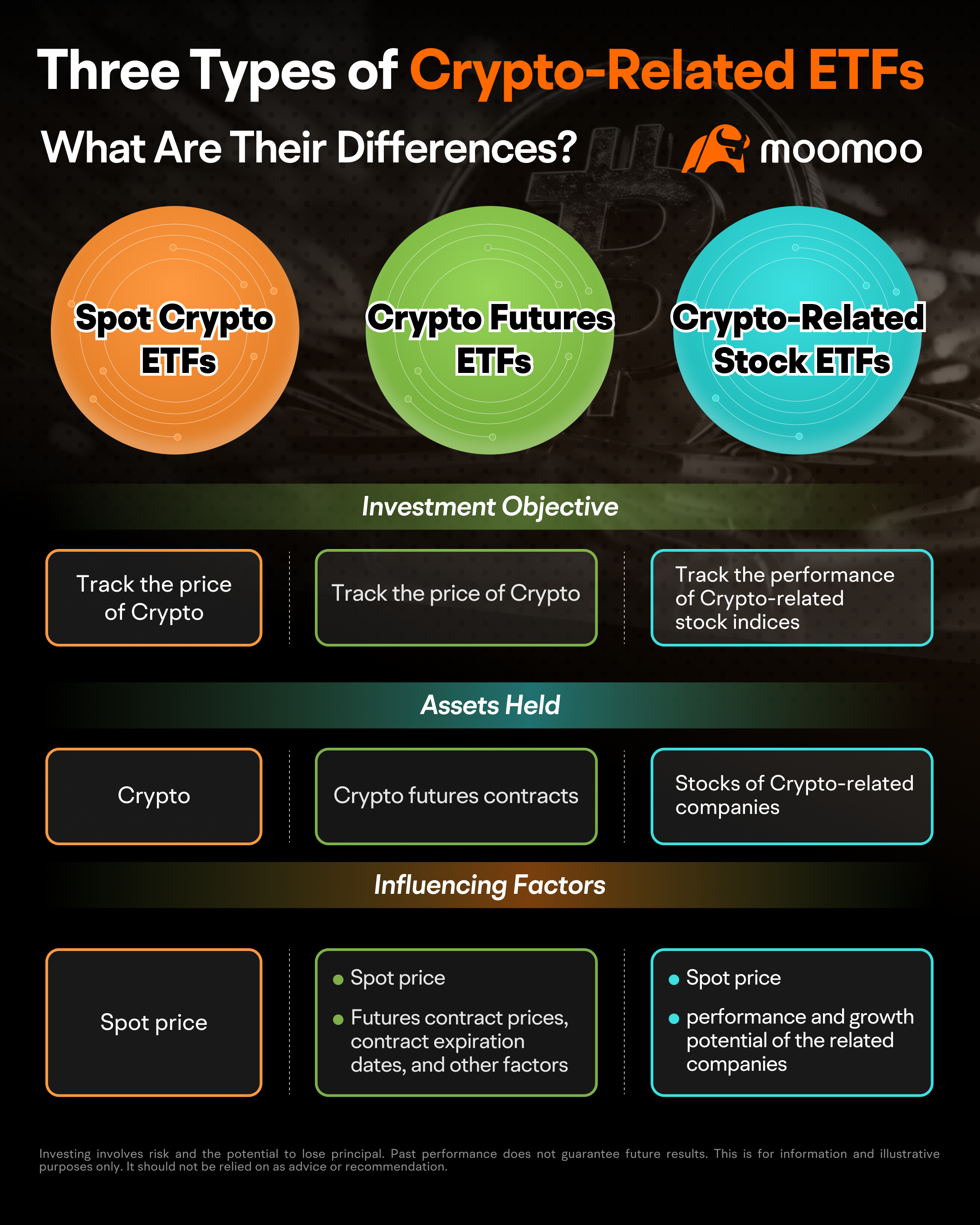
Based on the assets they hold, Bitcoin ETFs on the market can be divided into three categories: spot Bitcoin ETFs, Bitcoin futures ETFs, and Bitcoin-related stock ETFs. What are their differences?
Spot Bitcoin ETFs
Approved in January 2024, spot Bitcoin ETFs directly hold Bitcoin, which offers a direct reflection of Bitcoin's price. For instance, if a firm releases a Bitcoin Spot ETF with 100,000 Bitcoins and offers 10 million shares, buying one share equates to owning a 0.01 share of a Bitcoin.
Bitcoin Futures ETFs
These ETFs track Bitcoin's price through futures contracts, and agreements to trade Bitcoin at a future date and price. They are more complex, with additional factors like contract prices and expiration dates influencing performance. They might also incur higher management fees due to the need for frequent contract rollovers and carry counterparty risk, i.e., one of the parties involved in a futures contract might not fulfill their obligations.
Bitcoin-Related Stock ETFs
Investors can gain indirect Bitcoin exposure by investing in ETFs that hold shares of Bitcoin-related businesses, such as mining equipment producers, exchanges, and blockchain companies. These ETFs offer the dual benefit of Bitcoin exposure and the growth potential of related companies, though their performance also depends on the companies' financial health and may not always closely align with Bitcoin's price movements.
Here's how to find Bitcoin-related ETFs on Moomoo:
Open moomoo.
Type "Crypto" into the search bar, then tap "More".
View the list of different types of ETFs.
You can sort the list by price changes, trading volume, transaction amounts, market cap, and other conditions.
Tap on a specific ETF to see detailed information, including its quotes, management fees, and prospectus.

Disclaimer:
Cryptocurrency ETFs are speculative and involve a high degree of risk. An investor may lose all or substantially all of an investment in the Fund. Bitcoin has historically exhibited high price volatility relative to more traditional asset classes, which may be due to speculation regarding potential future appreciation in value among other factors. The performance of these ETFs should follow bitcoin prices closely, minus fees and the fund’s trading costs.
This presentation is for informational and educational use only and is not a recommendation or endorsement of any particular investment or investment strategy. Investment information provided in this content is general in nature, strictly for illustrative purposes, and may not be appropriate for all investors. Read more