Hong Kong Stock Market Experiences Best Week in Years (0429-0503)
Weekly Overview of Global Markets
Market Review and Outlook
Weekly performance of major asset classes:
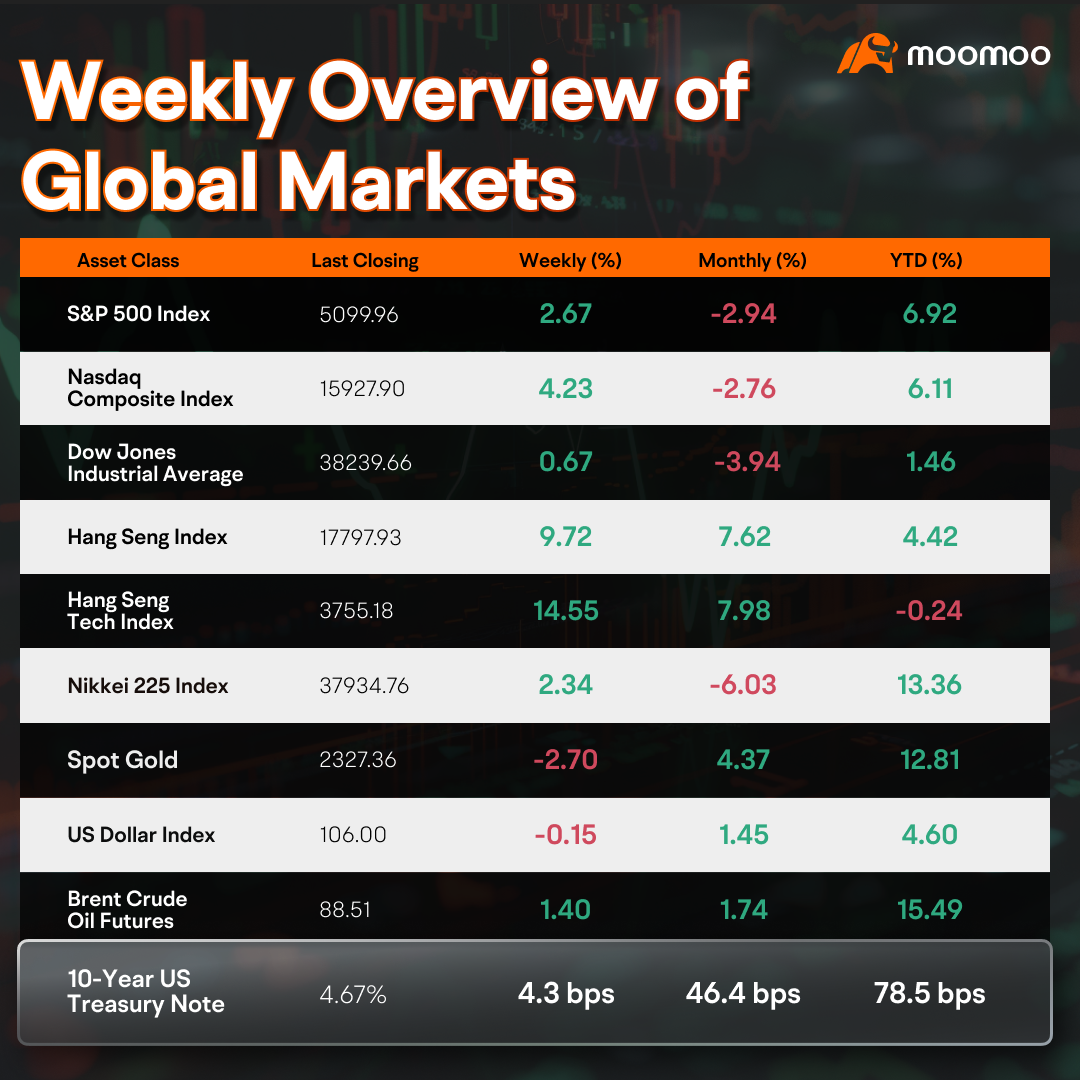
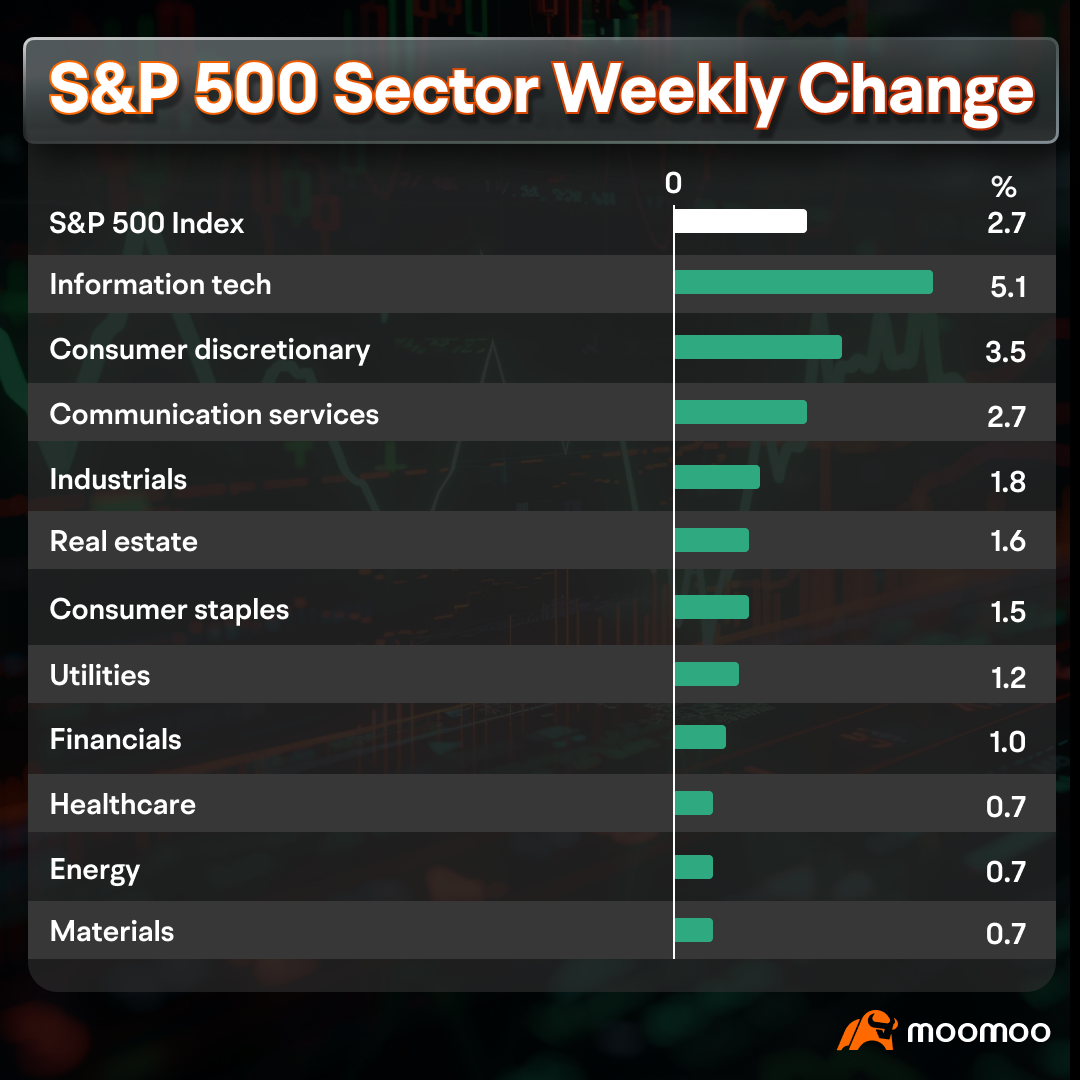
Stocks: The earnings season is currently in full swing, with roughly one-third of the companies listed on the S&P 500 reporting their results last week, which accounted for about 40% of the index's total market capitalization. Impressively, over 80% of these companies have exceeded earnings expectations, with Q1 earnings growth surpassing 10%. The "Magnificent Seven" tech giants are expected to see a substantial 47% YoY increase in profits during Q1, in stark contrast to the S&P 500's anticipated 2% earnings growth. Out of the four companies that reported earnings last week, Tesla (NASDAQ: TSLA), Alphabet (NASDAQ: GOOG), and Microsoft (NASDAQ: MSFT) all saw their stock prices surge. Supported by the tech sector's strength, the stock market has managed to recover half of the losses it incurred in April. However, given the high earnings expectations and the increasing valuations of US stocks over the past five months, companies will need to deliver impressive earnings and growth prospects to continue supporting their high valuations. Analyst from EdwardJones states, the positive news is that so far, the majority of companies have been able to meet these expectations.
Bonds: The Federal Reserve's preferred gauge for inflation has confirmed that progress in this area is still sluggish. This indicates that rates will likely remain high for an extended period of time. Last week, the 10-year US Treasury yield increased to 4.702%, while the 2-year US Treasury yield rose to 4.998%, both reaching their highest levels since November. AXA IM analysts predict that if inflation continues to remain high and investors demand higher premiums for holding longer-term bonds due to concerns about the US fiscal situation, there is a possibility that the 10-year US Treasury yield may exceed 5% once again.
Gold: As tensions in the Middle East have recently eased, gold volatility has decreased considerably. This improvement in risk sentiment has caused higher-risk assets, like the S&P 500, to recover some of their losses. Consequently, the safe-haven demand for gold has lost momentum, as per DailyFX analysts. In the short term, if gold prices remain above the support level of $2,320, the bullish trend may continue.
Note: The weekly performance of major asset classes is ranked based on the weekly change in the asset class as shown in the table above, with ">" indicating the ranking from highest to lowest. US bonds are ranked based on the change in futures prices. Past returns do not guarantee future returns.
Data source: Bloomberg. Date as of April 28th, 2024
Weekly Hot Topic
Hong Kong stock market experienced its best week in years
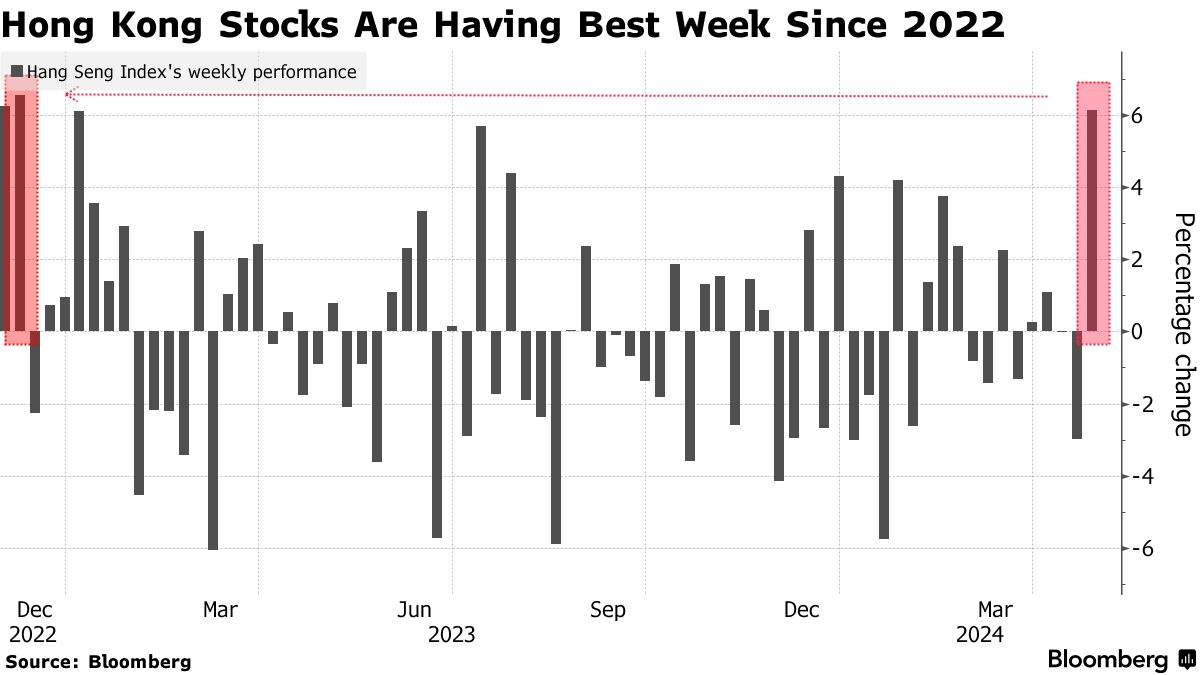
Last week, the Hong Kong stock market experienced its best week in years, with all three major indices surging to impressive heights. The Hang Seng Tech Index led the way, posting a remarkable 13% gain, while the Hang Seng Index rose nearly 9%, representing its strongest performance since late 2011. The Hang Seng China Enterprises Index, which tracks Chinese companies, also recorded its biggest weekly gain since 2015. Additionally, shares of tech giant Tencent Holdings Ltd. saw a nearly 15% surge in April.
Market experts have identified four potential reasons behind the recent surge of Hong Kong stocks:
With US interest rates expected to remain high in the short term, hedge funds and long-term investors have shown increased interest in Chinese stocks, leading to a shift in sentiment towards the Hong Kong stock market as investors seek to reallocate their assets by buying undervalued Hong Kong stocks.
Chinese investors are buying Hong Kong stocks to diversify their portfolios due to a weakening yuan.
Recent pledges by Chinese market regulators to improve fund flows into the Hong Kong market and encourage more companies to list there have increased trading volume in Hong Kong stocks. Bloomberg data shows that Chinese investors bought over HK$74 billion ($9.5 billion) worth of Hong Kong stocks via the southbound trading links in April.
Corporate profits of Chinese companies are showing signs of recovery, with China's largest offshore oil producer, CNOOC, reporting a 24% increase in profits in the first quarter compared to the same period last year. This latest sign of a recovery in corporate profits has contributed to the general optimism in the Hong Kong stock market.
According to Bloomberg analysts, all the signs are pointing to a revival of Chinese stocks, and the recent surge in the Hong Kong stock market is a clear indication of this trend.
Is the US Economy Slipping into Stagflation
US economic growth slid to an almost two-year low last quarter while inflation jumped to uncomfortable levels, interrupting a run of strong demand and muted price pressures that had fueled optimism for a soft landing.
Gross domestic product (GDP) increased at a 1.6% annualized rate, which was below all economists' forecasts, according to the government's initial estimate. Furthermore, a closely watched measure of underlying inflation, the Q1 Core PCE price index, surged at a greater-than-expected rate of 3.7%, marking the first quarterly acceleration in a year, according to the Bureau of Economic Analysis report released last Thursday. The pickup in inflation was driven by a 5.1% jump in service-sector inflation that excludes housing and energy, almost double the prior quarter's pace.
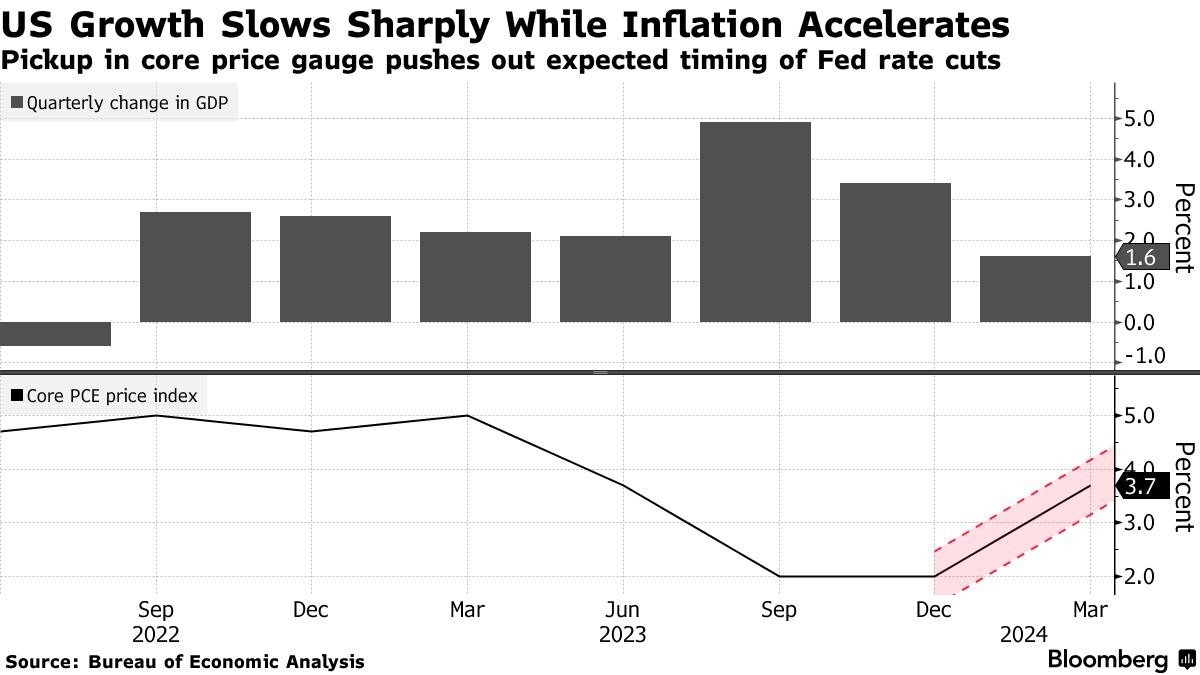
This inflationary pressure may create renewed pressure on Federal Reserve policymakers, who were already expected to hold interest rates at a two-decade high when they meet this week, to further delay any cuts and even consider whether borrowing costs are high enough. Economist Eliza Winger argues that the economy continued to expand at an above-trend pace when excluding volatile categories, and strong imports are an indication of continued solid demand, which is not what the Fed wants.
"The hot inflation print is the real story in this report," said Olu Sonola, head of US economic research at Fitch Ratings, in a note. "If growth continues to slowly decelerate, but inflation strongly takes off again in the wrong direction, the expectation of a Fed interest rate cut in 2024 is starting to look increasingly more out of reach."
Important Events Outlook for This Week
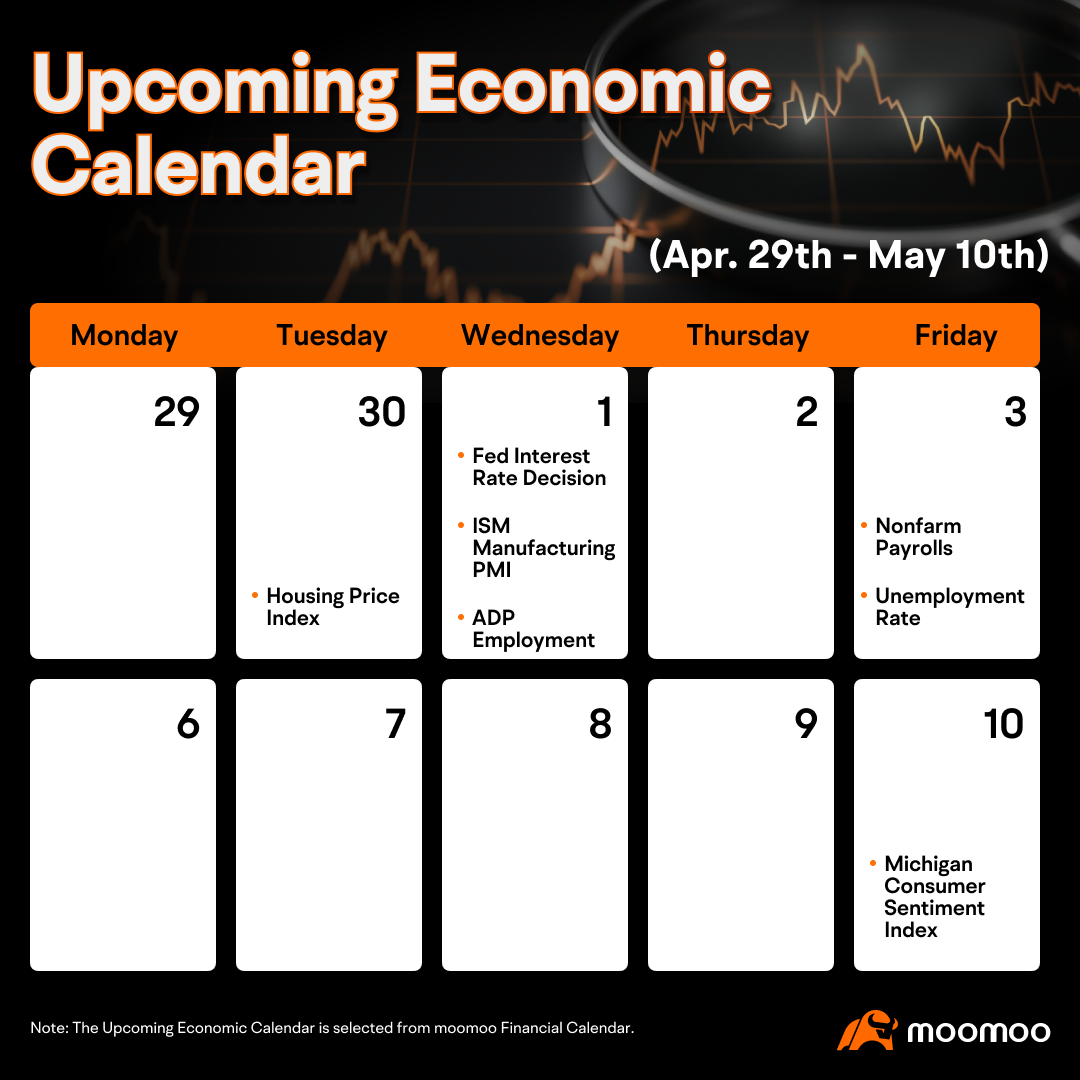
Fed Interest Rate Decision
The next Federal Open Market Committee (FOMC) meeting will be held on April 30-May 1, 2024. This is one of the key dates that investors, economists, and policymakers mark on their calendars. Many experts expect the Fed to hold rates steady at a target of 5.25%-5.50%, as the Fed still waits for inflation to ease a bit more.
Angelo Kourkafas, analyst from EdwardJones, has stated that the market has likely entered a choppier phase, primarily due to uncertainty surrounding the Fed's policy path. Despite this, we maintain our cautiously optimistic outlook for the year, supported by resilient economic growth and a reacceleration in corporate profits. Additionally, the Fed's bias towards easing policy once better inflation readings are established, likely by September, also bolsters our positive outlook.
This presentation is for informational and educational use only and is not a recommendation or endorsement of any particular investment or investment strategy. Investment information provided in this content is general in nature, strictly for illustrative purposes, and may not be appropriate for all investors. Read more