Netflix hits a new high: what's next?
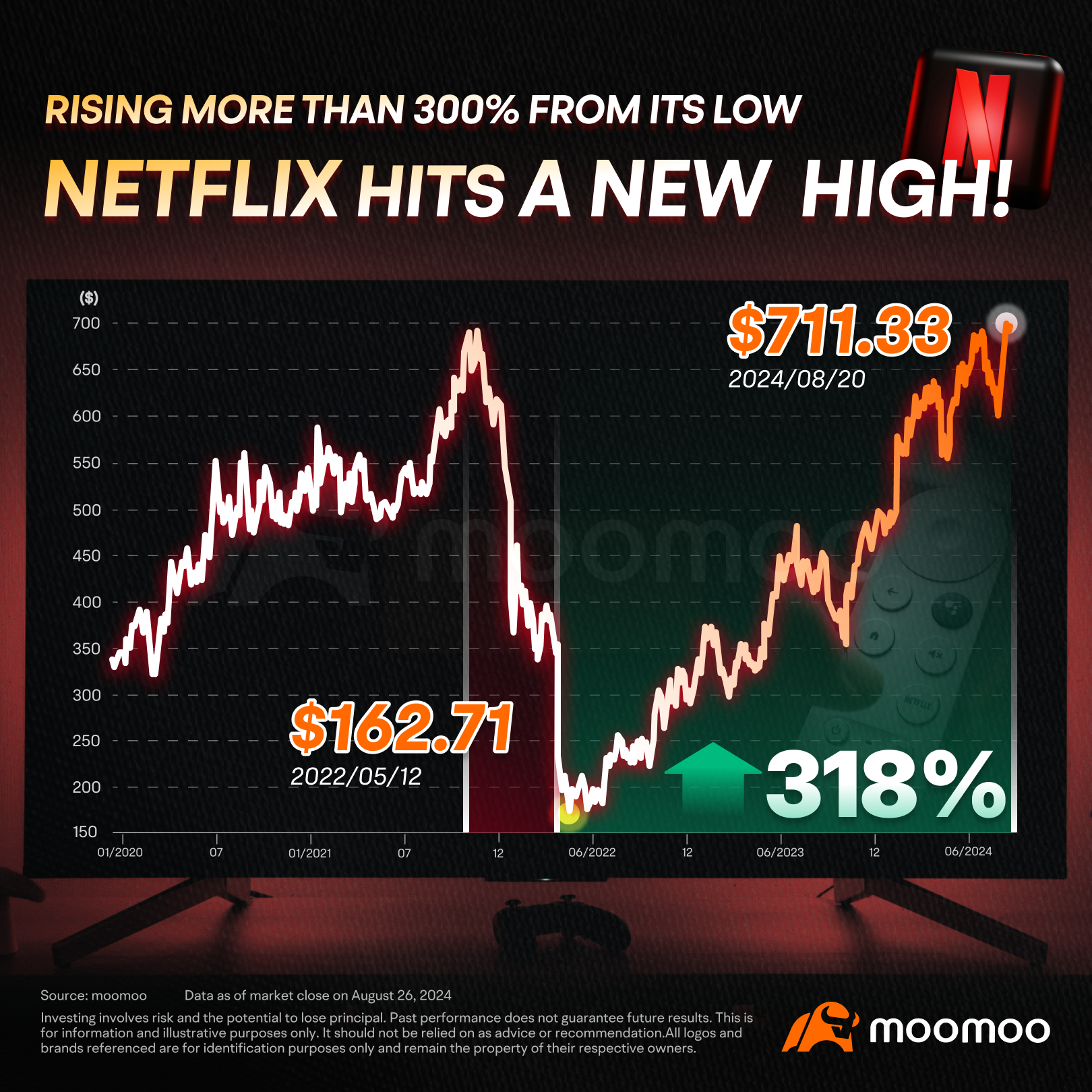
From 'FAANG' to 'The Magnificent Seven', Facebook (now $Meta Platforms (META.US)$ ), $Apple (AAPL.US)$ , $Amazon (AMZN.US)$ , and $Alphabet-C (GOOG.US)$ have all joined new elite groups, leaving $Netflix (NFLX.US)$ behind. Despite receiving less attention, Netflix reached a historic high in August, surpassing its 2021 peak.
After a sharp decline of over 70% following November 2021, Netflix has made a remarkable recovery. In nearly three years, the stock has surged more than 300% from its low, surpassing the $700 mark once again.
What did the company go through during this rollercoaster journey? How should we interpret its return to the peak, and what does the future hold? This week's Opportunity Mining will explore these questions.
Tackling password sharing
For streaming platforms, password sharing is a persistent challenge. This behavior impacts subscription revenue and hampers new customer acquisition, disrupting the beneficial cycle between membership services and content production. Even more concerning, measures like account bans could result in losing users.
In early 2022, research indicated that while Netflix's subscription growth was rapid, the rate of password sharing was even more alarming, potentially costing the company billions.
In the same year, Netflix saw a rare decline in its subscriber base. The company reported that in addition to its 222 million paid households, over 100 million households accessed its services through shared passwords.
According to a Statista survey from 2022, 17% of the respondents accessed Netflix using someone else's password, with 11% using the account of someone outside their own home.
Concerns about the company's growth, along with the Federal Reserve's rate hikes, led to a plunge in the stock price.
During its high-growth phase, Netflix did not pay much attention to password sharing, even promoting the idea that "Love is sharing a password." However, as operational data began to decline, the company recognized the need to tackle this issue.
Netflix demonstrated considerable flexibility in tackling this problem:
Enhanced Monitoring: Netflix strengthened user location monitoring to determine if users sharing an account were from the same household and restricted the number of simultaneous streams per account.
Violators faced three options: create a new account, pay $7.99/month to add an extra member to the original shared account, or appeal for remote access.
Cheaper Ad-Supported Plan: Initially, the company emphasized user experience by offering content with no ads. In November 2022, Netflix introduced a more affordable ad-supported plan at $6.99/month, attracting price-sensitive users while expanding ad revenue.
Since its launch, the plan saw explosive growth, with many freeloaders opting for the ad-supported plan. By January 2024, ad-supported subscribers exceeded 23 million. Netflix co-CEO Peters stated the company would stop sharing quarterly paid user numbers starting in 2025, shifting focus to new businesses like advertising.
This "carrot and stick" approach succeeded, putting Netflix back on a high-growth path.
An eMarketer analyst noted that the ad tier added more subscribers than many analysts expected. This signals that password sharing is even more common than previously thought, as Netflix keeps converting freeloader viewers into paid users.
Impressive performance
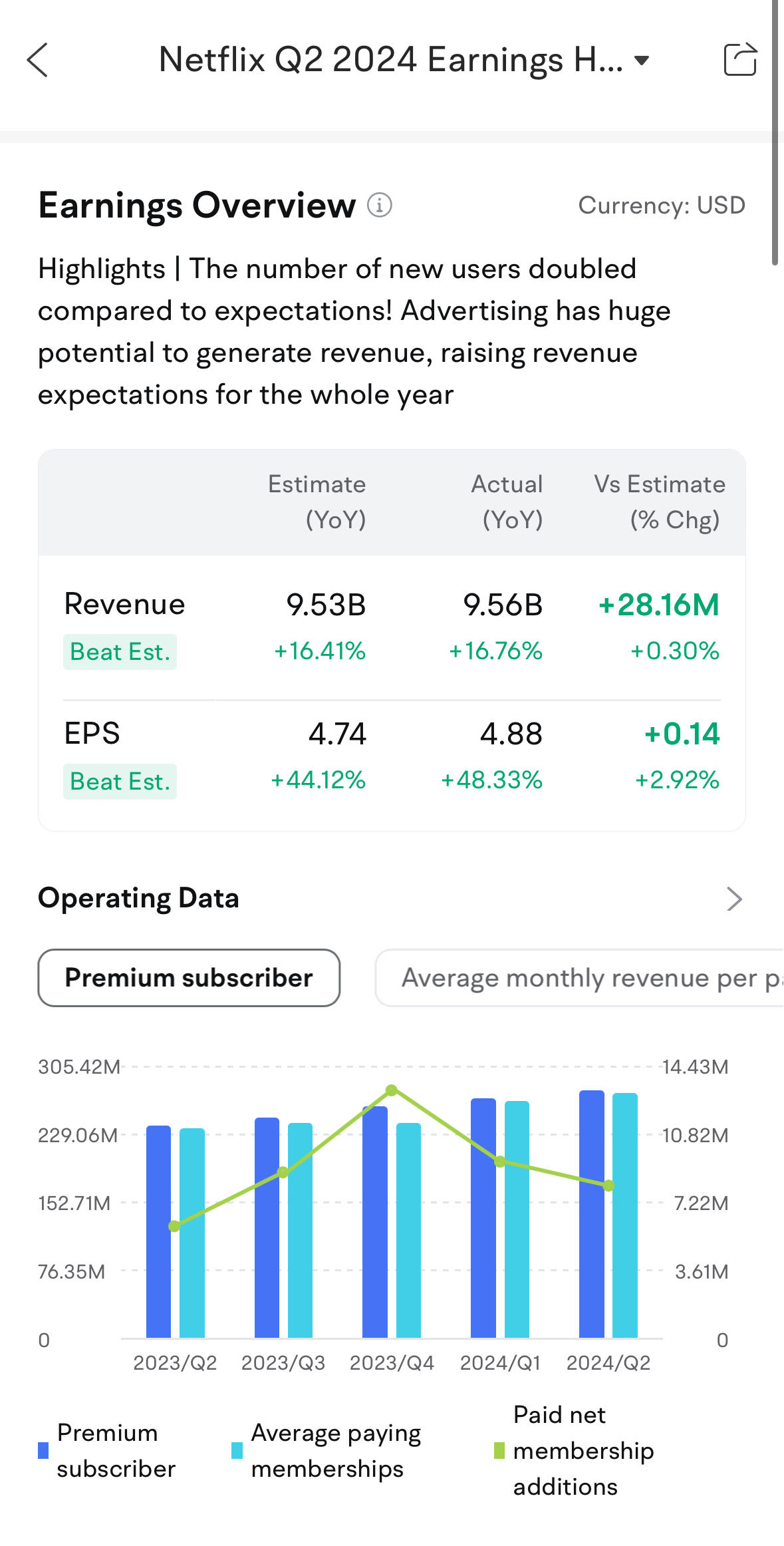
On July 18, Netflix released its Q2 earnings report. Revenue grew 17% year-over-year to $9.56 billion, with GAAP net income rising 44.3% to $2.15 billion. Non-GAAP earnings per share were $4.88.
Both revenue and profit exceeded Wall Street's consensus estimates. Notably, Netflix added 8.05 million net new subscribers in Q2, against a market expectation of 4.7 million.
Source: moomoo. Data as of Q2 2024. Investing involves risk and the potential to lose principal. Past performance does not guarantee future results. This is for information and illustrative purposes only. It should not be relied on as advice or recommendation.
Bernstein analysts said 2024's user growth is strong, making previously unattainable targets within reach.
Mature markets like the U.S. continued to see high growth, and international markets also performed well. Non-English content drove membership growth in markets like France, South Korea, and India. This trend is expected to continue, with analysts projecting Netflix's 30 million net additions this year.
Technical analysis and potential strategies
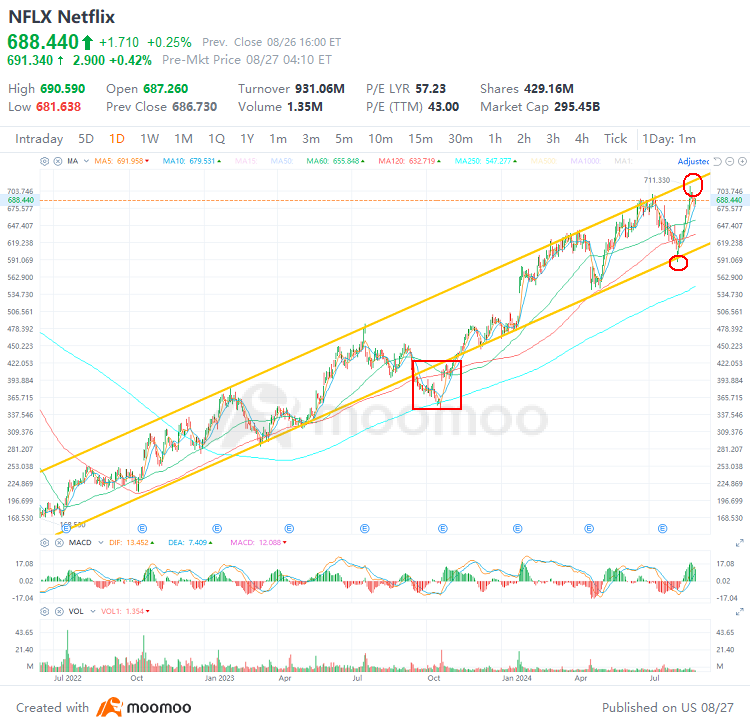
From a technical perspective, Netflix's stock has roughly been in the ascending channel since bottoming out in 2022. After briefly dipping below the MA250 bull-bear dividing line in October 2023, it regained upward momentum.
During the market sell-off in early August, the stock remained resilient, rebounding after hitting the lower channel boundary and seeing a slight pullback after reaching a historic high.
Source: moomoo. Data as of market close on August 26, 2024. The company mentioned is for illustration purposes only, and any statement involved does not constitute investment advice.
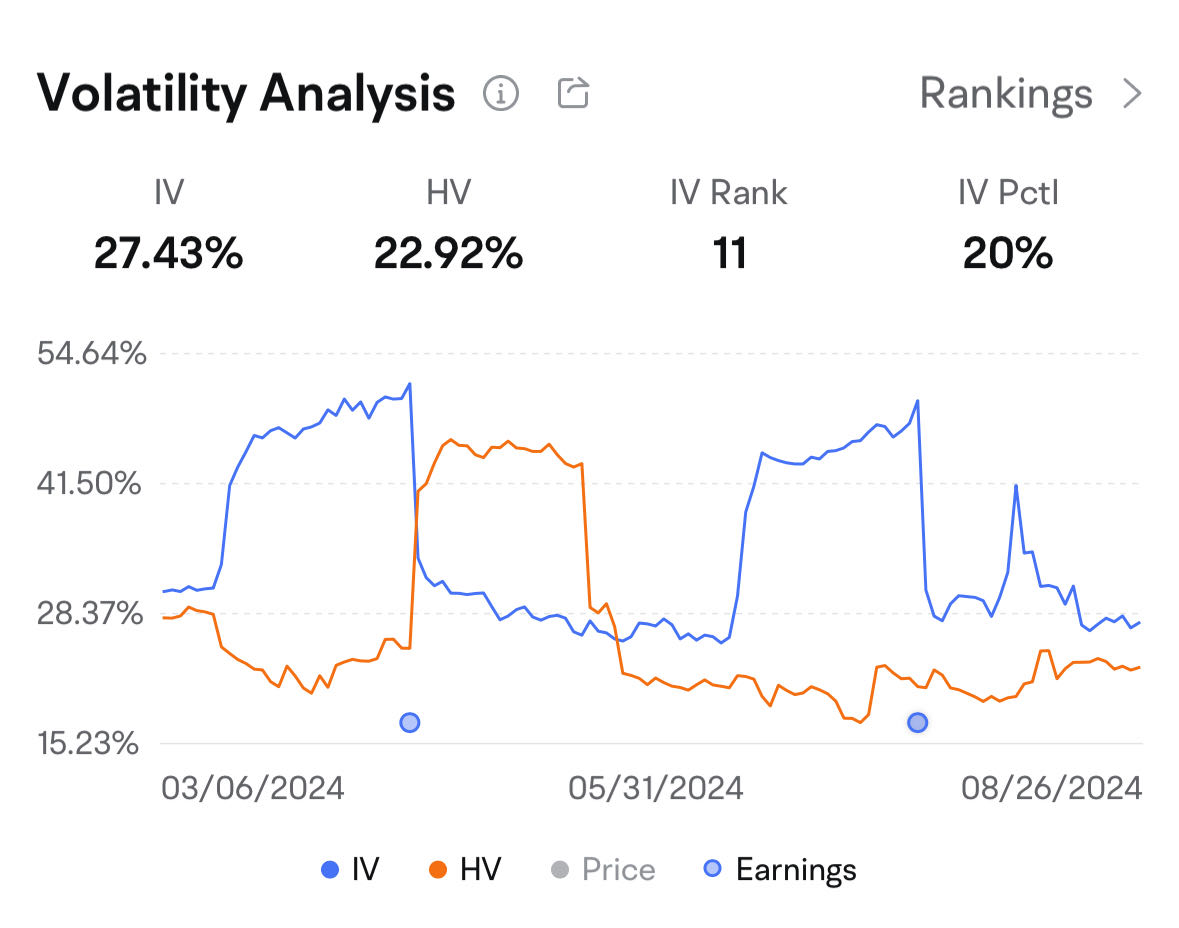
Volatility analysis tools show Netflix's current volatility is low. As of August 27, the implied volatility (IV) rank was 11, and the IV percentile was 20%.
Implied volatility values, IV Rankings, and IV Percentiles are theoretical estimates, and the actual market conditions may not always align with the theoretical information shown. Investors should exercise caution and use multiple sources of information when making investment decisions.No guarantee or assurance using any tools or data provided on the moomoo app will result in investment success or reduce investment risk.
Low implied volatility suggests relatively low premiums in a neutral risk scenario, theoretically favoring option buyers.
If you are optimistic about the company's future, you might consider buying a call option (Long Call). If you anticipate a pullback, buying a put option (Long Put) could be considered.
For stockholders, if you believe the market will remain flat without significant gains, selling a covered call option (Covered Call Strategy) can help reduce investment costs. It is important to note that options carry higher risks than stocks. They also have greater volatility. Interested investors might systematically learn about options before trying them.
Related risks
User Growth: While recent growth has been strong, some believe that mature markets are gradually saturating, and user growth may slow down in the future, with rising acquisition costs for new users.
Market Competition: With Netflix's ad-supported plan showing results, other streaming companies are following suit. Competitors like Disney+ and Apple TV could erode Netflix's market share.
International Market Expansion: International markets are crucial for Netflix's future growth, but varying regulations and cultural differences across countries may impact expansion plans.
Additional Disclosures: This content is also not a research report and is not intended to serve as the basis for any investment decision. The information contained in this article does not purport to be a complete description of the securities, markets, or developments referred to in this material. The information has been obtained from sources considered to be reliable, but we do not guarantee that the foregoing material is accurate or complete. Furthermore, there is no guarantee that any statements, opinions or forecasts provided herein will prove to be correct.
Options trading involves substantial risks and may not be suitable for all investors. Losses could potentially exceed your initial investment. Please also consider our US Options Product Disclosure Statement (PDS), US Options Target Market Determination (TMD) and OCC's Characteristics and Risks of Standardized Options available on the website before trading options.
This presentation is for informational and educational use only and is not a recommendation or endorsement of any particular investment or investment strategy. Investment information provided in this content is general in nature, strictly for illustrative purposes, and may not be appropriate for all investors. Read more