Meta has recently been on a Bull Run
In July 2023, the challenge from Meta's founder Mark Zuckerberg to Twitter's current leader Elon Musk with "Threads" swept the world. The escalation of the confrontation between these two tech giants has drawn significant public attention to the future of social media. In an era of big data, the question remains: how can tech giants sustain their success?
In today's opportunity mining, we will explore Meta's history and current state, discussing how it began with social networking and eventually became a top player in the global metaverse.
Before getting to the point, we have to mention one company—Facebook, one of the largest internet companies in the world and also the predecessor of Meta. Founded by Zuckerberg in February 2004, Facebook encouraged everyone to participate in social media, whereas a few decades ago, it was impolite to talk to strangers. Facebook's revolutionization of social networking brought it great success, leading to its April 2012 listing on the Nasdaq.
Subsequently, the company continued to expand its presence in social media. In 2012, Facebook acquired Instagram. In 2014, it extended its portfolio by acquiring the instant messaging tool WhatsApp.
After acquiring Oculus in 2014, the company expanded into AI, VR/AR, and meta universe businesses. In 2021, Facebook announced a name change to "Meta" to rebrand its image and realize its meta-universe strategic goals.
The name change is not a sudden decision but a well-planned move that announces the start of a significant transformation. Zuckerberg's ambition goes far beyond social media. He aims to conquer new areas such as Web3, cryptocurrency, NFT, and metaverse.
Knowing the prequel, we can imagine how large and complex the company's business system has become. However, its main business and revenue streams are rather simple.
Business Model: Ads as the Main Contributor
Social media platforms and communications tools remain Meta's primary business.
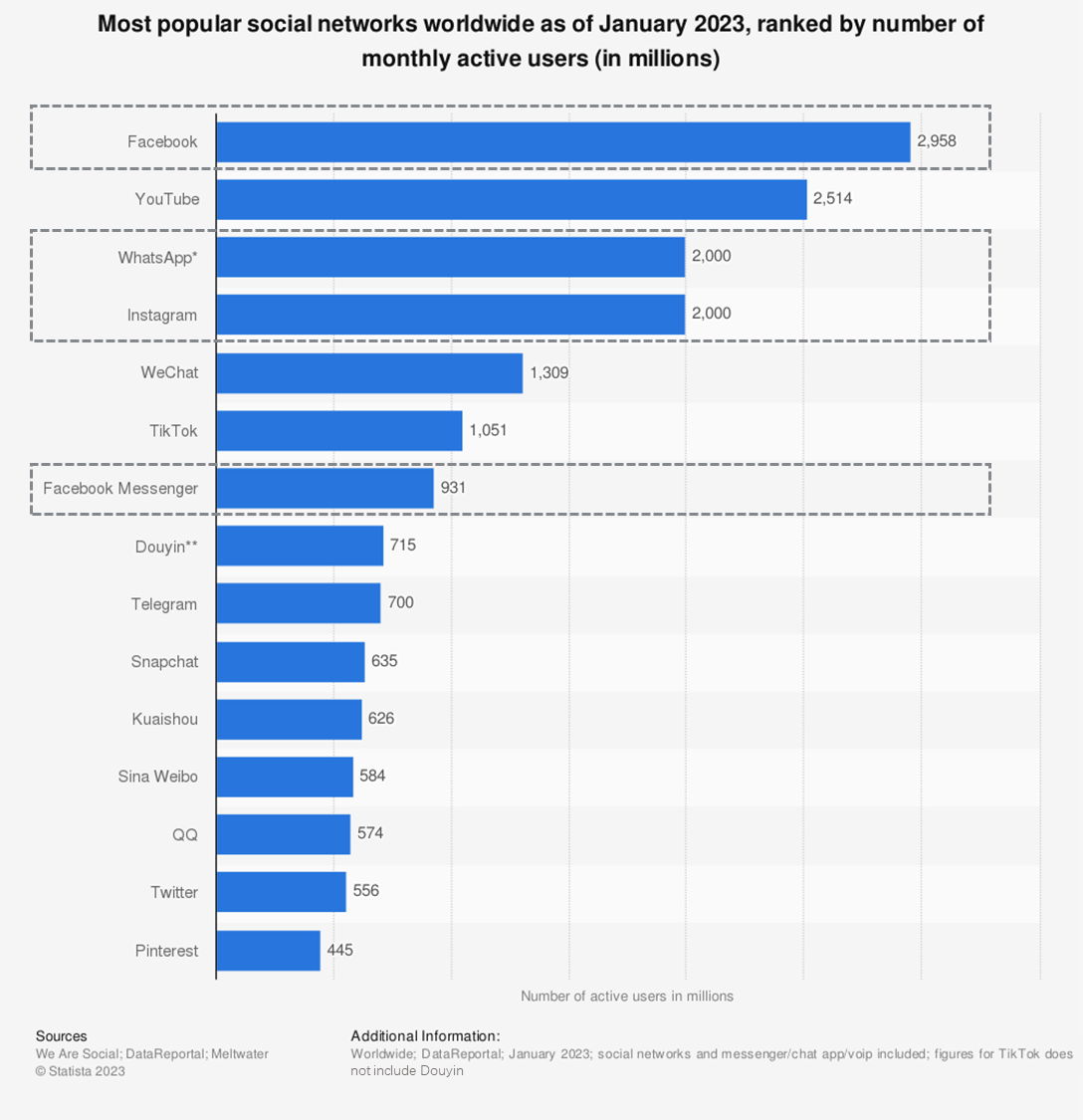
Meta's product matrix has amassed a large number of social relationships with acquaintances, ensuring its unshakable leadership in the global social media universe. With 2.96 billion users by the end of 2022, Facebook is the largest social media platform in the world. The monthly active users of all Meta apps, including Facebook, Instagram, WhatsApp, and Messenger, amounted to 7.89 billion.
Now you may figure out where the main revenue comes from.
The company continues to profit from advertising on its platform. Meta's earnings report reveals that advertising revenue is the company's main operating income source. Its proportion in total revenue has been consistently increasing over the years. For instance, advertising revenue in 2015 amounted to $17.079 billion, accounting for 95.26% of total revenue. The figure rose to $114.364 billion in 2022, representing 98.07% of total revenue.
( 2015: Ads / Revenue = 17.079 / 17.928 = 95.26%; 2022: Ads / Revenue = 114.364 / 116.609 = 98.07% )
However, it's hard to maintain a foothold in a competitive market solely relying on social media platforms. What makes Meta successful? Let's see how the company established a deep moat to secure its position.
Core Competitiveness: Strong Social Attributes + Product Research and Development Capabilities
Strong social attributes help maintain user stickiness. Besides, Meta keeps improving its product research and development capabilities.
If you are weary of Facebook's "acquaintance socializing" and want to share pictures with strangers worldwide, Instagram may be your go-to option. If you live in Europe or America without a social media account, and staying in touch with family and close friends is your only socializing, what communication tool might you use? Probably Messenger or WhatsApp.
All these social media and instant messaging apps are owned by Meta, who has built a full-coverage product matrix that meets the social needs of most users around the world. The strong social attributes make it difficult to be replaced by any other company.
Regarding product research and development capabilities, Meta has a unique advantage due to Zuckerberg's technical background.
For example, ten years ago, the groundbreaking introduction of Facebook allowed users to share photos and stay in touch with friends on the platform.
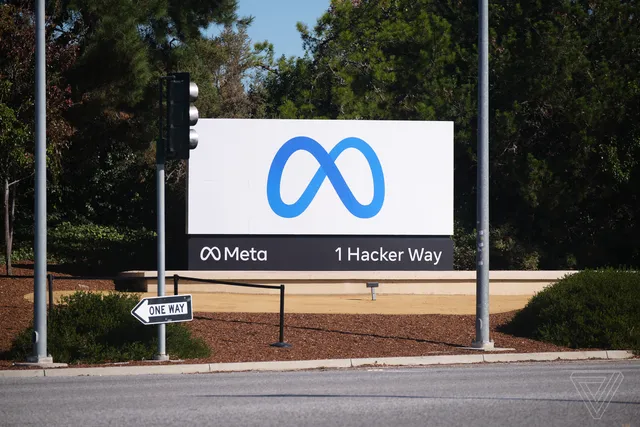
The company adopts "The Hacker Way," an approach to building that involves continuous improvement and iteration, which has laid the foundation for the company principle of fast response to trends and breaking conventions over the years.
As a company with such innovative spirit and capacity, no wonder it decided to transform for a bigger picture.
Right after the birth of Web3 and metaverse, Zuckerberg announced that Facebook would change its name to Meta and head into metaverse in full force.
Did Meta realize transformation in this brand-new field?
Stock Price Trends: V-shaped Reversal
Reviewing the stock price of Meta, its performance after the transformation was not as good as expected for a long time.
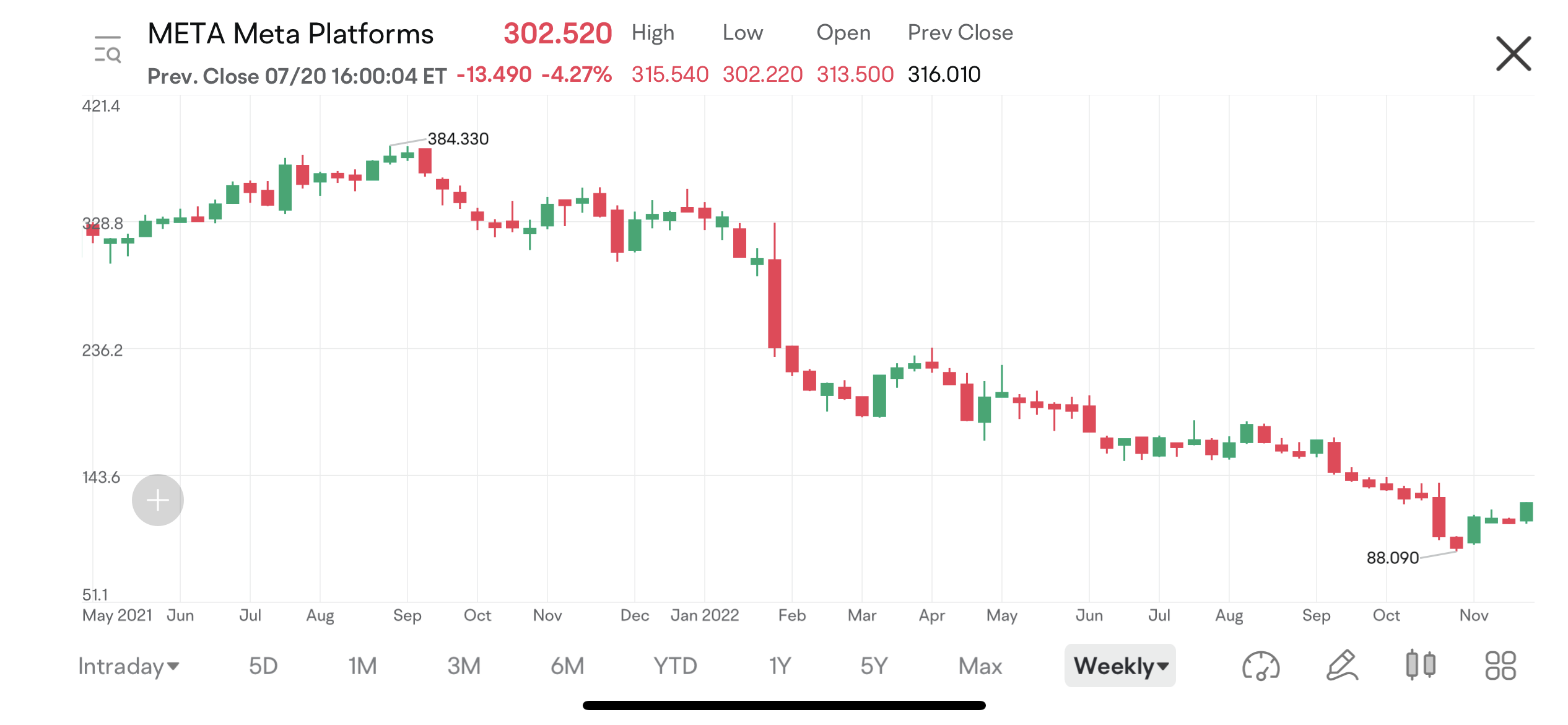
Source: Moomoo | Note: Any app images provided in the content are not current and any securities shown are for illustrative purposes only and is not a recommendation.
What are the reasons? According to Industrial Securities analysts, here are some key points:
Firstly, the economic slowdown hit Meta's main revenue source, advertising. According to statistics from Statista, as a solid cyclical industry, the decline in consumer confidence accounted for high inflation significantly affects advertising revenue.
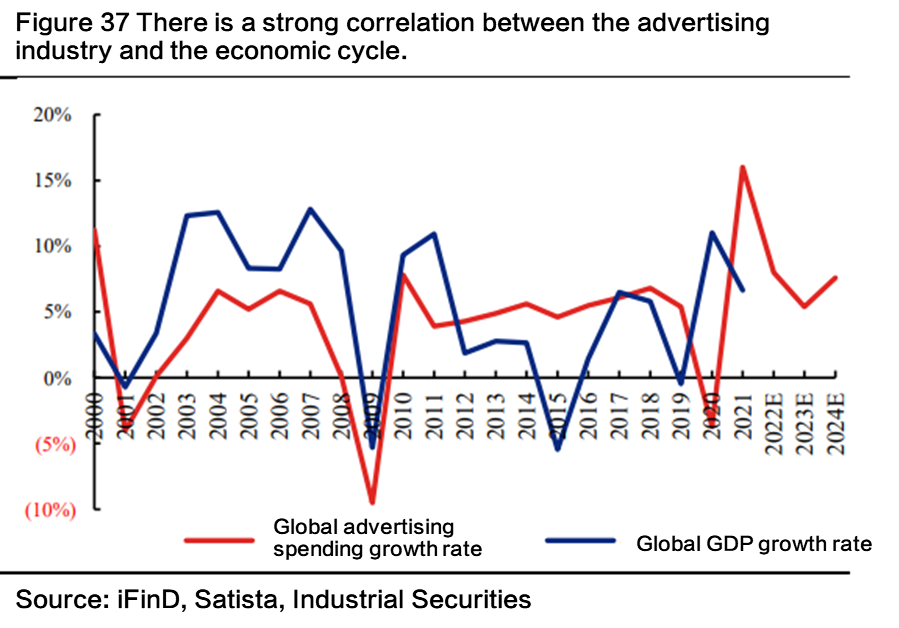
Secondly, Industrial Securities states that Meta has a significant decline in net profit in recent earnings reports. But does it mean the company is losing profitability?
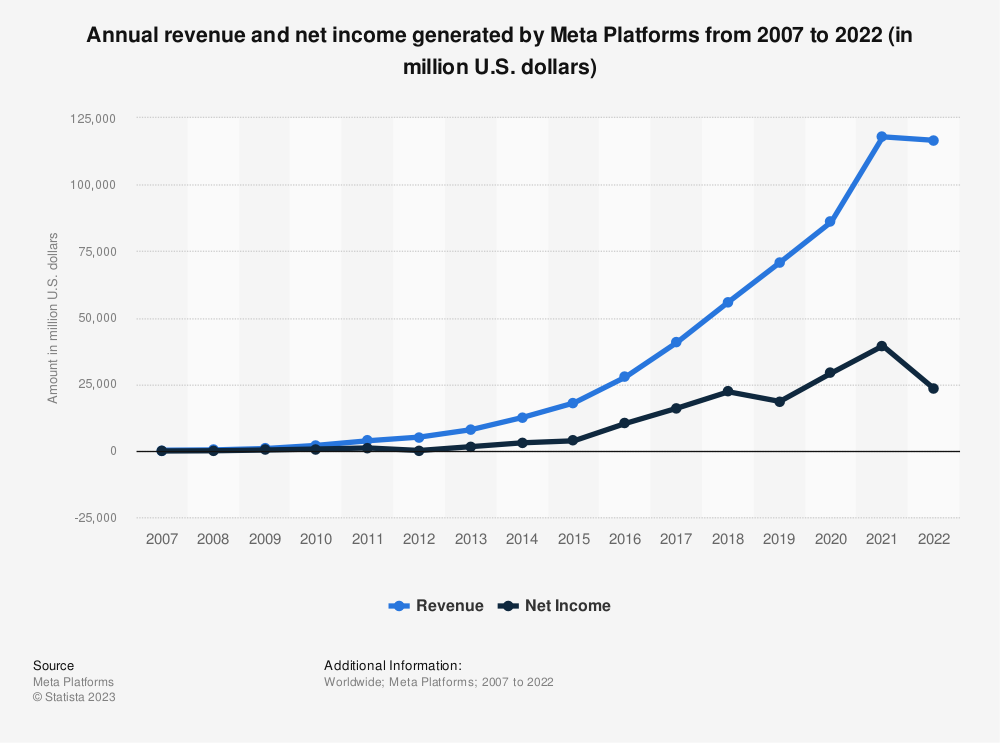
If we notice how much it spent on research and development, you may understand where the decline comes from.
According to the Motley Fool, since its transformation in 2021, the company has delved into the metaverse, but the rapid expansion and excessive capital expenditures have led to a decline in operating income and net profit. For example, the Reality Labs business unit lost $4 billion in the first quarter. According to statistics, Meta's R&D expenditure was $35.338 billion in 2022, a year-on-year growth of 43.3%, while the year-on-year growth in 2021 and 2020 was only 33.65% and 35.64%, respectively.
In response, Meta reduced other costs and investments and improved advertising efficiency to gradually restore the company's profitability.
As a major player in artificial intelligence, Meta's stock has rebounded with the AI fever. As of July 24, 2023, it has risen 3.31 times from its 2022 low of $88.09.
So what does the future hold for Meta? What are the opportunities and risks?
Future Opportunities and Risks
According to the Motley Fool, Meta is making efforts to recover from the decline in 2022. Declaring 2023 as Meta's "year of efficiency," Zuckerberg surprised investors at the beginning of the year with a $40 billion increase in the stock buyback plan, sending a signal of the company's great development potential.
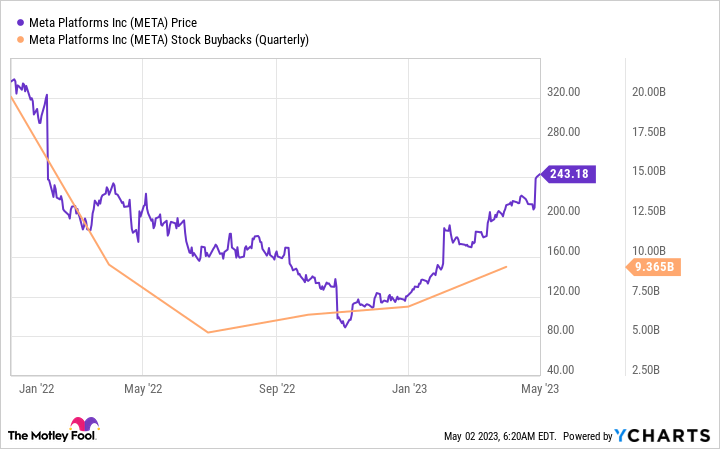
In addition, in order to improve profitability, Meta is controlling operating expenses and reducing expense expectations and future operating costs in 2023.
Meanwhile, Morningstar columnist states that Meta continues integrating artificial intelligence into the business and providing advertisers with better recommendations and tracking, which has boosted the monetization of some offshoot products that previously dragged down overall profitability, such as Reels. These products may gradually supplement the general advertising business.
Finally, Meta recently released a new product called "Threads." Compared to ChatGPT, which achieved 30 million registrations in 60 days, Threads has 30 million registered users within a day. It is regarded as the fastest-growing product after ChatGPT, whose prospects cannot be underestimated.

Along with opportunities, Meta also faces risks.
For any company with advertising as the main revenue, the biggest risk likely comes from the instability of this business. According to Morningstar, Meta may face a slowdown in consumer spending if there is an economic downturn.
While a strong balance sheet should help the company weather the recession, the stock could see a pullback. However, the company has also prepared for a slowdown in advertising growth.
Additional disclosures: This content is also not a research report and is not intended to serve as the basis for any investment decision. The information contained in this article does not purport to be a complete description of the securities, markets, or developments referred to in this material. The information has been obtained from sources considered to be reliable, but we do not guarantee that the foregoing material is accurate or complete. Furthermore, there is no guarantee that any statements, opinions or forecasts provided herein will prove to be correct.
This presentation is for informational and educational use only and is not a recommendation or endorsement of any particular investment or investment strategy. Investment information provided in this content is general in nature, strictly for illustrative purposes, and may not be appropriate for all investors. Read more