[November.2024]Decoding the earnings of Chinese tech giant Tencent
With over a billion WeChat users, Tencent is a household name in China and enjoys substantial global recognition. As the largest Chinese stock by market capitalization, Tencent wields significant influence in the capital markets.
Over the past three years, Tencent’s stock price has swung from a high of over 700 HKD to a low of under 200 HKD, before nearly doubling from its bottom in a strong rebound.
The fluctuations in Tencent's stock price are tied to both the overall market environment and its financial performance.
Tencent will release its latest earnings report on November 13. Each earnings release may signal a potential investment opportunity, but before diving in, investors need to understand how to interpret their financial statements.
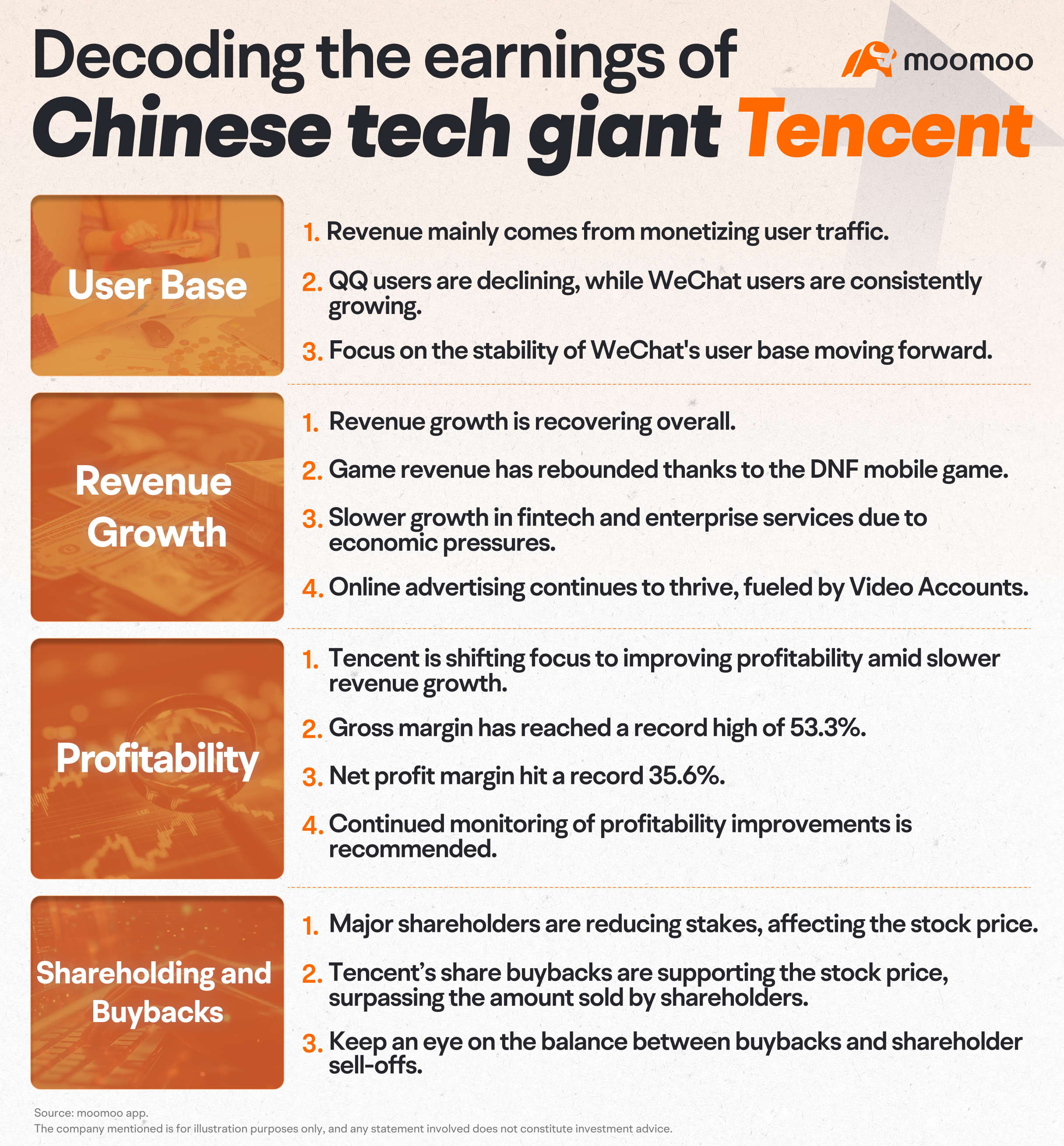
So, how should we interpret Tencent’s financial reports? We may focus on four key areas: user base, revenue growth, profitability, and the impact of major shareholder sell-offs and company buybacks.
1. User base
Tencent's user base began with QQ, a messaging platform launched in 1999 that quickly became popular in China. Over time, QQ was gradually overtaken by WeChat, which was introduced in 2011.
WeChat, known as "Weixin" in China, is a multi-functional app that combines messaging, social media, and mobile payment services. This user base is crucial because Tencent’s main revenue streams—including gaming, advertising, and financial services like WeChat Pay—depend heavily on monetizing the vast traffic from WeChat and QQ.
Therefore, monitoring changes in Tencent's user base may be essential. Tencent’s quarterly reports disclose the monthly active users (MAUs) for both WeChat and QQ. Since WeChat's introduction, QQ has seen a gradual decline in MAUs, so we should focus on WeChat's growing influence.
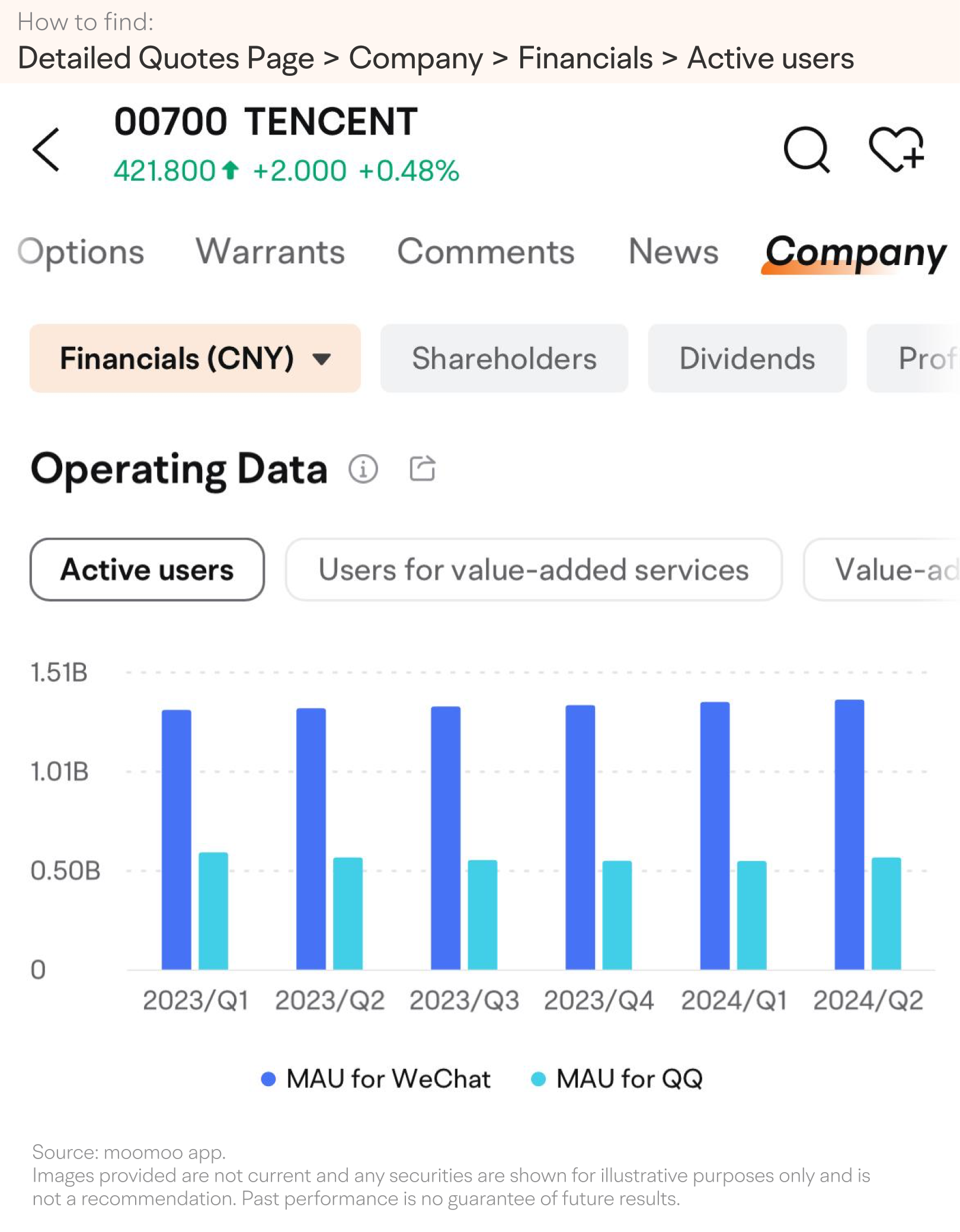
WeChat’s MAUs have consistently increased every quarter; even if the growth is modest, the trend is steady.
Today, WeChat has reached 1.371 billion users. With such a large user base, further growth potential is limited. In future financial reports, the key is to ensure that user numbers remain stable. As long as there are no consecutive quarters of decline, Tencent’s foundational user base may be considered solid.
2. Revenue growth
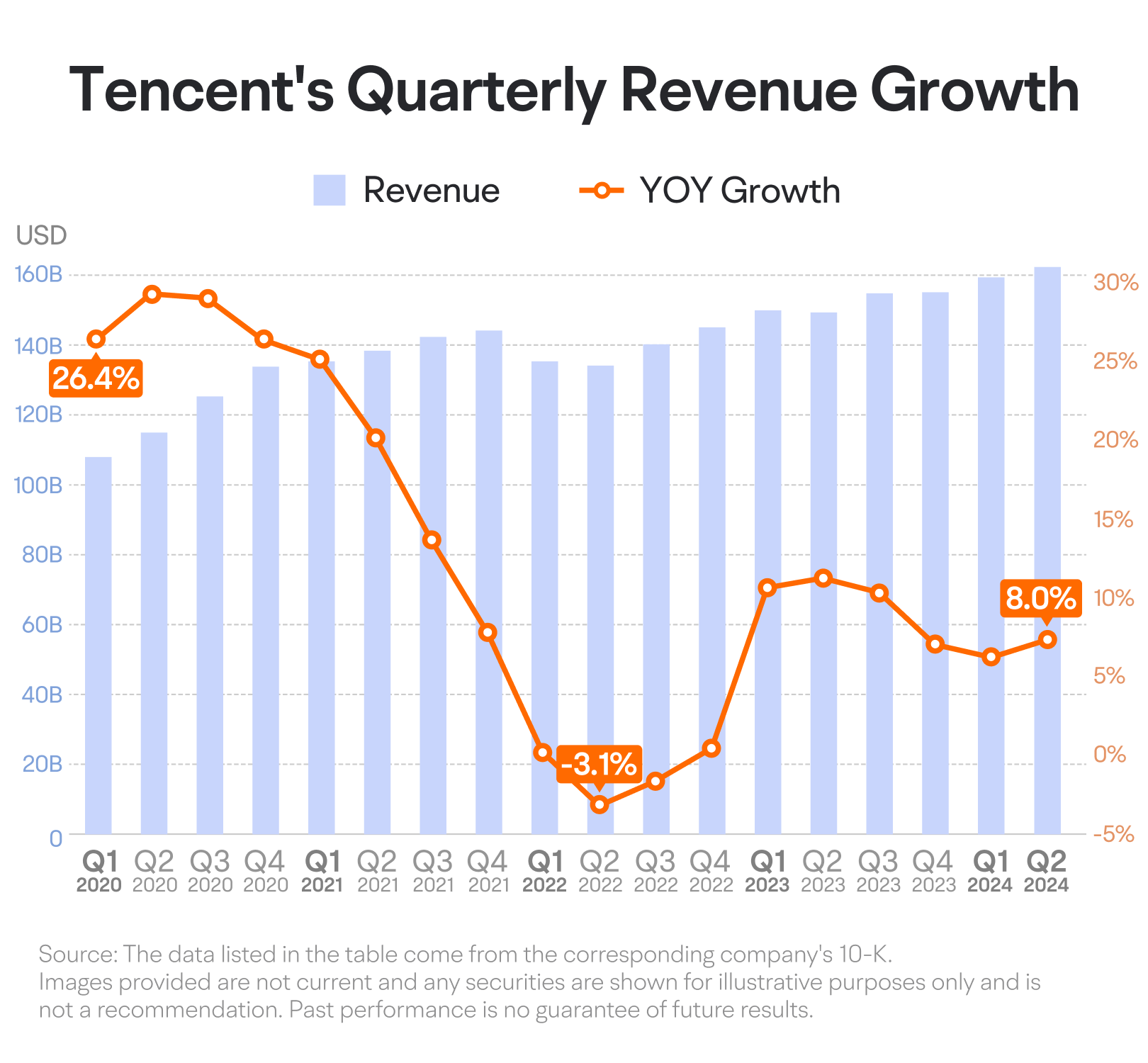
A few years ago, Tencent was growing its revenue at a rate exceeding 20%. However, partly due to economic challenges, its revenue growth began to decline in 2021 and even experienced negative growth in several quarters of 2022. In recent quarters, with improving economic expectations, a low comparison base, and the incremental revenue from WeChat Channels, Tencent's revenue growth started to recover, briefly returning to double-digit growth. In the latest Q2 2024 quarter, the year-over-year growth rate was 8%, maintaining a high single-digit growth rate.
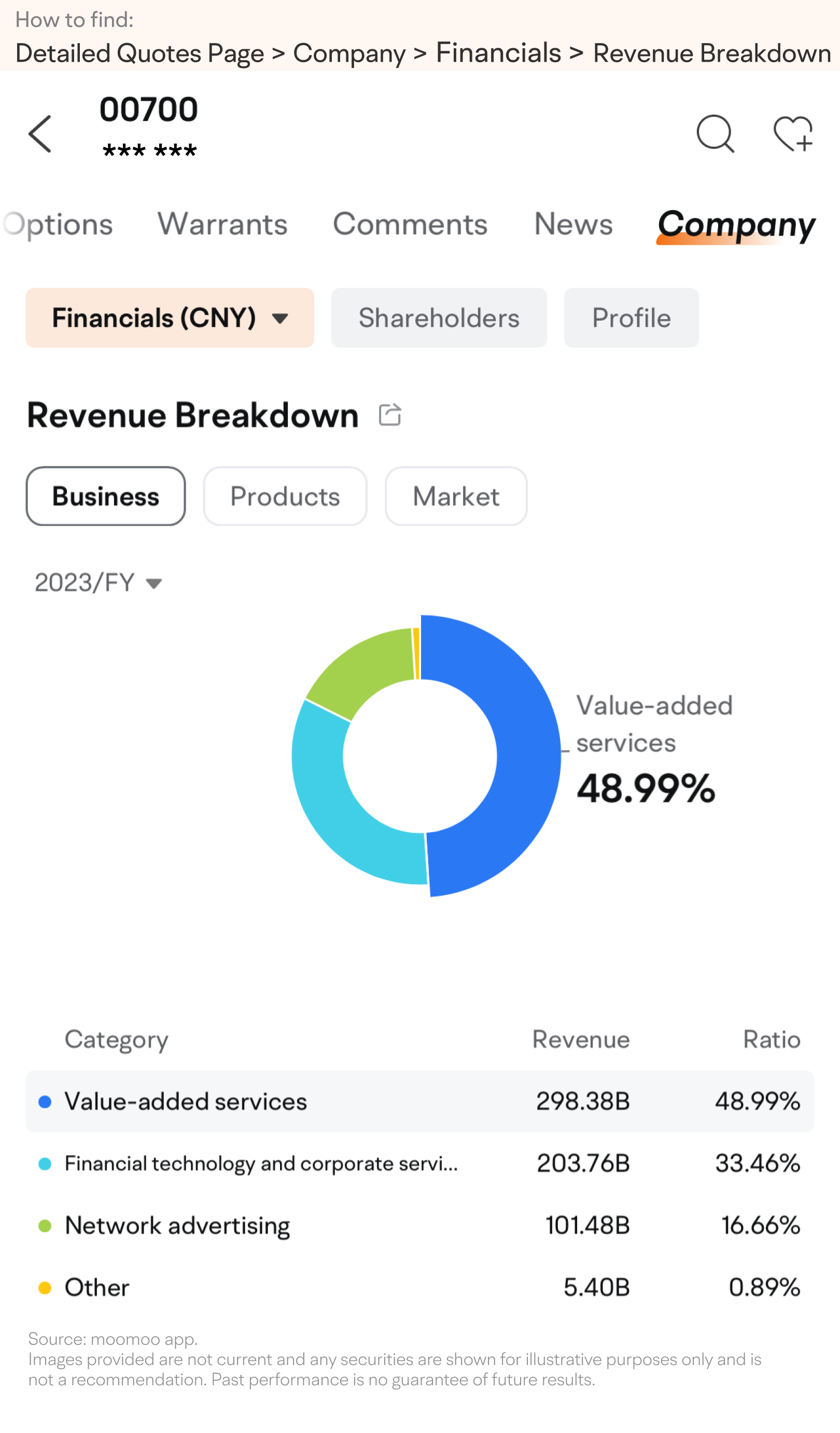
To understand Tencent’s future growth prospects, we can break down its various business segments. Tencent's revenue primarily comes from three areas: Value-Added Services, Online Advertising, and FinTech & Business Services.
Value-Added Services:
This is Tencent's largest revenue source, accounting for over half of its total revenue. It includes online gaming revenue and social network revenue from services like Tencent Music, Tencent Video, and WeChat Channels live streaming. Social network revenue has returned to growth, driven mostly by live streaming on WeChat channels. The focus is now on the previously declining online gaming revenue.
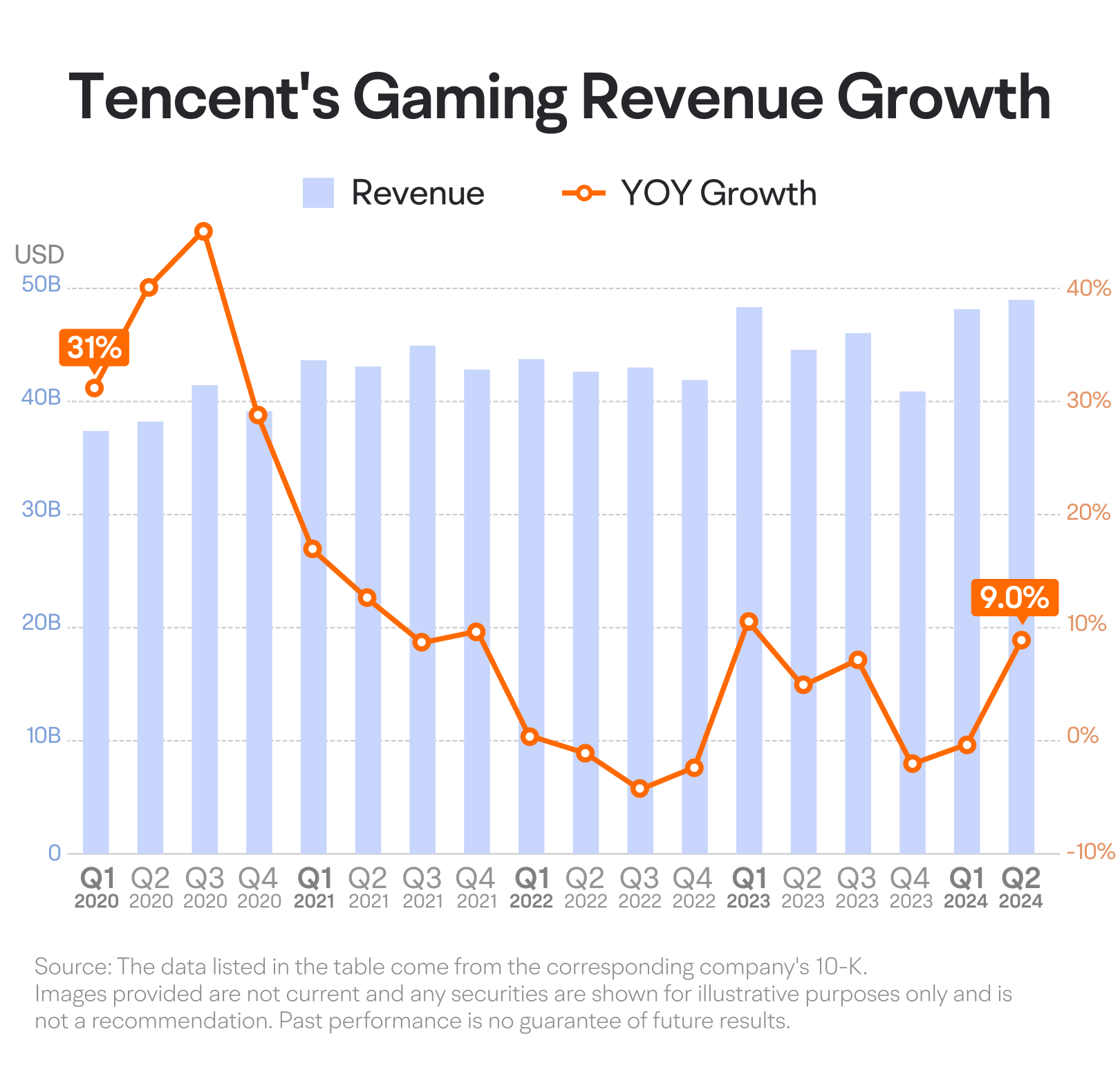
Since Q1 2022, Tencent's online game revenue has faced year-on-year declines in most quarters. However, the launch of its blockbuster IP game, DNF Mobile, in May 2024 has sparked a resurgence in gaming revenue. By Q1 2024, Tencent's gaming revenue ended its downward trend and then reported a year-on-year growth rate of approximately 9% in Q2 2024.
To gauge gaming's potential revenue growth, we can watch the leading indicator deferred revenue, which represents money received for services yet to be delivered and will be recognized in future quarters. Deferred revenue is mainly driven by online gaming, as well as membership fees from Tencent Music and Tencent Video.
In Q2 2024, Tencent’s deferred revenue was approximately 1.07 billion CNY, up 14.6% year-over-year, setting a recent high. This could be a positive signal for future gaming and overall revenue growth.
FinTech & Business Services:
This is Tencent's second-largest revenue source, encompassing WeChat Pay-related financial services and enterprise services like Tencent Cloud and WeChat Channels technical service fees. This segment has been a stabilizing force for Tencent’s revenue growth, with previous quarters exceeding 15% growth. However, in Q2 2024, this segment's revenue grew by only 3.7% year-over-year, dropping to single-digit growth.
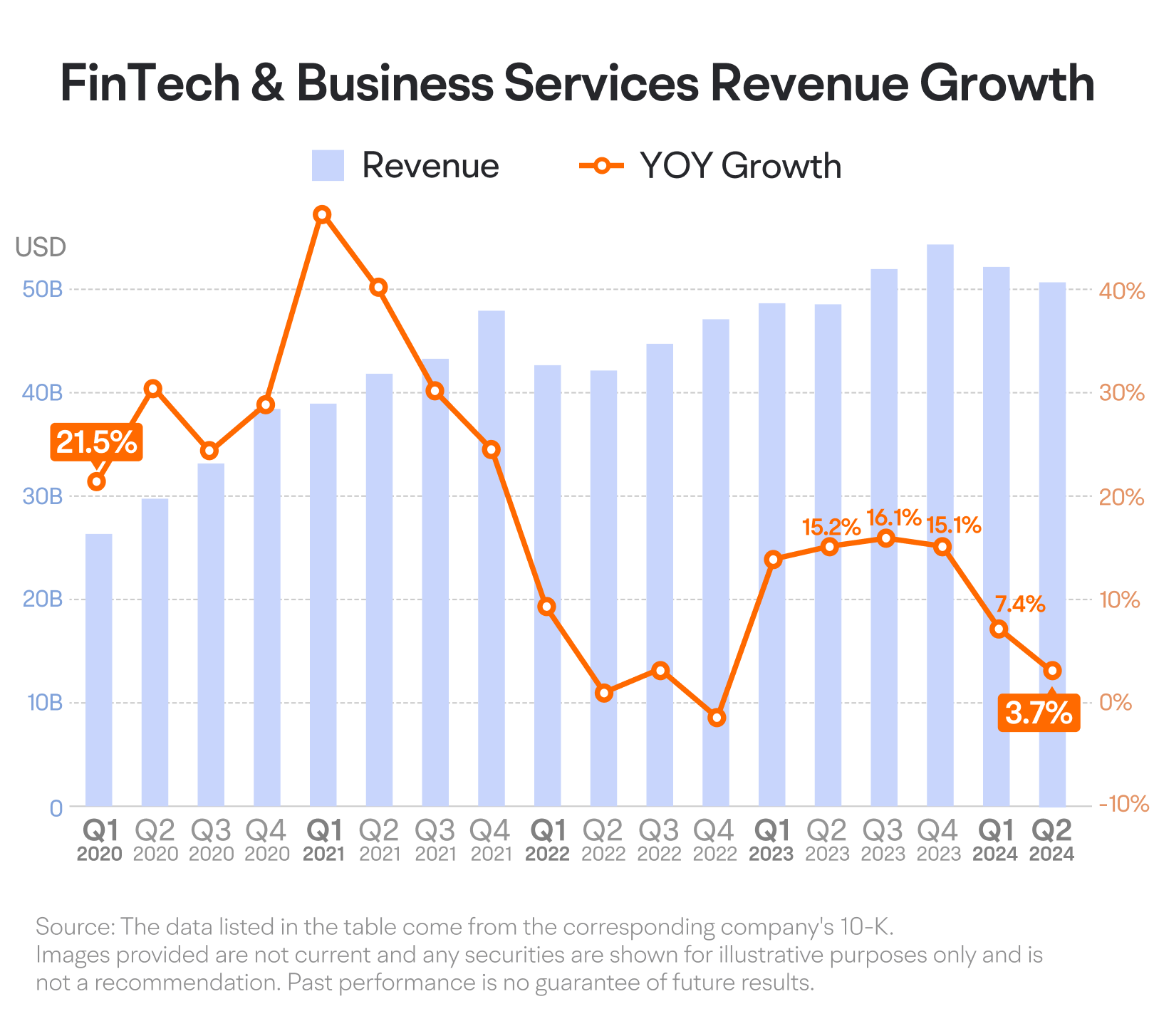
The slowdown is mainly due to a deceleration in WeChat Pay-related revenue, as its penetration rate has reached a plateau, and overall economic consumption has weakened, affecting offline payments. Fortunately, driven by cloud service revenue and WeChat Channels merchant service fees, Tencent's enterprise service revenue still maintained double-digit growth.
Online Advertising:
This is Tencent's third-largest revenue source, contributing about 14% of total revenue. However, it has been the fastest-growing segment among the three, with four consecutive quarters of over 20% growth and a year-on-year increase of about 19.5% in Q2 2024.
The rapid growth in online advertising can be largely attributed to WeChat Channels.
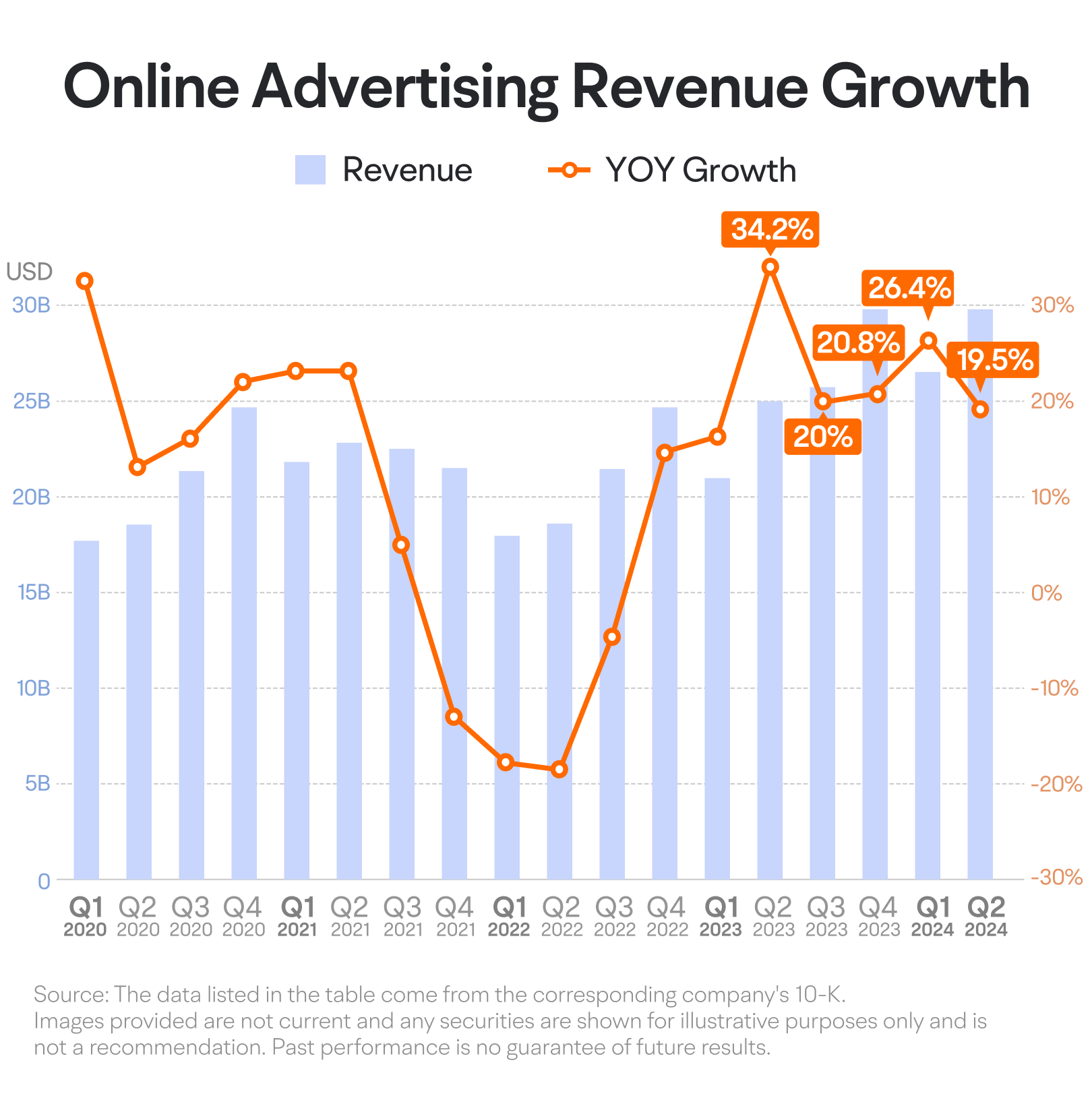
User penetration and engagement on WeChat Channels continue to expand. After doubling in 2023, user time has shown significant increases in Q1 and Q2 of 2024.
Additionally, the monetization of WeChat Channels has progressed smoothly, boosting ad exposure in the content feed and accelerating e-commerce operations. This has likely led to increased merchant ad spending.
For future revenue growth, key areas to watch include the continued recovery of the online gaming business, the stability of FinTech & Business Services growth, and the continuation of high growth in the Online Advertising segment.
3. Profitability changes
Amid a slowdown in overall growth, Tencent has shifted its focus towards improving profitability through cost reduction and efficiency enhancements—a common strategy among publicly traded companies. Over the past two years, Tencent has undertaken several rounds of layoffs to boost its profit potential.
In early 2020, Tencent's profitability was relatively high, with a gross margin approaching 50% and an adjusted net margin of around 25%. However, over the next two years, profitability gradually declined.
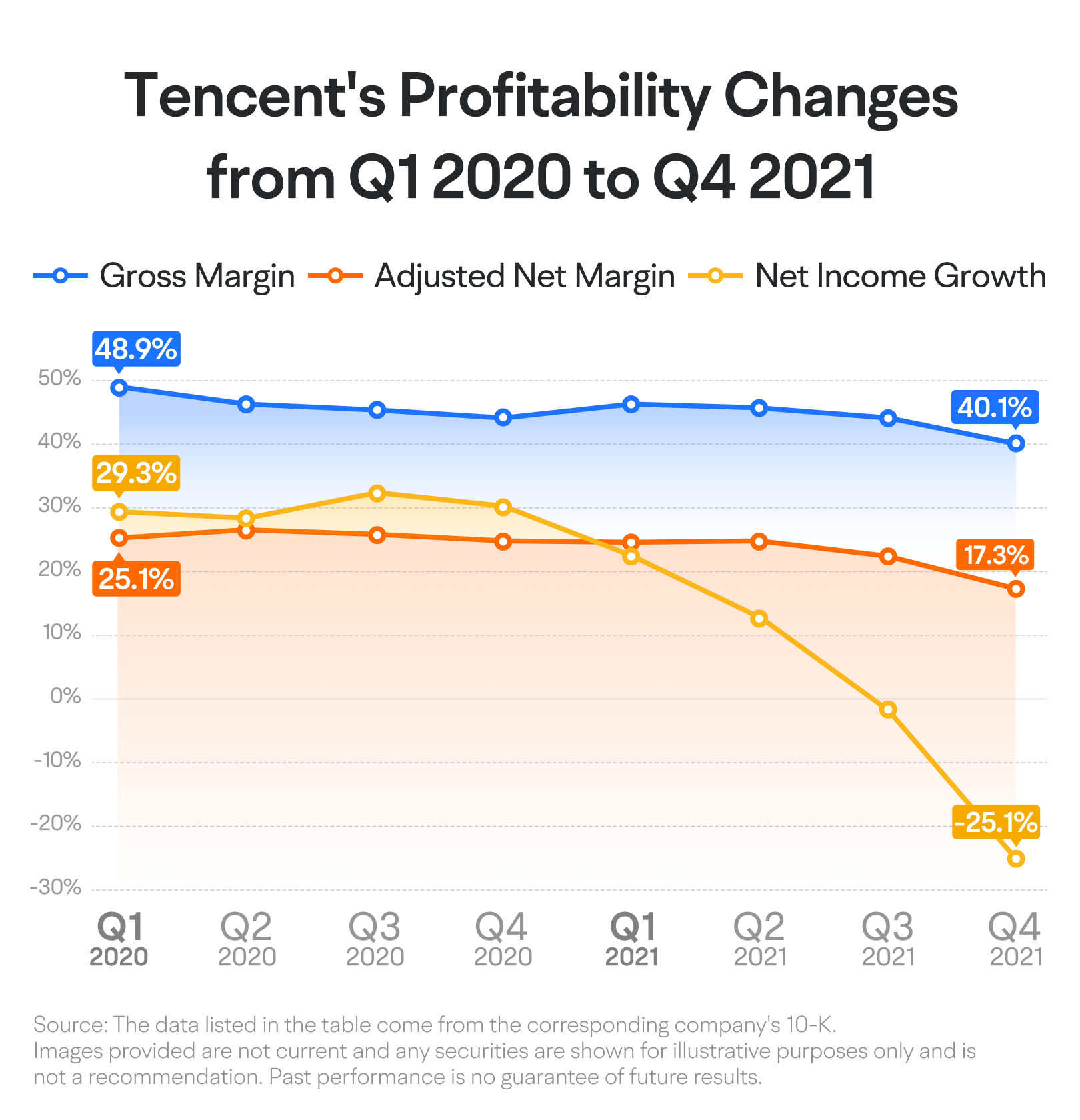
Due to weakening profitability, Tencent's net income growth plummeted. In Q4 2021, the gross margin fell to 40.1%, and the adjusted net margin dropped to 17.3%. Although revenue reached 135.4 billion CNY, barely maintaining growth, the adjusted net income was only 25.5 billion CNY, a significant year-over-year decline of 25.1%.
In response, Tencent announced cost-cutting and efficiency measures following its 2021 annual report and Q4 results, including eliminating low-efficiency or loss-making businesses and reducing staff, which has yielded visible results.
Improving profitability typically involves two aspects: enhancing gross margins and controlling expense ratios.
With reduced costs and the emergence of high-margin businesses like WeChat Channels advertising, Tencent's gross margin has been on an upward trajectory since Q1 2022. It climbed from a low of 40.1% in Q4 2021 to a historic high of 53.3% in Q2 2024, an improvement of 13.2 percentage points.
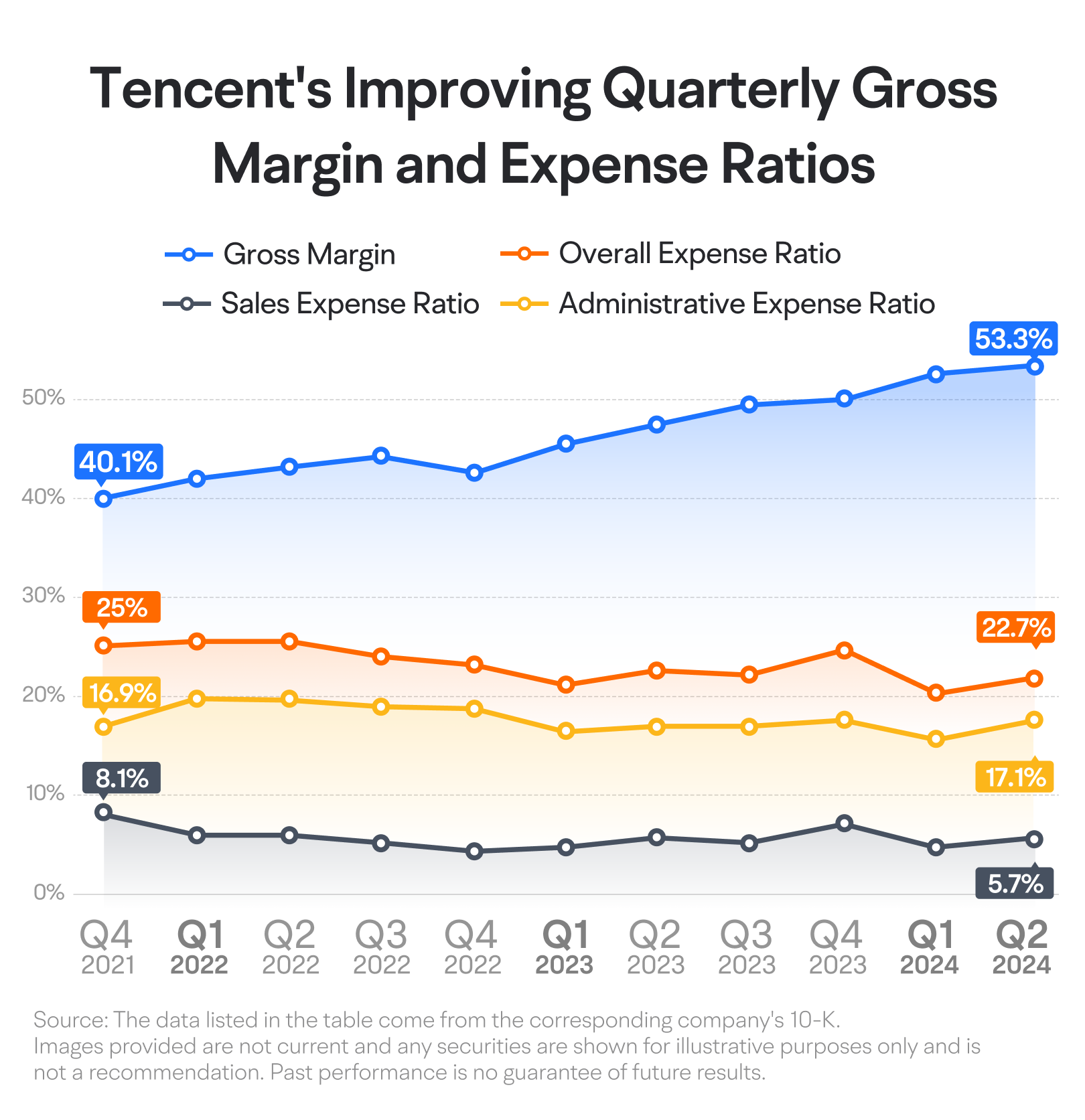
Tencent's selling expense ratio decreased from 8.1% in Q4 2021 to 4.7% in Q1 2024, while administrative expenses, including R&D and management costs, fell from 16.9% to 15.6% over the same period. The overall expense ratio dropped from 25.0% to 20.3%, a reduction of nearly five percentage points. However, in Q2 2024, Tencent's expense ratio increased.
With the combined effect of rising gross margins and decreasing overall expense ratios, Tencent’s adjusted net margin surged from 17.3% to 35.6%, more than doubling.
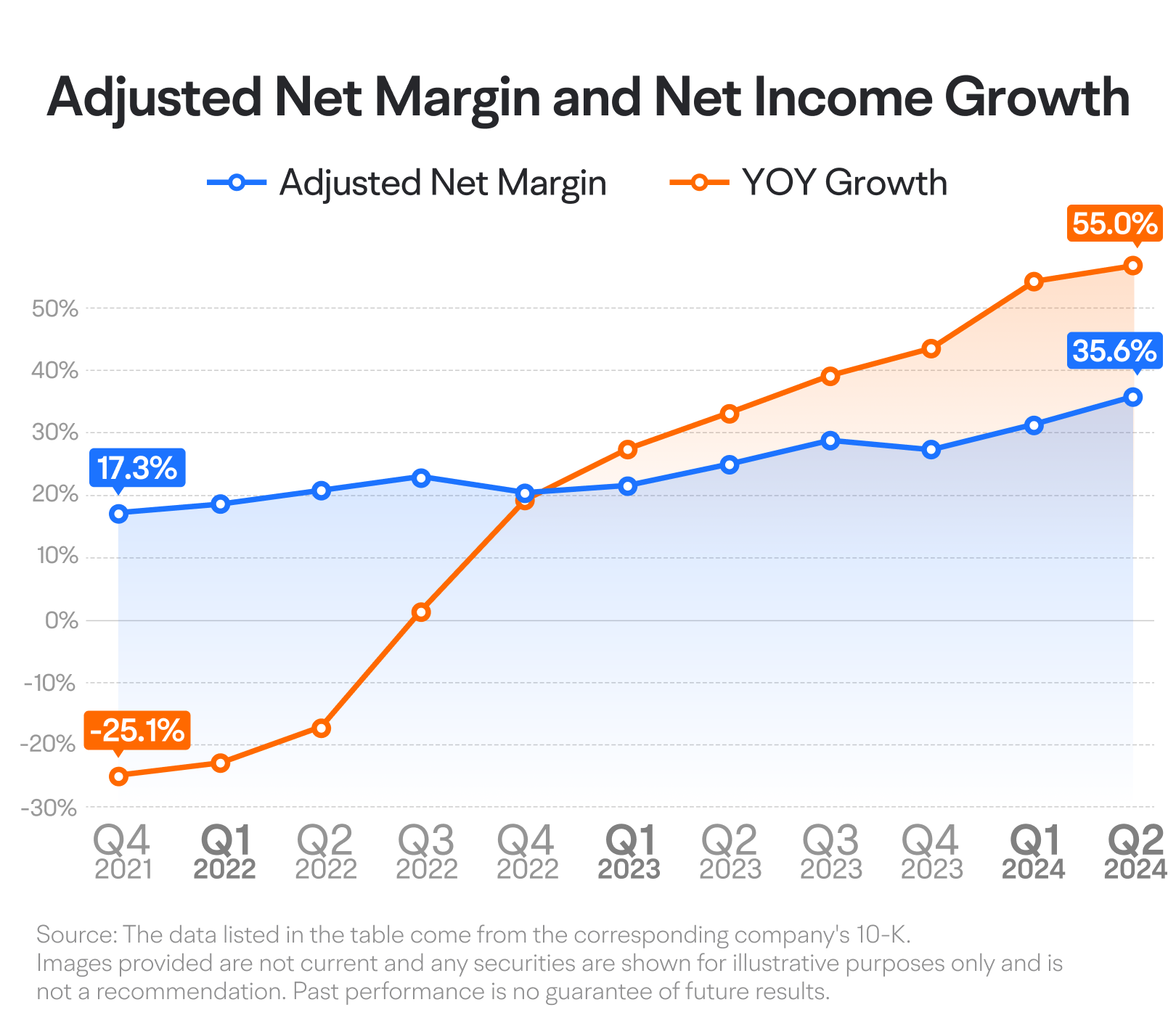
This substantial improvement in profitability has led to an acceleration in net income growth, despite modest revenue growth. Over ten consecutive quarters, net income growth soared from a decline of 25.1% in Q4 2021 to a 55% increase in Q2 2024, far outpacing revenue growth.
In future financial reports, we can monitor whether Tencent’s profitability has further room for improvement, which could sustain and enhance net income growth.
4. Major shareholder sell-offs and share buybacks
In addition to declining performance and an unfavorable market environment, one important factor contributing to Tencent's stock price decline from 2021 to 2023 was the continuous sell-off by major shareholders. Starting in June 2022, Tencent's major shareholder, Prosus, a global investment group, broke its previous commitment and decided to continually sell Tencent shares to free up cash to support its own buyback plan.
Since then, Prosus has been selling tens of millions of shares each month, amounting to billions of Hong Kong dollars. Its ownership stake decreased from 28.74% to approximately 24.4%. During this period, Tencent initiated some share buybacks to counteract the selling pressure from Prosus, but the number of shares repurchased was significantly lower than the number of shares sold by Prosus.
In 2024, this situation has improved. On the one hand, Tencent ramped up its buyback program at the end of 2023 and announced a 100 billion HKD buyback plan in its 2023 annual report, doubling the amount from 2023. On the other hand, the pace of Prosus's sell-offs has slowed down in recent months, reducing to around 10 million shares per month, which is now overall lower than Tencent's buyback volume.
In the future, we can continue to monitor the execution of Tencent's buyback plan and the pace of Prosus's sell-offs. If Tencent's buyback amount surpasses Prosus's sell-off amount, it may provide some support for the stock price.
Having read this far, you may now have a deeper understanding of how to interpret Tencent's financial reports. It's noteworthy that the release of earnings reports from prominent companies may present unique trading opportunities for different types of investors.
For instance, if an investor, after analyzing past reports and considering recent developments, believes a company's latest earnings will send positive signals and boost the short-term stock price, they might consider taking a long position. This could involve buying the underlying stock or purchasing call options.
Conversely, if the investor expects the earnings to be unfavorable and potentially pressure the stock price, they might consider taking a short position, either through short selling or buying put options.
If the report's outcome is unclear but volatility is expected, they might use a straddle strategy, buying both calls and puts.
However, investors should carefully assess their risk tolerance, particularly when considering high-risk trades like short selling or options, before making any trading decisions.
This presentation is for informational and educational use only and is not a recommendation or endorsement of any particular investment or investment strategy. Investment information provided in this content is general in nature, strictly for illustrative purposes, and may not be appropriate for all investors. Read more