[November.2024]Has Disney turned the corner? Watch for these 3 earnings signals
As an entertainment empire that has captivated audiences for nearly a century, Disney's standing in Hollywood is truly remarkable. Listed on the US stock market for over 60 years, Disney's historical stock performance has been impressive, notably achieving 12 consecutive years of growth from 2009 to 2020.
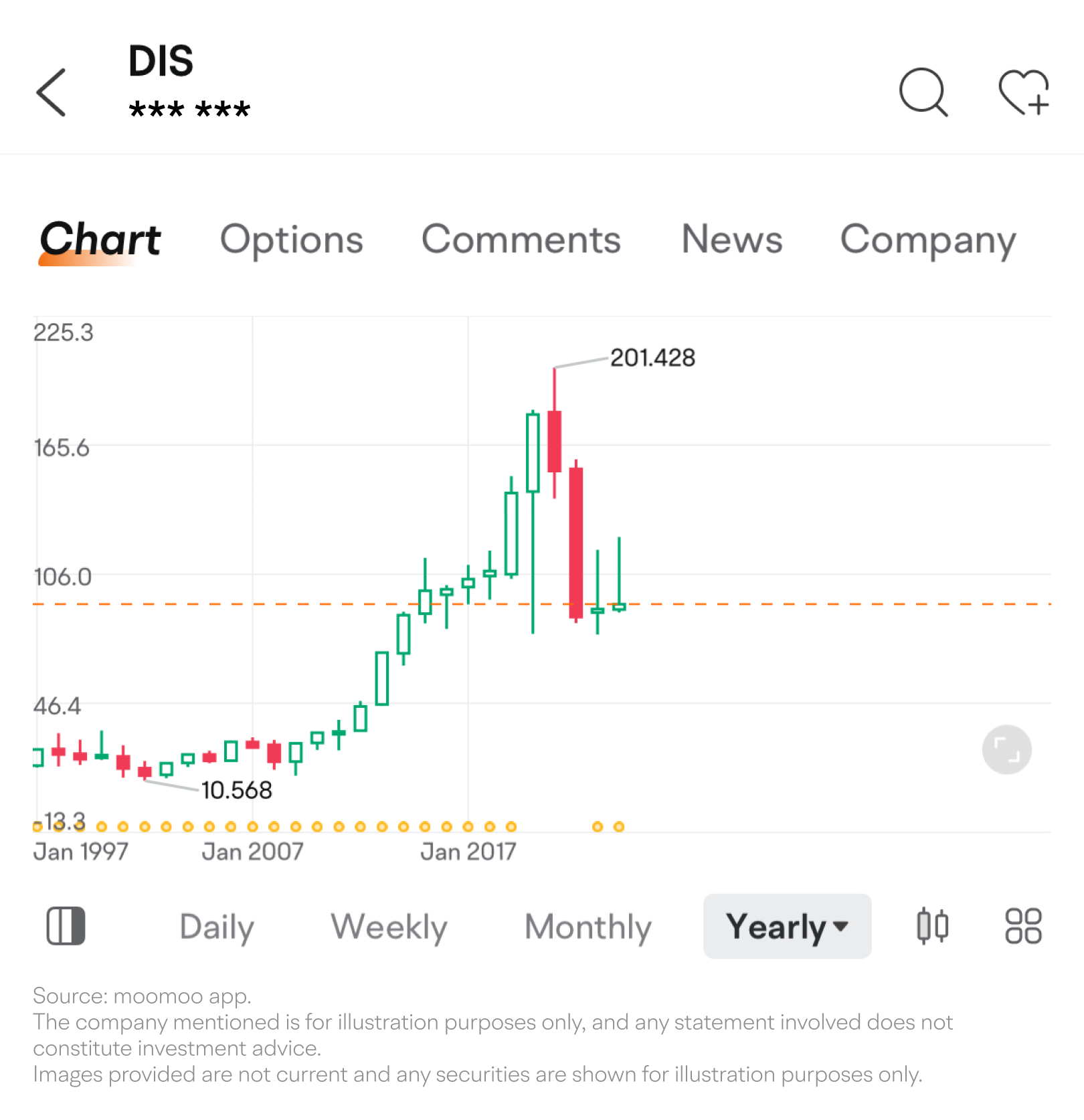
However, starting in 2021, Disney's stock began to descend from its lofty heights, suffering significant declines for two straight years and underperforming the S&P 500 index by a considerable margin in 2023. So, what does the future hold for Disney? Will it continue to struggle, or will it soar to new heights?
Disney will release its latest earnings report on November 14. Each earnings release may signal a potential investment opportunity, but before diving in, investors need to understand how to interpret their financial statements.
To potentially forecast Disney's trajectory, we can look for clues within its financial reports, focusing on several key aspects.
Earnings growth
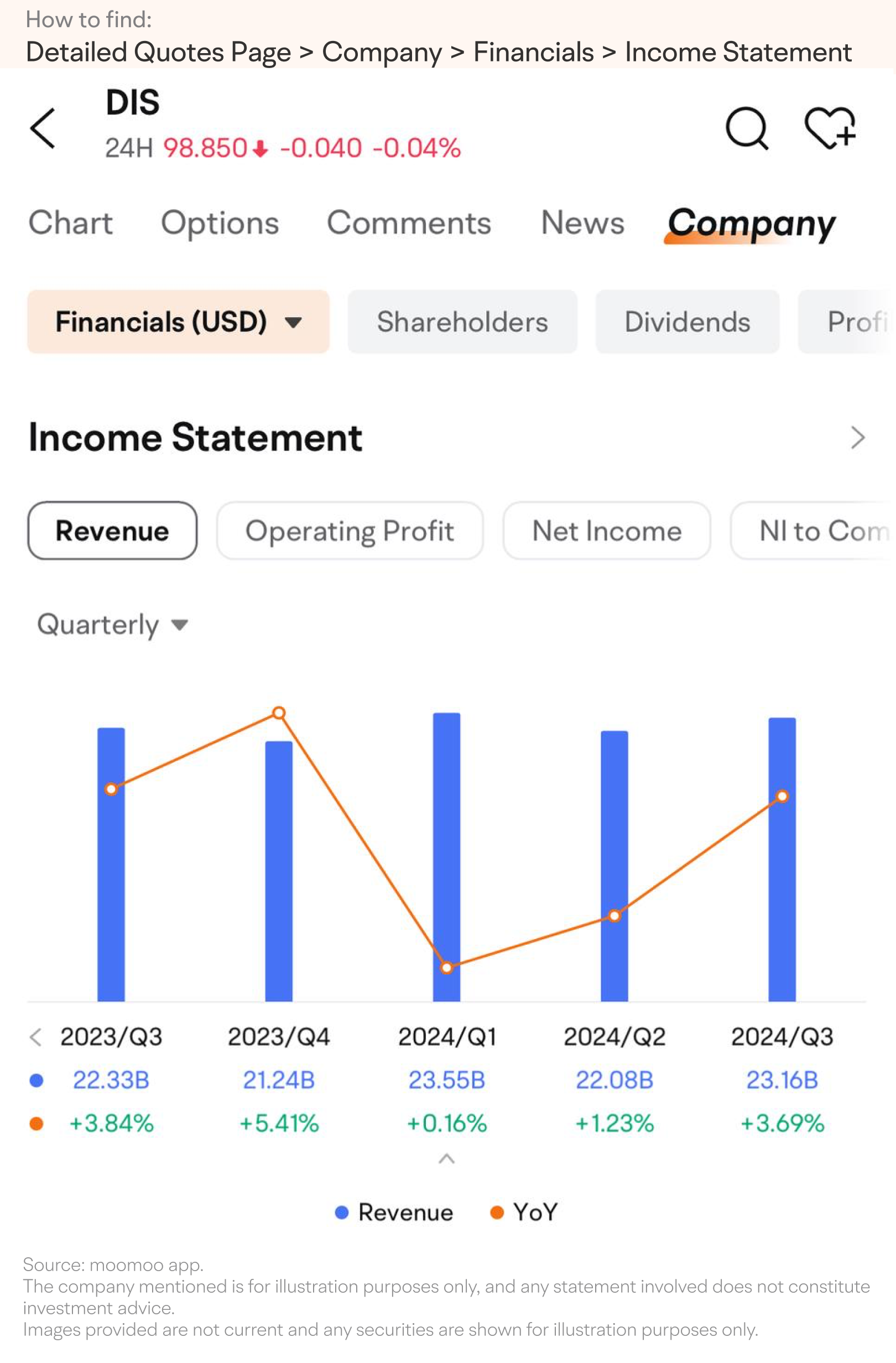
Disney's stock retreat is tied closely to its decelerating revenue growth. After soaring past 20% in 2019, the company's quarterly revenue faced a steep pandemic-induced drop. Though bouncing back after the re-opening of the economy, Disney's revenue has dwindled to low single-digit growth for the recent quarters.
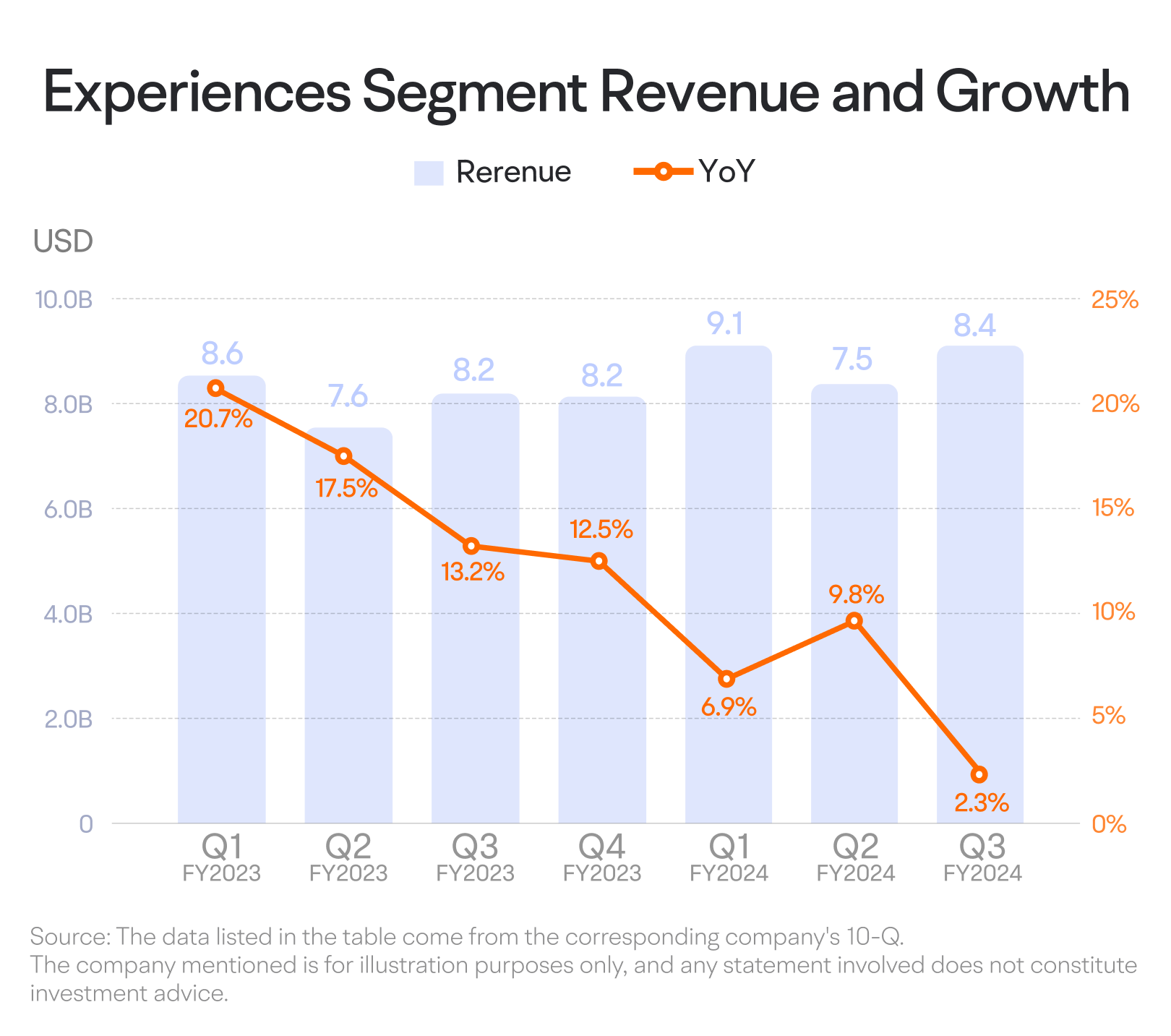
Disney's revenue is primarily driven by three segments: entertainment, experiences, and sports. The experiences division—which encompasses theme parks, hotels, cruises, and consumer products—has consistently grown over the past six quarters.
After a period of sustained high growth, the experiences segment's revenue has reached a relatively high base. While international parks remain popular, domestic parks are experiencing a rapid decline, with revenue growth dropping significantly. In Q3 of fiscal year 2024, the growth rate fell to just 2.3%. Moving forward, we will need to monitor the performance of the parks and see if the overall revenue growth in the experience segment can rebound.
The second segment is entertainment, which has seen very lackluster growth over the past few quarters. In the first two quarters of the 2024 fiscal year, this segment saw consecutive 5% year-over-year declines.
This is primarily because, on the one hand, the cable television business has been declining in the face of streaming services. For instance, in the United States, according to Nielsen, the share of time TV users spent on cable fell from 32.9% to about 28% between October 2022 and September 2024—a decline of nearly five percentage points in just two years.
Disney's cable TV business has seen a significant decline in revenue over recent quarters, with a 12.5% year-over-year drop in Q1 of fiscal year 2024. In Q2 and Q3 fiscal year 2024, the year-over-year drop was about 7%
To counter the downturn in the cable TV sector, Disney is pivoting towards its streaming services, where the focus is on subscriber counts and average revenue per user (ARPU). In an effort to improve profitability, Disney has implemented price hikes in recent quarters. For instance, the monthly charge for Disney+ increased from $5.77 in Q1 of the fiscal year 2023 to $7.22 in Q3 of the fiscal year 2024, resulting in a rise in ARPU.
Amid price hikes, Disney's overall user growth stalled for several consecutive quarters. The good news is that in Q2 and Q3 of 2024, user numbers have returned to growth.
Consequently, with both volume and pricing on the rise, Disney's streaming revenue continued to strengthen, growing 15.1% year-over-year in Q3 2024. This effectively offset declines in the cable television segment and contributed to an overall entertainment revenue increase of about 4%.
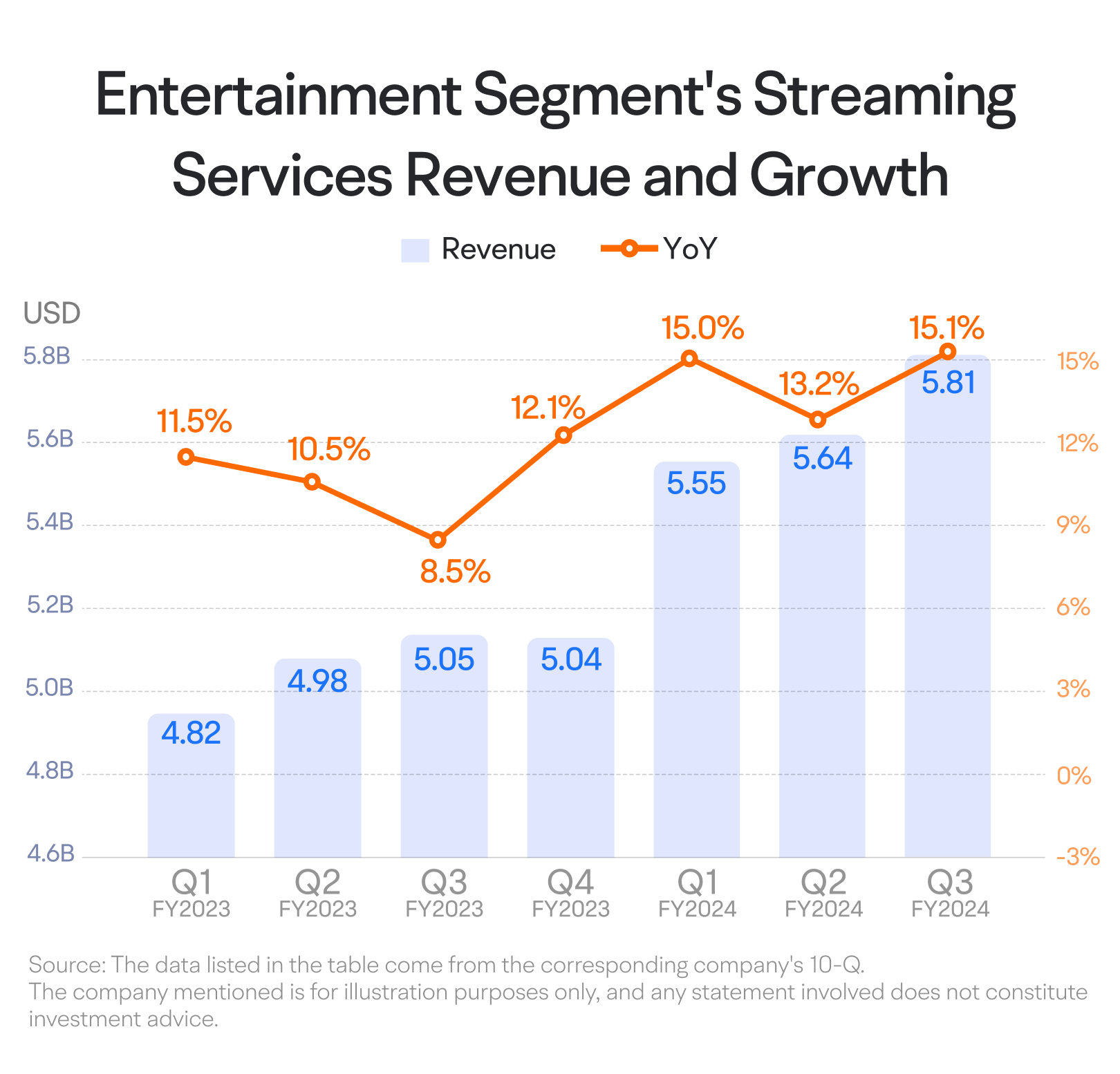
In the entertainment division, Disney's cable TV segment may continue to face challenges. For the streaming business, we need to monitor whether the number of paid subscribers can maintain steady growth, as this is the foundation for long-term revenue growth.
The sports segment, consisting of ESPN channels, ESPN+, and Star Sports, saw a modest growth in fiscal year 2023 but achieved a 5.1% year-over-year increase in Q3 2024.
With streaming giants like Netflix also pushing into sports, Disney benefits from its traditional channel advantage with ESPN. Additionally, its content collaboration with Warner Bros. could enhance its competitive edge. Moving forward, we should monitor whether Disney's sports revenue can achieve stable growth.
Profitability
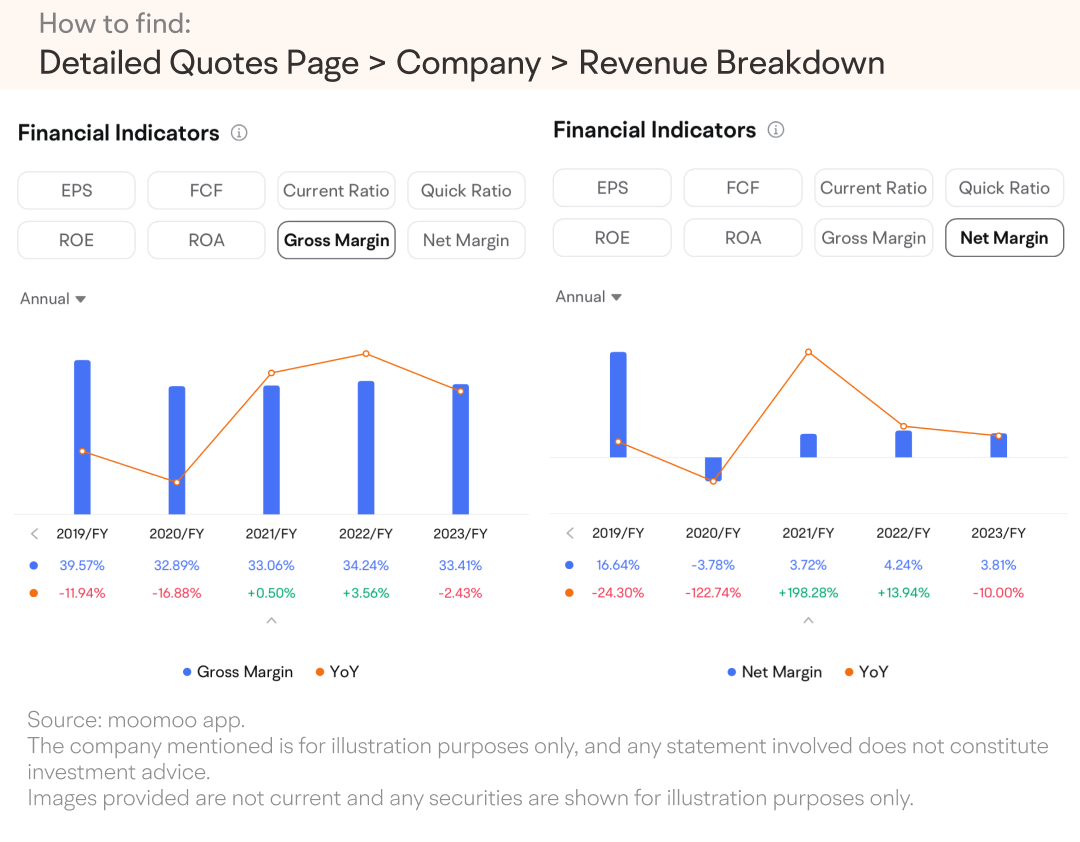
For years until 2020, Disney boasted strong profitability, with gross margins consistently above 40% and net margins generally over 15%. However, the onset of the pandemic in 2020, coupled with heavy investments in the costly streaming business, led to a sharp decline in profitability, including losses reported in 2020. Even as the pandemic effects have waned, Disney's profit levels have not significantly recovered, partly contributing to the company's lackluster stock performance over the past two years.
However, there's good news: from Q1 2023 to Q3 2024, Disney's operating profit margin has been gradually improving. This is largely attributed to the strategic focus on profitability by new CEO Robert Iger, who took the helm at the end of 2022, particularly aiming to boost the streaming division.
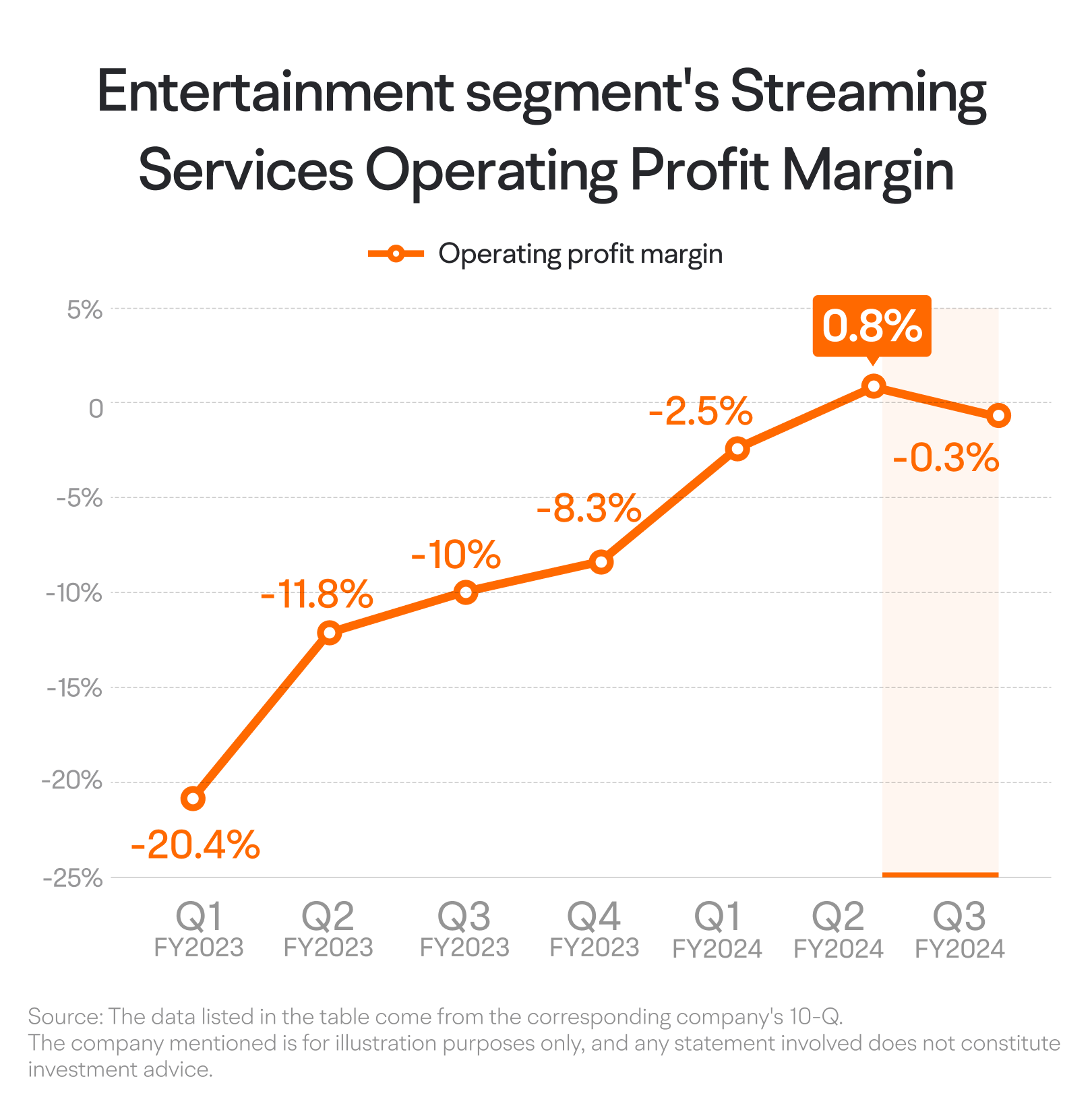
The streaming segment within the entertainment division saw its operating loss margin exceed 30% at its worst but has been steadily improving since Q1 of fiscal 2023.
The operating loss rate for the entertainment segment's streaming business exceeded 30% at its worst. However, starting in Q1 of fiscal year 2023, it showed gradual improvement, finally achieving profitability in Q2 of 2024, albeit with a modest margin of just 0.8%. While this marks a positive development, the profitability remains unstable, as Q3 of 2024 saw a slight loss of about 0.3%. Moving forward, we can continue to monitor whether Disney can sustain profitability in this segment and further increase its profit margins.
Additionally, the profitability of the Disney Experiences segment may deserve close attention. Strong demand for Disney parks and cruises has supported continuous price increases, resulting in rising operating profit margins for the Disney Experiences services, which reached an impressive 26.5% in Q3 fiscal 2024, accounting for 60% of Disney's total operating profits. This segment is currently the cornerstone of Disney's earnings. Future earnings reports should be watched to see if the demand for Disney Experiences can sustain its hot streak and maintain high profitability.
Cash flow
Cash flow is the lifeblood of a company's survival and growth, as well as a prerequisite for shareholder returns through buybacks and dividends. Prior to 2020, Disney's free cash flow was robust, consistently ranging between $5-10 billion annually, allowing the company to execute substantial buybacks and dividend distributions. Between fiscal years 2010 and 2019, Disney returned approximately $64.25 billion to shareholders through buybacks and dividends, constituting over 90% of its net earnings of about $70.75 billion.
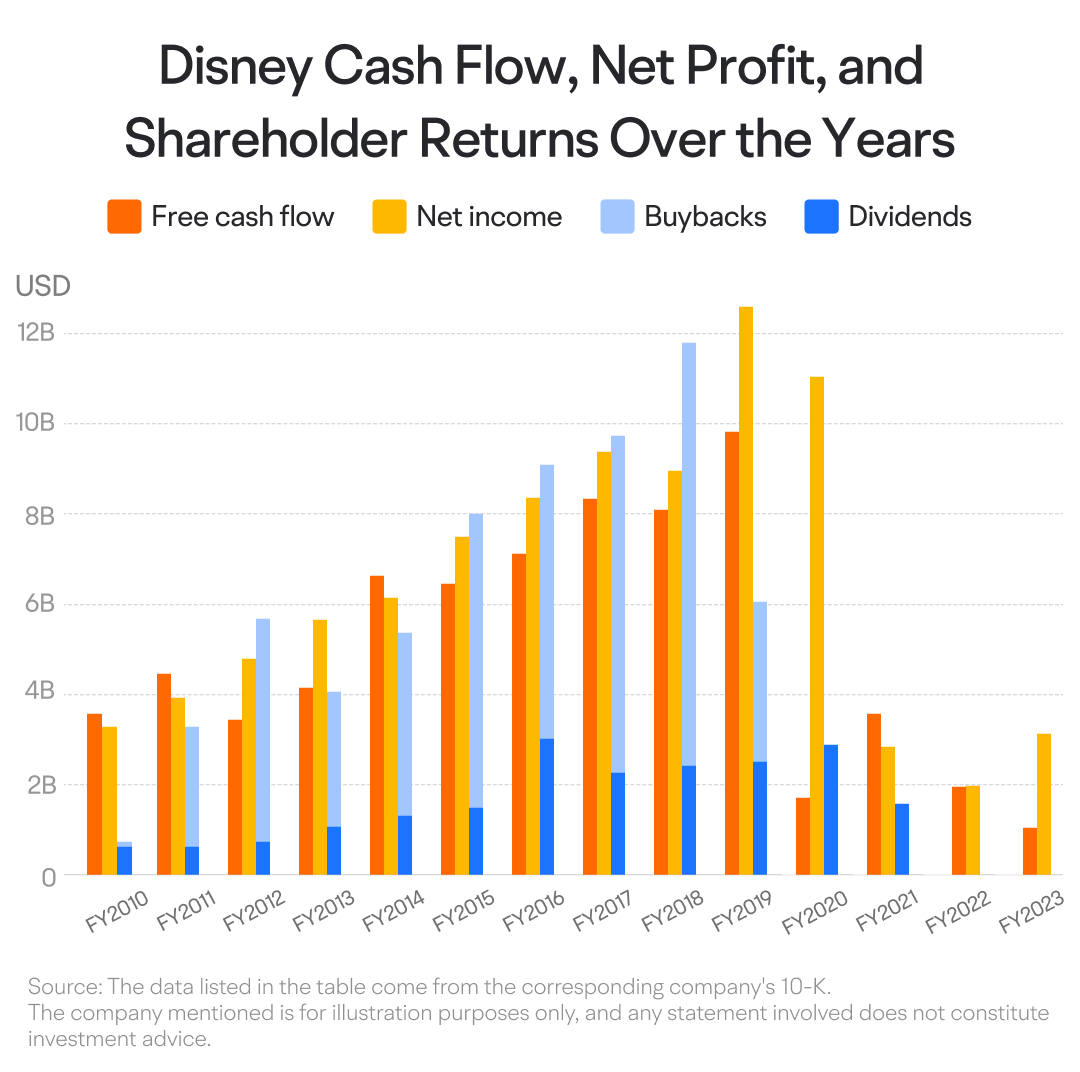
However, post-2020, with increased content investment and reduced operational profitability, Disney’s cash flow took a hit, leading to a pause in dividends and buybacks during the fiscal years 2021-2023, which may have contributed to its languishing stock price during this period.
In recent quarters, Disney's cash flow has improved as the streaming service made a turnaround. The company's free cash flow stayed positive for the past four quarters and saw year-over-year growth for most of the time. After releasing the earnings for Q1 2024, Disney management announced a $3 billion share buyback scheme. They expected a $8 billion free cash flow for fiscal 2024, up 60% year over year.
Going forward, we may need to keep an eye on Disney's cash flow progress and the execution of its announced buyback initiative.
Having read this far, you may now have a deeper understanding of how to interpret Disney's financial reports. It's noteworthy that the release of earnings reports from prominent companies may present unique trading opportunities for different types of investors.
For instance, if an investor, after analyzing past reports and considering recent developments, believes a company's latest earnings will send positive signals and boost the short-term stock price, they might consider taking a long position. This could involve buying the underlying stock or purchasing call options.
Conversely, if the investor expects the earnings to be unfavorable and potentially pressure the stock price, they might consider taking a short position, either through short selling or buying put options.
If the report's outcome is unclear but volatility is expected, they might use a straddle strategy, buying both calls and puts.
However, investors should carefully assess their risk tolerance, particularly when considering high-risk trades like short selling or options, before making any trading decisions.
Summary
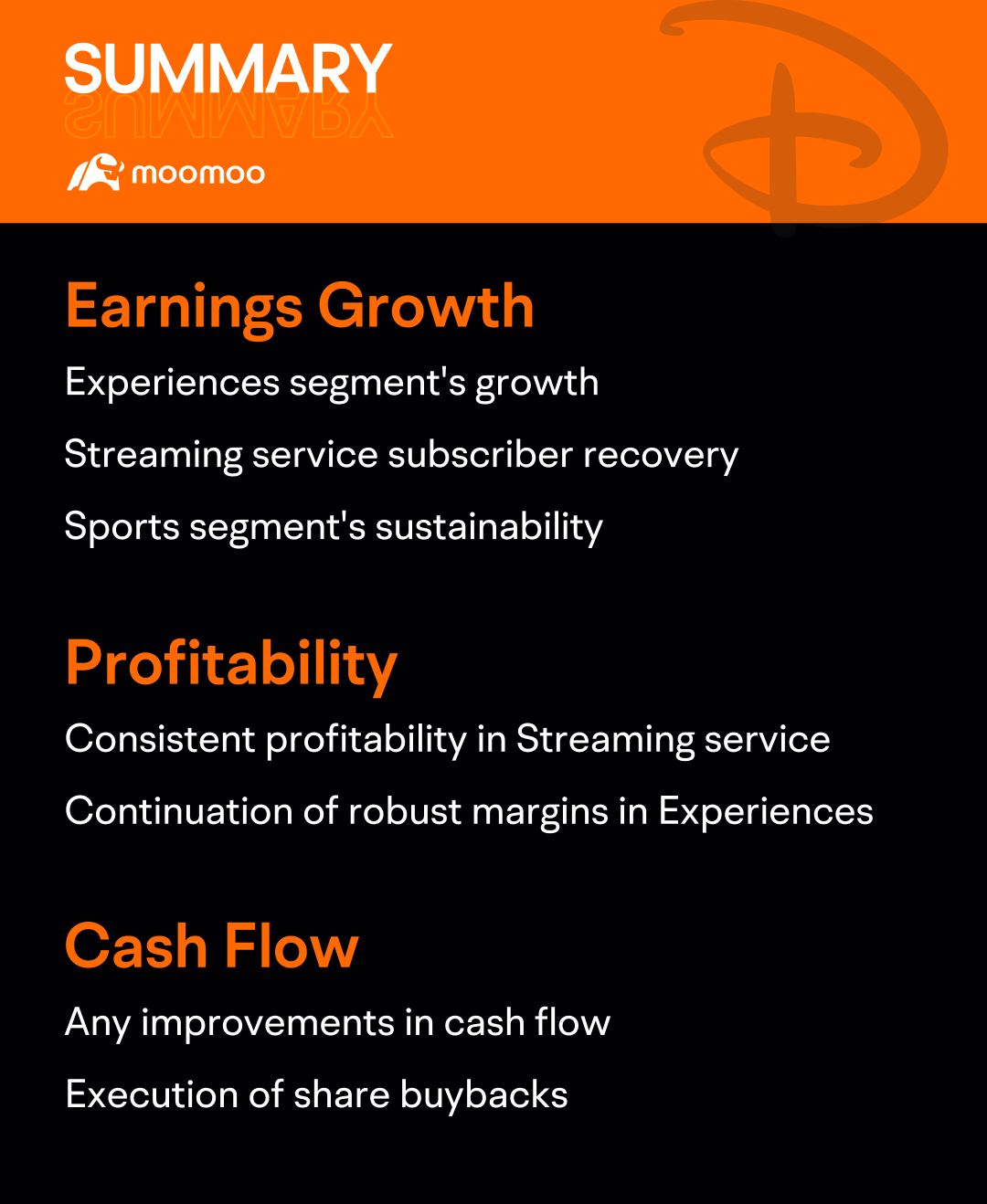
Disney's revenue growth has significantly slowed down. Moving forward, we need to watch for whether the Experiences segment can maintain robust growth, if the streaming service can resume subscriber growth, and if the sports business can sustain its growth trajectory.
Disney's profitability has gradually improved over the past few quarters. We should observe whether its streaming service can maintain consistent profitability and if the Experiences segment can maintain high profitability levels.
The state of Disney's cash flow is important for dividend payments and buybacks. We may need to keep an eye on Disney's cash flow improvements and the pace at which its buyback program is carried out.
This presentation is for informational and educational use only and is not a recommendation or endorsement of any particular investment or investment strategy. Investment information provided in this content is general in nature, strictly for illustrative purposes, and may not be appropriate for all investors. Read more