Will the Positive Momentum in US Stocks Eventually Spread Beyond Large Tech Stocks? (0304-0308)
Weekly Overview of Global Markets
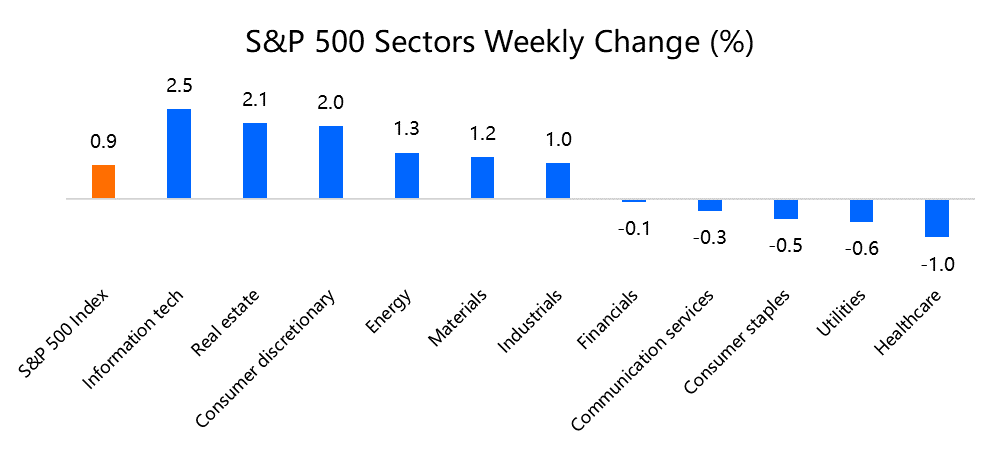
Market Review and Outlook
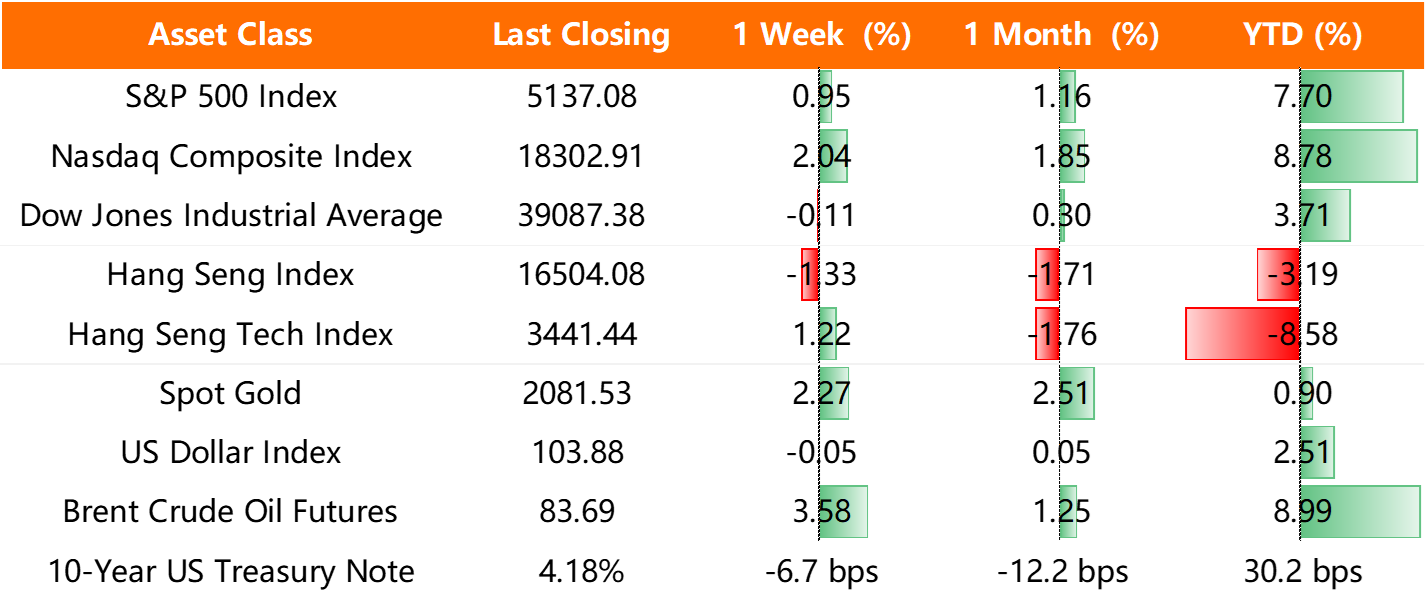
Weekly performance of major asset classes: Crude oil> Hong Kong stocks> US stocks> Gold > US dollar > US bonds
Stocks: US stock markets saw a strong performance last month, with the Dow, S&P, and Nasdaq indices all posting their best monthly gains since December 2023. Despite some volatility, the markets closed higher on Thursday, with investors feeling reassured by better-than-expected economic data. While the PCE index for January indicated that the road to lower inflation may be rocky, data that met expectations helped to ease concerns among investors who had been worried that inflation would surprise them in the early part of the year. The Chicago Fed President also offered some reassurance, noting that a single month's rebound in inflation data should not overshadow the progress being made towards a significant drop in inflation by 2023. Looking ahead, traders are anticipating a Fed interest rate cut in June, and inflation data ahead of this announcement is not expected to be significantly different. Despite concerns, the S&P 500 and Nasdaq both reached new closing highs.
Bonds: With signs of rising inflation, the yield on 10-year Treasuries increased by the largest monthly amount since October 2023. The yield rose by 28.6 basis points to 4.25%, representing the biggest monthly increase since October. The two-year Treasury, which is more sensitive to policy rates, also saw a rise of 41.7 basis points to 4.63%. However, towards the end of February, investors became increasingly concerned about the potential impact of PCE data on future rate prospects, causing yields to trend downward.
Crude oil: The price of crude oil futures remained volatile in February, reflecting ongoing concerns about supply and demand. While OPEC+ announced plans to extend production cuts through Q2, concerns about rising US inventories and weak demand in some parts of the world kept prices in check. As always, geopolitical risks continue to be a major factor in the oil market, with tensions in the Middle East and elsewhere potentially impacting supply and prices in the months ahead.
Gold: Gold tends to perform well when treasury yields drop. The positive performance of precious metals was driven to some extent by the decline in bond yields last week in response to economic reports. Currently, there are differences between the technical and fundamental aspects of gold. The technical aspect has successfully broken through the resistance level and the 50-day moving average, which is an overall positive signal. However, if the Fed postpones interest rate cuts again, gold prices may face downward pressure again.
Note: The weekly performance of major asset classes is ranked based on the weekly change in the asset class as shown in the table above, with ">" indicating the ranking from highest to lowest. US bonds are ranked based on the change in futures prices. Past returns do not guarantee future returns.
Data source: Bloomberg. Date as of March 1st, 2024
Weekly Hot Topic
A Strong Start to the New Year for the US Stock Market: Will the Positive Momentum Spread Beyond Big Tech?
The US stock market has had a robust start to the new year, with the S&P 500 and Dow Jones Industrial Average indices recording gains of 6.8% and 3.5% respectively, in the first two months of 2024. These gains represent the best start since 2019.
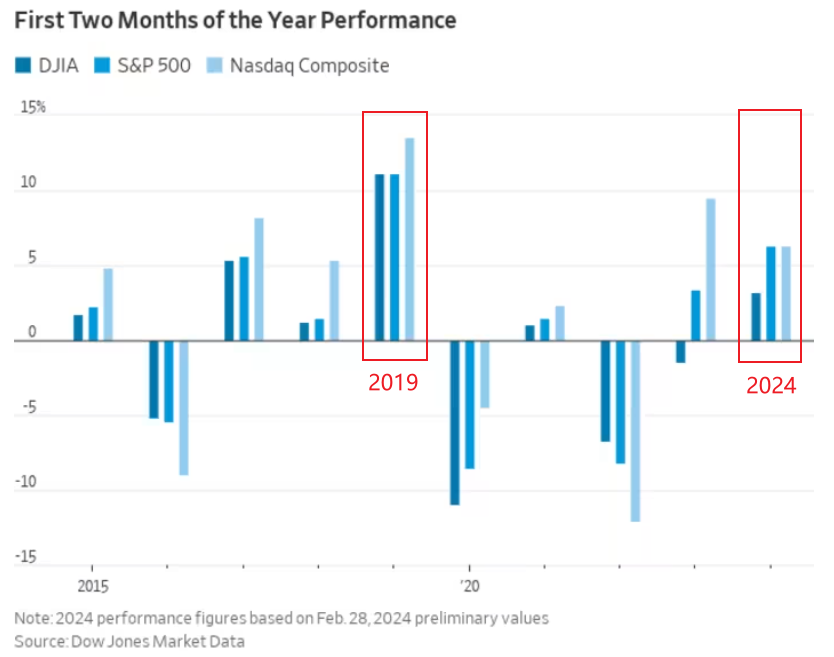
Although the "big seven" tech stocks are still driving the market higher and taking the three major indices to record highs in February, the positive momentum seems to be spreading beyond these tech giants. Some previously struggling individual stocks are also contributing to the market surge.
Small-cap stocks have shown a strong comeback in February
The Russell 2000 index, which represents small-cap stocks, has been showing signs of this trend. On Thursday morning, the small-cap benchmark index reached a high of 2,072.96 points, a 52-week intraday high and the highest level since April 2022.
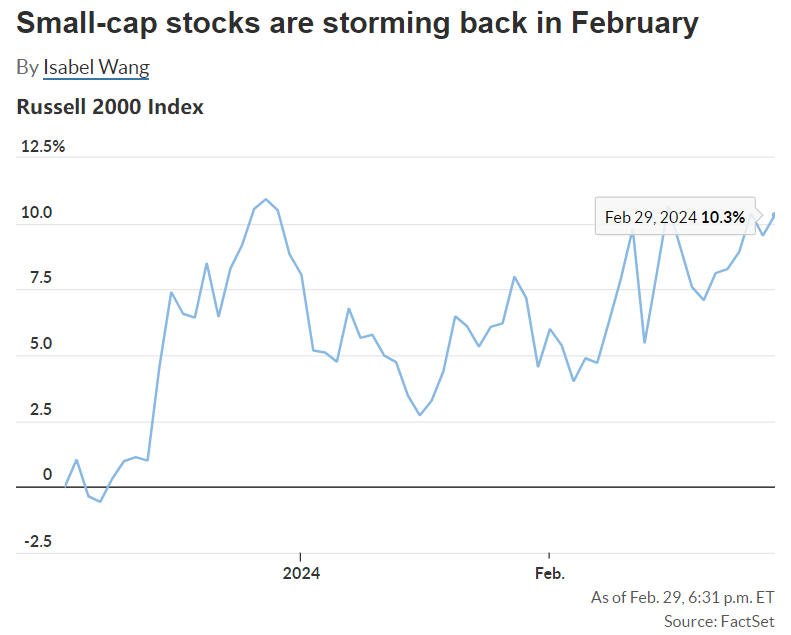
Data from FactSet shows that small-cap stocks have once again been outperforming over the past month, with the Russell 2000 index up 5.3% in February, marking the best monthly gain since December. The Russell 2000 index measures the performance of 2,000 small-to-midsize companies in the Russell 3000 index, and according to FactSet, the index is set to outperform the S&P 500 and Dow Jones Industrial Average indices this month, with leads of around 1% and 3.3%, respectively.
As market confidence strengthens, the credit spreads on US government bonds have decreased
The recent surge in the US stock market may be attributed to the growing market confidence, as evidenced by the decreasing credit spreads on US government bonds. Credit spreads are a reliable indicator of the macroeconomic environment, as high-yield bonds usually offer higher returns due to their higher default risk.
Normally, these risky bonds are less sensitive to interest rates, but if the economic environment is unfavorable, investors may demand higher risk premiums, leading to an increase in credit spreads. Therefore, a higher yield bond spread represents a risk premium. Conversely, a decrease in credit spreads suggests an improving economy.
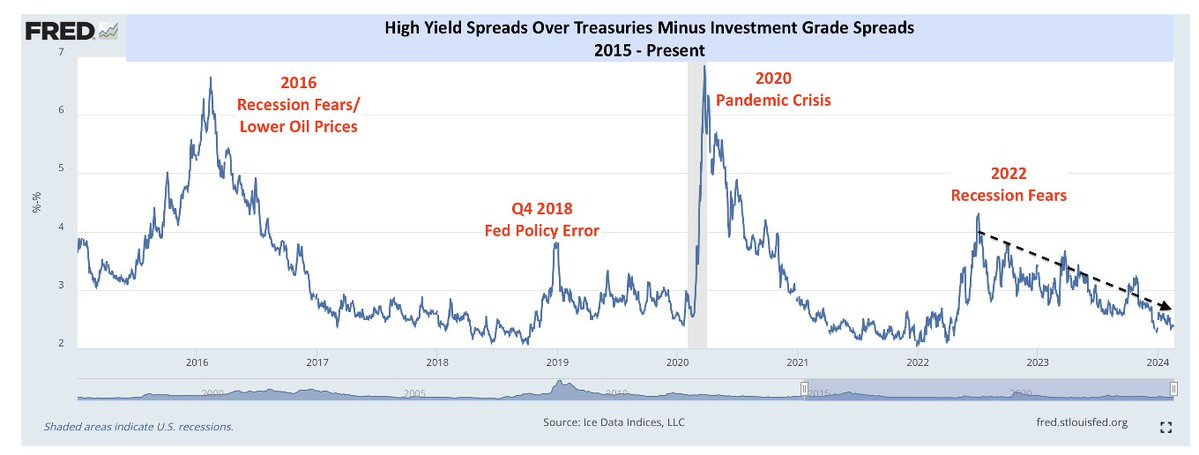
Currently, the gap between investment-grade and junk-grade corporate bond yields has reached its lowest level in more than two years, indicating that investors' overall confidence in the US economy is growing.
The spread of the ICE BofA US Corporate Bond Index, which is one of the commonly used benchmarks for high-grade bonds, decreased to 93 basis points last Thursday, the lowest level since November 2021. In the ICE BofA US High Yield Bond Index, another widely used benchmark for junk bonds, the option-adjusted spread fell to 322 basis points, the lowest level since January 2022.
Important Events Outlook for This Week
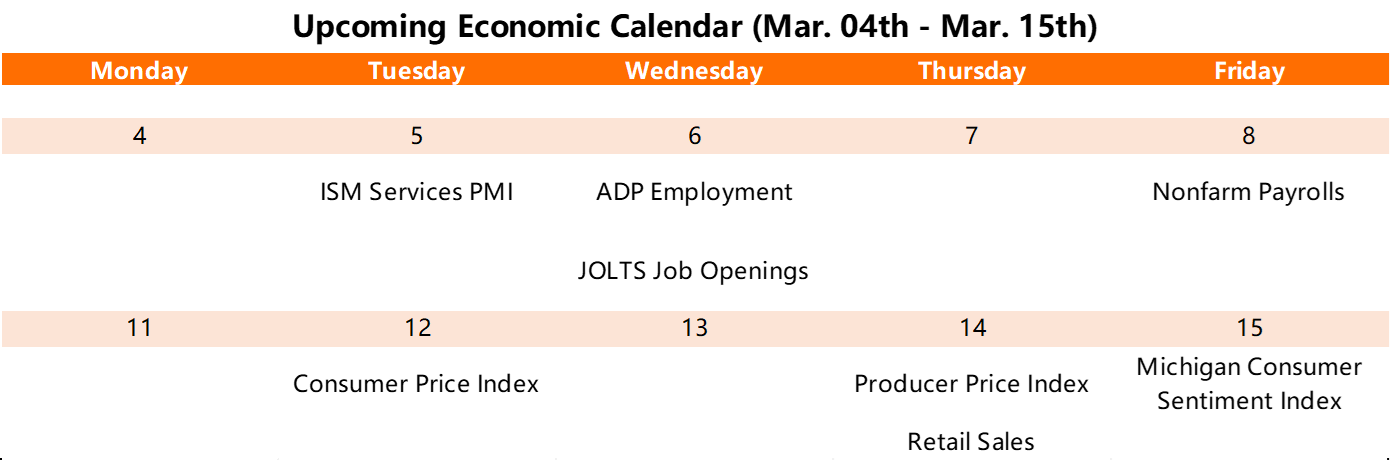
Note: The Upcoming Economic Calendar is selected from moomoo Financial Calendar.
The US non-farm payroll data is set to release on March 8th, while the ADP non-farm report, which is considered a leading indicator of non-farm payrolls, will be released on Wednesday.
At the beginning of the new year, the US experienced a remarkable surge in employment, adding 353,000 new jobs in January, overcoming the impact of the highest interest rates implemented by the Federal Reserve in 20 years. Last week, there were more applications for unemployment benefits, but the number of layoffs remains historically low, despite some well-known companies announcing layoffs this year. The unemployment rate is currently at 3.7%, which is still at its lowest level in half a century.
The Federal Reserve and investors always keep a close eye on robust employment data. If the February data significantly exceeds market expectations, it may delay the timing of interest rate cuts.
This presentation is for informational and educational use only and is not a recommendation or endorsement of any particular investment or investment strategy. Investment information provided in this content is general in nature, strictly for illustrative purposes, and may not be appropriate for all investors. Read more