Is electricity the next beneficiary of AI? Understanding how to invest in power generation stock
In the early stages of AI development, the shortage of chips led to a surge in chip stocks, like NVIDIA, AMD, and Micron Technology.
As we move into 2024, it's becoming clear that the AI industry not only faces a chip shortage but also a power shortage, as AI data centers consume vast amounts of energy.
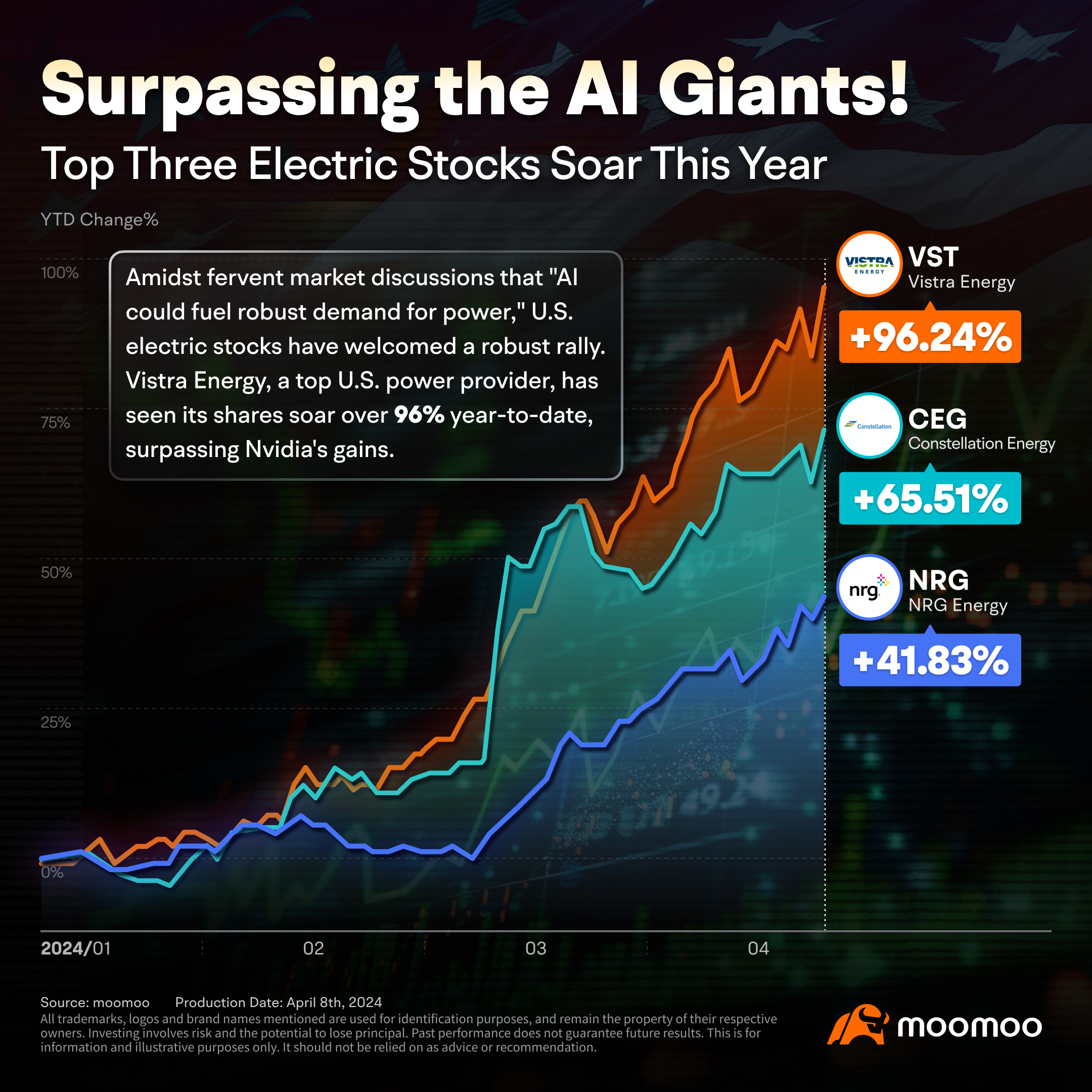
As a result, investors are turning their attention to power generation stocks. In 2024, several of these stocks have outperformed chip industry leaders, with top U.S. power provider Vistra Energy's stock price surging by over 96% since the start of the year.
Will power generation stocks become the next beneficiaries of AI? This article seeks to explore the factors affecting power generation stocks, differentiate between various types, and provide insights into understanding these sectors.
AI's growing demand could lead to a shortage of electricity.
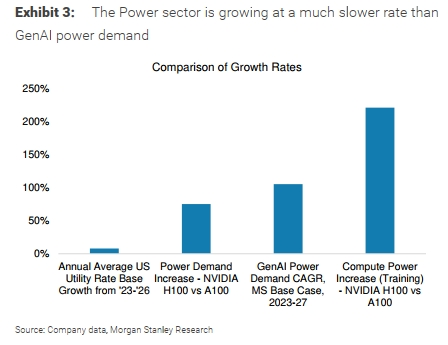
As Generative AI becomes more affordable, its use is expected to rise. But there's a catch—the power infrastructure might not keep up.
Morgan Stanley's report draws a parallel to the story of the Tortoise and the Hare, suggesting that while AI advances rapidly, it relies on a consistent power supply to function. However, constructing new power infrastructure can be a slow and challenging process.
Morgan Stanley forecasts that the power demand from Generative AI could double by 2027. The compound annual growth rate (CAGR) for power demand from GenAI is expected to be around 105% from 2023 to 2027.
However, building new power plants and lines takes time, leading to potential delays.
This gap between demand and supply might push data center operators to pay more for electricity.
Power shortages, coupled with premium electricity prices, could present opportunities for power generation stocks.
What are power generation stocks?
Power generation stocks refer to the stocks of companies engaged in power generation, transmission, distribution, and sale of electricity.
These stocks are commonly categorized as utility stocks since electricity is a fundamental energy source crucial to contemporary living.
In the stock market, the power sector is the largest segment within the utility sector.
Therefore, to understand power generation stocks, one can research the relevant sub-industries within the utility sector. This knowledge can enhance your understanding and inform your investment decisions in the power generation market.

What types of power stocks are there? Which companies are considered the leading players?
In the U.S. stock market's utility sector, there are mainly four sub-industries related to electricity power: regulated electric, independent power producers, renewable energy suppliers, and diversified utilities.
Each type of industry may have different characteristics. Here's a brief introduction to these types:
1. Regulated Electric
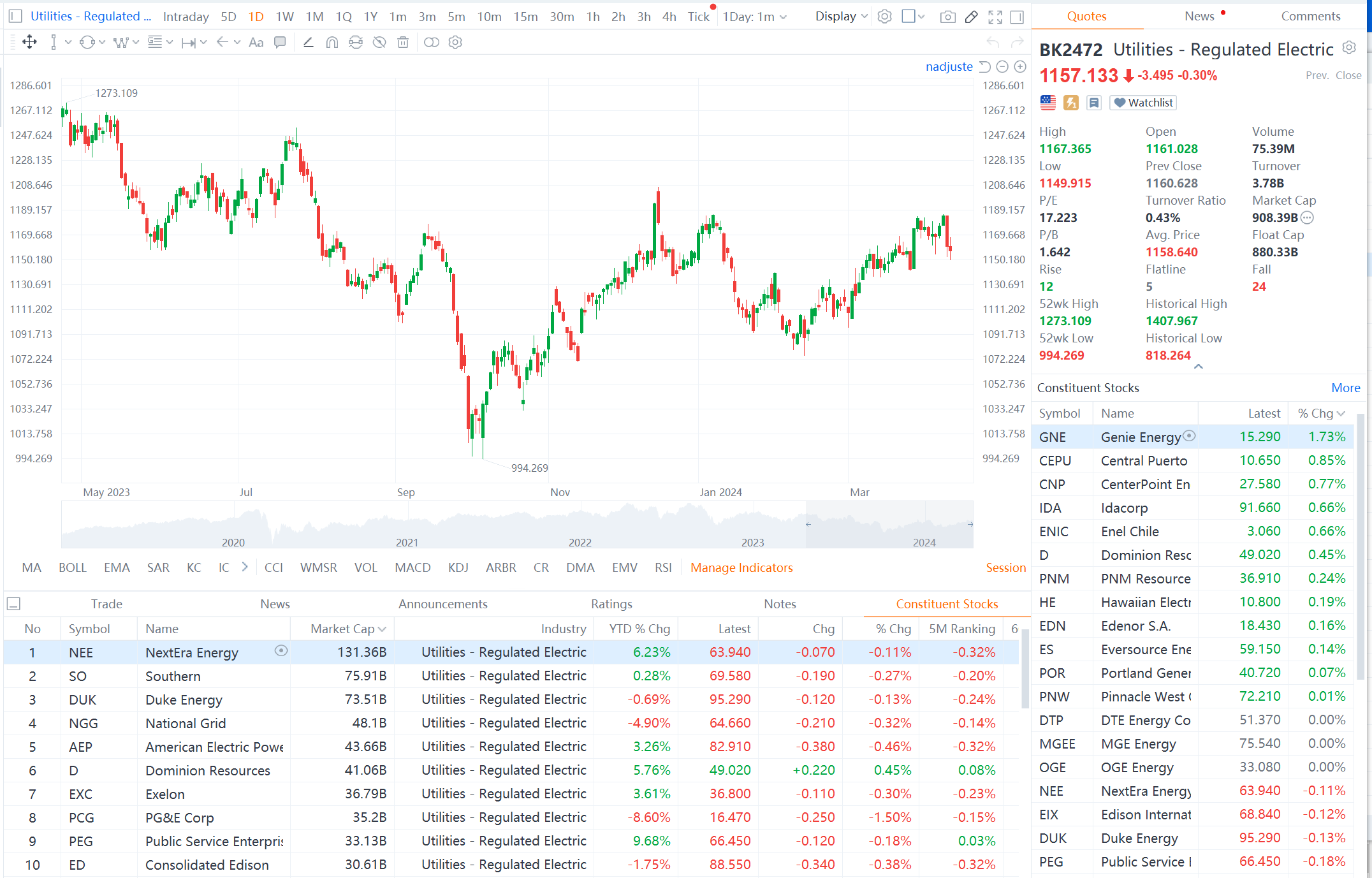
Definition: Regulated electric utilities are companies that offer fundamental services such as the generation, transmission, and distribution of electricity. They typically operate under stringent regulatory oversight.
Company Characteristics: Regulated electric utilities usually have stable revenue streams and a comparatively low-risk profile, although their growth potential is often modest.
Industry Market Cap: $908.39 billion
Key Players: NextEra Energy (NEE), Southern Company (SO), and Duke Energy (DUK)
Regulated utilities are the largest sub-industry within the utility sector, with a total market cap of $908.39 billion. These companies provide essential electricity services and are often subject to strict regulations concerning service areas, pricing, and service quality.
Regulations deter new competitors and constrain the profitability of utility companies. As a result, these companies typically have stable stock prices, low volatility, and reliable dividends, but their growth potential is limited.
Key players in this sector include NextEra Energy (NEE), Southern Company (SO), and Duke Energy (DUK).
NextEra Energy is a leading company in this sector based on market cap. Founded in 1984 in Florida, NextEra Energy is one of the top ten electricity suppliers in the U.S. The company has two business segments: Florida Power & Light (FPL) and NextEra Energy Resources (NEER).
FPL is the largest electricity provider in Florida, similar to utility companies in other parts of the U.S. Meanwhile, NEER focuses on the company's renewable energy projects, with wind and solar centers across 26 states in the U.S. and Canada. NEER is pivotal to NextEra's growth, both in developing utility-scale projects and selling electricity directly to consumers.
2. Independent Power Producers (IPPs)
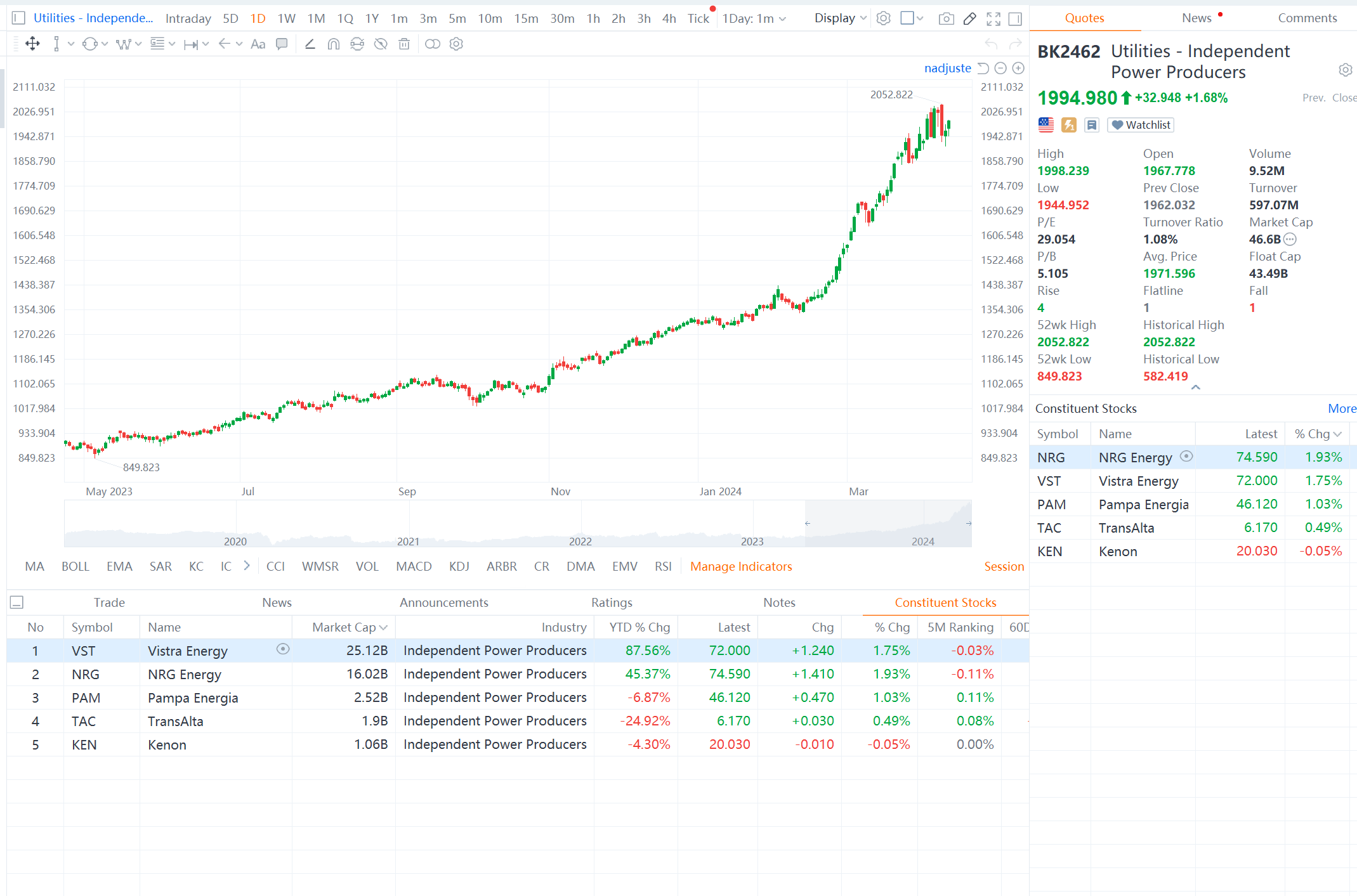
Definition: Independent power producers operate without the regulatory restrictions that govern traditional utility companies, allowing for greater autonomy in their operations.
Company Characteristics: Independent power producers usually have higher profit potential, but they also have higher risks and volatility.
Sector Market Value: $46.6 billion
Key Players: Vistra Energy (VST), NRG Energy (NRG)
Independent Power Producers (IPPs) are companies that generate electricity and sell it to utilities or other entities.
The main difference between IPPs and regulated electric utilities is that IPPs operate in competitive markets and have greater pricing and operational flexibility.
In other words, IPPs can sell electricity directly to retail customers. When there is a shortage of electricity supply, IPPs may have greater room for price adjustments. Therefore, the stock prices of such companies may be more sensitive to fluctuations in electricity prices.
In this niche sub-industry, only a handful of companies compete, with Vistra Energy and NRG Energy standing out as the largest in market value.
In 2024, the stock prices of Vistra Energy and NRG Energy experienced substantial growth driven by rising demand for AI electricity, leading the independent power generation sector to outperform its regulated counterpart.
3. Renewable
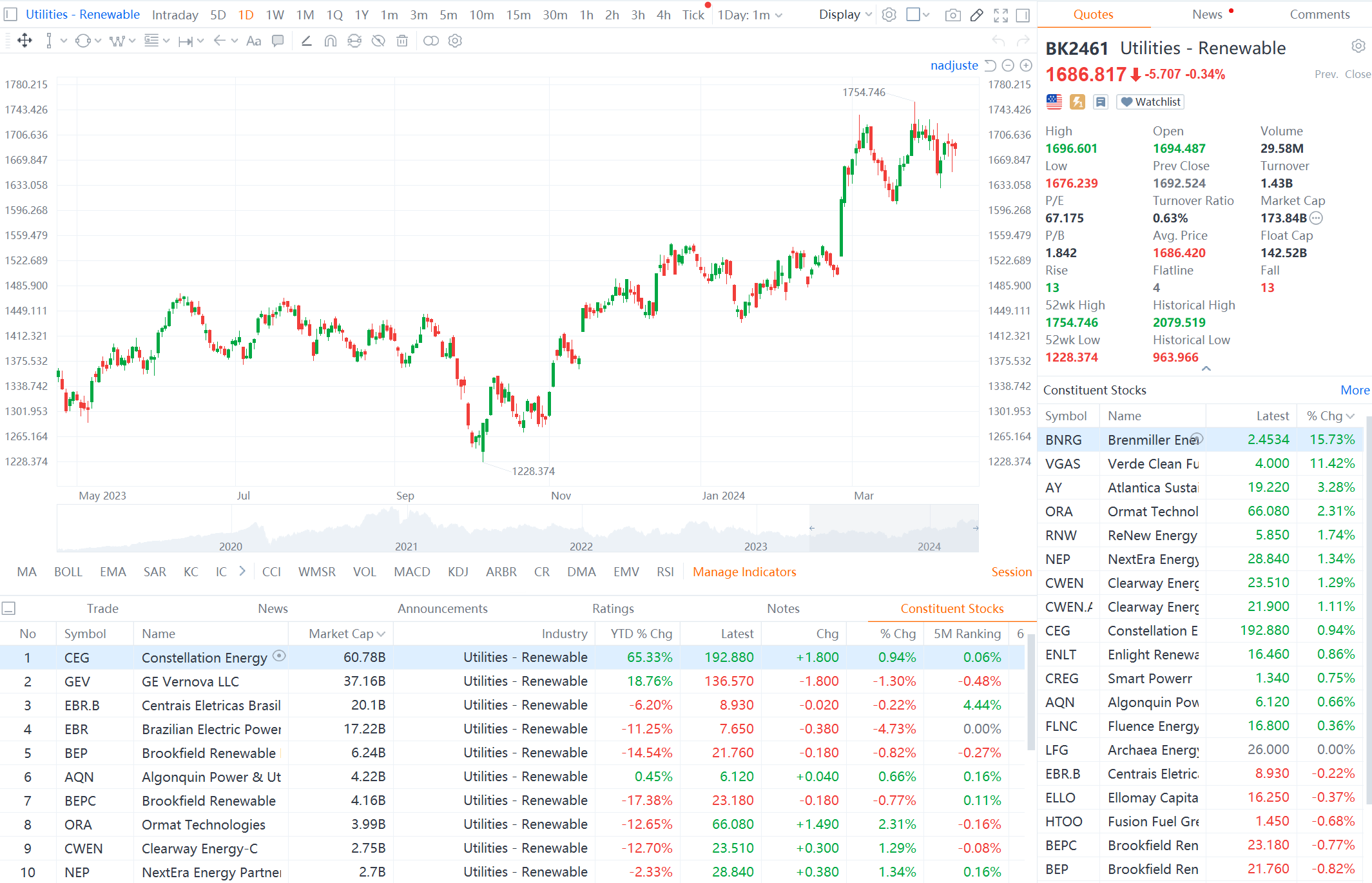
Definition: Renewable utilities specialize in the production of electricity from sustainable sources, including wind, solar, and nuclear energy.
Company Characteristics: High growth potential, supported by government subsidies and environmental policies, but may face challenges in technology and storage.
Sector Total Market Value: $173.84 billion
Key Players: Constellation Energy (CEG)
Companies in the renewable energy sector primarily rely on renewable resources such as biomass energy, geothermal energy, solar energy, hydroelectric power, and wind energy for electricity generation and distribution.
A key player in this sector is Constellation Energy, focusing on carbon-free power generation. Historically part of Exelon Corporation, Constellation Energy became an independent entity following its spin-off in February 2022. This transition allowed the company to establish itself as a leading operator of nuclear power plants in the United States, free from carbon emissions.
As a power producer and supplier with a capacity exceeding 32,400 megawatts, Constellation Energy provides electricity to over 20 million homes and businesses. With increasing emphasis on clean energy in the United States, Constellation Energy, as a nuclear energy company, is receiving more attention.
Since the beginning of 2024, the company's stock price has risen by 65%. According to the financial report released by the company on February 27, 2024, strong growth is expected in 2024, with earnings per share (EPS) expected to be between $7.23 and $8.03.
4. Diversified Utilities
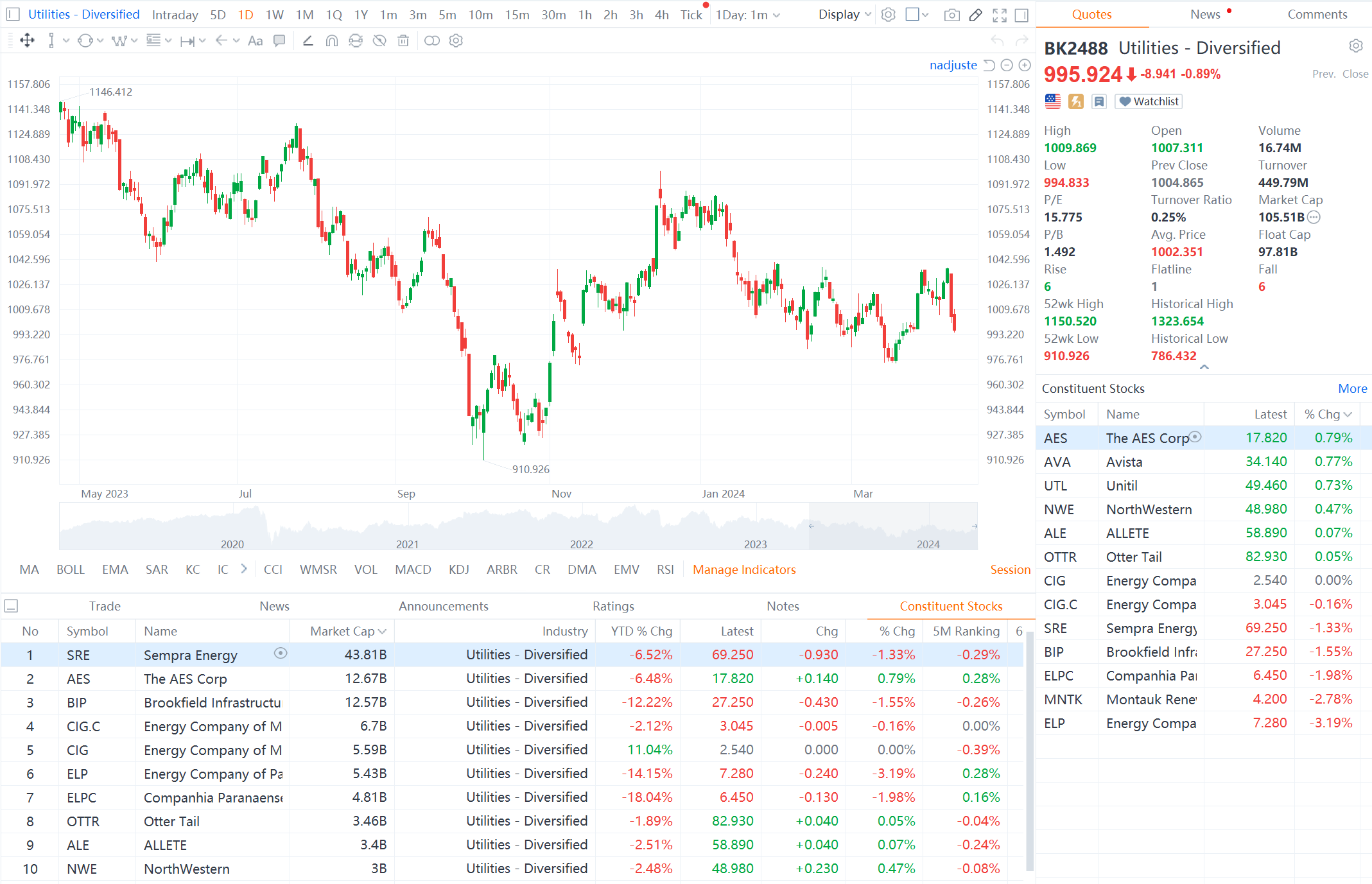
Definition: Diversified utilities are multifaceted enterprises that deliver a range of essential services, extending beyond electricity to include the provision of natural gas and water.
Company Characteristics: Stable revenue sources, but growth may be slower.
Sector Market Value: $105.51 billion
Representative Companies: Sempra Energy (SRE), AES Corporation (AES)
Companies in the diversified utility sector focus not only on electricity supply but also offer other types of utility services, such as natural gas and water.
Sempra Energy (SRE) and AES Corporation (AES) are representative companies in this sector. However, since 2024, the stock performance of these two companies has been relatively flat, even underperforming the market.
Despite offering diversified utility services, these companies may face challenges in the current market environment, leading to weaker stock performance compared to companies focused on electricity or renewable energy.
Insight of investing in power generation stocks
Investing in the power generation sector can be approached through various strategies. You can either select specific power companies for investment or capture the entire industry's performance by investing in utility sector ETFs.
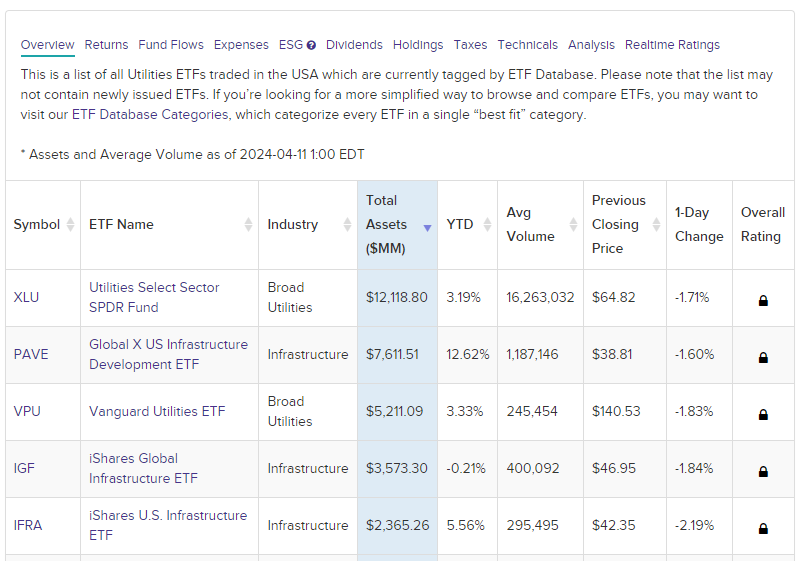
1. Utility Sector ETFs: By investing in utility sector ETFs, you can track the performance of the entire power generation industry rather than relying on a single company. According to the ETF Database, the largest utility sector ETF is XLU, which tracks the trends of the U.S. utility sector. XLU is characterized by low price volatility and stable dividends, but limited growth. Its year-to-date return is 3.19%, underperforming the S&P 500 and Nasdaq indices.
2. Research and Analysis: Before making investment decisions, thorough research and analysis are crucial. This includes understanding the financial conditions, growth prospects, market positions, and industry trends of various companies and ETFs.
3. Risk Management: The power generation sector presents unique challenges, making effective risk management strategies essential. This can involve diversifying investments, setting stop-loss points, and regularly reviewing the investment portfolio.
Risks in investing in power generation stocks:
1. Policy Risk: Government policies can significantly impact the power generation industry. Changes in competition, pricing, and environmental standards can affect stock investments.
2. Market Risk: Increased market competition can lead to declining stock prices for power generation companies.
3. International Price Risk: Fluctuations in global market prices can influence investments in power generation stocks.
4. Weather Risk: Power generation capacity and demand can be weather-dependent. Droughts and adverse weather can impact stock prices.
5. Risk of Technological Disruption: Emerging technologies can revolutionize power generation, leaving traditional methods obsolete. Companies slow to adapt may see their market share and stock value decline.
Additional Disclosures: This content is also not a research report and is not intended to serve as the basis for any investment decision. The information contained in this article does not purport to be a complete description of the securities, markets, or developments referred to in this material. The information has been obtained from sources considered to be reliable, but we do not guarantee that the foregoing material is accurate or complete. Furthermore, there is no guarantee that any statements, opinions or forecasts provided herein will prove to be correct.
This presentation is for informational and educational use only and is not a recommendation or endorsement of any particular investment or investment strategy. Investment information provided in this content is general in nature, strictly for illustrative purposes, and may not be appropriate for all investors. Read more