Disney's theme park woes: A warning sign for the economy? (08/08/2024)
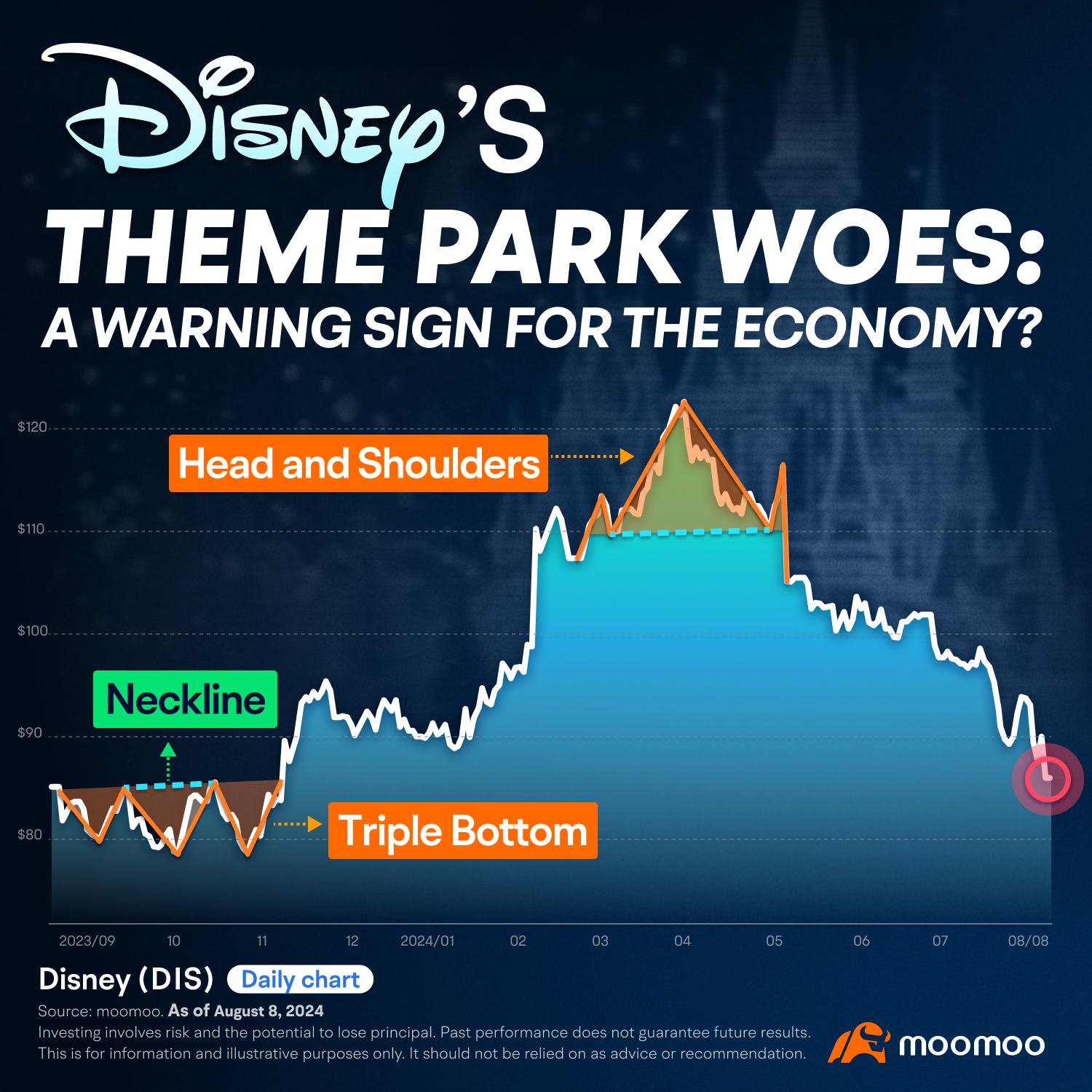
Hello, everyone! Today is August 8, 2024, and we will be focusing on The Walt Disney Company $Disney (DIS.US)$ , one of the world’s leading producers and providers of entertainment and information. In this article, we’ll explore the latest trends and take a close look at the company’s recent market activity.
What’s new?
On August 7, 2024, Disney released its fiscal third-quarter earnings, revealing weaker-than-expected results in the theme park unit. This development indicates that consumers are becoming more cautious with their spending, given potential economic uncertainties.
Disney’s operating profit for its experiences unit, which includes domestic and international parks and experiences, declined by 3% from the previous year to $2.2 billion, while revenues grew by 2% to $8.4 billion.
The entertainment behemoth attributed the decrease in operating income at its domestic theme parks to slowing consumer demand and elevated costs associated with inflation. In light of this, Disney issued a cautionary statement, indicating that moderation in demand for its parks and experiences is expected to endure, potentially impacting the next few quarters.
The impact of reduced consumer spending has been felt throughout the US economy. Fast-food chains such as McDonald’s, Burger King, and Taco Bell launched discounts and value meals to attract cost-conscious customers, as some reported slowing sales. Additionally, Starbucks noted a decline in customer visits due to a “challenging consumer environment.”
Despite these challenges, Disney has some positive news. The company’s total segment operating income increased 19% to $4.225 billion compared to the same period last year. This growth was largely due to the outstanding performance of Disney’s entertainment unit, particularly in streaming.
Disney’s combined streaming business, consisting of Disney+, Hulu, and ESPN+, reported an operating profit of $47 million, compared to a $512 million loss in the same quarter last year. Remarkably, this marks the first time the streaming business has generated a profit, and it occurred a quarter earlier than anticipated by the company.
Chart of the day
Trend analysis:
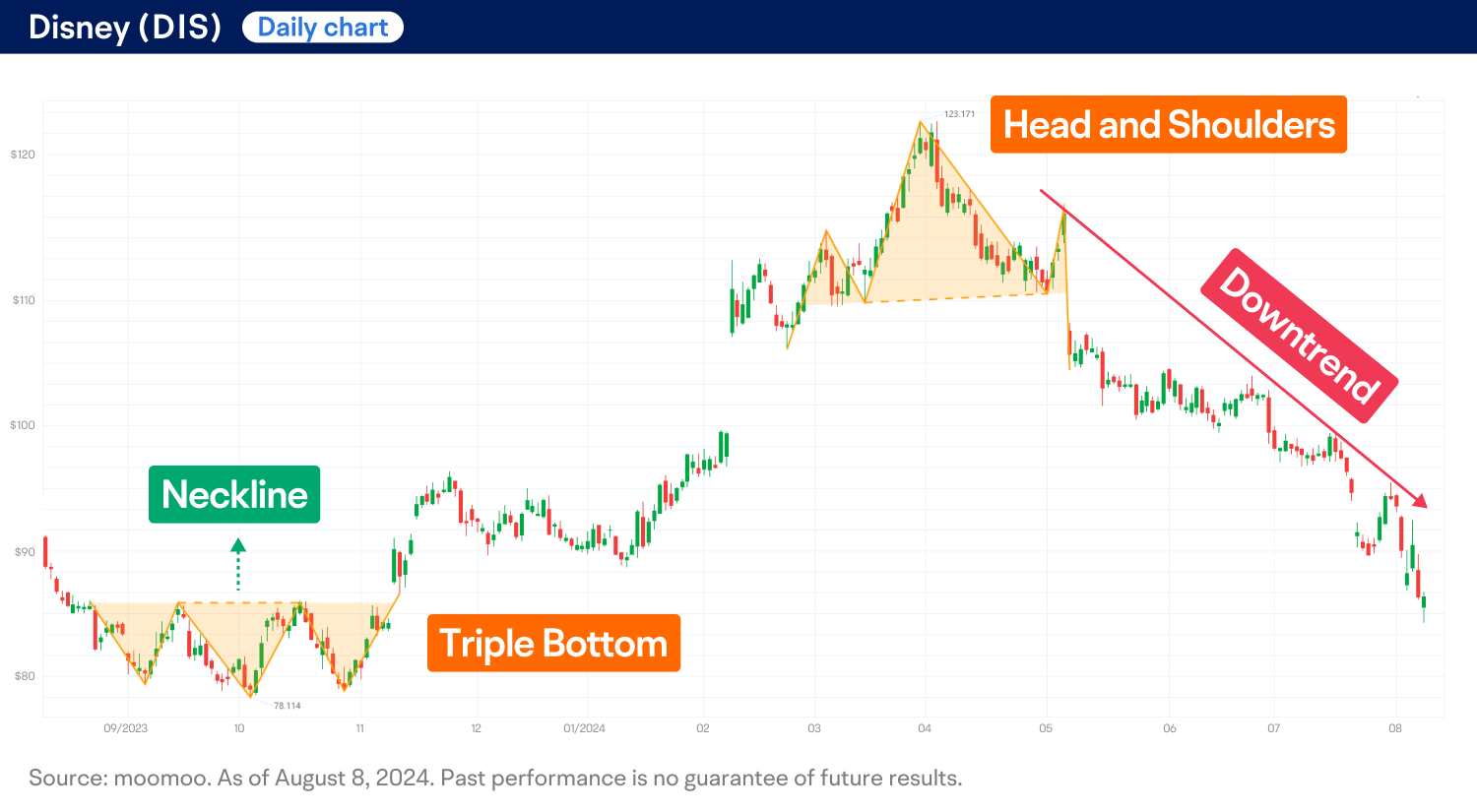
After reaching a ten-year low in late October 2023, Disney’s shares (DIS) experienced an upward trend, surging by over 50% within five months. However, the stock has since reversed its course and is currently on a downtrend. The daily chart’s triple bottom and head-and-shoulders patterns depict how market sentiment can shift over time.
Technical indicators:
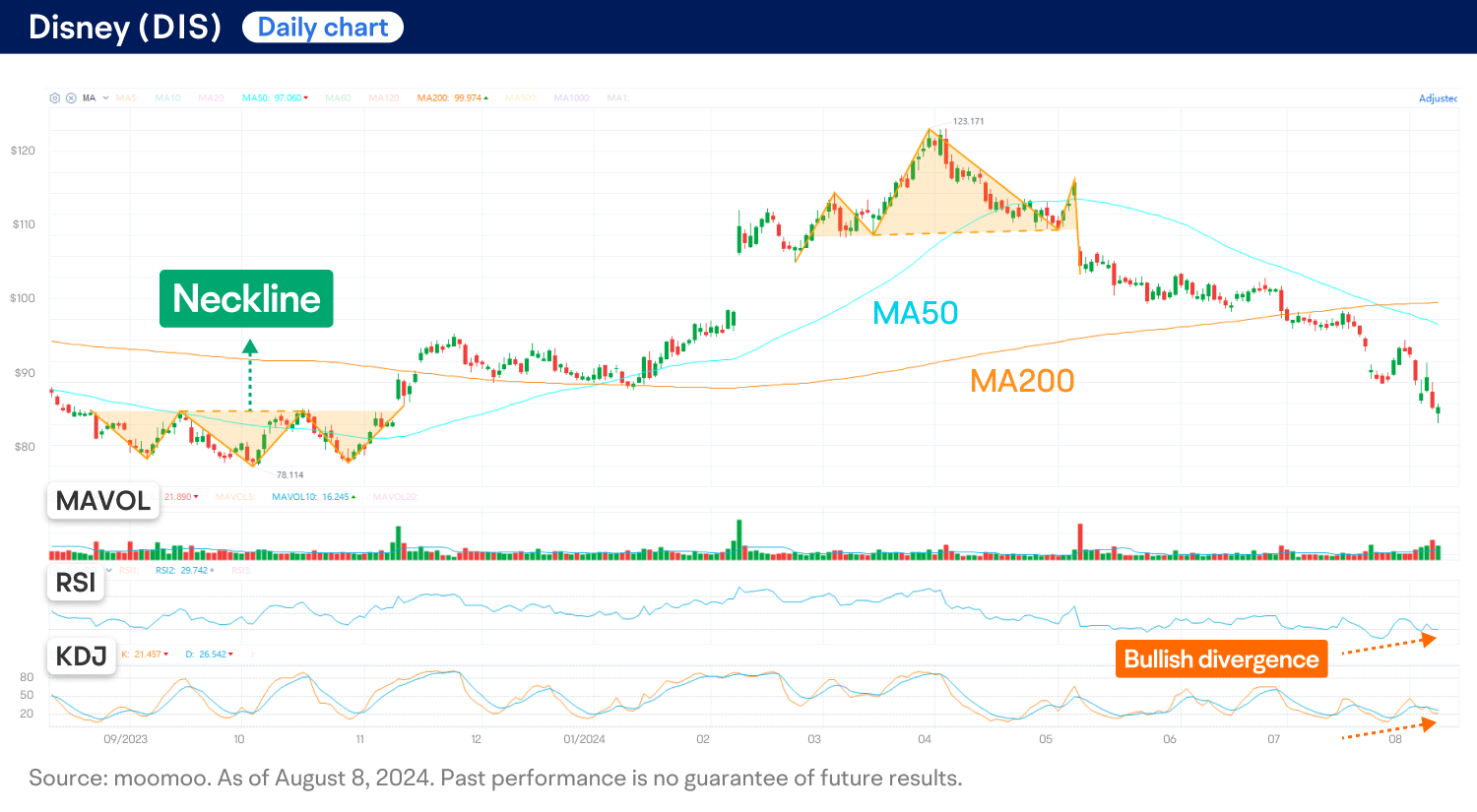
● DIS is currently trading below its key moving averages (MAs), including the 50-day and 200-day MAs, highlighting an alignment with the bearish market trend.
● In the wake of the stock hitting a nine-month low, the trading volume has been rising in recent days, indicating selling pressure.
● The relative strength index (RSI) and the KDJ indicator both display bullish divergence signals, indicating a potentially positive market trend. However, despite these indications, there is still a lack of clear and immediate buy signals in the short term.
Next move?
DIS is presently trading at a nine-month low, hovering near the neckline ($85.5) of the Triple Bottom formation, as previously illustrated in the daily chart. This level has historically acted as a support zone, which could potentially attract interest from buyers as selling pressure stabilizes in the short term.
This presentation discusses technical analysis, other approaches, including fundamental analysis, may offer very different views. The examples provided are for illustrative purposes only and are not intended to be reflective of the results you can expect to achieve.
All investing involves risk, including the potential loss of principal, and there can be no guarantee that any investing strategy will be successful.
This presentation is for informational and educational use only and is not a recommendation or endorsement of any particular investment or investment strategy. Investment information provided in this content is general in nature, strictly for illustrative purposes, and may not be appropriate for all investors. Read more