A guide to gold mining stocks
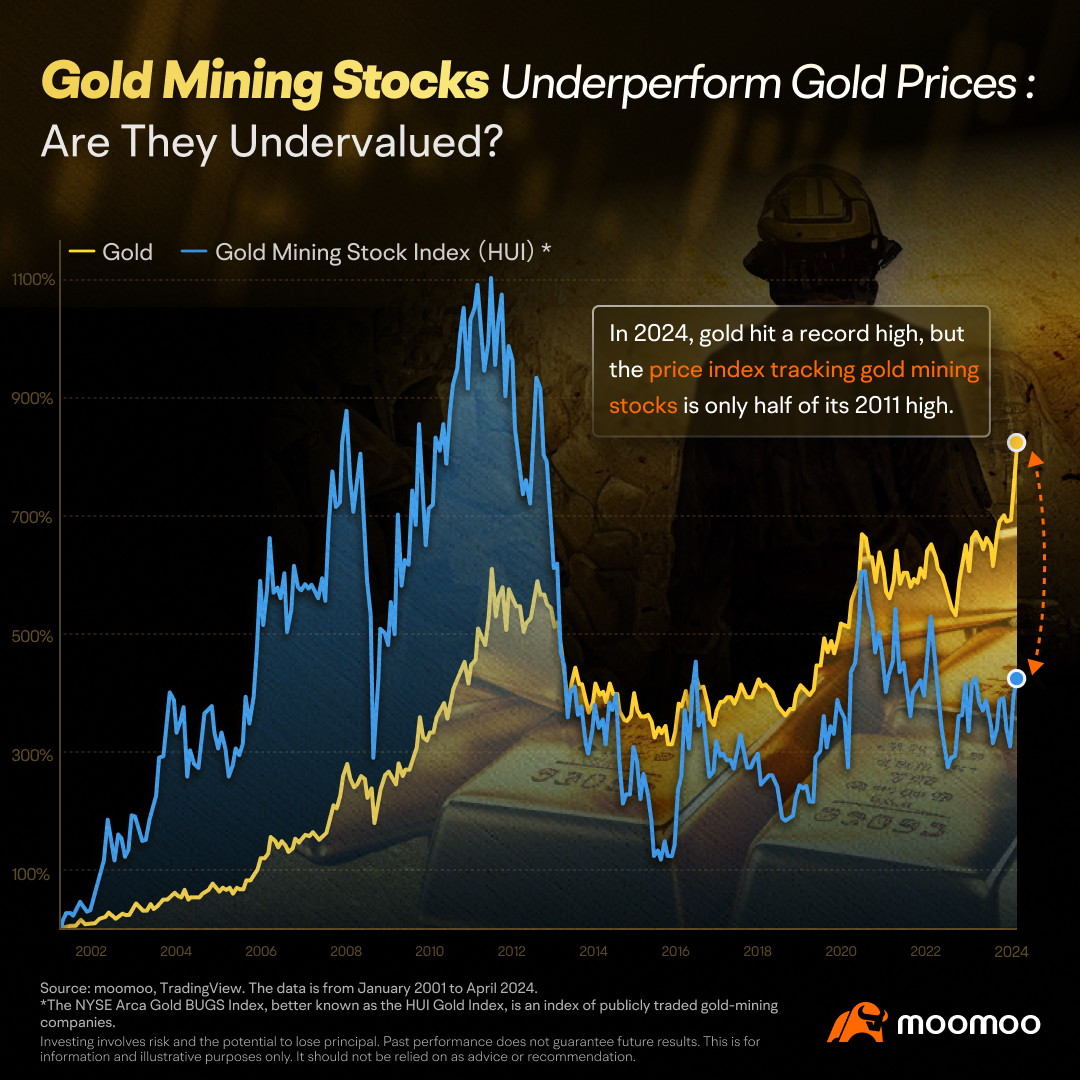
Rising geopolitical tensions have pushed gold prices over $2400 per ounce, sparking a surge in interest in investments linked to gold.
Interestingly, despite the bullish momentum in gold prices, gold mining stocks have not mirrored this enthusiasm. The NYSE Arca Gold BUGS (HUI) index, which serves as a benchmark for gold mining stocks, languishes at just half of its 2011 peak.
Why are the prices of gold mining stocks not keeping up with gold prices? Are they undervalued?
This article will discuss these questions and provide insights into the relationship between gold mining stocks and gold prices, along with what to consider when investing in them.
The relationship between gold prices and gold miners
Gold mining stocks, representing publicly traded companies engaged in gold extraction, often see their stock prices move in tandem with gold prices. The rationale behind this correlation lies in the leverage effect on their operations.
For example, suppose that the gold price is now $2400 per ounce, and the production cost of a gold mining company is $2000 per ounce, so the profit is $400 per ounce.
When the gold price rises from $2400 to $2500, the increase is 4.2%. Assuming that the production cost of the company remains unchanged, the company's profit will rise from $400 to $500 per ounce, an increase of 25%.
Thus, a rising gold price will significantly increase the profits of gold miners (assuming the same production cost), and the share prices of gold miners may rise because of better operating performance, and vice versa.
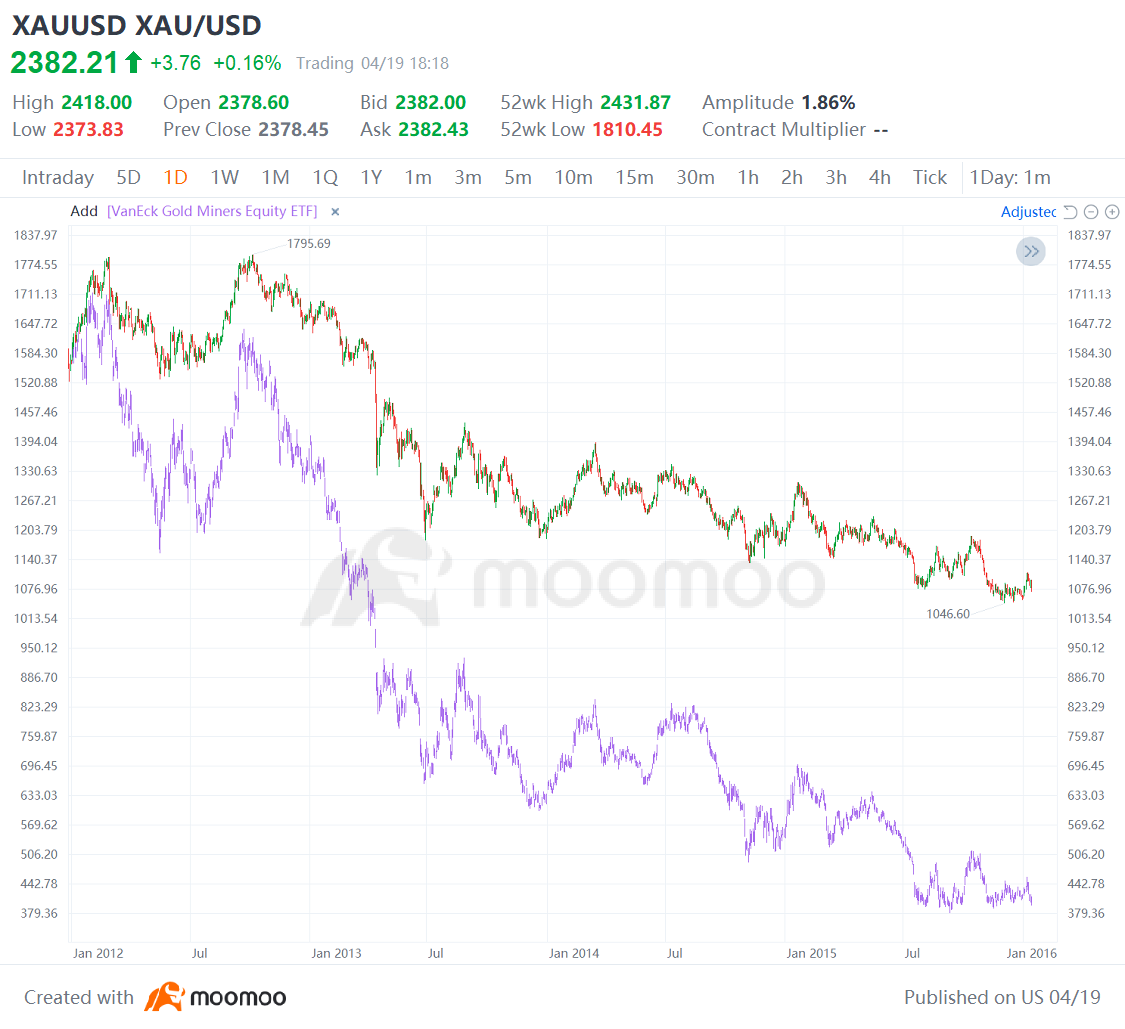
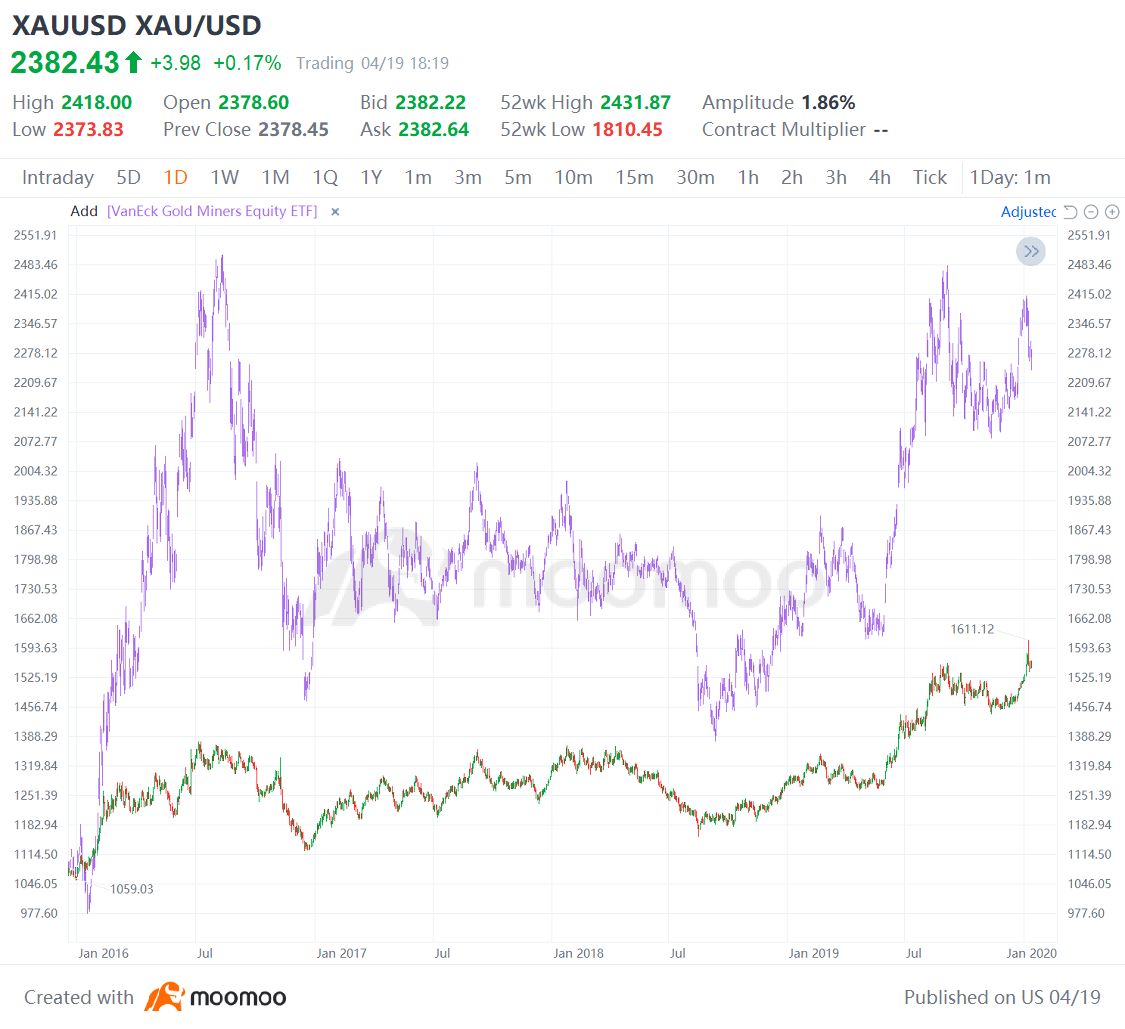
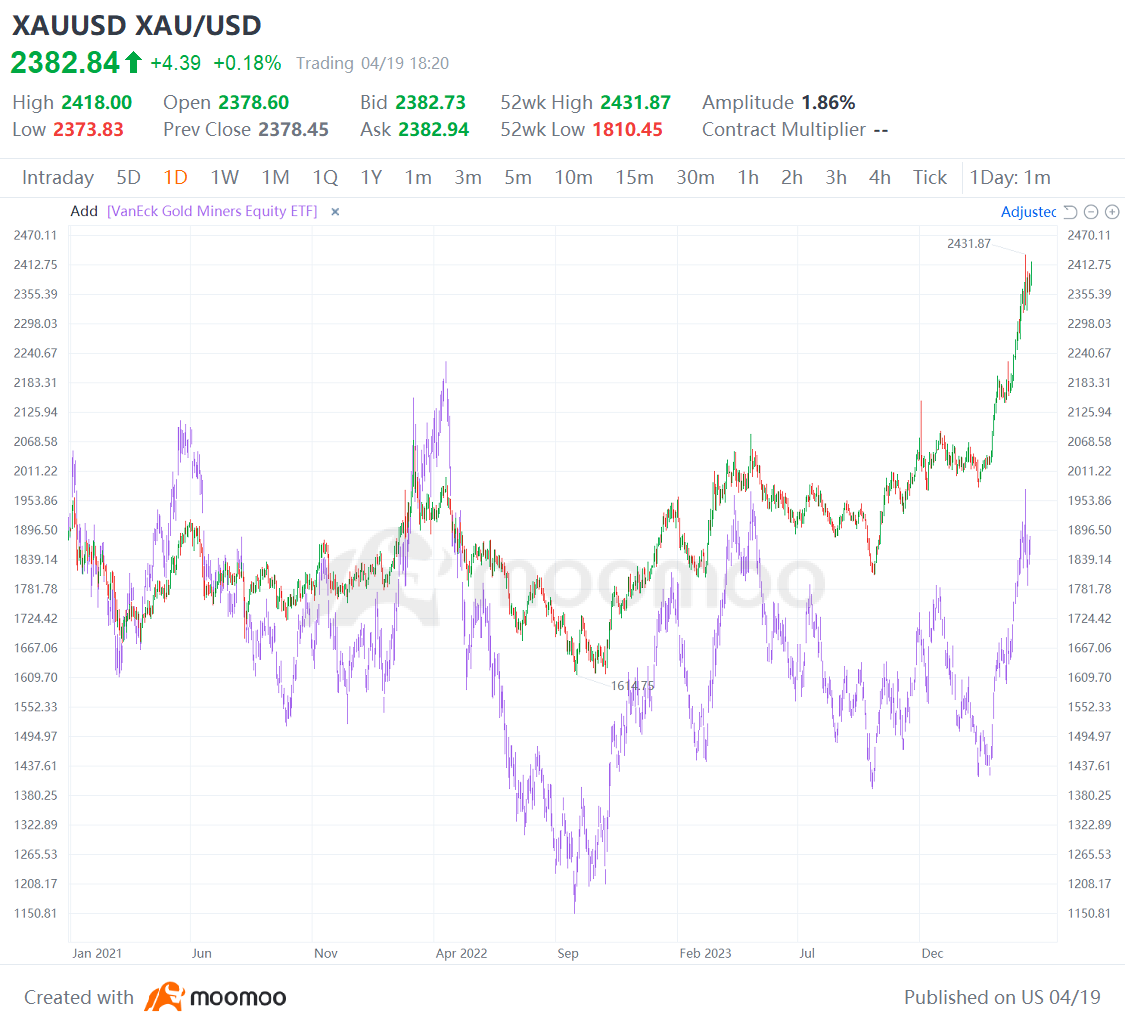
Historical trends between gold prices and gold mining stocks support this relationship. The VanEck Gold Miners ETF (GDX), the largest ETF tracking gold mining stocks, provides insights into the correlation between its price movement and spot gold prices (XAUUSD).
From 2012 to 2015, gold prices experienced a bear market, dropping from over $1,700 per ounce to $1,000. During this period, GDX suffered greater losses compared to the decline in gold prices.
Starting in 2016, gold prices began to rebound. From 2016 to 2019, gold prices surged from around $1,000 per ounce to over $1,600 per ounce, with GDX outperforming gold prices.
However, a curious divergence has emerged since 2020. Despite gold prices reaching historic highs in 2024, gold mining stocks have failed to keep pace. According to MarketWatch, the reason for the underperformance of gold miners is mainly due to rising production costs. Since the beginning of 2020, miners' production costs have increased by 35%, mainly due to rising labor costs, which is why gold has reached a record high, but gold miners have not kept up.
So, are gold mining stocks undervalued in the current environment?
John Hathaway, Senior Portfolio Manager at Sprott Asset Management, suggests they might be. With the total market capitalization of the gold mining industry standing at approximately $300 billion—lower than that of credit card giant Mastercard (MA)—there's potential for a mean reversion, offering investors potential opportunity in gold mining stocks.
Leading gold mining companies: Who's in the Industry?
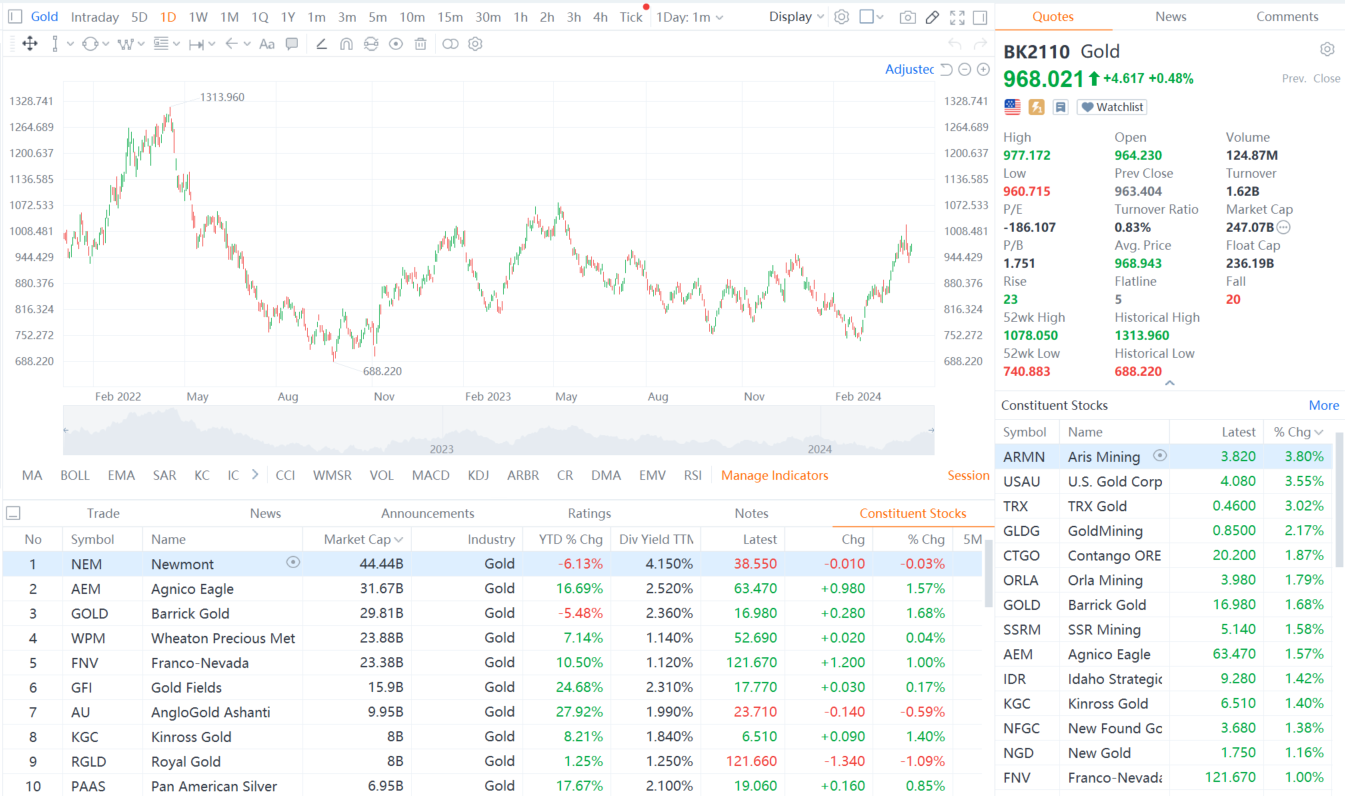
Investors can easily find gold mining stocks related to gold on the moomoo platform. Currently, the top three companies in terms of market capitalization in this sector are Newmont (NEM), Agnico Eagle Mines Limited (AEM), and Barrick Gold Corporation (GOLD).
It's worth noting that both Newmont and Barrick Gold Corporation have seen their stock prices decline this year. However, according to Barron's, analysts believe that despite their lackluster performance earlier this year, these companies remain potential beneficiaries of rising gold prices. Let's delve deeper into NEM and GOLD.
1. Newmont (NEM)
Headquartered in Colorado, Newmont stands as a premier global gold producer with 136 million ounces in gold reserves as of the end of 2023.
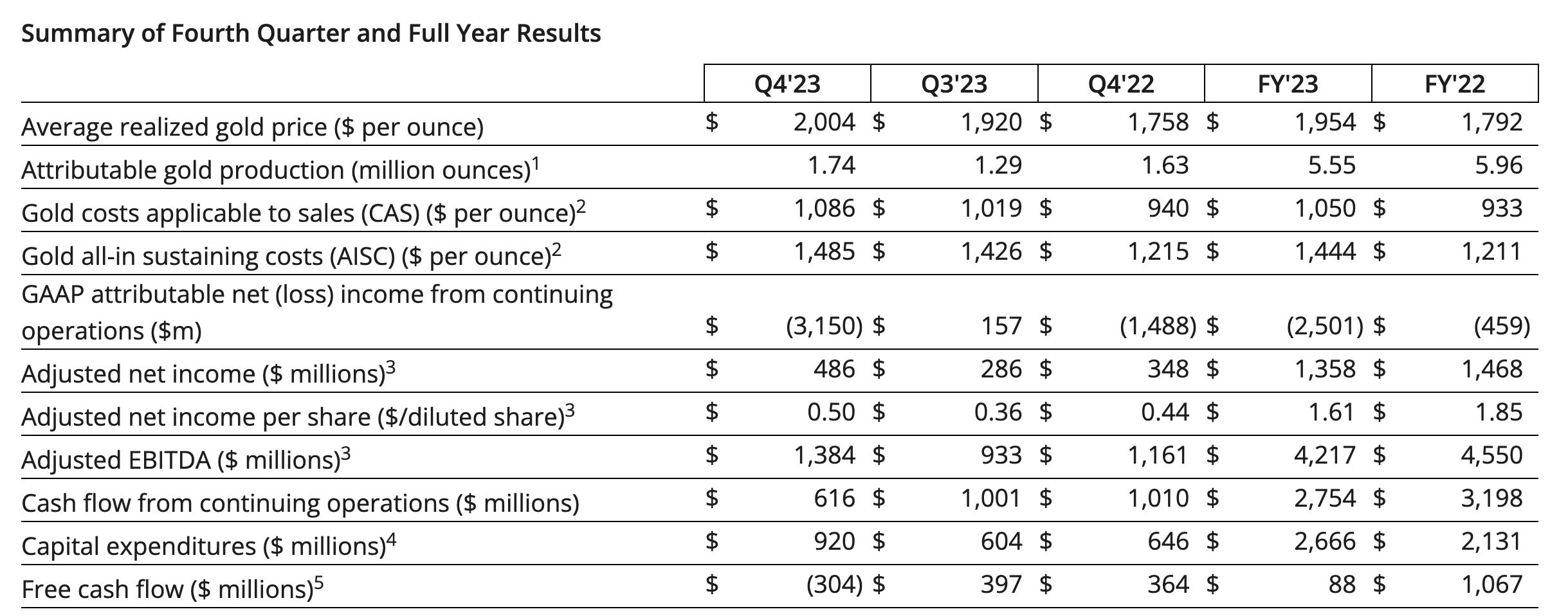
Their Q4 2023 financial report, released on February 22, 2024, indicated production of 5.55 million ounces of gold for 2023 at a cost of $1,444 per ounce. This marked a nearly 7% decrease in production compared to 2022, while production costs surged by 16%.
Looking ahead, Newmont forecasts a promising turnaround for 2024. They project a production increase to 6.9 million ounces, representing a 25% rise from 2023. Additionally, they anticipate maintaining a production cost of $1,400 per ounce.
Despite Newmont's strong position in the gold industry, NEM's stock price has dipped by 6% this year, not keeping pace with the surge in gold prices. This divergence might be attributed to the company's decision to reduce its 2024 dividends. The 2023 dividend stood at $1.6 per share, whereas the 2024 projection is at $1 per share.
Moreover, the company's gold price outlook for 2024 is conservative. In their February financial report, they projected an average gold price of $1,900 per ounce for the year, which is significantly lower than the recent monthly gold price.
Therefore, if gold prices can remain above $2,000 per ounce for most of 2024 (currently trending towards $2,500), Newmont may achieve better profit margins.
2. Barrick Gold (GOLD)
Barrick Gold stands as one of the world's premier gold producers, with operations spanning exploration, development, production, and sales across the globe.
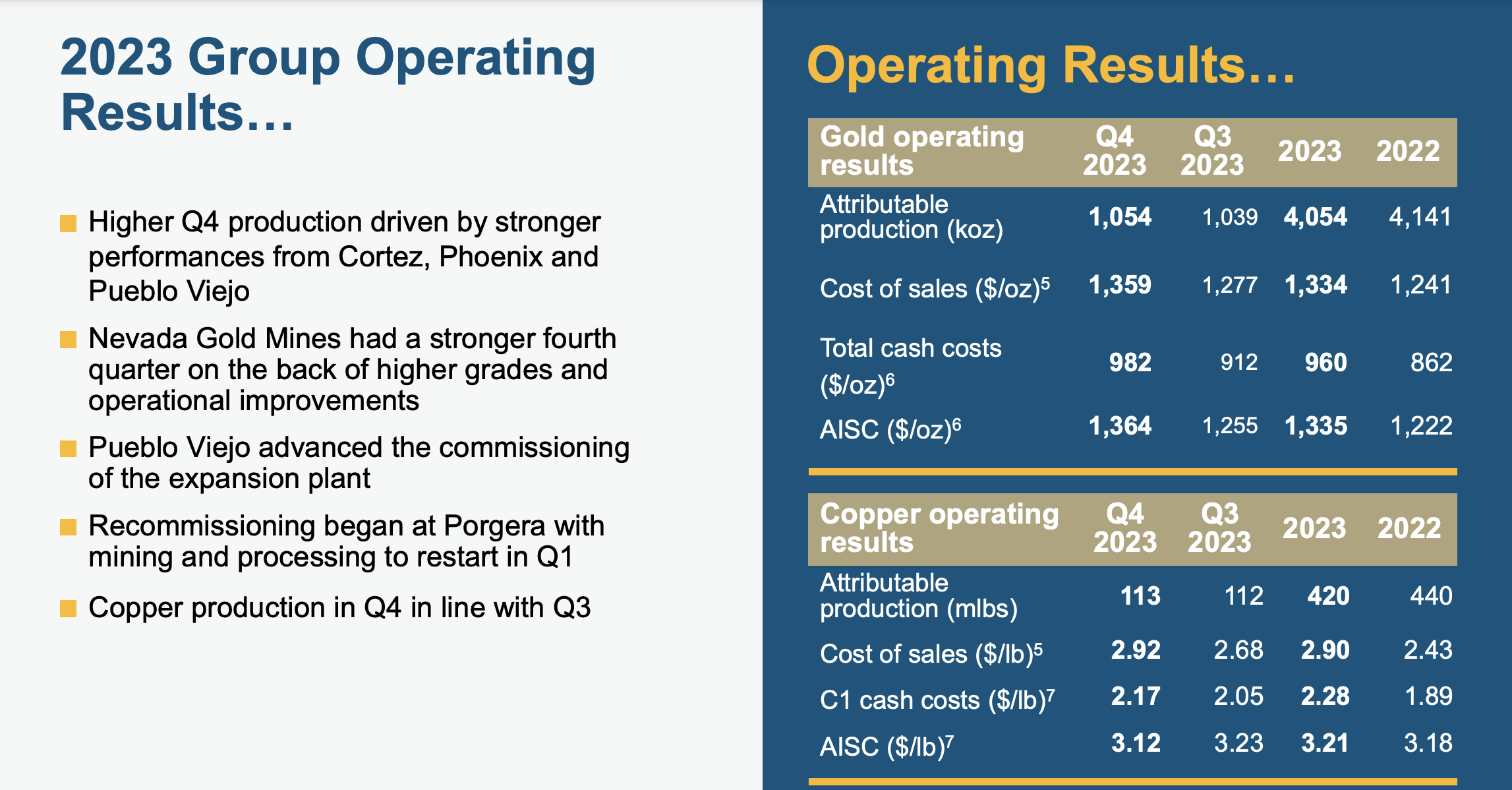
The company's Q4 2023 financial report, unveiled on February 14, 2024, disclosed a gold production of 4.054 million ounces for 2023 at a cost of $1,335 per ounce. While production remained consistent with 2022 levels, costs saw a notable increase of 9%. This performance fell short of the company's initial projections of 4.2 to 4.6 million ounces for the year, triggering a 9.5% decline in stock price on January 16.
Though the stock began to recover in March, tracking the upward trend in gold prices, it still reflects a 5.5% decrease since the year's start.
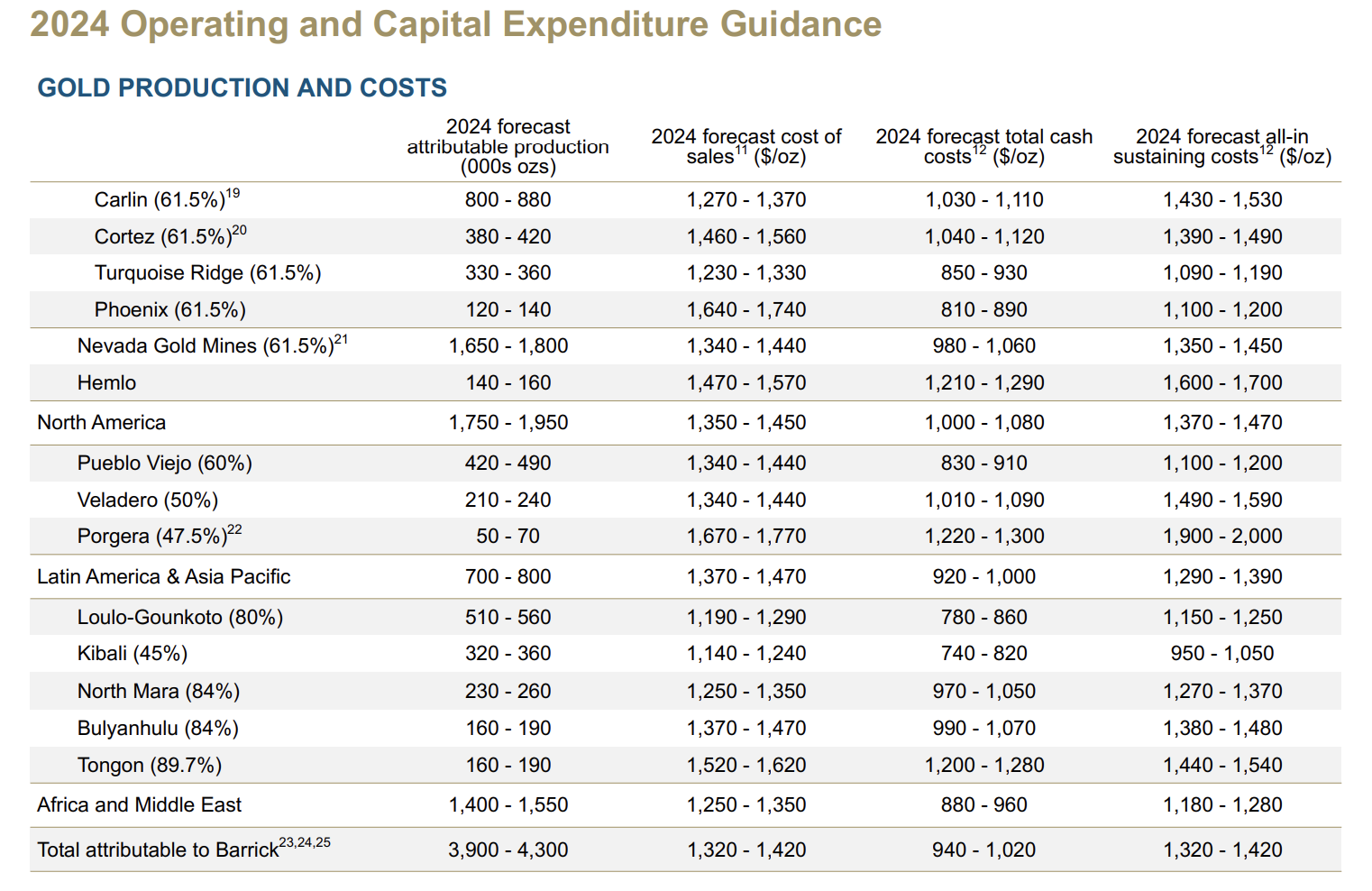
Looking ahead to 2024, Barrick Gold's projections appear cautious. They anticipate a gold production range of 3.9 to 4.3 million ounces, with costs expected to range between $1,320 and $1,420 per ounce.
Additionally, the company's gold price forecast for 2024 sits at a conservative $1,900 per ounce. However, with gold prices hovering around the $2,400 per ounce mark, the company's revenue potential may outpace these conservative estimates.
How to track gold mining stock trends?
Besides monitoring leading gold mining stocks, tracking gold mining ETFs provides insights into the sector's trends.
According to the ETF Database, the VanEck Vectors Gold Miners ETF (GDX) leads with $13.76 billion in assets, far ahead of the second-ranked fund GDXJ.
GDX follows The NYSE Arca Gold BUGS (HUI) Index, which includes major companies like Newmont, Agnico Eagle Mines, and Barrick Gold. It has risen by 8.19% year-to-date.
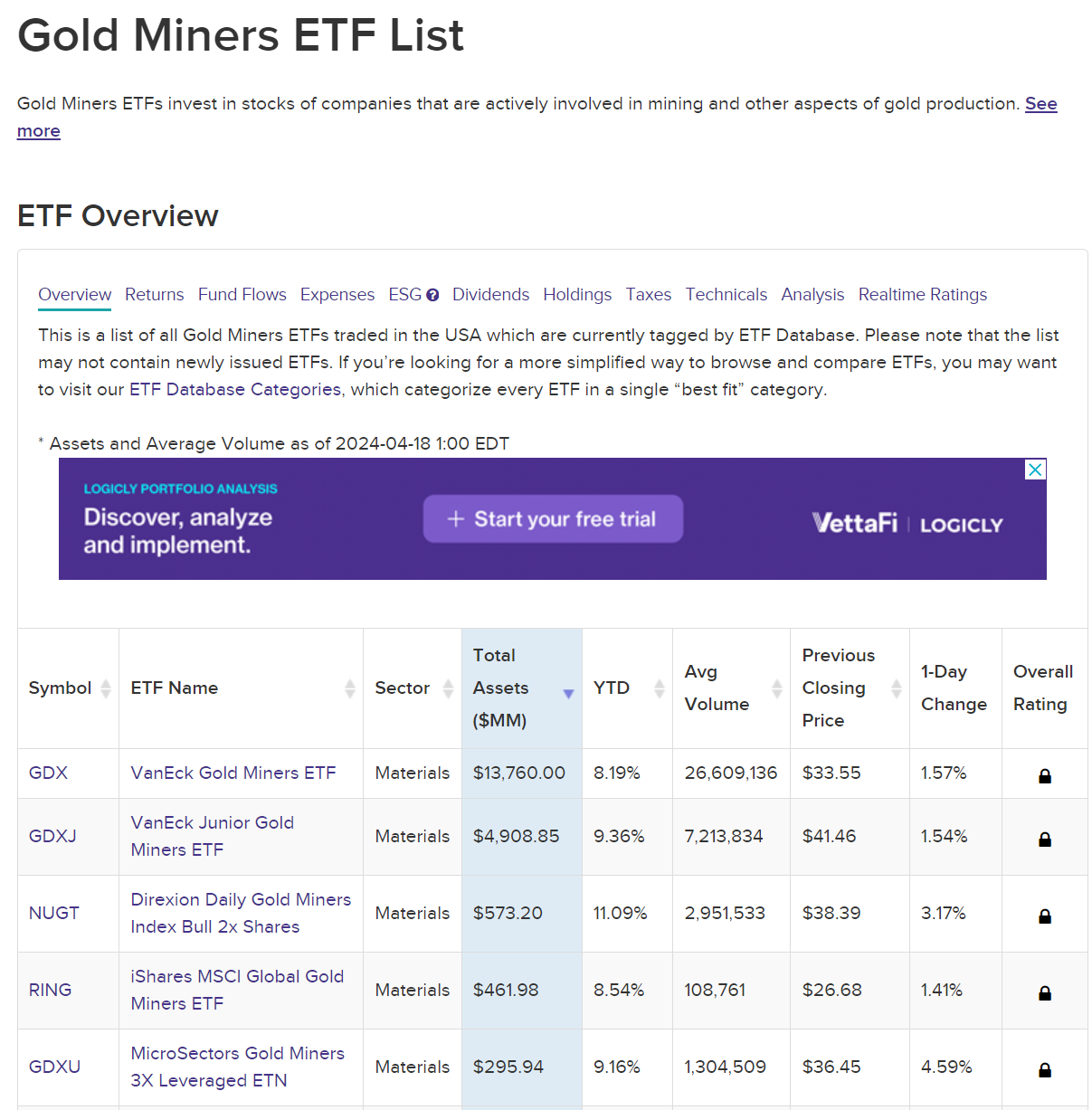
While these ETFs focus on gold mining stocks, their trends can vary due to different methodologies.
Remember, past performance isn't the only factor when evaluating ETFs. Consider aspects like liquidity and fees, and always approach investment decisions with caution due to market risks.
Risks associated with gold mining stocks
Gold price volatility: Fluctuations in gold prices can directly impact gold mining stocks. A rise in gold prices may boost stock prices, while a decline can lead to decreases.
Political and economic risks: Gold mining projects can be affected by government policies, taxation, permit approvals, and community opposition, potentially negatively impacting stock prices.
Operating costs: Fluctuating mining costs can affect profitability and, consequently, stock prices.
Macroeconomic factors: Economic cycles, interest rate changes, and monetary policies can influence the performance of gold mining stocks.
Additional Disclosures: This content is also not a research report and is not intended to serve as the basis for any investment decision. The information contained in this article does not purport to be a complete description of the securities, markets, or developments referred to in this material. The information has been obtained from sources considered to be reliable, but we do not guarantee that the foregoing material is accurate or complete. Furthermore, there is no guarantee that any statements, opinions or forecasts provided herein will prove to be correct.
This presentation is for informational and educational use only and is not a recommendation or endorsement of any particular investment or investment strategy. Investment information provided in this content is general in nature, strictly for illustrative purposes, and may not be appropriate for all investors. Read more