AI opportunities in 2024 - AI PC
In 2023, Artificial intelligence AI is the top theme for investors in 2023.
The rise of generative AI has driven advancements in various technology industries like chips, cloud computing, and software applications.
As we enter 2024, many investors wonder if there are still opportunities in AI.
The CES conference at the beginning of the year provided insights into new trends, with "AI PCs" emerging as a popular term and major tech companies actively investing in this field.
This article will explore what is the AI PC, why it may be the next big thing in AI, how it may change the PC industry, and who are the key players.
What is the AI PC?
The definition of the AI PC is currently unclear as it is a new term in the industry.
Essentially, an AI PC, or "AI-capable" PC, is a computer capable of running AI models on-premises, requiring a high-performance chip module.
Typically, personal computers are equipped with CPUs and GPUs. However, according to Canalys' definition, truly meaningful AI use cases on PCs must prioritize real-time responsiveness, low latency, and enhanced security. Therefore, an AI PC needs to be equipped with a dedicated chipset or module designed for accelerating AI computing tasks.
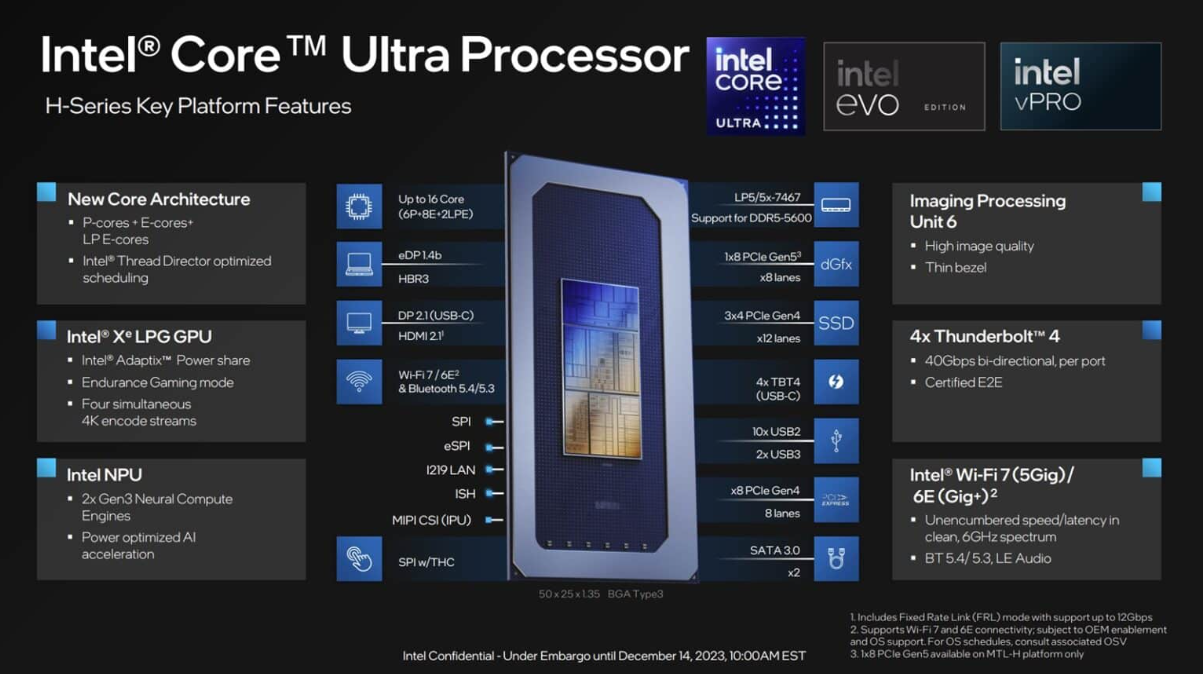
For instance, Intel's chipset for AI PCs includes a neural processing unit (NPU) alongside the traditional CPU and GPU to enhance efficiency and reduce energy consumption in AI computing operations.
Will AI PCs trigger a super replacement cycle for PCs?
Why is the market so excited about the AI PCs? This is because the AI PCs may trigger a replacement super cycle for PCs due to their potential to accelerate technological updates in the industry.
The overall PC market is experiencing a downturn.
The entire PC market has become highly mature, and without revolutionary technological innovations, the annual PC shipments remain relatively stable. According to IDC data, global PC shipments stayed around 260 million units from 2017 to 2019.
However, in 2020, as people gradually adopted remote work habits, PC shipments started to rise to 302.6 million units, with a year-on-year growth of 13.1%. By 2021, it further reached 348.8 million units, exhibiting a year-on-year growth of 14.8%.
Yet, as the pandemic gradually recedes, the reduction in global home-based scenarios in 2022 led to a slump in demand, causing PC shipments to decline to 292 million units. In 2023, the PC market continued to struggle, with a total annual PC shipment of 259.5 million units, marking a year-on-year decline of 13.9%.
Against this backdrop, the entire PC industry is seeking a second wave of growth, and the groundbreaking "AI" naturally becomes their hopeful "savior." Therefore, it is no surprise that many tech companies are betting on the AI PC.
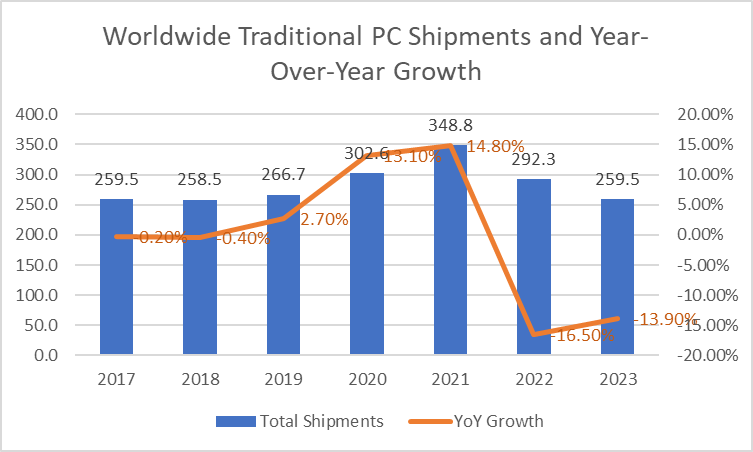
Source: IDC. Shipments are in millions of units.
Is 2024 going to be the year of AI PCs?
As AI PC products start hitting the market, there's a chance we'll see lots of people upgrading their computers. Kedar Kondap, Qualcomm Technologies’ Senior Vice President and GM of Compute and Gaming, thinks AI will kick off a super upgrade cycle for PCs, starting in 2024.
IDC, a research group, adds that people wanting to switch to Windows 11 will also drive more PC upgrades. Combining these factors, IDC predicts that global PC shipments will bounce back in 2024, growing by 3.4%.
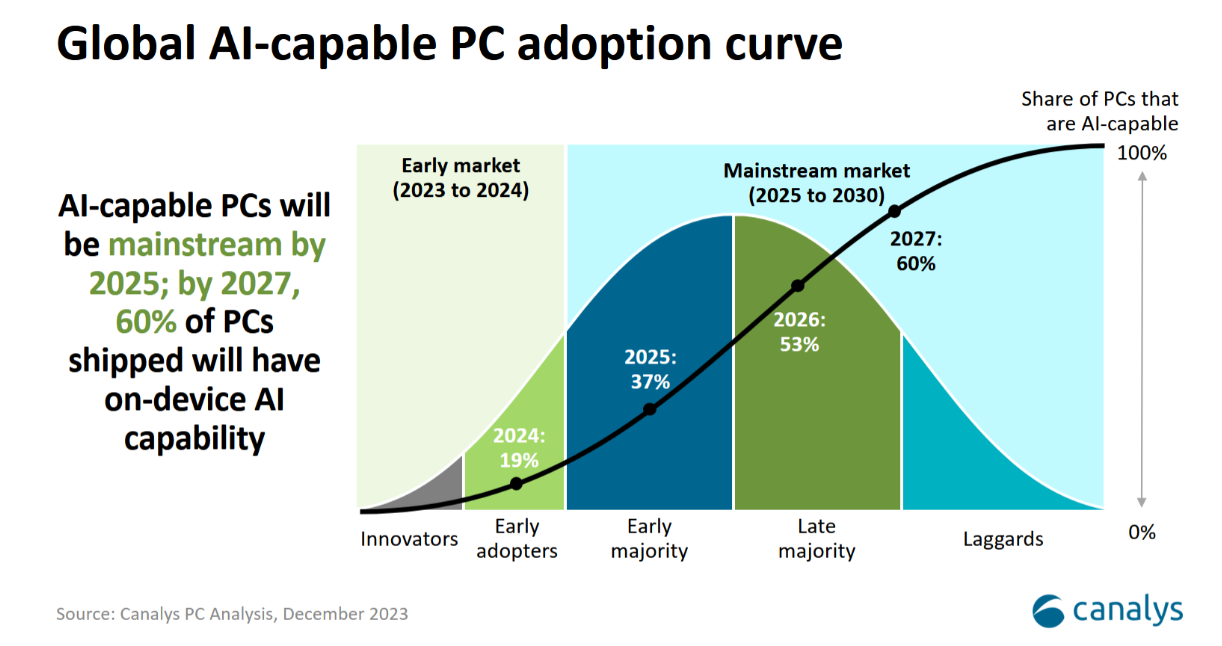
A similar conclusion can be drawn from a report by another research firm, Canalys, which anticipates that 2024 will mark the initial surge of AI PCs. They think AI PCs are expected to become mainstream products in the market by 2025, with AI PC sales accounting for over half of total PC sales in 2026, reaching a shipment share of 60% by 2027.
Which companies are positioning themselves in the AI PC market?
Faced with this historic opportunity in AI, major players are rushing to make strategic moves. Looking at the industry chain, this involves both chip manufacturers and terminal computer companies. Here is a compilation of publicly available information to give you an overview of the companies involved in this landscape.
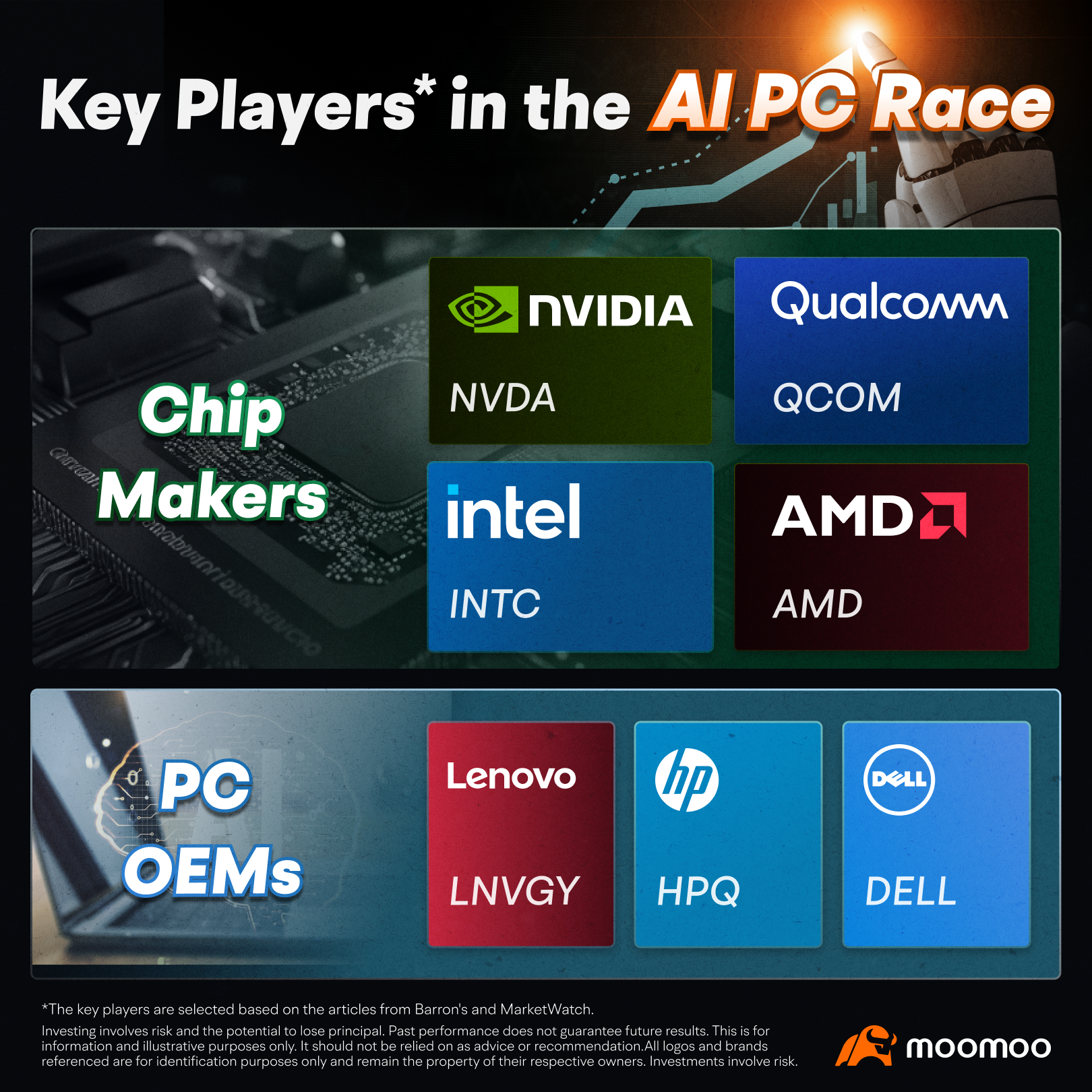
*OEM stands for "original equipment manufacturer." The term initially referred to the company that made the products (the "original" manufacturer), but eventually became widely used to refer to the organization that buys the products and resells them. Many of the largest PC vendors are OEMs, including HP, Dell, and Lenovo.
Intel (INTC)
As one of the oldest computer chip processor manufacturers, Intel is also among the pioneers in AI PC chip development. In mid-December 2023, Intel officially launched the Intel Core Ultra mobile processors for AI PCs, calling it the most significant architectural shift in the company's 40-year history. The Intel Core Ultra comes with an AI accelerator – the Neural Processing Unit (NPU) – providing high-performance AI acceleration and 2.5 times better energy efficiency. Over 230 models are expected to feature this processor in 2024, marking the beginning of a new AI era.
Qualcomm (QCOM)
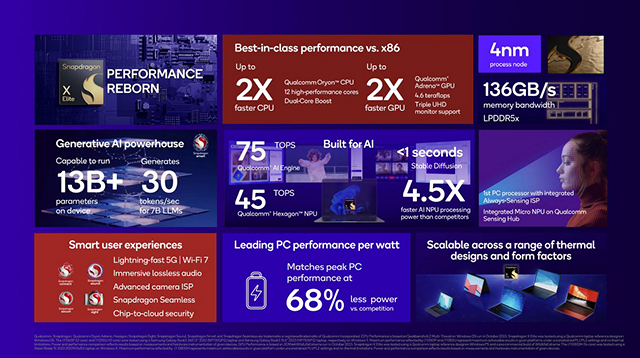
Known for mobile chips, Qualcomm also entered the AI PC realm last year. In October 2023, they unveiled the Snapdragon X Elite platform designed for PCs. This chipset stands out with its advanced Oryon architecture CPU, claimed to be faster and more energy-efficient than Apple's M2 Max and Intel. Alex Katouzian, Qualcomm's Senior Vice President, highlighted the chip's ability to process AI models with 13 billion parameters. PCs equipped with the Snapdragon X Elite are expected to hit the market in mid-2024.
Advanced Micro Devices (AMD)
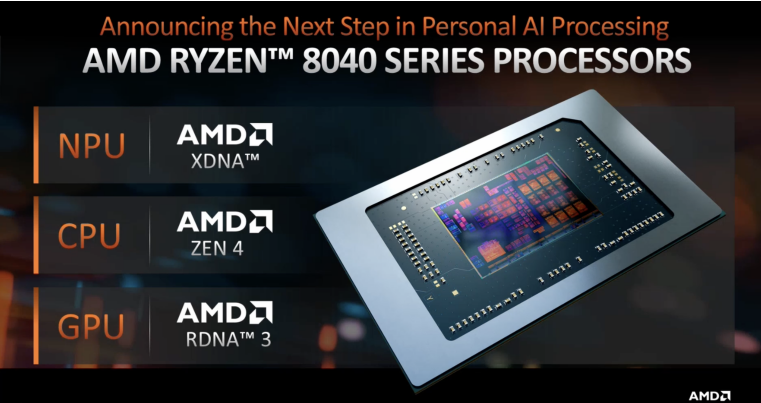
AMD, a major player in PC CPUs, is making strides in the AI PC arena. In December 2023, they announced the next-gen Ryzen 8040 series processors featuring the Ryzen AI NPU module, providing 1.6 times better AI performance. The Ryzen 8040 series processors are expected to be broadly available from leading OEMs including Acer, Asus, Dell, HP, Lenovo, and Razer, beginning in Q1 2024.
Nvidia (NVDA)
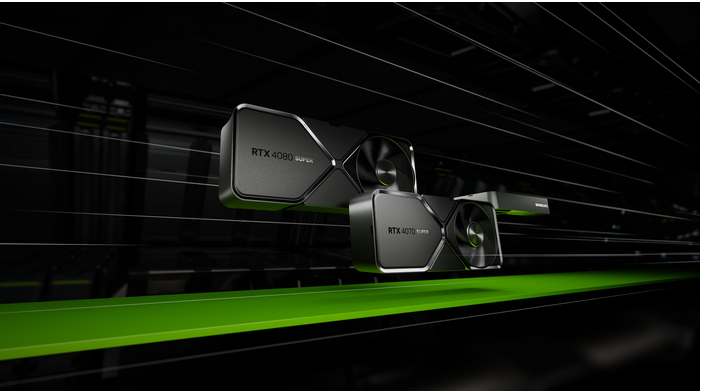
Before the rise of generative AI, Nvidia dominated the 'Gaming' segment in PCs. However, in 2023, Nvidia shifted focus to the data center business, momentarily quieting their PC endeavors. At the CES event in early 2024, Nvidia unveils AI applications and new GPU products for PCs, including the GeForce RTX 40 SUPER series graphics cards. These new graphics cards will be featured in leading manufacturers, including Acer, ASUS, Dell, HP, Lenovo, MSI, Razer, and Samsung, hitting the market in January 2024.
Lenovo (LNVGY)
Lenovo quickly embraced AI PCs and launched three new models in mid-December 2023: the Lenovo ThinkPad X1 Carbon, ThinkPad X1 2-in-1, and IdeaPad Pro 5i. These PCs are equipped with the latest Intel Core Ultra processors and operate on the Windows 11 system.
HP Inc (HPQ)
HP is also stepping into the AI PC game, planning to release its first AI PC in the second half of 2024. While HP sees AI PCs driving market growth, they expect customers to take some time to adopt computers with AI acceleration features.
Dell Technologies (DELL)
Known for laptops and screens, Dell entered the AI field, initially focusing on AI servers and infrastructure. Now, they've also ventured into AI PCs. On January 4, 2024, Dell introduced three new AI PCs: XPS 13, XPS 14, and XPS 15, all featuring Intel's Core Ultra processors.
The Potential Risks of AI PCs
Certainly, AI PCs come with inherent risks. Currently, AI PCs are still in the conceptual phase. While some manufacturers have introduced related products, there is skepticism regarding whether users truly have a demand for upgrading. This uncertainty stems from two main considerations:
Affordability: With a limited number of AI PC products currently available, the specific pricing remains uncertain. If the cost of upgrading is high, price-sensitive users may opt against the upgrade.
Practicality: For most consumers, existing cloud-based AI applications may already meet their needs. The question arises whether there's a real need to have AI computing power deployed locally on personal computers.
Comparing this to the past scenario of 5G smartphone upgrades, where 5G phones were initially more expensive than 4G ones. Despite the heavy promotion of 5G's advantages, some users found the experience not significantly different. Convincing consumers to pay more for 5G was challenging.
Hence, 5G is no longer a significant selling point. People only started choosing 5G phones during upgrades when the prices aligned with previous generations.
The question lingers: Is AI PC just a marketing gimmick like 5G, or can it genuinely revolutionize the PC industry, similar to how smartphones transformed the mobile industry over a decade ago? This question requires thoughtful consideration.
Summary:
AI PC Definition: AI PCs are computers capable of running AI models locally, requiring high-performance chip modules. However, the industry lacks a clear definition.
Impact on the PC Market: AI PCs are expected to spark a significant upgrade cycle in the PC market, with a wave of replacements predicted to begin in 2024.
Major players are actively entering the AI PC space. This includes chip-level strategies from Intel, Qualcomm, AMD, and Nvidia, as well as efforts from terminal computer manufacturers like Lenovo, HP, and Dell.
Potential Risks: Risks associated with AI PCs include high costs and perceived practicality issues, reminiscent of challenges faced by 5G smartphones.
This presentation is for informational and educational use only and is not a recommendation or endorsement of any particular investment or investment strategy. Investment information provided in this content is general in nature, strictly for illustrative purposes, and may not be appropriate for all investors. Read more