Blue Shield of California Drops CVS Health (NYSE: CVS): What Are the Implications?
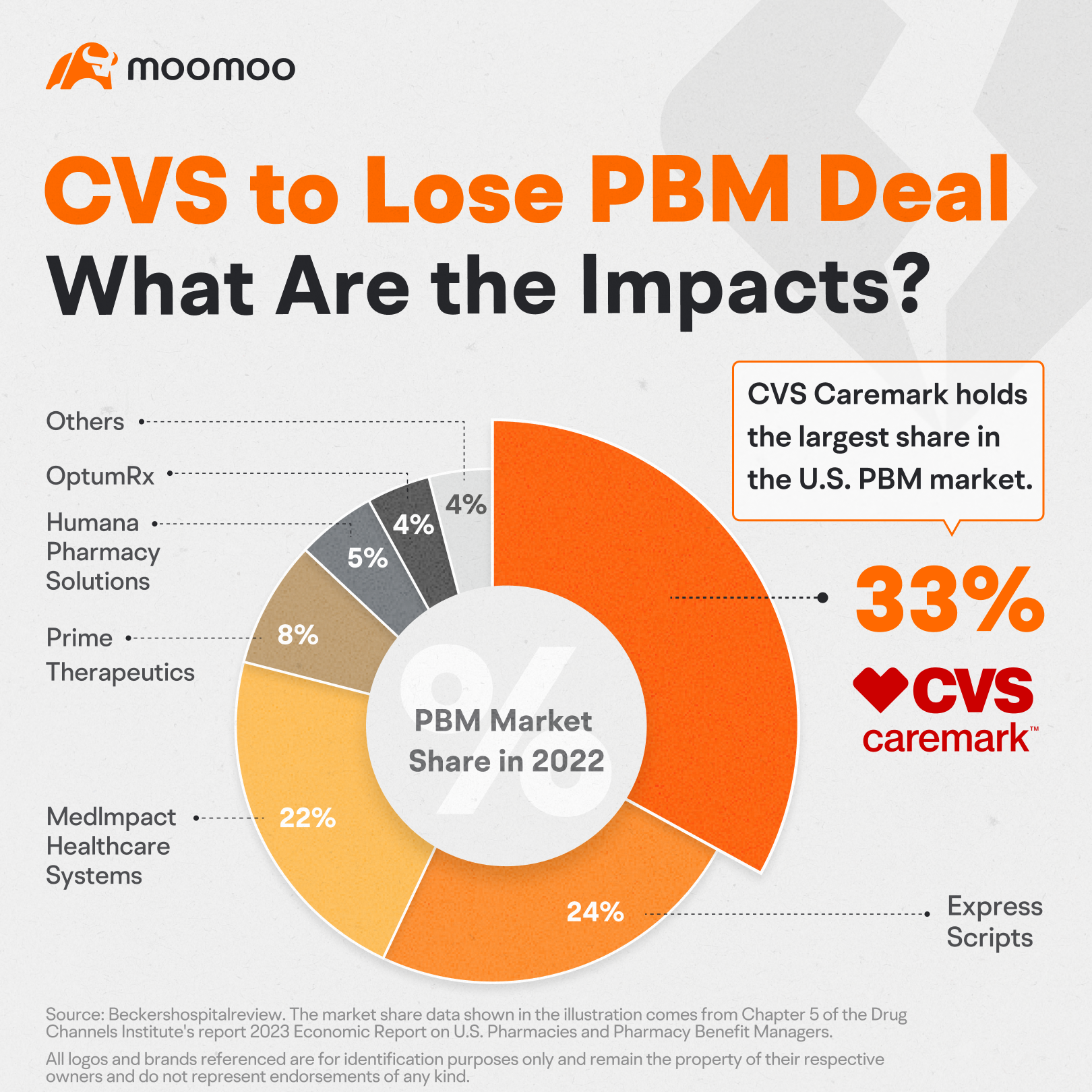
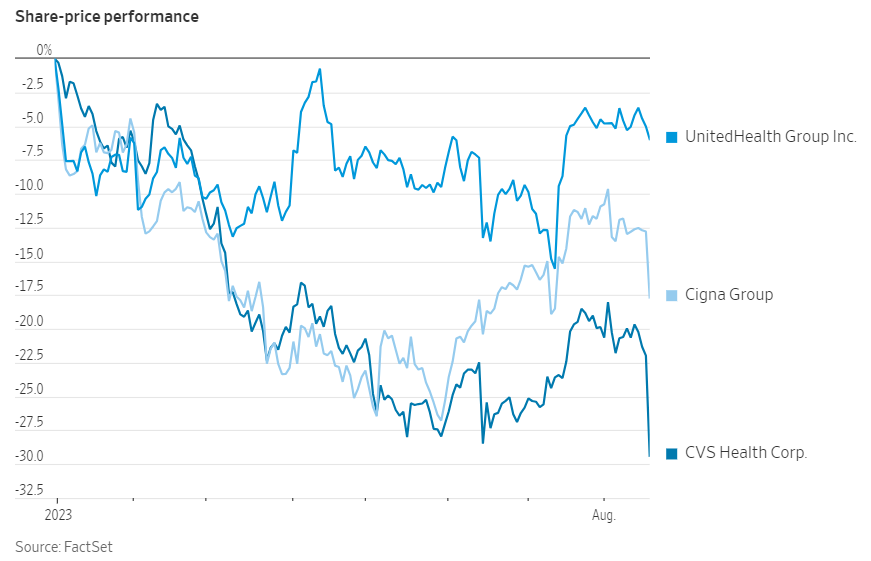
On August 17, 2023, CVS Health (NYSE: CVS), the parent company of CVS Caremark, a prominent pharmacy benefit manager with a 33% market share in 2022, witnessed an 8.5% decrease in its stock price.
This decline was triggered by the announcement made by Blue Shield of California, one of the state's largest health insurance providers, stating their intention to discontinue the use of CVS Caremark as their main pharmacy benefit management service (PBM).
In this article, we will explore the potential implications of this event and analyze the opportunities and risks associated with investing in CVS stock.
What is the connection between Blue Shield of California and CVS?
Blue Shield of California is a non-profit health insurance company with 4.8 million members and has partnered with CVS Health for over 15 years.
Simply put, Blue Shield's decision to part ways with CVS Caremark is aimed at reducing costs. Blue Shield's CEO claimed that partnering with new industry players such as Mark Cuban and Amazon could significantly reduce costs compared to working with Caremark. This shift is expected to save $500 million on medications. Blue Shield's actions will take effect in 2024, which is when the contract signed with CVS in 2021 will end.
However, Blue Shield is not completely abandoning CVS Caremark. The company will still use Caremark for specialty drugs to provide prescriptions and services for patients with complex conditions, which is the most profitable part of CVS in Blue Shield, accounting for roughly 50% of the insurer's pharmacy spend. Still, the loss of the PBM portion of the contract could lower CVS earnings per share by 2 to 6 cents in 2025, according to analysts at Evercore ISI.
According to Blue Shield's new arrangement, Cost Plus Drugs will be responsible for the generic drug business, Amazon will be responsible for the mail-order business, Abarca Health based in Puerto Rico will manage claims, and Prime Therapeutics will handle drug pricing negotiations.
The announcement of this high-profile experiment has piqued market interest, with Bloomberg analysts stating, "We’re skeptical this approach is sophisticated enough and practical, yet it bears watching".
What's next for CVS's PBM operations?
For a more detailed analysis of CVS's business composition and the definition of PBM business, please refer to our first article on CVS Opportunity Mining.
Opinions on the future of CVS's PBM business are mixed.
Some believe that CVS is likely to face more uncertainty with its PBM business.
According to Morningstar, in 2022, PBM accounted for approximately 37% of CVS's operating profit, making it the company's largest business sector, followed by retail stores (33%) and health insurance (30%). Losing a key customer would be a major blow to CVS's most profitable business.
Over the last decade, the three largest PBMs, CVS, Cigna CI, and UnitedHealth UNH, have been consolidating their power. While Blue Shield's decision to end its partnership with CVS may not directly impact the other two giants, the emergence of new players like Amazon in recent years aims to disrupt the PBM industry and reduce drug prices in the United States.
According to Blue Shield representatives, transitioning to a new PBM could save them 10%-15% on drug costs. If this expectation is realized and new PBMs gain more customers, it could weaken the profitability of the industry. This shift could mark the beginning of changes for these PBM giants and potentially alter the competitive landscape of the industry. For CVS, the loss of a major customer presents a challenge to its strong moat, which is why the market reacted strongly to this news.
Evercore ISI also holds a similar view, stating that while partnering with multiple new companies to provide drug benefits may be challenging, if Blue Shield's new strategy works, it could inspire other firms to follow suit, potentially creating long-term uncertainty for CVS's PBM business due to changing market dynamics.
Others think that Blue Shield's decision may not be as detrimental to CVS as anticipated, citing two reasons:
1. CVS is strong in specialty drugs.
CVS dominates in specialty drugs, which account for the largest portion of Blue Shield's drug spending. According to JPMorgan analyst Lisa Gill, generics make up only 15% of Blue Shield's drug spending. While one of Blue Shield's new channels, Cost Plus, offers over 1,000 generic drugs, it has few specialty drugs available. Retaining CVS's exceptional specialty drug business emphasizes the value of traditional PBM practices and reveals the limitations of the new supply chain.
Health economist Craig Garthwaite believes that CVS's ability to keep its specialty drug division supports the notion that "the three major PBM giants are not monopolistic capitalists but are doing important things for people." He also bets that California Blue Shield's savings will not reach $500 million. Goldman Sachs analysts offer a similar view: "It has been difficult historically to replicate the scale value provided by the three major PBMs."
2. The mail-order delivery business taken over by Amazon, one of CVS's new competitor, makes up only a negligible market share
Amazon's foray into the mail-order delivery business has raised concerns about its potential impact on CVS. However, analyst Gill points out that mail-order delivery accounts for only a small proportion of Blue Shield's total medication costs since only specialty drugs can be delivered this way. Gill also notes that while the number of mail-order prescriptions significantly increased during the pandemic, in-person pickups have not been entirely replaced. As a result, worries about Amazon's impact on CVS's market position may be exaggerated.
Opportunities and risks reflected in the CVS stock price
Investment opportunities in CVS stock are highlighted by Morningstar and Nasdaq in three areas.
Firstly, CVS shares remain significantly undervalued, as do most Managed Care Organizations (MCO) shares. Secondly, as CVS's drug sales are largely unrelated to consumers' disposable income, it maintains a relatively high revenue growth even during macroeconomic turbulence. Moreover, CVS's stock buybacks in the next five years have the potential to boost adjusted earnings per share, potentially translating into mid-single-digit annual growth rates.
On the other hand, Morningstar and The Motley Fool analysts have identified three risks for CVS over the next two years.
Firstly, the potential loss of an estimated $35 billion PBM contract in 2024 increases overall uncertainty regarding the PBM business. Secondly, CVS has delayed its goal of achieving double-digit earnings per share growth due to significant challenges in the Medicare Advantage sector that are expected to arise between 2024 and 2025. Lastly, the emergence of new entrants in the PBM industry, as mentioned in Blue Shield's recent announcement, may threaten CVS's leading position, which explains why Morningstar downgrades its long-term profit growth estimate for CVS.
This presentation is for informational and educational use only and is not a recommendation or endorsement of any particular investment or investment strategy. Investment information provided in this content is general in nature, strictly for illustrative purposes, and may not be appropriate for all investors. Read more