What's Behind the Growth of Amazon Stock?
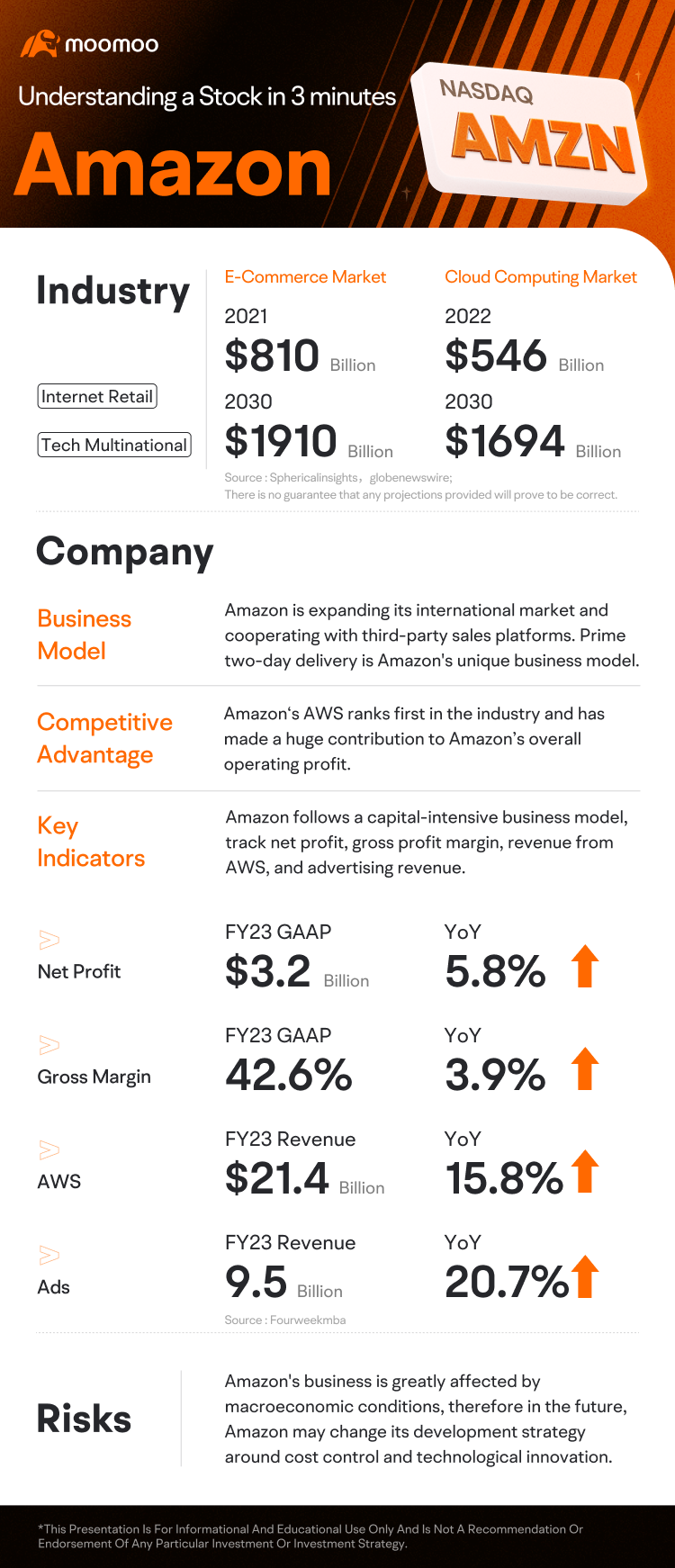
Since Amazon's IPO in 1997, its market capitalization has grown by almost 6,053 times to reach a high of $1.82 trillion in 2021.
While many investors view Amazon as an e-commerce company, it also dominates the cloud computing industry.
However, the question remains whether Amazon's business model can support its future growth. In this article, we will explore the story behind this e-commerce giant's remarkable success.
The Early Years: From a Small Virtual Bookseller to an International Retail Giant
When we talk about Amazon, we have to mention its legendary founder, Jeff Bezos. After graduating from Princeton, Bezos worked for a Wall Street bank and a famous hedge fund. In 1995, keenly aware of the Internet's blowout growth, he quit his job and set up Amazon, the very first online retail company in the US. At that time, people around him were cynical about his decision.
Founded in the garage of Bezos' rented home, Amazon started its business as an online bookshop. It quickly stood out and won customers' hearts due to its vast selection, lower prices, and convenient delivery compared to offline bookstores. Amazon opened markets in all fifty states of the US in a month. By the end of 1996, more than 2.5 million books were available on its website, making it the "biggest bookstore on Earth."
Amazon went public only two years after its founding. Bezos began to realize selling books online was just the start of Amazon's journey. In 1998, Amazon acquired an Internet movie database company and entered the online music market. 1999 saw Amazon's rapid expansion of retail scope through online pharmacies, pet supplies stores, and household products stores.

The dot-com bubble peaked in the 90s, with numerous internet companies growing at an unprecedented rate. However, thanks to its keen business sense, Amazon refocused from the Internet to the cash flow. It launched a program called "debt conversion", selling $681 million in convertible 10-year notes to overseas investors. The plan was executed just a month before the stock market crash. Without that cushion, Amazon would almost certainly have faced the prospect of insolvency over the next year.
While other internet companies were struggling with mergers and bankruptcy, Amazon survived due to its exceptional management skills and a bit of luck.
Key to Success: Customer Centricity and Technology
Amazon's success is greatly attributed to Bezos' foresight and bold action. When talking about his business in 2011, he said, "If we think long term, we can accomplish things that we wouldn’t otherwise accomplish. Time horizons matter. They matter a lot. If you're willing to invest on a seven-year time horizon, you're now competing against a fraction of those people because very few companies are willing to do that."
Bezos used the term "flywheel effect," which occurs when small wins accumulate over time, creating momentum that keeps the business growing. Amazon's flywheel is composed of the following parts:
● Amazon's mission is "to be Earth's most customer-centric company." Under this guidance, it first expanded its international markets and opened third-party sales platforms, offering frequently used services and products at lower prices to attract more consumers.
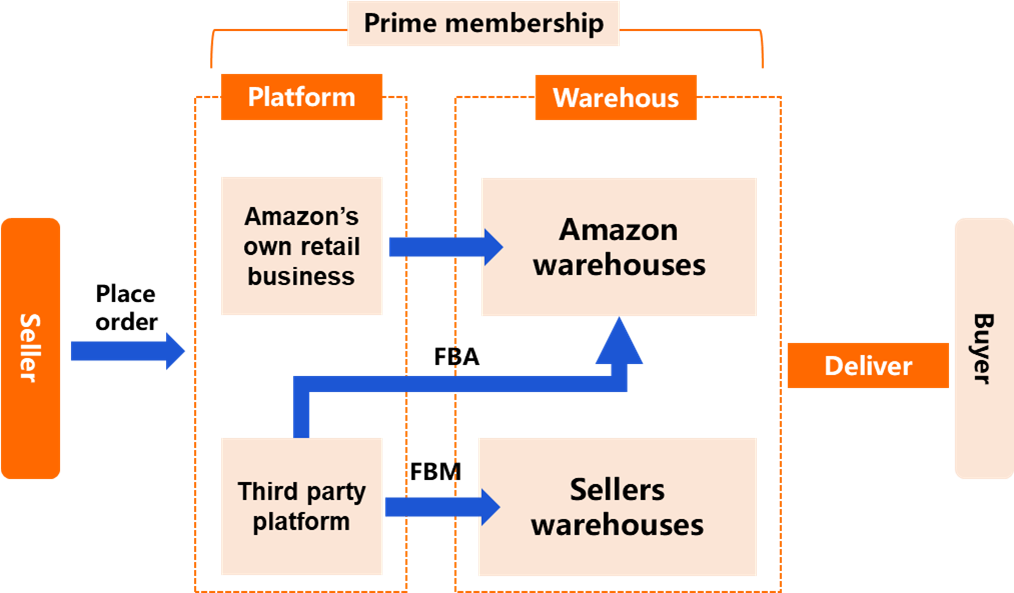
● Prime is the frame of the flywheel in which Amazon first applied its unique business model. Up to now, over half of US households are Amazon Prime members.
● The logistics supply chain is the tire of the flywheel. Amazon reached a mutually beneficial partnership with UPS to serve Prime members. Besides, it established a fulfillment by Amazon (FBA) system for third-party sellers, effectively reducing costs and ensuring nearly all Prime members' deliveries were generally completed in two days.
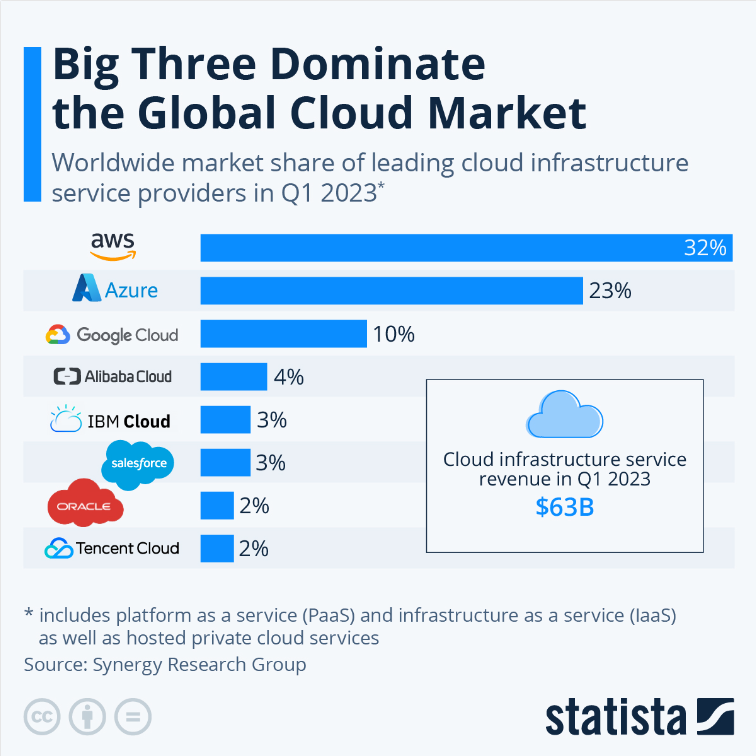
● AWS lubricates the flywheel. Amazon Web Services (AWS) is Amazon's cloud service platform that provides users with a wide range of IT services, including servers, storage, networking, remote computing, email, mobile development, and security management. AWS dominates the global cloud services market with significant technological and scale advantages.
Bezos has applied conventional wisdom to his Internet business, emphasizing economies of scale and reducing marginal costs to boost competitive power.
Behind the Stock: AWS Contributes to the Transformation
After the dot-com bubble collapsed in 2000, Amazon's stock price plummeted by over 90%. From 2001 to 2008, Bezos spent eight years integrating the company, setting the stage for reigniting its growth momentum and creating high barriers to entry.
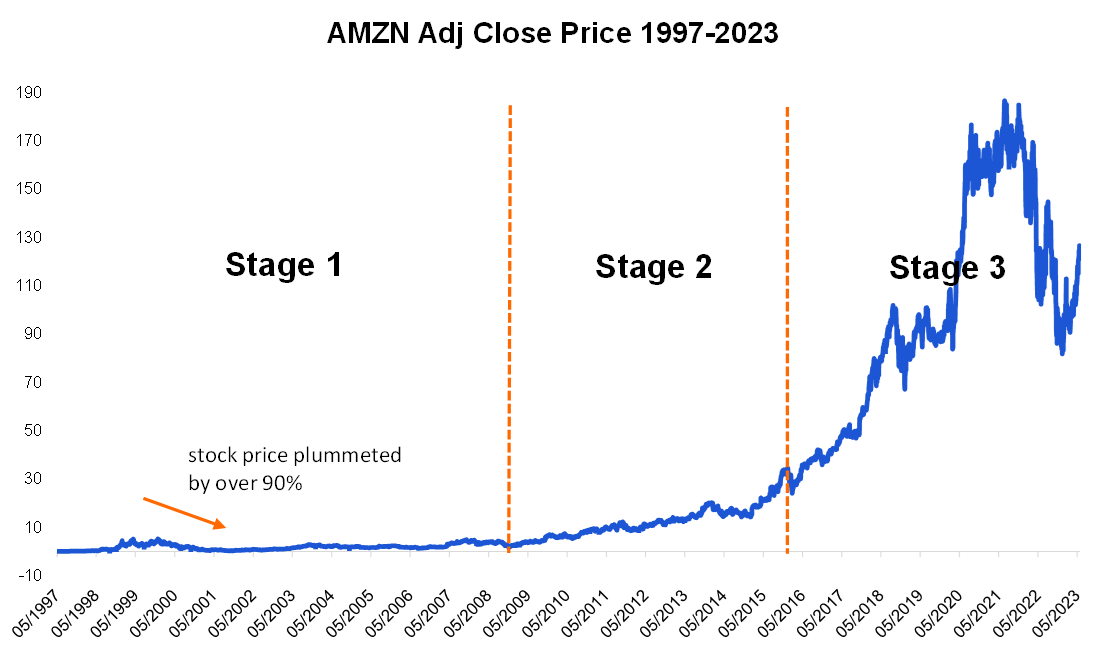
What are the reasons for the explosive growth of its stock price after 2015? We may find some clues in its earnings reports. Amazon briefly went through three phases of development:
- From 1997 - 2009, Amazon invested heavily in building a modern logistics system;
- From 2010 - 2015, Amazon actively expanded into cloud computing;
- From 2016 - present, logistics and technology gradually became its double moat.
The considerable traffic accumulated in the previous period was converted into profits. According to Amazon's annual report, its AWS capital expenditures, such as the purchase of large server equipment, experienced a significant increase since 2010. With a fixed primary cost of AWS, the operating margins are relatively high. Consequently, Amazon's gross margin increased rapidly after 2012 as AWS accounts for a large proportion of its business.
Over the years, Amazon's AWS service has accumulated hundreds of thousands of enterprise and institutional customers from more than 190 countries, including almost 90% of Silicon Valley startups, large corporations such as Adobe and Netflix, and higher education institutions such as Harvard and MIT. It has even earned the trust of the CIA, which has high requirements for information security. The outstanding performance of AWS boosted the transformation of Amazon from a retail giant to a tech giant.
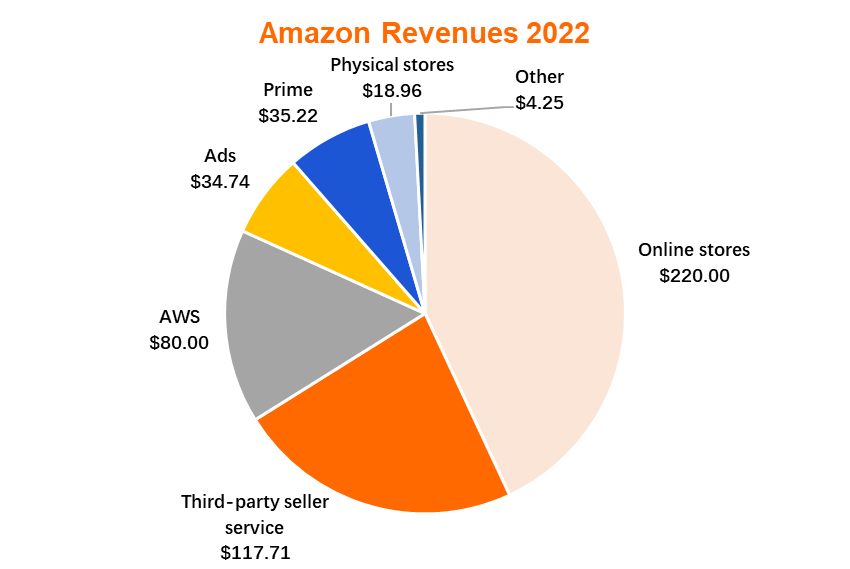
Is retail still its core business? If we look at Amazon's revenue composition in 2022, we can see that the e-commerce business still accounts for the majority of its revenue. After surpassing eBay in market cap in 2008 and later Walmart in 2015, Amazon has retained its leading position in the e-commerce industry in Europe and the US. The CTO Werner Vogels once stated, "Amazon has always been, at its heart, a technology company – it's what has allowed us to grow and continue to satisfy our customers."
Future Opportunities and Challenges
Having learned about its growth story, You may be wondering what the future may hold for Amazon. In 2022, Amazon weathered the impact of rising macro interest rates and inflation pressures. In Q1 2023, it reported better-than-expected quarterly results.
Jesse Cohen, senior analyst at Investing.com, believes that Amazon's strong performance may further fuel the current rally in tech shares. "The results indicate that ongoing cost-cutting measures are having a positive impact on Amazon's business prospects. Amazon's strong guidance for Q2 revenue is another indicator that the company may be starting to come out of the woods." Moreover, its breakthrough and expansion in new areas will gradually challenge prior leaderships.
From a longer-term perspective, Dr. Robin Gaster at CEOWORLD magazine believes that Amazon is turning from growth to profitability. While AWS will continuously bring cash flow and rapid growth, its brick-and-mortar business may be less impressive. Amazon has shuttered its healthcare service and closed some warehouses, cutting the enormous spending on warehouses and infrastructure. Gaster predicts that Amazon's own retail business will continue to shrink over the next five years, and it will monetize the existing customer base and vendor base, although those revenue sources may be nearing their limits. However, robots and automation may replace warehouse workers, and autonomous vehicles may be used for specific delivery routes in the future.
To sum up, Amazon's logistics and delivery have incomparable advantages in speed and professionalism thanks to steadfastly putting customers first. It has also challenged Google's dominance as a digital advertising giant.
Additional disclaimer:
This content is also not a research report and is not intended to serve as the basis for any investment decision. The information contained in this article does not purport to be a complete description of the securities, markets, or developments referred to in this material. The information has been obtained from sources considered to be reliable, but we do not guarantee that the foregoing material is accurate or complete. Furthermore, there is no guarantee that any statements, opinions or forecasts provided herein will prove to be correct.
This presentation is for informational and educational use only and is not a recommendation or endorsement of any particular investment or investment strategy. Investment information provided in this content is general in nature, strictly for illustrative purposes, and may not be appropriate for all investors. Read more