[October.2024] NVIDIA's challenger revealed: key things to watch in AMD's earnings
In the U.S. stock market, only the top players usually become $200 billion giants. But AMD is an exception. Despite being the perennial runner-up in both the CPU and GPU markets, its stock has skyrocketed over 60-fold in less than a decade, surpassing Intel to join the $200 billion club.
$Advanced Micro Devices (AMD.US)$ will release its latest earnings results after the market closes on October 29. Each time a company releases its financial report, it may present a potential trading or investment opportunity.
Can AMD keep up this impressive growth? To find out, let's look at its earnings report, focusing on four key metrics: data center revenue growth, CPU market share, inventory levels, and profitability.
1. Data Center business performance
The rapid rise in AMD's stock price in earlier years was primarily due to the expansion of its CPU-related business. However, recent record highs have been largely driven by the data center business, which focuses on GPU shipments and has benefited from the AI boom. Therefore, the growth of the data center business remains an important area of focus.
We can examine two aspects. The first is the growth rate of the data center business itself and its contribution to total revenue. AMD currently has four main business segments: data centers, client computing (mainly CPUs), gaming, and embedded solutions for custom enterprise chips.
The data center business was only separated into its own segment in Q2 2022. From that point until Q2 2024, three of AMD's four business segments have seen declines, with only the data center segment showing growth.
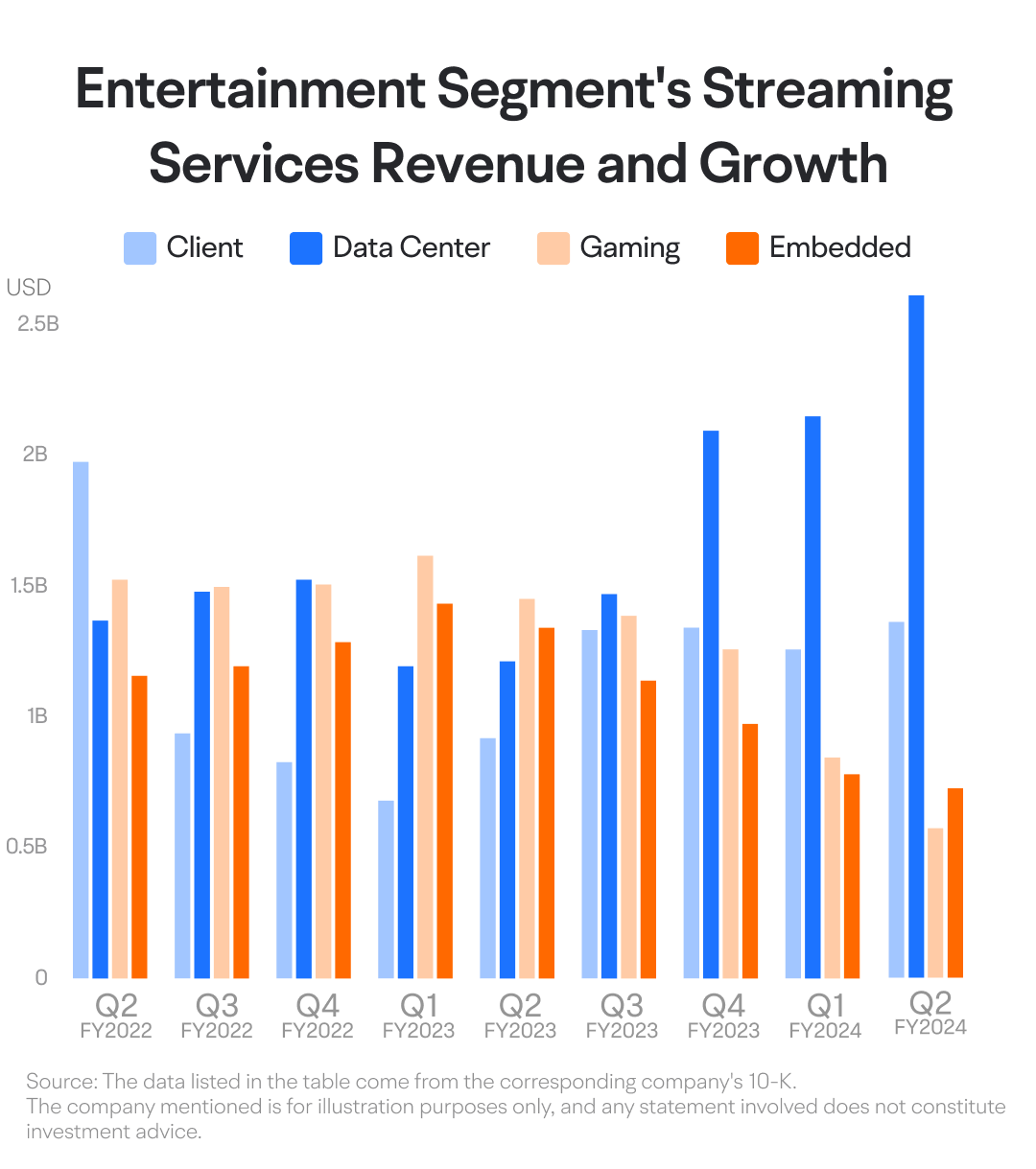
During this period, the data center growth rate fluctuated but eventually accelerated, increasing its revenue share from 22.7% in Q2 2022 to 48.6% in Q2 2024, overtaking the client computing segment as AMD's largest revenue source.
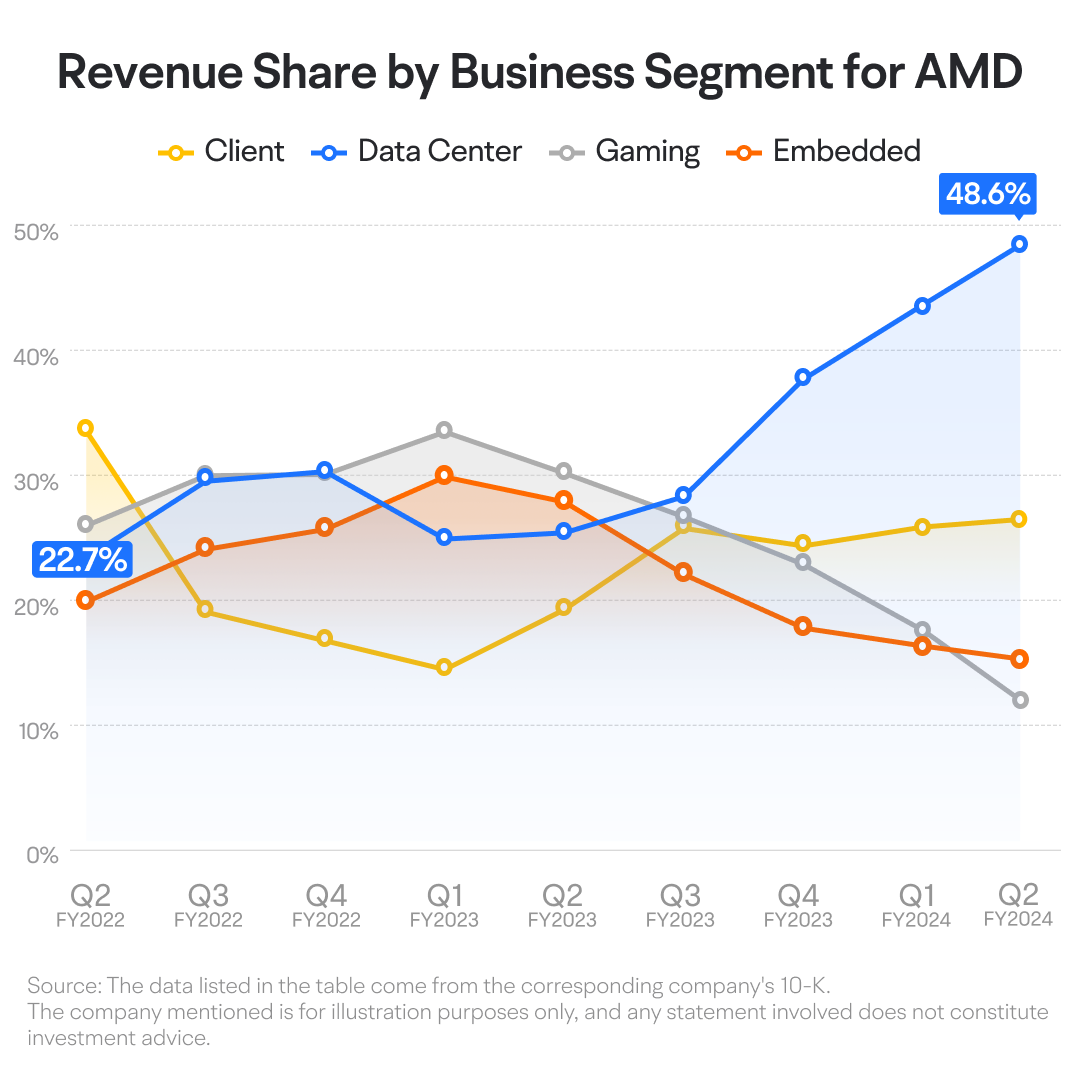
Future earnings reports should be monitored to see if AMD's data center revenue can continue its rapid growth and further increase its share of total revenue. Given the decline in other segments, the data center's performance may be crucial for overall revenue growth.
Additionally, it's important to compare the growth rate of AMD's data center revenue to that of industry leader NVIDIA. From Q4 2022 to Q2 2024, NVIDIA's data center revenue grew more than sixfold, while AMD's increased by only 71%. The gap between the two widened from about 2x in Q4 2022 to nearly 10x in Q2 2024.
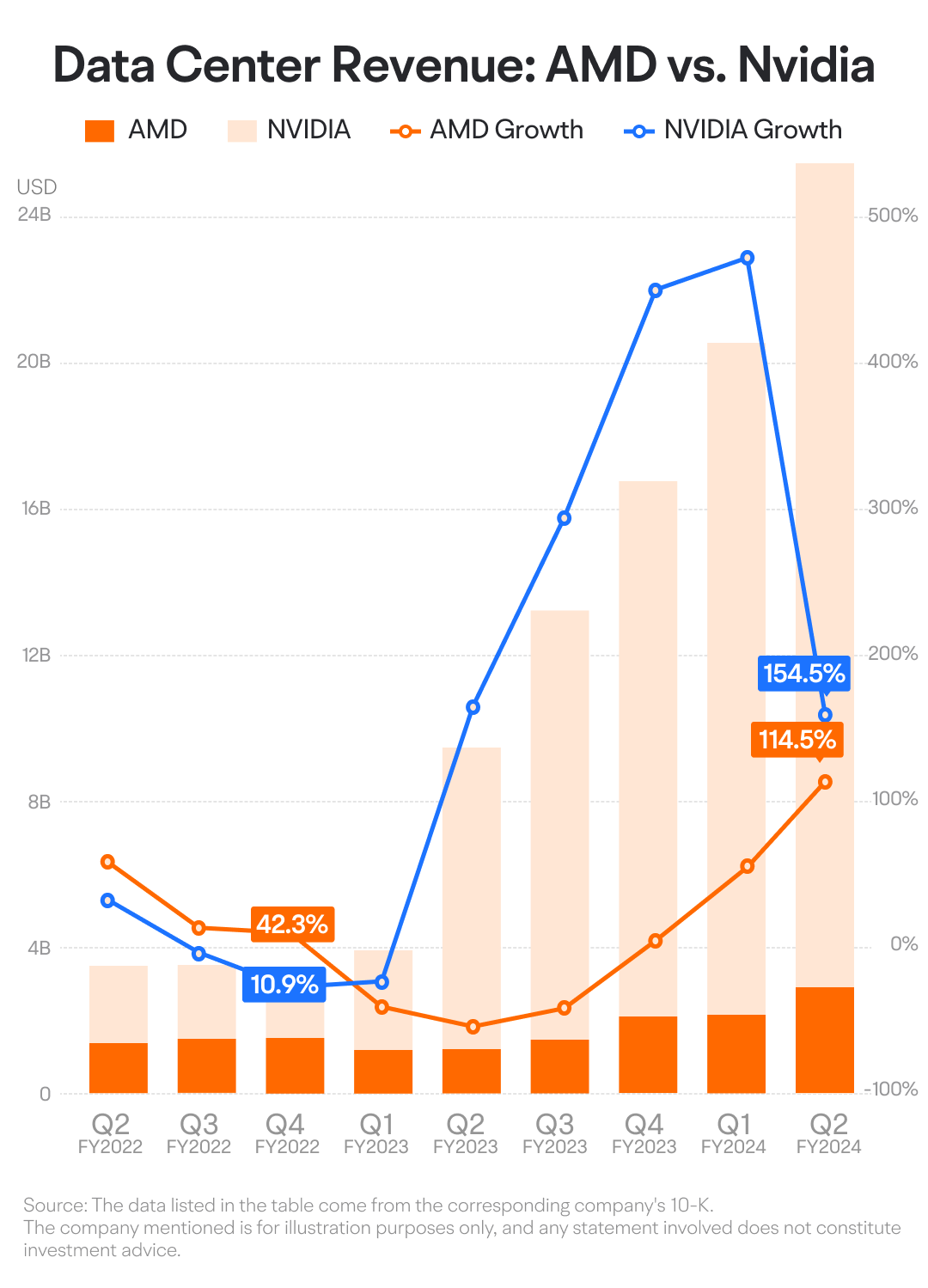
This disparity may be a key reason why AMD's stock, despite hitting new highs, has lagged behind NVIDIA's in terms of growth. Moving forward, we may continue to compare the data center growth rates of AMD and NVIDIA. If AMD can close the gap, its stock performance may improve. Conversely, if NVIDIA maintains its strong lead, AMD's stock could face pressure.
2. Changes in CPU market share
AMD's journey began with CPUs, leveraging Intel's x86 processor licenses to become the second-largest player in the market. Its CPU market share grew from single digits to over 30%, posing a significant threat to Intel's dominance.
All four of AMD's business segments are tied to CPU chips, making this a crucial foundation for the company. The rapid rise in AMD's stock price since 2016 is largely due to its expanding CPU market share. Therefore, any changes in CPU market share may be key to understanding AMD's stability and stock performance.
Although the CPU industry is currently sluggish compared to the explosive growth of GPUs, maintaining market share is vital. Once the CPU market enters a growth phase again, AMD's related business will naturally benefit.
According to CPU Benchmark, AMD's market share increased from 17.5% in Q3 2016 to 37.7% in Q3 2021, more than doubling and closing the gap with Intel. This period also saw AMD's stock price rise the fastest.
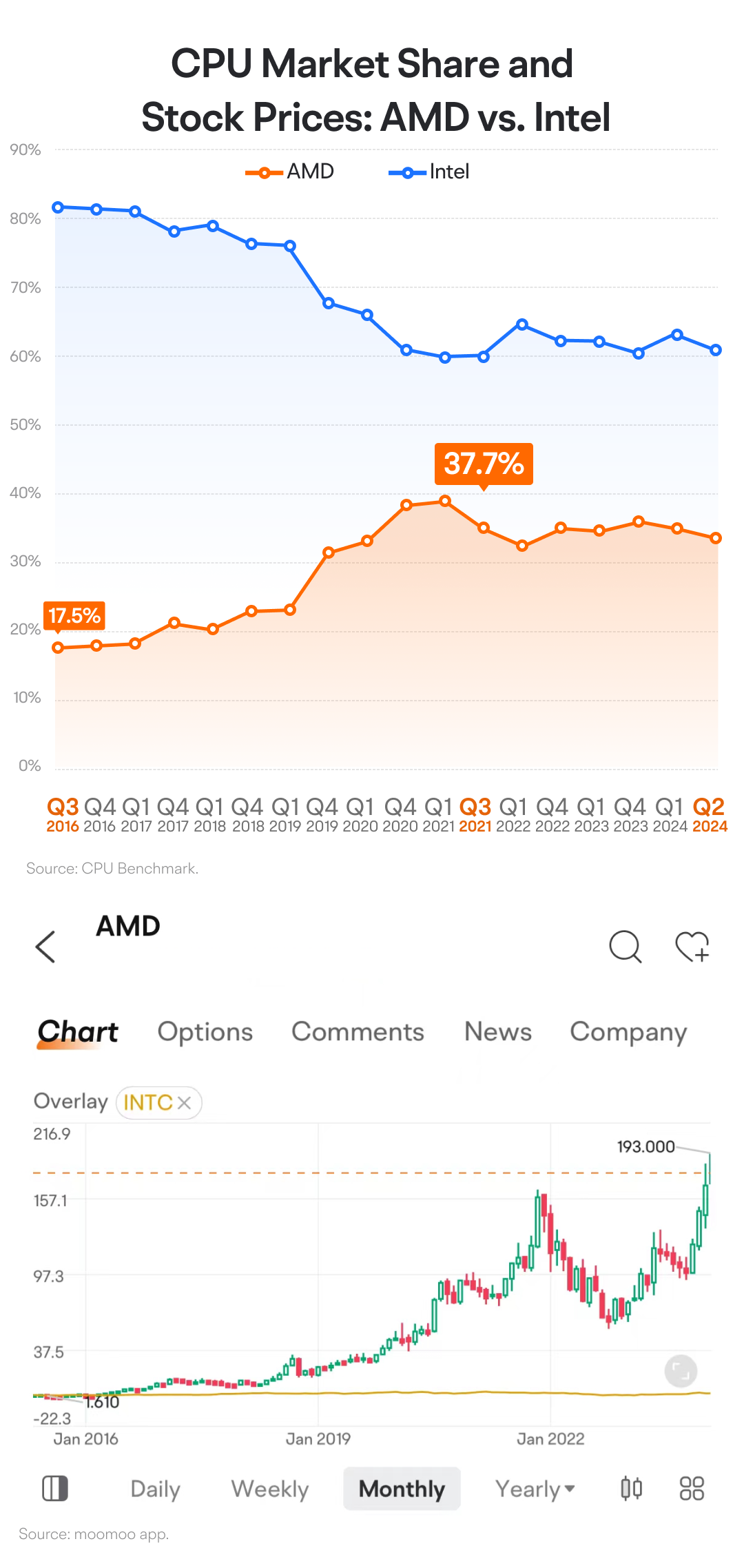
However, from Q4 2021 to now, AMD's CPU market share has plateaued and even slightly declined, leading to weaker stock performance until the recent AI-driven surge.
During this same period, Intel's market share was significantly eroded, and its revenue stagnated. Consequently, Intel's stock price increased by less than 50%, much lower than AMD's exponential growth.
Moving forward, we'll keep an eye on AMD's market share to see if it can resume its upward trajectory after this period of adjustment.
3. Inventory pressure
AMD's revenue primarily comes from CPU and GPU chips, which are part of an industry known for strong growth but also significant cyclical fluctuations. Inventory levels are a key indicator of these cycles and growth expectations. When demand drops, and supply exceeds demand, inventory levels rise, increasing sales pressure and negatively impacting stock prices. Conversely, when the cycle reverses, and demand improves, inventory levels decrease, and sales prospects brighten.
A useful metric for assessing inventory levels may be the inventory-to-revenue ratio. A higher ratio may indicate higher inventory levels and greater sales pressure.
Due to weak demand in the chip industry, AMD's inventory-to-revenue ratio has been rising since Q1 2022, peaking at over 80% from around 40%. This period also saw AMD's stock price drop sharply.
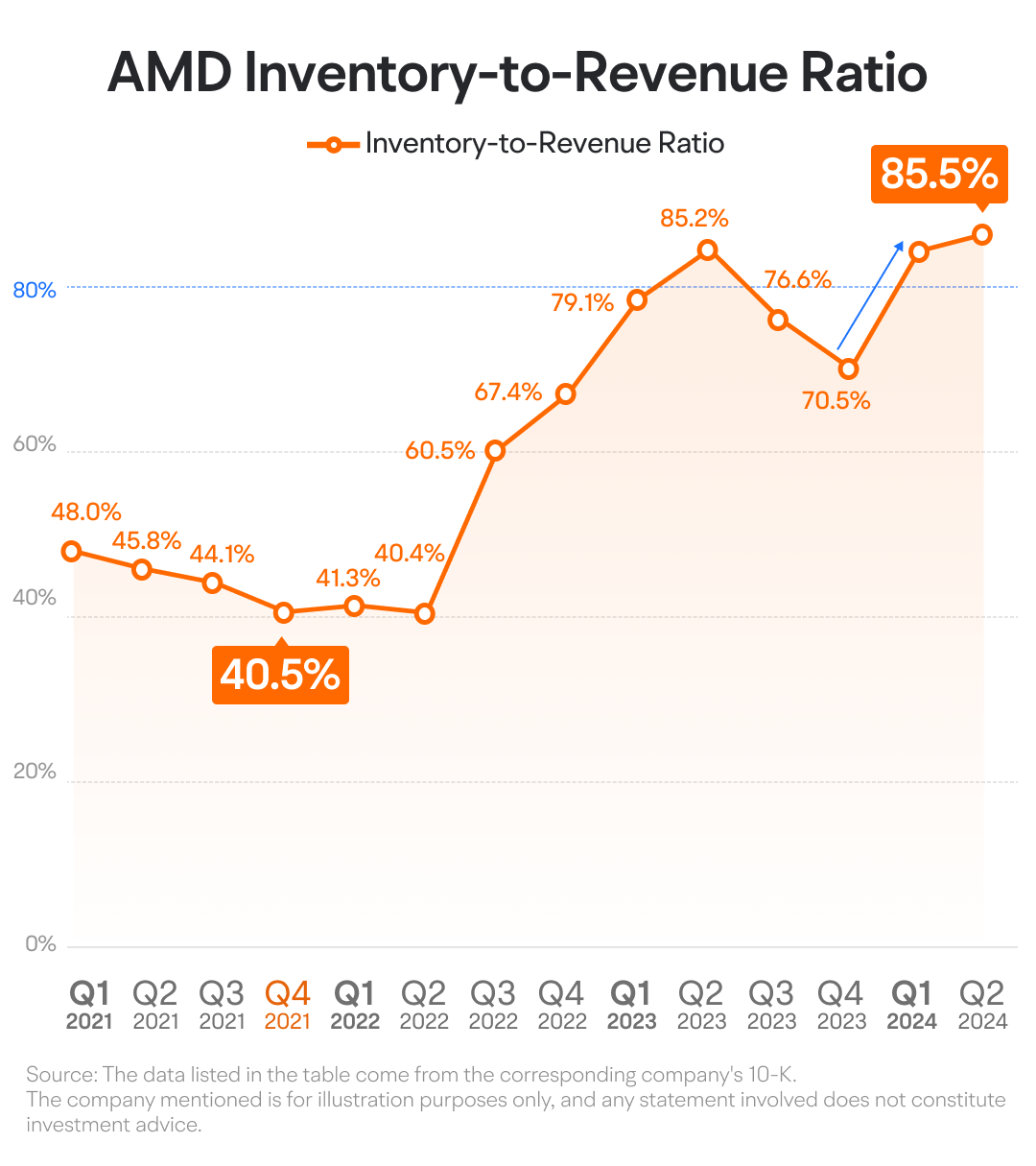
In Q3-Q4 2023, thanks to significant growth in AMD's data center business and a rebound in client computing, sales pressure eased, and the inventory-to-revenue ratio declined. However, this ratio surged again in Q1 2024 and remained high at 85.5% in Q2 2024. Moving forward, we should closely monitor the inventory-to-revenue trend to see if AMD can sustain its prior improvements.
In future earnings reports, we may closely monitor AMD's inventory-to-revenue ratio to see if the recent improvement trend continues.
4. Profitability
The cyclical nature of the chip industry significantly impacts a company's profitability, making changes in AMD's profitability metrics a key focus for the market.
From a gross margin perspective, AMD's adjusted gross margin saw a sharp decline in Q3 2022 but began to stabilize and recover in Q3 2023. By Q2 2024, the gross margin reached approximately 53.1%, marking an eight-quarter high and indicating an overall improvement in the business cycle.
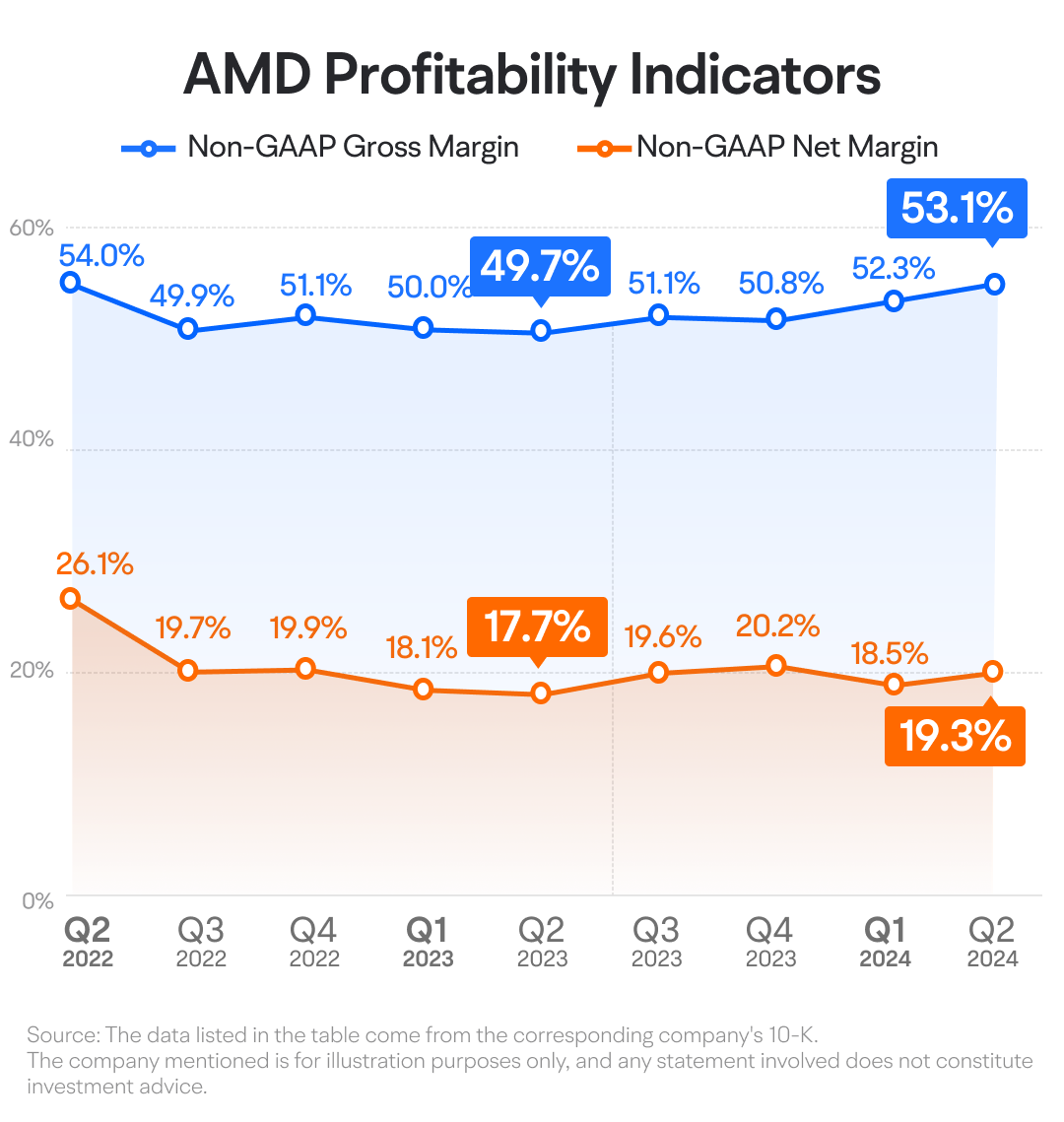
AMD's adjusted net profit margin began to recover in Q3 2023 and is currently stable at around 20%. In future earnings reports, we may continue to monitor whether AMD can sustain its gross margin improvement and further enhance its net profit margin.
Having read this far, you may now have a deeper understanding of how to interpret AMD's financial reports. It's noteworthy that the release of earnings reports from prominent companies may present unique trading opportunities for different types of investors.
For instance, if an investor, after analyzing past reports and considering recent developments, believes a company's latest earnings will send positive signals and boost the short-term stock price, they might consider taking a long position. This could involve buying the underlying stock or purchasing call options.
Conversely, if the investor expects the earnings to be unfavorable and potentially pressure the stock price, they might consider taking a short position, either through short selling or buying put options.
If the report's outcome is unclear but volatility is expected, they might use a straddle strategy, buying both calls and puts.
However, investors should carefully assess their risk tolerance, particularly when considering high-risk trades like short selling or options, before making any trading decisions.
Summary
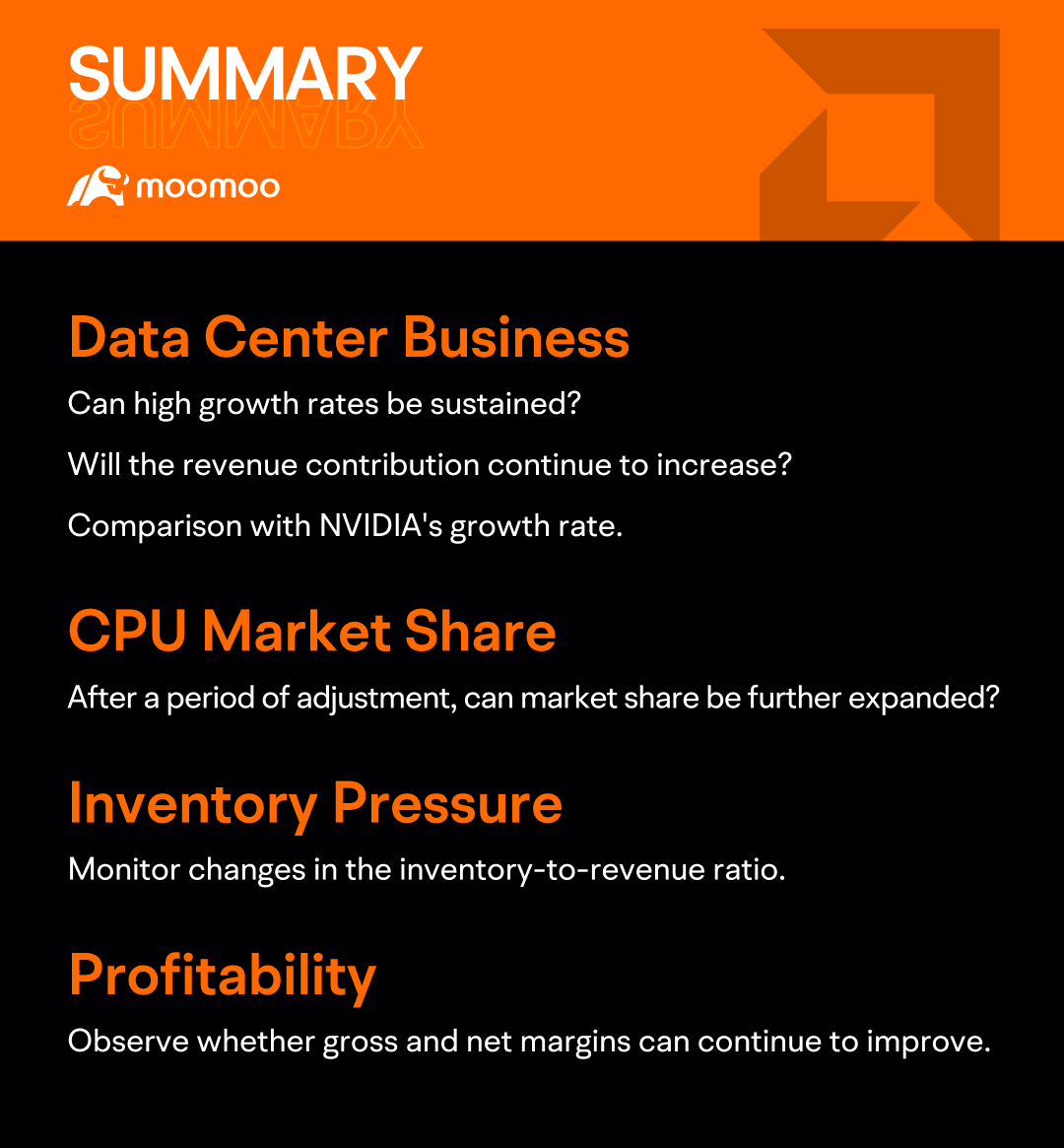
For AMD's financial reports, we may focus on several key areas: growth in its data center business, CPU market share, inventory pressure, and profitability.
Data Center Business: This is AMD's current growth driver. We may monitor whether it can maintain high growth rates and narrow the gap with NVIDIA.
CPU Market Share: After a period of rapid growth, AMD's CPU market share has plateaued. We should watch to see if it can further expand its market share.
Inventory Pressure: AMD's inventory-to-revenue ratio is currently high. It's important to track if this ratio decreases in upcoming reports, which would help ease sales pressure.
Profitability: While AMD's gross margin is generally improving, its net margin has declined. Watching for potential improvements in these profitability metrics may be essential.
Each earnings report may present new investment opportunities, so investors should align their strategies with their risk capacity.
This presentation is for informational and educational use only and is not a recommendation or endorsement of any particular investment or investment strategy. Investment information provided in this content is general in nature, strictly for illustrative purposes, and may not be appropriate for all investors. Read more