



Moomoo Insights
Jul 16 15:38
TSMC Earnings: AI Demand Is Stronger Than the Chip Selloff Suggests
Moomoo Insights
Sep 30 05:04
Live Take | Anthropic’s $518B Compute Bet: Who Wins From the AI Buildout?
Exploring different trading strategies gives traders a toolkit to navigate the ever-changing finance landscape effectively. One key strategy in this toolkit is the vertical spread.
Vertical spreads offer some traders a structured way to handle risks and potential rewards in the options market. Understanding how vertical spreads work can help traders make more informed decisions, providing the opportunity to take advantage of market movements while staying more in control of their investments.
Read on to learn more about vertical spreads.
A vertical spread strategy in option trading involves simultaneously buying and selling a call or put option of the same underlying asset with different strike price within the same expiration date.
This strategy helps investors potentially profit from the directional price movement of the underlying security. The goal is to try to potentially profit on the market price direction whether its neutral to bullish or bearish while limiting its potential losses.
By understanding the basics of vertical spreads, option traders can position themselves strategically to potentially profit from trending markets with a directional market bias.
When a trader utilizes a vertical spread strategy, they begin by selecting options on the same underlying asset with different strike prices at the same expiration date. Here's how it works step by step:
Select your option contracts: Choose two options on the same asset — an option is bought while another one is sold simultaneously.
Decide on strike prices: Opt for different strike prices to establish a price range where the asset's movement is expected.
Take precautions to manage risk: Aim to potentially profit from the price difference between the options while limiting potential losses.
Consider market outlook: Anticipate both bullish and bearish scenarios.
Implement your strategy: Implement the vertical spread and monitor the performance.
By following these steps, traders can leverage vertical spreads to make better informed decisions tailored to their market outlook and risk tolerance.

There are several different types of vertical spreads. These spreads — like the bull call spread, bear put spread, bull put spread, and bear call spread — give traders versatile ways to navigate market changes.
Each type has its own unique features and profit potential, allowing traders to customize their strategies based on specific market conditions and outlook. Let's explore some of these types.
The Bull Call Spread can be used when traders expect a bullish market. This strategy involves buying an in-the-money (ITM) call option and simultaneously selling an out-of-the-money (OTM) call option on the same underlying asset with the same expiration date.
However, these strategies don't require one ITM and one OTM options contract; both can be ITM or OTM.
The key elements are:
ITM Call Option: Bought at a lower strike price.
OTM Call Option: Sold at a higher strike price.
Profit Calculation: The maximum profit is the difference between the strike prices minus the net premium paid (premium of ITM call - premium received from OTM call).
Theoretical Maximum Loss: Limited to the net premium paid.
Example: If you buy a call option with a $50 strike price and sell a call option with a $55 strike price, your potential profit is capped at $5 per share minus the net premium paid.
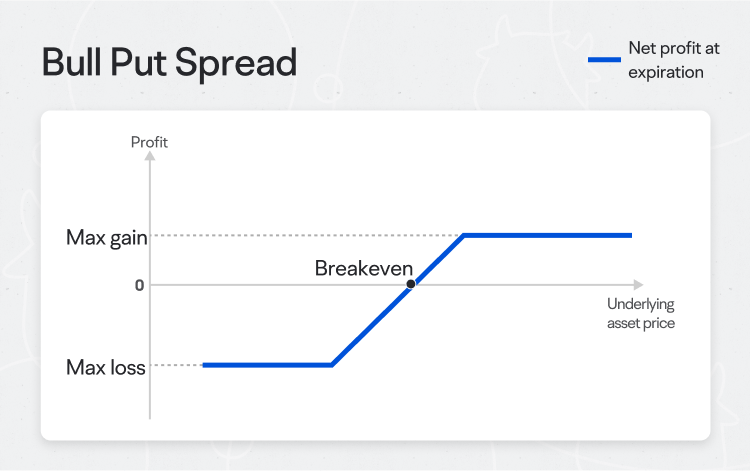
The Bull Put Spread can be used when traders have bullish market expectations and involves selling a higher strike put option and buying a lower strike put option. This approach targets a net credit, as the premium received from selling the put is higher than the premium paid for buying the put.
The key elements are:
ITM Put Option: Sold at the higher strike price.
OTM Put Option: Bought at the lower strike price.
Profit Calculation: The maximum profit is the net premium received.
Theoretical Maximum Loss: Limited to the difference between the strike prices minus the net premium received.
Example: If you sell a put option with a $45 strike price and buy a put option with a $40 strike price, your maximum profit is the net premium received, and your potential loss is capped at $5 per share minus the net premium received.
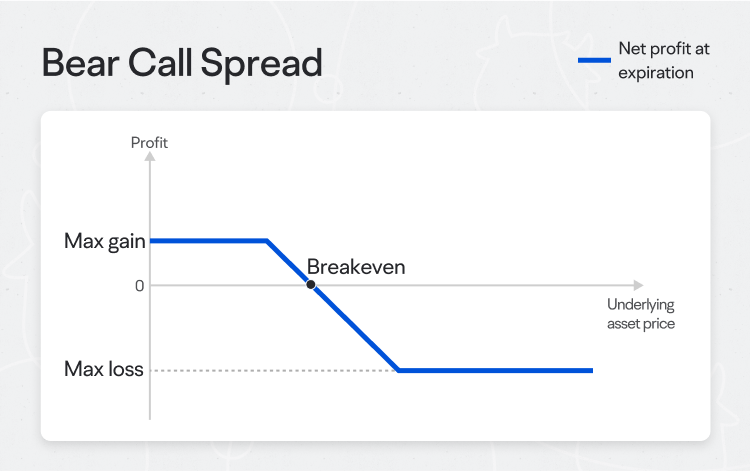
The Bear Call Spread can be used in bearish market conditions. It involves selling an ITM call option and buying an OTM call option. This strategy aims for a net credit, potentially benefiting from the premium received from the ITM call sale.
The key elements are:
ITM Call Option: Sold at a lower strike price.
OTM Call Option: Bought at a higher strike price.
Profit Calculation: The maximum profit is the net premium received.
Theoretical Maximum Loss: Limited to the difference between the strike prices minus the net premium received.
Example: If you sell a call option with a $60 strike price and buy a call option with a $65 strike price, your maximum profit is the net premium received, and your potential loss is capped at $5 per share minus the net premium received.
The Bear Put Spread can be used when traders anticipate a bearish market. This strategy involves buying an ITM put option and selling an OTM put option. It aims to capitalize on a decline in the underlying asset's price.
The key elements are:
ITM Put Option: Bought at a higher strike price.
OTM Put Option: Sold at a lower strike price.
Profit Calculation: The maximum profit is the difference between the strike prices minus the net premium paid.
Theoretical Maximum Loss: Limited to the net premium paid.
Example: If you buy a put option with a $50 strike price and sell a put option with a $45 strike price, your maximum profit is capped at $5 per share minus the net premium paid.
When considering the strategic implementation of vertical spreads, several key factors come into play in an effort to optimize trading decisions effectively.
Market Conditions: This strategy may be appropriate for a moderately bullish market outlook.
Option Delta: Use when you want a net positive delta, indicating sensitivity to upward price movements.
Gamma: Monitor gamma to gauge how delta will change as the underlying price moves.
Theta: Consider the impact of time decay; bull call spreads can be negatively affected by theta.
Vega: Assess how changes in volatility impact your spread; higher volatility can potentially benefit the spread initially but hurt it as expiration nears.
Risk Factors: Limited risk, with a maximum theoretical loss capped at the net premium paid.
Market Conditions: This strategy can be used in a neutral-bullish market with sideways or rising prices.
Option Delta: Seek a net positive delta but lower than a bull call spread.
Gamma: Lower gamma exposure, typically providing more stability in delta changes.
Theta: Can benefit from positive theta as time decay works in favor of the strategy.
Vega: Can potentially benefit from falling volatility.
Risk Factors: Limited risk, with maximum theoretical loss occurring if the underlying price falls below the lower strike.
Market Conditions: This strategy can be used in a moderately bearish market expectation.
Option Delta: Use when you want a net negative delta, indicating sensitivity to downward price movements.
Gamma: Relatively low gamma exposure, potentially providing more stability.
Theta: Can benefit from positive theta as time decay works in favor of the spread.
Vega: Can potentially benefit from falling volatility.
Risk Factors: Limited risk, with maximum theoretical loss occurring if the underlying price rises above the higher strike.
Market Conditions: This strategy can be used in a neutral-bearish market with sideways or falling prices.
Option Delta: Seek a net negative delta, indicating sensitivity to downward price movements.
Gamma: Higher gamma can increase risk if the market moves unexpectedly.
Theta: Negatively affected by time decay; closer to expiration can erode value.
Vega: Higher sensitivity to volatility changes; rising volatility can potentially benefit the spread.
Risk Factors: Limited risk, with the theoretical maximum loss capped at the net premium paid.
Keep in mind: Maximum potential loss and profit for options are calculated based on the single leg or an entire multi-leg trade remaining intact until expiration with no option contracts being exercised or assigned. These figures do not account for a portion of a multi-leg strategy being changed or removed or the trader assuming a short or long position in the underlying stock at or before expiration. Therefore, it is possible to lose more than the theoretical max loss of a strategy.
By weighing these factors thoughtfully, traders can navigate market dynamics with greater confidence and more precision, leveraging vertical spreads strategically to potentially capitalize on various market conditions.
Moomoo offers an intuitive way to manage vertical spread. Here's how to access this feature on the moomoo app:
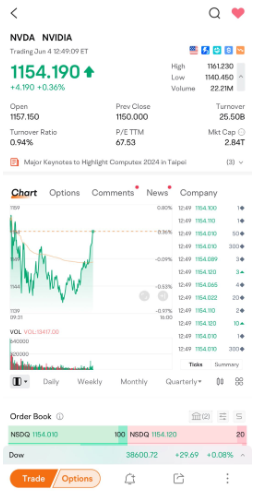
Step 1: Open the app and navigate to the stock you want to analyze. Click on "Options."
Disclaimer: Images provided are not current and any securities are shown for illustrative purposes only and is not a recommendation.
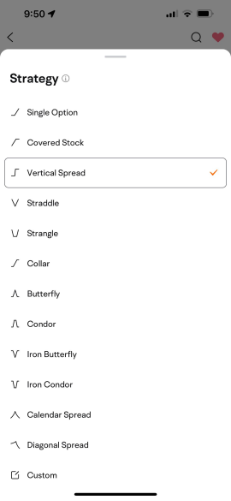
Step 2: Click "options strategy", then click "Vertical Spread".
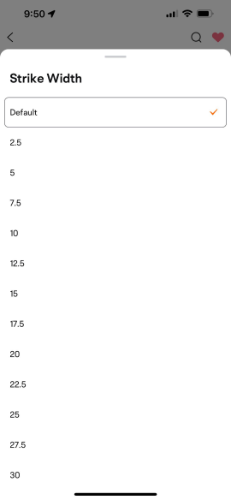
Step 3: Set your strike width and manage your trades.
Risk management: Offers a clear risk management strategy, which may be attractive to some option traders with a relatively lower risk tolerance.
Methodical approach: Provides a methodical approach to market exposure enabling traders to adapt the strategy for use in different market conditions.
Clearer profit loss parameters: Defines potential profit and loss parameters upfront, potentially enabling better risk management for the trades.
Lower potential for profit: Restricts profit potential compared to more aggressive trading strategies.
Up-front premium costs: Involves initial premium costs for debit spread and margin requirements for credit spreads that can tie up trading capital.
Need for careful monitoring: Requires traders to monitor the changes in theta (time decay) and vega (volatility) that can affect the vertical spread value.
What is the difference between vertical and horizontal spread?
A vertical spread involves options with the same expiration date but different strike prices, while a horizontal spread uses options with the same strike price but different expiration dates. This distinction impacts how each strategy benefits from specific market conditions. Vertical spreads focus on price movements, offering limited risk and reward within a set timeframe (like bull call spread, bull put spread, bear call spread, bear put spread), whereas horizontal spreads seek to capitalize on time decay of the shorter term option and volatility changes often in neutral market outlook like calendar spread. A diagonal spread combines the characteristics of a horizontal and a vertical spread.
Are vertical spreads bullish or bearish?
Vertical spreads can work in both bullish and bearish markets. When you're optimistic about a stock, you might go for a bullish vertical spread by buying a call option and selling another call with a higher strike price. If you're leaning towards a bearish outlook, a bearish vertical spread could involve buying a put option and selling a put with a lower strike price. These strategies give you room to play the market in different directions.
Should I let a vertical spread expire?
It's not necessarily best to let a vertical spread expire worthless since longer dated vertical spread can be managed if required. Closing the spread before it runs out can help manage risks tied to the stock's movement. Deciding whether to let it expire depends on your market view, profit goals, and risk comfort. By closing the spread early, you can potentially lock in profits or limit losses based on how the market looks at that time, which may assist in managing your investments more effectively.
This presentation is for informational and educational use only and is not a recommendation or endorsement of any particular investment or investment strategy. Investment information provided in this content is general in nature, strictly for illustrative purposes, and may not be appropriate for all investors. Read more
Recommend
Moomoo Offers Extended Trading Hours for Options Trading on Oct 19
At-the-Money (ATM) - How It Works in Options Trading
Out-of-the-Money in Options Trading - How It Works & Examples

Covered Call: A Comprehensive Guide to Options Trading
Strangle Options Strategy - A Helpful Guide for Traders
Straddle vs. Strangle: Understanding the Key Differences
Triple Witching: Understanding Its Impact on the Stock Market
Underlying Asset: Definition, Types and Examples
What Are Option Premiums
Covered Calls and Covered Puts - Strategies for Options Trading
Expiration Date in Options Trading
Options Break-Even Point: Definition, Formula, and Examples
Credit Spread: Definition, Examples & How to Calculate
Bull Put Spread: Definitions, How It Works & Examples
How to Manage Your Risk in Options Trading
How to Pick the 'Right' Strike Price
Options Wheel Strategy Explained: Definition and How to Trade
Long Collar Options Strategy: Definition, How It Works & Examples
Long Call Options Strategy: Definition, Potential Benefits, and Risks
Exercise of Options: When and How to Exercise Options
Time Value: Definition, Calculation, Importance in Options Trading
Short Call Options Strategy: Guide & Examples
What Are Bitcoin ETF Options: Investment Insights & Strategies
Hedge with Options: Protect Your Portfolio in 2026
Options Chains: Definition, How to Read and Analyze Them
Options Profit Calculation: Overview, Formula & Examples
What is Theta in Options Trading: Overview and Strategies
Debit Spread: Definition, Types & Examples
Butterfly Spread: Definition and Application in Options Trading
What Is an Options Screener and How to Use?
Unusual Options Activity: Insights and Strategies for Traders
Protective Put Strategy: Definition, How It Works & Examples
What Are Stock Options: Types, How They Work and Examples
Weekly vs. Monthly Options: Choosing the Right Expiration Date
How to Practice Options Trading with Demo Trading Account
Sell to Open vs Sell to Close: Understanding the Difference
Long Put: Definition, Examples and How to Trade
Iron Condor: Understanding This Options Trading Strategy
Diagonal Spread: Definition, Types & How to Use
Implied Volatility (IV) Rank & Percentile in Options Trading
Trading Earnings with Options
Iron Butterfly: Mastering the Options Trading Strategy
Interest Rate Options: Definition & How They Work
Options Buy to Open vs Buy to Close: What's the difference?
Vertical Spread: Definition, Types, & Examples
Bear Put Spread: An Options Trading Strategy Explained
What is a Dividend Reinvestment Plan (DRIP)?
Put/Call Ratio (PCR): Definition & How to Use
How Are Options Priced? | Calculation and Examples
Naked Calls Options Strategy: Definition & How It Works
Options Vs. Futures: Understanding Their Key Differences
Extrinsic Value: Definition, Calculation, and Trading Strategies
Intrinsic Value: How It Works And How To Calculate It
Bull Call Spread - Examples and Applications in Options Trading
Index Options: Definitions, Strategies and Risks
Short Put Options: Strategies and Risks Explained
Quadruple Witching: How It Can Affect the Stock Market
What Are Options? Everything You Need to Know before Trading
Four Option Trading Strategies for Beginners
10 Options Strategies to Enhance Your Trading Portfolio
American Options vs. European Options
In-The-Money (ITM): Call and Put Options Examples
What is a Calendar Spread?
Open Interest: What it means for traders and investors
Options vs Stocks: Choosing the Right Investment Strategy
Options Strike Prices Explained: A Complete Guide for Beginners
Call vs Put Options: Your Essential Guide to the Basics
Zero Days to Expiration (0DTE) Options: Trade Mag 7 Stock Options Today
What Is An Options Contract? How Does It Work?
What is Synthetic Put? (How Does It Work)
How and When to Roll Covered Calls
Option Volume vs Open Interest: Understanding the Difference
4 Options Trading Levels
How to Trade Options for Beginners?
What Is Implied Volatility (IV)?
What Are Cash Secured Puts: How To Sell Them
What Is a Straddle Options Strategy?
What Is Ratio Spread in Options
What is a Call Option: Strategies and Tips
Taxes on Stocks: How Selling Stocks Affects Your Taxes
Option Greeks Explained - Option Greek Cheat Sheet
Put Options: Hedging Your Portfolio
Put Options: How to Use Them in Your Trading Strategy
Poor Man's Covered Call (PMCC): A Beginner's Guide
Four Option Trading Mistakes to Avoid
Trading Synthetic Options: Risks and Rewards
Call Spread vs. Put Spread: What are the differences?
What is stock options trading
What Is Margin Call and How Can You Avoid the Risks?
Options Trading Strategies: Iron Condor vs. Iron Butterfly
Moomoo Offers Extended Trading Hours for Options Trading on Oct 19
At-the-Money (ATM) - How It Works in Options Trading
Out-of-the-Money in Options Trading - How It Works & Examples
Covered Call: A Comprehensive Guide to Options Trading
Strangle Options Strategy - A Helpful Guide for Traders
Straddle vs. Strangle: Understanding the Key Differences
Triple Witching: Understanding Its Impact on the Stock Market
Underlying Asset: Definition, Types and Examples
What Are Option Premiums
Covered Calls and Covered Puts - Strategies for Options Trading
Expiration Date in Options Trading
Options Break-Even Point: Definition, Formula, and Examples
Credit Spread: Definition, Examples & How to Calculate
Bull Put Spread: Definitions, How It Works & Examples
How to Manage Your Risk in Options Trading
How to Pick the 'Right' Strike Price
Options Wheel Strategy Explained: Definition and How to Trade
Long Collar Options Strategy: Definition, How It Works & Examples
Long Call Options Strategy: Definition, Potential Benefits, and Risks
Exercise of Options: When and How to Exercise Options
Time Value: Definition, Calculation, Importance in Options Trading
Short Call Options Strategy: Guide & Examples
What Are Bitcoin ETF Options: Investment Insights & Strategies
Hedge with Options: Protect Your Portfolio in 2026
Options Chains: Definition, How to Read and Analyze Them
Options Profit Calculation: Overview, Formula & Examples
What is Theta in Options Trading: Overview and Strategies
Debit Spread: Definition, Types & Examples
Butterfly Spread: Definition and Application in Options Trading
What Is an Options Screener and How to Use?
Unusual Options Activity: Insights and Strategies for Traders
Protective Put Strategy: Definition, How It Works & Examples
What Are Stock Options: Types, How They Work and Examples
Weekly vs. Monthly Options: Choosing the Right Expiration Date
How to Practice Options Trading with Demo Trading Account
Sell to Open vs Sell to Close: Understanding the Difference
Long Put: Definition, Examples and How to Trade
Iron Condor: Understanding This Options Trading Strategy
Diagonal Spread: Definition, Types & How to Use
Implied Volatility (IV) Rank & Percentile in Options Trading
Trading Earnings with Options
Iron Butterfly: Mastering the Options Trading Strategy
Interest Rate Options: Definition & How They Work
Options Buy to Open vs Buy to Close: What's the difference?
Vertical Spread: Definition, Types, & Examples
Bear Put Spread: An Options Trading Strategy Explained
What is a Dividend Reinvestment Plan (DRIP)?
Put/Call Ratio (PCR): Definition & How to Use
How Are Options Priced? | Calculation and Examples
Naked Calls Options Strategy: Definition & How It Works
Options Vs. Futures: Understanding Their Key Differences
Extrinsic Value: Definition, Calculation, and Trading Strategies
Intrinsic Value: How It Works And How To Calculate It
Bull Call Spread - Examples and Applications in Options Trading
Index Options: Definitions, Strategies and Risks
Short Put Options: Strategies and Risks Explained
Quadruple Witching: How It Can Affect the Stock Market
What Are Options? Everything You Need to Know before Trading
Four Option Trading Strategies for Beginners
10 Options Strategies to Enhance Your Trading Portfolio
American Options vs. European Options
In-The-Money (ITM): Call and Put Options Examples
What is a Calendar Spread?
Open Interest: What it means for traders and investors
Options vs Stocks: Choosing the Right Investment Strategy
Options Strike Prices Explained: A Complete Guide for Beginners
Call vs Put Options: Your Essential Guide to the Basics
Zero Days to Expiration (0DTE) Options: Trade Mag 7 Stock Options Today
What Is An Options Contract? How Does It Work?
What is Synthetic Put? (How Does It Work)
How and When to Roll Covered Calls
Option Volume vs Open Interest: Understanding the Difference
4 Options Trading Levels
How to Trade Options for Beginners?
What Is Implied Volatility (IV)?
What Are Cash Secured Puts: How To Sell Them
What Is a Straddle Options Strategy?
What Is Ratio Spread in Options
What is a Call Option: Strategies and Tips
Taxes on Stocks: How Selling Stocks Affects Your Taxes
Option Greeks Explained - Option Greek Cheat Sheet
Put Options: Hedging Your Portfolio
Put Options: How to Use Them in Your Trading Strategy
Poor Man's Covered Call (PMCC): A Beginner's Guide
Four Option Trading Mistakes to Avoid
Trading Synthetic Options: Risks and Rewards
Call Spread vs. Put Spread: What are the differences?
What is stock options trading
What Is Margin Call and How Can You Avoid the Risks?
Options Trading Strategies: Iron Condor vs. Iron Butterfly

