
Moomoo Insights
Jul 16 15:38
TSMC Earnings: AI Demand Is Stronger Than the Chip Selloff Suggests
Moomoo Insights
Sep 30 05:04
Live Take | Anthropic’s $518B Compute Bet: Who Wins From the AI Buildout?
Investors can earn profits through dividends when companies share their earnings. While some investors might spend or save this money, others may choose to reinvest it to help grow their investment.
Dividend reinvestment plans (DRIPs) simplify the process by using dividends to buy more shares, helping to enhance your investment, with minimal or no fees. However, sometimes DRIPs still incur costs due to brokerage fees, administrative charges, or company policies. Despite these possible expenses, DRIPs can may offer a convenient and efficient way to grow your investment.
Let’s explore how DRIPs work and how they can be beneficial.
A dividend reinvestment plan (DRIP) allows investors to automatically reinvest cash dividends received from owning stocks or other securities back into additional shares of the same investment, rather than receiving the dividends as cash payouts. This reinvestment can compound over time, potentially increasing the investor's holdings.
DRIPs can be offered by publicly traded companies, either directly or by a third-party transfer agent, or a by a brokerage firm such as Moomoo. Some companies offer their stock to particpants at a discount to the market price. They provide a convenient way for some long-term investors to steadily grow their investment portfolios through regular dividend payments, often with reduced or no transaction fees.
Here’s how a DRIP works:
Earn dividends: When you own shares in a company or an ETF, they might pay you dividends, which is a portion of their profits given to shareholders.
Automatic reinvestment: Instead of receiving these dividends as cash, a DRIP automatically uses that money to buy more shares of the company's stock or the ETF.
Potentially lower costs: You may not have to pay brokerage fees for these purchases, meaning more of your money can go into buying additional shares. However, some DRIPs may still incur administrative or other fees.
Buying more over time: Because dividends are reinvested regularly, you can gradually accumulate more shares without having to invest additional money out of pocket.
Compounding growth potential: The more shares you have, the more dividends you can earn next time, and those dividends can buy even more shares. This cycle has the potential to significantly grow your investment over time.
In short, a DRIP can potentially help your portfolio shares grow like a snowball rolling down a hill, getting bigger as it goes along.
There are three main types of DRIPs: company-sponsored DRIPs, third-party DRIPs, and brokerage-sponsored DRIPs.
An investor typically chooses a type of DRIP based on preference for control and convenience. Company-issued DRIPs and third-party DRIPs often foster a sense of loyalty, but they lack diversification. Brokerage DRIPs provide flexibility to reinvest dividends across multiple companies and can be managed alongside other investments.
Investors prioritize factors like cost, administrative ease, and portfolio strategy to decide which type of DRIP suits their goals best.
Many companies offer their own dividend reinvestment plans (DRIPs). Investors can purchase common stock directly from the company's share reserve. After buying the stock, investors can enroll in the company's DRIP to accumulate additional shares over time. While some companies manage these plans themselves, it is more common for them to use a third-party transfer agent to handle investor relations. These are known as third-party DRIPs.
Third-party DRIPs are managed by transfer agents on behalf of companies. For example, Microsoft has a transfer agent called Computershare that administers a direct stock purchase plan and a dividend reinvestment plan for the company. These plans may involve fees for starting the program or making subsequent purchases.
One potential benefit of company and third-party DRIPs is that they often let investors buy fractional shares with their dividends. For example, if you own a $20 stock that pays a $2 dividend, that $2 can be reinvested to buy one-tenth of a share. This makes it easy for investors to start with just a few shares and gradually build their holdings over time. Additionally, some companies’ DRIPs allow investors to buy more shares with extra cash, often at discounted rates, directly from the company.
Company and third-party DRIPs can enable investors to steadily grow their investment portfolios over time by compounding dividends and increasing their ownership in the company without the need for additional capital. These plans may be beneficial for some long-term investors seeking to reinvest dividends efficiently and enhance their overall returns through regular share accumulation. However, they lack the ability to add diversification by using the dividends to purchase shares of different securities.

Brokerage-sponsored dividend reinvestment plans (DRIPs) are facilitated by brokerages, enabling investors to reinvest dividends from multiple stocks in their portfolio. These DRIPs allow shareholders to automatically purchase additional shares with their dividends, enhancing portfolio growth over time.
Unlike company-sponsored DRIPs, brokerage DRIPs offer flexibility by consolidating dividend reinvestment across various holdings within a single brokerage account. Investors can benefit from the compounding effect of reinvested dividends without needing individual DRIPs for each company they own, simplifying portfolio management. Brokerage-sponsored DRIPs provide a convenient and efficient way for investors to reinvest dividends.
Brokerage account DRIPS and third-party DRIPs can sometimes be referred to as 'synthetic DRIPs'.
Company-sponsored plans: Company-sponsored plans, like those offered by Coca-Cola, ExxonMobil, and Procter & Gamble, allow shareholders to reinvest dividends to buy more shares at a discount. For instance, Coca-Cola might offer a 3% discount on shares purchased with reinvested dividends, ExxonMobil a 2% discount, and Procter & Gamble a 4% discount. This means if a share of Coca-Cola is priced at $100, shareholders could purchase it for $97 through the dividend reinvestment plan. Similarly, ExxonMobil shares priced at $80 could be bought for $78.40, and Procter & Gamble shares priced at $120 could be acquired for $115.20.
When you’re thinking about DRIPs, remember to look into how reinvesting dividends affects your taxes. Even though you're reinvesting, those dividends are still taxable.
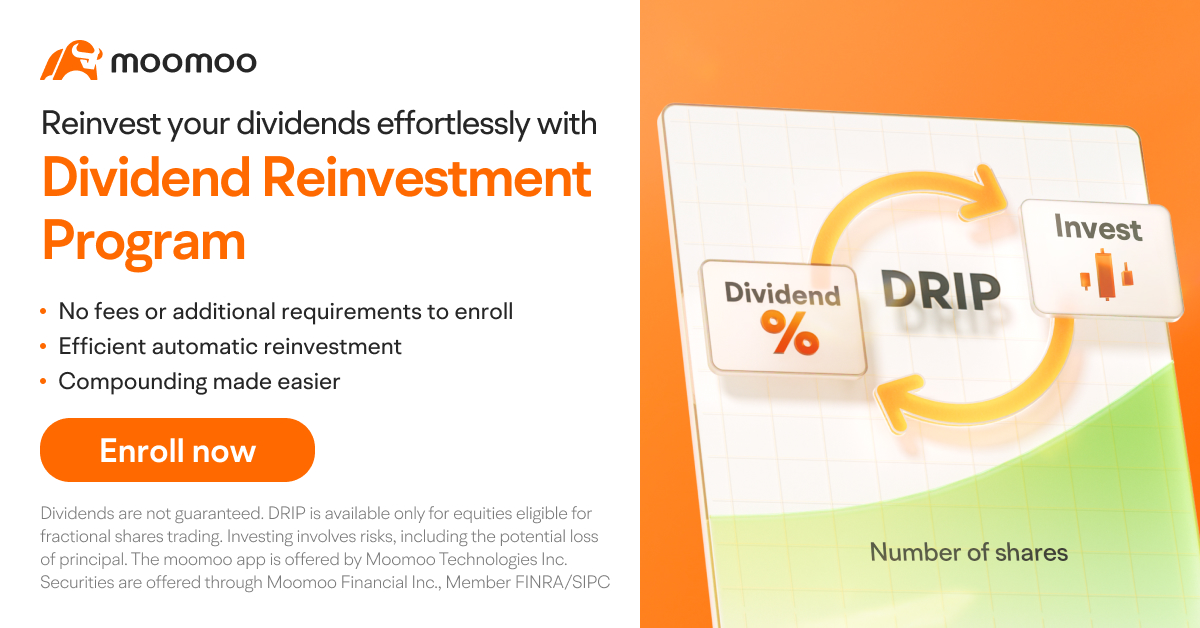
Also, check out any costs involved in joining a DRIP, like fees from the company or brokerage. It’s important to understand the DRIP's terms, too, like who’s eligible and what your reinvestment options are. With Moomoo, there are no fees or additional requirements to enroll. Users just select 'DRIP' when setting up their account to enroll.
Don’t forget about how DRIPs fit into your overall investment strategy and diversification goals. And keep an eye on how your DRIP is performing, making adjustments as needed to stay on track with your investment goals.
Moomoo's Dividend Reinvestment Plan (DRIP) will be available exclusively for S&P 500 securities. This is because these securities support fractional shares trading, enabling the reinvestment of dividends into fractional shares.
DRIPs impact taxes as reinvested dividends are still considered taxable income, even though they're used to purchase additional shares. Investors must report these dividends on their tax returns, whether or not they receive them as cash payouts. The reinvestment of dividends impacts the investor's cost basis in the stock, potentially increasing or reducing capital gains taxes when shares are eventually sold. However, tracking the cost basis for tax purposes can become complex, especially with multiple reinvestments over time. Investors need to be aware that reinvested dividends can potentially create wash sales, as these reinvestments are considered purchases, and this should be taken into account when initiating sales of shares. Investors should also consult with a tax professional to ensure proper reporting and understanding of the tax implications of DRIP participation.
The automatic reinvestment of dividends, facilitating compound growth over time.
They often allow investors to purchase additional shares at a discount.
DRIPs can promote disciplined investing.
They may increase tax complexity, as reinvested dividends are taxable.
Participation in DRIPs may involve fees charged by the company or brokerage.
DRIPs can limit the flexibility of dividend income, as cash payouts are foregone in favor of additional shares.
Overall, while DRIPs offer a convenient way to reinvest dividends, investors should consider their individual financial goals and tax implications.
Cash dividends provide immediate income for investors, offering flexibility to use the funds as desired, such as for living expenses or alternative investments. Reinvested dividends, however, purchase additional shares, leveraging the power of compounding. While cash dividends offer liquidity, reinvested dividends promote portfolio holdings growth over time. Choosing between them depends on an investor's financial goals, risk tolerance, and investment strategy.
A dividend reinvestment program (DRIP) can offer several benefits, including the ability to buy more shares with minimal or no brokerage fees. Some DRIPs even let you purchase shares at a discount. Plus, by reinvesting dividends regularly, you can benefit from dollar-cost averaging. This means you may be able to buy more shares when prices are low, reducing your cost basis over time.
The cost of a DRIP depends on several factors, including the policies of the company offering the program and the specific terms of the DRIP. Some brokerages may offer DRIPs with no fees, while others might charge a fee for reinvestment transactions. Additionally, the cost can be influenced by whether the shares are purchased at market price or at a discounted rate offered by the DRIP program. It is important for investors to review the specific terms and conditions of the DRIP to understand any associated costs.
Dividend reinvestment plans (DRIPs) offer several benefits for companies. By allowing shareholders to buy more shares directly from the company, DRIPs generate additional capital without the need for external financing. Another benefit is that shareholders in DRIPs are typically long-term investors who are less likely to sell during market downturns, helping to stabilize share prices. This is partly because DRIP-purchased shares can only be redeemed through the company, making them less liquid, which further discourages selling.
Companies can often sweeten the deal by offering shares at a discount, boosting shareholder participation and engagement while potentially reducing administrative costs related to dividend payments.
DRIP enrollment is available only for equities eligible for fractional shares trading by Moomoo Financial Inc. ("MFI"). Fractional shares are illiquid outside of MFI, and cannot be transferred. Not all securities offered by MFI can be traded as fractional shares. Diversification is an investment strategy that can help manage risk within your portfolio, but it does not guarantee profits or protect against loss in declining markets. Dividends are not guaranteed and are subject to change or elimination.
This presentation is for informational and educational use only and is not a recommendation or endorsement of any particular investment or investment strategy. Investment information provided in this content is general in nature, strictly for illustrative purposes, and may not be appropriate for all investors. Read more
Recommend

Moomoo Offers Extended Trading Hours for Options Trading on Oct 19
At-the-Money (ATM) - How It Works in Options Trading
Out-of-the-Money in Options Trading - How It Works & Examples

Covered Call: A Comprehensive Guide to Options Trading
Strangle Options Strategy - A Helpful Guide for Traders
Straddle vs. Strangle: Understanding the Key Differences
Triple Witching: Understanding Its Impact on the Stock Market
Underlying Asset: Definition, Types and Examples
What Are Option Premiums
Covered Calls and Covered Puts - Strategies for Options Trading
Expiration Date in Options Trading
Options Break-Even Point: Definition, Formula, and Examples
Credit Spread: Definition, Examples & How to Calculate
Bull Put Spread: Definitions, How It Works & Examples
How to Manage Your Risk in Options Trading
How to Pick the 'Right' Strike Price
Options Wheel Strategy Explained: Definition and How to Trade
Long Collar Options Strategy: Definition, How It Works & Examples
Long Call Options Strategy: Definition, Potential Benefits, and Risks
Exercise of Options: When and How to Exercise Options
Time Value: Definition, Calculation, Importance in Options Trading
Short Call Options Strategy: Guide & Examples
What Are Bitcoin ETF Options: Investment Insights & Strategies
Hedge with Options: Protect Your Portfolio in 2026
Options Chains: Definition, How to Read and Analyze Them
Options Profit Calculation: Overview, Formula & Examples
What is Theta in Options Trading: Overview and Strategies
Debit Spread: Definition, Types & Examples
Butterfly Spread: Definition and Application in Options Trading
What Is an Options Screener and How to Use?
Unusual Options Activity: Insights and Strategies for Traders
Protective Put Strategy: Definition, How It Works & Examples
What Are Stock Options: Types, How They Work and Examples
Weekly vs. Monthly Options: Choosing the Right Expiration Date
How to Practice Options Trading with Demo Trading Account
Sell to Open vs Sell to Close: Understanding the Difference
Long Put: Definition, Examples and How to Trade
Iron Condor: Understanding This Options Trading Strategy
Diagonal Spread: Definition, Types & How to Use
Implied Volatility (IV) Rank & Percentile in Options Trading
Trading Earnings with Options
Iron Butterfly: Mastering the Options Trading Strategy
Interest Rate Options: Definition & How They Work
Options Buy to Open vs Buy to Close: What's the difference?
Vertical Spread: Definition, Types, & Examples
Bear Put Spread: An Options Trading Strategy Explained
What is a Dividend Reinvestment Plan (DRIP)?
Put/Call Ratio (PCR): Definition & How to Use
How Are Options Priced? | Calculation and Examples
Naked Calls Options Strategy: Definition & How It Works
Options Vs. Futures: Understanding Their Key Differences
Extrinsic Value: Definition, Calculation, and Trading Strategies
Intrinsic Value: How It Works And How To Calculate It
Bull Call Spread - Examples and Applications in Options Trading
Index Options: Definitions, Strategies and Risks
Short Put Options: Strategies and Risks Explained
Quadruple Witching: How It Can Affect the Stock Market
What Are Options? Everything You Need to Know before Trading
Four Option Trading Strategies for Beginners
10 Options Strategies to Enhance Your Trading Portfolio
American Options vs. European Options
In-The-Money (ITM): Call and Put Options Examples
What is a Calendar Spread?
Open Interest: What it means for traders and investors
Options vs Stocks: Choosing the Right Investment Strategy
Options Strike Prices Explained: A Complete Guide for Beginners
Call vs Put Options: Your Essential Guide to the Basics
Zero Days to Expiration (0DTE) Options: Trade Mag 7 Stock Options Today
What Is An Options Contract? How Does It Work?
What is Synthetic Put? (How Does It Work)
How and When to Roll Covered Calls
Option Volume vs Open Interest: Understanding the Difference
4 Options Trading Levels
How to Trade Options for Beginners?
What Is Implied Volatility (IV)?
What Are Cash Secured Puts: How To Sell Them
What Is a Straddle Options Strategy?
What Is Ratio Spread in Options
What is a Call Option: Strategies and Tips
Taxes on Stocks: How Selling Stocks Affects Your Taxes
Option Greeks Explained - Option Greek Cheat Sheet
Put Options: Hedging Your Portfolio
Put Options: How to Use Them in Your Trading Strategy
Poor Man's Covered Call (PMCC): A Beginner's Guide
Four Option Trading Mistakes to Avoid
Trading Synthetic Options: Risks and Rewards
Call Spread vs. Put Spread: What are the differences?
What is stock options trading
What Is Margin Call and How Can You Avoid the Risks?
Options Trading Strategies: Iron Condor vs. Iron Butterfly
Moomoo Offers Extended Trading Hours for Options Trading on Oct 19
At-the-Money (ATM) - How It Works in Options Trading
Out-of-the-Money in Options Trading - How It Works & Examples
Covered Call: A Comprehensive Guide to Options Trading
Strangle Options Strategy - A Helpful Guide for Traders
Straddle vs. Strangle: Understanding the Key Differences
Triple Witching: Understanding Its Impact on the Stock Market
Underlying Asset: Definition, Types and Examples
What Are Option Premiums
Covered Calls and Covered Puts - Strategies for Options Trading
Expiration Date in Options Trading
Options Break-Even Point: Definition, Formula, and Examples
Credit Spread: Definition, Examples & How to Calculate
Bull Put Spread: Definitions, How It Works & Examples
How to Manage Your Risk in Options Trading
How to Pick the 'Right' Strike Price
Options Wheel Strategy Explained: Definition and How to Trade
Long Collar Options Strategy: Definition, How It Works & Examples
Long Call Options Strategy: Definition, Potential Benefits, and Risks
Exercise of Options: When and How to Exercise Options
Time Value: Definition, Calculation, Importance in Options Trading
Short Call Options Strategy: Guide & Examples
What Are Bitcoin ETF Options: Investment Insights & Strategies
Hedge with Options: Protect Your Portfolio in 2026
Options Chains: Definition, How to Read and Analyze Them
Options Profit Calculation: Overview, Formula & Examples
What is Theta in Options Trading: Overview and Strategies
Debit Spread: Definition, Types & Examples
Butterfly Spread: Definition and Application in Options Trading
What Is an Options Screener and How to Use?
Unusual Options Activity: Insights and Strategies for Traders
Protective Put Strategy: Definition, How It Works & Examples
What Are Stock Options: Types, How They Work and Examples
Weekly vs. Monthly Options: Choosing the Right Expiration Date
How to Practice Options Trading with Demo Trading Account
Sell to Open vs Sell to Close: Understanding the Difference
Long Put: Definition, Examples and How to Trade
Iron Condor: Understanding This Options Trading Strategy
Diagonal Spread: Definition, Types & How to Use
Implied Volatility (IV) Rank & Percentile in Options Trading
Trading Earnings with Options
Iron Butterfly: Mastering the Options Trading Strategy
Interest Rate Options: Definition & How They Work
Options Buy to Open vs Buy to Close: What's the difference?
Vertical Spread: Definition, Types, & Examples
Bear Put Spread: An Options Trading Strategy Explained
What is a Dividend Reinvestment Plan (DRIP)?
Put/Call Ratio (PCR): Definition & How to Use
How Are Options Priced? | Calculation and Examples
Naked Calls Options Strategy: Definition & How It Works
Options Vs. Futures: Understanding Their Key Differences
Extrinsic Value: Definition, Calculation, and Trading Strategies
Intrinsic Value: How It Works And How To Calculate It
Bull Call Spread - Examples and Applications in Options Trading
Index Options: Definitions, Strategies and Risks
Short Put Options: Strategies and Risks Explained
Quadruple Witching: How It Can Affect the Stock Market
What Are Options? Everything You Need to Know before Trading
Four Option Trading Strategies for Beginners
10 Options Strategies to Enhance Your Trading Portfolio
American Options vs. European Options
In-The-Money (ITM): Call and Put Options Examples
What is a Calendar Spread?
Open Interest: What it means for traders and investors
Options vs Stocks: Choosing the Right Investment Strategy
Options Strike Prices Explained: A Complete Guide for Beginners
Call vs Put Options: Your Essential Guide to the Basics
Zero Days to Expiration (0DTE) Options: Trade Mag 7 Stock Options Today
What Is An Options Contract? How Does It Work?
What is Synthetic Put? (How Does It Work)
How and When to Roll Covered Calls
Option Volume vs Open Interest: Understanding the Difference
4 Options Trading Levels
How to Trade Options for Beginners?
What Is Implied Volatility (IV)?
What Are Cash Secured Puts: How To Sell Them
What Is a Straddle Options Strategy?
What Is Ratio Spread in Options
What is a Call Option: Strategies and Tips
Taxes on Stocks: How Selling Stocks Affects Your Taxes
Option Greeks Explained - Option Greek Cheat Sheet
Put Options: Hedging Your Portfolio
Put Options: How to Use Them in Your Trading Strategy
Poor Man's Covered Call (PMCC): A Beginner's Guide
Four Option Trading Mistakes to Avoid
Trading Synthetic Options: Risks and Rewards
Call Spread vs. Put Spread: What are the differences?
What is stock options trading
What Is Margin Call and How Can You Avoid the Risks?
Options Trading Strategies: Iron Condor vs. Iron Butterfly

