
Moomoo Insights
Jul 16 15:38
TSMC Earnings: AI Demand Is Stronger Than the Chip Selloff Suggests
Moomoo Insights
Sep 30 05:04
Live Take | Anthropic’s $518B Compute Bet: Who Wins From the AI Buildout?
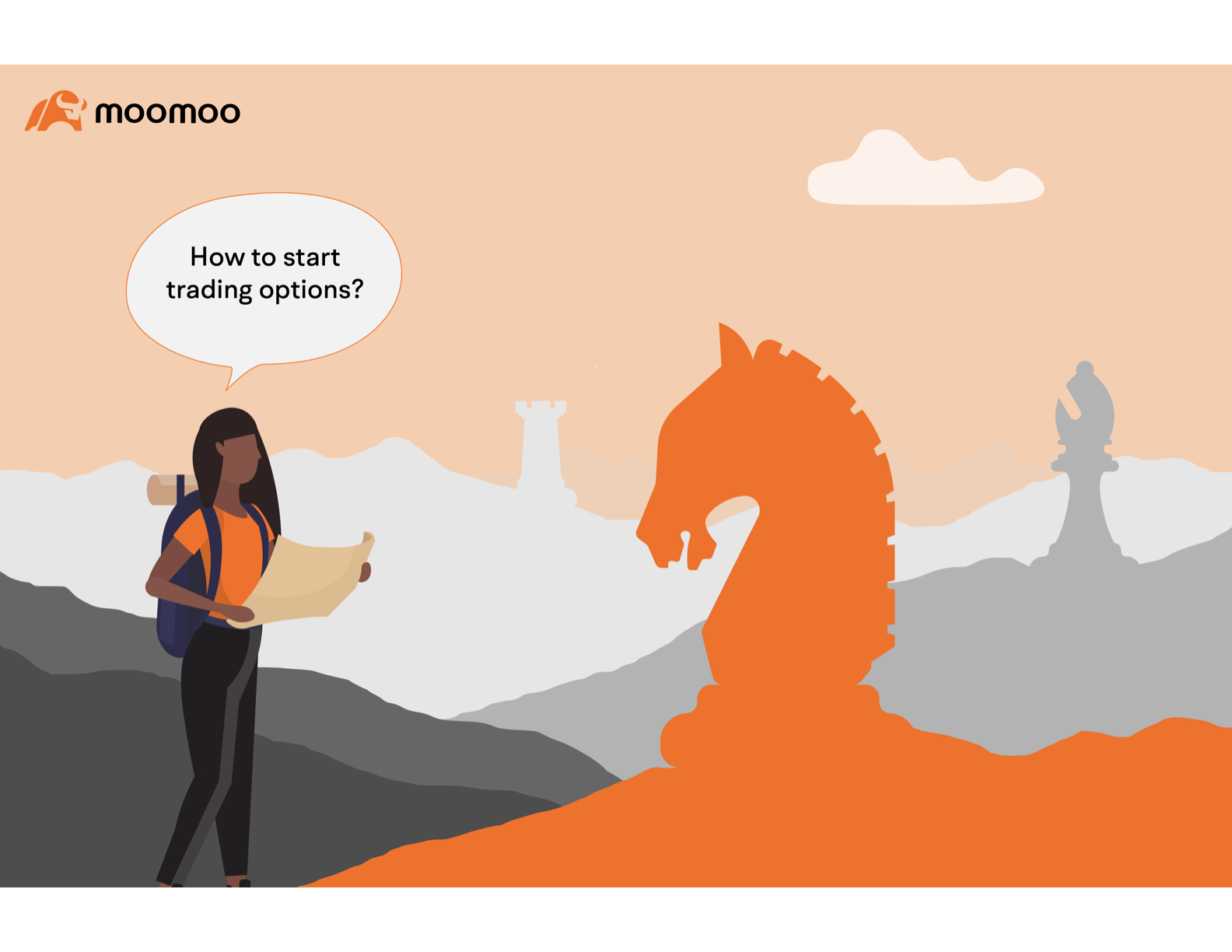
When you think of having an option, you think of having a choice. As a trader, you may want to have as many choices available as possible – choice is a common feature among all options contracts. You can choose to exercise an option or decide not to, depending on market circumstances. Moomoo’s platform offers options trading.
Option strategies can amplify both returns and losses and are often used for risk management. Some option strategies are relatively straightforward to put in place and are used to work toward achieving trading goals. This article will dive into option trading strategies for beginners with a few examples.
An option is a derivatives contract that gives you the right, but not the obligation, to either buy or sell an asset by or at a predetermined time (expiration date) and prespecified price (strike price).
A put option gives you the right to sell the underlying asset, and a call option gives you the right to buy the underlying asset. To own an option, you need to pay a price called a premium. The premium is usually a small percentage of what you otherwise might pay to own the stock, providing leverage.
Options trading refers to using puts and calls individually or combining them for investment strategies. Most major liquid assets, like stocks and bonds, have options trading markets.
Options contracts are not commonly discussed in the news because they require additional understanding and may be completely new to beginner traders. When you buy an option, the maximum you can lose is the option premium, which limits your downside risk. For this reason, option strategies that involve buying options are generally safer than selling them, which can have a significant downside. However, when you are long calls for example, you may end up owning the underlying stock and will need the buying power to buy those shares and manage the risk of a falling share price.
As a beginner, trading strategies that have limited loss may be useful so that you don’t potentially lose as much money. Once you’ve learned beginner strategies, you can study additional strategies like the iron condor or iron butterfly.
Most traders aren’t prepared and are not advised to trade options without a bit of education. You can educate yourself on the fundamentals of options, trading strategies, and common option-trading mistakes to avoid, like lack of preparation, poor discipline, or inconsistent strategy use. Below are a few starter option trading strategies — using stocks as the underlying asset — to get to know.
A call option is the option to buy a stock at the strike price by the expiration date. Long call positions are implemented by paying a price — the premium — to buy a call option.
The theoretical maximum you can lose on the trade is the premium, and the option can expire worthless, that’s when options enter expiration out of the money and expire without any remaining value, even if you’ve paid the premium. If the stock rises above the strike price plus the premium, you can exercise the option profitably.
For example, if a stock is trading at $50 and you buy a call option priced at $1 with a strike price of $55, you will profit if the sock rises above $56 at expiration, not accounting for any fees or expenses. Your maximum loss is the premium of $1.
A covered call strategy combines a long stock position with selling a call on the same stock. Although you have a downside if the stock falls, you receive the premium from selling the call. In return, your upside is capped at the level of the strike price plus the premium.
For example, if you buy a stock trading at $50 and sell the call option, as in the previous example, at $1 dollar with a strike price of $55, you start losing if the stock trades below
$49. You keep the $1 option premium and profit on your long stock position up to a stock price of $55 at expiration.
To go long on a put option, you pay the option premium and receive the right to sell a stock at a strike price by or on the expiration date.
If you think a stock will fall by more than the cost of the put option, you could profit from buying a put. The most you can lose is the option premium, but the option can expire without value.
To illustrate, on a stock trading at $50, you might buy a put option priced at $1 with a strike price of $45, you will profit if the stock falls below $44 at expiration. Your maximum loss is the $1 premium.
Holding a short put position means selling a put option and receiving the premium, which is the maximum profit. You risk a loss when the stock drops below the strike price minus the option premium received. However, a cash-secured put where the cash is held as collateral is a means of buying a stock below the current market price. You must be willing to buy the stock and take on the risk of a long stock position.
This is how it works: if a stock is trading at $50 and you sell a put option priced at $1 with a strike price of $45, your maximum profit on the option is the $1 premium. You also would need to hold $4,500 in cash in your brokerage account in case the option is assigned, it will be used to pay for shares of the assigned put.
A married put is similar to a covered call in that an option is combined with a long stock position. Also known as a protective put, it is a long put combined with a long stock position. You hedge your long stock position with a put that can help manage downside risk if the stock drops below the strike price minus your option premium. Your theoretical maximum loss is the cost of the option premium, and you won’t get that back. Your long stock position is also subject to risk if the stock price falls below your entry point.
So if you buy a stock trading at $50 and pay $5 for a put option with a strike price of $50, your maximum loss for the long option position is the premium paid for the put option. If the stock price rises, you can keep the profits. If the stock falls to $45, you lose the option premium paid of $5 and the $5 drop in the stock.
A long straddle is a combination strategy where you buy a call and a put option with the same strike price and expiration date. Your maximum loss is the option premiums paid, and your profit potential increases the more the stock moves away from the strike price.
For example, you can buy a call and a put option with a $50 strike price and the same expiration date. You might pay $5 per option and profit if the stock moves more than $10 in either direction. Your theoretical maximum loss is the option premium paid upfront.
Option trading is a type of investment strategy that provides option holders the choice to use the option. Most option traders will not exercise an option unless it is a profitable move. Profitability depends on factors like the option premium, the current stock price, the stock price at expiration and the strike price. Keep in mind, if the option expires in the money, then more than likely the long option will automatically be exercised by the broker.
While option strategies can amplify both returns and losses, they are often used for risk management. It is possible to learn options strategies for beginners that involve limited loss where you pay a premium upfront, in some ways, this is similar to insurance.
Some common starter option trading strategies include long call, covered call, long put, cash secured put and married put, which can be implemented using stocks as the underlying asset. Ultimately, day traders or longer-term investors use options to help manage risk and as a tool to potentially achieve their trading goals.
The strategies to consider for beginners usually involves buying options where the theoretical maximum loss is the premium paid.
The riskiest option strategy is to sell uncovered call options where your loss is theoretically unlimited.
A common option strategy is to buy options and speculate on either the increase or decline of a stock price.
This presentation is for informational and educational use only and is not a recommendation or endorsement of any particular investment or investment strategy. Investment information provided in this content is general in nature, strictly for illustrative purposes, and may not be appropriate for all investors. Read more
Recommend
Moomoo Offers Extended Trading Hours for Options Trading on Oct 19
At-the-Money (ATM) - How It Works in Options Trading
Out-of-the-Money in Options Trading - How It Works & Examples

Covered Call: A Comprehensive Guide to Options Trading
Strangle Options Strategy - A Helpful Guide for Traders
Straddle vs. Strangle: Understanding the Key Differences
Triple Witching: Understanding Its Impact on the Stock Market
Underlying Asset: Definition, Types and Examples
What Are Option Premiums
Covered Calls and Covered Puts - Strategies for Options Trading
Expiration Date in Options Trading
Options Break-Even Point: Definition, Formula, and Examples
Credit Spread: Definition, Examples & How to Calculate
Bull Put Spread: Definitions, How It Works & Examples
How to Manage Your Risk in Options Trading
How to Pick the 'Right' Strike Price
Options Wheel Strategy Explained: Definition and How to Trade
Long Collar Options Strategy: Definition, How It Works & Examples
Long Call Options Strategy: Definition, Potential Benefits, and Risks
Exercise of Options: When and How to Exercise Options
Time Value: Definition, Calculation, Importance in Options Trading
Short Call Options Strategy: Guide & Examples
What Are Bitcoin ETF Options: Investment Insights & Strategies
Hedge with Options: Protect Your Portfolio in 2026
Options Chains: Definition, How to Read and Analyze Them
Options Profit Calculation: Overview, Formula & Examples
What is Theta in Options Trading: Overview and Strategies
Debit Spread: Definition, Types & Examples
Butterfly Spread: Definition and Application in Options Trading
What Is an Options Screener and How to Use?
Unusual Options Activity: Insights and Strategies for Traders
Protective Put Strategy: Definition, How It Works & Examples
What Are Stock Options: Types, How They Work and Examples
Weekly vs. Monthly Options: Choosing the Right Expiration Date
How to Practice Options Trading with Demo Trading Account
Sell to Open vs Sell to Close: Understanding the Difference
Long Put: Definition, Examples and How to Trade
Iron Condor: Understanding This Options Trading Strategy
Diagonal Spread: Definition, Types & How to Use
Implied Volatility (IV) Rank & Percentile in Options Trading
Trading Earnings with Options
Iron Butterfly: Mastering the Options Trading Strategy
Interest Rate Options: Definition & How They Work
Options Buy to Open vs Buy to Close: What's the difference?
Vertical Spread: Definition, Types, & Examples
Bear Put Spread: An Options Trading Strategy Explained
What is a Dividend Reinvestment Plan (DRIP)?
Put/Call Ratio (PCR): Definition & How to Use
How Are Options Priced? | Calculation and Examples
Naked Calls Options Strategy: Definition & How It Works
Options Vs. Futures: Understanding Their Key Differences
Extrinsic Value: Definition, Calculation, and Trading Strategies
Intrinsic Value: How It Works And How To Calculate It
Bull Call Spread - Examples and Applications in Options Trading
Index Options: Definitions, Strategies and Risks
Short Put Options: Strategies and Risks Explained
Quadruple Witching: How It Can Affect the Stock Market
What Are Options? Everything You Need to Know before Trading
Four Option Trading Strategies for Beginners
10 Options Strategies to Enhance Your Trading Portfolio
American Options vs. European Options
In-The-Money (ITM): Call and Put Options Examples
What is a Calendar Spread?
Open Interest: What it means for traders and investors
Options vs Stocks: Choosing the Right Investment Strategy
Options Strike Prices Explained: A Complete Guide for Beginners
Call vs Put Options: Your Essential Guide to the Basics
Zero Days to Expiration (0DTE) Options: Trade Mag 7 Stock Options Today
What Is An Options Contract? How Does It Work?
What is Synthetic Put? (How Does It Work)
How and When to Roll Covered Calls
Option Volume vs Open Interest: Understanding the Difference
4 Options Trading Levels
How to Trade Options for Beginners?
What Is Implied Volatility (IV)?
What Are Cash Secured Puts: How To Sell Them
What Is a Straddle Options Strategy?
What Is Ratio Spread in Options
What is a Call Option: Strategies and Tips
Taxes on Stocks: How Selling Stocks Affects Your Taxes
Option Greeks Explained - Option Greek Cheat Sheet
Put Options: Hedging Your Portfolio
Put Options: How to Use Them in Your Trading Strategy
Poor Man's Covered Call (PMCC): A Beginner's Guide
Four Option Trading Mistakes to Avoid
Trading Synthetic Options: Risks and Rewards
Call Spread vs. Put Spread: What are the differences?
What is stock options trading
What Is Margin Call and How Can You Avoid the Risks?
Options Trading Strategies: Iron Condor vs. Iron Butterfly
Moomoo Offers Extended Trading Hours for Options Trading on Oct 19
At-the-Money (ATM) - How It Works in Options Trading
Out-of-the-Money in Options Trading - How It Works & Examples
Covered Call: A Comprehensive Guide to Options Trading
Strangle Options Strategy - A Helpful Guide for Traders
Straddle vs. Strangle: Understanding the Key Differences
Triple Witching: Understanding Its Impact on the Stock Market
Underlying Asset: Definition, Types and Examples
What Are Option Premiums
Covered Calls and Covered Puts - Strategies for Options Trading
Expiration Date in Options Trading
Options Break-Even Point: Definition, Formula, and Examples
Credit Spread: Definition, Examples & How to Calculate
Bull Put Spread: Definitions, How It Works & Examples
How to Manage Your Risk in Options Trading
How to Pick the 'Right' Strike Price
Options Wheel Strategy Explained: Definition and How to Trade
Long Collar Options Strategy: Definition, How It Works & Examples
Long Call Options Strategy: Definition, Potential Benefits, and Risks
Exercise of Options: When and How to Exercise Options
Time Value: Definition, Calculation, Importance in Options Trading
Short Call Options Strategy: Guide & Examples
What Are Bitcoin ETF Options: Investment Insights & Strategies
Hedge with Options: Protect Your Portfolio in 2026
Options Chains: Definition, How to Read and Analyze Them
Options Profit Calculation: Overview, Formula & Examples
What is Theta in Options Trading: Overview and Strategies
Debit Spread: Definition, Types & Examples
Butterfly Spread: Definition and Application in Options Trading
What Is an Options Screener and How to Use?
Unusual Options Activity: Insights and Strategies for Traders
Protective Put Strategy: Definition, How It Works & Examples
What Are Stock Options: Types, How They Work and Examples
Weekly vs. Monthly Options: Choosing the Right Expiration Date
How to Practice Options Trading with Demo Trading Account
Sell to Open vs Sell to Close: Understanding the Difference
Long Put: Definition, Examples and How to Trade
Iron Condor: Understanding This Options Trading Strategy
Diagonal Spread: Definition, Types & How to Use
Implied Volatility (IV) Rank & Percentile in Options Trading
Trading Earnings with Options
Iron Butterfly: Mastering the Options Trading Strategy
Interest Rate Options: Definition & How They Work
Options Buy to Open vs Buy to Close: What's the difference?
Vertical Spread: Definition, Types, & Examples
Bear Put Spread: An Options Trading Strategy Explained
What is a Dividend Reinvestment Plan (DRIP)?
Put/Call Ratio (PCR): Definition & How to Use
How Are Options Priced? | Calculation and Examples
Naked Calls Options Strategy: Definition & How It Works
Options Vs. Futures: Understanding Their Key Differences
Extrinsic Value: Definition, Calculation, and Trading Strategies
Intrinsic Value: How It Works And How To Calculate It
Bull Call Spread - Examples and Applications in Options Trading
Index Options: Definitions, Strategies and Risks
Short Put Options: Strategies and Risks Explained
Quadruple Witching: How It Can Affect the Stock Market
What Are Options? Everything You Need to Know before Trading
Four Option Trading Strategies for Beginners
10 Options Strategies to Enhance Your Trading Portfolio
American Options vs. European Options
In-The-Money (ITM): Call and Put Options Examples
What is a Calendar Spread?
Open Interest: What it means for traders and investors
Options vs Stocks: Choosing the Right Investment Strategy
Options Strike Prices Explained: A Complete Guide for Beginners
Call vs Put Options: Your Essential Guide to the Basics
Zero Days to Expiration (0DTE) Options: Trade Mag 7 Stock Options Today
What Is An Options Contract? How Does It Work?
What is Synthetic Put? (How Does It Work)
How and When to Roll Covered Calls
Option Volume vs Open Interest: Understanding the Difference
4 Options Trading Levels
How to Trade Options for Beginners?
What Is Implied Volatility (IV)?
What Are Cash Secured Puts: How To Sell Them
What Is a Straddle Options Strategy?
What Is Ratio Spread in Options
What is a Call Option: Strategies and Tips
Taxes on Stocks: How Selling Stocks Affects Your Taxes
Option Greeks Explained - Option Greek Cheat Sheet
Put Options: Hedging Your Portfolio
Put Options: How to Use Them in Your Trading Strategy
Poor Man's Covered Call (PMCC): A Beginner's Guide
Four Option Trading Mistakes to Avoid
Trading Synthetic Options: Risks and Rewards
Call Spread vs. Put Spread: What are the differences?
What is stock options trading
What Is Margin Call and How Can You Avoid the Risks?
Options Trading Strategies: Iron Condor vs. Iron Butterfly

