

Moomoo Insights
Jul 16 15:38
TSMC Earnings: AI Demand Is Stronger Than the Chip Selloff Suggests
Moomoo Insights
Sep 30 05:04
Live Take | Anthropic’s $518B Compute Bet: Who Wins From the AI Buildout?
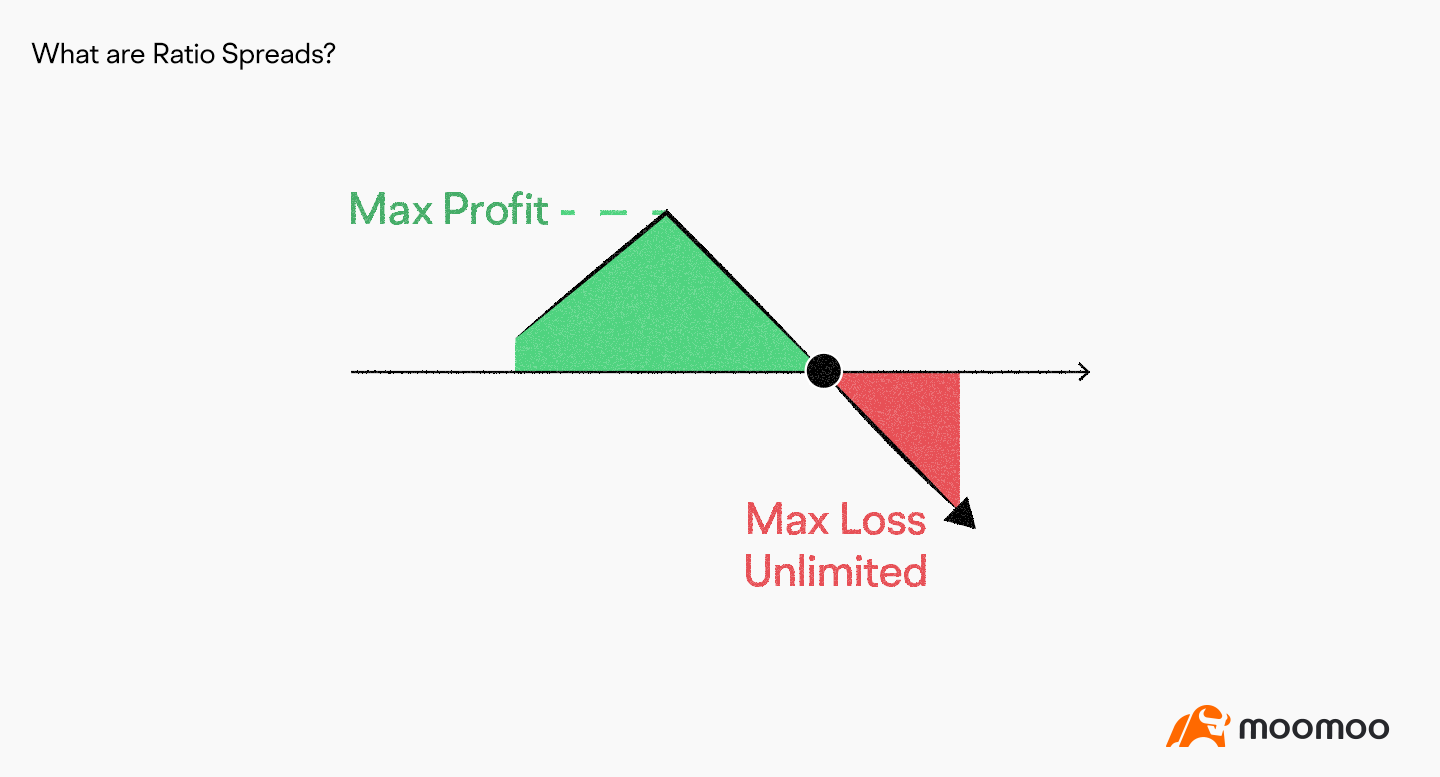
Options trading can offer flexible options for trading strategies, especially when traders can time their trades according to the difference between the asset’s market value and the strike price listed in the contract. A ratio spread is one such strategy, one that requires traders to purchase unequal numbers of options contracts. Though this options strategy carries some risk, it also offers the possibility of substantial rewards.
Below, moomoo explains how a ratio spread works in options trading and how traders can use it to their advantage.
A ratio spread is a type of options strategy in which a trader buys a call or put option that is either at the money (ATM) or out of the money (OTM) while then selling at least two or more of the same OTM options. Traders can buy or sell calls (call ratio spread) or puts (put ratio spread).
The method carries risk since the asset’s stock price could move outside the strike price of the options involved in the strategic maneuver. On the other hand, the difference in the strike prices and the net credit received translates into the possibility of large returns.
A ratio strategy is best used when you believe that the price of an asset is unlikely to change. However, there may be times when you use a ratio spread with a bullish or bearish approach — which requires the use of either a put ratio spread or a call ratio spread. These approaches can be further divided into front and back ratio spreads, which are explained further below.
How does a ratio spread make money? The profit potential is found in the difference between the long and short strike prices. Traders may also profit from any net credit that results from the trading strategy.
In a front ratio spread, traders buy and sell options at different strike prices and expiration dates. The goal is to profit from the difference between the premiums and the money received. Unlike an ordinary spread trade, the trader will buy one option and then sell two option contracts (or vice versa). In other words, the trader will create a “ratio” by buying/selling two contracts for every one option.
Front ratio spread can be either a ratio call spread or a ratio put spread. Here’s how each method works.
In a front ratio put spread, traders purchase a put debit spread and a short put at the short strike of the debit spread. This method is often used as a bearish strategy and for a net credit to minimize risk.
For example, John decides to buy a put option that’s at the money (ATM) — though he could also have purchased an OTM option. He then sells two further OTM put options for a lower strike price and net credit overall. John has effectively minimized risk while providing the opportunity for gains through the net credit and the long position he’s created.
A front ratio call spread works similarly, though here, a trader purchases a call debit spread and a short call at the short strike of the debit spread. As before, the strategy relies on a net credit, though the call ratio spread is used as a slightly bullish strategy.
For example, John purchases a call option that’s either ATM or OTM. He then sells two further OTM call options for a higher strike price and a net credit.
Think of a back ratio spread as the mirror image of a front ratio spread. In a back ratio spread, traders buy more call/put options than they sell. The advantage of a back ratio spread is that it offers larger profit potential, especially with a long position. However, this method can be more expensive and usually involves two In The Money (ITM) options.
Here’s how call/put ratio spreads work.
A back ratio call spread can be used as a bullish strategy. Traders can purchase two ITM call options while selling one ATM or one OTM call option against the long options.
For example, John could sell two long ITM call options while buying a short ATM call option. By doing so, John has offset the long options’ extrinsic value, but his long position now offers unlimited earnings potential.
A back ratio put spread can be used as a bearish strategy. Traders can purchase a put debit spread and an additional long put at the long strike.
For example, John can purchase two ITM put options, then sell one ATM (or OTM) put option at a lower strike price. This method offsets the long options’ extrinsic value, though John stands to profit by the difference between the long ITM strike and the stock price itself (minus the debit paid).
For a step-by-step guide to trading option on Moomoo, see here:
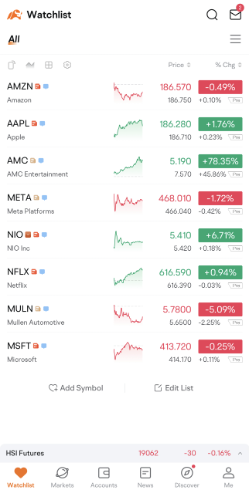
Step 1: Navigate to your Watchlist, then select a stock's "Detailed Quotes" page.
Disclaimer: Images provided are not current and any securities are shown for illustrative purposes only and is not a recommendation.
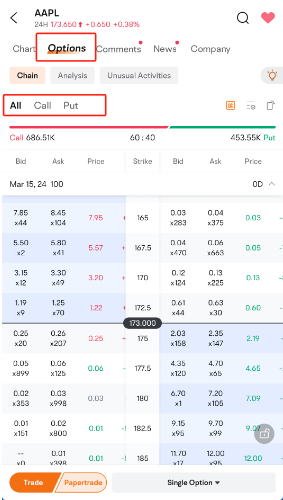
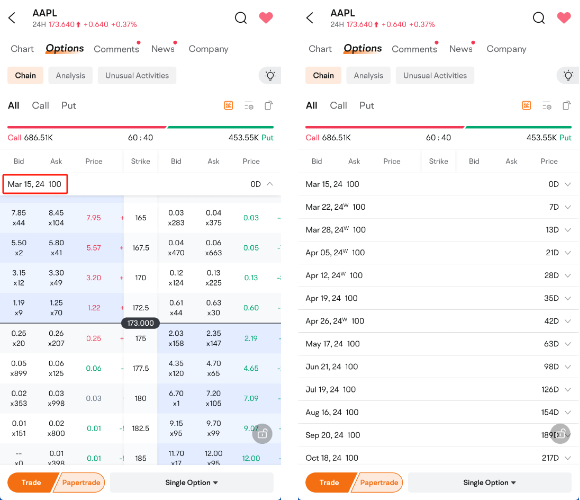
Step 2: Navigate to Options> Chain located at the top of the page.
Step 3: By default, all options with a specific expiration date are shown. For selective viewing of calls or puts, simply tap "Call/Put."
Disclaimer: Images provided are not current and any securities are shown for illustrative purposes only and is not a recommendation.
Step 4: Adjust the expiration date by choosing your preferred date from the menu.
Disclaimer: Images provided are not current and any securities are shown for illustrative purposes only and is not a recommendation.
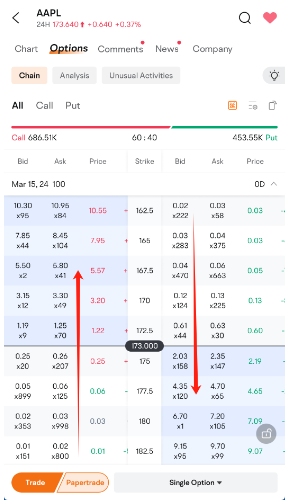
Step 5: Easily distinguish between options: white denotes out-of-the-money, and blue indicates in-the-money. Swipe horizontally to access additional option details.
Disclaimer: Images provided are not current and any securities are shown for illustrative purposes only and is not a recommendation.
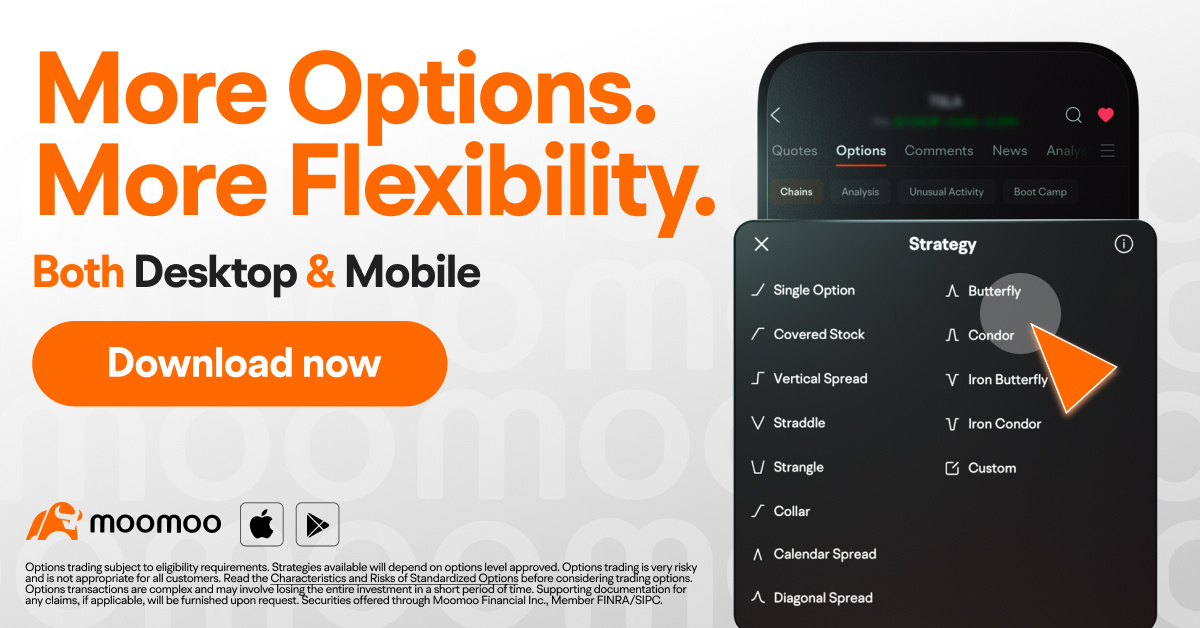
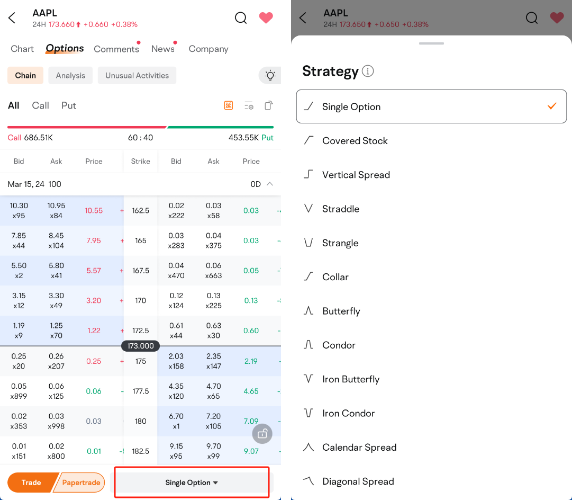
Step 6: Explore various trading strategies at the screen's bottom, offering flexibility for your investment approach.
Disclaimer: Images provided are not current and any securities are shown for illustrative purposes only and is not a recommendation.
A ratio spread offers some tactical advantages for savvy investors, including:
The possibility of limitless rewards
Flexible options for bullish or bearish strategies
Risk minimization
Additionally, options trading can be surprisingly affordable, giving investors more reasons to learn about options strategies.
At the same time, options traders should be aware of the limitations of ratio spreads, including:
Multiple trades may involve higher brokerage/commission fees.
The strategy is relatively complex and requires prior investment experience. ● Some ITM options trades can be expensive.
However, these drawbacks are not insurmountable, and investors who learn to perform these trades can potentially reap great rewards.
Ratio spread is a technical options strategy that promises considerable reward. Options traders will likely discover that these methods offer flexible solutions to bull and bear markets, making them a valuable technique for committed investors.
Is ratio spread profitable? Potentially, yes. In some cases, a long position on a ratio spread offers the potential for limitless gains.
What is a 1-2 ratio call spread? A 1-2 ratio call spread is created when you buy one lower-strike call, then sell two higher-strike call options.
Is the call ratio spread bullish or bearish? A call ratio spread tends to be neutral to bullish.
This presentation is for informational and educational use only and is not a recommendation or endorsement of any particular investment or investment strategy. Investment information provided in this content is general in nature, strictly for illustrative purposes, and may not be appropriate for all investors. Read more
Recommend
Moomoo Offers Extended Trading Hours for Options Trading on Oct 19
At-the-Money (ATM) - How It Works in Options Trading
Out-of-the-Money in Options Trading - How It Works & Examples

Covered Call: A Comprehensive Guide to Options Trading
Strangle Options Strategy - A Helpful Guide for Traders
Straddle vs. Strangle: Understanding the Key Differences
Triple Witching: Understanding Its Impact on the Stock Market
Underlying Asset: Definition, Types and Examples
What Are Option Premiums
Covered Calls and Covered Puts - Strategies for Options Trading
Expiration Date in Options Trading
Options Break-Even Point: Definition, Formula, and Examples
Credit Spread: Definition, Examples & How to Calculate
Bull Put Spread: Definitions, How It Works & Examples
How to Manage Your Risk in Options Trading
How to Pick the 'Right' Strike Price
Options Wheel Strategy Explained: Definition and How to Trade
Long Collar Options Strategy: Definition, How It Works & Examples
Long Call Options Strategy: Definition, Potential Benefits, and Risks
Exercise of Options: When and How to Exercise Options
Time Value: Definition, Calculation, Importance in Options Trading
Short Call Options Strategy: Guide & Examples
What Are Bitcoin ETF Options: Investment Insights & Strategies
Hedge with Options: Protect Your Portfolio in 2026
Options Chains: Definition, How to Read and Analyze Them
Options Profit Calculation: Overview, Formula & Examples
What is Theta in Options Trading: Overview and Strategies
Debit Spread: Definition, Types & Examples
Butterfly Spread: Definition and Application in Options Trading
What Is an Options Screener and How to Use?
Unusual Options Activity: Insights and Strategies for Traders
Protective Put Strategy: Definition, How It Works & Examples
What Are Stock Options: Types, How They Work and Examples
Weekly vs. Monthly Options: Choosing the Right Expiration Date
How to Practice Options Trading with Demo Trading Account
Sell to Open vs Sell to Close: Understanding the Difference
Long Put: Definition, Examples and How to Trade
Iron Condor: Understanding This Options Trading Strategy
Diagonal Spread: Definition, Types & How to Use
Implied Volatility (IV) Rank & Percentile in Options Trading
Trading Earnings with Options
Iron Butterfly: Mastering the Options Trading Strategy
Interest Rate Options: Definition & How They Work
Options Buy to Open vs Buy to Close: What's the difference?
Vertical Spread: Definition, Types, & Examples
Bear Put Spread: An Options Trading Strategy Explained
What is a Dividend Reinvestment Plan (DRIP)?
Put/Call Ratio (PCR): Definition & How to Use
How Are Options Priced? | Calculation and Examples
Naked Calls Options Strategy: Definition & How It Works
Options Vs. Futures: Understanding Their Key Differences
Extrinsic Value: Definition, Calculation, and Trading Strategies
Intrinsic Value: How It Works And How To Calculate It
Bull Call Spread - Examples and Applications in Options Trading
Index Options: Definitions, Strategies and Risks
Short Put Options: Strategies and Risks Explained
Quadruple Witching: How It Can Affect the Stock Market
What Are Options? Everything You Need to Know before Trading
Four Option Trading Strategies for Beginners
10 Options Strategies to Enhance Your Trading Portfolio
American Options vs. European Options
In-The-Money (ITM): Call and Put Options Examples
What is a Calendar Spread?
Open Interest: What it means for traders and investors
Options vs Stocks: Choosing the Right Investment Strategy
Options Strike Prices Explained: A Complete Guide for Beginners
Call vs Put Options: Your Essential Guide to the Basics
Zero Days to Expiration (0DTE) Options: Trade Mag 7 Stock Options Today
What Is An Options Contract? How Does It Work?
What is Synthetic Put? (How Does It Work)
How and When to Roll Covered Calls
Option Volume vs Open Interest: Understanding the Difference
4 Options Trading Levels
How to Trade Options for Beginners?
What Is Implied Volatility (IV)?
What Are Cash Secured Puts: How To Sell Them
What Is a Straddle Options Strategy?
What Is Ratio Spread in Options
What is a Call Option: Strategies and Tips
Taxes on Stocks: How Selling Stocks Affects Your Taxes
Option Greeks Explained - Option Greek Cheat Sheet
Put Options: Hedging Your Portfolio
Put Options: How to Use Them in Your Trading Strategy
Poor Man's Covered Call (PMCC): A Beginner's Guide
Four Option Trading Mistakes to Avoid
Trading Synthetic Options: Risks and Rewards
Call Spread vs. Put Spread: What are the differences?
What is stock options trading
What Is Margin Call and How Can You Avoid the Risks?
Options Trading Strategies: Iron Condor vs. Iron Butterfly
Moomoo Offers Extended Trading Hours for Options Trading on Oct 19
At-the-Money (ATM) - How It Works in Options Trading
Out-of-the-Money in Options Trading - How It Works & Examples
Covered Call: A Comprehensive Guide to Options Trading
Strangle Options Strategy - A Helpful Guide for Traders
Straddle vs. Strangle: Understanding the Key Differences
Triple Witching: Understanding Its Impact on the Stock Market
Underlying Asset: Definition, Types and Examples
What Are Option Premiums
Covered Calls and Covered Puts - Strategies for Options Trading
Expiration Date in Options Trading
Options Break-Even Point: Definition, Formula, and Examples
Credit Spread: Definition, Examples & How to Calculate
Bull Put Spread: Definitions, How It Works & Examples
How to Manage Your Risk in Options Trading
How to Pick the 'Right' Strike Price
Options Wheel Strategy Explained: Definition and How to Trade
Long Collar Options Strategy: Definition, How It Works & Examples
Long Call Options Strategy: Definition, Potential Benefits, and Risks
Exercise of Options: When and How to Exercise Options
Time Value: Definition, Calculation, Importance in Options Trading
Short Call Options Strategy: Guide & Examples
What Are Bitcoin ETF Options: Investment Insights & Strategies
Hedge with Options: Protect Your Portfolio in 2026
Options Chains: Definition, How to Read and Analyze Them
Options Profit Calculation: Overview, Formula & Examples
What is Theta in Options Trading: Overview and Strategies
Debit Spread: Definition, Types & Examples
Butterfly Spread: Definition and Application in Options Trading
What Is an Options Screener and How to Use?
Unusual Options Activity: Insights and Strategies for Traders
Protective Put Strategy: Definition, How It Works & Examples
What Are Stock Options: Types, How They Work and Examples
Weekly vs. Monthly Options: Choosing the Right Expiration Date
How to Practice Options Trading with Demo Trading Account
Sell to Open vs Sell to Close: Understanding the Difference
Long Put: Definition, Examples and How to Trade
Iron Condor: Understanding This Options Trading Strategy
Diagonal Spread: Definition, Types & How to Use
Implied Volatility (IV) Rank & Percentile in Options Trading
Trading Earnings with Options
Iron Butterfly: Mastering the Options Trading Strategy
Interest Rate Options: Definition & How They Work
Options Buy to Open vs Buy to Close: What's the difference?
Vertical Spread: Definition, Types, & Examples
Bear Put Spread: An Options Trading Strategy Explained
What is a Dividend Reinvestment Plan (DRIP)?
Put/Call Ratio (PCR): Definition & How to Use
How Are Options Priced? | Calculation and Examples
Naked Calls Options Strategy: Definition & How It Works
Options Vs. Futures: Understanding Their Key Differences
Extrinsic Value: Definition, Calculation, and Trading Strategies
Intrinsic Value: How It Works And How To Calculate It
Bull Call Spread - Examples and Applications in Options Trading
Index Options: Definitions, Strategies and Risks
Short Put Options: Strategies and Risks Explained
Quadruple Witching: How It Can Affect the Stock Market
What Are Options? Everything You Need to Know before Trading
Four Option Trading Strategies for Beginners
10 Options Strategies to Enhance Your Trading Portfolio
American Options vs. European Options
In-The-Money (ITM): Call and Put Options Examples
What is a Calendar Spread?
Open Interest: What it means for traders and investors
Options vs Stocks: Choosing the Right Investment Strategy
Options Strike Prices Explained: A Complete Guide for Beginners
Call vs Put Options: Your Essential Guide to the Basics
Zero Days to Expiration (0DTE) Options: Trade Mag 7 Stock Options Today
What Is An Options Contract? How Does It Work?
What is Synthetic Put? (How Does It Work)
How and When to Roll Covered Calls
Option Volume vs Open Interest: Understanding the Difference
4 Options Trading Levels
How to Trade Options for Beginners?
What Is Implied Volatility (IV)?
What Are Cash Secured Puts: How To Sell Them
What Is a Straddle Options Strategy?
What Is Ratio Spread in Options
What is a Call Option: Strategies and Tips
Taxes on Stocks: How Selling Stocks Affects Your Taxes
Option Greeks Explained - Option Greek Cheat Sheet
Put Options: Hedging Your Portfolio
Put Options: How to Use Them in Your Trading Strategy
Poor Man's Covered Call (PMCC): A Beginner's Guide
Four Option Trading Mistakes to Avoid
Trading Synthetic Options: Risks and Rewards
Call Spread vs. Put Spread: What are the differences?
What is stock options trading
What Is Margin Call and How Can You Avoid the Risks?
Options Trading Strategies: Iron Condor vs. Iron Butterfly

