
Moomoo Insights
Jul 16 15:38
TSMC Earnings: AI Demand Is Stronger Than the Chip Selloff Suggests
Moomoo Insights
Sep 30 05:04
Live Take | Anthropic’s $518B Compute Bet: Who Wins From the AI Buildout?
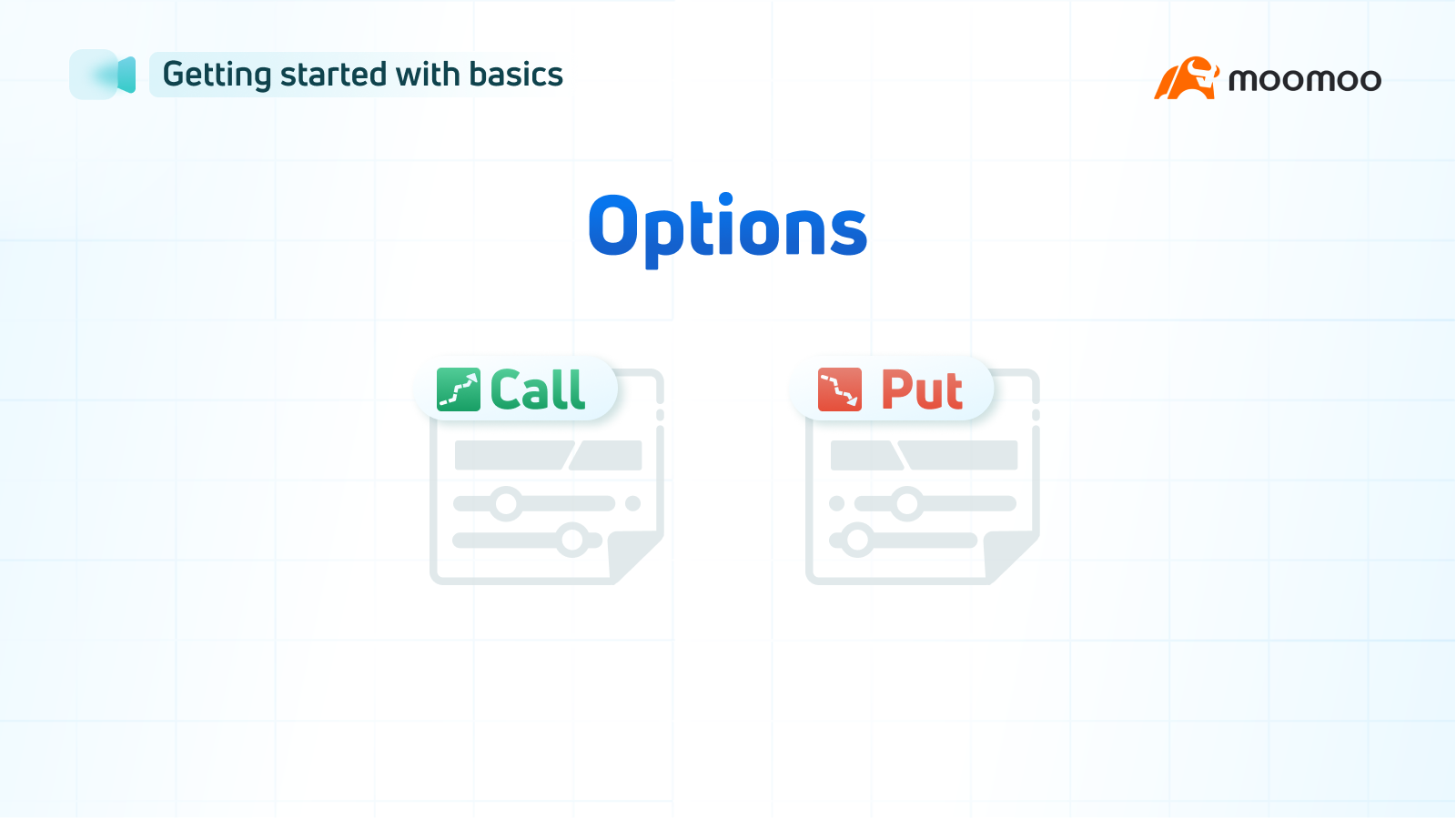
Options trading can be an intricate yet potentially rewarding aspect of investment. Options traders should have a solid grasp of calls and puts, two essential types of options that play a significant role in trading. Let's delve into the world of options trading, understand what calls and puts are, how they work, and explore their benefits and risks.
Options are financial instruments that offer the buyer the right, but not the obligation, to buy (call option) or sell (put option) an underlying asset at a predetermined price within a specified time frame. Conversely, the seller of an option holds the obligation to fulfill the terms of the contract if the buyer chooses to exercise their right.
Call options provide the holder with the right to purchase the underlying asset at a predetermined price, known as the strike price, before the expiration date. On the other hand, the seller of a call option bears the obligation to sell the asset at the strike price if the buyer decides to exercise the option.
For instance, let's say you sell a call option for Company X with a strike price of $50 and an expiration date in three months. If the stock price of Company X rises above $50 within the specified time frame and the buyer exercises the option, you must sell the stock at $50, regardless of its current market price.
In options trading, a put option provides the holder with the right to sell the underlying asset at a predetermined price before the expiration date. For the seller of a put option, there is an obligation to purchase the asset at the agreed-upon strike price if the buyer chooses to exercise the option.
For instance, imagine you sell a put option for Company X with a strike price of $50 and an expiration date in three months. If the stock price falls below $50 within the specified time frame and the buyer decides to exercise the option, you, as the seller, are obligated to buy the stock at $50 per share, irrespective of its current market value.
The primary differentiation between call and put options lies in the direction of price speculation. Call options are commonly employed by investors anticipating a rise in the underlying asset's price, offering them the opportunity to buy the asset at a predetermined price. Conversely, put options are favored by those expecting a decline in price, granting them the right to sell the asset at a predetermined price. While call options provide bullish positions for buyers, enabling them to profit from upward market movements, put options offer bearish positions for buyers, allowing them to benefit from downward market trends.
Call Options | Put Options |
Buy-side perspective
Sell-side perspective
| Buy-side perspective
Sell-side perspective
|
Choosing the right contract requires analyzing an options chain, which on many platforms can look like a confusing spreadsheet. This makes it difficult to compare contracts and can slow down decision-making. To address this, the moomoo options chain presents key data in a clear layout, even letting you see a profit-and-loss analysis for any single contract with just one click. This visualizes how much you might gain or lose under different price scenarios. You can filter contracts by expiration or group them by strategy, helping you quickly compare potential outcomes and select contracts that fit your risk tolerance. Open the moomoo app to review the profit-and-loss of individual contracts and turn complex data into a clearer options plan.
Call options: Employed by investors who foresee the underlying asset's price increasing, granting them the right to purchase the asset at a predetermined price. Sellers of call options, on the other hand, anticipate the asset's price to remain stable or decrease, obligating them to potentially sell the asset if the option is exercised.
Put options: Preferred by investors who predict a decrease in the underlying asset's price, giving them the right to sell the asset at a predetermined price. Sellers of put options, conversely, anticipate the asset's price to remain stable or increase, potentially obligating them to purchase the asset if the option is exercised.
Call options: Typically represent bullish positions for buyers, allowing them to profit from upward market movements. However, for sellers, especially with covered call strategies, they may adopt a neutral or even bearish position depending on their outlook.
Put options: Generally offer bearish positions for buyers, enabling them to benefit from downward market trends. Conversely, for sellers, especially with cash-secured put strategies, they may take a neutral or even bullish stance depending on their outlook.
Call options: Buyers may profit from upward market movements, while sellers' potential max profit is the premium received. Sellers prefer the underlying price below the strike price to avoid exercise. They profit if the underlying price stays below the breakeven price, which is the strike price plus the premium.
Put options: Buyers benefit from downward trends, while sellers' potential max profit is the premium received. Sellers prefer the underlying price above the strike price to avoid exercise. They profit if the underlying price stays above the breakeven price, which is the strike price minus the premium.
Many investors think they will profit as long as the price moves in their favor, only to find their returns are lower than expected. This often happens because the break-even point wasn't calculated correctly, allowing high premium costs to erode gains. Without precise profit calculations, you can't optimize your entry. Moomoo’s Options Analysis feature brings clarity to every trade by instantly calculating the precise break-even point and providing a theoretical probability of profit. For any contract, the analysis tool displays the break-even point, maximum potential loss, and maximum potential profit, showing exactly when a trade becomes profitable. If the break-even point seems too far from the current price, you can adjust your strategy for better capital efficiency. Register for a free Moomoo account today to use our Options Analysis features and trade with a clear understanding of your bottom line.
Call options: Buyers typically face limited theoretical risk (premium paid) with unlimited max profit potential. However, sellers, especially with naked call strategies, can encounter unlimited risk.
Put options: Buyers usually have limited theoretical risk (premium paid) with potential for a significant max gain. Yet, sellers, particularly with uncovered put strategies, may face significant risk.
Call options: Perform well in rising markets; buyers can profit from price increases while sellers are less likely to face assignment in declining markets, as out-of-the-money options are unlikely to be exercised by holders.
Put options: Perform well in falling markets or volatility; buyers can profit from declines, while sellers may face obligations in declining markets. It's worth noting that sellers are less likely to face assignment if the underlying stock is increasing, as out-of-the-money (OTM) options typically wouldn't be exercised by the holder under such circumstances.
Understanding these differences is crucial for investors to effectively utilize call and put options in their investment strategies.
When you buy a call option, you pay a premium to the seller. If the underlying asset's price rises above the strike price plus the initial premium paid before the expiration date, you can exercise your option and profit from the price difference. However, if the price remains below the strike price, you may choose not to exercise the option, limiting your loss to the premium paid. An investor might also consider selling the call before expiration and realize any profits or losses on that trade depending on if the option is worth more or less than your initial purchase price.
Suppose you buy a call option for Company Y with a strike price of $100 and pay a premium of $5 per share. If, before the expiration date, the stock price of Company Y rises to $110 per share, you can exercise your option and buy the shares at $100 each, even though the market price is $110. After deducting the premium paid, your net profit per share would be $5.
Similarly, purchasing a put option involves paying a premium. If the underlying asset's price falls below the strike price plus the initial premium paid before the expiration date, you can exercise your option and sell the asset at the predetermined price, thereby profiting from the price difference. Conversely, if the price stays above the strike price, you may opt not to exercise the option, limiting your loss to the premium paid. An investor might also consider selling the put before expiration and realize any profits or losses on that trade depending on if the option is worth more or less than your initial purchase price.
Continuing with the example of Company Y, if the stock price falls to $90 per share before the expiration date, you can exercise your put option and sell the shares at $100 each, regardless of the market price being $90. After deducting the premium paid, your net profit per share would be $5.
However, if you're holding an option and aiming for an early, profitable exit, the challenge is knowing the optimal price at which to sell. Traditional tools often can't predict your option's future value, which can cause you to miss the peak exit point. The moomoo Option Calculator helps turn profit prediction into data. By adjusting the target date and stock price, the tool instantly computes the option's future theoretical value and estimated profit. This allows you to "stress test" your trade beforehand, replacing guesswork with precise data to create a scientific exit strategy. Register for free access to the Moomoo Option Price Calculator to make your trade expectations clear and precise.
Options trading presents inherent risks for both buyers and sellers. For option buyers, the primary risk lies in losing the entire premium paid if market movements don't align with their expectations. Conversely, option sellers face the risk of being obligated to fulfill the terms of the contract if the market moves unfavorably, potentially resulting in losses beyond the premium received.
These losses can vary significantly, ranging from the unlimited loss potential for naked call writers to being assigned at prices unfavorable to their positions. Naked call writers, in particular, are exposed to theoretically unlimited losses if the underlying asset's price rises significantly. Additionally, assignment at unfavorable prices can lead to substantial losses for sellers, especially if the market experiences sharp movements against their positions.
Additionally, options come with expiration dates, causing their value to diminish over time. If the anticipated price movement fails to materialize within the specified period, both buyers and sellers may risk experiencing a total loss of investment. While options trading has the potential to offer significant rewards, it's essential for participants to carefully consider and manage these risks.
Diversification: Spread your investments across different assets to reduce the impact of adverse price movements.
Stop-loss orders: Set predetermined price levels to automatically place orders to sell your options if the market moves against your position, limiting potential losses.
Option spreads: Combine multiple options positions to create spread strategies that may help reduce risk exposure.
Options provide various strategies for investors to manage risk and potentially capitalize on market opportunities.
Hedging – Buying puts: Investors can use put options to help protect their investment portfolios from potential downside risk. By purchasing put options on their existing holdings, investors can avoid losses below the put's strike price if the market experiences a decline. However, buying protective puts can be a costly strategy.
Speculation – Buy calls or sell puts: Traders can speculate on the price movement of an underlying asset by buying call options or selling put options. This strategy allows investors to potentially profit from anticipated price increases without owning the underlying asset.
Speculation – Sell calls or buy puts on bearish securities: On the other hand, traders can potentially profit from anticipated price decreases by selling call options or buying put options. This strategy enables investors to benefit from declining prices without short-selling the underlying asset. However, it's important to remember that a naked call (short calls) have unlimited loss potential, since there is no limit to how high the stock's price could rise. The investor would need to buy at the market price to cover assignment.
The decision between a call and a put option hinges on various factors, including your role as either a buyer or seller in the market and your specific investment strategy. If you're aiming for potential profit from an anticipated increase in the underlying asset's price, opting for a call option might align with your objectives. Conversely, if your analysis suggests a potential downturn in the asset's value, choosing a put option could offer a strategic advantage. It's essential to carefully assess your market outlook and investment goals before deciding which option best suits your needs.
CE stands for 'call option' and PE stands for 'put option'. These are commonly used abbreviations in options trading to differentiate between call and put options.
Understanding call and put options is essential for any investor looking to diversify their portfolio and manage risk effectively. By grasping the fundamentals of options trading and employing appropriate strategies, investors can potentially enhance their investment outcomes and navigate the dynamic financial markets with greater confidence.
This presentation is for informational and educational use only and is not a recommendation or endorsement of any particular investment or investment strategy. Investment information provided in this content is general in nature, strictly for illustrative purposes, and may not be appropriate for all investors. Read more
Recommend
Moomoo Offers Extended Trading Hours for Options Trading on Oct 19
At-the-Money (ATM) - How It Works in Options Trading
Out-of-the-Money in Options Trading - How It Works & Examples

Covered Call: A Comprehensive Guide to Options Trading
Strangle Options Strategy - A Helpful Guide for Traders
Straddle vs. Strangle: Understanding the Key Differences
Triple Witching: Understanding Its Impact on the Stock Market
Underlying Asset: Definition, Types and Examples
What Are Option Premiums
Covered Calls and Covered Puts - Strategies for Options Trading
Expiration Date in Options Trading
Options Break-Even Point: Definition, Formula, and Examples
Credit Spread: Definition, Examples & How to Calculate
Bull Put Spread: Definitions, How It Works & Examples
How to Manage Your Risk in Options Trading
How to Pick the 'Right' Strike Price
Options Wheel Strategy Explained: Definition and How to Trade
Long Collar Options Strategy: Definition, How It Works & Examples
Long Call Options Strategy: Definition, Potential Benefits, and Risks
Exercise of Options: When and How to Exercise Options
Time Value: Definition, Calculation, Importance in Options Trading
Short Call Options Strategy: Guide & Examples
What Are Bitcoin ETF Options: Investment Insights & Strategies
Hedge with Options: Protect Your Portfolio in 2026
Options Chains: Definition, How to Read and Analyze Them
Options Profit Calculation: Overview, Formula & Examples
What is Theta in Options Trading: Overview and Strategies
Debit Spread: Definition, Types & Examples
Butterfly Spread: Definition and Application in Options Trading
What Is an Options Screener and How to Use?
Unusual Options Activity: Insights and Strategies for Traders
Protective Put Strategy: Definition, How It Works & Examples
What Are Stock Options: Types, How They Work and Examples
Weekly vs. Monthly Options: Choosing the Right Expiration Date
How to Practice Options Trading with Demo Trading Account
Sell to Open vs Sell to Close: Understanding the Difference
Long Put: Definition, Examples and How to Trade
Iron Condor: Understanding This Options Trading Strategy
Diagonal Spread: Definition, Types & How to Use
Implied Volatility (IV) Rank & Percentile in Options Trading
Trading Earnings with Options
Iron Butterfly: Mastering the Options Trading Strategy
Interest Rate Options: Definition & How They Work
Options Buy to Open vs Buy to Close: What's the difference?
Vertical Spread: Definition, Types, & Examples
Bear Put Spread: An Options Trading Strategy Explained
What is a Dividend Reinvestment Plan (DRIP)?
Put/Call Ratio (PCR): Definition & How to Use
How Are Options Priced? | Calculation and Examples
Naked Calls Options Strategy: Definition & How It Works
Options Vs. Futures: Understanding Their Key Differences
Extrinsic Value: Definition, Calculation, and Trading Strategies
Intrinsic Value: How It Works And How To Calculate It
Bull Call Spread - Examples and Applications in Options Trading
Index Options: Definitions, Strategies and Risks
Short Put Options: Strategies and Risks Explained
Quadruple Witching: How It Can Affect the Stock Market
What Are Options? Everything You Need to Know before Trading
Four Option Trading Strategies for Beginners
10 Options Strategies to Enhance Your Trading Portfolio
American Options vs. European Options
In-The-Money (ITM): Call and Put Options Examples
What is a Calendar Spread?
Open Interest: What it means for traders and investors
Options vs Stocks: Choosing the Right Investment Strategy
Options Strike Prices Explained: A Complete Guide for Beginners
Call vs Put Options: Your Essential Guide to the Basics
Zero Days to Expiration (0DTE) Options: Trade Mag 7 Stock Options Today
What Is An Options Contract? How Does It Work?
What is Synthetic Put? (How Does It Work)
How and When to Roll Covered Calls
Option Volume vs Open Interest: Understanding the Difference
4 Options Trading Levels
How to Trade Options for Beginners?
What Is Implied Volatility (IV)?
What Are Cash Secured Puts: How To Sell Them
What Is a Straddle Options Strategy?
What Is Ratio Spread in Options
What is a Call Option: Strategies and Tips
Taxes on Stocks: How Selling Stocks Affects Your Taxes
Option Greeks Explained - Option Greek Cheat Sheet
Put Options: Hedging Your Portfolio
Put Options: How to Use Them in Your Trading Strategy
Poor Man's Covered Call (PMCC): A Beginner's Guide
Four Option Trading Mistakes to Avoid
Trading Synthetic Options: Risks and Rewards
Call Spread vs. Put Spread: What are the differences?
What is stock options trading
What Is Margin Call and How Can You Avoid the Risks?
Options Trading Strategies: Iron Condor vs. Iron Butterfly
Moomoo Offers Extended Trading Hours for Options Trading on Oct 19
At-the-Money (ATM) - How It Works in Options Trading
Out-of-the-Money in Options Trading - How It Works & Examples
Covered Call: A Comprehensive Guide to Options Trading
Strangle Options Strategy - A Helpful Guide for Traders
Straddle vs. Strangle: Understanding the Key Differences
Triple Witching: Understanding Its Impact on the Stock Market
Underlying Asset: Definition, Types and Examples
What Are Option Premiums
Covered Calls and Covered Puts - Strategies for Options Trading
Expiration Date in Options Trading
Options Break-Even Point: Definition, Formula, and Examples
Credit Spread: Definition, Examples & How to Calculate
Bull Put Spread: Definitions, How It Works & Examples
How to Manage Your Risk in Options Trading
How to Pick the 'Right' Strike Price
Options Wheel Strategy Explained: Definition and How to Trade
Long Collar Options Strategy: Definition, How It Works & Examples
Long Call Options Strategy: Definition, Potential Benefits, and Risks
Exercise of Options: When and How to Exercise Options
Time Value: Definition, Calculation, Importance in Options Trading
Short Call Options Strategy: Guide & Examples
What Are Bitcoin ETF Options: Investment Insights & Strategies
Hedge with Options: Protect Your Portfolio in 2026
Options Chains: Definition, How to Read and Analyze Them
Options Profit Calculation: Overview, Formula & Examples
What is Theta in Options Trading: Overview and Strategies
Debit Spread: Definition, Types & Examples
Butterfly Spread: Definition and Application in Options Trading
What Is an Options Screener and How to Use?
Unusual Options Activity: Insights and Strategies for Traders
Protective Put Strategy: Definition, How It Works & Examples
What Are Stock Options: Types, How They Work and Examples
Weekly vs. Monthly Options: Choosing the Right Expiration Date
How to Practice Options Trading with Demo Trading Account
Sell to Open vs Sell to Close: Understanding the Difference
Long Put: Definition, Examples and How to Trade
Iron Condor: Understanding This Options Trading Strategy
Diagonal Spread: Definition, Types & How to Use
Implied Volatility (IV) Rank & Percentile in Options Trading
Trading Earnings with Options
Iron Butterfly: Mastering the Options Trading Strategy
Interest Rate Options: Definition & How They Work
Options Buy to Open vs Buy to Close: What's the difference?
Vertical Spread: Definition, Types, & Examples
Bear Put Spread: An Options Trading Strategy Explained
What is a Dividend Reinvestment Plan (DRIP)?
Put/Call Ratio (PCR): Definition & How to Use
How Are Options Priced? | Calculation and Examples
Naked Calls Options Strategy: Definition & How It Works
Options Vs. Futures: Understanding Their Key Differences
Extrinsic Value: Definition, Calculation, and Trading Strategies
Intrinsic Value: How It Works And How To Calculate It
Bull Call Spread - Examples and Applications in Options Trading
Index Options: Definitions, Strategies and Risks
Short Put Options: Strategies and Risks Explained
Quadruple Witching: How It Can Affect the Stock Market
What Are Options? Everything You Need to Know before Trading
Four Option Trading Strategies for Beginners
10 Options Strategies to Enhance Your Trading Portfolio
American Options vs. European Options
In-The-Money (ITM): Call and Put Options Examples
What is a Calendar Spread?
Open Interest: What it means for traders and investors
Options vs Stocks: Choosing the Right Investment Strategy
Options Strike Prices Explained: A Complete Guide for Beginners
Call vs Put Options: Your Essential Guide to the Basics
Zero Days to Expiration (0DTE) Options: Trade Mag 7 Stock Options Today
What Is An Options Contract? How Does It Work?
What is Synthetic Put? (How Does It Work)
How and When to Roll Covered Calls
Option Volume vs Open Interest: Understanding the Difference
4 Options Trading Levels
How to Trade Options for Beginners?
What Is Implied Volatility (IV)?
What Are Cash Secured Puts: How To Sell Them
What Is a Straddle Options Strategy?
What Is Ratio Spread in Options
What is a Call Option: Strategies and Tips
Taxes on Stocks: How Selling Stocks Affects Your Taxes
Option Greeks Explained - Option Greek Cheat Sheet
Put Options: Hedging Your Portfolio
Put Options: How to Use Them in Your Trading Strategy
Poor Man's Covered Call (PMCC): A Beginner's Guide
Four Option Trading Mistakes to Avoid
Trading Synthetic Options: Risks and Rewards
Call Spread vs. Put Spread: What are the differences?
What is stock options trading
What Is Margin Call and How Can You Avoid the Risks?
Options Trading Strategies: Iron Condor vs. Iron Butterfly

