

Moomoo Insights
Jul 16 15:38
TSMC Earnings: AI Demand Is Stronger Than the Chip Selloff Suggests
Moomoo Insights
Sep 30 05:04
Live Take | Anthropic’s $518B Compute Bet: Who Wins From the AI Buildout?
For traders and investors obtaining and using information and data can help them make trading decisions. It's even better if it's timely. One source of information commonly used is unusual options activity. Market participants can use this to review trading volumes, discover potential trading opportunities, and more. Let's take a look.
Unusual options activity refers to trading patterns that deviate from the norm, often indicating insider knowledge or larger market movements. Typically, this involves a substantial increase in trading volume or open interest of specific options contracts compared to historical averages. Traders can observe this activity as it can signal potential shifts in stock prices, either due to anticipated events or underlying market trends.
Here are some examples. A spike in call option activity might suggest that investors expect the stock price to rise, while a surge in put options could indicate a bearish outlook. Unusual options activity can also arise from institutional traders implementing large-scale strategies, thereby providing valuable insights for retail investors seeking to anticipate market direction.
Investors should pay attention to unusual options activity because it can serve as an early indicator of significant market moves or even potential insider trading. When options are bought or sold in atypically large volumes, it might signal that market participants expect a big change in the underlying stock's price. This insight can provide a strategic advantage, allowing astute investors to position their portfolios proactively.
Furthermore, unusual options activity can shed light on broader market sentiment or reveal potential catalysts that may not be immediately apparent. By carefully analyzing this activity, investors can possibly enhance their risk management strategies, identify arbitrage opportunities, and make informed decisions that align with evolving market trends. However, it's important to exercise caution and integrate unusual options activity into a broader analytical framework to avoid overreliance on this single indicator.
You can easily find and read unusual options activity on moomoo options trading app.
On this page, it can help you spot potential candidates for unusual activity. Focus on options contracts that show unusually high trading volume, large block trades, or significant changes in open interest.
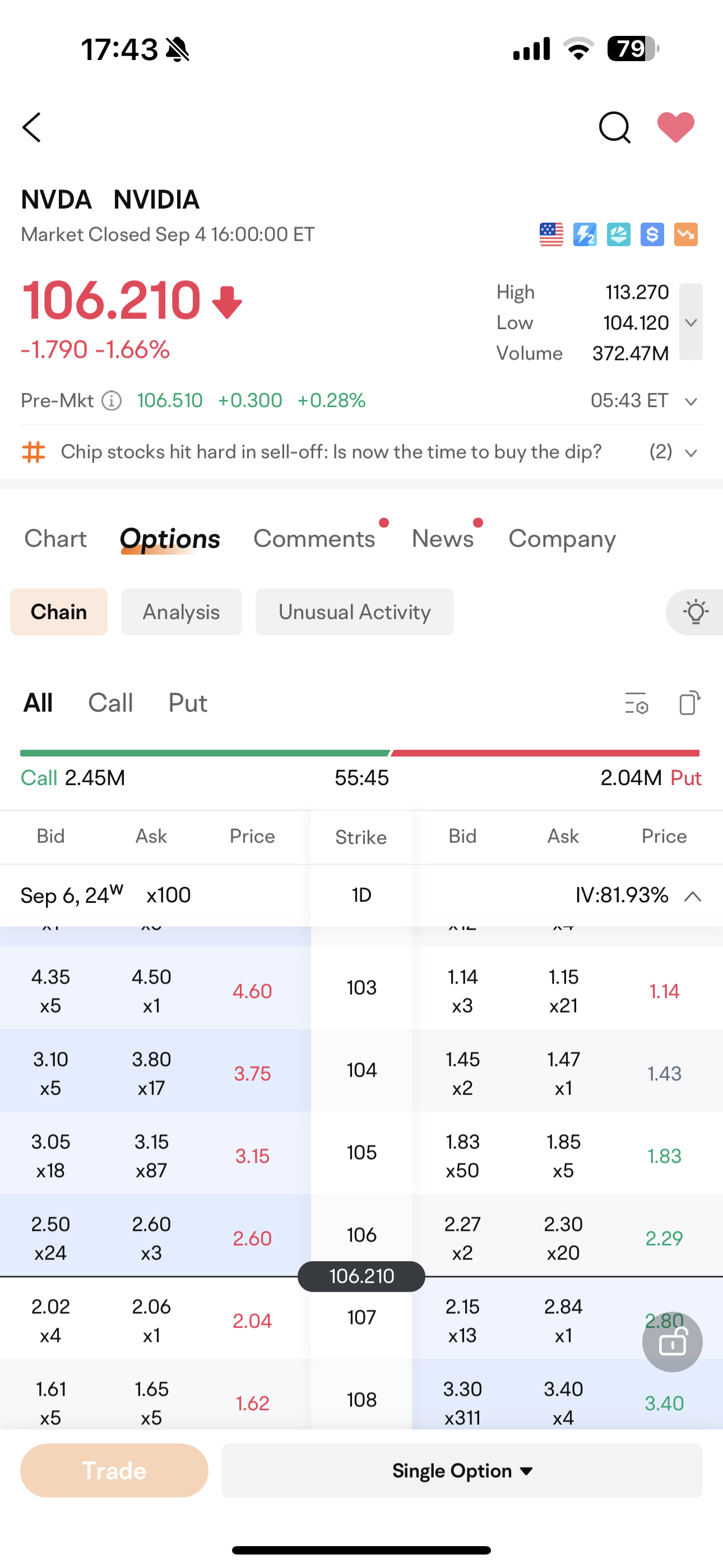
Images provided are not current and any securities are shown for illustrative purposes only and is not a recommendation.
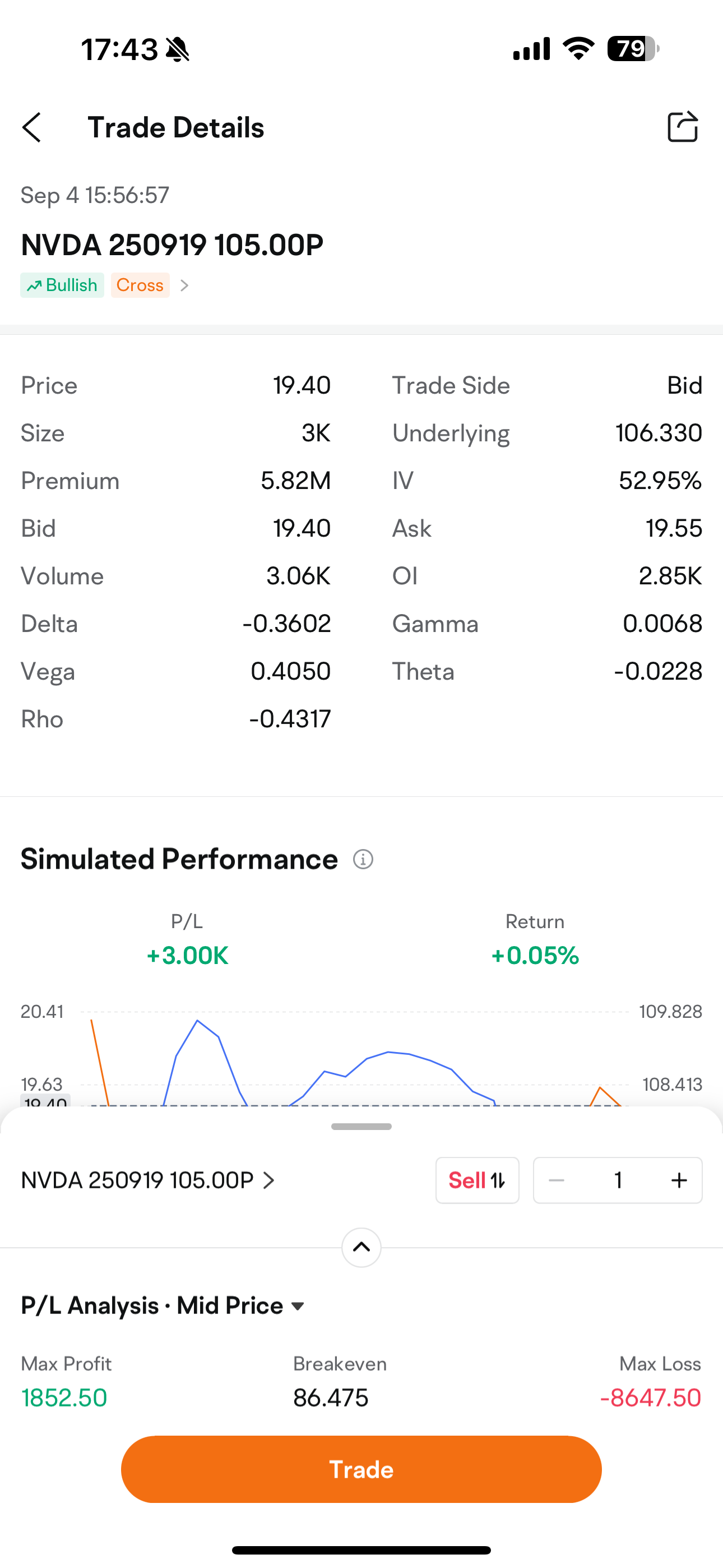
Images provided are not current and any securities are shown for illustrative purposes only and is not a recommendation.
Once you've identified potential candidates, select one and analyze the corresponding option chains to gain insights into market sentiment. Pay attention to the strike prices, expiration dates, and volume of traded contracts for clues about investors' expectations and sentiment regarding the underlying security.
Pay attention to key metrics like the put/call ratio, implied volatility, and option delta to assess market sentiment and potential direction. A high put/call ratio may signal bearish sentiment, while low implied volatility often points to lower uncertainty. Option delta can help you estimate the likelihood of the option expiring in-the-money.
Images provided are not current and any securities are shown for illustrative purposes only and is not a recommendation.
Consider external factors like news events, earnings reports, or macroeconomic indicators that could affect the underlying security. When unusual options activity aligns with significant news or events, it can offer strong confirmation or validation of trading signals.
Before acting on unusual options activity, thoroughly assess the trade's risk-reward profile. Consider factors such as its potential impact on portfolio risk, liquidity constraints, and the likelihood of success based on your analysis of the options activity.
Continuously monitor the market and adapt your trading strategy as new information and market conditions evolve. Be ready to exit trades or adjust positions if the original rationale for the trade no longer applies, or if changing market conditions call for a shift in strategy.
Investors looking to capitalize on unusual options activity should start by closely monitoring options flow data to identify contracts with significant volume spikes or open interest changes. Various platforms and tools can provide real-time insights into these activities, allowing investors to spot emerging trends or anomalies. Once potential opportunities are identified, investors should conduct thorough due diligence to understand the broader market context and assess the likelihood of underlying stock movements.
This evaluation could involve analyzing company announcements, earnings reports, or broader economic indicators that might justify the observed options activity. Investors can then decide whether to align their positions in line with the anticipated trends, utilizing strategies such as long or short options plays, spreads, or other risk-managed approaches.
However, it is paramount for investors to integrate this strategy within their overall investment framework, ensuring they are not solely reliant on unusual options activity to make trading decisions, as this data only provides a piece of the larger market puzzle. Risk management techniques, such as setting stop-loss orders or using hedging strategies, can further protect against adverse market movements or misinterpretations of the data.
Unusual options activity can bring potential benefits and drawbacks for investors.
On the positive side, unusual options activity can serve as a leading indicator of market sentiment, offering timely insights that may not be obvious from typical stock analysis. It allows investors to detect potential market movements early, thus providing potential strategic opportunities to capitalize on trends before they become apparent to the broader market. And by understanding these patterns, investors can fine-tune their risk management strategies, optimizing portfolio performance based on anticipated stock price movements.
On the cons side, there's the potential for misinterpretation; not all unusual activity translates to specific stock movements or trends, leading to possible misinformation or overreliance on incomplete data. Additionally, this activity might reflect broader market manipulation or speculative actions by large institutional players, which can obscure genuine market signals.
Investors should take a comprehensive approach but a good place is to start by analyzing the context in which these activities occur. Sudden spikes in options volume or significant changes in open interest can indicate potential developments related to the underlying stock. To interpret these patterns effectively, it's crucial for investors to examine company news, upcoming earnings reports, or market events that might provide a backdrop for this activity.
Additionally, investors should assess the options market's broader sentiment by observing whether the activity is concentrated in calls or puts, as this can suggest a bullish or bearish outlook. Advanced analytical tools and services can further aid investors in filtering and understanding large-scale transactions, offering insights into potential direction and volatility.
Investors can track unusual options activity by leveraging specialized tools and platforms that provide real-time data on options trading. These systems offer insights into volume spikes, open interest changes, and other anomalies that can signal significant market movements. Key platforms often utilized for this purpose include options flow services, financial news terminals, and online brokerages that provide advanced options analytics. Investors should filter through this data to focus on contracts with atypical trading patterns, ensuring their analysis is comprehensive by considering the broader market context, such as macroeconomic indicators or significant corporate events.
Unusual options activity volume refers to a significant and unexpected increase in the number of options contracts being traded for a particular stock or asset, compared to its normal or historical trading volume. This spike in activity can be a sign that something noteworthy is happening in the market — such as major news, earnings reports, or changes in investor sentiment — and it can provide traders with early clues about potential price movements in the underlying stock.
This presentation is for informational and educational use only and is not a recommendation or endorsement of any particular investment or investment strategy. Investment information provided in this content is general in nature, strictly for illustrative purposes, and may not be appropriate for all investors. Read more
Recommend
Moomoo Offers Extended Trading Hours for Options Trading on Oct 19
At-the-Money (ATM) - How It Works in Options Trading
Out-of-the-Money in Options Trading - How It Works & Examples

Covered Call: A Comprehensive Guide to Options Trading
Strangle Options Strategy - A Helpful Guide for Traders
Straddle vs. Strangle: Understanding the Key Differences
Triple Witching: Understanding Its Impact on the Stock Market
Underlying Asset: Definition, Types and Examples
What Are Option Premiums
Covered Calls and Covered Puts - Strategies for Options Trading
Expiration Date in Options Trading
Options Break-Even Point: Definition, Formula, and Examples
Credit Spread: Definition, Examples & How to Calculate
Bull Put Spread: Definitions, How It Works & Examples
How to Manage Your Risk in Options Trading
How to Pick the 'Right' Strike Price
Options Wheel Strategy Explained: Definition and How to Trade
Long Collar Options Strategy: Definition, How It Works & Examples
Long Call Options Strategy: Definition, Potential Benefits, and Risks
Exercise of Options: When and How to Exercise Options
Time Value: Definition, Calculation, Importance in Options Trading
Short Call Options Strategy: Guide & Examples
What Are Bitcoin ETF Options: Investment Insights & Strategies
Hedge with Options: Protect Your Portfolio in 2026
Options Chains: Definition, How to Read and Analyze Them
Options Profit Calculation: Overview, Formula & Examples
What is Theta in Options Trading: Overview and Strategies
Debit Spread: Definition, Types & Examples
Butterfly Spread: Definition and Application in Options Trading
What Is an Options Screener and How to Use?
Unusual Options Activity: Insights and Strategies for Traders
Protective Put Strategy: Definition, How It Works & Examples
What Are Stock Options: Types, How They Work and Examples
Weekly vs. Monthly Options: Choosing the Right Expiration Date
How to Practice Options Trading with Demo Trading Account
Sell to Open vs Sell to Close: Understanding the Difference
Long Put: Definition, Examples and How to Trade
Iron Condor: Understanding This Options Trading Strategy
Diagonal Spread: Definition, Types & How to Use
Implied Volatility (IV) Rank & Percentile in Options Trading
Trading Earnings with Options
Iron Butterfly: Mastering the Options Trading Strategy
Interest Rate Options: Definition & How They Work
Options Buy to Open vs Buy to Close: What's the difference?
Vertical Spread: Definition, Types, & Examples
Bear Put Spread: An Options Trading Strategy Explained
What is a Dividend Reinvestment Plan (DRIP)?
Put/Call Ratio (PCR): Definition & How to Use
How Are Options Priced? | Calculation and Examples
Naked Calls Options Strategy: Definition & How It Works
Options Vs. Futures: Understanding Their Key Differences
Extrinsic Value: Definition, Calculation, and Trading Strategies
Intrinsic Value: How It Works And How To Calculate It
Bull Call Spread - Examples and Applications in Options Trading
Index Options: Definitions, Strategies and Risks
Short Put Options: Strategies and Risks Explained
Quadruple Witching: How It Can Affect the Stock Market
What Are Options? Everything You Need to Know before Trading
Four Option Trading Strategies for Beginners
10 Options Strategies to Enhance Your Trading Portfolio
American Options vs. European Options
In-The-Money (ITM): Call and Put Options Examples
What is a Calendar Spread?
Open Interest: What it means for traders and investors
Options vs Stocks: Choosing the Right Investment Strategy
Options Strike Prices Explained: A Complete Guide for Beginners
Call vs Put Options: Your Essential Guide to the Basics
Zero Days to Expiration (0DTE) Options: Trade Mag 7 Stock Options Today
What Is An Options Contract? How Does It Work?
What is Synthetic Put? (How Does It Work)
How and When to Roll Covered Calls
Option Volume vs Open Interest: Understanding the Difference
4 Options Trading Levels
How to Trade Options for Beginners?
What Is Implied Volatility (IV)?
What Are Cash Secured Puts: How To Sell Them
What Is a Straddle Options Strategy?
What Is Ratio Spread in Options
What is a Call Option: Strategies and Tips
Taxes on Stocks: How Selling Stocks Affects Your Taxes
Option Greeks Explained - Option Greek Cheat Sheet
Put Options: Hedging Your Portfolio
Put Options: How to Use Them in Your Trading Strategy
Poor Man's Covered Call (PMCC): A Beginner's Guide
Four Option Trading Mistakes to Avoid
Trading Synthetic Options: Risks and Rewards
Call Spread vs. Put Spread: What are the differences?
What is stock options trading
What Is Margin Call and How Can You Avoid the Risks?
Options Trading Strategies: Iron Condor vs. Iron Butterfly
Moomoo Offers Extended Trading Hours for Options Trading on Oct 19
At-the-Money (ATM) - How It Works in Options Trading
Out-of-the-Money in Options Trading - How It Works & Examples
Covered Call: A Comprehensive Guide to Options Trading
Strangle Options Strategy - A Helpful Guide for Traders
Straddle vs. Strangle: Understanding the Key Differences
Triple Witching: Understanding Its Impact on the Stock Market
Underlying Asset: Definition, Types and Examples
What Are Option Premiums
Covered Calls and Covered Puts - Strategies for Options Trading
Expiration Date in Options Trading
Options Break-Even Point: Definition, Formula, and Examples
Credit Spread: Definition, Examples & How to Calculate
Bull Put Spread: Definitions, How It Works & Examples
How to Manage Your Risk in Options Trading
How to Pick the 'Right' Strike Price
Options Wheel Strategy Explained: Definition and How to Trade
Long Collar Options Strategy: Definition, How It Works & Examples
Long Call Options Strategy: Definition, Potential Benefits, and Risks
Exercise of Options: When and How to Exercise Options
Time Value: Definition, Calculation, Importance in Options Trading
Short Call Options Strategy: Guide & Examples
What Are Bitcoin ETF Options: Investment Insights & Strategies
Hedge with Options: Protect Your Portfolio in 2026
Options Chains: Definition, How to Read and Analyze Them
Options Profit Calculation: Overview, Formula & Examples
What is Theta in Options Trading: Overview and Strategies
Debit Spread: Definition, Types & Examples
Butterfly Spread: Definition and Application in Options Trading
What Is an Options Screener and How to Use?
Unusual Options Activity: Insights and Strategies for Traders
Protective Put Strategy: Definition, How It Works & Examples
What Are Stock Options: Types, How They Work and Examples
Weekly vs. Monthly Options: Choosing the Right Expiration Date
How to Practice Options Trading with Demo Trading Account
Sell to Open vs Sell to Close: Understanding the Difference
Long Put: Definition, Examples and How to Trade
Iron Condor: Understanding This Options Trading Strategy
Diagonal Spread: Definition, Types & How to Use
Implied Volatility (IV) Rank & Percentile in Options Trading
Trading Earnings with Options
Iron Butterfly: Mastering the Options Trading Strategy
Interest Rate Options: Definition & How They Work
Options Buy to Open vs Buy to Close: What's the difference?
Vertical Spread: Definition, Types, & Examples
Bear Put Spread: An Options Trading Strategy Explained
What is a Dividend Reinvestment Plan (DRIP)?
Put/Call Ratio (PCR): Definition & How to Use
How Are Options Priced? | Calculation and Examples
Naked Calls Options Strategy: Definition & How It Works
Options Vs. Futures: Understanding Their Key Differences
Extrinsic Value: Definition, Calculation, and Trading Strategies
Intrinsic Value: How It Works And How To Calculate It
Bull Call Spread - Examples and Applications in Options Trading
Index Options: Definitions, Strategies and Risks
Short Put Options: Strategies and Risks Explained
Quadruple Witching: How It Can Affect the Stock Market
What Are Options? Everything You Need to Know before Trading
Four Option Trading Strategies for Beginners
10 Options Strategies to Enhance Your Trading Portfolio
American Options vs. European Options
In-The-Money (ITM): Call and Put Options Examples
What is a Calendar Spread?
Open Interest: What it means for traders and investors
Options vs Stocks: Choosing the Right Investment Strategy
Options Strike Prices Explained: A Complete Guide for Beginners
Call vs Put Options: Your Essential Guide to the Basics
Zero Days to Expiration (0DTE) Options: Trade Mag 7 Stock Options Today
What Is An Options Contract? How Does It Work?
What is Synthetic Put? (How Does It Work)
How and When to Roll Covered Calls
Option Volume vs Open Interest: Understanding the Difference
4 Options Trading Levels
How to Trade Options for Beginners?
What Is Implied Volatility (IV)?
What Are Cash Secured Puts: How To Sell Them
What Is a Straddle Options Strategy?
What Is Ratio Spread in Options
What is a Call Option: Strategies and Tips
Taxes on Stocks: How Selling Stocks Affects Your Taxes
Option Greeks Explained - Option Greek Cheat Sheet
Put Options: Hedging Your Portfolio
Put Options: How to Use Them in Your Trading Strategy
Poor Man's Covered Call (PMCC): A Beginner's Guide
Four Option Trading Mistakes to Avoid
Trading Synthetic Options: Risks and Rewards
Call Spread vs. Put Spread: What are the differences?
What is stock options trading
What Is Margin Call and How Can You Avoid the Risks?
Options Trading Strategies: Iron Condor vs. Iron Butterfly

