


Moomoo Insights
Jul 16 15:38
TSMC Earnings: AI Demand Is Stronger Than the Chip Selloff Suggests
Moomoo Insights
Sep 30 05:04
Live Take | Anthropic’s $518B Compute Bet: Who Wins From the AI Buildout?
When the proportion of an investment's capital in a margin requirement drops below the minimum level specified by the broker, the investor will get a margin call. Investment securities purchased using a mix of the investment's own funds and margin funds obtained from the investment's brokerage are held in the investment's margin requirement.
When you get a margin call, it often indicates that the price of the securities in your margin account has fallen. When an investor receives a margin call, they can either increase the number of dollars or margin securities deposited into their account or liquidate a portion of the assets already held in their account.
· When the available funds in a margin account are low due to a losing transaction, the account holder may be subject to a margin call.
· A margin call is a request for extra funds or securities to be deposited into a margin account to bring it back up to the required level of maintenance.
· If a trader does not deposit sufficient funds or securities, their broker may require them to sell assets, regardless of the current market price, in order to satisfy the margin call.
· There is another scenario that might trigger a margin call, when the price of a stock rises, and losses begin to accumulate in accounts that have sold short.
· Investors may avoid obtaining margin calls if they keep a close eye on their equity and ensure sufficient cash is in their accounts to keep the value of their investments at or above the needed maintenance level.
A trader is said to be "buying on margin" when using their own cash and funds from a broker to finance the acquisition and sale of assets. A shareholder's equity stake in an asset is equal to the current market value of the shares, less the amount borrowed to make the transaction. The investor receives a margin call when his or her equity falls below a certain proportion of the total market value of the securities the investor holds (called the maintenance margin).
When purchasing securities on margin, investors are required to keep an equity level equal to at least 25 percent of the total value of their holdings, as stipulated by both the New York Stock Exchange (NYSE) and the Financial Industry Regulatory Authority (FINRA), the latter of which is the regulatory authority for the vast bulk of securities companies based in the United States.
Some brokerage companies have a greater minimum maintenance requirement than others, with some requiring as much as 30–40%. Margin calls may occur at any moment due to a decrease in account value. However, the likelihood of their occurrence increases during heightened economic uncertainty.
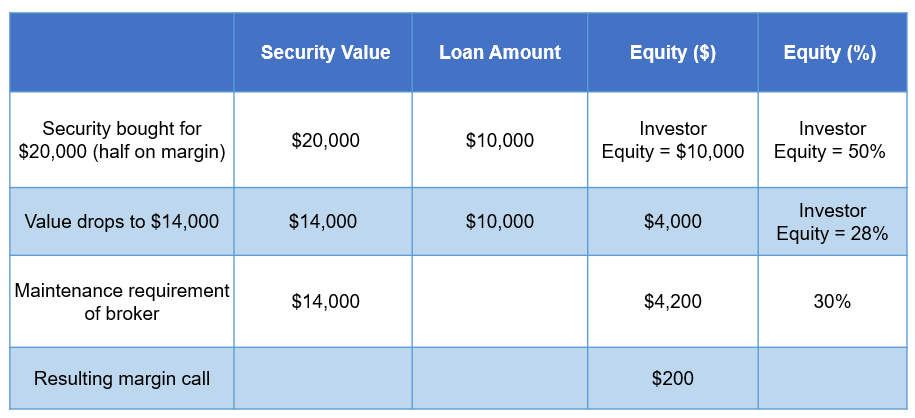
The following illustrates how a margin account's value shift might reduce an investor's equity to a point where a broker is required to make a margin call.
A drop in value triggers a margin call by broker, How to deal with a Margin Call?
Images provided are not current and any securities are shown for illustrative purposes only.
Images provided are not current and any securities are shown for illustrative purposes only.
If the value of an investor's account lowers to the point that their broker must issue a margin call, the account value has reached a critical level. The investor usually has between two and five days to meet it. Using the example of the margin call from earlier, here are the many ways to go about doing so:
1. Place a cash deposit of two hundred dollars into the account.
2. Fund your account with $285 worth of marginable securities already in their entirety.
This figure is obtained by dividing the minimum needed equity of 30% by the required funds of $200, which yields the following calculation: 200/(1-.30) = $285.
3. Employ a hybrid strategy that combines elements of the first two possibilities.
4. To get the necessary funds, sell any other securities you own.
If an investor cannot satisfy the margin call, a broker may liquidate all open positions to bring the client's account back to the minimum needed value. They may be able to carry out this action without the investor's permission. In addition, the broker could levy a commission fee on the investor for each of these transactions. The investor is responsible for any losses that may occur in this process.
FAST FACT
Because the amount of a margin loan is determined by the acquisition price of a security, the sum of the loan is always the same. However, the dollar amount calculated by the maintenance margin requirement depends on the current account value. It is not dependent on the price at which the item was first purchased. That's why there are swings in it.
Investors have to consider seriously whether or not they require a margin account before going ahead and creating one.
Most long-term investors do not need the use of margins to generate profitable returns on their investments. In addition, the loans do not come without a cost. Brokerages tack on an interest fee for holding them.
To manage your account, prevent a margin call, or be ready for it if it does happen, here are a few things you can do if you want to invest with margin.
· Make sure that there is cash accessible that can be deposited into your account immediately. You may want to maintain it in a statement that earns interest at the same brokerage as your other investments.
· Ensure that your investment portfolio is appropriately diversified. This may help prevent margin calls since it will make it less probable that a single position would cause the account value to decline.
· Always keep an eye on your open positions and your equity and margin borrowing (even daily).
· Make sure you set an alert for yourself at a comfortable level higher than the margin maintenance needs. You may enhance your equity by depositing dollars or securities if your account falls below it.
· When you get a margin call, you must take care of it as soon as possible.
When Trading Stocks on Margin, Is There a Risk Involved?
Trading stocks with margin presents a greater risk than trading equities without margin. This is because trading stocks on margin involves using money that has been borrowed. Trades that use leverage have a higher level of risk than those that do not. Margin trading exposes investors to the possibility of incurring losses more significant than the capital they initially put up. Learn more about when forced liquidation would happen when margin trading.
How Is It Possible to Answer a Margin Call?
When there is insufficient margin in the trader's margin account, the broker will send a margin call to the trader. To make up for a shortfall in the margin, a trader must either transfer funds into the margin account in cash or marginable securities or sell off some of the assets held in the margin account.
Is It Possible for a Trader to Put Off Meeting a Margin Call?
A margin call must be met immediately and shortly after it is issued. However, depending on the broker, you can be given anywhere from two to five days to satisfy the margin call. In almost all cases, the small print of an average margin account agreement will indicate that to satiate an overdue margin call. The broker can liquidate any securities and other assets held in the margin account at its discretion and without providing the trader prior notice of its intention. It is in a trader's best interest to swiftly respond to a margin call and make any necessary corrections to avoid being pushed into liquidation.
How Can I Avoid Being Overwhelmed by the Dangers Involved in Margin Trading?
Managing the risks associated with leverage trading involves taking measures such as the following: using stop loss orders to keep losses to a minimum; maintaining an amount of leverage that is within tolerable limits, and taking out a loan against a diverse portfolio to lower the likelihood of receiving a margin call. This possibility is substantially increased when dealing with a single stock.
moomoo app discloses the risks on each user's account risk details page. The account risk detail page contains descriptions of your account risks, disposal suggestions, and early warning information on fluctuations of individual stocks. You could easily find out your risk level of the stock when you margin trade, to better be informed of the dangers in the early stage.
Not everyone should make their purchases on margin. There are potential benefits, such as greater return on investment for investors, and potential drawbacks. To begin, it is only beneficial if the value of your assets rises enough to cover the cost of the margin loan (and the interest on it). The margin calls for cash that investors are required to satisfy may also be a source of headaches.
The moomoo app is designed for serious traders and investors. Get access to free advanced technical charting tools featuring 62 technical indicators and 37 drawing tools across mobile and desktop. Sign up for free. Enjoy free stocks when you fund your account. Get started now and see how moomoo can help you build your investment portfolio.
Level 2 data is free to moomoo users who have an approved brokerage account with Moomoo Financial Inc. Terms and Conditions apply; please visit https://www.moomoo.com/support/topic490 for details.
This presentation is for informational and educational use only and is not a recommendation or endorsement of any particular investment or investment strategy. Investment information provided in this content is general in nature, strictly for illustrative purposes, and may not be appropriate for all investors. Read more
Recommend
Moomoo Offers Extended Trading Hours for Options Trading on Oct 19
At-the-Money (ATM) - How It Works in Options Trading
Out-of-the-Money in Options Trading - How It Works & Examples

Covered Call: A Comprehensive Guide to Options Trading
Strangle Options Strategy - A Helpful Guide for Traders
Straddle vs. Strangle: Understanding the Key Differences
Triple Witching: Understanding Its Impact on the Stock Market
Underlying Asset: Definition, Types and Examples
What Are Option Premiums
Covered Calls and Covered Puts - Strategies for Options Trading
Expiration Date in Options Trading
Options Break-Even Point: Definition, Formula, and Examples
Credit Spread: Definition, Examples & How to Calculate
Bull Put Spread: Definitions, How It Works & Examples
How to Manage Your Risk in Options Trading
How to Pick the 'Right' Strike Price
Options Wheel Strategy Explained: Definition and How to Trade
Long Collar Options Strategy: Definition, How It Works & Examples
Long Call Options Strategy: Definition, Potential Benefits, and Risks
Exercise of Options: When and How to Exercise Options
Time Value: Definition, Calculation, Importance in Options Trading
Short Call Options Strategy: Guide & Examples
What Are Bitcoin ETF Options: Investment Insights & Strategies
Hedge with Options: Protect Your Portfolio in 2026
Options Chains: Definition, How to Read and Analyze Them
Options Profit Calculation: Overview, Formula & Examples
What is Theta in Options Trading: Overview and Strategies
Debit Spread: Definition, Types & Examples
Butterfly Spread: Definition and Application in Options Trading
What Is an Options Screener and How to Use?
Unusual Options Activity: Insights and Strategies for Traders
Protective Put Strategy: Definition, How It Works & Examples
What Are Stock Options: Types, How They Work and Examples
Weekly vs. Monthly Options: Choosing the Right Expiration Date
How to Practice Options Trading with Demo Trading Account
Sell to Open vs Sell to Close: Understanding the Difference
Long Put: Definition, Examples and How to Trade
Iron Condor: Understanding This Options Trading Strategy
Diagonal Spread: Definition, Types & How to Use
Implied Volatility (IV) Rank & Percentile in Options Trading
Trading Earnings with Options
Iron Butterfly: Mastering the Options Trading Strategy
Interest Rate Options: Definition & How They Work
Options Buy to Open vs Buy to Close: What's the difference?
Vertical Spread: Definition, Types, & Examples
Bear Put Spread: An Options Trading Strategy Explained
What is a Dividend Reinvestment Plan (DRIP)?
Put/Call Ratio (PCR): Definition & How to Use
How Are Options Priced? | Calculation and Examples
Naked Calls Options Strategy: Definition & How It Works
Options Vs. Futures: Understanding Their Key Differences
Extrinsic Value: Definition, Calculation, and Trading Strategies
Intrinsic Value: How It Works And How To Calculate It
Bull Call Spread - Examples and Applications in Options Trading
Index Options: Definitions, Strategies and Risks
Short Put Options: Strategies and Risks Explained
Quadruple Witching: How It Can Affect the Stock Market
What Are Options? Everything You Need to Know before Trading
Four Option Trading Strategies for Beginners
10 Options Strategies to Enhance Your Trading Portfolio
American Options vs. European Options
In-The-Money (ITM): Call and Put Options Examples
What is a Calendar Spread?
Open Interest: What it means for traders and investors
Options vs Stocks: Choosing the Right Investment Strategy
Options Strike Prices Explained: A Complete Guide for Beginners
Call vs Put Options: Your Essential Guide to the Basics
Zero Days to Expiration (0DTE) Options: Trade Mag 7 Stock Options Today
What Is An Options Contract? How Does It Work?
What is Synthetic Put? (How Does It Work)
How and When to Roll Covered Calls
Option Volume vs Open Interest: Understanding the Difference
4 Options Trading Levels
How to Trade Options for Beginners?
What Is Implied Volatility (IV)?
What Are Cash Secured Puts: How To Sell Them
What Is a Straddle Options Strategy?
What Is Ratio Spread in Options
What is a Call Option: Strategies and Tips
Taxes on Stocks: How Selling Stocks Affects Your Taxes
Option Greeks Explained - Option Greek Cheat Sheet
Put Options: Hedging Your Portfolio
Put Options: How to Use Them in Your Trading Strategy
Poor Man's Covered Call (PMCC): A Beginner's Guide
Four Option Trading Mistakes to Avoid
Trading Synthetic Options: Risks and Rewards
Call Spread vs. Put Spread: What are the differences?
What is stock options trading
What Is Margin Call and How Can You Avoid the Risks?
Options Trading Strategies: Iron Condor vs. Iron Butterfly
Moomoo Offers Extended Trading Hours for Options Trading on Oct 19
At-the-Money (ATM) - How It Works in Options Trading
Out-of-the-Money in Options Trading - How It Works & Examples
Covered Call: A Comprehensive Guide to Options Trading
Strangle Options Strategy - A Helpful Guide for Traders
Straddle vs. Strangle: Understanding the Key Differences
Triple Witching: Understanding Its Impact on the Stock Market
Underlying Asset: Definition, Types and Examples
What Are Option Premiums
Covered Calls and Covered Puts - Strategies for Options Trading
Expiration Date in Options Trading
Options Break-Even Point: Definition, Formula, and Examples
Credit Spread: Definition, Examples & How to Calculate
Bull Put Spread: Definitions, How It Works & Examples
How to Manage Your Risk in Options Trading
How to Pick the 'Right' Strike Price
Options Wheel Strategy Explained: Definition and How to Trade
Long Collar Options Strategy: Definition, How It Works & Examples
Long Call Options Strategy: Definition, Potential Benefits, and Risks
Exercise of Options: When and How to Exercise Options
Time Value: Definition, Calculation, Importance in Options Trading
Short Call Options Strategy: Guide & Examples
What Are Bitcoin ETF Options: Investment Insights & Strategies
Hedge with Options: Protect Your Portfolio in 2026
Options Chains: Definition, How to Read and Analyze Them
Options Profit Calculation: Overview, Formula & Examples
What is Theta in Options Trading: Overview and Strategies
Debit Spread: Definition, Types & Examples
Butterfly Spread: Definition and Application in Options Trading
What Is an Options Screener and How to Use?
Unusual Options Activity: Insights and Strategies for Traders
Protective Put Strategy: Definition, How It Works & Examples
What Are Stock Options: Types, How They Work and Examples
Weekly vs. Monthly Options: Choosing the Right Expiration Date
How to Practice Options Trading with Demo Trading Account
Sell to Open vs Sell to Close: Understanding the Difference
Long Put: Definition, Examples and How to Trade
Iron Condor: Understanding This Options Trading Strategy
Diagonal Spread: Definition, Types & How to Use
Implied Volatility (IV) Rank & Percentile in Options Trading
Trading Earnings with Options
Iron Butterfly: Mastering the Options Trading Strategy
Interest Rate Options: Definition & How They Work
Options Buy to Open vs Buy to Close: What's the difference?
Vertical Spread: Definition, Types, & Examples
Bear Put Spread: An Options Trading Strategy Explained
What is a Dividend Reinvestment Plan (DRIP)?
Put/Call Ratio (PCR): Definition & How to Use
How Are Options Priced? | Calculation and Examples
Naked Calls Options Strategy: Definition & How It Works
Options Vs. Futures: Understanding Their Key Differences
Extrinsic Value: Definition, Calculation, and Trading Strategies
Intrinsic Value: How It Works And How To Calculate It
Bull Call Spread - Examples and Applications in Options Trading
Index Options: Definitions, Strategies and Risks
Short Put Options: Strategies and Risks Explained
Quadruple Witching: How It Can Affect the Stock Market
What Are Options? Everything You Need to Know before Trading
Four Option Trading Strategies for Beginners
10 Options Strategies to Enhance Your Trading Portfolio
American Options vs. European Options
In-The-Money (ITM): Call and Put Options Examples
What is a Calendar Spread?
Open Interest: What it means for traders and investors
Options vs Stocks: Choosing the Right Investment Strategy
Options Strike Prices Explained: A Complete Guide for Beginners
Call vs Put Options: Your Essential Guide to the Basics
Zero Days to Expiration (0DTE) Options: Trade Mag 7 Stock Options Today
What Is An Options Contract? How Does It Work?
What is Synthetic Put? (How Does It Work)
How and When to Roll Covered Calls
Option Volume vs Open Interest: Understanding the Difference
4 Options Trading Levels
How to Trade Options for Beginners?
What Is Implied Volatility (IV)?
What Are Cash Secured Puts: How To Sell Them
What Is a Straddle Options Strategy?
What Is Ratio Spread in Options
What is a Call Option: Strategies and Tips
Taxes on Stocks: How Selling Stocks Affects Your Taxes
Option Greeks Explained - Option Greek Cheat Sheet
Put Options: Hedging Your Portfolio
Put Options: How to Use Them in Your Trading Strategy
Poor Man's Covered Call (PMCC): A Beginner's Guide
Four Option Trading Mistakes to Avoid
Trading Synthetic Options: Risks and Rewards
Call Spread vs. Put Spread: What are the differences?
What is stock options trading
What Is Margin Call and How Can You Avoid the Risks?
Options Trading Strategies: Iron Condor vs. Iron Butterfly

