
Moomoo Insights
Jul 16 15:38
TSMC Earnings: AI Demand Is Stronger Than the Chip Selloff Suggests
Moomoo Insights
Sep 30 05:04
Live Take | Anthropic’s $518B Compute Bet: Who Wins From the AI Buildout?
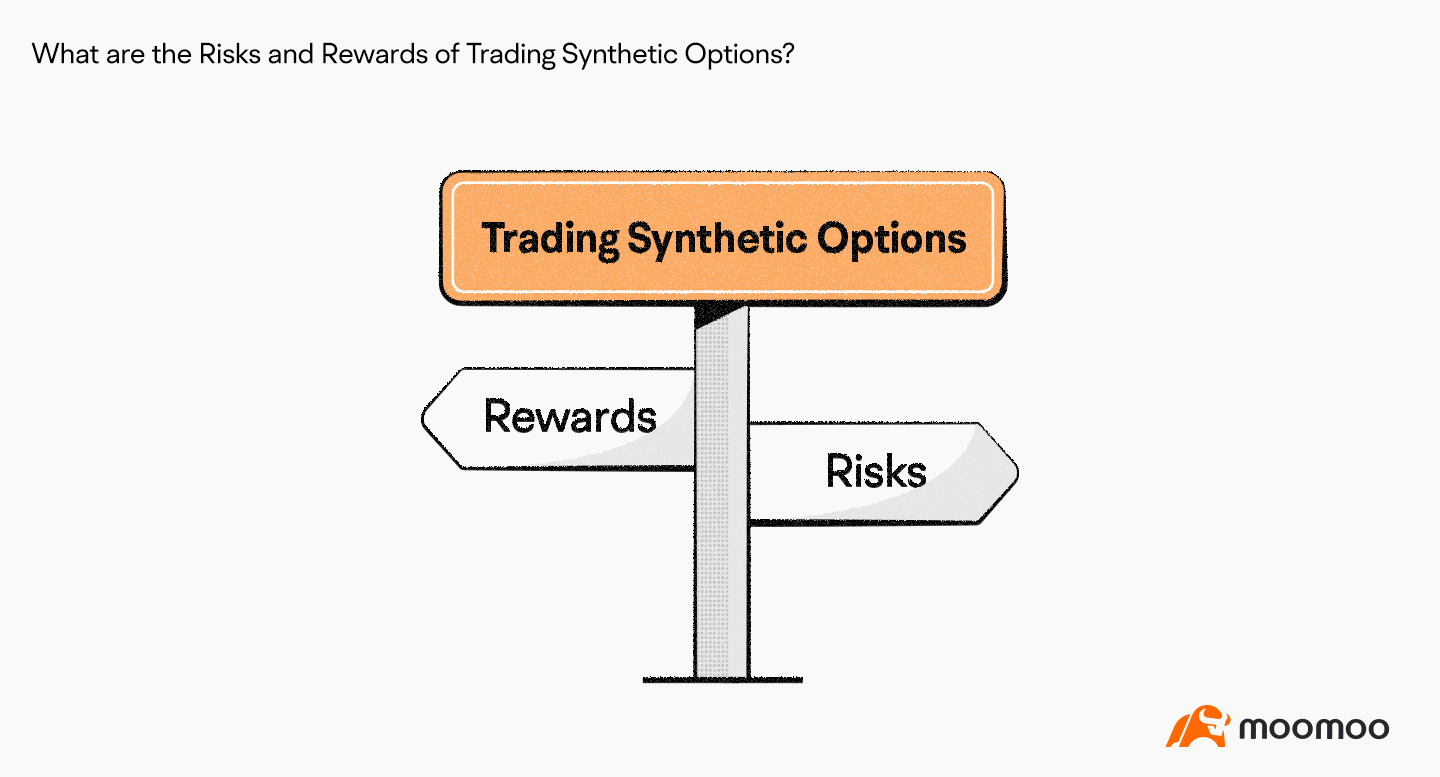
Synthetic options can be a valuable tool if you want to explore new possibilities among your options trading strategies. Synthetic options are a type of derivative that mimic the behavior of other financial instruments, such as stocks or options, without directly owning them. They can offer flexibility and alternative approaches to trading, enabling you to leverage your investment opportunities.
This article will explore synthetic options, their different types, potential rewards and risks and how you can use them alongside other trading strategies.
Synthetic options are financial instruments that replicate a specific option contract's payoff and risk characteristics by employing combinations of the underlying asset and various options. This goal is achieved through buying or selling the underlying asset and simultaneously buying or selling an option with differing strike prices or expiration dates.
Creating a synthetic option adheres to the principle of put-call parity, which asserts that the value of a long call and a short put featuring the same strike price and expiration date, is equivalent to holding a long position in the underlying asset.
Synthetic options allow traders to potentially capitalize on various market scenarios and strategies, offering flexibility in portfolio management. By constructing synthetic positions, you can simulate the behavior of different securities and possibly benefit from their price movements, volatility or time decay. Synthetic options also provide a versatile approach to trading, enabling investors to navigate the market with increased precision and efficiency but they're not without risks.
Traders could lose money in real-time if the market moves against a future position. They will also need a strategy to get out of a future position when trading these options as they may lose a potential opportunity to move from a declining synthetic position to a more profitable one.
Synthetic options come in various forms, each designed to replicate a specific trading position.
A synthetic long stock position is created by buying an at-the-money call option and selling an equal number of at-the-money put options of the same underlying security with the same expiration date. This strategy aims to replicate the profit and loss characteristics of owning the underlying stock but with a lower initial cost and margin requirement. It allows traders to benefit from upside price movements but they will still be exposed to downside risk.
Simulating the payoff of a short stock position, a synthetic short stock position is constructed by selling an at-the-money call option and purchasing an equal number of at-the-money put options of the same underlying stock and expiration date. This strategy mimics the profit and loss patterns of short-selling the underlying stock. It enables traders to profit from downward price movements though you are still subject to potential large losses on the upside.
A synthetic long call simulates the performance and profit potential of a long call. It involves buying the underlying stock and simultaneously purchasing a put option for every 100 shares of the purchased stock. This combination offers a low-risk strategy that limits your potential losses while your potential for profit remains uncapped if stock prices rise.
Conversely, a synthetic short-call position is created by selling the underlying stock and simultaneously selling a put option. This strategy generates profit when the stock price remains stagnant or declines. It is a bearish strategy that has unlimited risk and limited profit potential.
A synthetic long put mimics the payoff of a long put position. It is established by buying a call option and simultaneously short-selling the underlying asset. This strategy protects against downward price movements while allowing potential gains from the stock's appreciation. It is a defensive strategy often employed to hedge existing stock positions.
An inverse position to the synthetic long put, a synthetic short put is constructed by selling a call option and simultaneously buying the underlying stock. A bullish strategy, it has limited risk and unlimited profit upsides. This strategy aims to generate income through the premiums potentially from selling the call option while benefiting from a stable or rising stock price.
Synthetic options can leverage the underlying asset and options with varying strike prices and expiration dates to offer several potential advantages to traders.
Customizability and flexibility: Investors can tailor the synthetic option to their needs and market expectations by combining different options and adjusting strike prices or expiration dates. This versatility allows for various strategies, including hedging positions, implementing complex trading strategies or creating bespoke risk and reward profiles.
Enhanced risk management: By combining long calls and short puts with the same strike prices and expiration dates, investors can create positions that mimic the risk profile of another position. Synthetic options are helpful tools to fine-tune risk exposures based on your risk appetite and market outlook.
Expanded trading opportunities: Because they blend different options and the underlying asset, synthetic options enable investors to create positions that are not readily available in the options market. This factor allows you to take advantage of unique market views, explore arbitrage opportunities or express more sophisticated trading strategies that may not be possible with standard options alone.
Capital efficiency: By using the underlying asset with different options, investors can achieve similar payoffs and risk profiles while using less capital compared to direct options trading. This process can free up money for other investments or provide greater leverage in implementing trading strategies, potentially maximizing returns.
While synthetic options offer benefits, it's important to consider the associated risks:
Increased complexity: Synthetic options are riskier than standard ones because of their complexity. They involve multiple underlying assets and options, making them difficult to understand and execute accurately. This factor increases the likelihood of mistakes and unintended consequences.
Execution and liquidity risks: Synthetic options come with risks, such as difficulties in executing the strategy with larger positions and variations in liquidity of the underlying asset and options. These factors can lead to wider bid-ask spreads or limited availability of desired positions.
Potential losses: Synthetic options carry risks like any other investment. Despite mimicking a specific option's payoff and risk profile, unforeseen events or market movements can lead to losses.
Regulatory and margin requirements: As an investor using synthetic options, remember to follow regulatory and margin requirements. Non-compliance may lead to expenses, limitations or legal consequences.
Counterparty risk: In synthetic options trading done over the counter, there's a risk of counterparty default. This risk means investors may need help recovering their investments if a counterparty fails. It's crucial to assess the credit of all counterparties involved.
By replicating the characteristics of various securities, synthetic options allow for flexibility, risk management and increased trading opportunities. However, it is vital to understand the risks involved and have a solid grasp of options trading strategies. With proper knowledge and skill, synthetic options can be used to work towards your investment goals.
Yes, synthetic options can be combined with other trading strategies to enhance portfolio performance and achieve specific objectives.
The best time to use synthetic options depends on your trading strategy, market conditions and investment goals. Before implementing synthetic options, you must analyze the underlying assets, evaluate market trends and consider the risk-reward dynamics.
Yes, synthetic options can be handy in volatile markets or when there is uncertainty regarding the direction of the underlying assets. They offer flexibility and risk management capabilities that make them suitable for adapting to changing market conditions.
This presentation is for informational and educational use only and is not a recommendation or endorsement of any particular investment or investment strategy. Investment information provided in this content is general in nature, strictly for illustrative purposes, and may not be appropriate for all investors. Read more
Recommend
Moomoo Offers Extended Trading Hours for Options Trading on Oct 19
At-the-Money (ATM) - How It Works in Options Trading
Out-of-the-Money in Options Trading - How It Works & Examples

Covered Call: A Comprehensive Guide to Options Trading
Strangle Options Strategy - A Helpful Guide for Traders
Straddle vs. Strangle: Understanding the Key Differences
Triple Witching: Understanding Its Impact on the Stock Market
Underlying Asset: Definition, Types and Examples
What Are Option Premiums
Covered Calls and Covered Puts - Strategies for Options Trading
Expiration Date in Options Trading
Options Break-Even Point: Definition, Formula, and Examples
Credit Spread: Definition, Examples & How to Calculate
Bull Put Spread: Definitions, How It Works & Examples
How to Manage Your Risk in Options Trading
How to Pick the 'Right' Strike Price
Options Wheel Strategy Explained: Definition and How to Trade
Long Collar Options Strategy: Definition, How It Works & Examples
Long Call Options Strategy: Definition, Potential Benefits, and Risks
Exercise of Options: When and How to Exercise Options
Time Value: Definition, Calculation, Importance in Options Trading
Short Call Options Strategy: Guide & Examples
What Are Bitcoin ETF Options: Investment Insights & Strategies
Hedge with Options: Protect Your Portfolio in 2026
Options Chains: Definition, How to Read and Analyze Them
Options Profit Calculation: Overview, Formula & Examples
What is Theta in Options Trading: Overview and Strategies
Debit Spread: Definition, Types & Examples
Butterfly Spread: Definition and Application in Options Trading
What Is an Options Screener and How to Use?
Unusual Options Activity: Insights and Strategies for Traders
Protective Put Strategy: Definition, How It Works & Examples
What Are Stock Options: Types, How They Work and Examples
Weekly vs. Monthly Options: Choosing the Right Expiration Date
How to Practice Options Trading with Demo Trading Account
Sell to Open vs Sell to Close: Understanding the Difference
Long Put: Definition, Examples and How to Trade
Iron Condor: Understanding This Options Trading Strategy
Diagonal Spread: Definition, Types & How to Use
Implied Volatility (IV) Rank & Percentile in Options Trading
Trading Earnings with Options
Iron Butterfly: Mastering the Options Trading Strategy
Interest Rate Options: Definition & How They Work
Options Buy to Open vs Buy to Close: What's the difference?
Vertical Spread: Definition, Types, & Examples
Bear Put Spread: An Options Trading Strategy Explained
What is a Dividend Reinvestment Plan (DRIP)?
Put/Call Ratio (PCR): Definition & How to Use
How Are Options Priced? | Calculation and Examples
Naked Calls Options Strategy: Definition & How It Works
Options Vs. Futures: Understanding Their Key Differences
Extrinsic Value: Definition, Calculation, and Trading Strategies
Intrinsic Value: How It Works And How To Calculate It
Bull Call Spread - Examples and Applications in Options Trading
Index Options: Definitions, Strategies and Risks
Short Put Options: Strategies and Risks Explained
Quadruple Witching: How It Can Affect the Stock Market
What Are Options? Everything You Need to Know before Trading
Four Option Trading Strategies for Beginners
10 Options Strategies to Enhance Your Trading Portfolio
American Options vs. European Options
In-The-Money (ITM): Call and Put Options Examples
What is a Calendar Spread?
Open Interest: What it means for traders and investors
Options vs Stocks: Choosing the Right Investment Strategy
Options Strike Prices Explained: A Complete Guide for Beginners
Call vs Put Options: Your Essential Guide to the Basics
Zero Days to Expiration (0DTE) Options: Trade Mag 7 Stock Options Today
What Is An Options Contract? How Does It Work?
What is Synthetic Put? (How Does It Work)
How and When to Roll Covered Calls
Option Volume vs Open Interest: Understanding the Difference
4 Options Trading Levels
How to Trade Options for Beginners?
What Is Implied Volatility (IV)?
What Are Cash Secured Puts: How To Sell Them
What Is a Straddle Options Strategy?
What Is Ratio Spread in Options
What is a Call Option: Strategies and Tips
Taxes on Stocks: How Selling Stocks Affects Your Taxes
Option Greeks Explained - Option Greek Cheat Sheet
Put Options: Hedging Your Portfolio
Put Options: How to Use Them in Your Trading Strategy
Poor Man's Covered Call (PMCC): A Beginner's Guide
Four Option Trading Mistakes to Avoid
Trading Synthetic Options: Risks and Rewards
Call Spread vs. Put Spread: What are the differences?
What is stock options trading
What Is Margin Call and How Can You Avoid the Risks?
Options Trading Strategies: Iron Condor vs. Iron Butterfly
Moomoo Offers Extended Trading Hours for Options Trading on Oct 19
At-the-Money (ATM) - How It Works in Options Trading
Out-of-the-Money in Options Trading - How It Works & Examples
Covered Call: A Comprehensive Guide to Options Trading
Strangle Options Strategy - A Helpful Guide for Traders
Straddle vs. Strangle: Understanding the Key Differences
Triple Witching: Understanding Its Impact on the Stock Market
Underlying Asset: Definition, Types and Examples
What Are Option Premiums
Covered Calls and Covered Puts - Strategies for Options Trading
Expiration Date in Options Trading
Options Break-Even Point: Definition, Formula, and Examples
Credit Spread: Definition, Examples & How to Calculate
Bull Put Spread: Definitions, How It Works & Examples
How to Manage Your Risk in Options Trading
How to Pick the 'Right' Strike Price
Options Wheel Strategy Explained: Definition and How to Trade
Long Collar Options Strategy: Definition, How It Works & Examples
Long Call Options Strategy: Definition, Potential Benefits, and Risks
Exercise of Options: When and How to Exercise Options
Time Value: Definition, Calculation, Importance in Options Trading
Short Call Options Strategy: Guide & Examples
What Are Bitcoin ETF Options: Investment Insights & Strategies
Hedge with Options: Protect Your Portfolio in 2026
Options Chains: Definition, How to Read and Analyze Them
Options Profit Calculation: Overview, Formula & Examples
What is Theta in Options Trading: Overview and Strategies
Debit Spread: Definition, Types & Examples
Butterfly Spread: Definition and Application in Options Trading
What Is an Options Screener and How to Use?
Unusual Options Activity: Insights and Strategies for Traders
Protective Put Strategy: Definition, How It Works & Examples
What Are Stock Options: Types, How They Work and Examples
Weekly vs. Monthly Options: Choosing the Right Expiration Date
How to Practice Options Trading with Demo Trading Account
Sell to Open vs Sell to Close: Understanding the Difference
Long Put: Definition, Examples and How to Trade
Iron Condor: Understanding This Options Trading Strategy
Diagonal Spread: Definition, Types & How to Use
Implied Volatility (IV) Rank & Percentile in Options Trading
Trading Earnings with Options
Iron Butterfly: Mastering the Options Trading Strategy
Interest Rate Options: Definition & How They Work
Options Buy to Open vs Buy to Close: What's the difference?
Vertical Spread: Definition, Types, & Examples
Bear Put Spread: An Options Trading Strategy Explained
What is a Dividend Reinvestment Plan (DRIP)?
Put/Call Ratio (PCR): Definition & How to Use
How Are Options Priced? | Calculation and Examples
Naked Calls Options Strategy: Definition & How It Works
Options Vs. Futures: Understanding Their Key Differences
Extrinsic Value: Definition, Calculation, and Trading Strategies
Intrinsic Value: How It Works And How To Calculate It
Bull Call Spread - Examples and Applications in Options Trading
Index Options: Definitions, Strategies and Risks
Short Put Options: Strategies and Risks Explained
Quadruple Witching: How It Can Affect the Stock Market
What Are Options? Everything You Need to Know before Trading
Four Option Trading Strategies for Beginners
10 Options Strategies to Enhance Your Trading Portfolio
American Options vs. European Options
In-The-Money (ITM): Call and Put Options Examples
What is a Calendar Spread?
Open Interest: What it means for traders and investors
Options vs Stocks: Choosing the Right Investment Strategy
Options Strike Prices Explained: A Complete Guide for Beginners
Call vs Put Options: Your Essential Guide to the Basics
Zero Days to Expiration (0DTE) Options: Trade Mag 7 Stock Options Today
What Is An Options Contract? How Does It Work?
What is Synthetic Put? (How Does It Work)
How and When to Roll Covered Calls
Option Volume vs Open Interest: Understanding the Difference
4 Options Trading Levels
How to Trade Options for Beginners?
What Is Implied Volatility (IV)?
What Are Cash Secured Puts: How To Sell Them
What Is a Straddle Options Strategy?
What Is Ratio Spread in Options
What is a Call Option: Strategies and Tips
Taxes on Stocks: How Selling Stocks Affects Your Taxes
Option Greeks Explained - Option Greek Cheat Sheet
Put Options: Hedging Your Portfolio
Put Options: How to Use Them in Your Trading Strategy
Poor Man's Covered Call (PMCC): A Beginner's Guide
Four Option Trading Mistakes to Avoid
Trading Synthetic Options: Risks and Rewards
Call Spread vs. Put Spread: What are the differences?
What is stock options trading
What Is Margin Call and How Can You Avoid the Risks?
Options Trading Strategies: Iron Condor vs. Iron Butterfly

