

Moomoo Insights
Jul 16 15:38
TSMC Earnings: AI Demand Is Stronger Than the Chip Selloff Suggests
Moomoo Insights
Sep 30 05:04
Live Take | Anthropic’s $518B Compute Bet: Who Wins From the AI Buildout?
Covered calls are a common options strategy. However, they are known for being expensive because a traditional covered call requires investors to own at least 100 shares of the underlying stock.
In contrast, a poor man’s covered call (PMCC) reduces this initial investment and makes it easier to execute. Below, moomoo explains how the PMCC works and how it could be utilized in an options trading strategy.
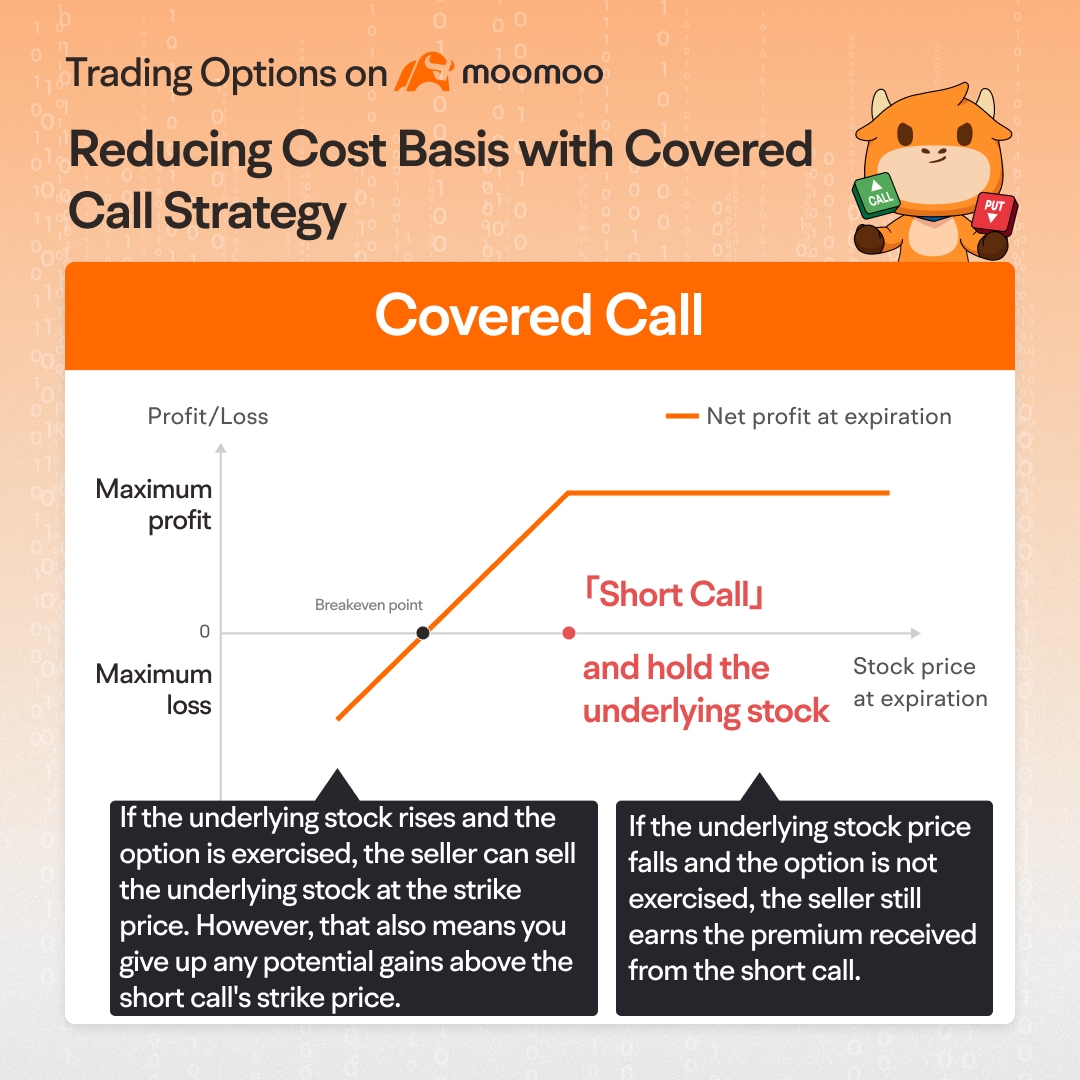
A poor man’s covered call (PMCC) is a bullish options strategy designed to replicate a traditional covered call position. A PMCC can also be classified as a “diagonal debit spread,” which refers to a call spread involving two different expiration periods.
How does a poor man’s covered call differ from a traditional covered call? In a traditional covered call, an investor must buy 100 shares of stock before shorting an out-of-the-money (OTM) call option against the shares.
In a poor man’s covered call, investors replace the shares of stock with a deep in-the-money (ITM) long call that has a longer expiration term than the short call. As a result, investors generally spend significantly less money executing the PMCC while reducing the maximum loss potential as well.
The following shows you how to set up and perform a poor man’s covered call.
To set up a PMCC, you’ll need to take two steps:
Buy an ITM call option with a long expiration date, for example, 90 days.
Short an OTM call option with an expiration date sooner than the ITM call above.
These actions will provide you with a long call that has a longer-term expiration date than the short call.
Here’s an example:
Buy a 140 call option in the July 2023 expiration cycle (110 days to expiration (DTE)), paying $25 premium for the option ($2,500 capital outflow). The stock’s share price is $160. Short the 170 call in the May 2023 expiration cycle (60 DTE), receiving $3 premium for the option ($300 capital inflow). The stock’s share price is $160.
The maximum profit potential of a poor man’s covered call is calculated using the following equation:
Max Profit = Width of call strikes – Trade cost
It may help to use an example. Suppose that you set up a PMCC by purchasing a width of call strikes ($170 - $140 = $30) with the trade cost ($25 -$3 = $22). The max profit now comes to ($30 - $22 = $8). Remember to then multiply by 100 since each standard options contract typically represents 100 shares.
Don’t forget that the short call will expire before the long call. If this happens, and the trader does not close the long position, the trader effectively holds a long-call position, which could offer additional profit potential.
The maximum loss of a poor man’s covered call is the cost of executing the trade. In the preceding example, the underlying asset could remain below the call strike prices and expire worthless. But that only means that the trader would be out the initial cost of setting up the call, which in the example was $22.
Options traders describe the impact of time using the measurement “theta,” which relates the change in an option’s premium relative to the passage of time. In a PMCC, positive theta occurs when the position value increases over time.
A negative theta occurs when the position value declines with time. Ideally, traders want to see a positive theta; otherwise, they will incur losses in the trade.
One of the most difficult steps in setting up a call is determining the appropriate strike price — especially if you’re a beginner trader. But the following tips can help:
Consider buying a call with a delta above 0.75 and a day-to-expiration of at least 90 days.
Consider selling a call with a delta below 0.35 with fewer than 60 days to expire.
Essentially, you want to buy a deep-in-the-money (ITM) call while shorting an out-of-the-money (OTM) call. That said, you can adjust this strategy depending on how you set up the call.
As time passes, the short call may remain OTM, at which point the trader can buy back the call for a profit. They can subsequently short a new call option in the next expiration cycle to try and collect even more.
If the short call’s extrinsic value drops to zero, the position will have reached the greatest potential for profit, at which the trader can attempt to close the PMCC.
Once the ITM call approaches expiration, the trader will need to close or roll it over.
Traders value poor man’s covered calls for several reasons:
They cost less than a traditional covered call.
They offer less risk than a traditional covered call.
They require less maintenance for the long call.
At the same time, there are some risks and limitations associated with PMCCs, such as:
It’s not always possible to predict price movements within expiration dates.
Options held for less than a year would be subject to capital gains tax.
PMCCs generally work better for companies with limited volatility.
Call options have fixed expiration dates, requiring careful selection aligned with the expected move in the underlying asset--while short calls limit upside potential and may forfeit gains beyond the strike price.
Replacing long stock with a call option means foregoing dividend payments, impacting potential income despite capital conservation.
There is risk of early assignment with the short call--something a covered call does not have.
Options traders typically consider a covered call more of a beginner’s strategy, but a traditional covered call requires being long 100 shares of the underlying stock so it can carry considerable risk. A poor man’s covered call lowers the entry point for traders with less capital required but a spread trade is often more complex vs a covered call’s single leg.
While “good” depends on your goals and experience level, a PMCC does offer lower cost and risk levels than a traditional covered call, though it still requires traders to monitor the entire trade carefully.
In a PMCC, ideally the short call expires worthless, but the trader has kept the premium. The underlying asset’s value has progressively increased, raising the long, far-dated call option. This can contribute to the profit potential.
This presentation is for informational and educational use only and is not a recommendation or endorsement of any particular investment or investment strategy. Investment information provided in this content is general in nature, strictly for illustrative purposes, and may not be appropriate for all investors. Read more
Recommend
Moomoo Offers Extended Trading Hours for Options Trading on Oct 19
At-the-Money (ATM) - How It Works in Options Trading
Out-of-the-Money in Options Trading - How It Works & Examples

Covered Call: A Comprehensive Guide to Options Trading
Strangle Options Strategy - A Helpful Guide for Traders
Straddle vs. Strangle: Understanding the Key Differences
Triple Witching: Understanding Its Impact on the Stock Market
Underlying Asset: Definition, Types and Examples
What Are Option Premiums
Covered Calls and Covered Puts - Strategies for Options Trading
Expiration Date in Options Trading
Options Break-Even Point: Definition, Formula, and Examples
Credit Spread: Definition, Examples & How to Calculate
Bull Put Spread: Definitions, How It Works & Examples
How to Manage Your Risk in Options Trading
How to Pick the 'Right' Strike Price
Options Wheel Strategy Explained: Definition and How to Trade
Long Collar Options Strategy: Definition, How It Works & Examples
Long Call Options Strategy: Definition, Potential Benefits, and Risks
Exercise of Options: When and How to Exercise Options
Time Value: Definition, Calculation, Importance in Options Trading
Short Call Options Strategy: Guide & Examples
What Are Bitcoin ETF Options: Investment Insights & Strategies
Hedge with Options: Protect Your Portfolio in 2026
Options Chains: Definition, How to Read and Analyze Them
Options Profit Calculation: Overview, Formula & Examples
What is Theta in Options Trading: Overview and Strategies
Debit Spread: Definition, Types & Examples
Butterfly Spread: Definition and Application in Options Trading
What Is an Options Screener and How to Use?
Unusual Options Activity: Insights and Strategies for Traders
Protective Put Strategy: Definition, How It Works & Examples
What Are Stock Options: Types, How They Work and Examples
Weekly vs. Monthly Options: Choosing the Right Expiration Date
How to Practice Options Trading with Demo Trading Account
Sell to Open vs Sell to Close: Understanding the Difference
Long Put: Definition, Examples and How to Trade
Iron Condor: Understanding This Options Trading Strategy
Diagonal Spread: Definition, Types & How to Use
Implied Volatility (IV) Rank & Percentile in Options Trading
Trading Earnings with Options
Iron Butterfly: Mastering the Options Trading Strategy
Interest Rate Options: Definition & How They Work
Options Buy to Open vs Buy to Close: What's the difference?
Vertical Spread: Definition, Types, & Examples
Bear Put Spread: An Options Trading Strategy Explained
What is a Dividend Reinvestment Plan (DRIP)?
Put/Call Ratio (PCR): Definition & How to Use
How Are Options Priced? | Calculation and Examples
Naked Calls Options Strategy: Definition & How It Works
Options Vs. Futures: Understanding Their Key Differences
Extrinsic Value: Definition, Calculation, and Trading Strategies
Intrinsic Value: How It Works And How To Calculate It
Bull Call Spread - Examples and Applications in Options Trading
Index Options: Definitions, Strategies and Risks
Short Put Options: Strategies and Risks Explained
Quadruple Witching: How It Can Affect the Stock Market
What Are Options? Everything You Need to Know before Trading
Four Option Trading Strategies for Beginners
10 Options Strategies to Enhance Your Trading Portfolio
American Options vs. European Options
In-The-Money (ITM): Call and Put Options Examples
What is a Calendar Spread?
Open Interest: What it means for traders and investors
Options vs Stocks: Choosing the Right Investment Strategy
Options Strike Prices Explained: A Complete Guide for Beginners
Call vs Put Options: Your Essential Guide to the Basics
Zero Days to Expiration (0DTE) Options: Trade Mag 7 Stock Options Today
What Is An Options Contract? How Does It Work?
What is Synthetic Put? (How Does It Work)
How and When to Roll Covered Calls
Option Volume vs Open Interest: Understanding the Difference
4 Options Trading Levels
How to Trade Options for Beginners?
What Is Implied Volatility (IV)?
What Are Cash Secured Puts: How To Sell Them
What Is a Straddle Options Strategy?
What Is Ratio Spread in Options
What is a Call Option: Strategies and Tips
Taxes on Stocks: How Selling Stocks Affects Your Taxes
Option Greeks Explained - Option Greek Cheat Sheet
Put Options: Hedging Your Portfolio
Put Options: How to Use Them in Your Trading Strategy
Poor Man's Covered Call (PMCC): A Beginner's Guide
Four Option Trading Mistakes to Avoid
Trading Synthetic Options: Risks and Rewards
Call Spread vs. Put Spread: What are the differences?
What is stock options trading
What Is Margin Call and How Can You Avoid the Risks?
Options Trading Strategies: Iron Condor vs. Iron Butterfly
Moomoo Offers Extended Trading Hours for Options Trading on Oct 19
At-the-Money (ATM) - How It Works in Options Trading
Out-of-the-Money in Options Trading - How It Works & Examples
Covered Call: A Comprehensive Guide to Options Trading
Strangle Options Strategy - A Helpful Guide for Traders
Straddle vs. Strangle: Understanding the Key Differences
Triple Witching: Understanding Its Impact on the Stock Market
Underlying Asset: Definition, Types and Examples
What Are Option Premiums
Covered Calls and Covered Puts - Strategies for Options Trading
Expiration Date in Options Trading
Options Break-Even Point: Definition, Formula, and Examples
Credit Spread: Definition, Examples & How to Calculate
Bull Put Spread: Definitions, How It Works & Examples
How to Manage Your Risk in Options Trading
How to Pick the 'Right' Strike Price
Options Wheel Strategy Explained: Definition and How to Trade
Long Collar Options Strategy: Definition, How It Works & Examples
Long Call Options Strategy: Definition, Potential Benefits, and Risks
Exercise of Options: When and How to Exercise Options
Time Value: Definition, Calculation, Importance in Options Trading
Short Call Options Strategy: Guide & Examples
What Are Bitcoin ETF Options: Investment Insights & Strategies
Hedge with Options: Protect Your Portfolio in 2026
Options Chains: Definition, How to Read and Analyze Them
Options Profit Calculation: Overview, Formula & Examples
What is Theta in Options Trading: Overview and Strategies
Debit Spread: Definition, Types & Examples
Butterfly Spread: Definition and Application in Options Trading
What Is an Options Screener and How to Use?
Unusual Options Activity: Insights and Strategies for Traders
Protective Put Strategy: Definition, How It Works & Examples
What Are Stock Options: Types, How They Work and Examples
Weekly vs. Monthly Options: Choosing the Right Expiration Date
How to Practice Options Trading with Demo Trading Account
Sell to Open vs Sell to Close: Understanding the Difference
Long Put: Definition, Examples and How to Trade
Iron Condor: Understanding This Options Trading Strategy
Diagonal Spread: Definition, Types & How to Use
Implied Volatility (IV) Rank & Percentile in Options Trading
Trading Earnings with Options
Iron Butterfly: Mastering the Options Trading Strategy
Interest Rate Options: Definition & How They Work
Options Buy to Open vs Buy to Close: What's the difference?
Vertical Spread: Definition, Types, & Examples
Bear Put Spread: An Options Trading Strategy Explained
What is a Dividend Reinvestment Plan (DRIP)?
Put/Call Ratio (PCR): Definition & How to Use
How Are Options Priced? | Calculation and Examples
Naked Calls Options Strategy: Definition & How It Works
Options Vs. Futures: Understanding Their Key Differences
Extrinsic Value: Definition, Calculation, and Trading Strategies
Intrinsic Value: How It Works And How To Calculate It
Bull Call Spread - Examples and Applications in Options Trading
Index Options: Definitions, Strategies and Risks
Short Put Options: Strategies and Risks Explained
Quadruple Witching: How It Can Affect the Stock Market
What Are Options? Everything You Need to Know before Trading
Four Option Trading Strategies for Beginners
10 Options Strategies to Enhance Your Trading Portfolio
American Options vs. European Options
In-The-Money (ITM): Call and Put Options Examples
What is a Calendar Spread?
Open Interest: What it means for traders and investors
Options vs Stocks: Choosing the Right Investment Strategy
Options Strike Prices Explained: A Complete Guide for Beginners
Call vs Put Options: Your Essential Guide to the Basics
Zero Days to Expiration (0DTE) Options: Trade Mag 7 Stock Options Today
What Is An Options Contract? How Does It Work?
What is Synthetic Put? (How Does It Work)
How and When to Roll Covered Calls
Option Volume vs Open Interest: Understanding the Difference
4 Options Trading Levels
How to Trade Options for Beginners?
What Is Implied Volatility (IV)?
What Are Cash Secured Puts: How To Sell Them
What Is a Straddle Options Strategy?
What Is Ratio Spread in Options
What is a Call Option: Strategies and Tips
Taxes on Stocks: How Selling Stocks Affects Your Taxes
Option Greeks Explained - Option Greek Cheat Sheet
Put Options: Hedging Your Portfolio
Put Options: How to Use Them in Your Trading Strategy
Poor Man's Covered Call (PMCC): A Beginner's Guide
Four Option Trading Mistakes to Avoid
Trading Synthetic Options: Risks and Rewards
Call Spread vs. Put Spread: What are the differences?
What is stock options trading
What Is Margin Call and How Can You Avoid the Risks?
Options Trading Strategies: Iron Condor vs. Iron Butterfly

