

Moomoo Insights
Jul 16 15:38
TSMC Earnings: AI Demand Is Stronger Than the Chip Selloff Suggests
Moomoo Insights
Sep 30 05:04
Live Take | Anthropic’s $518B Compute Bet: Who Wins From the AI Buildout?
In options trading, the relationship between an option contract's strike price and the current market price of its underlying asset is important. Whether an investor is holding an option contract that's at-the-money (ATM), in-the-money (ITM) or out-of-the-money (OTM), pricing affects all of them.
For this article, we're going to dive into OTM options, learn how pricing affects them and discover the potential pros and cons when using them.
Out-of-the-money call options occur when the strike price is above the market price, and for put options, the strike price is below the market price. OTM options do not have intrinsic value.
So what does OTM mean? It's important to first explain options moneyness. Moneyness refers to an option’s intrinsic value in the market. It provides insight into the relationship between an option’s strike price and the current price of the underlying asset.
Similar to OTM options, ATM options do not have intrinsic value, only time value; however, ITM options do have intrinsic value. This comes as the current price of the underlying asset exceeds the strike price for calls and for put options, the market price is below the strike price.
Since an out of the money option doesn't have intrinsic value, its premium is mainly composed of time value. OTM options don't offer an immediate profit if exercised due to their current unfavorable strike price relative to the underlying asset's market price. Therefore, their premium reflects the market's perception of the likelihood that the option will move into the money before expiration.
In addition, the further an option is from being ITM, the lower its premium tends to be, as the probability of it becoming profitable decreases. Conversely, as an option moves closer to being ITM, its premium can increase due to the higher perceived chance of it yielding a profit.
This dynamic between the strike price's position and its premium underlines the speculative nature of OTM options: investors pay for the potential, rather than the immediate value.
Out-of-the-money (OTM) options would not make money if they were immediately exercised. They have no intrinsic value but may still have time value if there is time remaining until expiration. Remember, the total value of an option is the sum of its intrinsic value and its time value.
Here's a deeper look at OTM calls and OTM puts to gain a greater understanding of what is OTM.

An out of the money call option occurs when the strike price is higher than the current market price of the underlying asset. It lacks intrinsic value because the underlying asset’s price is below the option’s strike price; it only has extrinsic value (time value).
Traders can buy OTM call options when they anticipate the underlying asset’s price will rise significantly before the option’s expiration date; however, if the asset’s price doesn’t reach the strike price by expiration, the OTM call option becomes worthless. OTM call options are less expensive than in-the-money (ITM) or at-the-money (ATM) call options.
An out of the money put option is an option contract where the strike price is lower than the current market price of the underlying asset. An OTM put option lacks intrinsic value because the underlying asset’s price is above the option’s strike price; it only has extrinsic value (also known as time value).
A trader may buy OTM puts for a few reasons. This can include speculating on price declines for the underlying asset, hedging to protect against price declines and paying a lower cost to enter a trade as OTM optons have lower premiums as compared to in-the-money options.
Here are some examples of an OTM call option and an OTM put option to help demonstrate the OTM meaning.
OTM call: A stock currently trades at $40 per share. An OTM call option with a strike price of $50 is considered OTM because the current stock price is below the strike price. If the stock price doesn’t reach more than $50 by expiration, the OTM call option expires worthless.
OTM put: A stock currently trades at $40 per share. An OTM put option with a strike price of $30 is considered OTM because the stock price is above the strike price. If the stock price doesn’t fall below $30 by expiration, the OTM put option expires worthless.
Whether it's an in-the-money or out-of-the-money option, both come with their own set of pros and cons. Below is a table illustrating the potential pros and cons of OTM options. We'll talk about the differences between ITM and OTM options in the next section.
Potential Pros | Potential Cons | |
Buyer side |
|
|
Seller side |
|
|
In options trading, understanding the difference between in the money (ITM) and out of the money (OTM) is crucial. This can affect trading strategy, timing, and goals. Let’s break it down by comparing the two in five areas.
Strike price: An ITM option's strike price has already been surpassed by the current stock price whereas an OTM option's has a strike price that the underlying security has yet to reach.
Intrinsic value: ITM options possess intrinsic value, enabling the option holder to buy or sell the underlying asset with the potential for profit. OTM options lack intrinsic value and are priced mainly based on extrinsic factors like time decay and implied volatility.
Pricing: ITM options are priced higher than OTM options in the same chain. With OTM options being less costly than ITM options, it may appeal to traders with smaller capital who still want to participate in the market.
Uses: ITM options are often used for hedging, partial hedging, or when traders want intrinsic value, not just time value. OTM options strategies are commonly used for strategies like covered calls or protective puts.
Price moves: As ITM options have intrinsic value and when in the same chain, they're priced higher than OTM options. The price moves (in percentage) of ITM options are relatively smaller as compared to OTM options.
Moomoo provides a user-friendly platform for trading options. Here's a step-by-step guide:
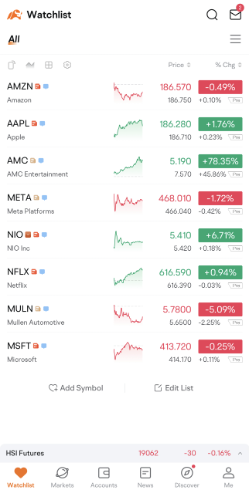
Step 1: Go to to a stock on your Watchlist and select its "Detailed Quotes" page.
Disclaimer: Images provided are not current and any securities are shown for illustrative purposes only and is not a recommendation.
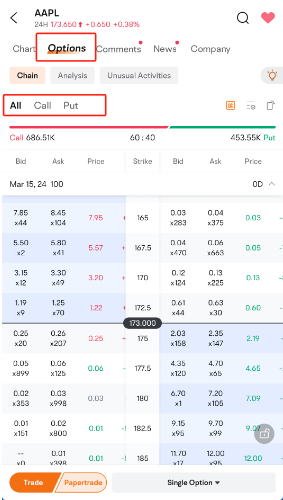
Step 2: Tap Options> Chain on top of the page
Step 3: All options with a specific expiration date are displayed by default. To view just calls or puts, tap "Call/Put."
Disclaimer: Images provided are not current and any securities are shown for illustrative purposes only and is not a recommendation.
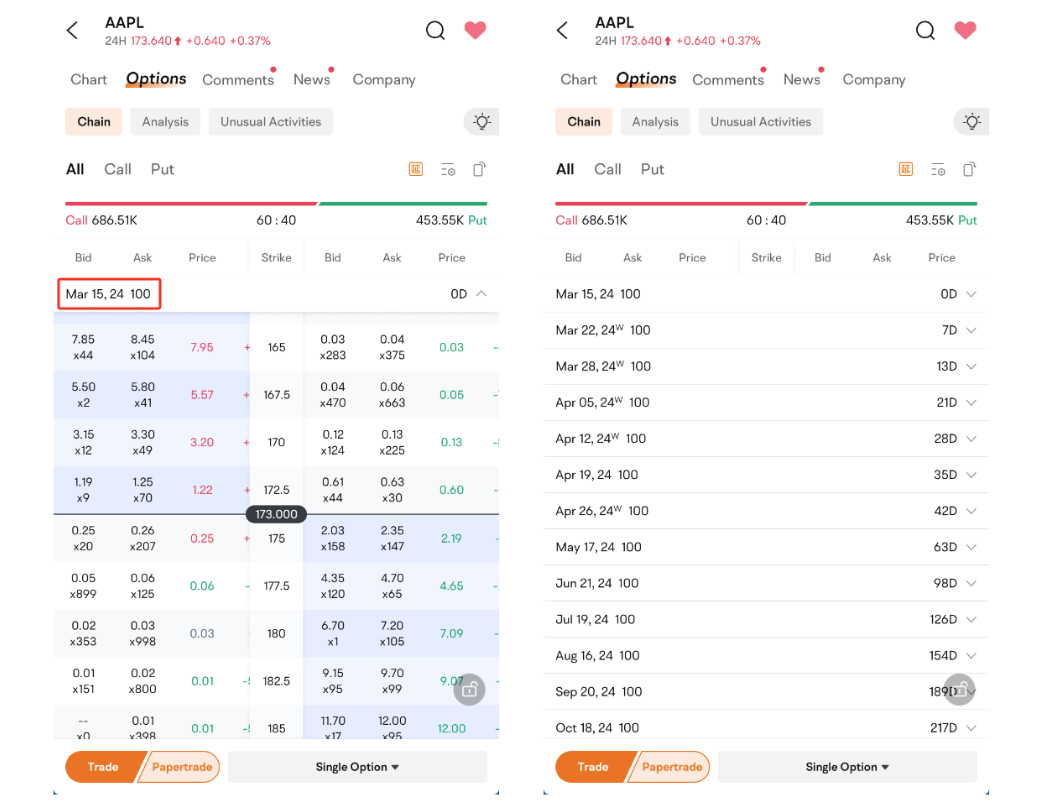
Step 4: Switch to a different expiration date by selecting the desired date.
Disclaimer: Images provided are not current and any securities are shown for illustrative purposes only and is not a recommendation.
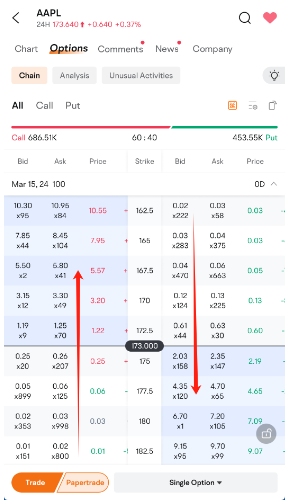
Step 5: Out-of-the-money options are displayed in white, while in-the-money options are displayed in blue. Scroll horizontally to view more information about the available options.
Disclaimer: Images provided are not current and any securities are shown for illustrative purposes only and is not a recommendation.
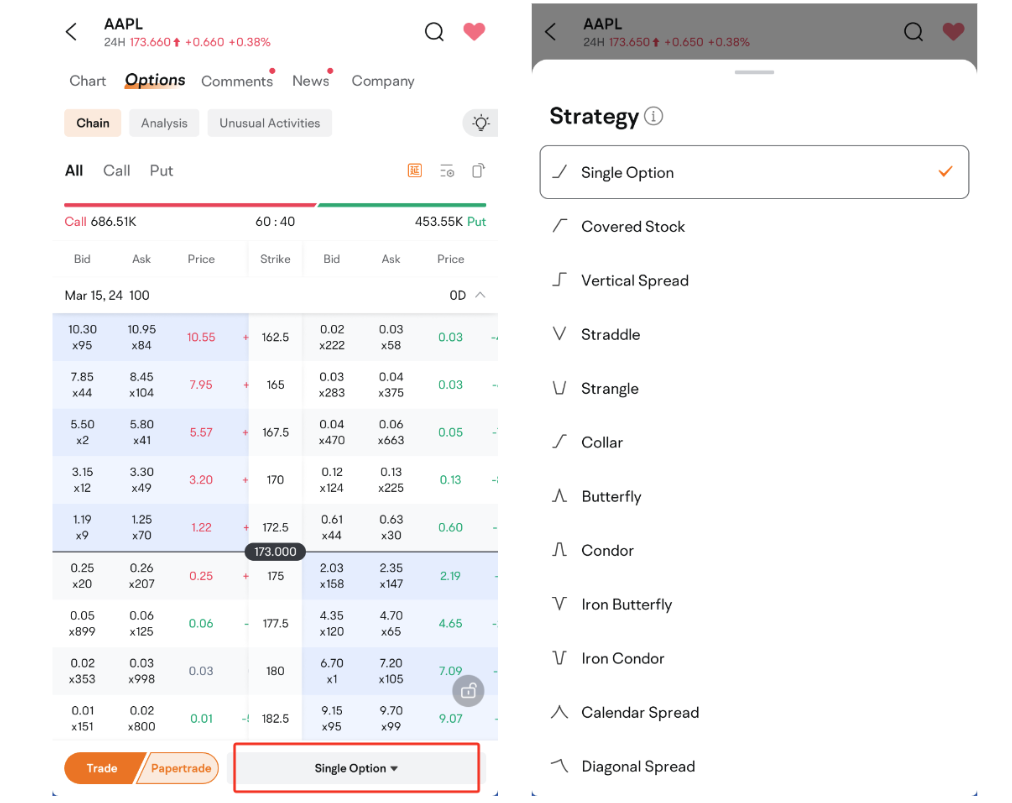
Step 6: At the bottom of the screen, you can switch between different trading strategies.
Disclaimer: Images provided are not current and any securities are shown for illustrative purposes only and is not a recommendation.
Yes options can technically be exercised out of the money (OTM). Exercising an OTM option means a trader chooses to buy (for call options) or sell (for put options) the underlying asset at a price that's not currently advantageous. This scenario usually results in a financial loss because the market price of the asset would be more favorable than the strike price agreed upon in the option contract.
When trading options in the money (ITM) or out of the money (OTM), the choice depends on your outlook for the underlying security, financial situation, and your goals. ITM options have intrinsic value and are priced higher than OTM options in the same chain. They can be exercised and useful for hedging or partially hedging positions.
For OTM options, they have a strike price that the underlying security has yet to reach and no intrinsic value. They are almost always less expensive than ITM options.
Yes, OTM options can expire worthless. When an option is OTM, its strike price is unfavorable compared to the current market price of the underlying asset. As a result, the option lacks intrinsic value and owners of OTM options often choose not to exercise them because doing so would result in a loss.
This is due to a few factors, beginning with volatility skew. Implied volatility (IV) varies across different strike prices, increasing for puts as the strike price declines while as the strike price increases, IV falls for calls. This skew results in higher premiums for OTM puts compared to OTM calls. Also, with puts providing downside protection, there's usually a greater demand for protective puts and their prices tend to be higher.
This presentation is for informational and educational use only and is not a recommendation or endorsement of any particular investment or investment strategy. Investment information provided in this content is general in nature, strictly for illustrative purposes, and may not be appropriate for all investors. Read more
Recommend
Moomoo Offers Extended Trading Hours for Options Trading on Oct 19
At-the-Money (ATM) - How It Works in Options Trading
Out-of-the-Money in Options Trading - How It Works & Examples

Covered Call: A Comprehensive Guide to Options Trading
Strangle Options Strategy - A Helpful Guide for Traders
Straddle vs. Strangle: Understanding the Key Differences
Triple Witching: Understanding Its Impact on the Stock Market
Underlying Asset: Definition, Types and Examples
What Are Option Premiums
Covered Calls and Covered Puts - Strategies for Options Trading
Expiration Date in Options Trading
Options Break-Even Point: Definition, Formula, and Examples
Credit Spread: Definition, Examples & How to Calculate
Bull Put Spread: Definitions, How It Works & Examples
How to Manage Your Risk in Options Trading
How to Pick the 'Right' Strike Price
Options Wheel Strategy Explained: Definition and How to Trade
Long Collar Options Strategy: Definition, How It Works & Examples
Long Call Options Strategy: Definition, Potential Benefits, and Risks
Exercise of Options: When and How to Exercise Options
Time Value: Definition, Calculation, Importance in Options Trading
Short Call Options Strategy: Guide & Examples
What Are Bitcoin ETF Options: Investment Insights & Strategies
Hedge with Options: Protect Your Portfolio in 2026
Options Chains: Definition, How to Read and Analyze Them
Options Profit Calculation: Overview, Formula & Examples
What is Theta in Options Trading: Overview and Strategies
Debit Spread: Definition, Types & Examples
Butterfly Spread: Definition and Application in Options Trading
What Is an Options Screener and How to Use?
Unusual Options Activity: Insights and Strategies for Traders
Protective Put Strategy: Definition, How It Works & Examples
What Are Stock Options: Types, How They Work and Examples
Weekly vs. Monthly Options: Choosing the Right Expiration Date
How to Practice Options Trading with Demo Trading Account
Sell to Open vs Sell to Close: Understanding the Difference
Long Put: Definition, Examples and How to Trade
Iron Condor: Understanding This Options Trading Strategy
Diagonal Spread: Definition, Types & How to Use
Implied Volatility (IV) Rank & Percentile in Options Trading
Trading Earnings with Options
Iron Butterfly: Mastering the Options Trading Strategy
Interest Rate Options: Definition & How They Work
Options Buy to Open vs Buy to Close: What's the difference?
Vertical Spread: Definition, Types, & Examples
Bear Put Spread: An Options Trading Strategy Explained
What is a Dividend Reinvestment Plan (DRIP)?
Put/Call Ratio (PCR): Definition & How to Use
How Are Options Priced? | Calculation and Examples
Naked Calls Options Strategy: Definition & How It Works
Options Vs. Futures: Understanding Their Key Differences
Extrinsic Value: Definition, Calculation, and Trading Strategies
Intrinsic Value: How It Works And How To Calculate It
Bull Call Spread - Examples and Applications in Options Trading
Index Options: Definitions, Strategies and Risks
Short Put Options: Strategies and Risks Explained
Quadruple Witching: How It Can Affect the Stock Market
What Are Options? Everything You Need to Know before Trading
Four Option Trading Strategies for Beginners
10 Options Strategies to Enhance Your Trading Portfolio
American Options vs. European Options
In-The-Money (ITM): Call and Put Options Examples
What is a Calendar Spread?
Open Interest: What it means for traders and investors
Options vs Stocks: Choosing the Right Investment Strategy
Options Strike Prices Explained: A Complete Guide for Beginners
Call vs Put Options: Your Essential Guide to the Basics
Zero Days to Expiration (0DTE) Options: Trade Mag 7 Stock Options Today
What Is An Options Contract? How Does It Work?
What is Synthetic Put? (How Does It Work)
How and When to Roll Covered Calls
Option Volume vs Open Interest: Understanding the Difference
4 Options Trading Levels
How to Trade Options for Beginners?
What Is Implied Volatility (IV)?
What Are Cash Secured Puts: How To Sell Them
What Is a Straddle Options Strategy?
What Is Ratio Spread in Options
What is a Call Option: Strategies and Tips
Taxes on Stocks: How Selling Stocks Affects Your Taxes
Option Greeks Explained - Option Greek Cheat Sheet
Put Options: Hedging Your Portfolio
Put Options: How to Use Them in Your Trading Strategy
Poor Man's Covered Call (PMCC): A Beginner's Guide
Four Option Trading Mistakes to Avoid
Trading Synthetic Options: Risks and Rewards
Call Spread vs. Put Spread: What are the differences?
What is stock options trading
What Is Margin Call and How Can You Avoid the Risks?
Options Trading Strategies: Iron Condor vs. Iron Butterfly
Moomoo Offers Extended Trading Hours for Options Trading on Oct 19
At-the-Money (ATM) - How It Works in Options Trading
Out-of-the-Money in Options Trading - How It Works & Examples
Covered Call: A Comprehensive Guide to Options Trading
Strangle Options Strategy - A Helpful Guide for Traders
Straddle vs. Strangle: Understanding the Key Differences
Triple Witching: Understanding Its Impact on the Stock Market
Underlying Asset: Definition, Types and Examples
What Are Option Premiums
Covered Calls and Covered Puts - Strategies for Options Trading
Expiration Date in Options Trading
Options Break-Even Point: Definition, Formula, and Examples
Credit Spread: Definition, Examples & How to Calculate
Bull Put Spread: Definitions, How It Works & Examples
How to Manage Your Risk in Options Trading
How to Pick the 'Right' Strike Price
Options Wheel Strategy Explained: Definition and How to Trade
Long Collar Options Strategy: Definition, How It Works & Examples
Long Call Options Strategy: Definition, Potential Benefits, and Risks
Exercise of Options: When and How to Exercise Options
Time Value: Definition, Calculation, Importance in Options Trading
Short Call Options Strategy: Guide & Examples
What Are Bitcoin ETF Options: Investment Insights & Strategies
Hedge with Options: Protect Your Portfolio in 2026
Options Chains: Definition, How to Read and Analyze Them
Options Profit Calculation: Overview, Formula & Examples
What is Theta in Options Trading: Overview and Strategies
Debit Spread: Definition, Types & Examples
Butterfly Spread: Definition and Application in Options Trading
What Is an Options Screener and How to Use?
Unusual Options Activity: Insights and Strategies for Traders
Protective Put Strategy: Definition, How It Works & Examples
What Are Stock Options: Types, How They Work and Examples
Weekly vs. Monthly Options: Choosing the Right Expiration Date
How to Practice Options Trading with Demo Trading Account
Sell to Open vs Sell to Close: Understanding the Difference
Long Put: Definition, Examples and How to Trade
Iron Condor: Understanding This Options Trading Strategy
Diagonal Spread: Definition, Types & How to Use
Implied Volatility (IV) Rank & Percentile in Options Trading
Trading Earnings with Options
Iron Butterfly: Mastering the Options Trading Strategy
Interest Rate Options: Definition & How They Work
Options Buy to Open vs Buy to Close: What's the difference?
Vertical Spread: Definition, Types, & Examples
Bear Put Spread: An Options Trading Strategy Explained
What is a Dividend Reinvestment Plan (DRIP)?
Put/Call Ratio (PCR): Definition & How to Use
How Are Options Priced? | Calculation and Examples
Naked Calls Options Strategy: Definition & How It Works
Options Vs. Futures: Understanding Their Key Differences
Extrinsic Value: Definition, Calculation, and Trading Strategies
Intrinsic Value: How It Works And How To Calculate It
Bull Call Spread - Examples and Applications in Options Trading
Index Options: Definitions, Strategies and Risks
Short Put Options: Strategies and Risks Explained
Quadruple Witching: How It Can Affect the Stock Market
What Are Options? Everything You Need to Know before Trading
Four Option Trading Strategies for Beginners
10 Options Strategies to Enhance Your Trading Portfolio
American Options vs. European Options
In-The-Money (ITM): Call and Put Options Examples
What is a Calendar Spread?
Open Interest: What it means for traders and investors
Options vs Stocks: Choosing the Right Investment Strategy
Options Strike Prices Explained: A Complete Guide for Beginners
Call vs Put Options: Your Essential Guide to the Basics
Zero Days to Expiration (0DTE) Options: Trade Mag 7 Stock Options Today
What Is An Options Contract? How Does It Work?
What is Synthetic Put? (How Does It Work)
How and When to Roll Covered Calls
Option Volume vs Open Interest: Understanding the Difference
4 Options Trading Levels
How to Trade Options for Beginners?
What Is Implied Volatility (IV)?
What Are Cash Secured Puts: How To Sell Them
What Is a Straddle Options Strategy?
What Is Ratio Spread in Options
What is a Call Option: Strategies and Tips
Taxes on Stocks: How Selling Stocks Affects Your Taxes
Option Greeks Explained - Option Greek Cheat Sheet
Put Options: Hedging Your Portfolio
Put Options: How to Use Them in Your Trading Strategy
Poor Man's Covered Call (PMCC): A Beginner's Guide
Four Option Trading Mistakes to Avoid
Trading Synthetic Options: Risks and Rewards
Call Spread vs. Put Spread: What are the differences?
What is stock options trading
What Is Margin Call and How Can You Avoid the Risks?
Options Trading Strategies: Iron Condor vs. Iron Butterfly

