



Moomoo Insights
Jul 16 15:38
TSMC Earnings: AI Demand Is Stronger Than the Chip Selloff Suggests
Moomoo Insights
Sep 30 05:04
Live Take | Anthropic’s $518B Compute Bet: Who Wins From the AI Buildout?
Options contracts offer a unique way for investors to participate in financial markets. Unlike traditional stock trading, options provide the buyer the right, but not the obligation, to buy or sell an asset (depending on the option), at a set price within a specified timeframe.
This flexibility can be advantageous for some investors, as it allows for potential profits from market movements while helping to limit some downside risks. Understanding the basics of options contracts is essential for investors looking to diversify their portfolios and navigate the complexities of the financial markets.
Options contracts can cover various types of assets including stocks, commodities, currencies, and indexes. These contracts provide flexibility for investors to speculate on price movements in the underlying asset without actually owning it.
Common types of assets that options contracts may cover include:
Stocks: Options contracts can be based on individual stocks, allowing investors to speculate on the price movements of specific companies.
Indexes: Options contracts can also be linked to stock market indexes such as the S&P 500 or the Dow Jones Industrial Average, providing exposure to broad market trends.
Exchange-Traded Funds (ETFs): Options contracts may be based on ETFs, which are investment funds that hold assets such as stocks, bonds, or commodities and trade on stock exchanges.
Commodities: Options contracts can be tied to commodities such as gold, oil, or agricultural products, allowing investors to hedge against price fluctuations in these markets.
Currencies: Options contracts may cover foreign exchange rates, enabling investors to speculate on currency movements between different countries.
Interest Rates: Options contracts can be linked to interest rates, providing a way for investors to hedge against changes in borrowing costs or to speculate on future interest rate movements.

Options contracts include key elements such as the expiration date, strike price, the underlying asset, and the option type. The expiration date determines when the contract expires, while the strike price is the predetermined price at which the underlying asset can be bought or sold. The underlying asset is the security that the option in part derives its value from, and the option type specifies whether it is a call or put option.
Disclaimer: The data involved in the picture is fictitious and the cost does not include commission and other fees.
Call options contract: A call option gives the buyer the right, but not the obligation, to purchase the underlying asset at the strike price before the expiration date.
Buy side: Let's say you purchase a call option contract for Company X with a strike price of $50 and a premium of $2 per contract. If the stock price rises above $52 ($50 strike price + $2 premium) before the expiration date, you can exercise the option to buy shares at $50 and sell them at the market price, potentially earning a profit.
Sell side: As a call option seller, you receive the premium upfront. If the underlying stock price is below the strike price, the option expires worthless, and you keep the premium. However, if the stock price rises upon expiration, you may be obligated to sell shares at the strike price, potentially limiting your gains or incurring a loss.
Put options contract: A put option gives the buyer the right, but not the obligation, to sell the underlying asset at the strike price before the expiration date.
Buy side: Suppose you purchase a put option contract for Company Y with a strike price of $100 and a premium of $3 per share. If the stock price falls below $97 ($100 strike price - $3 premium) before the expiration date, you can exercise the option to sell shares at $100.
Sell side: As a seller of a put option, you receive the premium upfront. If the option expires worthless, you keep the premium. However, if the stock price falls, you may be obligated to buy shares at the strike price, potentially incurring losses; the stock could fall and yet you could still make a profit breakeven but if it fell 'significantly' it would be unlikely. This depends upon what the original spread was (distance between strike price and time of option purchase/sale in relation to how much the stock falls).
Calls and puts can offer distinct advantages and disadvantages for investors. For buyers, calls provide potential for unlimited gains with limited risk while puts allow them to potentially profit from declining prices of the underlying stock. However, both options involve the risk of losing the entire premium paid for the contract.
Advantages | Disadvantages | |
Buyer Side | Buying a call option allows investors to potentially profit from upward price movements in the underlying asset while limiting risk to the premium paid. It offers the opportunity for significant gains with a smaller initial investment compared to buying the asset outright. | The main risk for call buyers is the potential loss of the premium paid if the underlying asset's price does not rise above the strike price before expiration. |
Seller Side | Selling a call option generates immediate income in the form of the premium received. If the underlying asset's price remains below the strike price, the seller keeps the premium without further obligation. | The seller of a call option faces the risk of significant losses if the underlying asset's price rises above the strike price, as they may be obligated to sell the asset at a lower price than the market value. |
Advantages | Disadvantages | |
Buyer Side | Buying a put option allows investors to potentially profit from downward price movements in the underlying asset while limiting risk to the premium paid. It offers a form of insurance against potential losses in a portfolio or specific asset. | The main risk for put buyers is the potential loss of the premium paid if the underlying asset's price does not fall below the strike price before expiration. |
Seller Side | Selling a put option generates immediate income in the form of the premium received. If the underlying asset's price remains above the strike price, the seller keeps the premium without further obligation. | The seller of a put option faces the risk of significant losses if the underlying asset's price falls below the strike price, as they may be obligated to buy the asset at a higher price than the market value. |
An option's premium represents the current market price of the option contract. It consists of two main components: intrinsic value and time value.
Intrinsic Value: This is the difference between the current price of the underlying asset and the option's strike price. For call options, the intrinsic value is the market price of the asset minus the strike price (if positive). For put options, it is the strike price minus the market price of the asset (if positive). Intrinsic value represents the amount that an option is "in-the-money," reflecting the potential profit by exercising the option and then selling the underlying stock's shares at a higher price than the current market value.
For instance, if you have a call option allowing you to buy a stock at a $50 strike price, and the stock is currently trading at $60, the intrinsic value is $10 ($60 - $50). Similarly, for a put option, if the stock is trading at $40, the intrinsic value is $10 ($50 - $40).
Time Value: Also known as extrinsic value, time value reflects the additional worth of the option beyond its intrinsic value. It accounts for factors such as the time remaining until expiration, market volatility, and the potential for the underlying asset's price to move in the future. Time value diminishes as the option approaches its expiration date, reflecting the decreasing likelihood of significant price changes.
In addition, this is the extra value added to the option because there's still time left before it expires. It's like paying for the chance that the stock's price will move in your favor before the option expires. As time passes, this value tends to decrease because there's less time for the stock to make big moves.
In summary, an option's premium may be comprised of both intrinsic value, reflecting its current in-the-money status, and time value, representing the potential for future price movements before expiration. Understanding the premium is essential for options traders, as it can be better inform their trading decisions and risk management strategies.
Moomoo provides a user-friendly platform for trading options. Here's a step-by-step guide:
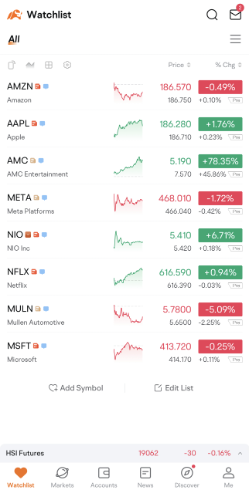
Step 1: Navigate to your Watchlist, then select a stock's "Detailed Quotes" page.
Disclaimer: Images provided are not current and any securities are shown for illustrative purposes only and is not a recommendation.
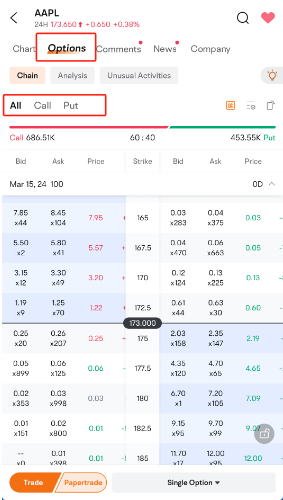
Step 2: Navigate to Options> Chain located at the top of the page.
Step 3: By default, all options with a specific expiration date are shown. For selective viewing of calls or puts, simply tap "Call/Put."
Disclaimer: Images provided are not current and any securities are shown for illustrative purposes only and is not a recommendation.
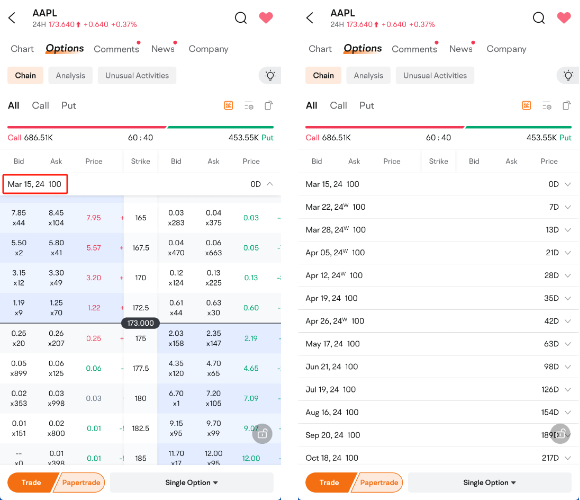
Step 4: Adjust the expiration date by choosing your preferred date from the menu.
Disclaimer: Images provided are not current and any securities are shown for illustrative purposes only and is not a recommendation.
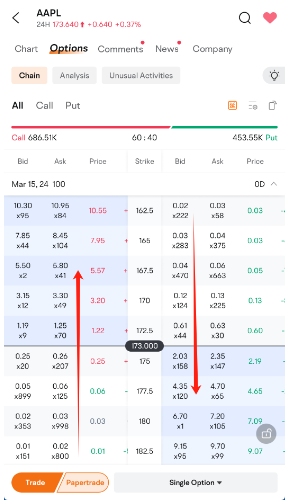
Step 5: Easily distinguish between options: white denotes out-of-the-money, and blue indicates in-the-money. Swipe horizontally to access additional option details.
Disclaimer: Images provided are not current and any securities are shown for illustrative purposes only and is not a recommendation.
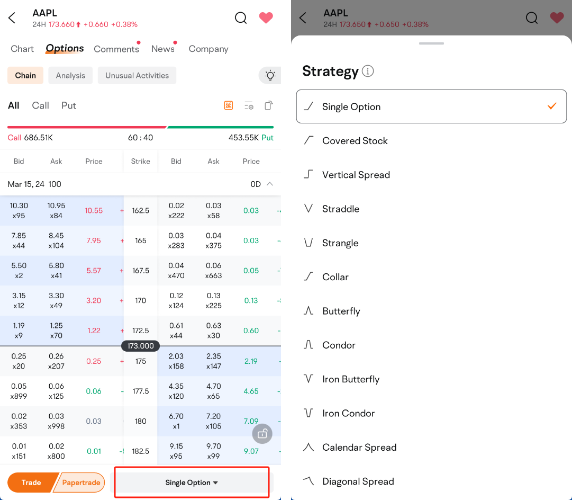
Step 6: Explore various trading strategies at the screen's bottom, offering flexibility for your investment approach.
Disclaimer: Images provided are not current and any securities are shown for illustrative purposes only and is not a recommendation.
Options contracts are typically created by options exchanges or financial institutions.
The market cost of an options contract, known as the premium, varies depending on factors such as the underlying asset, strike price, and expiration date.
Standard options contracts typically represent 100 shares of the underlying asset.
Both buyers and sellers of options contracts can potentially benefit, depending on market conditions and trading strategies.
If an out-of-the-money options contract expires, it is worthless and no action is required. If an option expires in-the-money, it has intrinsic value and is usually automatically exercised unless the option holder gives instructions otherwise. If the holder wants to sell the option contract they must do that before it expires (by end of regular trading hours on expiration date).
If the option is not exercised by the expiration date, the contracts are automatically settled by most brokerage firms.
This presentation is for informational and educational use only and is not a recommendation or endorsement of any particular investment or investment strategy. Investment information provided in this content is general in nature, strictly for illustrative purposes, and may not be appropriate for all investors. Read more
Recommend
Moomoo Offers Extended Trading Hours for Options Trading on Oct 19
At-the-Money (ATM) - How It Works in Options Trading
Out-of-the-Money in Options Trading - How It Works & Examples

Covered Call: A Comprehensive Guide to Options Trading
Strangle Options Strategy - A Helpful Guide for Traders
Straddle vs. Strangle: Understanding the Key Differences
Triple Witching: Understanding Its Impact on the Stock Market
Underlying Asset: Definition, Types and Examples
What Are Option Premiums
Covered Calls and Covered Puts - Strategies for Options Trading
Expiration Date in Options Trading
Options Break-Even Point: Definition, Formula, and Examples
Credit Spread: Definition, Examples & How to Calculate
Bull Put Spread: Definitions, How It Works & Examples
How to Manage Your Risk in Options Trading
How to Pick the 'Right' Strike Price
Options Wheel Strategy Explained: Definition and How to Trade
Long Collar Options Strategy: Definition, How It Works & Examples
Long Call Options Strategy: Definition, Potential Benefits, and Risks
Exercise of Options: When and How to Exercise Options
Time Value: Definition, Calculation, Importance in Options Trading
Short Call Options Strategy: Guide & Examples
What Are Bitcoin ETF Options: Investment Insights & Strategies
Hedge with Options: Protect Your Portfolio in 2026
Options Chains: Definition, How to Read and Analyze Them
Options Profit Calculation: Overview, Formula & Examples
What is Theta in Options Trading: Overview and Strategies
Debit Spread: Definition, Types & Examples
Butterfly Spread: Definition and Application in Options Trading
What Is an Options Screener and How to Use?
Unusual Options Activity: Insights and Strategies for Traders
Protective Put Strategy: Definition, How It Works & Examples
What Are Stock Options: Types, How They Work and Examples
Weekly vs. Monthly Options: Choosing the Right Expiration Date
How to Practice Options Trading with Demo Trading Account
Sell to Open vs Sell to Close: Understanding the Difference
Long Put: Definition, Examples and How to Trade
Iron Condor: Understanding This Options Trading Strategy
Diagonal Spread: Definition, Types & How to Use
Implied Volatility (IV) Rank & Percentile in Options Trading
Trading Earnings with Options
Iron Butterfly: Mastering the Options Trading Strategy
Interest Rate Options: Definition & How They Work
Options Buy to Open vs Buy to Close: What's the difference?
Vertical Spread: Definition, Types, & Examples
Bear Put Spread: An Options Trading Strategy Explained
What is a Dividend Reinvestment Plan (DRIP)?
Put/Call Ratio (PCR): Definition & How to Use
How Are Options Priced? | Calculation and Examples
Naked Calls Options Strategy: Definition & How It Works
Options Vs. Futures: Understanding Their Key Differences
Extrinsic Value: Definition, Calculation, and Trading Strategies
Intrinsic Value: How It Works And How To Calculate It
Bull Call Spread - Examples and Applications in Options Trading
Index Options: Definitions, Strategies and Risks
Short Put Options: Strategies and Risks Explained
Quadruple Witching: How It Can Affect the Stock Market
What Are Options? Everything You Need to Know before Trading
Four Option Trading Strategies for Beginners
10 Options Strategies to Enhance Your Trading Portfolio
American Options vs. European Options
In-The-Money (ITM): Call and Put Options Examples
What is a Calendar Spread?
Open Interest: What it means for traders and investors
Options vs Stocks: Choosing the Right Investment Strategy
Options Strike Prices Explained: A Complete Guide for Beginners
Call vs Put Options: Your Essential Guide to the Basics
Zero Days to Expiration (0DTE) Options: Trade Mag 7 Stock Options Today
What Is An Options Contract? How Does It Work?
What is Synthetic Put? (How Does It Work)
How and When to Roll Covered Calls
Option Volume vs Open Interest: Understanding the Difference
4 Options Trading Levels
How to Trade Options for Beginners?
What Is Implied Volatility (IV)?
What Are Cash Secured Puts: How To Sell Them
What Is a Straddle Options Strategy?
What Is Ratio Spread in Options
What is a Call Option: Strategies and Tips
Taxes on Stocks: How Selling Stocks Affects Your Taxes
Option Greeks Explained - Option Greek Cheat Sheet
Put Options: Hedging Your Portfolio
Put Options: How to Use Them in Your Trading Strategy
Poor Man's Covered Call (PMCC): A Beginner's Guide
Four Option Trading Mistakes to Avoid
Trading Synthetic Options: Risks and Rewards
Call Spread vs. Put Spread: What are the differences?
What is stock options trading
What Is Margin Call and How Can You Avoid the Risks?
Options Trading Strategies: Iron Condor vs. Iron Butterfly
Moomoo Offers Extended Trading Hours for Options Trading on Oct 19
At-the-Money (ATM) - How It Works in Options Trading
Out-of-the-Money in Options Trading - How It Works & Examples
Covered Call: A Comprehensive Guide to Options Trading
Strangle Options Strategy - A Helpful Guide for Traders
Straddle vs. Strangle: Understanding the Key Differences
Triple Witching: Understanding Its Impact on the Stock Market
Underlying Asset: Definition, Types and Examples
What Are Option Premiums
Covered Calls and Covered Puts - Strategies for Options Trading
Expiration Date in Options Trading
Options Break-Even Point: Definition, Formula, and Examples
Credit Spread: Definition, Examples & How to Calculate
Bull Put Spread: Definitions, How It Works & Examples
How to Manage Your Risk in Options Trading
How to Pick the 'Right' Strike Price
Options Wheel Strategy Explained: Definition and How to Trade
Long Collar Options Strategy: Definition, How It Works & Examples
Long Call Options Strategy: Definition, Potential Benefits, and Risks
Exercise of Options: When and How to Exercise Options
Time Value: Definition, Calculation, Importance in Options Trading
Short Call Options Strategy: Guide & Examples
What Are Bitcoin ETF Options: Investment Insights & Strategies
Hedge with Options: Protect Your Portfolio in 2026
Options Chains: Definition, How to Read and Analyze Them
Options Profit Calculation: Overview, Formula & Examples
What is Theta in Options Trading: Overview and Strategies
Debit Spread: Definition, Types & Examples
Butterfly Spread: Definition and Application in Options Trading
What Is an Options Screener and How to Use?
Unusual Options Activity: Insights and Strategies for Traders
Protective Put Strategy: Definition, How It Works & Examples
What Are Stock Options: Types, How They Work and Examples
Weekly vs. Monthly Options: Choosing the Right Expiration Date
How to Practice Options Trading with Demo Trading Account
Sell to Open vs Sell to Close: Understanding the Difference
Long Put: Definition, Examples and How to Trade
Iron Condor: Understanding This Options Trading Strategy
Diagonal Spread: Definition, Types & How to Use
Implied Volatility (IV) Rank & Percentile in Options Trading
Trading Earnings with Options
Iron Butterfly: Mastering the Options Trading Strategy
Interest Rate Options: Definition & How They Work
Options Buy to Open vs Buy to Close: What's the difference?
Vertical Spread: Definition, Types, & Examples
Bear Put Spread: An Options Trading Strategy Explained
What is a Dividend Reinvestment Plan (DRIP)?
Put/Call Ratio (PCR): Definition & How to Use
How Are Options Priced? | Calculation and Examples
Naked Calls Options Strategy: Definition & How It Works
Options Vs. Futures: Understanding Their Key Differences
Extrinsic Value: Definition, Calculation, and Trading Strategies
Intrinsic Value: How It Works And How To Calculate It
Bull Call Spread - Examples and Applications in Options Trading
Index Options: Definitions, Strategies and Risks
Short Put Options: Strategies and Risks Explained
Quadruple Witching: How It Can Affect the Stock Market
What Are Options? Everything You Need to Know before Trading
Four Option Trading Strategies for Beginners
10 Options Strategies to Enhance Your Trading Portfolio
American Options vs. European Options
In-The-Money (ITM): Call and Put Options Examples
What is a Calendar Spread?
Open Interest: What it means for traders and investors
Options vs Stocks: Choosing the Right Investment Strategy
Options Strike Prices Explained: A Complete Guide for Beginners
Call vs Put Options: Your Essential Guide to the Basics
Zero Days to Expiration (0DTE) Options: Trade Mag 7 Stock Options Today
What Is An Options Contract? How Does It Work?
What is Synthetic Put? (How Does It Work)
How and When to Roll Covered Calls
Option Volume vs Open Interest: Understanding the Difference
4 Options Trading Levels
How to Trade Options for Beginners?
What Is Implied Volatility (IV)?
What Are Cash Secured Puts: How To Sell Them
What Is a Straddle Options Strategy?
What Is Ratio Spread in Options
What is a Call Option: Strategies and Tips
Taxes on Stocks: How Selling Stocks Affects Your Taxes
Option Greeks Explained - Option Greek Cheat Sheet
Put Options: Hedging Your Portfolio
Put Options: How to Use Them in Your Trading Strategy
Poor Man's Covered Call (PMCC): A Beginner's Guide
Four Option Trading Mistakes to Avoid
Trading Synthetic Options: Risks and Rewards
Call Spread vs. Put Spread: What are the differences?
What is stock options trading
What Is Margin Call and How Can You Avoid the Risks?
Options Trading Strategies: Iron Condor vs. Iron Butterfly

