

Moomoo Insights
Jul 16 15:38
TSMC Earnings: AI Demand Is Stronger Than the Chip Selloff Suggests
Moomoo Insights
Sep 30 05:04
Live Take | Anthropic’s $518B Compute Bet: Who Wins From the AI Buildout?
In the fast-paced world of investing, predicting the direction of markets can be a challenge. That’s why experienced traders often turn to options, a type of financial contract that gives the buyer the right — but not the obligation — to buy or sell an underlying asset at a prespecified price (strike price) and time (expiration date). Options can be used individually or in combination.
A combination stock option strategy like the straddle uses both a call and put option, where a call gives the option buyer the right to buy the underlying stock at a predetermined price and date, and the put, which gives the option buyer the right to sell the stock at a predetermined price and date.
A straddle is an options trading strategy that uses both a call and a put option on the same asset, for example the underlying stock. In this approach, if you buy a straddle, you simultaneously buy a call option and a put option of the same stock at the same expiration date and strike price.
The strategy is often used when you believe the stock price will move significantly but cannot predict its direction.
Before creating a straddle option strategy, you must consider your timeline to come up with the expiration date. You’ll also determine the strike price by deciding the price from which you believe the stock will move.
Consider the combined cost of trading call and put options to understand your trading costs. You can create two types of option straddles.
You can create a straddle option strategy using one of two types of straddles: a long straddle and a short straddle. While these approaches are different from each other, the underlying principle of trading options with the same expiration date and strike price is the same.
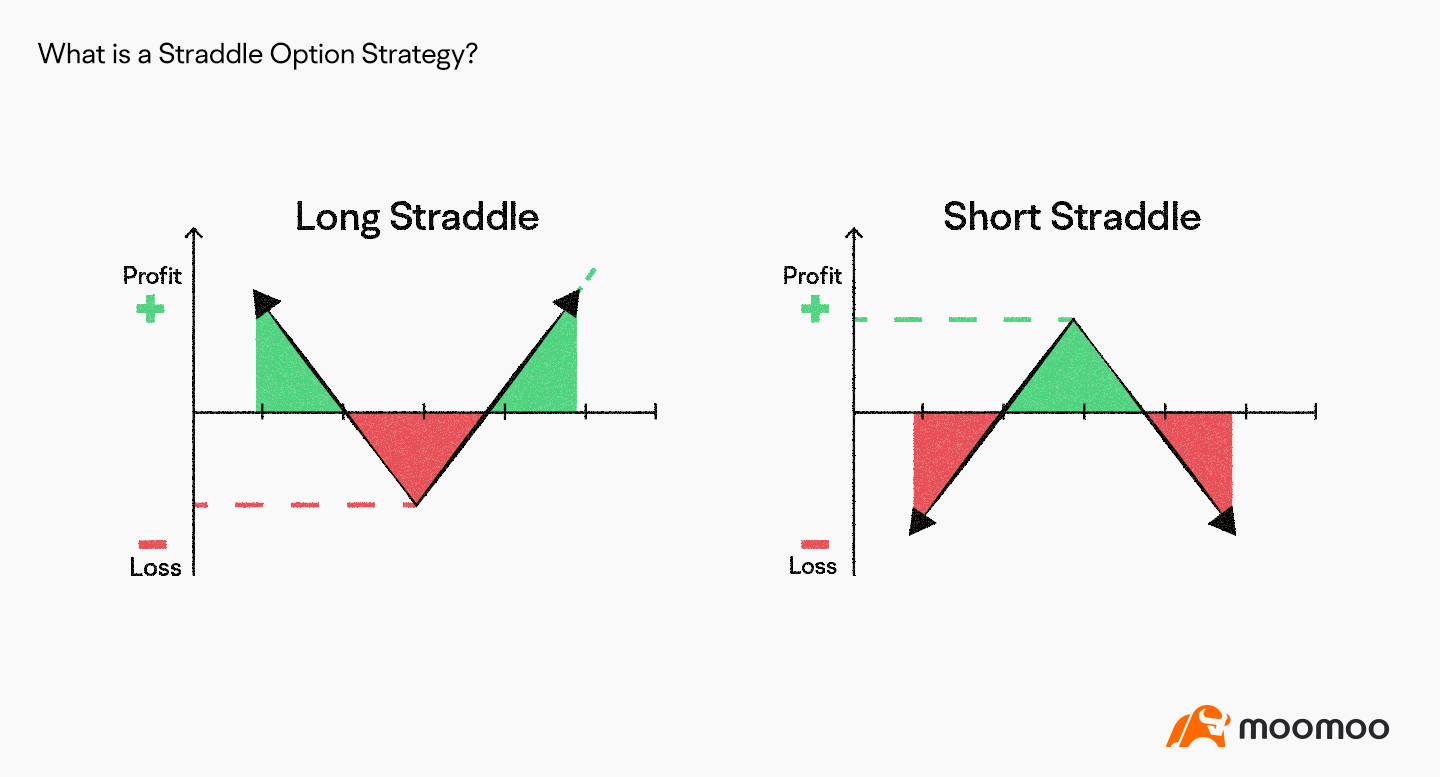
You can buy both call and put options on an underlying stock when you’re not sure whether the stock will go up or down. The long straddle is a risk-defined approach, because the cost of the put and call options is your maximum theoretical loss.
Regardless of which direction the price moves, you may be able to profit from your put option on the downside or your call option on the upside.
Say you buy a put option and a call option on a stock with a strike price of $100 that expires in three months. The option premium paid, which is the cost of the put option and call option, is your maximum loss. At expiration, if the stock price rises above $100, your call option gives you the right to buy the stock at $100, and you can sell it in the market for a potential profit.
Conversely, at expiration if the stock price drops below $100, you can exercise the put option and sell the stock at $100 even if it is trading lower, assuming you already own the shares. However, exercising contracts can come with additional capital requirements, costs and risks – the decision depends on individual trading goals and risk tolerance.
This approach entails the trader selling both the call option and the put option at the same expiration date and strike price. You may use this strategy if you believe the stock will remain range bound without trading too far above or below the strike price. Such a strategy can be effective if the market is not highly volatile and the strategy does well if the stock closes at the strike price by expiration.
If the trader sells a call and a put option, it will generate a combined option premium that is the maximum profit. If the stock doesn’t move from the strike price on the day of expiration, the put and call contract will expire with no intrinsic value. Here, the trader’s maximum profit would be determined by the difference between the initial premium and the intrinsic value. The maximum loss can be significant if the stock moves considerably away from the strike price, which makes this strategy a riskier trade than the long straddle. It can theoretically be unlimited to the upside since the strategy involves a short call.
Straddle and strangle option trading strategies both try to profit based on either increased volatility or lack of market volatility. You don’t necessarily need to predict whether the stock price is going up or down. However, you need to have a view on whether the movement will occur or not and how significant the move could be.
The main difference between a strangle and straddle option strategy is that in a straddle you trade a call and put option with the same strike price and expiration price, whereas the strangle has options with different strike prices and the same expiration dates. The strangle involves using an out-of-the-money put and out-of-the-money call option, which are cheaper because exercising those options at current market price would not be profitable. The caveat with using OTM options in a strangle strategy is that the underlying must move more significantly in order to potentially make a profit.
The straddle option strategy allows traders to potentially make profits based on predictions about stock price movement. Some benefits of the straddle strategy include:
Buying a call and put option contract allows traders to potentially benefit from a large upward or downward movement in the underlying stock’s price, regardless of the direction of the price movement. If the price of the underlying stock decreases, the put option can benefit. If it increases, the call option tends to benefit.
You can limit the risk of loss when buying a straddle because the theoretical maximum you can lose is the price of the premiums paid. If the stock moves significantly, you can benefit from either price moves up or down. If the price of the stock bought decreases significantly, you can earn a profit on the put option. If it increases, you can gain profits on the call option. If it remains relatively stable by expiration, then the options will like expire worthless.
The straddle strategy can potentially increase profits, but traders should consider a few things before implementing it. This strategy involves buying call and put options, and you may have to pay trading commissions and fees on both. In addition, factors like time decay, which is the rate of decline of an options contract's value, can influence profitability.
Premium costs. The total option premium cost consists of the call option premium and the put option premium. As a result, the total cost will be more than buying one of those options individually. If the strike prices are close to the current market price, the option premiums can be expensive. As a result, the market has to move significantly in either direction for a long straddle to breakeven and cover the cost of both options. Your overall profitability will depend on the cost of the premiums. For short straddle positions, you collect the option premium and are subject to the risk of the stock moving significantly and also assignment risks should the options expire in the money.
Execution. It may be more difficult to enter or exit both option positions simultaneously without the right trading platform. Your ability to enter or exit a trade will depend on the liquidity of the options.
If you’ve never tried a straddle, you can use paper trading platforms to practice the strategy. Traders often use option strategies to trade based on market volatility or the lack of it. Using the long straddle option strategy entails buying both call and put option of a stock with the same strike price and expiration date. Investors can achieve profit potential regardless of the direction of the market movement, though they may have to pay a considerable upfront cost.
A straddle strategy can be used when you are not certain about the direction of market volatility. Trading in different directions can help increase the profit potential when someone is unsure which direction a stock may move towards.
The success of the straddle option strategy depends on the option premiums paid or received and the underlying stock movement. A long straddle option strategy can be successful if the stock moves significantly away from the strike price, while a short straddle option strategy can be successful if the stock does not move much.
Compared to a short straddle, long straddle strategies may be more appropriate for traders who want defined risk of loss, because the theoretical maximum loss possible is the option premium paid.
This presentation is for informational and educational use only and is not a recommendation or endorsement of any particular investment or investment strategy. Investment information provided in this content is general in nature, strictly for illustrative purposes, and may not be appropriate for all investors. Read more
Recommend
Moomoo Offers Extended Trading Hours for Options Trading on Oct 19
At-the-Money (ATM) - How It Works in Options Trading
Out-of-the-Money in Options Trading - How It Works & Examples

Covered Call: A Comprehensive Guide to Options Trading
Strangle Options Strategy - A Helpful Guide for Traders
Straddle vs. Strangle: Understanding the Key Differences
Triple Witching: Understanding Its Impact on the Stock Market
Underlying Asset: Definition, Types and Examples
What Are Option Premiums
Covered Calls and Covered Puts - Strategies for Options Trading
Expiration Date in Options Trading
Options Break-Even Point: Definition, Formula, and Examples
Credit Spread: Definition, Examples & How to Calculate
Bull Put Spread: Definitions, How It Works & Examples
How to Manage Your Risk in Options Trading
How to Pick the 'Right' Strike Price
Options Wheel Strategy Explained: Definition and How to Trade
Long Collar Options Strategy: Definition, How It Works & Examples
Long Call Options Strategy: Definition, Potential Benefits, and Risks
Exercise of Options: When and How to Exercise Options
Time Value: Definition, Calculation, Importance in Options Trading
Short Call Options Strategy: Guide & Examples
What Are Bitcoin ETF Options: Investment Insights & Strategies
Hedge with Options: Protect Your Portfolio in 2026
Options Chains: Definition, How to Read and Analyze Them
Options Profit Calculation: Overview, Formula & Examples
What is Theta in Options Trading: Overview and Strategies
Debit Spread: Definition, Types & Examples
Butterfly Spread: Definition and Application in Options Trading
What Is an Options Screener and How to Use?
Unusual Options Activity: Insights and Strategies for Traders
Protective Put Strategy: Definition, How It Works & Examples
What Are Stock Options: Types, How They Work and Examples
Weekly vs. Monthly Options: Choosing the Right Expiration Date
How to Practice Options Trading with Demo Trading Account
Sell to Open vs Sell to Close: Understanding the Difference
Long Put: Definition, Examples and How to Trade
Iron Condor: Understanding This Options Trading Strategy
Diagonal Spread: Definition, Types & How to Use
Implied Volatility (IV) Rank & Percentile in Options Trading
Trading Earnings with Options
Iron Butterfly: Mastering the Options Trading Strategy
Interest Rate Options: Definition & How They Work
Options Buy to Open vs Buy to Close: What's the difference?
Vertical Spread: Definition, Types, & Examples
Bear Put Spread: An Options Trading Strategy Explained
What is a Dividend Reinvestment Plan (DRIP)?
Put/Call Ratio (PCR): Definition & How to Use
How Are Options Priced? | Calculation and Examples
Naked Calls Options Strategy: Definition & How It Works
Options Vs. Futures: Understanding Their Key Differences
Extrinsic Value: Definition, Calculation, and Trading Strategies
Intrinsic Value: How It Works And How To Calculate It
Bull Call Spread - Examples and Applications in Options Trading
Index Options: Definitions, Strategies and Risks
Short Put Options: Strategies and Risks Explained
Quadruple Witching: How It Can Affect the Stock Market
What Are Options? Everything You Need to Know before Trading
Four Option Trading Strategies for Beginners
10 Options Strategies to Enhance Your Trading Portfolio
American Options vs. European Options
In-The-Money (ITM): Call and Put Options Examples
What is a Calendar Spread?
Open Interest: What it means for traders and investors
Options vs Stocks: Choosing the Right Investment Strategy
Options Strike Prices Explained: A Complete Guide for Beginners
Call vs Put Options: Your Essential Guide to the Basics
Zero Days to Expiration (0DTE) Options: Trade Mag 7 Stock Options Today
What Is An Options Contract? How Does It Work?
What is Synthetic Put? (How Does It Work)
How and When to Roll Covered Calls
Option Volume vs Open Interest: Understanding the Difference
4 Options Trading Levels
How to Trade Options for Beginners?
What Is Implied Volatility (IV)?
What Are Cash Secured Puts: How To Sell Them
What Is a Straddle Options Strategy?
What Is Ratio Spread in Options
What is a Call Option: Strategies and Tips
Taxes on Stocks: How Selling Stocks Affects Your Taxes
Option Greeks Explained - Option Greek Cheat Sheet
Put Options: Hedging Your Portfolio
Put Options: How to Use Them in Your Trading Strategy
Poor Man's Covered Call (PMCC): A Beginner's Guide
Four Option Trading Mistakes to Avoid
Trading Synthetic Options: Risks and Rewards
Call Spread vs. Put Spread: What are the differences?
What is stock options trading
What Is Margin Call and How Can You Avoid the Risks?
Options Trading Strategies: Iron Condor vs. Iron Butterfly
Moomoo Offers Extended Trading Hours for Options Trading on Oct 19
At-the-Money (ATM) - How It Works in Options Trading
Out-of-the-Money in Options Trading - How It Works & Examples
Covered Call: A Comprehensive Guide to Options Trading
Strangle Options Strategy - A Helpful Guide for Traders
Straddle vs. Strangle: Understanding the Key Differences
Triple Witching: Understanding Its Impact on the Stock Market
Underlying Asset: Definition, Types and Examples
What Are Option Premiums
Covered Calls and Covered Puts - Strategies for Options Trading
Expiration Date in Options Trading
Options Break-Even Point: Definition, Formula, and Examples
Credit Spread: Definition, Examples & How to Calculate
Bull Put Spread: Definitions, How It Works & Examples
How to Manage Your Risk in Options Trading
How to Pick the 'Right' Strike Price
Options Wheel Strategy Explained: Definition and How to Trade
Long Collar Options Strategy: Definition, How It Works & Examples
Long Call Options Strategy: Definition, Potential Benefits, and Risks
Exercise of Options: When and How to Exercise Options
Time Value: Definition, Calculation, Importance in Options Trading
Short Call Options Strategy: Guide & Examples
What Are Bitcoin ETF Options: Investment Insights & Strategies
Hedge with Options: Protect Your Portfolio in 2026
Options Chains: Definition, How to Read and Analyze Them
Options Profit Calculation: Overview, Formula & Examples
What is Theta in Options Trading: Overview and Strategies
Debit Spread: Definition, Types & Examples
Butterfly Spread: Definition and Application in Options Trading
What Is an Options Screener and How to Use?
Unusual Options Activity: Insights and Strategies for Traders
Protective Put Strategy: Definition, How It Works & Examples
What Are Stock Options: Types, How They Work and Examples
Weekly vs. Monthly Options: Choosing the Right Expiration Date
How to Practice Options Trading with Demo Trading Account
Sell to Open vs Sell to Close: Understanding the Difference
Long Put: Definition, Examples and How to Trade
Iron Condor: Understanding This Options Trading Strategy
Diagonal Spread: Definition, Types & How to Use
Implied Volatility (IV) Rank & Percentile in Options Trading
Trading Earnings with Options
Iron Butterfly: Mastering the Options Trading Strategy
Interest Rate Options: Definition & How They Work
Options Buy to Open vs Buy to Close: What's the difference?
Vertical Spread: Definition, Types, & Examples
Bear Put Spread: An Options Trading Strategy Explained
What is a Dividend Reinvestment Plan (DRIP)?
Put/Call Ratio (PCR): Definition & How to Use
How Are Options Priced? | Calculation and Examples
Naked Calls Options Strategy: Definition & How It Works
Options Vs. Futures: Understanding Their Key Differences
Extrinsic Value: Definition, Calculation, and Trading Strategies
Intrinsic Value: How It Works And How To Calculate It
Bull Call Spread - Examples and Applications in Options Trading
Index Options: Definitions, Strategies and Risks
Short Put Options: Strategies and Risks Explained
Quadruple Witching: How It Can Affect the Stock Market
What Are Options? Everything You Need to Know before Trading
Four Option Trading Strategies for Beginners
10 Options Strategies to Enhance Your Trading Portfolio
American Options vs. European Options
In-The-Money (ITM): Call and Put Options Examples
What is a Calendar Spread?
Open Interest: What it means for traders and investors
Options vs Stocks: Choosing the Right Investment Strategy
Options Strike Prices Explained: A Complete Guide for Beginners
Call vs Put Options: Your Essential Guide to the Basics
Zero Days to Expiration (0DTE) Options: Trade Mag 7 Stock Options Today
What Is An Options Contract? How Does It Work?
What is Synthetic Put? (How Does It Work)
How and When to Roll Covered Calls
Option Volume vs Open Interest: Understanding the Difference
4 Options Trading Levels
How to Trade Options for Beginners?
What Is Implied Volatility (IV)?
What Are Cash Secured Puts: How To Sell Them
What Is a Straddle Options Strategy?
What Is Ratio Spread in Options
What is a Call Option: Strategies and Tips
Taxes on Stocks: How Selling Stocks Affects Your Taxes
Option Greeks Explained - Option Greek Cheat Sheet
Put Options: Hedging Your Portfolio
Put Options: How to Use Them in Your Trading Strategy
Poor Man's Covered Call (PMCC): A Beginner's Guide
Four Option Trading Mistakes to Avoid
Trading Synthetic Options: Risks and Rewards
Call Spread vs. Put Spread: What are the differences?
What is stock options trading
What Is Margin Call and How Can You Avoid the Risks?
Options Trading Strategies: Iron Condor vs. Iron Butterfly

