
Moomoo Insights
Jul 16 15:38
TSMC Earnings: AI Demand Is Stronger Than the Chip Selloff Suggests
Moomoo Insights
Sep 30 05:04
Live Take | Anthropic’s $518B Compute Bet: Who Wins From the AI Buildout?
When US stocks and ETFs pay cash dividends, a certain amount of tax is withheld, called withholding tax.
Whether you place orders through overseas US brokers or through domestic brokers' sub-commissioned trading, purchasing US stocks, stock ETFs, bond ETFs, etc., as long as cash dividends are paid, they will be taxed (there is no stock dividend tax in the US).
Non-US tax resident investors do not need to pay capital gains tax levied by the US. If a non-US tax resident investor directly holds US bonds, whether they are US Treasury bonds, municipal bonds, or corporate bonds, interest tax also does not need to be paid. However, if US bonds are held through bond funds or bond ETFs, the interest paid by the funds or ETFs will be treated as dividends and taxed at the dividend tax rate.
As a foreign investor (individual or institutional), if you do not meet any of the following conditions, you will generally not be considered a US tax resident by the US Internal Revenue Service (IRS).
The IRS generally considers individuals and entities meeting the following conditions to be US tax residents:
All US citizens and green card holders.
Entities incorporated or operating in the US.
Foreigners legally residing in the US:
Permanent residents holding green cards;
Individuals holding valid non-immigrant visas who have met the substantial presence test for time spent in the US. (Meeting the Substantial Presence Test involves being physically present in the US for at least 31 days in the current year and a total of 183 days over a three-year period, counting all the days present in the current year, 1/3 of the days from the previous year, and 1/6 of the days from two years before. )
Refer to IRS Publication 519, U.S. Tax Guide for Aliens>>
To explain the ETF tax refund situation more intuitively, we use the 20+ Year US Treasury Bond ETF-iShares (TLT) as an example to illustrate. The taxes involved for TLT investment returns include:
Dividends: The dividends paid by TLT are usually treated as ordinary income or may be treated as qualified dividends, requiring dividend tax payment.
Capital Gains: If TLT is sold at a price higher than the purchase price, capital gains are generated. The capital gains tax rate depends on the length of the holding period, where short-term capital gains refer to holding for one year or less, while long-term capital gains refer to having for more than one year, and the tax rate varies for each category.
For dividend taxes, the US typically withholds about 30% tax on cash dividends from US companies. However, the 30% dividend tax rate does not apply to countries that have tax treaties with the US. For example, dividend tax rates are 10% for China, 15% for Canada, 10% for Japan, 15% for Australia, 15% for New Zealand, etc. This part of the tax is usually collected by brokers through advance withholding when investors receive TLT cash dividends, which is called withholding tax.
However, the taxation of ETFs depends on the assets they hold. Since US Treasury bonds are tax exempt at the state and local levels, the dividend payments of the US Treasury bond ETF TLT are also exempt from state and local income taxes. The taxes prepaid by brokers at the time of distribution will be fully or partially refunded in early next year after confirmation. You can learn how to check the tax refund details in Moomoo app below.
In general, the refund time is in the first quarter of the next year. Brokers recalculate based on documents from upstream tax authorities and refund the corresponding taxes accordingly. Taking Moomoo as an example, the 2021 tax refund was completed in February 2022, and the 2022 tax refund time was between February and April. Investors should pay attention and make relevant financial and tax plans according to the latest timetable provided by upstream institutions. Please note that the refund date may change according to the actual processing progress of upstream institutions.
To illustrate with a full refund example: David is a Chinese mainland citizen holding TLT. The ex-dividend date was August 1, 2022. He received the TLT dividend payment of $29.83 on August 5, 2022. Based on the 10% tax rate, Moomoo withheld $2.98 in taxes for him. On April 4, 2023, David received Moomoo's automatic full refund of the $2.98 in taxes.
Brokerage | Automatic Tax Refund | Full Tax Refund |
Moomoo | Yes | Yes |
Interactive Brokers | Yes | Yes |
Firstrade | No | Unknown |
TD Ameritrade | Yes | Yes |
>> The above data is compiled and obtained through publicly available information. Specific data is subject to disclosure by each broker. The above table content is for display and illustration purposes only, and is not intended to point to any third party. Moomoo does not guarantee or warrant the timeliness and completeness of the relevant content.
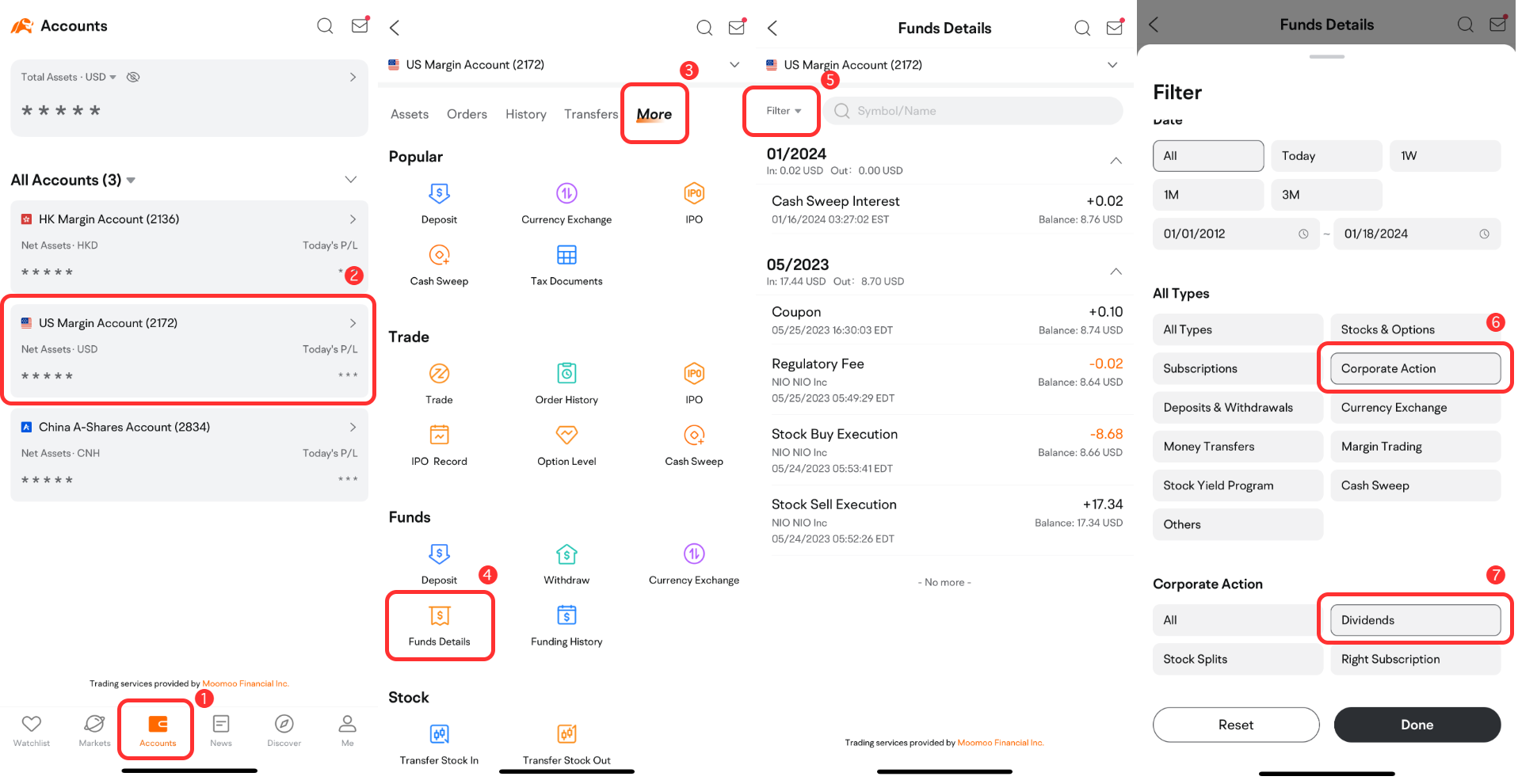
After receiving the refunded TLT dividend tax, you can view the TLT tax refund amount details yourself through the "Corporate Actions" - "Dividend" section under "Fund Details" in the Moomoo App.
Operation path: Tap the "Account" tab> Tap the "More" tab> Tap “Fund Details”> Tap “Filter”> Tap “Corporate Actions” - “Dividend”> Tap the “Dividend” of the relevant stock> “Dividend Payout Details”, as shown below.
>> The above tax-related statements are provided for informational purposes only and are not intended to constitute tax advice.
This presentation is for informational and educational use only and is not a recommendation or endorsement of any particular investment or investment strategy. Investment information provided in this content is general in nature, strictly for illustrative purposes, and may not be appropriate for all investors. Read more
Recommend
How to Trade During High Volatility (VIX > 25)
How to Day Trade Without $25,000
How to Start Day Trading for Beginners

Swing Trading Basics: Strategies & How It Works
How to Practice Day Trading (Day Trading Simulator Guide)
Intraday Trading Basics: How to Start & Benefits
ETF Tax Refund Guide: Understand Your Investment Returns
Stock Trading: A Beginner's Guide
How to Start Investing: A Beginner's Guide
How to Invest in Gold: Learn the Basics
Ethereum ETFs: How To Trade Spot Ethereum ETFs
What Is Copy Trading
What to Consider When Shifting from Paper Trading to Actual Trading
Investing During Earnings Season
How Stock Charting Tools Can Help You
What is Thematic Investing?
What Is Social Trading
6 ETF Concerns That Investors Shouldn’t Overlook
What Is Mirror Trading?
Company Earnings and Earnings per Share What Investors Need to Know
How to Use Paper Trading to Test and Help Refine Your Trading Strategy?
How to Practice Trading Without Risking Money?
Tax Trading Strategies in a Bear Market
What Are Market Orders?
Using Volume Oscillators to Confirm Price Movements
Price-to-Earnings (P/E) Ratio
What Is Working Capital?
What Is SWOT Analysis?
Choosing a Stock Simulator to Practice Stock Trading
What Is Revenue?
What Is A Recession?
Psychological Condition of the Market
What Is Beta in the Stock Market?
On-Balance Volume (OBV): What Is It?
What Is the Money Flow Index (MFI)?
Spot Market: What Is It?
What Does It Mean to Have a Certificate of Deposit (CD)?
What Is a Bellwether?
What Is the Spot Rate?
What Is a Volatility Smile?
What Is Historical Volatility (HV)?
What is Buying on Margin?
What Is Barbell Strategy?
How to Analyse Short Sale Volume in Trading
Trading Stocks Short: Overview
What is short selling?
Will ESG Investing Be The Future Of Investing?
How to Invest in the Hong Kong Stock Exchange - What Investors Should Know
Level 2 Market Data: How Advanced Traders Can Identify Value
Swing Trading vs. Day Trading: What's the Difference?
What Is a Day Order?
What Is the National Best Bid and Offer (NBBO) in US Equities?
What is Short Covering?
How to Find A Stock's Number of Shorted Shares?
What Is Trend Analysis?
TOP 10 Day Trading Strategies for Beginners
VWAP Trading Strategy - Volume Weighted Average Price
What is Maintenance Margin?
What Is Market Depth?
What Is Short Interest?
What Is a Trailing Stop and How to Use It?
Stock Split: Stock Trading Strategies for Advanced Traders
Scalping Stock Trading: How Does It Work?
Trading as a Side Hustle: How to get started
How to Pick Stocks: Invest Smarter with Stock Screener
Is Swing Trading More Profitable than Long-Term Trading?
Trade In A Bear Market With Short Sales
How to Trade During High Volatility (VIX > 25)
How to Day Trade Without $25,000
How to Start Day Trading for Beginners
Swing Trading Basics: Strategies & How It Works
How to Practice Day Trading (Day Trading Simulator Guide)
Intraday Trading Basics: How to Start & Benefits
ETF Tax Refund Guide: Understand Your Investment Returns
Stock Trading: A Beginner's Guide
How to Start Investing: A Beginner's Guide
How to Invest in Gold: Learn the Basics
Ethereum ETFs: How To Trade Spot Ethereum ETFs
What Is Copy Trading
What to Consider When Shifting from Paper Trading to Actual Trading
Investing During Earnings Season
How Stock Charting Tools Can Help You
What is Thematic Investing?
What Is Social Trading
6 ETF Concerns That Investors Shouldn’t Overlook
What Is Mirror Trading?
Company Earnings and Earnings per Share What Investors Need to Know
How to Use Paper Trading to Test and Help Refine Your Trading Strategy?
How to Practice Trading Without Risking Money?
Tax Trading Strategies in a Bear Market
What Are Market Orders?
Using Volume Oscillators to Confirm Price Movements
Price-to-Earnings (P/E) Ratio
What Is Working Capital?
What Is SWOT Analysis?
Choosing a Stock Simulator to Practice Stock Trading
What Is Revenue?
What Is A Recession?
Psychological Condition of the Market
What Is Beta in the Stock Market?
On-Balance Volume (OBV): What Is It?
What Is the Money Flow Index (MFI)?
Spot Market: What Is It?
What Does It Mean to Have a Certificate of Deposit (CD)?
What Is a Bellwether?
What Is the Spot Rate?
What Is a Volatility Smile?
What Is Historical Volatility (HV)?
What is Buying on Margin?
What Is Barbell Strategy?
How to Analyse Short Sale Volume in Trading
Trading Stocks Short: Overview
What is short selling?
Will ESG Investing Be The Future Of Investing?
How to Invest in the Hong Kong Stock Exchange - What Investors Should Know
Level 2 Market Data: How Advanced Traders Can Identify Value
Swing Trading vs. Day Trading: What's the Difference?
What Is a Day Order?
What Is the National Best Bid and Offer (NBBO) in US Equities?
What is Short Covering?
How to Find A Stock's Number of Shorted Shares?
What Is Trend Analysis?
TOP 10 Day Trading Strategies for Beginners
VWAP Trading Strategy - Volume Weighted Average Price
What is Maintenance Margin?
What Is Market Depth?
What Is Short Interest?
What Is a Trailing Stop and How to Use It?
Stock Split: Stock Trading Strategies for Advanced Traders
Scalping Stock Trading: How Does It Work?
Trading as a Side Hustle: How to get started
How to Pick Stocks: Invest Smarter with Stock Screener
Is Swing Trading More Profitable than Long-Term Trading?
Trade In A Bear Market With Short Sales

