
Moomoo Insights
Jul 16 15:38
TSMC Earnings: AI Demand Is Stronger Than the Chip Selloff Suggests
Moomoo Insights
Sep 30 05:04
Live Take | Anthropic’s $518B Compute Bet: Who Wins From the AI Buildout?
The maintenance margin is the lowest amount of equity an investor must have in an investment account after purchase to avoid a margin call. The current maintenance margin is set at 25% of the total value of securities the account holds per the (FINRA) requirements.
● Maintenance margin is the lowest amount of equity an investor must have in an investment account after purchase to avoid a margin call.
● The current maintenance margin is set at 25% of the total value of securities the account holds per the (FINRA) requirements.
● The investor might receive a margin call if the funds in the account are lower than the maintenance margin minimum, which can cause the investor to sell assets to meet the requirement.
Even though FINRA established a minimum of 25% as the maintenance margin, a lot of brokerage firms set their minimum rate at 30% to 40% of the total value of the securities. Other terms for maintenance margin are maintenance requirement and minimum maintenance.
A margin account is an account that offers investors the privilege to borrow money from the brokerage firm to purchase securities like bonds, stocks, and options Margin accounts are subjected to strict rules and regulations. One of these rules is the maintenance margin – which is the lowest amount of equity an investor must have in their margin account minus the amount borrowed from the brokerage firm. This minimum amount must always be in the account.
This means that if a margin account has $10,000 worth of security, at least $2,500 must be in that margin account at all times. If the value of the security rises, the maintenance margin automatically rises e.g. if the value of the security rises to $15,000, the maintenance margin will also rise to $3,750. The brokerage firm will hit the investor with a margin call if the value of the security decreases to less than the maintenance margin.
To mitigate the possibility of experiencing devastating losses for both investors and brokerages, the federal government and other self-regulatory agencies are the ones regulating margin trading. Today, a plethora of regulators of margin trading exist, however, the most crucial ones are the Federal Reserve Board and FINRA.
Before opening a margin account, all investors must sign an agreement with the brokerage firm. This agreement stipulates the minimum or initial margin of at least $ 2000 that the account must have in cash or securities before investors can make trades. This agreement is based on the terms of the Federal Reserve Board and the FINRA.
Following the Federal Reserve Board’s Regulation T (Reg T) an investor can borrow only up to 50% of the security’s price. However, certain brokers have set their deposit limits higher than 50%.
As soon as an investor purchases equity on margin, they must make sure to adhere to FINRA’s requirement of having at least 25% of the total market value of this equity in the account as the maintenance margin.
If the value of the security in the margin account decreases below the minimum percentage, the broker puts in effect a margin call so the investor can deposit more funds into the account to sustain the maintenance margin. If the investor is unable to deposit funds the brokerage firm will opt to sell securities to bring the account back to the maintenance margin. The broker may at times sell the securities in a margin account without the consent of the investor to meet the maintenance margin as that is their right. However, the broker will most likely send the investor an initial warning, and only when the investor fails to pay the margin call after multiple warnings, will the broker take action. A Federal Call is a different kind of margin call that only the federal government can issue.
FINRA regulations, maintenance margins, Reg T, and margin calls are all necessary facets of margin trading because of their potential to allow investors to make substantial profits and enormous losses. These losses can cause huge financial risks; without these regulations, they can destabilize the securities market or even disrupt the financial market.
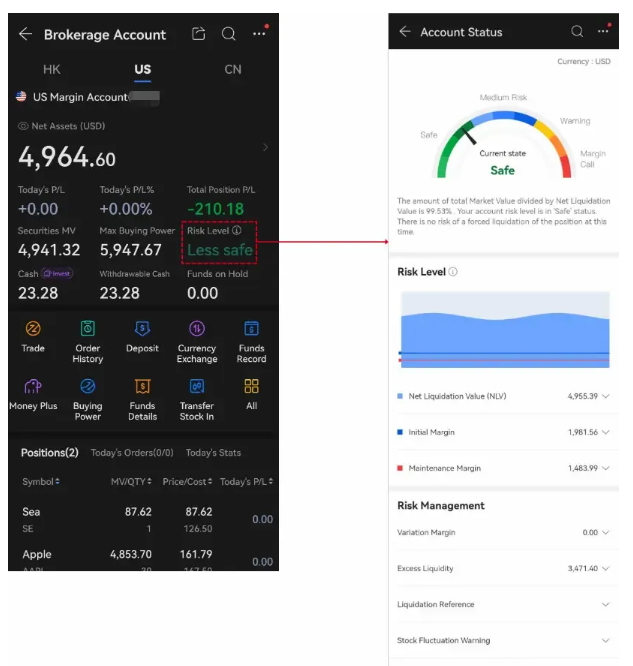
Moomoo app will disclose the risks on each user's account risk details page. The account risk detail page contains your account risks, disposal suggestions, and early warning information on fluctuations of individual stocks. It's easy to find out your risk level of the stock when you margin trade, to be better informed of the dangers in the early stage.
This presentation is for informational and educational use only and is not a recommendation or endorsement of any particular investment or investment strategy. Investment information provided in this content is general in nature, strictly for illustrative purposes, and may not be appropriate for all investors. Read more
Recommend
How to Trade During High Volatility (VIX > 25)
How to Day Trade Without $25,000
How to Start Day Trading for Beginners

Swing Trading Basics: Strategies & How It Works
How to Practice Day Trading (Day Trading Simulator Guide)
Intraday Trading Basics: How to Start & Benefits
ETF Tax Refund Guide: Understand Your Investment Returns
Stock Trading: A Beginner's Guide
How to Start Investing: A Beginner's Guide
How to Invest in Gold: Learn the Basics
Ethereum ETFs: How To Trade Spot Ethereum ETFs
What Is Copy Trading
What to Consider When Shifting from Paper Trading to Actual Trading
Investing During Earnings Season
How Stock Charting Tools Can Help You
What is Thematic Investing?
What Is Social Trading
6 ETF Concerns That Investors Shouldn’t Overlook
What Is Mirror Trading?
Company Earnings and Earnings per Share What Investors Need to Know
How to Use Paper Trading to Test and Help Refine Your Trading Strategy?
How to Practice Trading Without Risking Money?
Tax Trading Strategies in a Bear Market
What Are Market Orders?
Using Volume Oscillators to Confirm Price Movements
Price-to-Earnings (P/E) Ratio
What Is Working Capital?
What Is SWOT Analysis?
Choosing a Stock Simulator to Practice Stock Trading
What Is Revenue?
What Is A Recession?
Psychological Condition of the Market
What Is Beta in the Stock Market?
On-Balance Volume (OBV): What Is It?
What Is the Money Flow Index (MFI)?
Spot Market: What Is It?
What Does It Mean to Have a Certificate of Deposit (CD)?
What Is a Bellwether?
What Is the Spot Rate?
What Is a Volatility Smile?
What Is Historical Volatility (HV)?
What is Buying on Margin?
What Is Barbell Strategy?
How to Analyse Short Sale Volume in Trading
Trading Stocks Short: Overview
What is short selling?
Will ESG Investing Be The Future Of Investing?
How to Invest in the Hong Kong Stock Exchange - What Investors Should Know
Level 2 Market Data: How Advanced Traders Can Identify Value
Swing Trading vs. Day Trading: What's the Difference?
What Is a Day Order?
What Is the National Best Bid and Offer (NBBO) in US Equities?
What is Short Covering?
How to Find A Stock's Number of Shorted Shares?
What Is Trend Analysis?
TOP 10 Day Trading Strategies for Beginners
VWAP Trading Strategy - Volume Weighted Average Price
What is Maintenance Margin?
What Is Market Depth?
What Is Short Interest?
What Is a Trailing Stop and How to Use It?
Stock Split: Stock Trading Strategies for Advanced Traders
Scalping Stock Trading: How Does It Work?
Trading as a Side Hustle: How to get started
How to Pick Stocks: Invest Smarter with Stock Screener
Is Swing Trading More Profitable than Long-Term Trading?
Trade In A Bear Market With Short Sales
How to Trade During High Volatility (VIX > 25)
How to Day Trade Without $25,000
How to Start Day Trading for Beginners
Swing Trading Basics: Strategies & How It Works
How to Practice Day Trading (Day Trading Simulator Guide)
Intraday Trading Basics: How to Start & Benefits
ETF Tax Refund Guide: Understand Your Investment Returns
Stock Trading: A Beginner's Guide
How to Start Investing: A Beginner's Guide
How to Invest in Gold: Learn the Basics
Ethereum ETFs: How To Trade Spot Ethereum ETFs
What Is Copy Trading
What to Consider When Shifting from Paper Trading to Actual Trading
Investing During Earnings Season
How Stock Charting Tools Can Help You
What is Thematic Investing?
What Is Social Trading
6 ETF Concerns That Investors Shouldn’t Overlook
What Is Mirror Trading?
Company Earnings and Earnings per Share What Investors Need to Know
How to Use Paper Trading to Test and Help Refine Your Trading Strategy?
How to Practice Trading Without Risking Money?
Tax Trading Strategies in a Bear Market
What Are Market Orders?
Using Volume Oscillators to Confirm Price Movements
Price-to-Earnings (P/E) Ratio
What Is Working Capital?
What Is SWOT Analysis?
Choosing a Stock Simulator to Practice Stock Trading
What Is Revenue?
What Is A Recession?
Psychological Condition of the Market
What Is Beta in the Stock Market?
On-Balance Volume (OBV): What Is It?
What Is the Money Flow Index (MFI)?
Spot Market: What Is It?
What Does It Mean to Have a Certificate of Deposit (CD)?
What Is a Bellwether?
What Is the Spot Rate?
What Is a Volatility Smile?
What Is Historical Volatility (HV)?
What is Buying on Margin?
What Is Barbell Strategy?
How to Analyse Short Sale Volume in Trading
Trading Stocks Short: Overview
What is short selling?
Will ESG Investing Be The Future Of Investing?
How to Invest in the Hong Kong Stock Exchange - What Investors Should Know
Level 2 Market Data: How Advanced Traders Can Identify Value
Swing Trading vs. Day Trading: What's the Difference?
What Is a Day Order?
What Is the National Best Bid and Offer (NBBO) in US Equities?
What is Short Covering?
How to Find A Stock's Number of Shorted Shares?
What Is Trend Analysis?
TOP 10 Day Trading Strategies for Beginners
VWAP Trading Strategy - Volume Weighted Average Price
What is Maintenance Margin?
What Is Market Depth?
What Is Short Interest?
What Is a Trailing Stop and How to Use It?
Stock Split: Stock Trading Strategies for Advanced Traders
Scalping Stock Trading: How Does It Work?
Trading as a Side Hustle: How to get started
How to Pick Stocks: Invest Smarter with Stock Screener
Is Swing Trading More Profitable than Long-Term Trading?
Trade In A Bear Market With Short Sales

