
Moomoo Insights
Jul 16 15:38
TSMC Earnings: AI Demand Is Stronger Than the Chip Selloff Suggests
Moomoo Insights
Sep 30 05:04
Live Take | Anthropic’s $518B Compute Bet: Who Wins From the AI Buildout?
Are you waking up early to set up your pre-market positions or sneaking a look at your P&L during the lunch break? You’re not alone. Retail or individual investors drove 24% of all equity trades in 2021. When it comes to finding the best routine for trading as a side hustle and creating a strategy that fits your goals, there are a few steps you can follow.
Not having a plan or not following a set plan is the single biggest reason traders fail. Without a plan, you can fall victim to emotional trading and other ill-advised approaches when unforeseen market shifts arise. You also put yourself into the position of relying on luck and chance to see any profits.
Having a strong plan helps you to decide your course of action and avoid reactionary responses. A good plan addresses four specific questions:
1. Are you a value investor, a technical trader, or somewhere in between?
2. Do you have enough time to research and identify entry and exit points for each stock?
3. Will you set aside a specific budget for trading every month? This minimizes emotional trading.
4. How will you record a trade and what you learned from it?
To improve your potential for seeing profits, you should develop a strong plan as quickly as you can when you are trading as a side hustle.
Practice makes perfect
One of the best ways to try out your trading strategies and put your plan to the test without risking any of your own capital is with paper trading.

Look for an app with a robust paper trading feature that allows you to simulate buying and selling without risking real money. Your paper trading account should mimic the size of your real portfolio so that you can practice responding to real time price and volume movements and market news. Moomoo offers not just US stock paper trading, but international stock and options paper trading as well, so you can practice new trading strategies at all levels of trading.
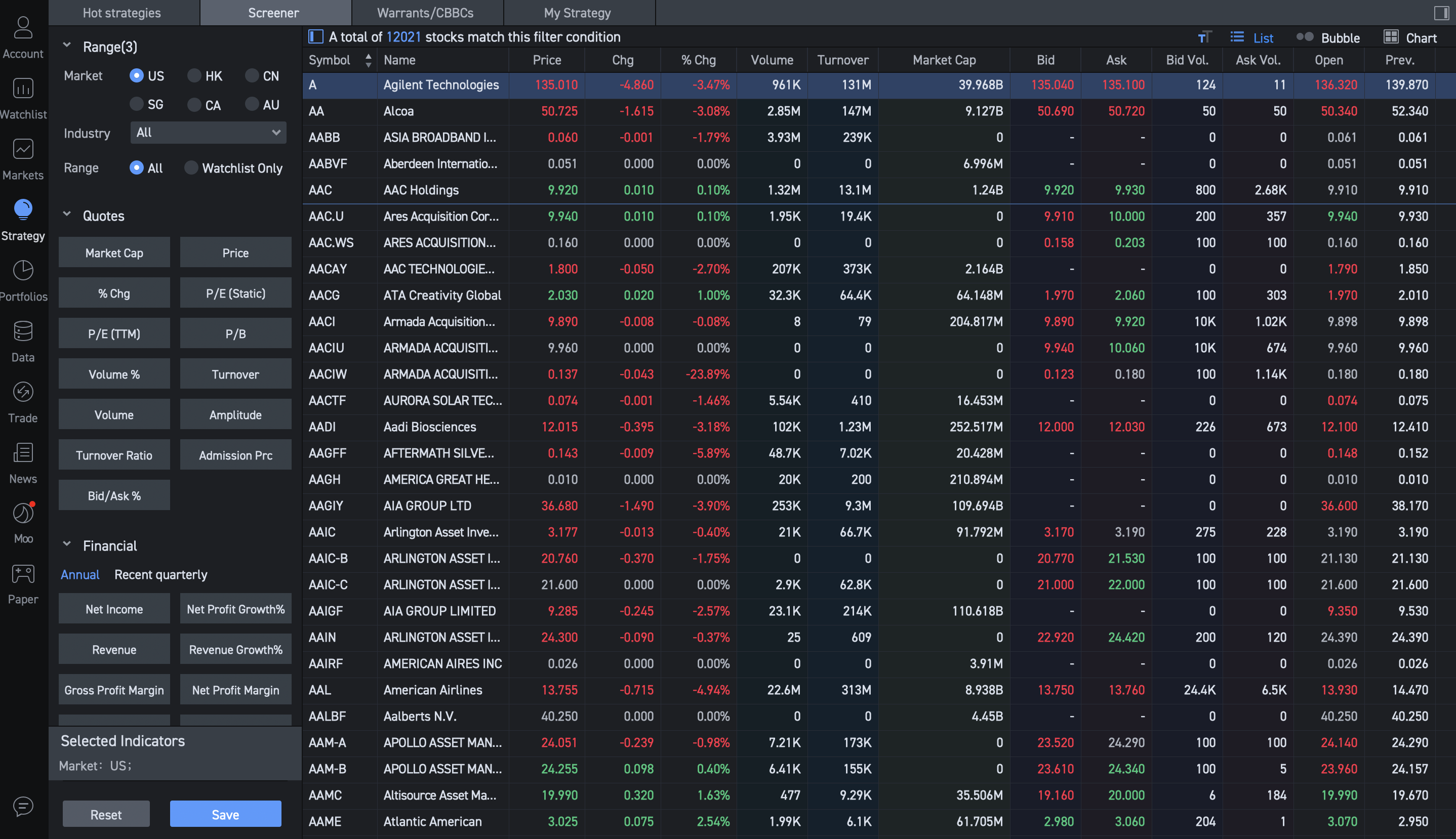
The only way to effectively gauge when you should enter or exit the market is with data. And if you want detailed insight into price action, real-time and in-depth data is what you need. Understanding how the price has historically behaved and the current trends they are exhibiting can help you to make informed decisions based on analysis and not gut reactions or lagging information.
Images provided are not current and any securities are shown for illustrative purposes only.
When you have this data, there are a number of technical indicators and tools you can use to determine if the price is right to enter or exit a stock. Some of these include moving averages, gold crosses, moving average crossover divergence (MACD), relative strength index (RSI), Bollinger Bands, and more.
If you can’t afford to lose it, you can’t afford to trade with it. Plus, if you don't have it, don't trade it. 80% of Gen Z traders took on debt to trade in 2021, and this is a dangerous situation to put yourself in financially. There are never guarantees for profits when it comes to trading. If you are using necessary money or money that you have borrowed, you may never see it again and can put yourself into serious straits.
When you first begin trading, start small with discretionary money that already exists in your budget. As you practice your plan and start to see consistent returns, you can begin to trade more money because you have built your capital to work with. Make sure that for any amount that you trade, you can cover any and all losses with funds that exist outside your monthly living expense budget.
When it comes to trading, it's important to be aware of what is happening in the market. Reputable news sources can help you stay informed on major events that may impact specific stocks or the market as a whole. And a trading community with like-minded traders, such as the Moo community, can help you stay abreast of stock developments. However, it’s also important to do your own research.
You should always analyze a stock for its current performance and historical trends, how the stock fits into your strategy, and check any emotional reactions when making trading decisions. Keep your perspective when hearing news, especially if you are one of the last to hear and will be making decisions behind the trend.
Now that you have some basics down, are you ready to start trading? Download the moomoo app today to start building your strategy and taking control of your portfolio.
This presentation is for informational and educational use only and is not a recommendation or endorsement of any particular investment or investment strategy. Investment information provided in this content is general in nature, strictly for illustrative purposes, and may not be appropriate for all investors. Read more
Recommend
How to Trade During High Volatility (VIX > 25)
How to Day Trade Without $25,000
How to Start Day Trading for Beginners

Swing Trading Basics: Strategies & How It Works
How to Practice Day Trading (Day Trading Simulator Guide)
Intraday Trading Basics: How to Start & Benefits
ETF Tax Refund Guide: Understand Your Investment Returns
Stock Trading: A Beginner's Guide
How to Start Investing: A Beginner's Guide
How to Invest in Gold: Learn the Basics
Ethereum ETFs: How To Trade Spot Ethereum ETFs
What Is Copy Trading
What to Consider When Shifting from Paper Trading to Actual Trading
Investing During Earnings Season
How Stock Charting Tools Can Help You
What is Thematic Investing?
What Is Social Trading
6 ETF Concerns That Investors Shouldn’t Overlook
What Is Mirror Trading?
Company Earnings and Earnings per Share What Investors Need to Know
How to Use Paper Trading to Test and Help Refine Your Trading Strategy?
How to Practice Trading Without Risking Money?
Tax Trading Strategies in a Bear Market
What Are Market Orders?
Using Volume Oscillators to Confirm Price Movements
Price-to-Earnings (P/E) Ratio
What Is Working Capital?
What Is SWOT Analysis?
Choosing a Stock Simulator to Practice Stock Trading
What Is Revenue?
What Is A Recession?
Psychological Condition of the Market
What Is Beta in the Stock Market?
On-Balance Volume (OBV): What Is It?
What Is the Money Flow Index (MFI)?
Spot Market: What Is It?
What Does It Mean to Have a Certificate of Deposit (CD)?
What Is a Bellwether?
What Is the Spot Rate?
What Is a Volatility Smile?
What Is Historical Volatility (HV)?
What is Buying on Margin?
What Is Barbell Strategy?
How to Analyse Short Sale Volume in Trading
Trading Stocks Short: Overview
What is short selling?
Will ESG Investing Be The Future Of Investing?
How to Invest in the Hong Kong Stock Exchange - What Investors Should Know
Level 2 Market Data: How Advanced Traders Can Identify Value
Swing Trading vs. Day Trading: What's the Difference?
What Is a Day Order?
What Is the National Best Bid and Offer (NBBO) in US Equities?
What is Short Covering?
How to Find A Stock's Number of Shorted Shares?
What Is Trend Analysis?
TOP 10 Day Trading Strategies for Beginners
VWAP Trading Strategy - Volume Weighted Average Price
What is Maintenance Margin?
What Is Market Depth?
What Is Short Interest?
What Is a Trailing Stop and How to Use It?
Stock Split: Stock Trading Strategies for Advanced Traders
Scalping Stock Trading: How Does It Work?
Trading as a Side Hustle: How to get started
How to Pick Stocks: Invest Smarter with Stock Screener
Is Swing Trading More Profitable than Long-Term Trading?
Trade In A Bear Market With Short Sales
How to Trade During High Volatility (VIX > 25)
How to Day Trade Without $25,000
How to Start Day Trading for Beginners
Swing Trading Basics: Strategies & How It Works
How to Practice Day Trading (Day Trading Simulator Guide)
Intraday Trading Basics: How to Start & Benefits
ETF Tax Refund Guide: Understand Your Investment Returns
Stock Trading: A Beginner's Guide
How to Start Investing: A Beginner's Guide
How to Invest in Gold: Learn the Basics
Ethereum ETFs: How To Trade Spot Ethereum ETFs
What Is Copy Trading
What to Consider When Shifting from Paper Trading to Actual Trading
Investing During Earnings Season
How Stock Charting Tools Can Help You
What is Thematic Investing?
What Is Social Trading
6 ETF Concerns That Investors Shouldn’t Overlook
What Is Mirror Trading?
Company Earnings and Earnings per Share What Investors Need to Know
How to Use Paper Trading to Test and Help Refine Your Trading Strategy?
How to Practice Trading Without Risking Money?
Tax Trading Strategies in a Bear Market
What Are Market Orders?
Using Volume Oscillators to Confirm Price Movements
Price-to-Earnings (P/E) Ratio
What Is Working Capital?
What Is SWOT Analysis?
Choosing a Stock Simulator to Practice Stock Trading
What Is Revenue?
What Is A Recession?
Psychological Condition of the Market
What Is Beta in the Stock Market?
On-Balance Volume (OBV): What Is It?
What Is the Money Flow Index (MFI)?
Spot Market: What Is It?
What Does It Mean to Have a Certificate of Deposit (CD)?
What Is a Bellwether?
What Is the Spot Rate?
What Is a Volatility Smile?
What Is Historical Volatility (HV)?
What is Buying on Margin?
What Is Barbell Strategy?
How to Analyse Short Sale Volume in Trading
Trading Stocks Short: Overview
What is short selling?
Will ESG Investing Be The Future Of Investing?
How to Invest in the Hong Kong Stock Exchange - What Investors Should Know
Level 2 Market Data: How Advanced Traders Can Identify Value
Swing Trading vs. Day Trading: What's the Difference?
What Is a Day Order?
What Is the National Best Bid and Offer (NBBO) in US Equities?
What is Short Covering?
How to Find A Stock's Number of Shorted Shares?
What Is Trend Analysis?
TOP 10 Day Trading Strategies for Beginners
VWAP Trading Strategy - Volume Weighted Average Price
What is Maintenance Margin?
What Is Market Depth?
What Is Short Interest?
What Is a Trailing Stop and How to Use It?
Stock Split: Stock Trading Strategies for Advanced Traders
Scalping Stock Trading: How Does It Work?
Trading as a Side Hustle: How to get started
How to Pick Stocks: Invest Smarter with Stock Screener
Is Swing Trading More Profitable than Long-Term Trading?
Trade In A Bear Market With Short Sales

