
Moomoo Insights
Jul 16 15:38
TSMC Earnings: AI Demand Is Stronger Than the Chip Selloff Suggests
Moomoo Insights
Sep 30 05:04
Live Take | Anthropic’s $518B Compute Bet: Who Wins From the AI Buildout?
Most traders notice VIX above 25 the hard way — after a "normal" position size eats a double-normal range in twenty minutes.
Here's what you walk away with: a simple operating system for vol trading in high-volatility U.S. sessions — size, timing, exits, and alerts that don't depend on perfect timing.
The VIX is a fear gauge, not a crystal ball. It does not say "short everything." It says expected swings are bigger.
When VIX sits above 25, three things tend to show up:
Ranges expand — the same ticker can travel farther than your usual stop width
Reversals get sharper — breakouts fail more often in the first hour
Slippage and emotion compound — slow decisions get expensive fast
I've watched solid setups turn into account damage solely because size stayed the same while volatility flipped regimes. The fix is boring. And it works.
If you remember one rule for trading volatility, make it this: smaller size, wider structure-based stops.
A practical starting point many discretionary traders use:
VIX> 25 → roughly half your normal share/contract size
VIX> 35 → closer to one-third, or fewer trades altogether
Why half? Because if average true range doubles, keeping the same size doubles dollar risk. Cutting size restores the risk you thought you were taking.
Stop placement matters just as much. A $0.40 stop that worked in quiet markets can sit inside noise when VIX is elevated. Put invalidation beyond a real level — prior day high/low, VWAP, a clear swing — then back into position size so max loss still fits your risk budget (often ~0.5–1% of equity on a high-VIX day).
Cash is a position. Use it.
Smaller size only helps if you still exit on plan. When VIX spikes past 25, are you still babysitting every tick — hoping you won't freeze, second-guess, or glance away right as the move reverses? Manual exits fall apart when ranges double and turns land in seconds. Late clicks become costly mistakes.
So set both sides at entry, while you're still calm. On moomoo, you can attach Profit Taker, Stop Loss, or Bracket orders in Pro mode when you open the trade — take-profit limit and stop-loss trigger together. After the parent order fills, the platform watches those levels for you; whichever side hits first can close the position and cancel the other.
Say you buy 100 shares near $50 with a profit taker at $54 and a stop at $47.50. A volatility dump tags $47.50 while you're in a meeting — the predefined exit can fire without panic clicking. If price runs to $54 first, the profit side works the other way. Worth opening a moomoo account and wiring a bracket into your next eligible trade before the next VIX spike, so exits aren't left to adrenaline.
One caveat: stop-loss triggers generally apply in regular U.S. market hours and can fill as market orders once triggered, so gap risk and slippage still exist. Predetermined exits improve discipline — they don't erase volatility.
The first 30–60 minutes on a VIX> 25 day can look like opportunity. Often it's just noise with a headline soundtrack.
A cleaner approach:
Mark overnight high/low and key premarket levels before the open
Let the first impulse settle
Trade pullbacks in the emerging direction at VWAP or prior extremes — not every fake breakout
Cap concurrent positions (two quality names beat six half-watched ones)
Trend days show up more often in elevated-vol regimes. Fading every spike because "it has to reverse" is how accounts get chopped. If the tape is one-way and your plan was mean reversion, sit on your hands.
Set a hard daily loss limit before the first click. Hit it → done. No "one more to get flat."
High VIX makes outright directional options pricey. That doesn't kill options as a tool — it changes how you build them.
Defined-risk multi-leg structures map max loss before you submit. Verticals for a directional lean with capped risk. Straddles/strangles when you expect a wide move but hate calling the side. Iron condors when you think the panic premium is overdone — knowing assignment and margin rules still apply.
Speed matters here. When implied volatility is already elevated, are you still stacking straddles, verticals, or iron condors leg by leg — watching the second fill drift while the first is already on? That lag gets expensive on VIX> 25 days.
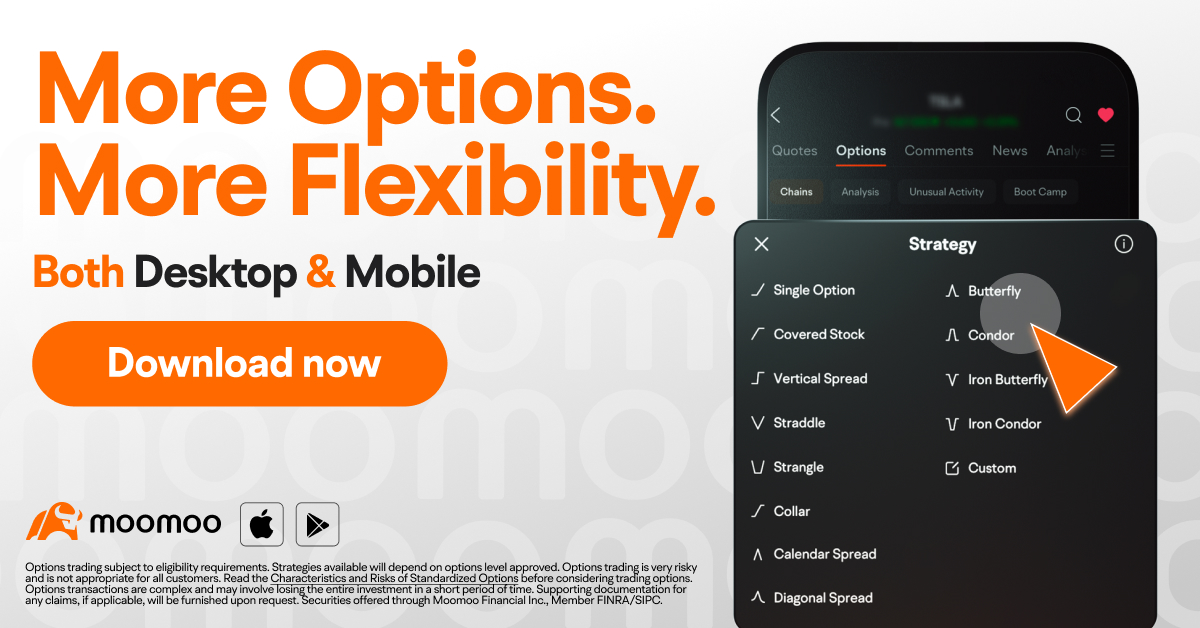
Build the whole structure in one go instead. In moomoo, open a stock's Options> Chains, pick a preset multi-leg strategy (vertical, straddle, strangle, iron condor, butterfly, and more), check the P/L profile and break-evens, then tap Trade to send typically 2–4 legs as a package — custom legs if the templates aren't enough. An index ETF swinging hard with VIX near 28 and no clean trend? Select a long straddle, confirm max loss and breakevens, submit both legs together, and see the risk envelope before the fill — not after. Download the moomoo app, enable options trading if you're eligible, and rehearse that one-click flow on liquid underlyings before the next surge.
Options involve substantial risk and are not suitable for every investor. Size for the worst case on the risk graph, not the best case in the meme screenshot.
High-vol sessions punish traders who need the chart glued to their face all day. Levels get tagged and rejected in minutes. Miss the zone, miss the setup.
When VIX holds above 25, can you really watch every support, resistance, and re-entry level without blinking — or do late-day swings and meeting interruptions quietly erase your plan? Missed levels turn into chased entries and emotional exits.
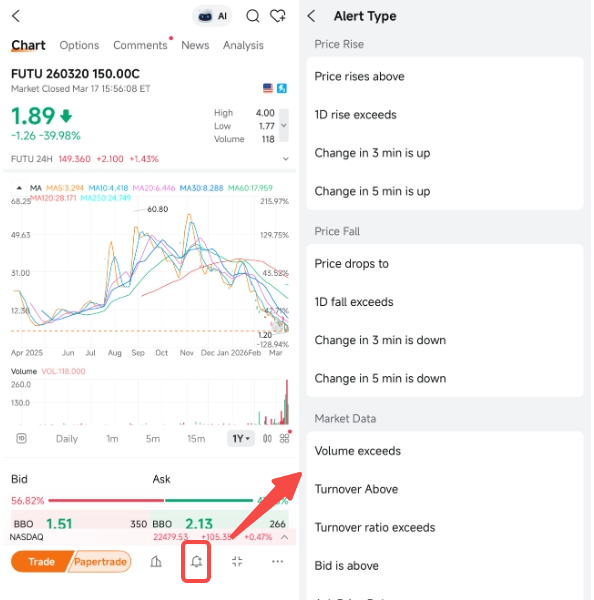
Mark the levels that actually matter before the open, then let the platform ping you when price gets there. moomoo Price Alerts notify you via the app (and email where available) at your target, so you're not refreshing quotes every thirty seconds. Pair them with invalidation, scale-in zones, and "only trade if tagged" triggers. Mark $178 support on a high-beta name, set an alert at $178.50; when fear selling dumps into the zone, you get the notification and decide — scale in per plan, tighten risk, or stand aside — without staring at the tape all afternoon. Register on moomoo, load those alerts on your watchlist before the bell, and treat the pings as playbook triggers — not as excuses to overtrade every notification.
Run this before the first order:
Is VIX> 25 (or> 35)? Adjust size accordingly
Is the stop beyond structure — not inside noise?
Is dollar risk capped, and is a daily max loss written down?
Are take-profit and stop-loss attached before you walk away from the screen?
If using options, is max loss visible and legs submitted as one structure?
Are price alerts live on the levels that actually matter?
High volatility rewards preparation more than prediction. The traders who survive VIX spikes aren't the ones calling every turn — they're the ones who already decided size, invalidation, and alerts before the candle got ugly.
What to do now: Cut your planned size for the next elevated-VIX session, open or log into moomoo, attach a bracket on a liquid name you're already researching, and set two price alerts on levels you'd actually trade. Practice the workflow on paper or small size first if advanced orders or multi-leg options are new to you.
Trading stocks and options involves risk of loss and is not appropriate for everyone. This article is for educational purposes and is not investment advice.
Should I stop trading when VIX is over 25?
Not necessarily. Many active traders still trade when VIX is elevated, but they tighten risk rules: smaller size, fewer concurrent positions, and a hard daily loss limit. If VIX pushes much higher and you feel rushed or emotional, standing aside can be the correct trade. Capital protection beats forcing activity.
How should I set stop losses in high volatility?
In high-volatility regimes, tight fixed-dollar stops often get hit by normal noise. Place stops beyond invalidation levels—prior swing highs/lows, VWAP, or key support/resistance—and reduce share size so dollar risk stays constant. Pairing a predefined take-profit and stop-loss (for example via a bracket order) helps remove panic decision-making mid-move.
Are options better than stocks when VIX is high?
Options can express a volatility view, but premiums are more expensive when VIX is elevated. Defined-risk multi-leg structures (verticals, iron condors, straddles) can help map max loss before entry. Speed of execution matters: building legs one at a time can leave you partially filled while prices move. Always size for worst-case loss, not best-case payoff.
This presentation is for informational and educational use only and is not a recommendation or endorsement of any particular investment or investment strategy. Investment information provided in this content is general in nature, strictly for illustrative purposes, and may not be appropriate for all investors. Read more
Recommend
How to Trade During High Volatility (VIX > 25)
How to Day Trade Without $25,000
How to Start Day Trading for Beginners

Swing Trading Basics: Strategies & How It Works
How to Practice Day Trading (Day Trading Simulator Guide)
Intraday Trading Basics: How to Start & Benefits
ETF Tax Refund Guide: Understand Your Investment Returns
Stock Trading: A Beginner's Guide
How to Start Investing: A Beginner's Guide
How to Invest in Gold: Learn the Basics
Ethereum ETFs: How To Trade Spot Ethereum ETFs
What Is Copy Trading
What to Consider When Shifting from Paper Trading to Actual Trading
Investing During Earnings Season
How Stock Charting Tools Can Help You
What is Thematic Investing?
What Is Social Trading
6 ETF Concerns That Investors Shouldn’t Overlook
What Is Mirror Trading?
Company Earnings and Earnings per Share What Investors Need to Know
How to Use Paper Trading to Test and Help Refine Your Trading Strategy?
How to Practice Trading Without Risking Money?
Tax Trading Strategies in a Bear Market
What Are Market Orders?
Using Volume Oscillators to Confirm Price Movements
Price-to-Earnings (P/E) Ratio
What Is Working Capital?
What Is SWOT Analysis?
Choosing a Stock Simulator to Practice Stock Trading
What Is Revenue?
What Is A Recession?
Psychological Condition of the Market
What Is Beta in the Stock Market?
On-Balance Volume (OBV): What Is It?
What Is the Money Flow Index (MFI)?
Spot Market: What Is It?
What Does It Mean to Have a Certificate of Deposit (CD)?
What Is a Bellwether?
What Is the Spot Rate?
What Is a Volatility Smile?
What Is Historical Volatility (HV)?
What is Buying on Margin?
What Is Barbell Strategy?
How to Analyse Short Sale Volume in Trading
Trading Stocks Short: Overview
What is short selling?
Will ESG Investing Be The Future Of Investing?
How to Invest in the Hong Kong Stock Exchange - What Investors Should Know
Level 2 Market Data: How Advanced Traders Can Identify Value
Swing Trading vs. Day Trading: What's the Difference?
What Is a Day Order?
What Is the National Best Bid and Offer (NBBO) in US Equities?
What is Short Covering?
How to Find A Stock's Number of Shorted Shares?
What Is Trend Analysis?
TOP 10 Day Trading Strategies for Beginners
VWAP Trading Strategy - Volume Weighted Average Price
What is Maintenance Margin?
What Is Market Depth?
What Is Short Interest?
What Is a Trailing Stop and How to Use It?
Stock Split: Stock Trading Strategies for Advanced Traders
Scalping Stock Trading: How Does It Work?
Trading as a Side Hustle: How to get started
How to Pick Stocks: Invest Smarter with Stock Screener
Is Swing Trading More Profitable than Long-Term Trading?
Trade In A Bear Market With Short Sales
How to Trade During High Volatility (VIX > 25)
How to Day Trade Without $25,000
How to Start Day Trading for Beginners
Swing Trading Basics: Strategies & How It Works
How to Practice Day Trading (Day Trading Simulator Guide)
Intraday Trading Basics: How to Start & Benefits
ETF Tax Refund Guide: Understand Your Investment Returns
Stock Trading: A Beginner's Guide
How to Start Investing: A Beginner's Guide
How to Invest in Gold: Learn the Basics
Ethereum ETFs: How To Trade Spot Ethereum ETFs
What Is Copy Trading
What to Consider When Shifting from Paper Trading to Actual Trading
Investing During Earnings Season
How Stock Charting Tools Can Help You
What is Thematic Investing?
What Is Social Trading
6 ETF Concerns That Investors Shouldn’t Overlook
What Is Mirror Trading?
Company Earnings and Earnings per Share What Investors Need to Know
How to Use Paper Trading to Test and Help Refine Your Trading Strategy?
How to Practice Trading Without Risking Money?
Tax Trading Strategies in a Bear Market
What Are Market Orders?
Using Volume Oscillators to Confirm Price Movements
Price-to-Earnings (P/E) Ratio
What Is Working Capital?
What Is SWOT Analysis?
Choosing a Stock Simulator to Practice Stock Trading
What Is Revenue?
What Is A Recession?
Psychological Condition of the Market
What Is Beta in the Stock Market?
On-Balance Volume (OBV): What Is It?
What Is the Money Flow Index (MFI)?
Spot Market: What Is It?
What Does It Mean to Have a Certificate of Deposit (CD)?
What Is a Bellwether?
What Is the Spot Rate?
What Is a Volatility Smile?
What Is Historical Volatility (HV)?
What is Buying on Margin?
What Is Barbell Strategy?
How to Analyse Short Sale Volume in Trading
Trading Stocks Short: Overview
What is short selling?
Will ESG Investing Be The Future Of Investing?
How to Invest in the Hong Kong Stock Exchange - What Investors Should Know
Level 2 Market Data: How Advanced Traders Can Identify Value
Swing Trading vs. Day Trading: What's the Difference?
What Is a Day Order?
What Is the National Best Bid and Offer (NBBO) in US Equities?
What is Short Covering?
How to Find A Stock's Number of Shorted Shares?
What Is Trend Analysis?
TOP 10 Day Trading Strategies for Beginners
VWAP Trading Strategy - Volume Weighted Average Price
What is Maintenance Margin?
What Is Market Depth?
What Is Short Interest?
What Is a Trailing Stop and How to Use It?
Stock Split: Stock Trading Strategies for Advanced Traders
Scalping Stock Trading: How Does It Work?
Trading as a Side Hustle: How to get started
How to Pick Stocks: Invest Smarter with Stock Screener
Is Swing Trading More Profitable than Long-Term Trading?
Trade In A Bear Market With Short Sales

