
Moomoo Insights
Jul 16 15:38
TSMC Earnings: AI Demand Is Stronger Than the Chip Selloff Suggests
Moomoo Insights
Sep 30 05:04
Live Take | Anthropic’s $518B Compute Bet: Who Wins From the AI Buildout?
The term "net working capital" (NWC) refers to the difference between a company's assets and its current obligations. This includes cash on hand, receivables from customers who haven't yet paid, and inventories of raw materials and completed items. It's a measurement that's often used to assess how healthy an organization will be in the near future.
In order to evaluate a company's working capital, the balance sheet's various assets and liabilities are considered. A corporation may better understand the kind of liquidity it will have in the not-too-distant future if it restricts its focus to only its current obligations and compensates for those obligations with its most liquid assets.
In addition, working capital is a measurement of an organization's operational efficiency and short-term financial health. If a firm has significant positive net working capital (NWC), then the company may have the ability to invest in growth and expand as a whole. Suppose a firm's current obligations are more than its current assets. In that case, the company could have difficulty expanding or paying back its debtors. It's even possible that the company will fail.
In most cases, a company's total quantity of working capital will be determined by the industry in which it operates. Some industries with longer production cycles may have greater requirements for cash flow since they do not have the rapid inventory turnover necessary to produce cash on demand. This may cause their working capital demands to be higher. Conversely, retail enterprises that deal with thousands of clients daily are typically able to acquire short-term financing considerably more quickly than other businesses and have lesser needs for their working capital.
While a business may not need every component of working capital listed below, it may be found on the balance sheet. For instance, a service firm that does not have goods on hand would exclude the cost of inventory entirely from its calculation of the company's working capital.
Included in the current assets are cash, accounts receivable, inventories, and any other assets anticipated to be liquidated or converted into cash in less than one year. Accounts payable, salaries, and tax payments due within the next year are all examples of current liabilities. Current liabilities also include the percentage of long-term debt due within the next 12 months.
The advantages to the company's finances that are considered to be current assets are those that are anticipated to be received within the following year. When determining the firm's cash flow, it is necessary to consider the hypothetical scenario in which the company converts all of the goods listed below into cash. The company has a claim or the ability to receive financial gain.
● Cash and cash equivalents: The total amount of cash that is now available to the firm. This consists of low-risk investments with short-term horizons, such as those offered by money market accounts and other forms of foreign currency.
● Inventory: Everything that hasn't been sold yet is being kept in storage. This comprises completed items that have not yet been sold, as well as raw materials that were acquired to make something else. Inventory that has been partly constructed but is still being worked on is also included.
● Accounts Receivable: Everything needs to be paid in cash for stock sold on credit. This should be placed after any provision that may be made for questionable payments.
● Notes Receivable: Each and every claim to monetary compensation for other agreements, usually as agreed upon in a signed document.
● Prepaid Expenses: The amount of the costs that have been paid in advance. Even if it could be tough to sell them in the event that cash is needed, they still have some worth in the near term.
● Others: Any other asset that has a short term. One example is the possibility that some businesses would acknowledge the existence of a short-term deferred tax asset, which will reduce a future obligation.
A company's debts due or could become due within the next year are considered current liabilities. The primary objective of analyzing a company's working capital is to determine whether or not it will be able to pay off all of these obligations using the short-term assets it currently has in its inventory.
● Accounts Payable: All bills from outside parties for services, goods, rent, utilities, property taxes, and other operational costs have not been paid. Since the standard payment period for bills is thirty days after their issuance, almost all invoices are included here.
● Wages Payable: Completion of all overdue employee salary and compensation payments. This may only accumulate up to one month's supply of earnings, depending on the date of the payment at the employer (if the company only issues one paycheck per month). Aside from that, the nature of these liabilities is that they are relatively short-term.
● Current Portion of Long-Term Debt: Any and all payments due during the next several months are tied to long-term debt. Imagine that a corporation borrows money to fund the construction of a warehouse and has a 10-year loan with monthly payments. The payments that are due during the next 12 months are classified as short-term debt, while the payments that are due within the next nine years are classified as long-term debt. Only the 12 months are considered when determining working capital.
● Accrued Tax Payable: Any commitments to governmental entities. These are likely accruals for tax liabilities related to filings that aren't due for many months. On the other hand, the nature of these accumulations is almost invariably short-term (due within the next twelve months).
● Dividend Payable: All permitted dividend payments to stockholders. A firm has the option of canceling future dividend payments. However, they are still obligated to pay out any dividends that have already been approved.
● Unearned Revenue: All of the money that was received prior to the work being finished. If the company cannot finish the job as agreed, they may be required to give the client some of their money back.
The level of a company's working capital may provide a wealth of information on the short-term health of the business. Nevertheless, the method has a few drawbacks that might result in the measure producing deceptive results on occasion.
To begin, the amount of working capital is constantly in flux. If a business is running at maximum capacity, it is quite probable that a number of its current asset and total liabilities categories will shift, if not the majority of them. Therefore, by the time the financial information is aggregated, it is probable that the company's working capital situation has already altered. This is because of the previous point.
The concept of working capital does not take into consideration the many kinds of underlying accounts. Consider the case of a corporation whose present assets consist entirely of receivables from other businesses. Even if the firm has a positive working capital, its long-term viability is contingent not only on whether or not its customers will pay but also on whether or not the company can get short-term cash.
To continue along this line of thought, the value of assets might rapidly decrease. If a significant client declares bankruptcy, any outstanding accounts receivable value may decrease. The inventory might become obsolete or be stolen at any time. Theft is another possibility with currency in its physical form. Because of this, a company's working capital may shift merely because of factors outside its control.
Also, it is possible for agreements to be overlooked or for invoices to be handled erroneously in businesses undergoing mergers or operating at extremely high speeds. The availability of working capital is highly dependent on accurate accounting methods, particularly those that pertain to the maintenance of internal control and the protection of assets.
Most significant new ventures, such as expanding production or entering new markets, need an initial financial investment. This has an adverse effect on the immediate flow of cash. Therefore, businesses making inefficient use of their working capital or needing more funding upfront might improve their cash flow by exerting pressure on their customers and suppliers.
On the other hand, having a large amount of working capital is not always a positive thing in every situation. It might be an indication that the company has an excessive quantity of supply or that it is not investing any of its spare cash. Alternately, it might suggest that a firm is wasting its resources rather than taking advantage of low-interest or even no-interest loans; in other words, the corporation is wasting money rather than reducing its overall cost of capital.
Another related kind of financial indicator is the fast ratio, which compares a company's current assets to its current liabilities. In addition to including a variety of accounts in its calculation, it also expresses the connection using a percentage rather than a monetary value.
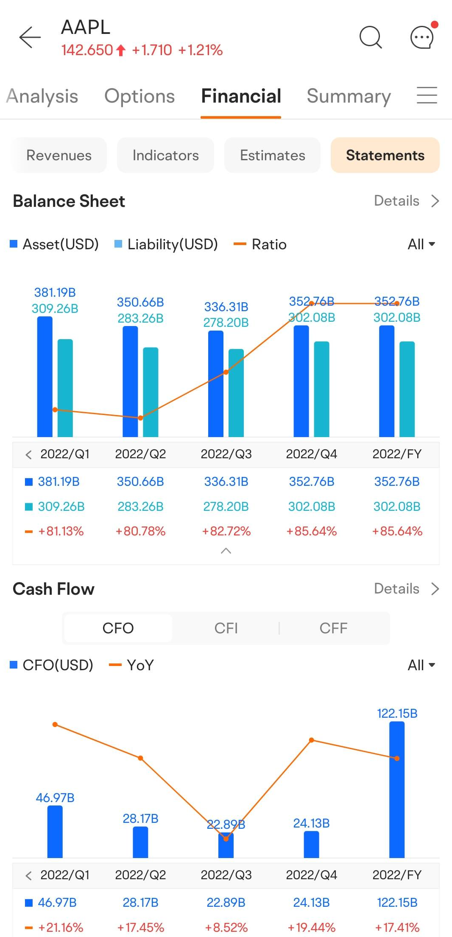
Moomoo trading app provides investors with visualized financial information, like balance sheet, cash flow, and more to help understand and evaluate individual stocks. Sign up and download the moomoo app now to get comprehensive financial information for individual stocks today!
This presentation is for informational and educational use only and is not a recommendation or endorsement of any particular investment or investment strategy. Investment information provided in this content is general in nature, strictly for illustrative purposes, and may not be appropriate for all investors. Read more
Recommend
How to Trade During High Volatility (VIX > 25)
How to Day Trade Without $25,000
How to Start Day Trading for Beginners

Swing Trading Basics: Strategies & How It Works
How to Practice Day Trading (Day Trading Simulator Guide)
Intraday Trading Basics: How to Start & Benefits
ETF Tax Refund Guide: Understand Your Investment Returns
Stock Trading: A Beginner's Guide
How to Start Investing: A Beginner's Guide
How to Invest in Gold: Learn the Basics
Ethereum ETFs: How To Trade Spot Ethereum ETFs
What Is Copy Trading
What to Consider When Shifting from Paper Trading to Actual Trading
Investing During Earnings Season
How Stock Charting Tools Can Help You
What is Thematic Investing?
What Is Social Trading
6 ETF Concerns That Investors Shouldn’t Overlook
What Is Mirror Trading?
Company Earnings and Earnings per Share What Investors Need to Know
How to Use Paper Trading to Test and Help Refine Your Trading Strategy?
How to Practice Trading Without Risking Money?
Tax Trading Strategies in a Bear Market
What Are Market Orders?
Using Volume Oscillators to Confirm Price Movements
Price-to-Earnings (P/E) Ratio
What Is Working Capital?
What Is SWOT Analysis?
Choosing a Stock Simulator to Practice Stock Trading
What Is Revenue?
What Is A Recession?
Psychological Condition of the Market
What Is Beta in the Stock Market?
On-Balance Volume (OBV): What Is It?
What Is the Money Flow Index (MFI)?
Spot Market: What Is It?
What Does It Mean to Have a Certificate of Deposit (CD)?
What Is a Bellwether?
What Is the Spot Rate?
What Is a Volatility Smile?
What Is Historical Volatility (HV)?
What is Buying on Margin?
What Is Barbell Strategy?
How to Analyse Short Sale Volume in Trading
Trading Stocks Short: Overview
What is short selling?
Will ESG Investing Be The Future Of Investing?
How to Invest in the Hong Kong Stock Exchange - What Investors Should Know
Level 2 Market Data: How Advanced Traders Can Identify Value
Swing Trading vs. Day Trading: What's the Difference?
What Is a Day Order?
What Is the National Best Bid and Offer (NBBO) in US Equities?
What is Short Covering?
How to Find A Stock's Number of Shorted Shares?
What Is Trend Analysis?
TOP 10 Day Trading Strategies for Beginners
VWAP Trading Strategy - Volume Weighted Average Price
What is Maintenance Margin?
What Is Market Depth?
What Is Short Interest?
What Is a Trailing Stop and How to Use It?
Stock Split: Stock Trading Strategies for Advanced Traders
Scalping Stock Trading: How Does It Work?
Trading as a Side Hustle: How to get started
How to Pick Stocks: Invest Smarter with Stock Screener
Is Swing Trading More Profitable than Long-Term Trading?
Trade In A Bear Market With Short Sales
How to Trade During High Volatility (VIX > 25)
How to Day Trade Without $25,000
How to Start Day Trading for Beginners
Swing Trading Basics: Strategies & How It Works
How to Practice Day Trading (Day Trading Simulator Guide)
Intraday Trading Basics: How to Start & Benefits
ETF Tax Refund Guide: Understand Your Investment Returns
Stock Trading: A Beginner's Guide
How to Start Investing: A Beginner's Guide
How to Invest in Gold: Learn the Basics
Ethereum ETFs: How To Trade Spot Ethereum ETFs
What Is Copy Trading
What to Consider When Shifting from Paper Trading to Actual Trading
Investing During Earnings Season
How Stock Charting Tools Can Help You
What is Thematic Investing?
What Is Social Trading
6 ETF Concerns That Investors Shouldn’t Overlook
What Is Mirror Trading?
Company Earnings and Earnings per Share What Investors Need to Know
How to Use Paper Trading to Test and Help Refine Your Trading Strategy?
How to Practice Trading Without Risking Money?
Tax Trading Strategies in a Bear Market
What Are Market Orders?
Using Volume Oscillators to Confirm Price Movements
Price-to-Earnings (P/E) Ratio
What Is Working Capital?
What Is SWOT Analysis?
Choosing a Stock Simulator to Practice Stock Trading
What Is Revenue?
What Is A Recession?
Psychological Condition of the Market
What Is Beta in the Stock Market?
On-Balance Volume (OBV): What Is It?
What Is the Money Flow Index (MFI)?
Spot Market: What Is It?
What Does It Mean to Have a Certificate of Deposit (CD)?
What Is a Bellwether?
What Is the Spot Rate?
What Is a Volatility Smile?
What Is Historical Volatility (HV)?
What is Buying on Margin?
What Is Barbell Strategy?
How to Analyse Short Sale Volume in Trading
Trading Stocks Short: Overview
What is short selling?
Will ESG Investing Be The Future Of Investing?
How to Invest in the Hong Kong Stock Exchange - What Investors Should Know
Level 2 Market Data: How Advanced Traders Can Identify Value
Swing Trading vs. Day Trading: What's the Difference?
What Is a Day Order?
What Is the National Best Bid and Offer (NBBO) in US Equities?
What is Short Covering?
How to Find A Stock's Number of Shorted Shares?
What Is Trend Analysis?
TOP 10 Day Trading Strategies for Beginners
VWAP Trading Strategy - Volume Weighted Average Price
What is Maintenance Margin?
What Is Market Depth?
What Is Short Interest?
What Is a Trailing Stop and How to Use It?
Stock Split: Stock Trading Strategies for Advanced Traders
Scalping Stock Trading: How Does It Work?
Trading as a Side Hustle: How to get started
How to Pick Stocks: Invest Smarter with Stock Screener
Is Swing Trading More Profitable than Long-Term Trading?
Trade In A Bear Market With Short Sales

