
Moomoo Insights
Jul 16 15:38
TSMC Earnings: AI Demand Is Stronger Than the Chip Selloff Suggests
Moomoo Insights
Sep 30 05:04
Live Take | Anthropic’s $518B Compute Bet: Who Wins From the AI Buildout?
The announcement of an impending stock split can cause many investors to examine the company in question closely. Most investors will want to see if this development will impact their investment strategy. The idea of a stock split recently attracted headlines thanks to Amazon. Amazon announced in March 2022 a stock split that then took place in June 2022. It generated considerable conversation even before it received the necessary approvals.
Other large companies have announced stock splits for this year as well. As you can see when you visit the NASDAQ Stock Split Calendar, since January 2022, four more companies were announced. Alphabet Inc., Bank of Montreal, New Oriental Education & Technology Group, Inc., and Healthcare Trust Inc.
Stock splits can play important roles for companies and their shareholders.
Let’s explore how a stock split impacts a company’s shares, what it means for its share value and its stock value. We will also cover:
• How to calculate a stock split
• Why a business uses a stock split
• The different types of stock splits
• When to engage and important dates
• How a stock split can impact investment strategies
Once you understand stock splits, you are better equipped to make the right investment decision.
A stock split is the term used when a company decides to increase the number of shares they offer to their shareholders on the stock exchange. Making this decision can help boost the business’s liquidity and impact the trading prices.
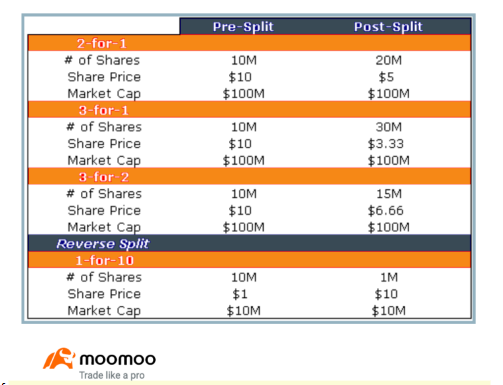
However, it is important to note that the total price of all available shares does not change. If a company was worth $200 million before the split, it would still be worth $200 million after the split. Since the company's total value does not change, the price of an individual share will drop to the ratio the company decides to use for its stock split.
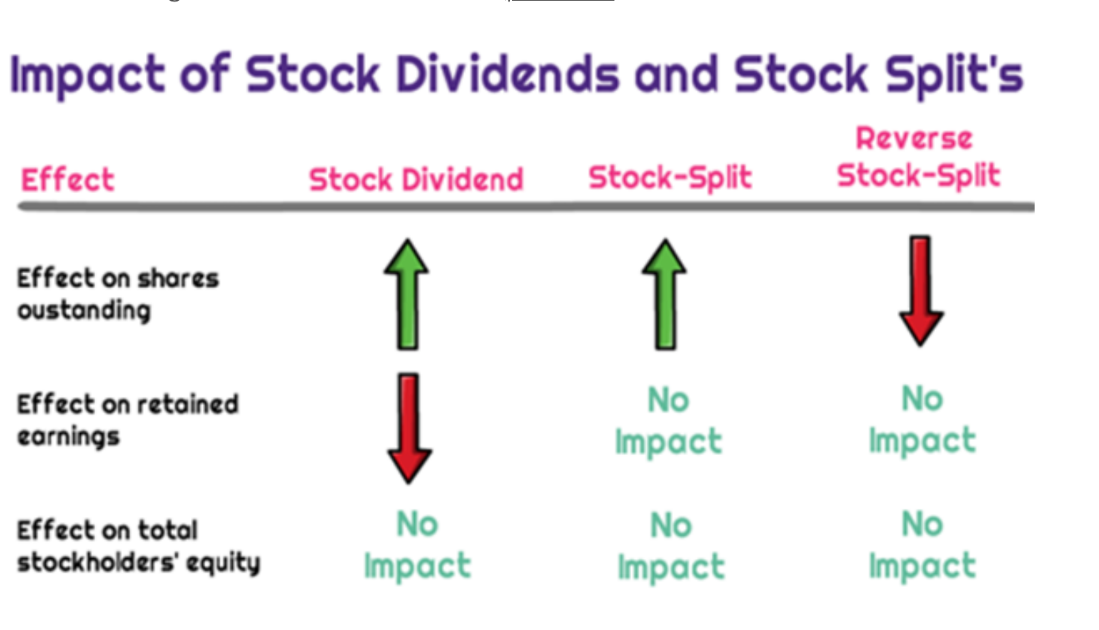
If a company issues new shares to investors, this is a forward stock split and the most common. A forward stock split often results in more shares at a lower per-share price without gain or loss of the company's market value.
A reverse stock split occurs when a company decreases the number of shares available and raises the price of any given share if a given stock's price is getting very low. Prices that fall too low cannot be traded on the stock exchanges. Businesses also want to keep their stocks at appealing levels. A stock that falls to a very low price might not be appealing to certain investors, either. The reverse stock split can help improve the perceived stock price. Again, however, the value of the company stays the same.
The most common stock split ratios are 2 for 1 (2:1) and 3 for 1 (3:1). This ratio means that for every share a stockholder had before the split, they now have two shares (in a 2:1) or three shares (in a 3:1).
An example can make this easier to understand. Say that a company has a total value of $200 million. This company also has 10,000,000 stocks available on the stock exchange. Each share, therefore, is worth $20. If an investor owns 100 shares, then the value of those shares is $2,000.
Say that this company decides to do a 2:1 stock split. This company will still be worth $200 million. However, now that company has 20,000,000 stocks available for purchase, each stock is worth $10. That investor with 100 shares now has 200 shares. Therefore, the total value of that investor's shares remains $2,000. As you can see, the value of the company and the value of an individual's investment stayed the same. What changed was the number of stocks and the value of each one by itself.
Companies will often take this step to make it easier to invest in their business. If the price of a single stock gets too high, it can hinder some investors; often, splitting the stock makes it easier to bring in these investors. Since companies want people interested in their stock, bringing in more investors helps the company increase liquidity, which can further help the business on the stock exchanges.
When a company does a stock split, this renews interest in the stock. The company receives article headlines and analyses of its business, which can cause the price to rise, but this boosting effect may not necessarily last long.
Stock splits typically have three dates of importance; Announcement date, Record date, and Effective date, and follow this chronological order.
• Announcement date: The company will make public its plans for the split, along with any details that are relevant to investors. The information usually contains the record date and the effective date it will happen, along with the split ratio.
• Record date: For investors, this information is not relevant. Existing shareholders need to own the stock before this date to be eligible to receive shares created by the stock split.
• Effective date: This is when investors’ brokerage accounts should receive the increased number of new shares at the adjusted split share price.
An announcement of an impending stock split and the split itself tends to generate attention for the stock and can, in turn, drive up the price. You can see an example with Amazon. After Amazon announced on March 9, 2022, that they would be doing a 20 for one stock split in the coming months, the stock price was expected to rise. A rising stock price is common for companies going through a stock split, which could explain why some investors purchase shares before the split and try to capture the profit of the rise.
On the other hand, investors who do not want to buy stocks that have reached extremely high prices might want to buy after the stock split, allowing them to take advantage of the lower price per stock. Typically, companies that go through a stock split do so because of their higher performance and thus very high stock price. When these successful companies do a stock split, they can be an appealing buy for investors of all levels.
In the current Amazon example, there are various reasons to execute trades after the split. While it is common for stocks to rise after an announced stock split, Amazon’s stock value has struggled, and lost 37% since the beginning of the year — traders will not have to contend with a significant price hike. In addition, some traders may want to buy in now because the future of e-commerce continues to grow, and Amazon is very well positioned for this economy. However, Amazon is also focused on more than just e-commerce, and derives significant profit from other drivers, making it a potentially lucrative investment now that stocks are easier to purchase post-split. At the same time, some traders do not want to purchase stocks after the split because it has struggled so far in 2022 and there continues to be serious inflation and supply-chain concerns that may impact the stock’s value for a long time to come.
If you already own stock in a company that will soon go through a stock split, you do not have to worry about losing any value. The split means that the number of shares you own will also increase according to the ratio selected for the split. If you owned 100 shares of a company that has decided to do a 2:1 split ratio, you would now own 200 shares. The difference is that each share is worth half of what it was worth before the split. The total value of the investment you own does not change, although the number of shares you own in the company does.
Investors ready to do a stock split and already own stocks in a company typically watch their investments in the coming days and weeks. The excitement that a stock split generates may positively impact the value of their investment. You can view Stock Split history in the moomoo app.
Say you had watched a particular company for a while and wanted to invest. Then this company announced they were going to do a stock split. If you do not already own stock in the company before, then you may want to think carefully about how you want to approach this investment. You have two basic options.
• You can buy the shares beforehand while the price per share remains high. You will likely hope to profit from a rise in the share value with the excitement surrounding the stock.
• You can also elect to wait until after the split and then take advantage of the lower price per share. You can then invest in the amount that fits your investment strategy.
Regardless of the method you choose, a careful investigation should play an important role. You can use various investment tools to track the company history, particularly before the announcement of the impending stock split. Looking at its history before the announcement can help you see how the company performed without it. Forecasting tools can also help you evaluate the stock's direction and help you improve your understanding of its long-range potential.
Using the information, investors can better understand whether or not a particular stock fits into your unique investment strategy. You can then decide if you want to add the stock to your portfolio, and you can determine whether you want to buy shares before or after the stock split.
For advanced traders, incorporating more sophisticated stock trading strategies is important. Understanding how a stock split works, when a company might employ it, and its impact on shares and investments is crucial for success. As you build your portfolio and your investing strategy, look closely at companies who have gone through the stock splits such as Amazon, Tesla, and Apple. Consider using the stock splits history to see to help you with your investment decisions.
The moomoo app offers investors advanced research and analysis tools to help them monitor stock changes. From heatmaps to see which industries have begun to heat up, to detailed forecasting tools, investors can look at each stock from various perspectives.
Sign up for moomoo app to get free access to the professional-grade trading tools today. Get free stocks when you open and fund your account (terms and conditions apply).
This presentation is for informational and educational use only and is not a recommendation or endorsement of any particular investment or investment strategy. Investment information provided in this content is general in nature, strictly for illustrative purposes, and may not be appropriate for all investors. Read more
Recommend
How to Trade During High Volatility (VIX > 25)
How to Day Trade Without $25,000
How to Start Day Trading for Beginners

Swing Trading Basics: Strategies & How It Works
How to Practice Day Trading (Day Trading Simulator Guide)
Intraday Trading Basics: How to Start & Benefits
ETF Tax Refund Guide: Understand Your Investment Returns
Stock Trading: A Beginner's Guide
How to Start Investing: A Beginner's Guide
How to Invest in Gold: Learn the Basics
Ethereum ETFs: How To Trade Spot Ethereum ETFs
What Is Copy Trading
What to Consider When Shifting from Paper Trading to Actual Trading
Investing During Earnings Season
How Stock Charting Tools Can Help You
What is Thematic Investing?
What Is Social Trading
6 ETF Concerns That Investors Shouldn’t Overlook
What Is Mirror Trading?
Company Earnings and Earnings per Share What Investors Need to Know
How to Use Paper Trading to Test and Help Refine Your Trading Strategy?
How to Practice Trading Without Risking Money?
Tax Trading Strategies in a Bear Market
What Are Market Orders?
Using Volume Oscillators to Confirm Price Movements
Price-to-Earnings (P/E) Ratio
What Is Working Capital?
What Is SWOT Analysis?
Choosing a Stock Simulator to Practice Stock Trading
What Is Revenue?
What Is A Recession?
Psychological Condition of the Market
What Is Beta in the Stock Market?
On-Balance Volume (OBV): What Is It?
What Is the Money Flow Index (MFI)?
Spot Market: What Is It?
What Does It Mean to Have a Certificate of Deposit (CD)?
What Is a Bellwether?
What Is the Spot Rate?
What Is a Volatility Smile?
What Is Historical Volatility (HV)?
What is Buying on Margin?
What Is Barbell Strategy?
How to Analyse Short Sale Volume in Trading
Trading Stocks Short: Overview
What is short selling?
Will ESG Investing Be The Future Of Investing?
How to Invest in the Hong Kong Stock Exchange - What Investors Should Know
Level 2 Market Data: How Advanced Traders Can Identify Value
Swing Trading vs. Day Trading: What's the Difference?
What Is a Day Order?
What Is the National Best Bid and Offer (NBBO) in US Equities?
What is Short Covering?
How to Find A Stock's Number of Shorted Shares?
What Is Trend Analysis?
TOP 10 Day Trading Strategies for Beginners
VWAP Trading Strategy - Volume Weighted Average Price
What is Maintenance Margin?
What Is Market Depth?
What Is Short Interest?
What Is a Trailing Stop and How to Use It?
Stock Split: Stock Trading Strategies for Advanced Traders
Scalping Stock Trading: How Does It Work?
Trading as a Side Hustle: How to get started
How to Pick Stocks: Invest Smarter with Stock Screener
Is Swing Trading More Profitable than Long-Term Trading?
Trade In A Bear Market With Short Sales
How to Trade During High Volatility (VIX > 25)
How to Day Trade Without $25,000
How to Start Day Trading for Beginners
Swing Trading Basics: Strategies & How It Works
How to Practice Day Trading (Day Trading Simulator Guide)
Intraday Trading Basics: How to Start & Benefits
ETF Tax Refund Guide: Understand Your Investment Returns
Stock Trading: A Beginner's Guide
How to Start Investing: A Beginner's Guide
How to Invest in Gold: Learn the Basics
Ethereum ETFs: How To Trade Spot Ethereum ETFs
What Is Copy Trading
What to Consider When Shifting from Paper Trading to Actual Trading
Investing During Earnings Season
How Stock Charting Tools Can Help You
What is Thematic Investing?
What Is Social Trading
6 ETF Concerns That Investors Shouldn’t Overlook
What Is Mirror Trading?
Company Earnings and Earnings per Share What Investors Need to Know
How to Use Paper Trading to Test and Help Refine Your Trading Strategy?
How to Practice Trading Without Risking Money?
Tax Trading Strategies in a Bear Market
What Are Market Orders?
Using Volume Oscillators to Confirm Price Movements
Price-to-Earnings (P/E) Ratio
What Is Working Capital?
What Is SWOT Analysis?
Choosing a Stock Simulator to Practice Stock Trading
What Is Revenue?
What Is A Recession?
Psychological Condition of the Market
What Is Beta in the Stock Market?
On-Balance Volume (OBV): What Is It?
What Is the Money Flow Index (MFI)?
Spot Market: What Is It?
What Does It Mean to Have a Certificate of Deposit (CD)?
What Is a Bellwether?
What Is the Spot Rate?
What Is a Volatility Smile?
What Is Historical Volatility (HV)?
What is Buying on Margin?
What Is Barbell Strategy?
How to Analyse Short Sale Volume in Trading
Trading Stocks Short: Overview
What is short selling?
Will ESG Investing Be The Future Of Investing?
How to Invest in the Hong Kong Stock Exchange - What Investors Should Know
Level 2 Market Data: How Advanced Traders Can Identify Value
Swing Trading vs. Day Trading: What's the Difference?
What Is a Day Order?
What Is the National Best Bid and Offer (NBBO) in US Equities?
What is Short Covering?
How to Find A Stock's Number of Shorted Shares?
What Is Trend Analysis?
TOP 10 Day Trading Strategies for Beginners
VWAP Trading Strategy - Volume Weighted Average Price
What is Maintenance Margin?
What Is Market Depth?
What Is Short Interest?
What Is a Trailing Stop and How to Use It?
Stock Split: Stock Trading Strategies for Advanced Traders
Scalping Stock Trading: How Does It Work?
Trading as a Side Hustle: How to get started
How to Pick Stocks: Invest Smarter with Stock Screener
Is Swing Trading More Profitable than Long-Term Trading?
Trade In A Bear Market With Short Sales

