How the Options Market Can Signal When Earnings Events Are Too Risky to Trade
Earnings season can drive significant stock price movements, and many traders use options to profit from expected swings. However, trading options around earnings involve risks. It’s important to understand how the options market prices expectations and breakeven points before deciding to trade.
In this article, we will break down the topic into the following sections:
The nature of earnings risk
Pricing expected moves and breakeven points
Assessing risk-reward before earnings
1. The Nature of Earnings Risk
Trading during earnings announcements involves two key uncertainties: directional risk, which is whether the stock will move up or down after the report, and magnitude risk, which is whether the stock will move far enough to generate a profit from the trade.
When trading options, it is not enough for the stock to move merely in the expected direction. The move must be large enough to overcome the premium paid — surpassing the breakeven point — for the trade to be profitable.
Additionally, after earnings are announced, implied volatility often drops sharply (a phenomenon known as "IV crush"), which can further reduce the value of options.
Thus, successful earnings trading with options requires not only correctly predicting direction but also accurately estimating the size of the move and the impact of volatility changes.
2. Pricing Expected Moves and Breakeven Points
Leading up to earnings, implied volatility (IV) tends to rise. Higher implied volatility reflects the market's expectation of larger potential price movements.
One way to estimate a stock’s expected move after earnings is by adding the premiums of the at-the-money Call and Put options expiring just after the announcement. For example, if both the Call and Put cost $6, the expected move is around $12. With a current stock price of $100, this suggests an expected move of ±12%. This estimate is direction-neutral — it reflects potential size of movement, not the direction.
Understanding the Breakeven Point in Earnings Trading
The breakeven point is a critical concept when trading options around earnings events.
The breakeven formulas are:
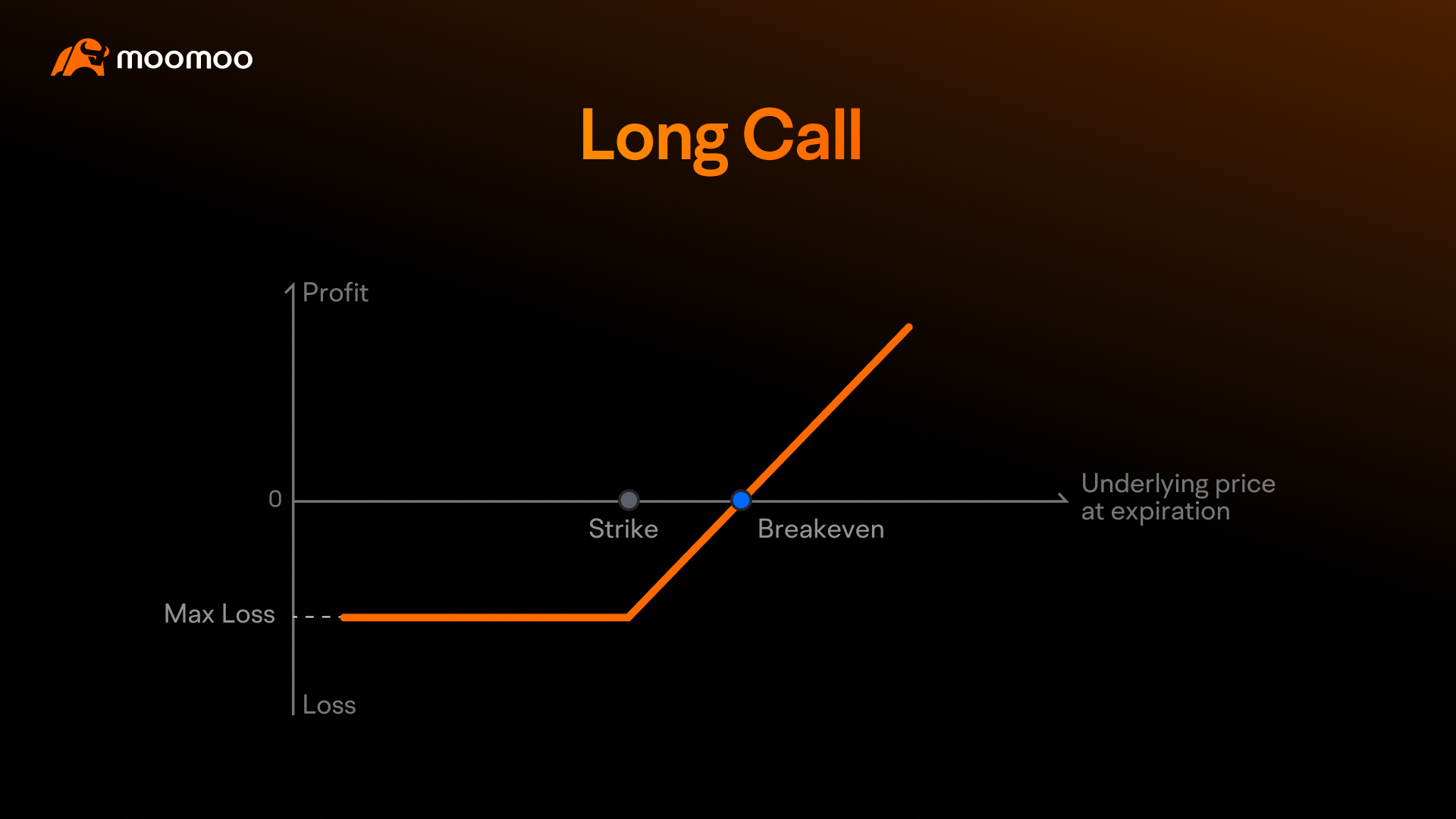
For buyers of a Call Option: Breakeven = Strike Price + Premium Paid
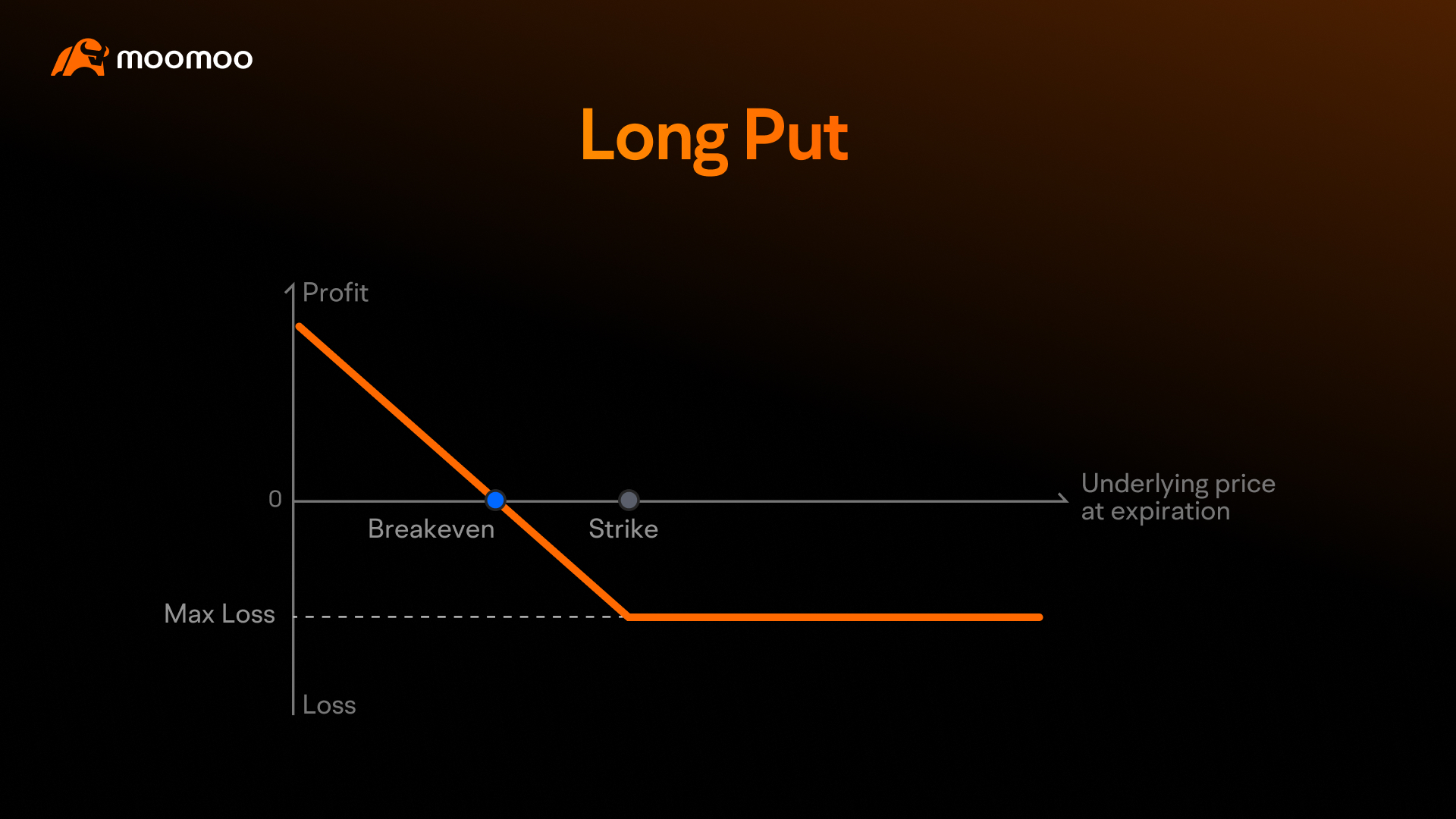
For buyers of a Put option: Breakeven = Strike Price – Premium Paid
Unless the stock moves beyond these breakeven levels by expiration, the option buyer would realize a loss.
Because options premiums are elevated before earnings, breakeven points are farther away from the current stock price than under normal conditions, making it more difficult to achieve profitability.
Additionally, after the earnings event, the drop in implied volatility can cause a decline in option values, even if the stock moves.
Key takeaway: It is not enough for the stock to move in the right direction — it must move enough to surpass the breakeven level while also offsetting the post-earnings volatility crush.
3. Assessing Risk-Reward before Earnings
Sometimes, the options market prices in a very large move before earnings, but historical data shows that the stock usually moves much less.
This could indicate that the risk-reward profile is not attractive.
Here's one way to evaluate the situation step-by-step:
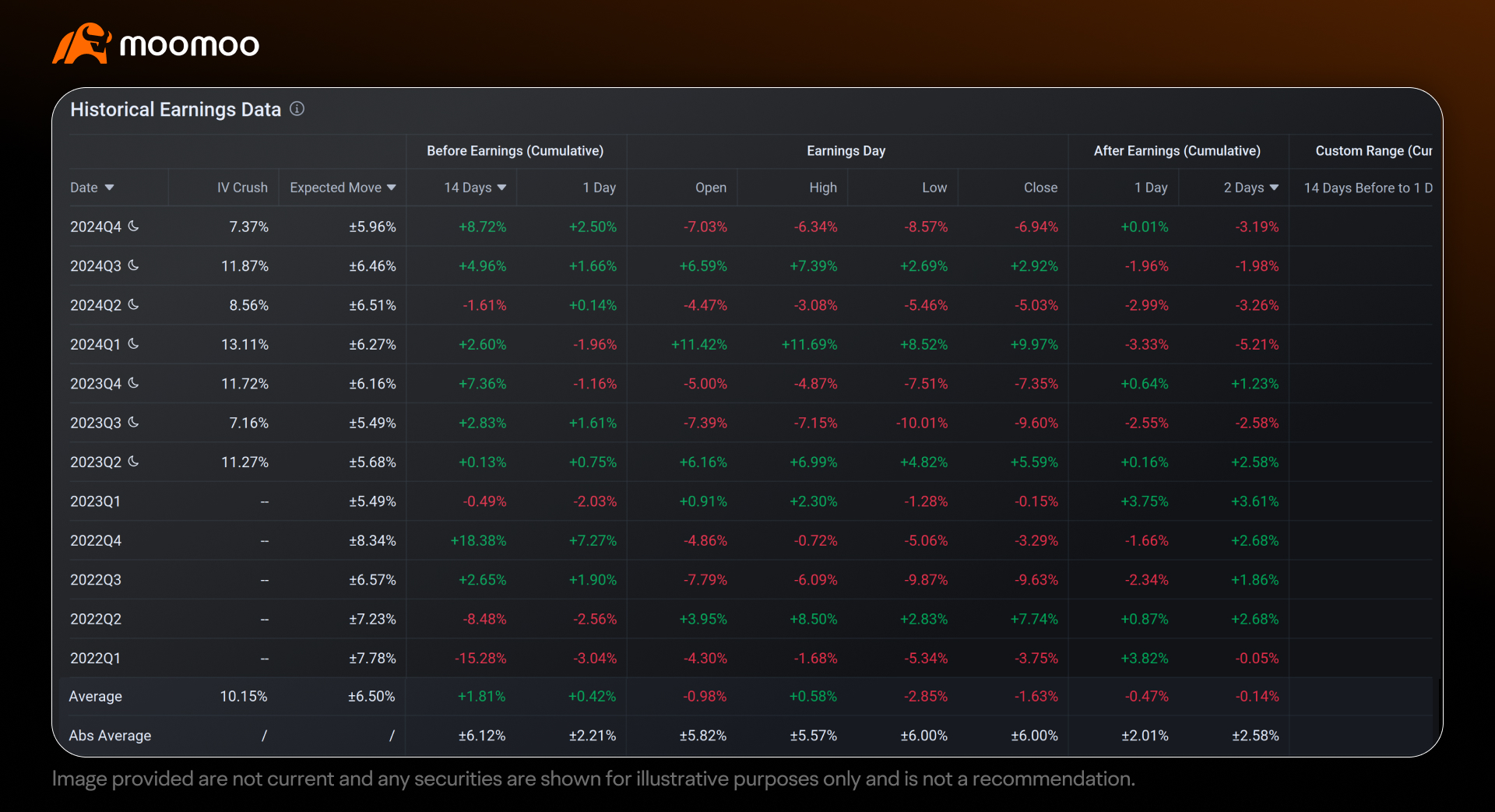
Step 1: Analyze the Options' Implied Move
If options pricing implies a ±10% move, that is the market's expectation based on premiums.
Step 2: Compare Against Historical Earnings Moves
If historical data shows that the stock typically moves only ±3% to ±5% after earnings, there is a mismatch.
The market may be overpricing the expected movement.
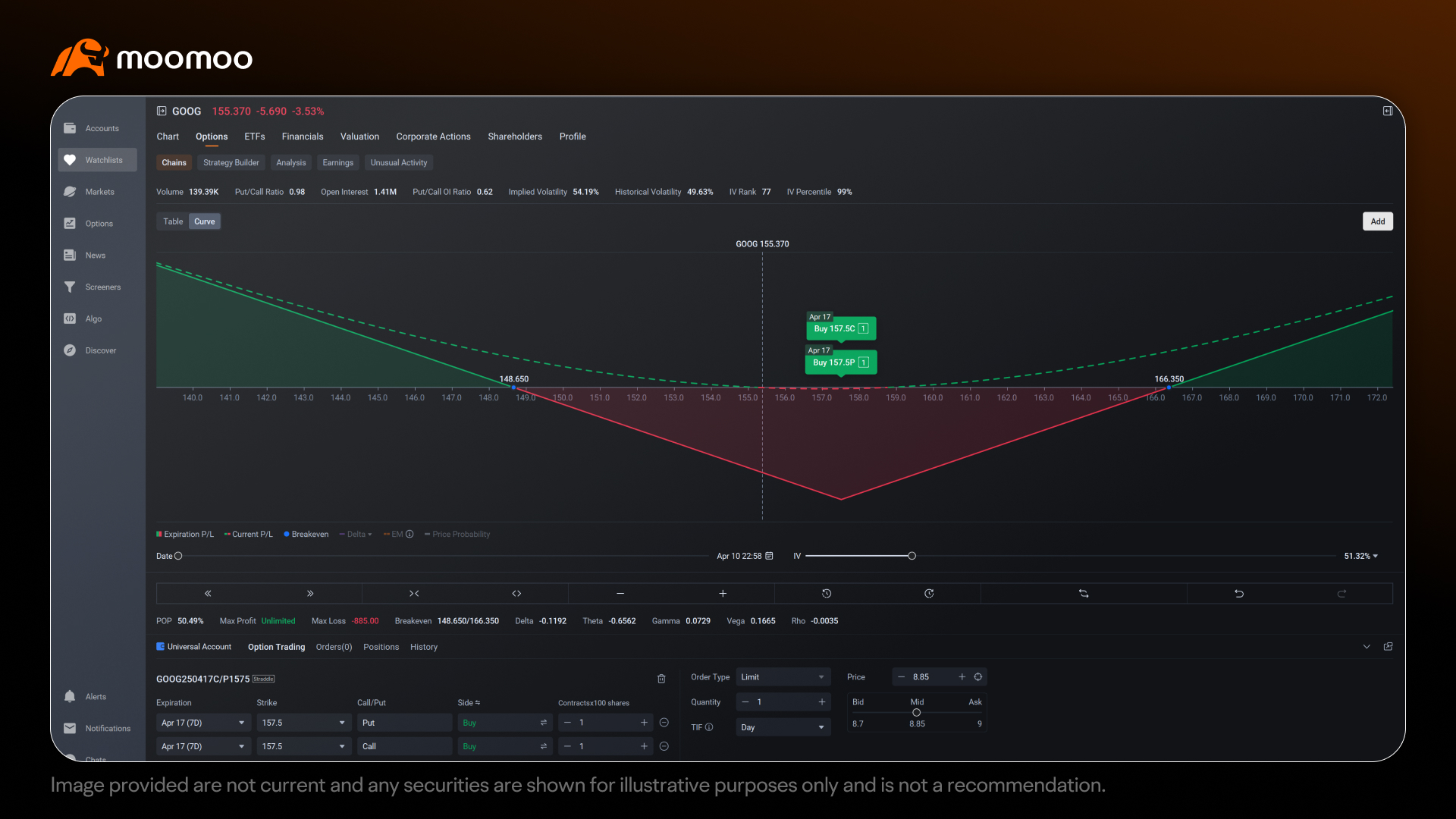
Step 3: Assess Breakeven and Premiums
With elevated implied volatility, the premiums are high, making breakeven points farther away from the current stock price.
Reaching breakeven would require an unusually large move.
Step 4: Understand the Risks
Even if the stock moves in the anticipated direction, the move might not be large enough to reach breakeven.
After earnings, implied volatility typically collapses, further reducing the value of options.
Traders could lose money despite predicting the correct direction.
For example, a stock trades at $100 before earnings. The at-the-money Call and Put options each cost $6, so the market-implied expected move is ±$12 (±12%). Historically, the stock moves only ±4% on earnings. After the announcement, the stock rises to $104 — a 4% increase. Although the direction was correct, the Call option’s breakeven is $106 ($100 stock price + $6 premium). Since the stock only reached $104, the Call remains out-of-the-money, and the buyer would likely incur a loss.
Summary: When the options market prices in a much larger move than what historical data supports, traders face a high hurdle to profitability. This situation often leads to an unfavorable risk-reward setup, making speculative earnings trades less attractive.
Conclusion
The options market offers important insights into market expectations around earnings events.
However, trading options during earnings involves risks that go beyond simply guessing the direction of a stock's movement.
Key points to remember:
Always compare the market’s implied expected move to the stock’s historical earnings moves.
Assess whether the stock is realistically likely to move far enough to reach breakeven.
Understand the impact of post-earnings volatility crush on option values.
When the market prices in unusually large moves that are inconsistent with a company's historical behavior, it may be wise to reconsider speculative trades. By focusing on breakeven analysis, implied moves, and historical volatility patterns, traders can make more informed and disciplined decisions during earnings season.
Disclaimer
Options trading entails significant risk and is not appropriate for all customers. It is important that investors read Characteristics and Risks of Standardized Options before engaging in any options trading strategies. Opening new options positions close to or on their expiration date comes with substantial risk of losses for reasons that include potential volatility of the underlying security and limited time to expiration. Options transactions are often complex and may involve the potential of losing the entire investment in a relatively short period of time. Certain complex options strategies carry additional risk, including the potential for losses that may exceed the original investment amount. Supporting documentation for any claims, if applicable, will be furnished upon request. Options trading subject to eligibility requirements. Strategies available will depend on options level approved.
The P/L Analysis is for informational purposes only and should not be considered a personalized recommendation or investment advice. The P/L Analysis performs hypothetical calculations based on model assumptions and other inputs you select, which may not reflect actual market conditions and do not guarantee future results. Although hedging strategies seek to limit or reduce investment risk, they may also limit or reduce the profit potential. There is no assurance that hedging strategies will be successful.
IMPORTANT: The projections or other information generated by the Trend Projection tool regarding the likelihood of various investment outcomes are hypothetical in nature, do not reflect actual investment results and are not guarantees of future results.
This presentation is for informational and educational use only and is not a recommendation or endorsement of any particular investment or investment strategy. Investment information provided in this content is general in nature, strictly for illustrative purposes, and may not be appropriate for all investors. It is provided without respect to individual investors’ financial sophistication, financial situation, investment objectives, investing time horizon, or risk tolerance. You should consider the appropriateness of this information having regard to your relevant personal circumstances before making any investment decisions. Past investment performance does not indicate or guarantee future success. Returns will vary, and all investments carry risks, including loss of principal. moomoo makes no representation or warranty as to its adequacy, completeness, accuracy or timeliness for any particular purpose of the above content.
Moomoo is a financial information and trading app offered by Moomoo Technologies Inc. Securities offered through moomoo Financial Inc, Member FINRA/SIPC.
In Singapore, investment products and services available through the moomoo app are offered through Moomoo Financial Singapore Pte. Ltd. regulated by the Monetary Authority of Singapore (MAS). Moomoo Financial Singapore Pte. Ltd. is a Capital Markets Services Licence (License No. CMS101000) holder with the Exempt Financial Adviser Status. This advertisement has not been reviewed by the Monetary Authority of Singapore.Moomoo Technologies Inc., Moomoo Financial Inc., Moomoo Financial Singapore Pte. Ltd., Moomoo Securities Australia Limited
In Australia, financial products and services available through the moomoo app are provided by Moomoo Securities Australia Limited, an Australian Financial Services Licensee (AFSL No. 224663) regulated by the Australian Securities and Investment Commission (ASIC). Please read and understand our Financial Services Guide, Terms and Conditions, Privacy Policy, Options PDS, Target Market Determination and other disclosure documents which are available on our website https://www.moomoo.com/au.
In Canada, order-execution only services available through the moomoo app are provided by Moomoo Financial Canada Inc., regulated by the Canadian Investment Regulatory Organization (CIRO).
In Malaysia, investment products and services available through the moomoo app are offered through Moomoo Securities Malaysia Sdn. Bhd.("Moomoo MY") regulated by the Securities Commission of Malaysia (SC). Moomoo Securities Malaysia Sdn. Bhd.is a Capital Markets Services Licence (License No. eCMSL/A0397/2024) holder. This advertisement has not been reviewed by the SC.
This presentation is for informational and educational use only and is not a recommendation or endorsement of any particular investment or investment strategy. Investment information provided in this content is general in nature, strictly for illustrative purposes, and may not be appropriate for all investors. Read more