Earnings unlocked: how options might enhance your trading approach
Takeaways:
Earnings reports create stock volatility, offering options trading opportunities
Options provide leverage for higher potential returns but carry more risk
Options offer flexible strategies for different market conditions
Moomoo aids in selecting strategies based on earnings forecasts
If the stock market is a performance, earnings reports are the thrilling finale. After they’re released, stock prices might soar or plummet.
This uncertainty is both a challenge and an opportunity for investors. At this time, options strategies might be a way of anticipating and preparing for an upcoming plot twist.
By employing the appropriate strategy for the situation and their needs, options traders can position themselves to handle these market dynamics with more confidence.
If you are an option trader interested in exploring trading around earnings, you may want to download the new moomoo Desktop. Click on Options> Upcoming Earnings to easily find which companies are about to release their earnings reports.
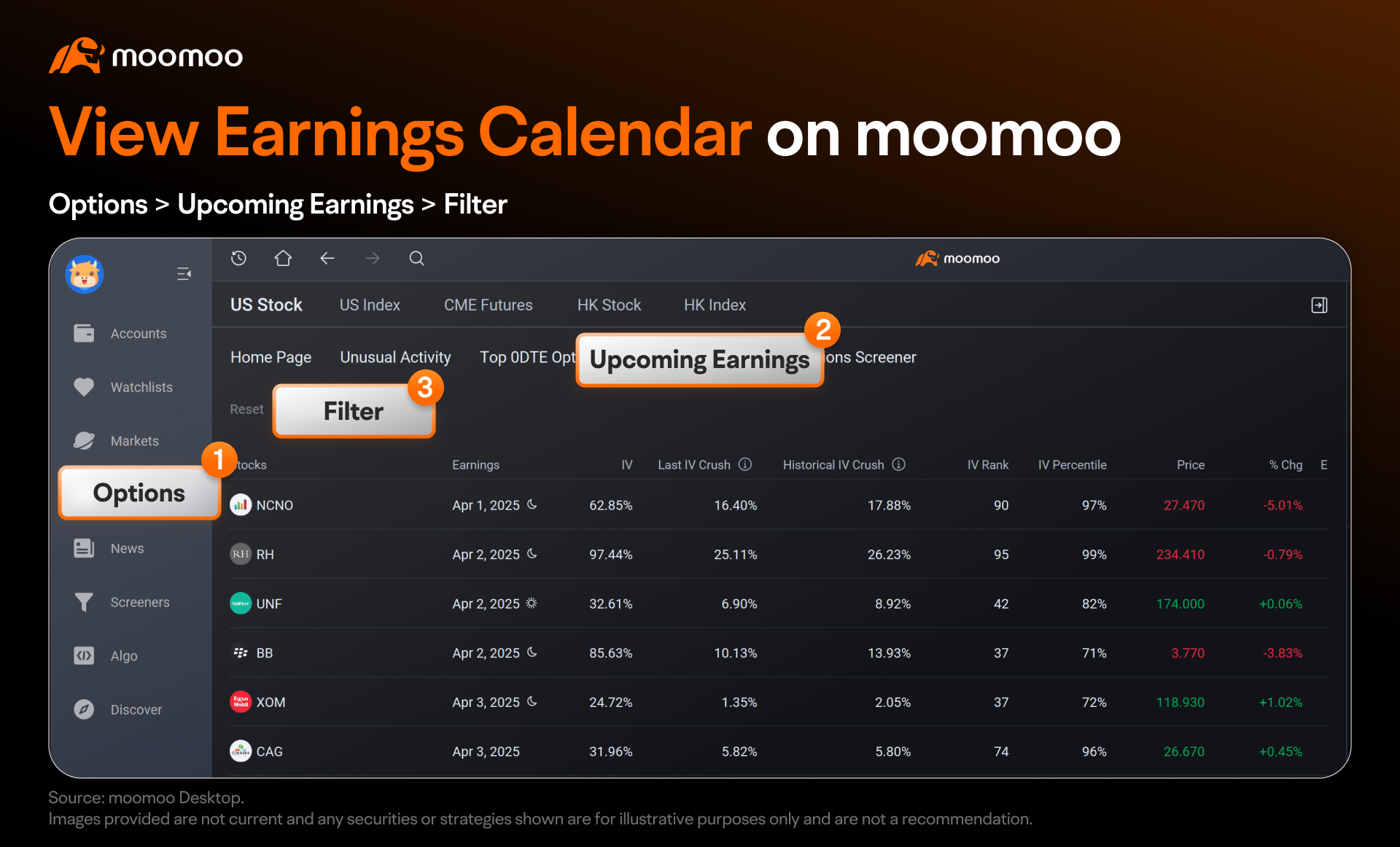
You can also click Filter to select options based on your investment preferences, boosting your investment efficiency.
So, what are some potential advantages of option strategies during earnings season? Let’s explore it together!
1. Leverage
Look, whenever companies release their earnings, stock prices tend to fluctuate.
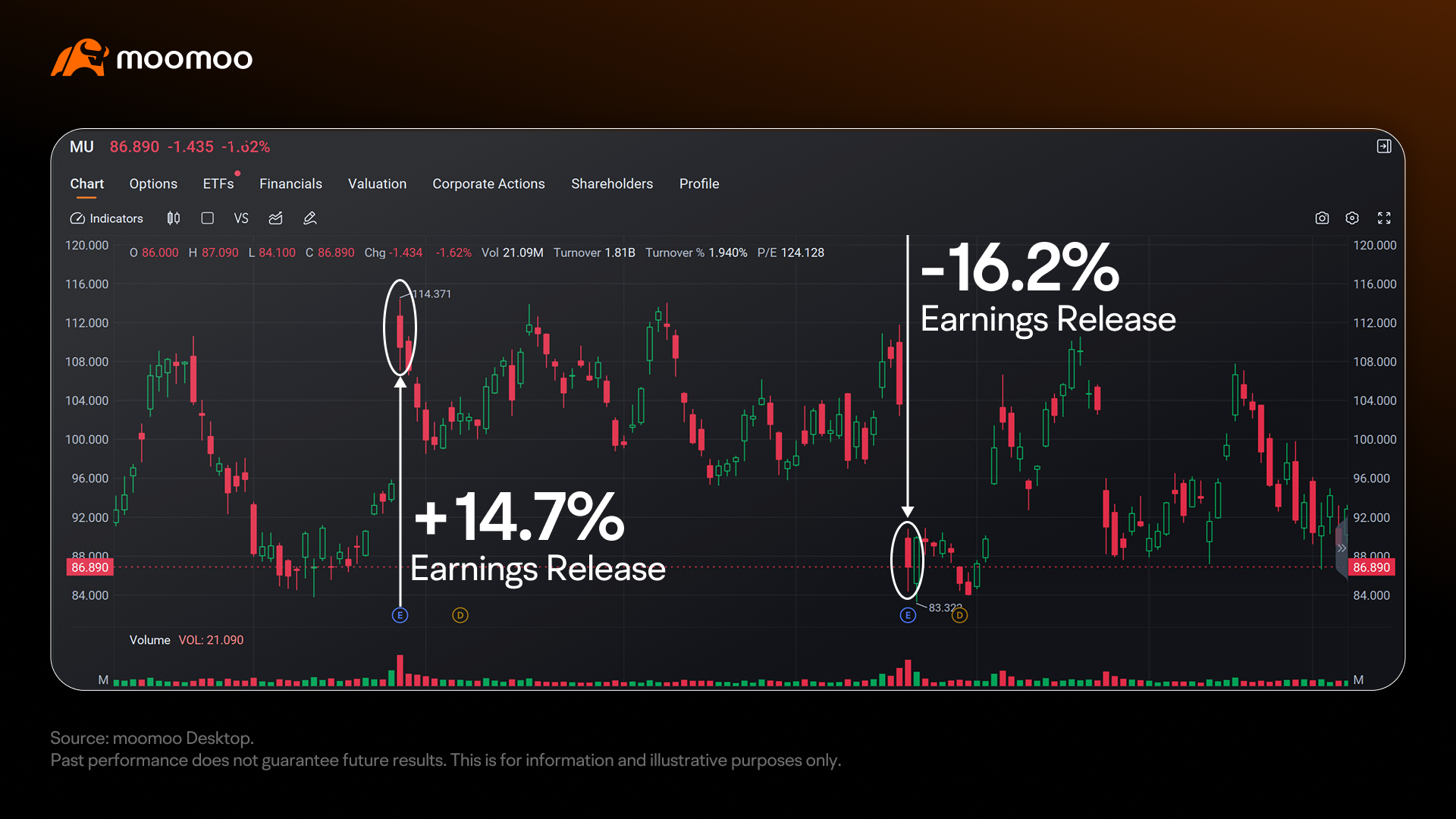
Following earnings releases, investors usually evaluate the company's performance for the past quarter and adjust their expectations.
This could potentially lead to significant stock price volatility. Some investors see this as an opportunity to enhance returns. For options trading, volatility can create value. The bigger the fluctuation, the more investment opportunities there are in options.
Let’s review the basics of options.

Options are a special type of contract involving a buyer and a seller. The buyer pays an amount, called the option premium, to gain the right to buy or sell stocks in the future. The seller receives this money and is obligated to buy or sell stocks at a set price in the future if the option contract is exercised.
You should know that the cost of the option premium is lower compared to buying stocks directly. Let’s make a comparison.
Suppose XYZ's stock price is $50. With $5,000, you can buy 100 shares. After the earnings release, the stock price rises 30% to $65, you make $1500 in profit.
(Note: XYZ is not a real stock; it is used for illustrative purposes only)
Your Return on Investment (ROI): $1,500/$5,000 = 30%. Sounds good, right?
But if you buy a call option with a strike price of $55, expiring at the earnings release date. You pay a premium of $2 per share totaling $2*100 = $200.
If the stock price rises to $65 at expiration, your profit will be (65-55-2)*100 = $800.
ROI: $800/$200 = 400%.
That's the leverage effect of options.
It allows you to greatly magnify your gains from market swings, generally at a lower cost relative to purchasing the underlying stock outright.
It is important to remember that it also creates enhanced risks and can lead to significant losses. If XYZ fluctuates or drops (remains below $55) after earnings but reaches $65 afterward, holding the stock would still allow you to benefit from the price increase. However, the call option would have expired worthless, which means you would lose your entire $200 investment.
2. Flexibility
In traditional stock investing, you can make money if stock prices go up. If they go down, you might lose money.
But in the world of options, things are different in many ways. Options offer a variety of strategies to choose from.
Some strategies can help you potentially benefit from rising markets. Others allow you to profit when the market is falling. There are even strategies to hedge and protect your investment portfolio.
Remember, option trading entails significant risk, which is further magnified by trading around earnings. It is not appropriate for everyone, and you must be qualified to trade options and approved for the level of option trading each strategy requires.
Let's see how to evaluate options strategies on moomoo.
First, double-click on your selected stock, which will take you to the stock quotes page.
Then click on Options to enter the Strategy Builder.
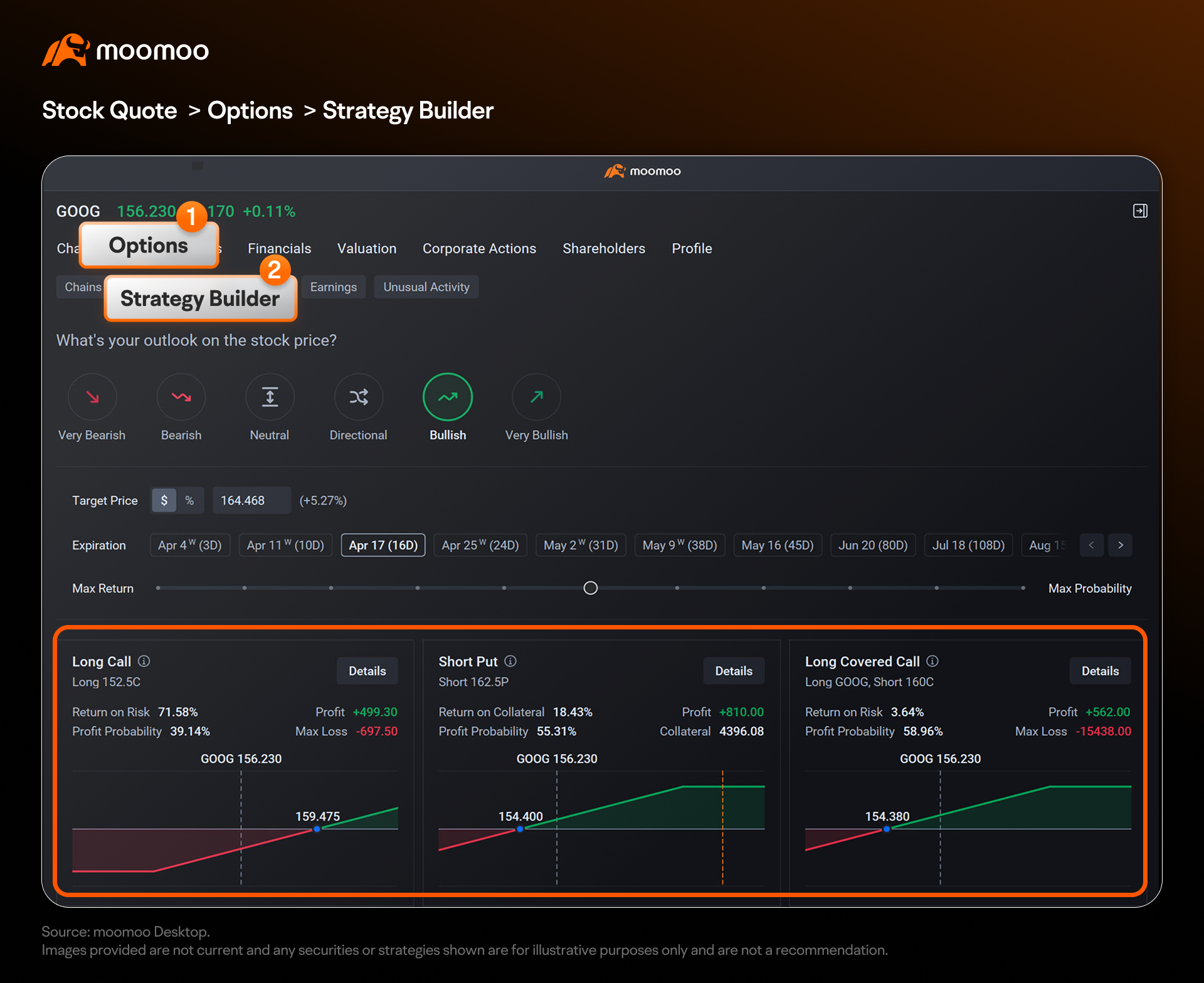
On this page, you can select different strategies based on your market forecasts.
If you expect the company's earnings to exceed expectations and the stock price to rise, click the Bullish arrow. Moomoo will show you several options strategies designed to potentially benefit from a rising market, like 'Long Call', 'Short Put', and 'Covered Call'.
On the other hand, if you think the earnings will be poor and the stock price will fall, click the Bearish arrow. You'll see options strategies potentially benefit from a falling market, such as 'Long Put', 'Short Call', and 'Bear Call Spread'.
If you want to know more about these strategies, you can click the [i] in the top right corner of each strategy to learn about their structure and possible uses.
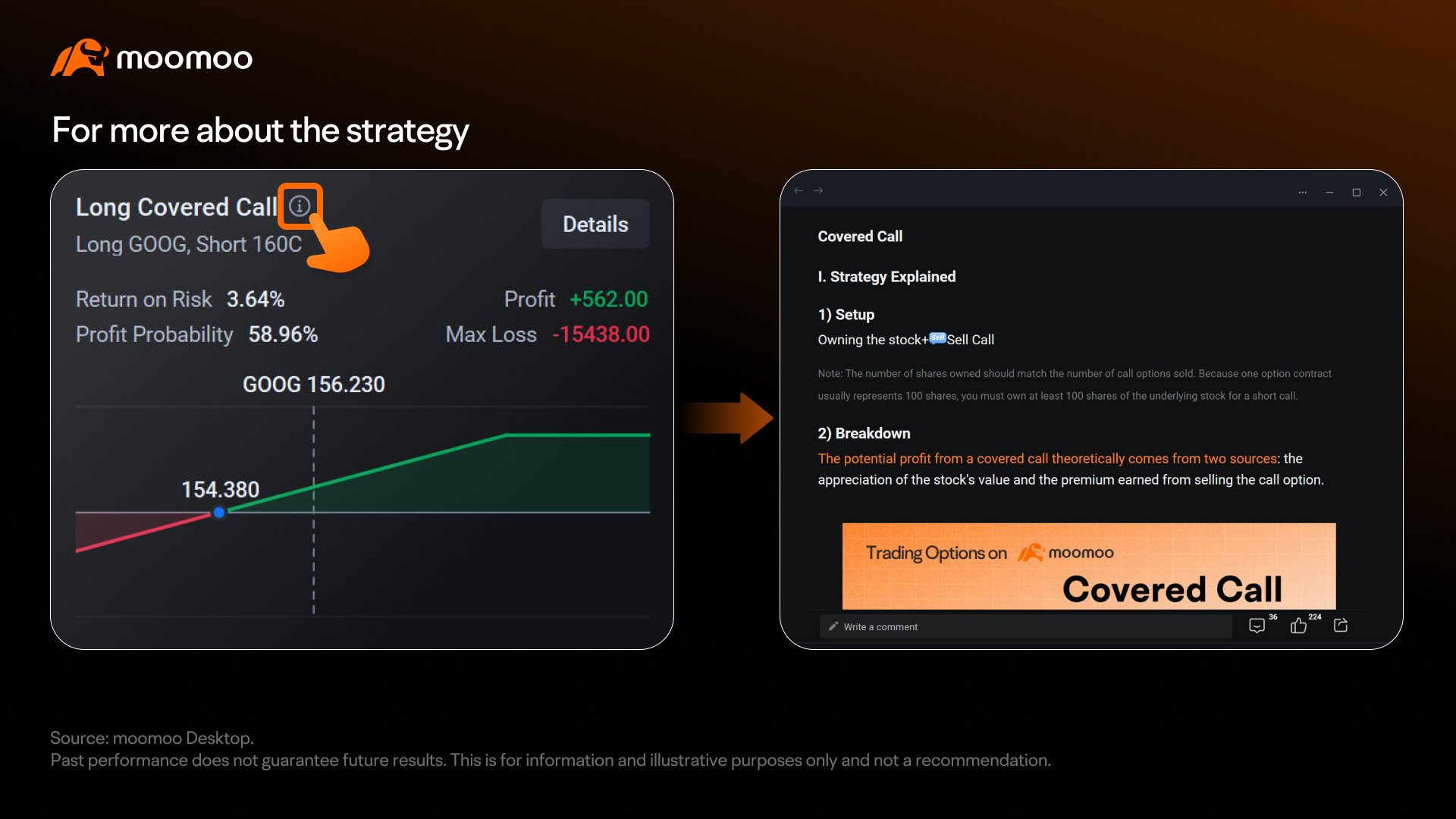
Clicking on the Details to the right of the strategy lets you explore further, crafting your own options strategy.
Which strategies might be worth consideration during the earnings season? No need to stress! We’ll break it all down for you in upcoming sessions. Stay tuned!
This presentation is for informational and educational use only and is not a recommendation or endorsement of any particular investment or investment strategy. Investment information provided in this content is general in nature, strictly for illustrative purposes, and may not be appropriate for all investors. Read more