How to Hedge a Market Downturn with Options:Here's what you need to know
During a bear market or periods of high volatility, investors often seek ways to protect their portfolios without selling their positions. Options offer flexible hedging strategies that can limit downside risk while still keeping the potential for gains.
In this guide, we'll cover:
Why hedging is important in volatile markets
Exploring two options hedging strategies
Detailed scenarios with step-by-step calculations
1. Why Consider Options for Hedging?
Markets can become volatile due to several factors:
Economic Slowdowns – Recession fears, inflation concerns, or weak corporate earnings.
Interest Rate Uncertainty – Central bank policies affecting liquidity and valuations.
Geopolitical Risks – Events causing sudden market swings.
Sector-Specific Weakness – Certain industries underperforming due to regulations or cyclical factors.
Instead of selling investments at a loss, options can allow investors to hedge against downside risk while keeping upside potential open.
2. A Practical Guide to Protective Puts and Collars
Introduction
When managing stock positions, investors often look for risk management strategies to help limit losses while maintaining potential gains. Two common strategies are:
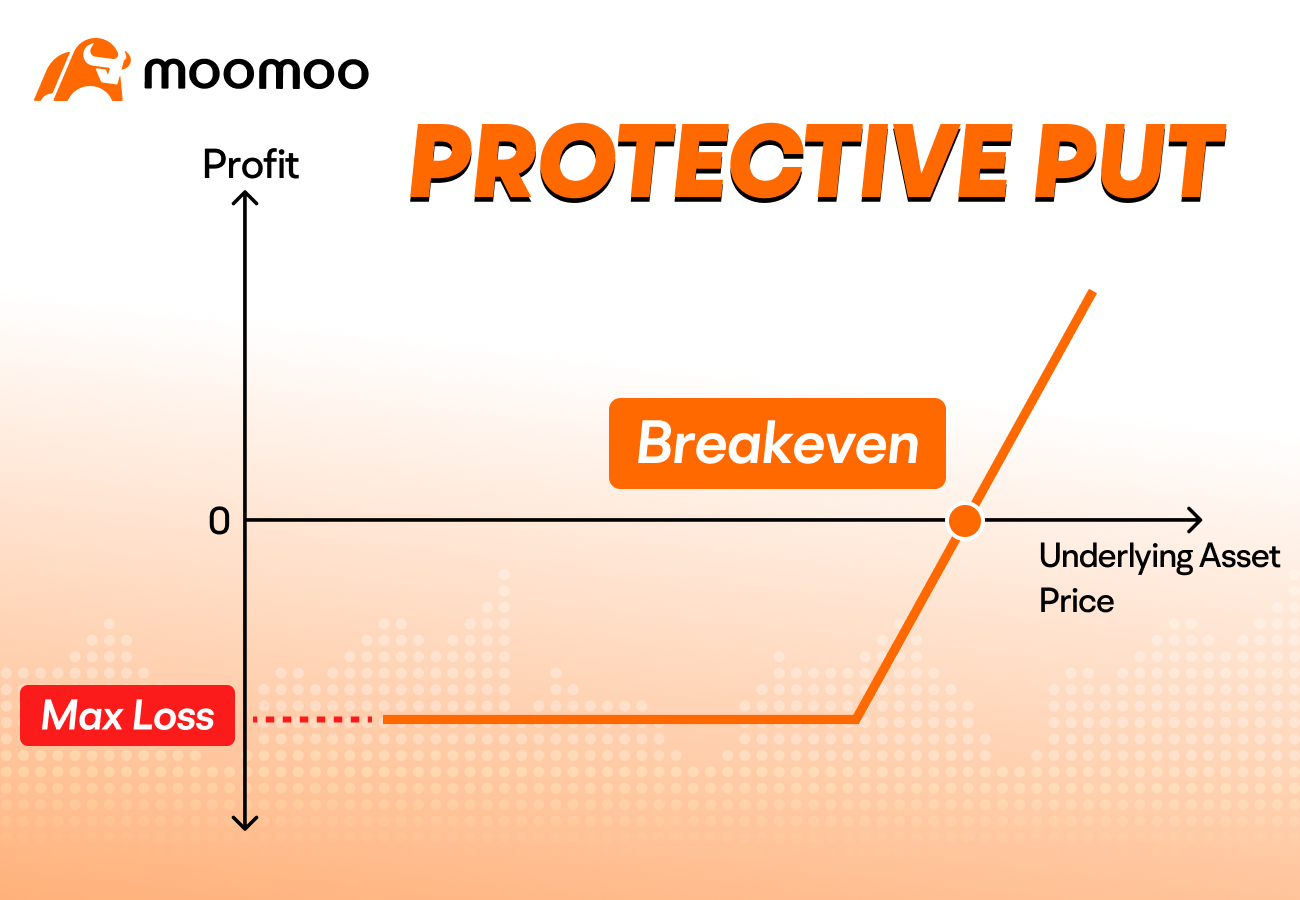
Protective Put – Buying a put option to hedge against potential downside.
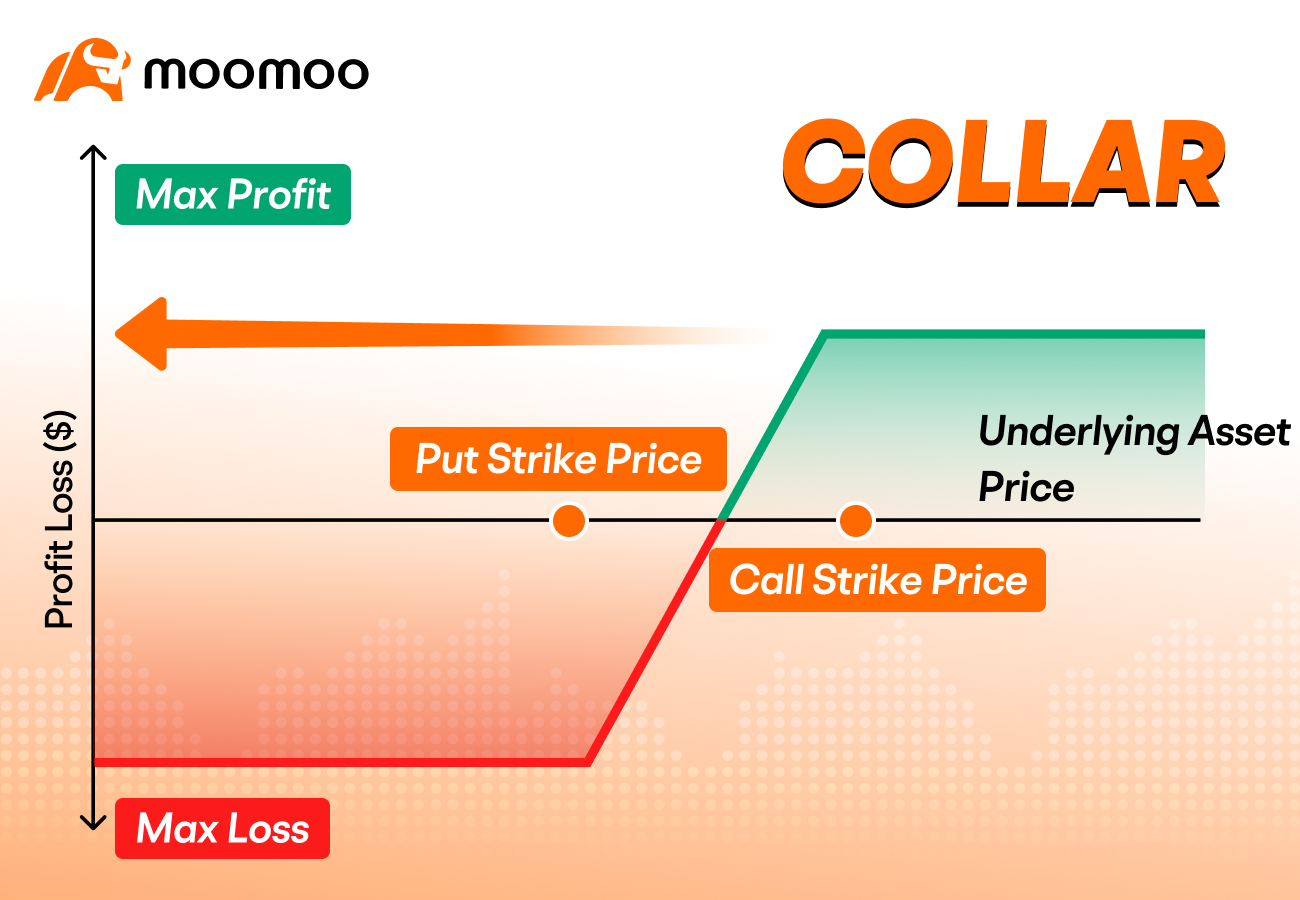
Collar Strategy – Using a put option to hedge against potential declines in the underlying stock while selling a call option to help offset the cost.
We'll guide each strategy with practical examples, step-by-step calculations, and detailed breakdowns.
3. Protective Put Strategy
How It Works:
Investor buys a put option while holding a stock.
The put can act as insurance, limiting downside risk.
If the stock falls, the put could offset some of the losses.
Example Setup:
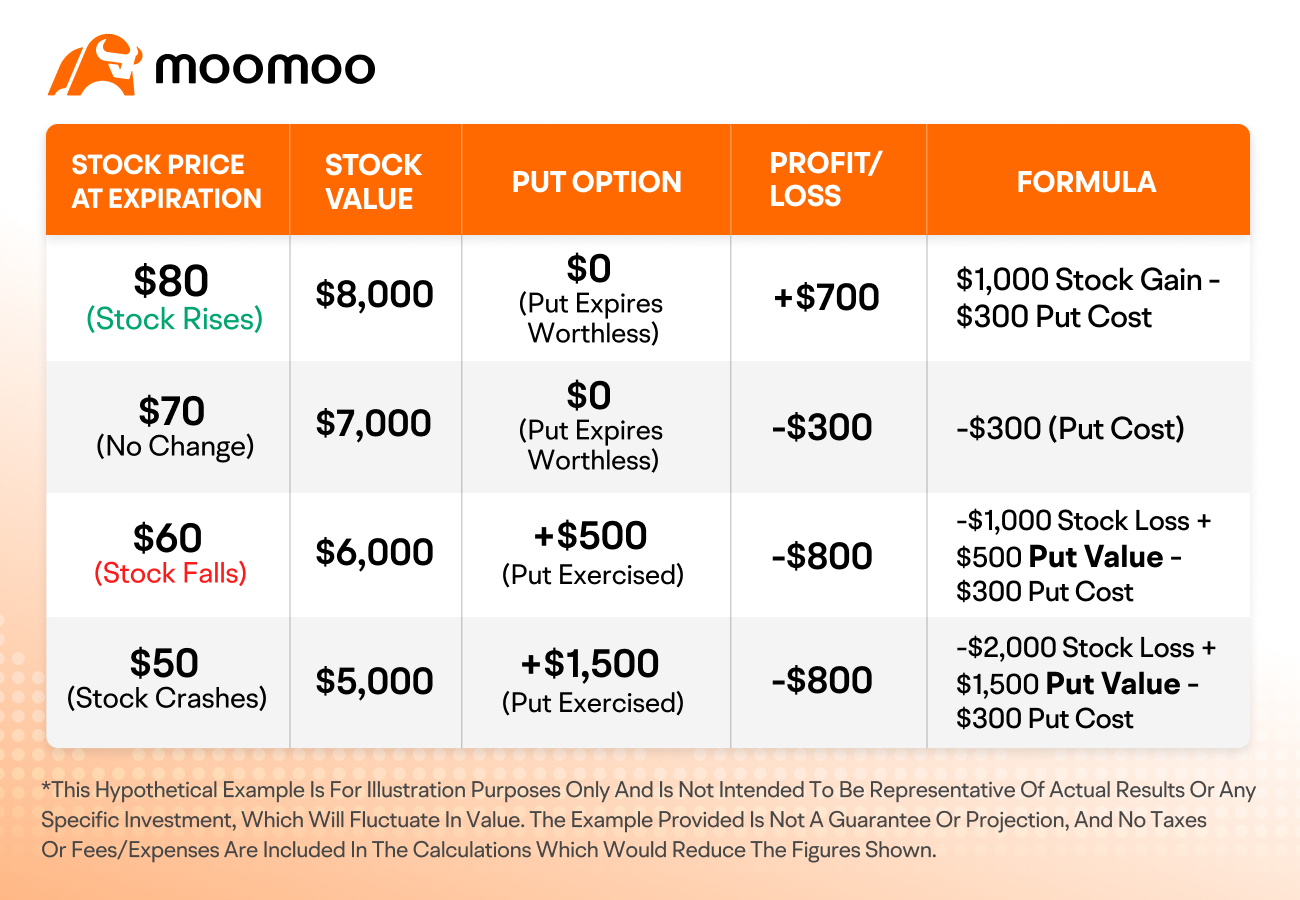
Stock Purchase Price: $70 per share (100 shares)
Stock Value : $7000
Put Strike Price: $65
Put Cost: $3 per share ($300 total)
Notes: When the put option is exercised, it means selling the underlying stock at the strike price, effectively closing out the stock position.
These calculations assume the strategy is preserved unchanged until expiration (ITM or OTM) and do not account for early position closure. In practice, traders may choose to close positions before expiration to lock in profits or try to limit losses, or adjust their hedges to avoid losing remaining extrinsic value.
Protective Put Strategy Effectiveness
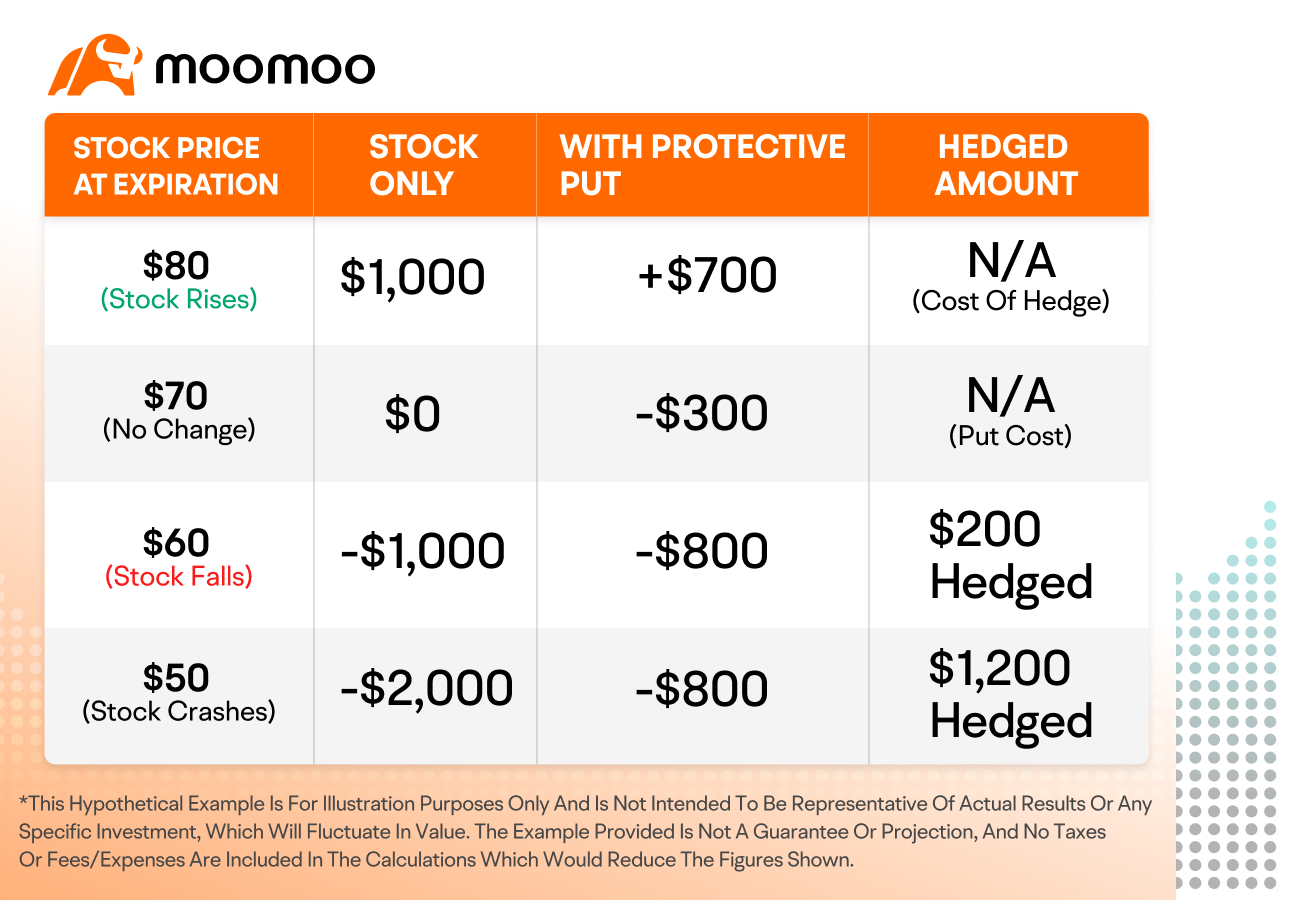
Without protection, a stock crash to $50 would result in a $2,000 loss. With a protective put, the maximum loss is limited to $800, demonstrating how this strategy helps mitigate downside risk. However, if the stock rises or remains unchanged, the $300 cost of the put reduces overall returns. This makes the strategy most useful for investors prioritizing risk management rather than those aiming to maximize gains in neutral or bullish markets.
4. Collar Strategy
How It Works:
Investor buys a put for protection but also sells a call to offset costs.
This limits both downside risk and upside profit potential.
Example Setup:
Stock Purchase Price: $70 per share (100 shares)
Stock Value : $7000
Put Strike Price: $65 (cost = $3 per share → $300 total)
Call Strike Price: $75 (sold for $2 per share → $200 total credit)
Net Collar Cost: $300 (put cost) - 200 (call premium) = $100
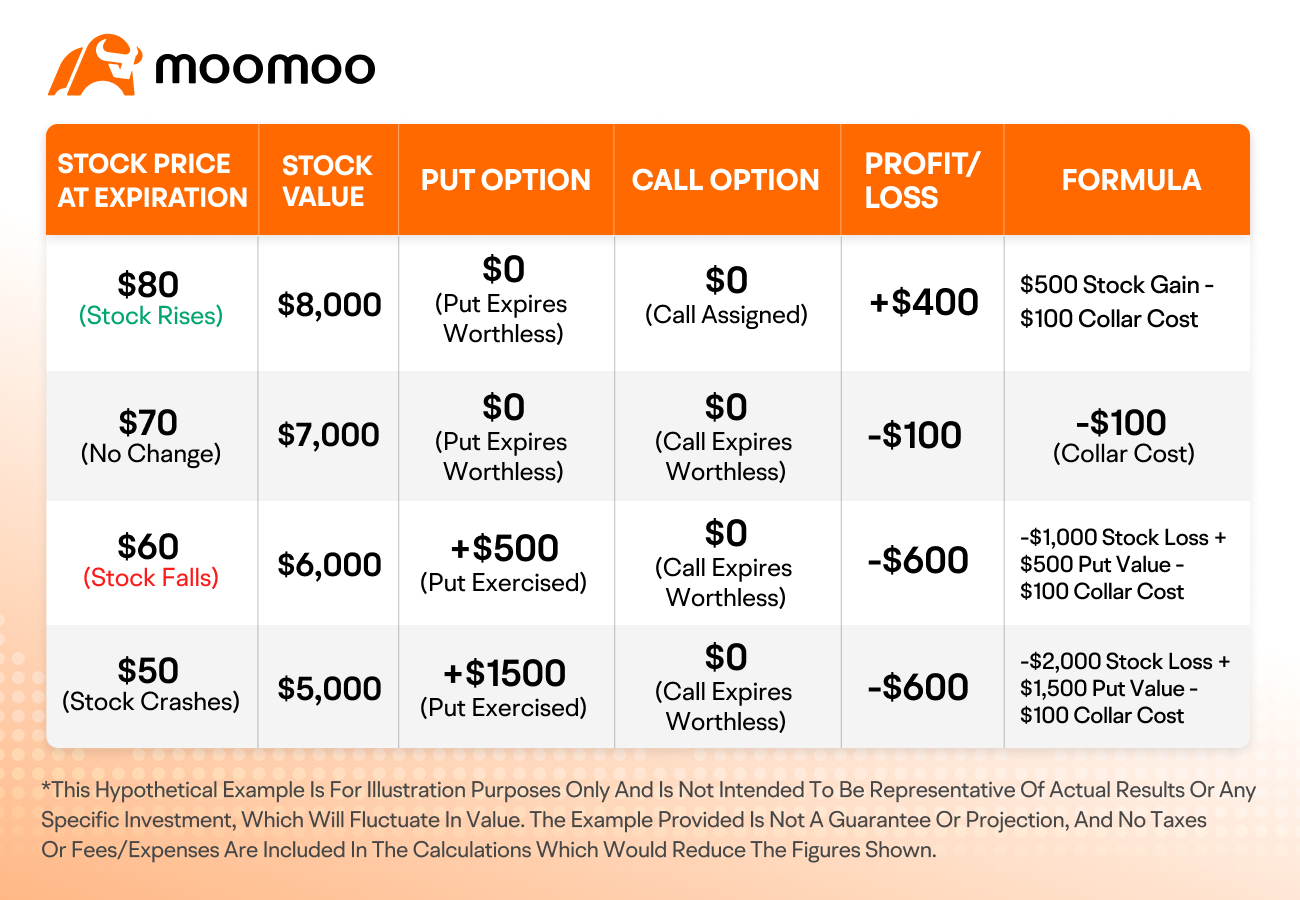
Notes: When the put option is exercised or call is assigned, it means selling the underlying stock at the strike price, effectively closing out the stock position.
These calculations assume the strategy is preserved unchanged until expiration (ITM or OTM) and do not account for early position closure. In practice, traders may choose to close positions before expiration to lock in profits try to limit losses, adjust their hedges to avoid losing remaining extrinsic value.
Collar Strategy: Balanced Risk Management
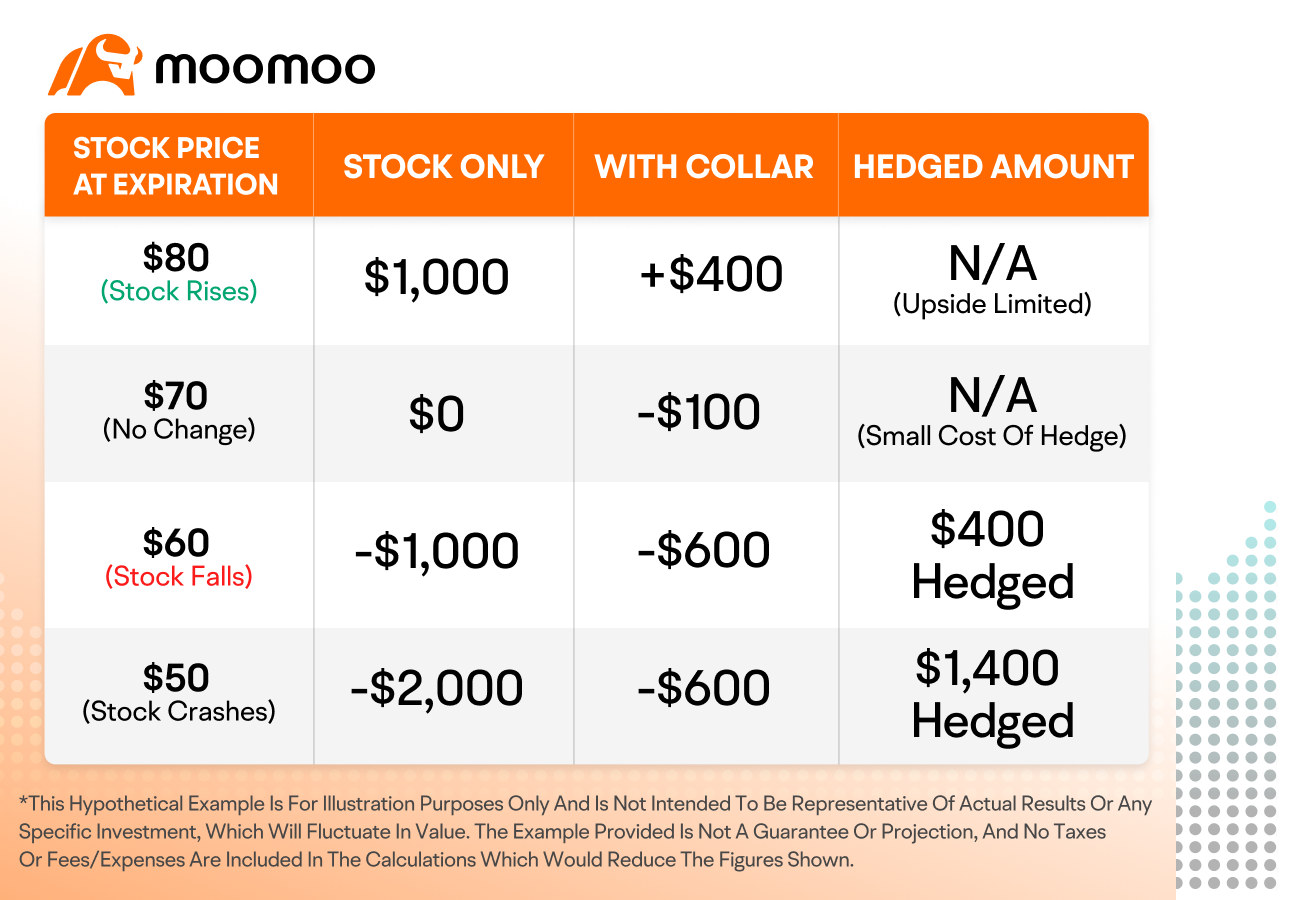
Compared to the protective put, the collar reduces the hedging cost by also selling a covered call. This lowers the protection cost from $300 to just $100. However, this trade-off limits potential gains. For example, if the stock rises to $80, the collar results in a $400 gain, while the protective put gain $700. Unlike the collar, the protective put does not cap upside potential if the stock keeps rising, the profit can continue increasing. In the worst-case scenario example, the underlying stock crashes to $50, the theoretical maximum loss for the collar is $600, which is less than the protective put's $800 loss but at the cost of limiting profit potential if the stock had risen above $75.
5. Protective Puts vs. Collar Strategy: A Comparative Analysis
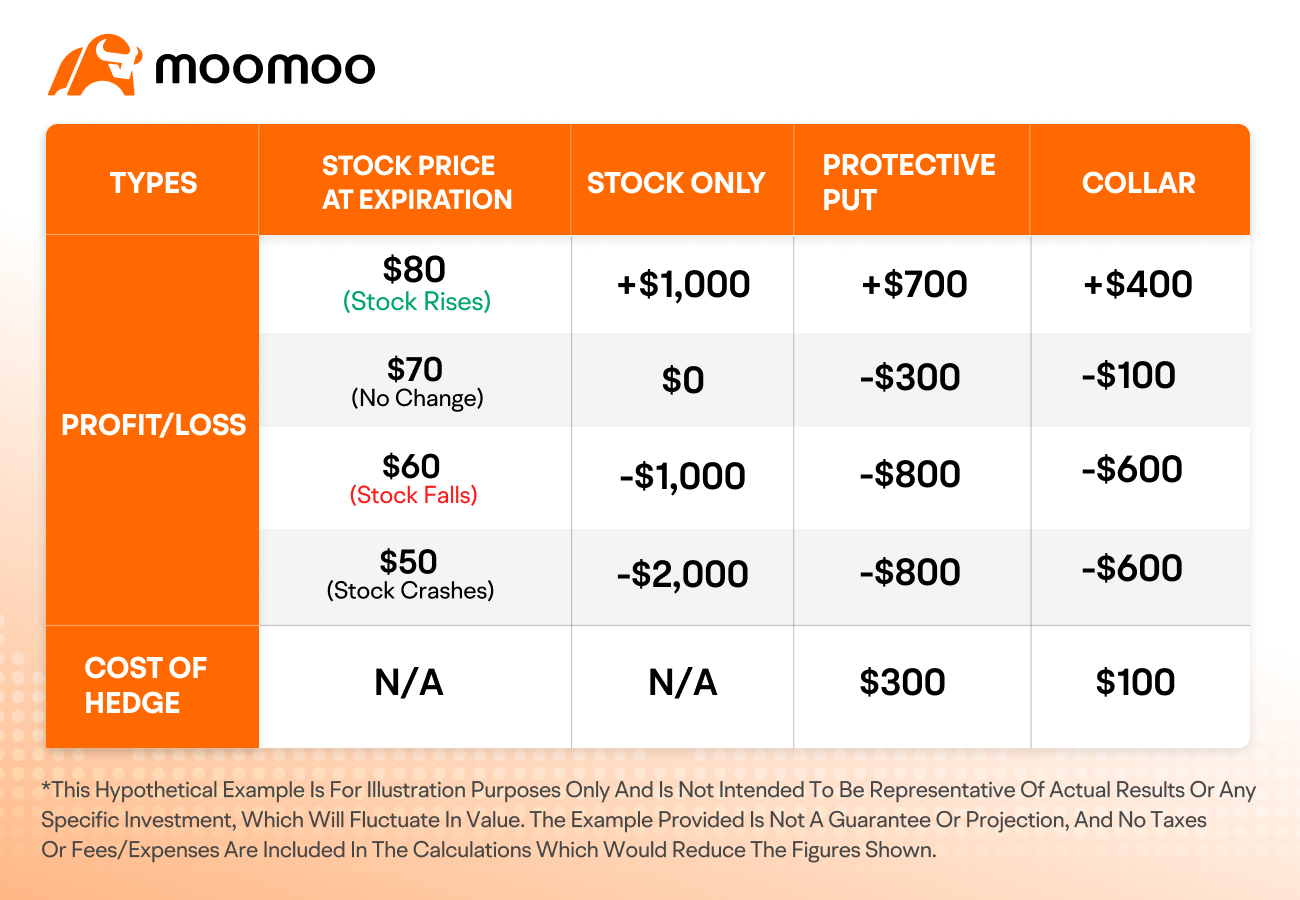
Both the Protective Put and Collar Strategy serve as risk management tools, but they differ in cost, downside protection, and upside potential. Below is a structured comparison:
6. Protective Put – Full Downside Protection at a Cost
A protective put functions as portfolio insurance, allowing investors to hedge downside risk while maintaining unlimited upside potential. However, this protection comes at a cost—the premium paid for the put option and is temporary because options expire.
Cost Consideration - The put premium represents an upfront cost, reducing net potential returns even if the stock does not decline. As shown in the table, if the stock neither rises nor falls, the protective put position incurs a $300 loss due to the premium expense, while holding the stock alone results in no gain or loss.
Risk Protection - The put option ensures that losses are capped beyond the strike price. In extreme downside scenarios, such as a -$2,000 drop in stock value, the protective put strategy only incurs an $800 loss, significantly less than the -$2,000 loss in an unhedged stock position.
Upside Potential - Since no call is sold, the stock price can rise freely. However, the put premium reduces potential net profits compared to an unhedged stock position. As seen in the table, a +$1,000 move results in a +$700 gain, lower than the +$1,000 gain of a stock-only position.
Common Use Case - Protective puts may be considered when an investor expects short-term downside risk but still wants full participation in any price recovery.
7. Collar Strategy – Cost-Effective Hedging with Trade-offs
A collar strategy can mitigate downside risk at a lower cost by combining a protective put with a covered call. While this reduces hedging expenses, it also limits upside potential due to the obligation to sell the stock if the price exceeds the call strike.
Cost Consideration - The collar strategy is generally cheaper than the protective put since the premium received from the sold call offsets part of the put cost. However, the level of protection depends on the chosen strike prices. If the put strike is too far from the stock price or the call premium is too low, the hedge may not provide sufficient downside protection. In the table, the net cost is shown as -$100, which is lower than the -$300 cost of a protective put alone, but actual outcomes vary based on strike selection.
Risk Protection - The collar strategy may provide downside protection at a lower cost compared to the protective put. In the case of a -$2,000 drop in stock value, the collar limits the loss to -$600, which is smaller than the -$800 loss from the protective put. While this results in a better outcome in this specific scenario, the overall effectiveness of the strategy depends on the chosen strike prices and market conditions.
Upside Limitation - Since the investor has sold a call, the profit is capped at the call strike price, adjusted for the net premium or cost of the strategy. As shown, a +$1,000 move results in only a +$400 gain, significantly lower than the protective put (+$700) and stock-only (+$1,000) scenarios.
Common Use Case - Collars could be employed by conservative investors seeking a cost-effective hedge. They are commonly used in long-term portfolio management when the investor prioritizes capital preservation over capturing full upside potential.
8. Conclusion
Both the Protective Put and Collar Strategy offer viable ways to hedge against downside risk, but they cater to different investor needs:
A Protective Put helps manage downside risk while still allowing unlimited upside potential, making it more appealing to for investors who prioritize risk reduction over cost. However, it comes at a higher premium cost. The level of protection depends on the put strike price and whether the position remains unchanged until expiration.
Collar Strategy lowers the cost of hedging by selling a call option, but this also limits potential gains. This might be a more appropriate choice for investors seeking a balanced approach to risk management at a lower cost.
The examples above assume that options are held until expiration, where the outcomes depend on whether the options expire in the money (ITM) or out of the money (OTM). However, in practice, many traders adjust or close their positions before expiration based on changing market conditions. For instance, traders might:
Close the put position early if the stock drops significantly, locking in gains from the hedge.
Exit the collar strategy if the stock approaches the call strike price, preventing assignment.
Adjust the strike prices or roll positions forward and realize a profit or loss if new market risks emerge.
Ultimately, the choice between these strategies depends on an investor’s market outlook, risk tolerance, and cost considerations. In volatile or bearish markets, hedging with options can help investors maintain their positions while managing risk effectively. However, investors should also consider whether they are approved to trade options and their level of approval, as this may impact the strategies available to them.
Disclaimer
Options trading entails significant risk and is not appropriate for all customers. It is important that investors read Characteristics and Risks of Standardized Options before engaging in any options trading strategies. Options transactions are often complex and may involve the potential of losing the entire investment in a relatively short period of time. Certain complex options strategies carry additional risk, including the potential for losses that may exceed the original investment amount. Positions may also be subject to margin requirements, early assignment, or liquidity constraints. Supporting documentation for any claims, if applicable, will be furnished upon request.Moomoo Technologies Inc., Moomoo Financial Inc., Moomoo Financial Singapore Pte. Ltd., Moomoo Securities Australia Limited and Moomoo Financial Canada Inc., and Moomoo Securities Malaysia Sdn. Bhd.are affiliated companies.
Moomoo will automatically liquidate the options upon expiration only in cases where the account meets margin requirements, and it is important to verify that this applies to your account. Liquidation is not guaranteed, and investors should monitor their positions closely.
Although hedging strategies seek to limit or reduce investment risk, they may also limit or reduce the profit potential. There is no assurance that hedging strategies will be successful.
Rolling involves closing an existing position and realizing gains or losses, while also opening a new position.
Rolling options doesn't ensure a profit or guarantee against a loss. You may also end up compounding your losses. By rolling out, the duration is extended, which can also increase risks as there's more time for the underlying security’s price to move unfavorably.
This presentation is for informational and educational use only and is not a recommendation or endorsement of any particular investment or investment strategy. Investment information provided in this content is general in nature, strictly for illustrative purposes, and may not be appropriate for all investors. It is provided without respect to individual investors’ financial sophistication, financial situation, investment objectives, investing time horizon, or risk tolerance. You should consider the appropriateness of this information having regard to your relevant personal circumstances before making any investment decisions. Past investment performance does not indicate or guarantee future success. Returns will vary, and all investments carry risks, including loss of principal. Moomoo makes no representation or warranty as to its adequacy, completeness, accuracy or timeliness for any particular purpose of the above content.
Moomoo is a financial information and trading app offered by Moomoo Technologies Inc.
In the U.S., investment products and services available through the moomoo app are offered by Moomoo Financial Inc., a broker-dealer registered with the U.S. Securities and Exchange Commission (SEC) and a member of Financial Industry Regulatory Authority (FINRA)/Securities Investor Protection Corporation (SIPC).
In Singapore, investment products and services available through the moomoo app are offered through Moomoo Financial Singapore Pte. Ltd. regulated by the Monetary Authority of Singapore (MAS). Moomoo Financial Singapore Pte. Ltd. is a Capital Markets Services Licence (License No. CMS101000) holder with the Exempt Financial Adviser Status. This advertisement has not been reviewed by the Monetary Authority of Singapore.
In Australia, financial products and services available through the moomoo app are provided by Moomoo Securities Australia Limited, an Australian Financial Services Licensee (AFSL No. 224663) regulated by the Australian Securities and Investment Commission (ASIC). Please read and understand our Financial Services Guide, Terms and Conditions, Privacy Policy and other disclosure documents which are available on our website https://www.moomoo.com/au.
In Canada, order-execution only services available through the moomoo app are provided by Moomoo Financial Canada Inc., regulated by the Canadian Investment Regulatory Organization (CIRO).
In Malaysia, investment products and services available through the moomoo app are offered through Moomoo Securities Malaysia Sdn. Bhd.("Moomoo MY") regulated by the Securities Commission of Malaysia (SC). Moomoo Securities Malaysia Sdn. Bhd.is a Capital Markets Services Licence (License No. eCMSL/A0397/2024) holder. This advertisement has not been reviewed by the SC.
This presentation is for informational and educational use only and is not a recommendation or endorsement of any particular investment or investment strategy. Investment information provided in this content is general in nature, strictly for illustrative purposes, and may not be appropriate for all investors. Read more