Short Put
I. Strategy overview
1)Strategy composition
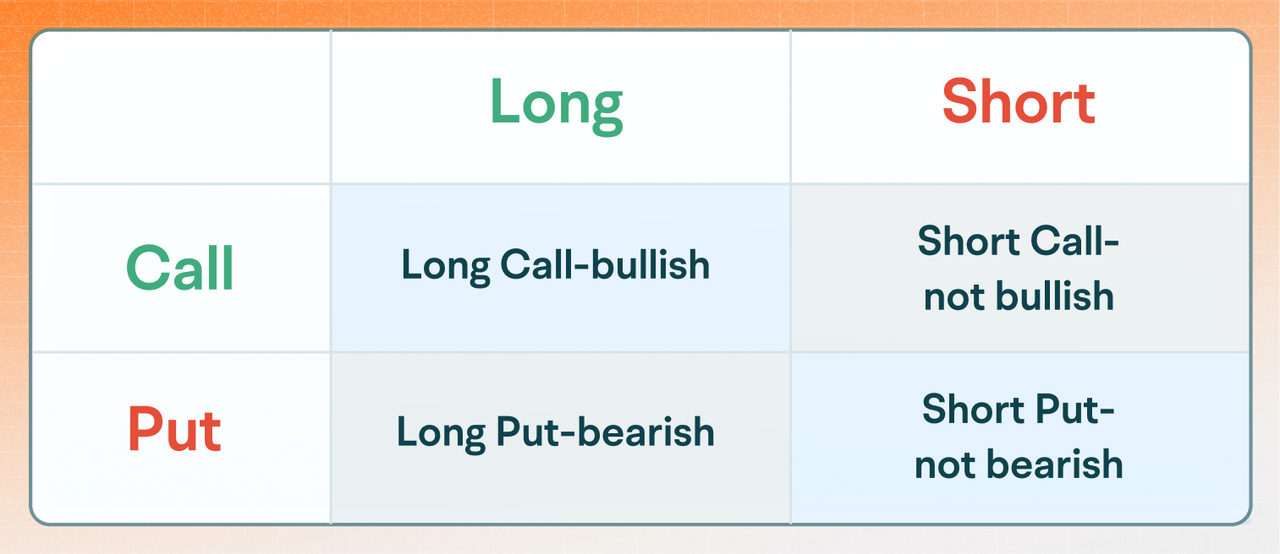
This chapter introduces the last of the four basic option strategies: Short Put.
If you believe a stock will not decline in value over a certain period, you might consider becoming a put option seller.
If the stock price is above the strike price at expiration, you can keep the premium without the obligation to purchase the underlying asset. However, if the stock price falls below the strike price during the agreed period, you will be obliged to buy the stock as per the agreement.
Here, we discuss a straightforward short put option, where the investor mainly aims to receive the option premium and typically does not intend for the option to be exercised, nor do they prepare sufficient cash.
This operation is also known as an "uncovered put" or "naked put." Similar to the Short Call, this strategy is speculative and carries high risk.
If you have enough cash to cover the amount needed if the short put option is exercised and you wish to acquire the stock at a target price, this strategy is known as a "cash-secured put." This strategy carries a relatively lower risk, and interested investors can look into it further.
2)Profit and loss analysis
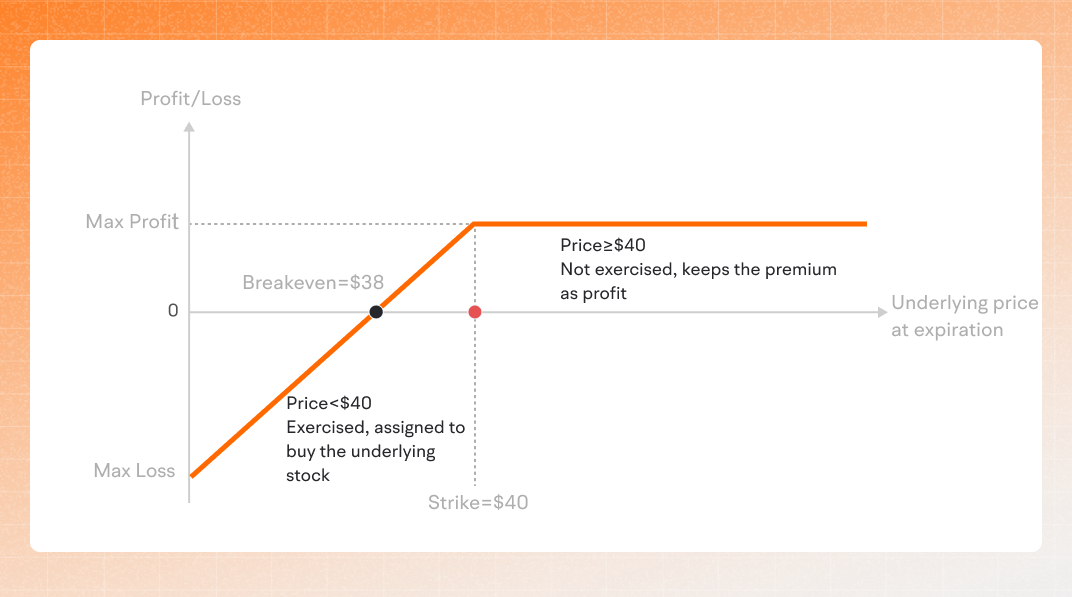
3)Strategy characteristics
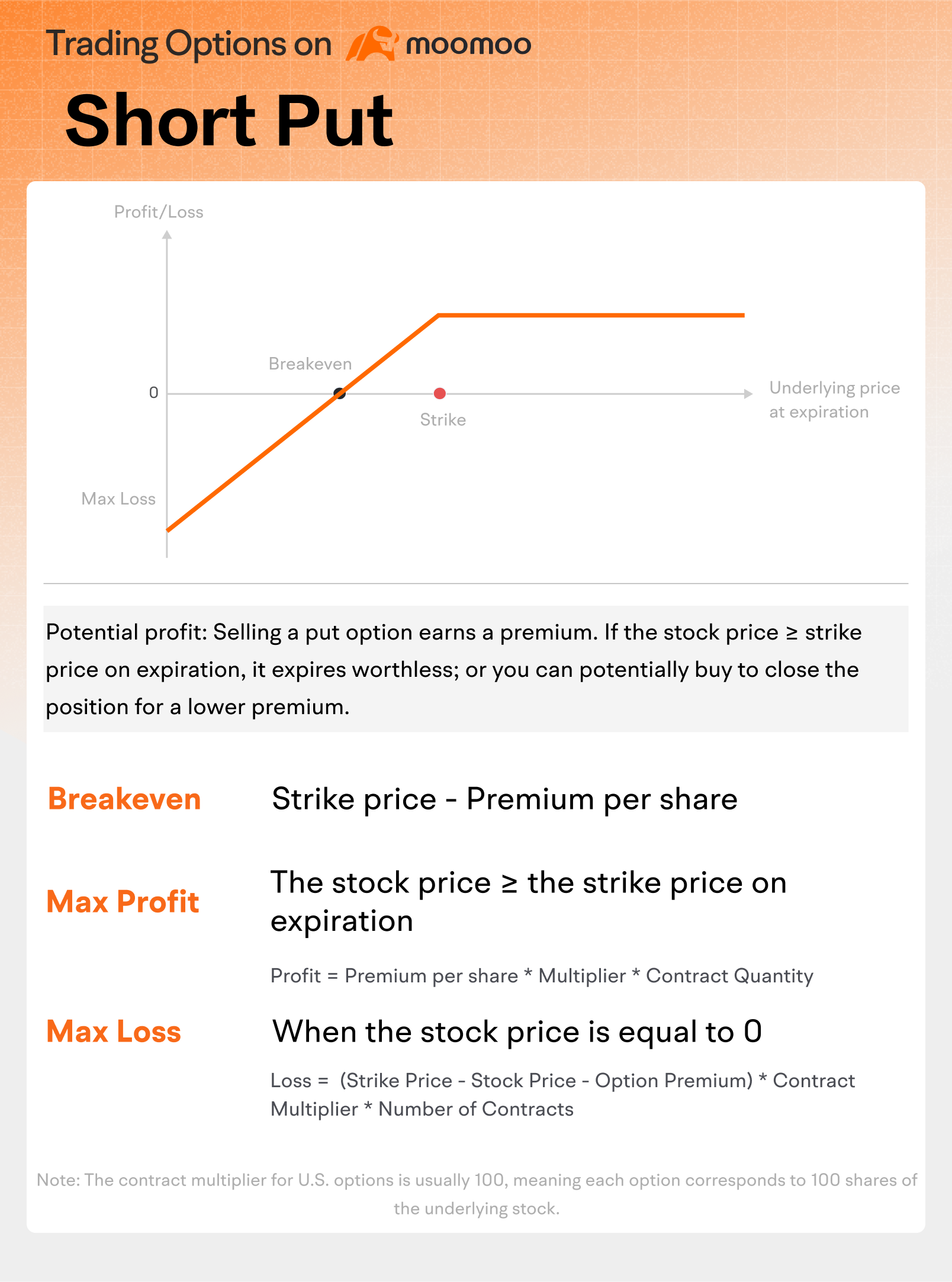
You are obligated to purchase the stock at the strike price. The more the underlying stock falls, the greater the potential loss.
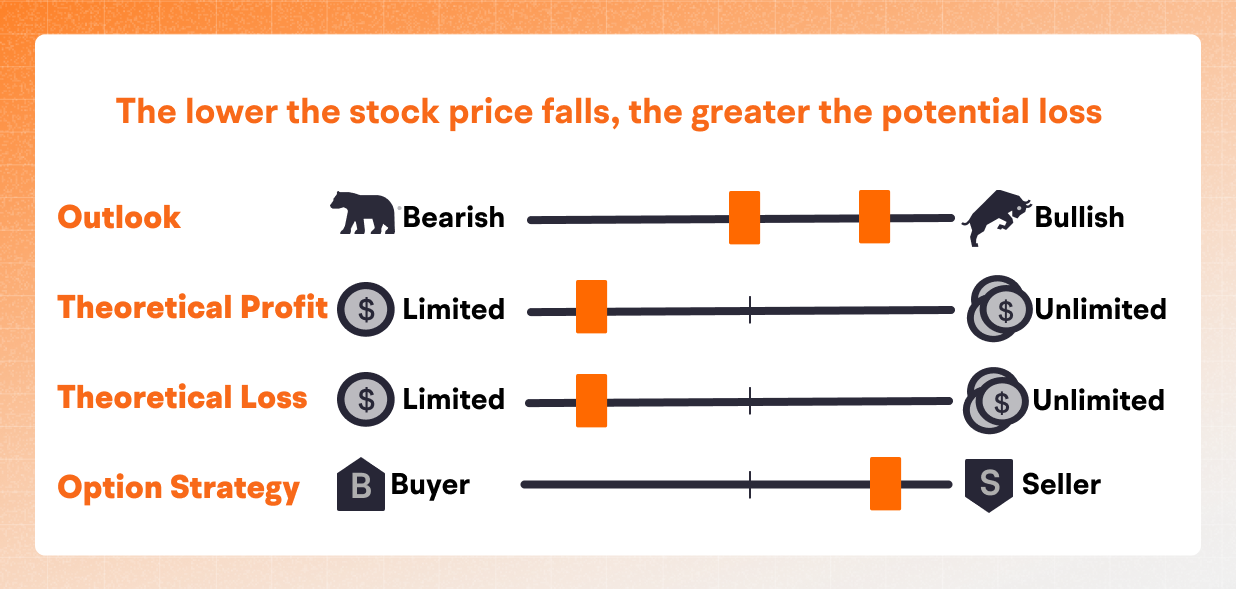
Limited profit: If the stock price does not fall below the strike price by the expiration date, the put option becomes worthless, and the seller retains the entire premium.
Limited loss: The seller of a put option bears the obligation to purchase the underlying asset at the strike price. Since the stock price can only fall to zero, the theoretical maximum loss from selling a put option is the strike price minus the option premium.
Seller strategy: This strategy is a seller's strategy, with the premium received when opening a position.
II. Case study
Assume TUTU is a publicly traded company with a current stock price of $50. You believe that TUTU will not fall below $40 in the near future, so you sell a put option expiring in three months with a strike price of $40 and receive a $2 per share premium.
(Note: TUTU is a fictional stock used for demonstration purposes only.)
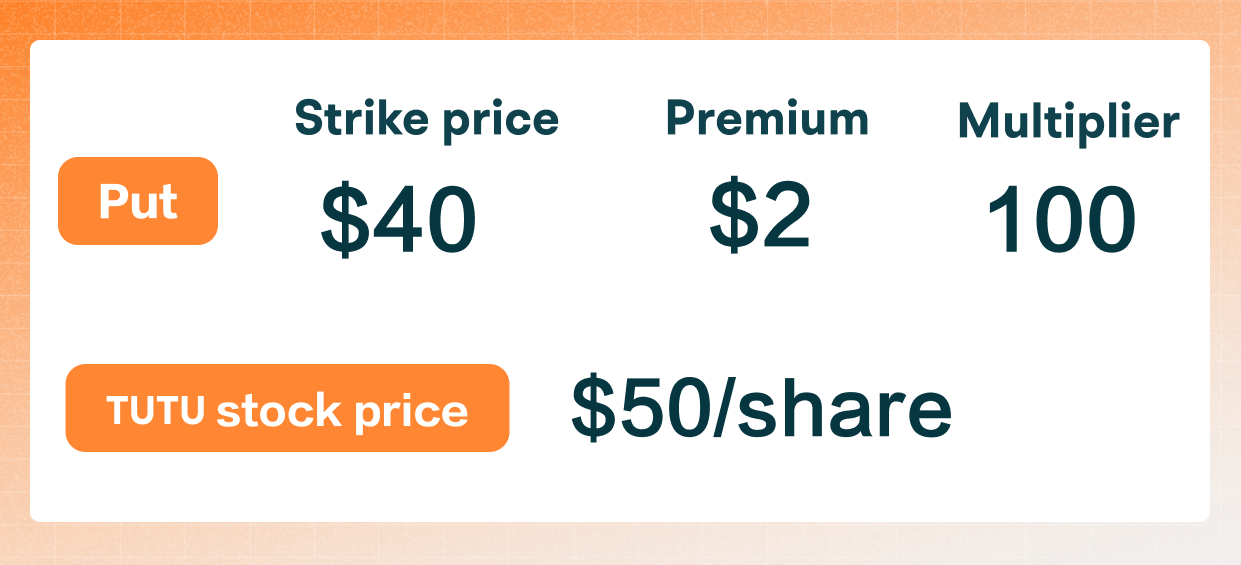
Since the option premium per share is $2, the total premium received is $200.
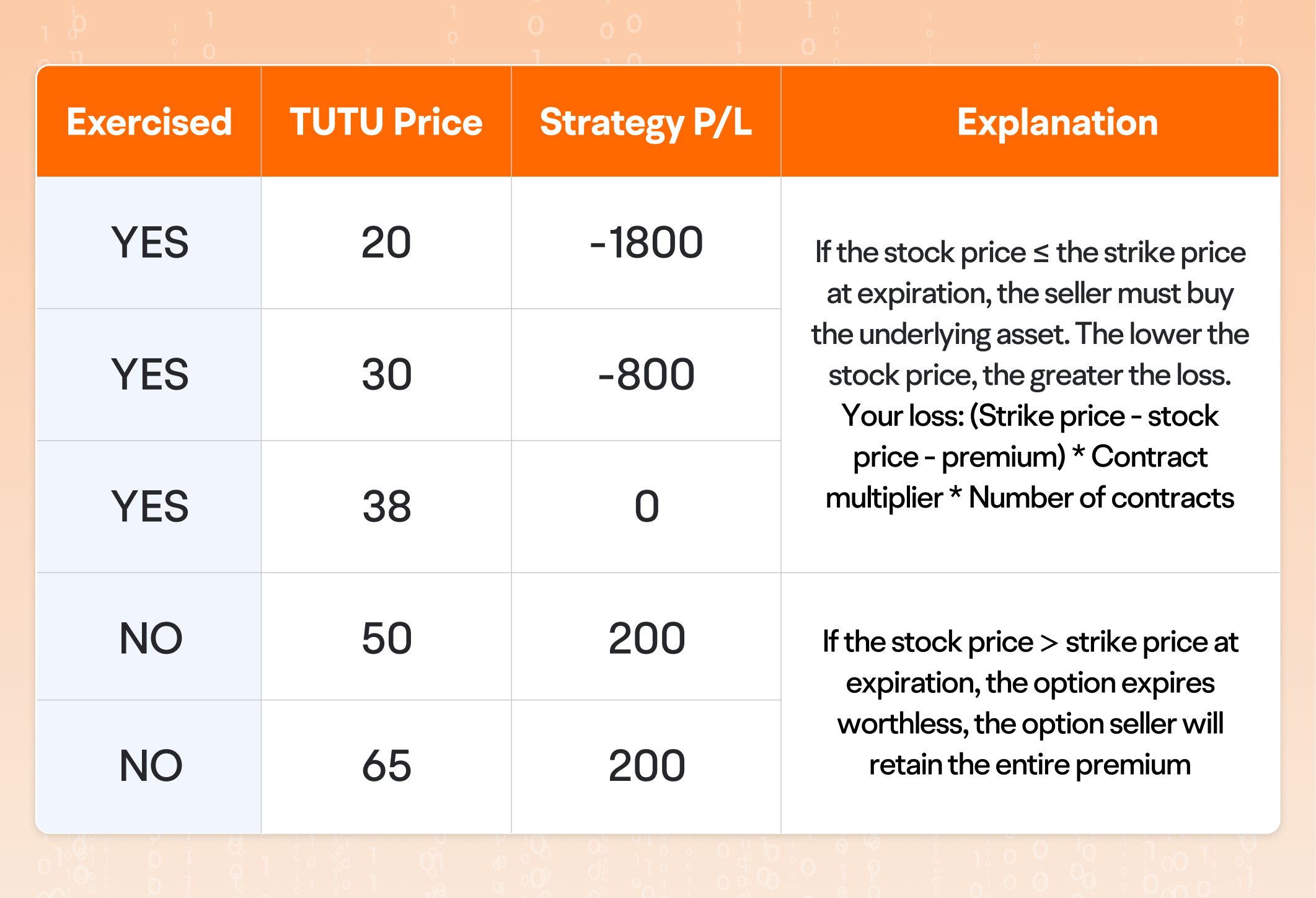
Scenario 1: Stock price < strike price
Assume on the expiration date, TUTU's stock price is $30:
You are obligated to buy 100 shares from the option buyer at $40 per share.
Your loss per share: 40 (strike price) - 30 (stock price) - 2 (option premium) = $8.
Total loss: 8 * 100 = $800.
If the stock price continues to drop, you may end up buying the stock at a higher price compared to the market, resulting in cash losses.
If the loss exceeds the premium you received, the strategy will generate a loss. In this example, $38 is the breakeven point.
Scenario 2: Stock price ≥ strike price
Assume on the expiration date, TUTU's stock price is $55:
In this case, the option will not be exercised, and as the seller, you will collect the entire option premium of $200.
III. How to set up a short put on moomoo
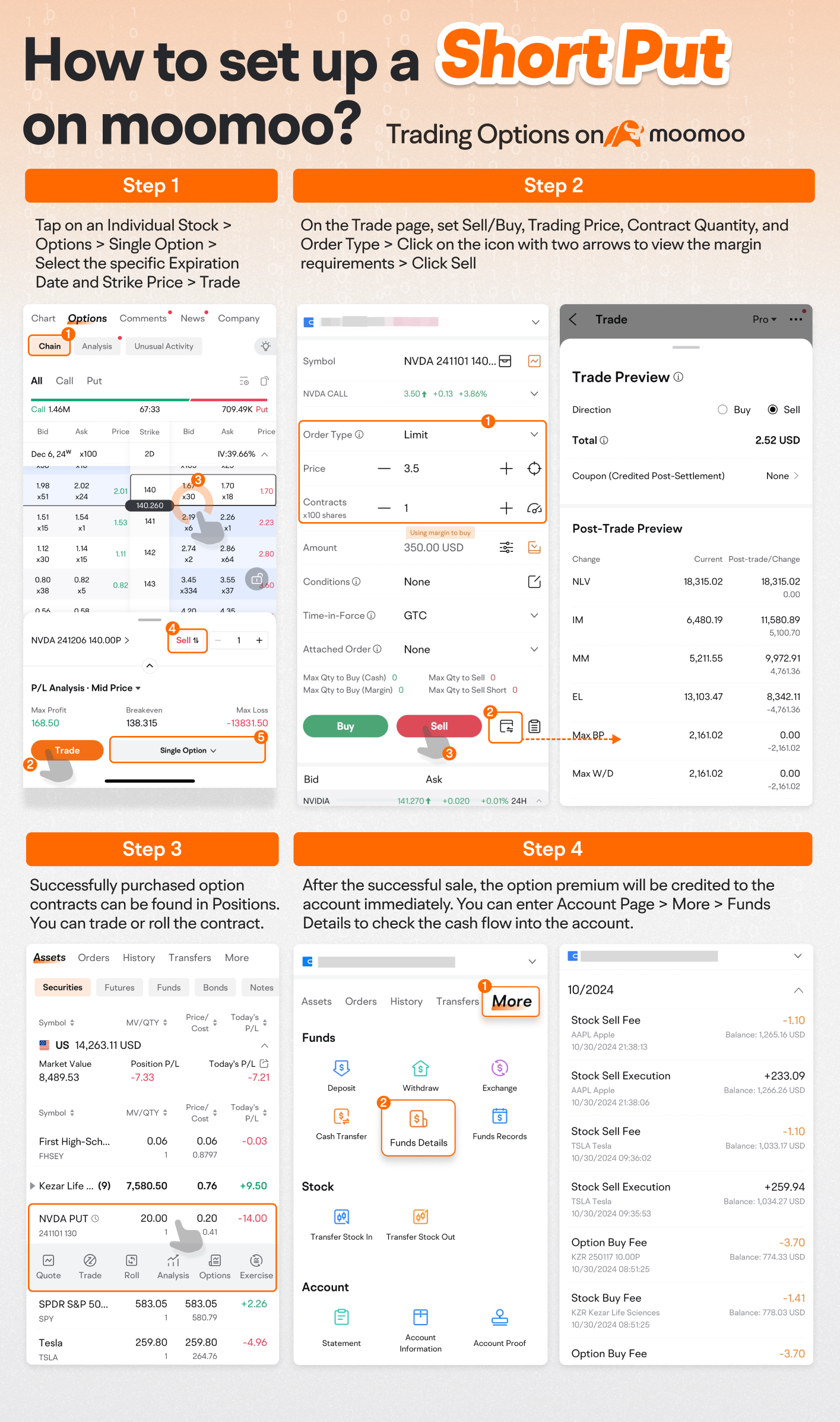
Step 1: Access the stock quotes page > Options chain > Single-leg options > Select specific expiration date and strike price > Click Trade
The page defaults to displaying all options for the nearest expiration date. Click Put to view all put options.
In the option chain, click the corresponding option and select the direction Sell. A quick trade bar will appear at the bottom of the page; clicking the upward arrow shows a profit/loss analysis chart.
This tool will automatically calculate potential profits based on the underlying stock price, and you can slide left or right on the chart to see how different price points might affect your return. It also shows the probability of profit and break-even points.
If you want more details, double-click to enter the specific quotes page. Once you've decided to sell the put option, click Trade at the bottom left of the page to proceed to the next step.
Step 2: Enter the Trade Page > Set trading direction, trading price, number of contracts, and order type > Click Sell
The options trading interface resembles that of the underlying stock, with the trade direction confirmed as 'sell.' Keep in mind that option prices may have a significant bid-ask spread, so you might want to place your order at a midpoint based on current market conditions.
Although the theoretical maximum loss from selling a put option is limited, extreme price fluctuations can still pose significant risks to your account.
You can use the limit order or market order functions in the trading interface to implement stop-loss and take-profit measures. If the put option's price hits your preset level, the system will automatically submit an order to buy back and close the position.
However, if the option price moves too quickly, there may be cases where the closing order cannot be executed, requiring you to monitor closely and manually close the position if necessary.
Step 3: The sold option contract can be found in Holdings. You can trade or roll forward the option here.
IV. Applying the short put strategy
1) Earning option premium upfront
When you sell a put option, the premium you receive acts like immediate income, and you don’t need to invest any funds upfront to earn it. If the stock price remains above the strike price at expiration, you can effortlessly keep this premium.
However, if the stock price falls below the strike price, the put option seller is obligated to purchase the corresponding quantity of stock at the strike price. If you don't have enough cash, you may need to borrow money to buy the stock, which could even trigger a margin call.
2) Utilizing volatility premium
Market expectations of future volatility affect option prices, known as implied volatility. The higher the volatility, the more expensive the option, as the market perceives a higher likelihood of the price reaching the option's strike price.
Before and after events such as company earnings announcements or Federal Reserve meetings, market volatility typically increases. Selling options during these times can yield higher premiums. If you have enough cash and are prepared to buy the underlying asset upon exercise (selling a cash-secured put), you can refer to the relevant sections for specific applications.
V. FAQs
A. Which carries higher risk, short call or short put? What are the differences?
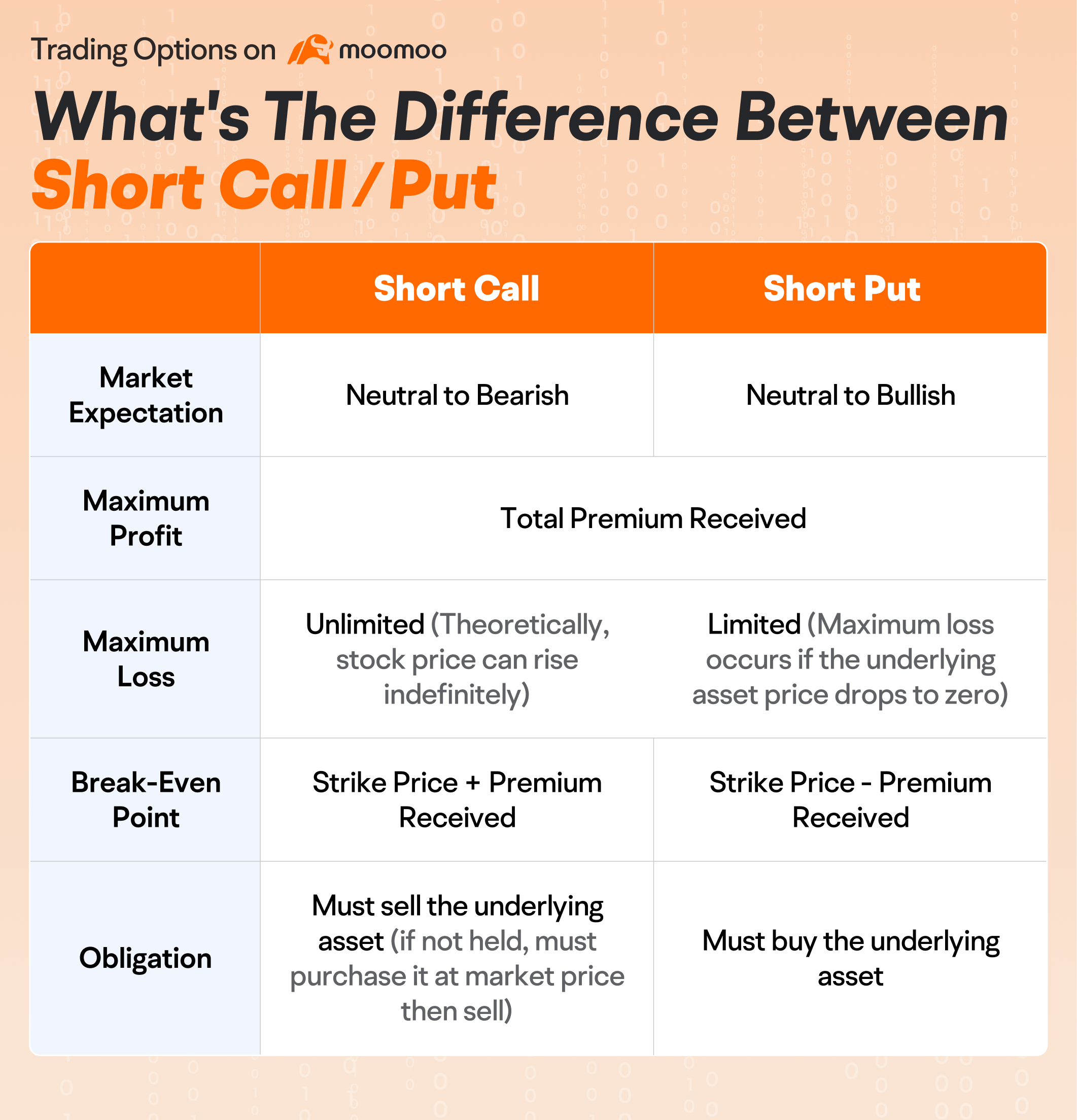
Both of them are high-risk strategies. However, the risks differ significantly. A short call carries unlimited theoretical loss potential since stock prices can rise indefinitely. In contrast, the risk associated with a short put is significant but predictable; the maximum loss occurs if the underlying asset's price drops to zero. Therefore, investors should exercise caution when using either of these strategies.
B. How can risk be reduced when using the short put strategy?
You can be more conservative in choosing the strike price, rather than simply maximizing the premium received. When selecting a strike price, you might choose a strong support level (or lower) to decrease the probability of the option being exercised.
For option sellers, time is on your side. Time value decays continuously as the expiration date approaches, reaching zero on the expiration date. The time decay process is non-linear; the closer to expiration, the faster the time value diminishes. Generally, the time value of options decays most rapidly within 30 days before expiration.
In practice, it is also advisable to select underlying assets with high trading volume and liquidity. Low liquidity can make it difficult to close your position at a favorable price, or even prevent you from closing it altogether.
C. What should you do if the short put option is exercised, but you lack sufficient cash?
Since you're obligated to purchase the underlying assets but don’t have enough cash, you can finance the purchase, though this will incur interest and additional costs. If your account's purchasing power is still inadequate, you may receive a margin call. You can either deposit enough funds to meet the margin requirements or, if you fail to do so within the specified time, the system may forcibly close your position. When selling a put option, the system will also determine the maximum number of puts you can sell based on your current account purchasing power.
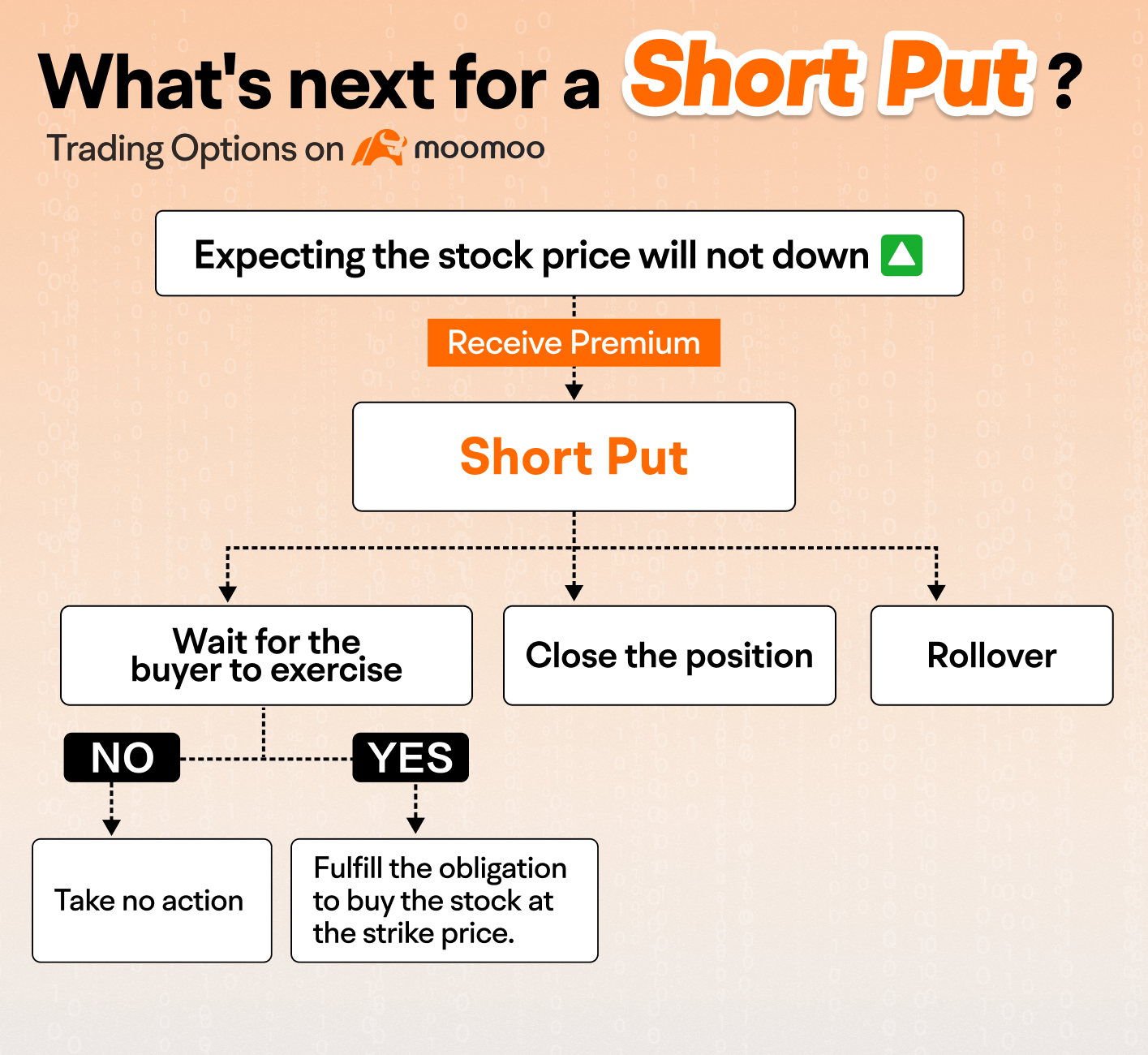
D. What are your trading options after selling a put option?
Closing the position early: After selling a put option, if the option price drops as expected, you might consider buying back to close the position and lock in profits. Conversely, if market trends differ from your previous expectations, you should also consider selling to stop losses at an appropriate time. Your profit is calculated as (Premium received at sale - Premium paid at closing) * Contract Multiplier * Number of Contracts.
Rolling the position: For the same underlying stock, you can buy back the current put option to close the position and sell a new put option. If the price or time of the initially sold option needs adjustment, this method can be used to reallocate. However, rolling over the position also increases transaction costs.
Assigned for early exercise: If an option buyer chooses to exercise early, the system will randomly match buyers and sellers, and you may be assigned to purchase the stock early. However, this scenario is less common since the option buyer forfeits time value by exercising early.
Holding until expiration: If the option is out-of-the-money at expiration, it will expire worthless, and you keep the entire premium. If the option is in-the-money, it will be automatically exercised, and you must purchase the corresponding number of underlying assets at the strike price.
Automatic exercise conditions:
U.S. market: On the expiration date, if the underlying stock price is $0.01 or more below the strike price.
Hong Kong market: On the expiration date, if the underlying stock price is 1.5% or more below the strike price.
This presentation is for informational and educational use only and is not a recommendation or endorsement of any particular investment or investment strategy. Investment information provided in this content is general in nature, strictly for illustrative purposes, and may not be appropriate for all investors. Read more