
Moomoo Insights
Jul 16 15:38
TSMC Earnings: AI Demand Is Stronger Than the Chip Selloff Suggests
Moomoo Insights
Sep 30 05:04
Live Take | Anthropic’s $518B Compute Bet: Who Wins From the AI Buildout?
The S&P 500 is one of the most popular stock market indices, representing 500 of the largest publicly traded companies in the U.S. If you're a beginner looking to invest in the S&P 500, this guide will walk you through the basics, explain why it's a favored choice for some investors, and provide strategies for potential returns while managing risks.
The S&P 500 (Standard & Poor's 500) is a stock market index that tracks the performance of 500 of the largest companies listed on U.S. stock exchanges. Created in 1957, the S&P 500 is widely considered a benchmark for the U.S. equity market and the broader economy. It includes companies from various sectors, such as technology, healthcare, and financial services, offering a diversified snapshot of the market’s performance.
The S&P 500 includes household names like Apple, Microsoft, and Amazon, along with a mix of other large-cap stocks across various industries. These companies are selected based on their market capitalization, liquidity, and financial performance. The composition of the index changes periodically as companies rise and fall in value or merge with others. This diversification makes the S&P 500 a relatively low-risk way to gain exposure to a broad swath of the economy.
The S&P 500 is a popular choice for both novice and seasoned investors due to its historical stability and diversification. Iinvesting in the S&P 500 has historically been similar to investing in the overall health of the U.S. economy, which has a track record of long-term growth. The index also tends to recover well after market downturns, making it a solid option for long-term investors looking to weather market volatility. It offers a relatively low-cost way to gain exposure to hundreds of large companies without the need to pick individual stocks.
There are several ways to invest in the S&P 500, each with its own set of potential advantages and considerations. Here are the three most common methods:
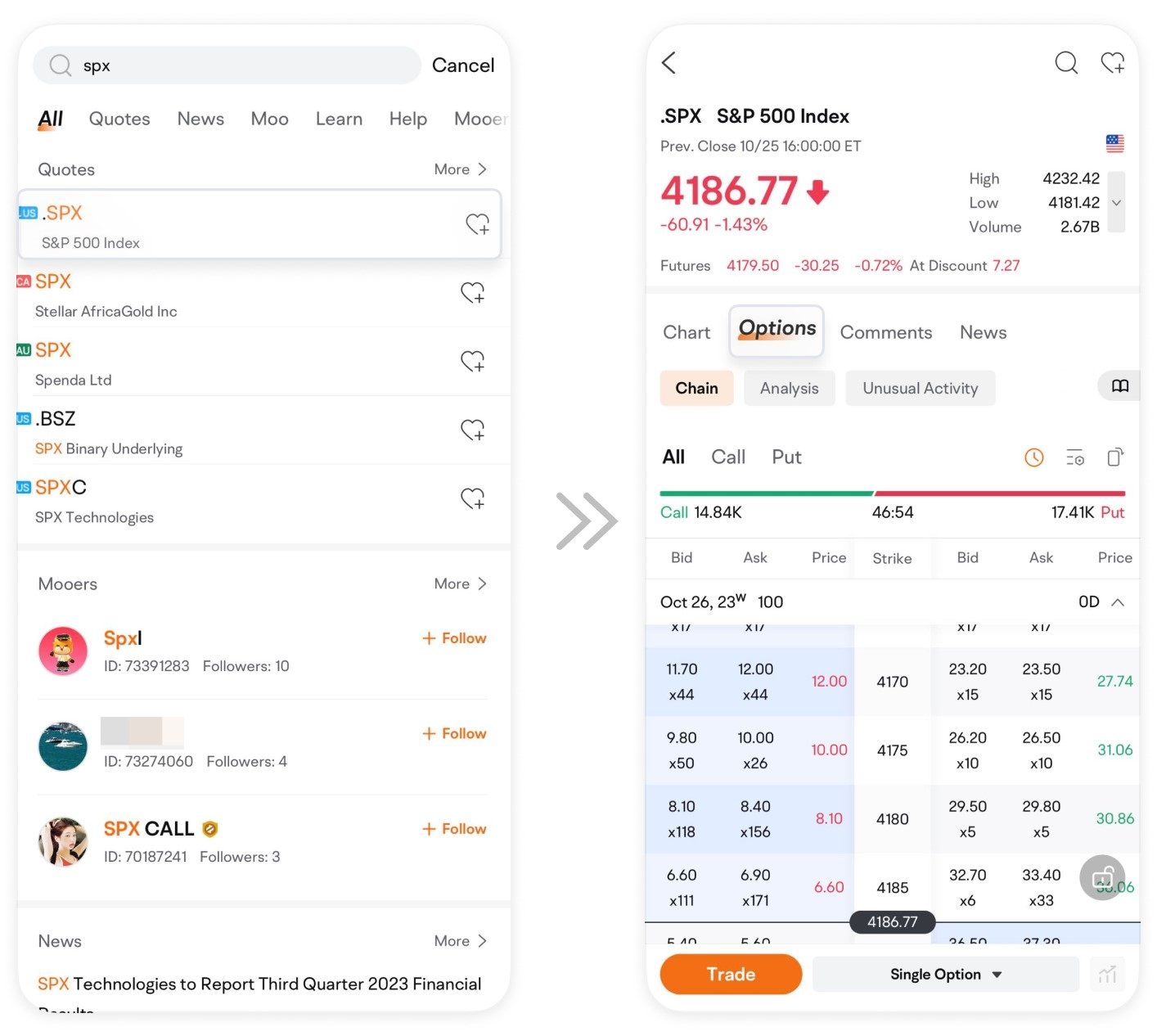
Images provided are not current and any securities are shown for illustrative purposes only
An S&P 500 index fund is a mutual fund that mirrors the performance of the S&P 500. When you invest in an index fund, you're buying into all 500 companies listed in the index, offering instant diversification. Index funds are managed passively, meaning they aim to match the index's performance rather than beat it. Because they require less active management, index funds typically have lower fees than actively managed funds.
An exchange-traded fund (ETF) that tracks the S&P 500 works similarly to an index fund, but it trades on a stock exchange like a regular stock. S&P 500 ETFs offer flexibility because you can buy and sell them throughout the day, whereas mutual funds settle at the end of the trading day. ETFs often come with lower expense ratios — a fee that reflects the cost of managing and operating the fund, expressed as a percentage of the fund's assets. Lower expense ratios help investors keep more of their potential returns over time. Additionally, ETFs generally have no minimum investment requirements, making them an attractive option for many investors.
Another option is to invest in individual stocks that are part of the S&P 500. This allows you to focus on specific companies you believe will outperform. However, this approach requires more research and carries more risk since you're not benefiting from the broad diversification of the full index. Investing in individual stocks is better suited for those who have experience with stock analysis and a higher risk tolerance.
The cost of investing in the S&P 500 depends on how you choose to invest. If you're investing in an index fund or ETF, you'll typically encounter low expense ratios — often between 0.03% and 0.1% annually. This means for every $1,000 you invest, you might pay as little as $0.30 to $1 in fees each year. However, if you decide to buy individual stocks from the S&P 500, you'll pay transaction fees or commissions, which can vary depending on your brokerage. Keep an eye on any management fees or trading commissions, as they can add up over time and impact your returns.
Investing in the S&P 500 can be a cornerstone of a long-term investment strategy. Here are some key strategies to consider:
Dollar-cost averaging: This involves investing a fixed amount of money at regular intervals, regardless of market conditions. Dollar-cost averaging can help reduce the impact of market volatility, as you’ll be buying more shares when prices are low and fewer shares when prices are high.
Buy and hold: The buy-and-hold strategy is based on the belief that, over time, the market tends to rise. By holding your investment in the S&P 500 over a long period, you can potentially benefit from the market's overall growth and avoid the pitfalls of trying to time the market.
Reinvesting dividends: Many S&P 500 funds or ETFs pay dividends, which can be reinvested to buy more shares. Reinvesting dividends can be an effective way to boost your returns over the long term.
The choice between an S&P 500 index fund and an ETF comes down to personal preference and investment style. If you prefer flexibility and the ability to trade throughout the day, an ETF may be a better choice. ETFs also tend to have lower expense ratios and no minimum investment requirements. On the other hand, index funds may be a good option if you prefer a more hands-off, long-term investment approach, as they allow for easy automatic investments.
Diversification: Investing in the S&P 500 gives you exposure to 500 companies across multiple industries, reducing individual stock risk.
Historical performance: The S&P 500 has historically provided solid long-term returns, averaging around 10% per year over several decades.
Liquidity: Whether through an index fund or ETF, S&P 500 investments are highly liquid, meaning they can easily be bought and sold.
Market risk: Like all stock market investments, the S&P 500 is subject to market fluctuations. In a downturn, your investment could lose value.
Concentration risk: While the S&P 500 is diversified across industries, a large portion of the index is made up of just a few tech giants, meaning a downturn in the tech sector could disproportionately affect the index.
The S&P 500 may be a good first investment for some beginners due to its diversification and historical performance. It allows you to invest in a broad section of the market without needing to pick individual stocks.
Most S&P 500 ETFs and index funds pay dividends. These dividends come from the profits of the companies within the index and can be reinvested or taken as cash.
You can invest in the S&P 500 without a traditional broker by using online trading platforms or apps. These platforms allow you to invest directly in S&P 500 ETFs or individual stocks with ease. For example, moomoo offers a user-friendly app where you can buy and sell S&P 500 stocks or ETFs, providing you with a range of tools to help manage your investments.
Over the past 10 years, the average annual return of the S&P 500 has been approximately 10-12%, though this figure fluctuates depending on market conditions. It’s important to remember that past performance does not guarantee future results.
This presentation is for informational and educational use only and is not a recommendation or endorsement of any particular investment or investment strategy. Investment information provided in this content is general in nature, strictly for illustrative purposes, and may not be appropriate for all investors. Read more
Recommend
How to Trade Volatility: Strategies & Tips for Success
How to File Taxes: 6 Steps for Beginners

Best AI Stock Trading Tools on moomoo Trading App

What is Algorithmic Trading | Benefits, Strategies & Future Trends
How to Diversify Your Portfolio: 6 Strategies to Consider
How to Invest in Dividend Stocks for Beginners
How to Invest in DeepSeek Stock: Easy Steps to Follow
How to Invest in Silver for Beginners
Meme Stocks: Definition, Examples, and Impact on the Market
What is an ACH Transfer: Definition, Types & Benefits
Stop-Limit Order: What it is in Stocks
How to Invest In OpenAI Stock in 2026
Fractional Shares: Definition & How to Buy
Cash Accounts: What Are They and How Do They Work
What Are International Stocks & American Stocks?
Margin Account vs Cash Account: Which is Right for You?
Volatility: Definition in Finance and How to Calculate
What is a Brokerage Account: Definition and How to Open
What Are Bitcoin ETFs and How to Trade
How to Transfer Stocks From One Broker to Another
New "T+1" Settlement Cycle | What You Need to Know
SEC Form 13F: Definition, Filling Requirements, and Examples
How to Choose a Good Online Brokerage for Stock Trading
Bitcoin Futures: What Are They and How to Invest
What Is 403(b) Plan? How Does It Work
Price Action Trading: A Guide to Understanding the Basics
Margin Trading: Strategies, Benefits, and Risks
How to Invest in Index Funds for Beginners
Pre-Market and After-Hours Trading: Definition & How It Works
What is the Stock Market: Key Concepts and Functions
Common Stock: Definition, Benefits, and vs. Preferred Stock
Stock Dividends vs. Capital Gains: What You Need to Know
What Is a Stock Split - Definitions, How It Works, & Examples
Institutional Investors: Definitions & How They Invest
How to Invest in the S&P 500 for Beginners
The Impacts of ChatGPT on the Stock Market
ETFs vs. Mutual Funds
How to Practice Trading Stocks with a Free Demo Account?
The Basics of Financial Literacy: Why You Should Care
Stocks vs. Bonds
Choosing the Best Trading Platform for You — moomoo vs. Webull vs. Robinhood
The Consumer Price Index (CPI) Explained For Investors
How to Use moomoo Paper Trading Online?
What Is the Price-to-Sales (P/S) Ratio?
What Is a Quarterly Report?
What Is the Price-to-Book (P/B) Ratio?
Margin Account Explained: Definition, Benefits, and How to Use It
What Is A 10-K?
What Is SEC Form 10-Q?
What Is Ethical Investing
What Is Earnings Season
What Is Socially Responsible Investment (SRI)?
What Is a Stop Order?
Reading the Annual Report
What Is Open Trade Equity (OTE)?
What Is Impact Investing
How to Use moomoo Paper Trading
What Is a Limit Order?
Margin Trading: How It Works, Risks and Benefits
What Is Initial Margin?
How to Invest in Stocks: From Basic to Advanced
Stock Market Courses that Seek to Empower Investment Goals
How Can You Calculate Margin Interest?
What is Intraday?
Retail Investors vs. Institutional Investors: What You Need to Know
What are Cyclical stocks?
How to Buy Stocks Online without A Broker
How to Trade Volatility: Strategies & Tips for Success
How to File Taxes: 6 Steps for Beginners
Best AI Stock Trading Tools on moomoo Trading App
What is Algorithmic Trading | Benefits, Strategies & Future Trends
How to Diversify Your Portfolio: 6 Strategies to Consider
How to Invest in Dividend Stocks for Beginners
How to Invest in DeepSeek Stock: Easy Steps to Follow
How to Invest in Silver for Beginners
Meme Stocks: Definition, Examples, and Impact on the Market
What is an ACH Transfer: Definition, Types & Benefits
Stop-Limit Order: What it is in Stocks
How to Invest In OpenAI Stock in 2026
Fractional Shares: Definition & How to Buy
Cash Accounts: What Are They and How Do They Work
What Are International Stocks & American Stocks?
Margin Account vs Cash Account: Which is Right for You?
Volatility: Definition in Finance and How to Calculate
What is a Brokerage Account: Definition and How to Open
What Are Bitcoin ETFs and How to Trade
How to Transfer Stocks From One Broker to Another
New "T+1" Settlement Cycle | What You Need to Know
SEC Form 13F: Definition, Filling Requirements, and Examples
How to Choose a Good Online Brokerage for Stock Trading
Bitcoin Futures: What Are They and How to Invest
What Is 403(b) Plan? How Does It Work
Price Action Trading: A Guide to Understanding the Basics
Margin Trading: Strategies, Benefits, and Risks
How to Invest in Index Funds for Beginners
Pre-Market and After-Hours Trading: Definition & How It Works
What is the Stock Market: Key Concepts and Functions
Common Stock: Definition, Benefits, and vs. Preferred Stock
Stock Dividends vs. Capital Gains: What You Need to Know
What Is a Stock Split - Definitions, How It Works, & Examples
Institutional Investors: Definitions & How They Invest
How to Invest in the S&P 500 for Beginners
The Impacts of ChatGPT on the Stock Market
ETFs vs. Mutual Funds
How to Practice Trading Stocks with a Free Demo Account?
The Basics of Financial Literacy: Why You Should Care
Stocks vs. Bonds
Choosing the Best Trading Platform for You — moomoo vs. Webull vs. Robinhood
The Consumer Price Index (CPI) Explained For Investors
How to Use moomoo Paper Trading Online?
What Is the Price-to-Sales (P/S) Ratio?
What Is a Quarterly Report?
What Is the Price-to-Book (P/B) Ratio?
Margin Account Explained: Definition, Benefits, and How to Use It
What Is A 10-K?
What Is SEC Form 10-Q?
What Is Ethical Investing
What Is Earnings Season
What Is Socially Responsible Investment (SRI)?
What Is a Stop Order?
Reading the Annual Report
What Is Open Trade Equity (OTE)?
What Is Impact Investing
How to Use moomoo Paper Trading
What Is a Limit Order?
Margin Trading: How It Works, Risks and Benefits
What Is Initial Margin?
How to Invest in Stocks: From Basic to Advanced
Stock Market Courses that Seek to Empower Investment Goals
How Can You Calculate Margin Interest?
What is Intraday?
Retail Investors vs. Institutional Investors: What You Need to Know
What are Cyclical stocks?
How to Buy Stocks Online without A Broker

