
Moomoo Insights
Jul 16 15:38
TSMC Earnings: AI Demand Is Stronger Than the Chip Selloff Suggests
Moomoo Insights
Sep 30 05:04
Live Take | Anthropic’s $518B Compute Bet: Who Wins From the AI Buildout?
To be aware of trends in volatile markets, investors often account for macroeconomic conditions like global events and the economic trends of the countries they're investing in.
One useful indicator is the Consumer Price Index (CPI), which is closely linked to inflation and the purchasing power of people in a country.
In this article, let us dive deep into understanding the CPI and what it tells investors.
A country's CPI is a percentage that measures the average price changes of a basket of goods and services that consumers pay for. The CPI does not measure the absolute price. Instead, it measures the change in prices over the past few time periods.
The CPI is calculated once every month. For longer time periods like years, the CPI is derived from taking the 12-month average.
In calculating the CPI, the cost of goods and services across a wide range of industries is taken into account. Depending on the country, the exact weight given to each industry can vary.
In the case of Singapore, this can include:
Housing & Utilities
Clothing & Footwear
Communication
Healthcare
Education
Recreation
Culture
Transport
Food
In the case of the United States, this can include:
Food and beverages
Housing
Apparel
Transportation
Medical care
Recreation
Education
Communication
By combining and calculating the overall change in prices across each industry, regulators can get an overall sentiment of what consumers might be feeling about their purchases and the cost of living.
The weightage for each industry can also change slightly over time. For example, the CPI weightage of food for Singapore was 21.7% in 2014 but dropped to 21.1% in 2019 [1]. In Australia, the CPI weight for housing was 24.1% in 2020 but dropped to 23.2% in 2021.[2]
Generally speaking, the CPI only measures the price changes of consumer goods. It does not account for loan repayments, income taxes or the purchase of assets like stocks or real estate.
The CPI is one of the more popular ways of measuring inflation and deflation. By looking at the CPI, investors can gauge whether inflation is under control and how effective the current monetary policies are.
Depending how the CPI changes, regulatory bodies like the Federal Reserve will have to adjust their economic policies. If the CPI remains consistently high, it is possible that countries will raise interest rates.
If the CPI starts dropping, it is possible for countries to lower interest rates in order to stimulate growth in the economy.
While the CPI can give an overview of the consumer price in a country, it cannot accurately track the financial impact felt by people of different income brackets. For example, a family in the top 20% of a country's income bracket might cope with rising consumer prices far better than a family in the bottom 20%.
Additionally, the CPI does not account for how prices might differ across living areas. For larger countries, the cost of living in one state might be far higher than the cost of living in another state.
The changes in the CPI might differ across countries. By looking at more than one country, we can get a better perspective of how the current economy looks. This can be a factor to consider in allocating capital for our portfolios.
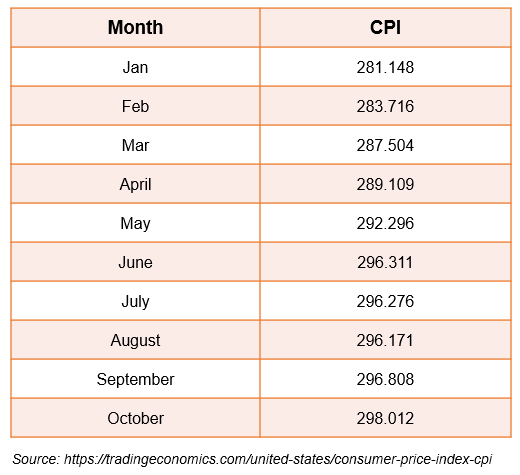
Across multiple countries, we can observe that CPI and inflation is increasing.
This is the CPI trend for the United States since 2022:
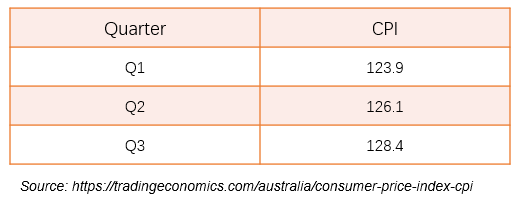
Australia uses a quarterly CPI indicator. However, it has recently explored a monthly CPI indicator.
The CPI trend for Australia is as follows:
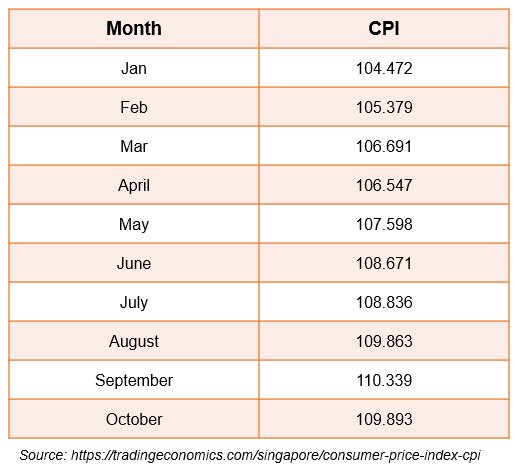
For Singapore, the CPI trend is as follows:
When it comes to measuring the growth of an economy, similar terms which mean different things can be used. Let us now explore some of the other terms investors look at.
According to the U.S. Bureau of Labor Statistics, the consumer price index is defined as "a measure of the average change over time in the prices paid by urban consumers for a market basket of consumer goods and services." [3]
However, inflation is defined as "the overall general upward price movement of goods and services in an economy." [4]
The consumer price index is a key factor used to calculate inflation. In calculating the average change for the CPI, the average price is compared to a predetermined base period. For example, the US uses the time period of 1982 to 1984 for the base period. [5]
By comparing the monthly CPI between two periods of time, we can derive the inflation rate. In other words, the consumer price index is used to calculate the inflation.
According to the U.S. Bureau of Labor Statistics, the producer price index (PPI) is defined as "the average change over time in the selling prices received by domestic producers for their output."
As such, the PPI looks at a different set of goods and services that are not directly related to consumers. This can include industries like natural gas, construction and electricity.
While the goal of the CPI is to track consumer prices, the PPI is meant to track the revenue generated by the producers or businesses. Hence, they can both be used to measure the performance of a country's economy.
With moomoo, you get 24/7 global news so you can catch up with the latest financial news and trends. This includes the latest announcements on the CPI.
You can download the moomoo app here to get real-time information you need to make better investment decisions.
This presentation is for informational and educational use only and is not a recommendation or endorsement of any particular investment or investment strategy. Investment information provided in this content is general in nature, strictly for illustrative purposes, and may not be appropriate for all investors. Read more
Recommend
How to Trade Volatility: Strategies & Tips for Success

How to File Taxes: 6 Steps for Beginners

Best AI Stock Trading Tools on moomoo Trading App

What is Algorithmic Trading | Benefits, Strategies & Future Trends
How to Diversify Your Portfolio: 6 Strategies to Consider
How to Invest in Dividend Stocks for Beginners
How to Invest in DeepSeek Stock: Easy Steps to Follow
How to Invest in Silver for Beginners
Meme Stocks: Definition, Examples, and Impact on the Market
What is an ACH Transfer: Definition, Types & Benefits
Stop-Limit Order: What it is in Stocks
How to Invest In OpenAI Stock in 2026
Fractional Shares: Definition & How to Buy
Cash Accounts: What Are They and How Do They Work
What Are International Stocks & American Stocks?
Margin Account vs Cash Account: Which is Right for You?
Volatility: Definition in Finance and How to Calculate
What is a Brokerage Account: Definition and How to Open
What Are Bitcoin ETFs and How to Trade
How to Transfer Stocks From One Broker to Another
New "T+1" Settlement Cycle | What You Need to Know
SEC Form 13F: Definition, Filling Requirements, and Examples
How to Choose a Good Online Brokerage for Stock Trading
Bitcoin Futures: What Are They and How to Invest
What Is 403(b) Plan? How Does It Work
Price Action Trading: A Guide to Understanding the Basics
Margin Trading: Strategies, Benefits, and Risks
How to Invest in Index Funds for Beginners
Pre-Market and After-Hours Trading: Definition & How It Works
What is the Stock Market: Key Concepts and Functions
Common Stock: Definition, Benefits, and vs. Preferred Stock
Stock Dividends vs. Capital Gains: What You Need to Know
What Is a Stock Split - Definitions, How It Works, & Examples
Institutional Investors: Definitions & How They Invest
How to Invest in the S&P 500 for Beginners
The Impacts of ChatGPT on the Stock Market
ETFs vs. Mutual Funds
How to Practice Trading Stocks with a Free Demo Account?
The Basics of Financial Literacy: Why You Should Care
Stocks vs. Bonds
Choosing the Best Trading Platform for You — moomoo vs. Webull vs. Robinhood
The Consumer Price Index (CPI) Explained For Investors
How to Use moomoo Paper Trading Online?
What Is the Price-to-Sales (P/S) Ratio?
What Is a Quarterly Report?
What Is the Price-to-Book (P/B) Ratio?
Margin Account Explained: Definition, Benefits, and How to Use It
What Is A 10-K?
What Is SEC Form 10-Q?
What Is Ethical Investing
What Is Earnings Season
What Is Socially Responsible Investment (SRI)?
What Is a Stop Order?
Reading the Annual Report
What Is Open Trade Equity (OTE)?
What Is Impact Investing
How to Use moomoo Paper Trading
What Is a Limit Order?
Margin Trading: How It Works, Risks and Benefits
What Is Initial Margin?
How to Invest in Stocks: From Basic to Advanced
Stock Market Courses that Seek to Empower Investment Goals
How Can You Calculate Margin Interest?
What is Intraday?
Retail Investors vs. Institutional Investors: What You Need to Know
What are Cyclical stocks?
How to Buy Stocks Online without A Broker
How to Trade Volatility: Strategies & Tips for Success
How to File Taxes: 6 Steps for Beginners
Best AI Stock Trading Tools on moomoo Trading App
What is Algorithmic Trading | Benefits, Strategies & Future Trends
How to Diversify Your Portfolio: 6 Strategies to Consider
How to Invest in Dividend Stocks for Beginners
How to Invest in DeepSeek Stock: Easy Steps to Follow
How to Invest in Silver for Beginners
Meme Stocks: Definition, Examples, and Impact on the Market
What is an ACH Transfer: Definition, Types & Benefits
Stop-Limit Order: What it is in Stocks
How to Invest In OpenAI Stock in 2026
Fractional Shares: Definition & How to Buy
Cash Accounts: What Are They and How Do They Work
What Are International Stocks & American Stocks?
Margin Account vs Cash Account: Which is Right for You?
Volatility: Definition in Finance and How to Calculate
What is a Brokerage Account: Definition and How to Open
What Are Bitcoin ETFs and How to Trade
How to Transfer Stocks From One Broker to Another
New "T+1" Settlement Cycle | What You Need to Know
SEC Form 13F: Definition, Filling Requirements, and Examples
How to Choose a Good Online Brokerage for Stock Trading
Bitcoin Futures: What Are They and How to Invest
What Is 403(b) Plan? How Does It Work
Price Action Trading: A Guide to Understanding the Basics
Margin Trading: Strategies, Benefits, and Risks
How to Invest in Index Funds for Beginners
Pre-Market and After-Hours Trading: Definition & How It Works
What is the Stock Market: Key Concepts and Functions
Common Stock: Definition, Benefits, and vs. Preferred Stock
Stock Dividends vs. Capital Gains: What You Need to Know
What Is a Stock Split - Definitions, How It Works, & Examples
Institutional Investors: Definitions & How They Invest
How to Invest in the S&P 500 for Beginners
The Impacts of ChatGPT on the Stock Market
ETFs vs. Mutual Funds
How to Practice Trading Stocks with a Free Demo Account?
The Basics of Financial Literacy: Why You Should Care
Stocks vs. Bonds
Choosing the Best Trading Platform for You — moomoo vs. Webull vs. Robinhood
The Consumer Price Index (CPI) Explained For Investors
How to Use moomoo Paper Trading Online?
What Is the Price-to-Sales (P/S) Ratio?
What Is a Quarterly Report?
What Is the Price-to-Book (P/B) Ratio?
Margin Account Explained: Definition, Benefits, and How to Use It
What Is A 10-K?
What Is SEC Form 10-Q?
What Is Ethical Investing
What Is Earnings Season
What Is Socially Responsible Investment (SRI)?
What Is a Stop Order?
Reading the Annual Report
What Is Open Trade Equity (OTE)?
What Is Impact Investing
How to Use moomoo Paper Trading
What Is a Limit Order?
Margin Trading: How It Works, Risks and Benefits
What Is Initial Margin?
How to Invest in Stocks: From Basic to Advanced
Stock Market Courses that Seek to Empower Investment Goals
How Can You Calculate Margin Interest?
What is Intraday?
Retail Investors vs. Institutional Investors: What You Need to Know
What are Cyclical stocks?
How to Buy Stocks Online without A Broker

