
Moomoo Insights
Jul 16 15:38
TSMC Earnings: AI Demand Is Stronger Than the Chip Selloff Suggests
Moomoo Insights
Sep 30 05:04
Live Take | Anthropic’s $518B Compute Bet: Who Wins From the AI Buildout?
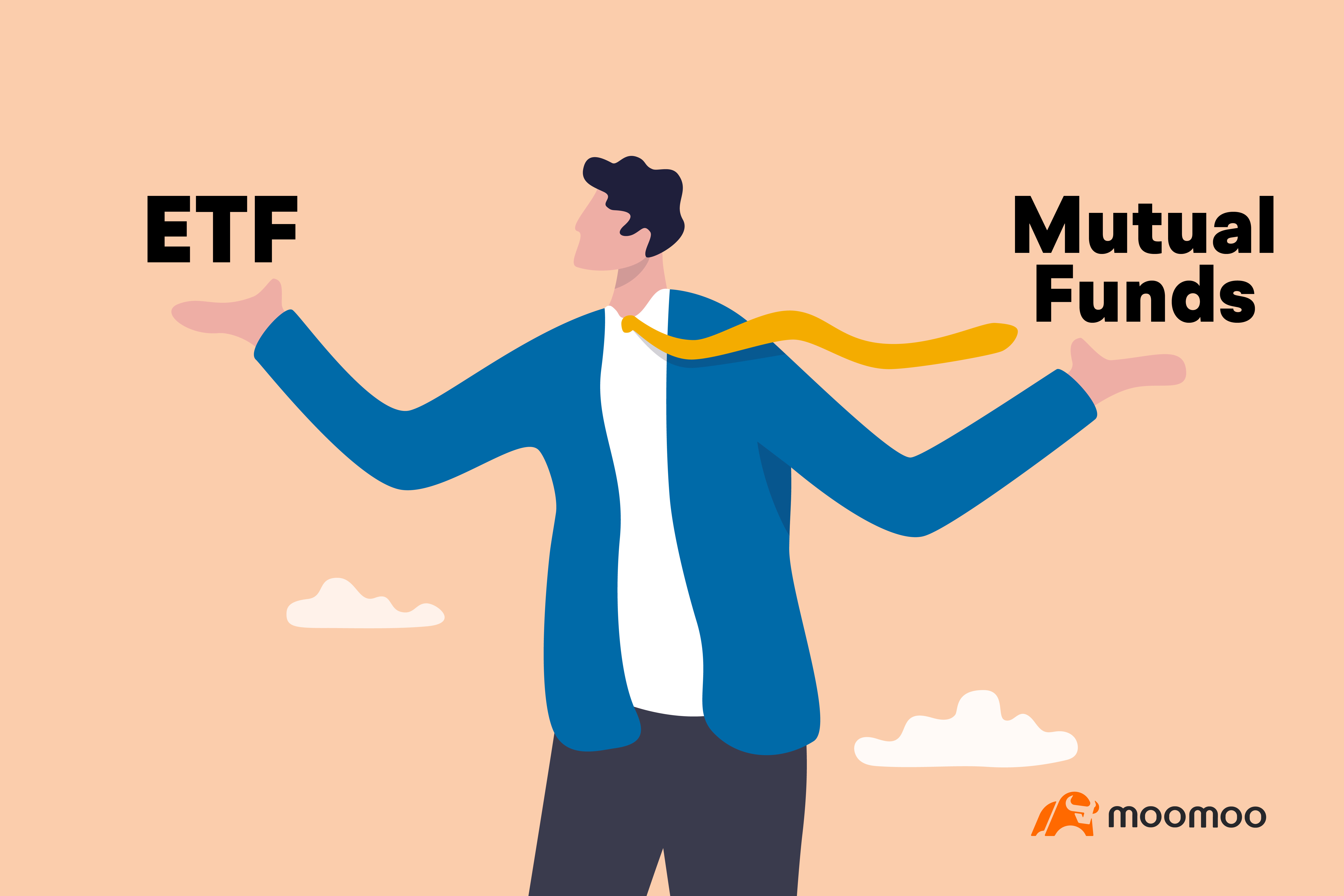
As business magnate Warren Buffett said, "Diversification is the only free lunch in investing." Portfolio diversification refers to investing in a mix of assets to distribute risk. But diversification can be difficult to achieve without buying a significant number of assets.
Both exchange-traded funds (ETFs) and mutual funds provide investors with diversification benefits, though they have a few fundamental differences in structure, pricing and taxation. Both products use pooled funds to buy a bundle of assets. Understanding the nuances between ETFs and mutual funds can help you learn to invest like a pro.
ETFs and mutual funds originated from the development of securitization in the 17th century. Securitization enables investors to pool funds to buy a group of assets and then each own a security or share of the collective investments.
Mutual funds are one of the oldest forms of pooled investing and represent an actively managed investment portfolio, usually tailored to a specific investment strategy. In the second half of the 18th century, mutual funds were created in The Netherlands as a means of offering smaller investors the opportunity to diversify.
America’s first mutual fund was created in 1924 and still exists today. As mutual funds proliferated, the government passed the Investment Company Act of 1940 to regulate investment companies like mutual funds and require them to register with the Securities and Exchange Commission (SEC).
The ETF is another innovative product first listed by State Street in January 1993 as an S&P 500 index tracker. ETFs quickly gained interest for their convenience and liquidity because they can be traded on stock exchanges like traditional stocks. Many types of ETFs came on the market, such as sector ETFs, international ETFs and ETFs with complex strategies or adding leverage. ETFs have now grown to over $6 trillion in assets under management.
ETFs and mutual funds are both pooled funds that offer investors access to a diversified portfolio that can include stocks, bonds or other investments. These pooled funds can invest in a variety of asset classes and niche markets, which give investors broader market exposure.
Both investment vehicles are regulated by the SEC, which requires public disclosure for investor protection.
Retail and institutional investors benefit from the convenience of ETFs and mutual funds. They can first select desired strategies and then choose the ETF or mutual fund that expresses the strategy.
ETFs and mutual funds have a few notable differences to consider when deciding which investment is best for you:
One of the main differences between ETFs and mutual funds is how they are managed. ETFs track the performance of a specific index or market and are typically passively managed. ETF providers use computer algorithms to buy and sell securities to match the underlying index automatically.
On the other hand, mutual funds are generally actively managed, which means that a professional fund manager selects the securities included in the fund. The fund manager will decide what to buy and sell based on their analysis of the market and individual securities.
Another difference between ETFs and mutual funds is the way they are bought and sold. ETFs are traded on stock exchanges, just like individual stocks. This means that investors can buy and sell ETFs throughout the day at prices that are based on supply and demand.
Mutual funds, on the other hand, are not traded on an exchange. Instead, they are bought and sold directly through the mutual fund company or through a broker. The price of a mutual fund is typically determined at the end of the trading day based on the net asset value (NAV) of the underlying securities.
Because ETFs are traded on an exchange, their prices can fluctuate throughout the day based on supply and demand. This price volatility means that the price of an ETF may be different from its NAV, which is the value of the underlying securities in the fund.
In contrast, mutual funds are typically priced at their NAV, meaning that the price of a mutual fund is based on the value of the underlying securities rather than supply and demand. Additionally, investors who purchase on the same day generally receive the same price since mutual fund orders are executed once per day.
ETFs usually have lower expense ratios than mutual funds because they typically require less management . In general, the average expense ratio of ETFs ranges from 0.1% to 0.75% depending on the fund, while the expense ratio for mutual funds is between 0.5% to 1%. ETFs also typically have lower trading costs because they are bought and sold like stocks.
Investors can purchase mutual funds without trading commissions, but they have a load, or a sales charge, that you must pay when you buy or sell shares. This sales charge can range from 1% to 8.5%.
ETFs do not have minimum investment requirements because they can be bought and sold like stocks. You may pay commissions for trading ETFs, while mutual funds might not carry commissions but could have other operating expenses and fees.
Mutual funds typically come with minimum investment requirements, which are a flat dollar amount. You can typically buy them in fractional shares or fixed dollar amounts.
ETFs can be more tax efficient than mutual funds because investments generate fewer taxable events. Investors are taxed when they sell their ETF shares, rather than during the holding period. ETFs are taxed when an investor sells the ETF shares, which generates fewer taxable events because ETFs usually have lower turnover.
In contrast, mutual funds distribute capital gains when they are held, triggered when the fund manager sells securities within the fund that generate a profit. Your capital gains distributions are then subject to taxation, even before you sell the position.
Choosing between an ETF and a mutual fund will depend on many factors such as: investment strategy, goals, risk tolerance and time horizon.
ETFs may be a worth exploring choice for different types of investors including active investors who want to trade the market, have a higher risk tolerance and are tax-sensitive. ETFs can provide access to a variety of investments, such as stocks, commodities and bonds, with a single purchase. They also generally have lower expenses and commissions than mutual funds, making them more cost-effective for short-term trading. Additionally, ETFs are typically more tax efficient than mutual funds because they tend to generate fewer capital gains distributions.
Long-term investors who, among other types, don't have the time to watch the market closely and have a low tolerance for risk might want to consider mutual funds. Mutual funds also provide investors with more investment variety. You can access a broader range of mutual funds designed for diverse investment strategies, risk tolerance levels and asset types.
Both ETFs and mutual fund investments offer diversification for your chosen investment strategy. Choosing between them depends on how much you want to invest, your desired levels of control and risk tolerance and your short-term and long-term investment goals. Research and explore your investment options on Moomoo with the support of advanced analytical tools and real-time data.
Before investing in an ETF, you should read both its summary prospectus and its full prospectus, which provide detailed information on the ETF’s investment objective, principal investment strategies, risks, costs, and historical performance (if any). Diversification is an investment strategy that can help manage risk within your portfolio, but it does not guarantee profits or protect against loss in declining markets.
This article is for informational and educational use only and is not a recommendation or endorsement of any particular investment or investment strategy. Investment information provided in this content is general in nature, strictly for illustrative purposes, and may not be appropriate for all investors. Investing involves risk regardless of the strategy selected and past performance does not indicate or guarantee future results.
Are ETFs safer than mutual funds?
Generally, ETFs can carry similar levels of risk as mutual funds, though it depends on the specific ETF or mutual fund. All funds carry some level of risk. With mutual funds, you may lose some of the money you invest because the securities held by a fund can go down in value.
Are ETFs good for beginners?
Yes, ETFs can be a good way to explore for beginners because they are typically lower cost and convenient to trade when compared to mutual funds. It is important to do your research and understand the risks associated with each ETF before investing.
This presentation is for informational and educational use only and is not a recommendation or endorsement of any particular investment or investment strategy. Investment information provided in this content is general in nature, strictly for illustrative purposes, and may not be appropriate for all investors. Read more
Recommend
How to Trade Volatility: Strategies & Tips for Success
How to File Taxes: 6 Steps for Beginners

Best AI Stock Trading Tools on moomoo Trading App

What is Algorithmic Trading | Benefits, Strategies & Future Trends
How to Diversify Your Portfolio: 6 Strategies to Consider
How to Invest in Dividend Stocks for Beginners
How to Invest in DeepSeek Stock: Easy Steps to Follow
How to Invest in Silver for Beginners
Meme Stocks: Definition, Examples, and Impact on the Market
What is an ACH Transfer: Definition, Types & Benefits
Stop-Limit Order: What it is in Stocks
How to Invest In OpenAI Stock in 2026
Fractional Shares: Definition & How to Buy
Cash Accounts: What Are They and How Do They Work
What Are International Stocks & American Stocks?
Margin Account vs Cash Account: Which is Right for You?
Volatility: Definition in Finance and How to Calculate
What is a Brokerage Account: Definition and How to Open
What Are Bitcoin ETFs and How to Trade
How to Transfer Stocks From One Broker to Another
New "T+1" Settlement Cycle | What You Need to Know
SEC Form 13F: Definition, Filling Requirements, and Examples
How to Choose a Good Online Brokerage for Stock Trading
Bitcoin Futures: What Are They and How to Invest
What Is 403(b) Plan? How Does It Work
Price Action Trading: A Guide to Understanding the Basics
Margin Trading: Strategies, Benefits, and Risks
How to Invest in Index Funds for Beginners
Pre-Market and After-Hours Trading: Definition & How It Works
What is the Stock Market: Key Concepts and Functions
Common Stock: Definition, Benefits, and vs. Preferred Stock
Stock Dividends vs. Capital Gains: What You Need to Know
What Is a Stock Split - Definitions, How It Works, & Examples
Institutional Investors: Definitions & How They Invest
How to Invest in the S&P 500 for Beginners
The Impacts of ChatGPT on the Stock Market
ETFs vs. Mutual Funds
How to Practice Trading Stocks with a Free Demo Account?
The Basics of Financial Literacy: Why You Should Care
Stocks vs. Bonds
Choosing the Best Trading Platform for You — moomoo vs. Webull vs. Robinhood
The Consumer Price Index (CPI) Explained For Investors
How to Use moomoo Paper Trading Online?
What Is the Price-to-Sales (P/S) Ratio?
What Is a Quarterly Report?
What Is the Price-to-Book (P/B) Ratio?
Margin Account Explained: Definition, Benefits, and How to Use It
What Is A 10-K?
What Is SEC Form 10-Q?
What Is Ethical Investing
What Is Earnings Season
What Is Socially Responsible Investment (SRI)?
What Is a Stop Order?
Reading the Annual Report
What Is Open Trade Equity (OTE)?
What Is Impact Investing
How to Use moomoo Paper Trading
What Is a Limit Order?
Margin Trading: How It Works, Risks and Benefits
What Is Initial Margin?
How to Invest in Stocks: From Basic to Advanced
Stock Market Courses that Seek to Empower Investment Goals
How Can You Calculate Margin Interest?
What is Intraday?
Retail Investors vs. Institutional Investors: What You Need to Know
What are Cyclical stocks?
How to Buy Stocks Online without A Broker
How to Trade Volatility: Strategies & Tips for Success
How to File Taxes: 6 Steps for Beginners
Best AI Stock Trading Tools on moomoo Trading App
What is Algorithmic Trading | Benefits, Strategies & Future Trends
How to Diversify Your Portfolio: 6 Strategies to Consider
How to Invest in Dividend Stocks for Beginners
How to Invest in DeepSeek Stock: Easy Steps to Follow
How to Invest in Silver for Beginners
Meme Stocks: Definition, Examples, and Impact on the Market
What is an ACH Transfer: Definition, Types & Benefits
Stop-Limit Order: What it is in Stocks
How to Invest In OpenAI Stock in 2026
Fractional Shares: Definition & How to Buy
Cash Accounts: What Are They and How Do They Work
What Are International Stocks & American Stocks?
Margin Account vs Cash Account: Which is Right for You?
Volatility: Definition in Finance and How to Calculate
What is a Brokerage Account: Definition and How to Open
What Are Bitcoin ETFs and How to Trade
How to Transfer Stocks From One Broker to Another
New "T+1" Settlement Cycle | What You Need to Know
SEC Form 13F: Definition, Filling Requirements, and Examples
How to Choose a Good Online Brokerage for Stock Trading
Bitcoin Futures: What Are They and How to Invest
What Is 403(b) Plan? How Does It Work
Price Action Trading: A Guide to Understanding the Basics
Margin Trading: Strategies, Benefits, and Risks
How to Invest in Index Funds for Beginners
Pre-Market and After-Hours Trading: Definition & How It Works
What is the Stock Market: Key Concepts and Functions
Common Stock: Definition, Benefits, and vs. Preferred Stock
Stock Dividends vs. Capital Gains: What You Need to Know
What Is a Stock Split - Definitions, How It Works, & Examples
Institutional Investors: Definitions & How They Invest
How to Invest in the S&P 500 for Beginners
The Impacts of ChatGPT on the Stock Market
ETFs vs. Mutual Funds
How to Practice Trading Stocks with a Free Demo Account?
The Basics of Financial Literacy: Why You Should Care
Stocks vs. Bonds
Choosing the Best Trading Platform for You — moomoo vs. Webull vs. Robinhood
The Consumer Price Index (CPI) Explained For Investors
How to Use moomoo Paper Trading Online?
What Is the Price-to-Sales (P/S) Ratio?
What Is a Quarterly Report?
What Is the Price-to-Book (P/B) Ratio?
Margin Account Explained: Definition, Benefits, and How to Use It
What Is A 10-K?
What Is SEC Form 10-Q?
What Is Ethical Investing
What Is Earnings Season
What Is Socially Responsible Investment (SRI)?
What Is a Stop Order?
Reading the Annual Report
What Is Open Trade Equity (OTE)?
What Is Impact Investing
How to Use moomoo Paper Trading
What Is a Limit Order?
Margin Trading: How It Works, Risks and Benefits
What Is Initial Margin?
How to Invest in Stocks: From Basic to Advanced
Stock Market Courses that Seek to Empower Investment Goals
How Can You Calculate Margin Interest?
What is Intraday?
Retail Investors vs. Institutional Investors: What You Need to Know
What are Cyclical stocks?
How to Buy Stocks Online without A Broker

