
Moomoo Insights
Jul 16 15:38
TSMC Earnings: AI Demand Is Stronger Than the Chip Selloff Suggests
Moomoo Insights
Sep 30 05:04
Live Take | Anthropic’s $518B Compute Bet: Who Wins From the AI Buildout?
Public companies need to provide their investors with an annual report detailing the previous year's activities and financial status. The introduction section of the report often includes an outstanding combination of graphics, images, and an accompanying narrative. Overall, these elements record the firm's actions over the course of the previous year and may even predict the organization's future. The report includes in-depth information on the business's finance and operations in the last section.
After the fall of the stock market in 1929, politicians required standardized corporate financial statements, which resulted in the necessity that publicly traded corporations produce annual reports as a legislative requirement. [1] The purpose of the annual report that a corporation needs to submit is to publicly disclose the firm's operational and financial operations that occurred over the preceding year. In most situations, the analysis is provided to shareholders and other interested parties to assess the company's financial health and make informed investment choices.
The following are examples of parts that are often included in an annual report:
General corporate information
Operating and financial highlights
Letter to the shareholders from the CEO
Narrative text, graphics, and photos
Management's discussion and analysis
Financial statements, including the balance sheet, income statement, and cash flow statement
Notes to the financial statements
Auditor's report
Summary of financial data
Accounting policies
In the United States, a more detailed form of the financial statement is known as Form 10-K, filed with the United States Securities and Exchange Commission (SEC). Businesses can electronically file annual reports through the SEC's Electronic Data Gathering and Analysis (EDGAR) database. Companies that are required to declare their financial information must provide annual reports to their shareholders at the same time as they have their annual meetings to elect directors. Reporting businesses are expected to publish their proxy materials, which may include their annual reports, on the websites of their respective firms in accordance with the proxy regulations. [2]
Things to Keep in Mind
The annual report of a corporation will often include important information about the status of the firm's finances, which may be used for purposes including but not limited to the following:
The ability of a firm to pay its obligations when they come due.
Whether or not a corporation was profitable during the recent fiscal year it completed.
The development of a business over the years
What percentage of a company's profits are set aside for investment in expanding its existing business?
Income as a percentage of total operating costs
If the numbers add up and follow GAAP (Generally Accepted Accounting Principles) guidelines, it will also be clear in the yearly report. In the part of the auditor's report referred to as "unqualified opinion," this confirmation will be emphasized as an "unqualified opinion." [3]
Analyzing the information included in a business's annual report is one method that fundamental analysis uses to try to get insight into the path a company intends to follow in the future.
In a broad sense, a 10-K filing and an annual report are comparable in that both report on the firm's performance over the previous year. Both documents constitute a wrap-up of the company's financial performance for the year. The annual report format is far more user-friendly in terms of visual presentation. They are attractively designed and include both photos and graphics. The 10-K file has no design elements or added flair; it only presents statistics and other qualitative data.
A company's quarterly results are summarized on a form known as a 10-Q filing, which is submitted to the Securities and Exchange Commission (SEC) for review. Most publicly traded corporations are required to submit a Form 10-Q to the Securities and Exchange Commission (SEC) to disclose their financial situation for the quarter.
Publicly traded firms must produce annual reports demonstrating their current financial situation and activities. Annual reports could be used to investigate a business's current financial standing and, perhaps, get insight into the path the firm intends to take in the coming years. These reports work differently for mutual funds; in this instance, they are made accessible at the beginning of each fiscal year and are often less complicated.
Moomoo trading app will provide the earnings report calendar feature, so traders and investors can track the earnings report schedule more quickly with convenience. Sign up and download the moomoo app today to access the clear and customizable earnings calendar!
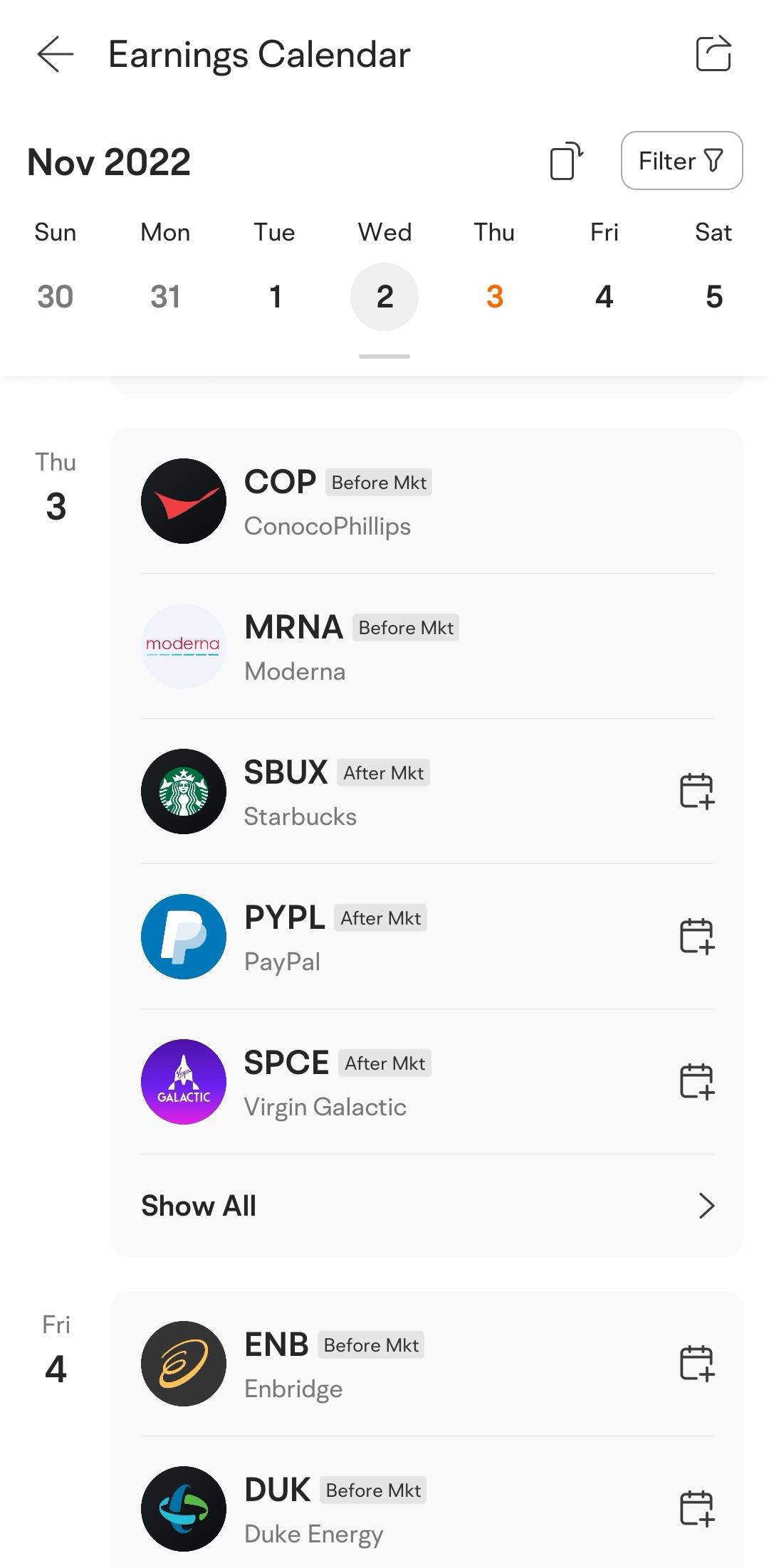
Images provided are not current and any securities are shown for illustrative purposes only.
[1] https://www.sec.gov/news/speech/spch100704psa.htm
[2] https://www.investor.gov/introduction-investing/investing-basics/glossary/annual-report
[3]https://www.investor.gov/introduction-investing/general-resources/news-alerts/alerts-bulletins/investor-bulletins/how-read
This presentation is for informational and educational use only and is not a recommendation or endorsement of any particular investment or investment strategy. Investment information provided in this content is general in nature, strictly for illustrative purposes, and may not be appropriate for all investors. Read more
Recommend
How to Trade Volatility: Strategies & Tips for Success
How to File Taxes: 6 Steps for Beginners

Best AI Stock Trading Tools on moomoo Trading App

What is Algorithmic Trading | Benefits, Strategies & Future Trends
How to Diversify Your Portfolio: 6 Strategies to Consider
How to Invest in Dividend Stocks for Beginners
How to Invest in DeepSeek Stock: Easy Steps to Follow
How to Invest in Silver for Beginners
Meme Stocks: Definition, Examples, and Impact on the Market
What is an ACH Transfer: Definition, Types & Benefits
Stop-Limit Order: What it is in Stocks
How to Invest In OpenAI Stock in 2026
Fractional Shares: Definition & How to Buy
Cash Accounts: What Are They and How Do They Work
What Are International Stocks & American Stocks?
Margin Account vs Cash Account: Which is Right for You?
Volatility: Definition in Finance and How to Calculate
What is a Brokerage Account: Definition and How to Open
What Are Bitcoin ETFs and How to Trade
How to Transfer Stocks From One Broker to Another
New "T+1" Settlement Cycle | What You Need to Know
SEC Form 13F: Definition, Filling Requirements, and Examples
How to Choose a Good Online Brokerage for Stock Trading
Bitcoin Futures: What Are They and How to Invest
What Is 403(b) Plan? How Does It Work
Price Action Trading: A Guide to Understanding the Basics
Margin Trading: Strategies, Benefits, and Risks
How to Invest in Index Funds for Beginners
Pre-Market and After-Hours Trading: Definition & How It Works
What is the Stock Market: Key Concepts and Functions
Common Stock: Definition, Benefits, and vs. Preferred Stock
Stock Dividends vs. Capital Gains: What You Need to Know
What Is a Stock Split - Definitions, How It Works, & Examples
Institutional Investors: Definitions & How They Invest
How to Invest in the S&P 500 for Beginners
The Impacts of ChatGPT on the Stock Market
ETFs vs. Mutual Funds
How to Practice Trading Stocks with a Free Demo Account?
The Basics of Financial Literacy: Why You Should Care
Stocks vs. Bonds
Choosing the Best Trading Platform for You — moomoo vs. Webull vs. Robinhood
The Consumer Price Index (CPI) Explained For Investors
How to Use moomoo Paper Trading Online?
What Is the Price-to-Sales (P/S) Ratio?
What Is a Quarterly Report?
What Is the Price-to-Book (P/B) Ratio?
Margin Account Explained: Definition, Benefits, and How to Use It
What Is A 10-K?
What Is SEC Form 10-Q?
What Is Ethical Investing
What Is Earnings Season
What Is Socially Responsible Investment (SRI)?
What Is a Stop Order?
Reading the Annual Report
What Is Open Trade Equity (OTE)?
What Is Impact Investing
How to Use moomoo Paper Trading
What Is a Limit Order?
Margin Trading: How It Works, Risks and Benefits
What Is Initial Margin?
How to Invest in Stocks: From Basic to Advanced
Stock Market Courses that Seek to Empower Investment Goals
How Can You Calculate Margin Interest?
What is Intraday?
Retail Investors vs. Institutional Investors: What You Need to Know
What are Cyclical stocks?
How to Buy Stocks Online without A Broker
How to Trade Volatility: Strategies & Tips for Success
How to File Taxes: 6 Steps for Beginners
Best AI Stock Trading Tools on moomoo Trading App
What is Algorithmic Trading | Benefits, Strategies & Future Trends
How to Diversify Your Portfolio: 6 Strategies to Consider
How to Invest in Dividend Stocks for Beginners
How to Invest in DeepSeek Stock: Easy Steps to Follow
How to Invest in Silver for Beginners
Meme Stocks: Definition, Examples, and Impact on the Market
What is an ACH Transfer: Definition, Types & Benefits
Stop-Limit Order: What it is in Stocks
How to Invest In OpenAI Stock in 2026
Fractional Shares: Definition & How to Buy
Cash Accounts: What Are They and How Do They Work
What Are International Stocks & American Stocks?
Margin Account vs Cash Account: Which is Right for You?
Volatility: Definition in Finance and How to Calculate
What is a Brokerage Account: Definition and How to Open
What Are Bitcoin ETFs and How to Trade
How to Transfer Stocks From One Broker to Another
New "T+1" Settlement Cycle | What You Need to Know
SEC Form 13F: Definition, Filling Requirements, and Examples
How to Choose a Good Online Brokerage for Stock Trading
Bitcoin Futures: What Are They and How to Invest
What Is 403(b) Plan? How Does It Work
Price Action Trading: A Guide to Understanding the Basics
Margin Trading: Strategies, Benefits, and Risks
How to Invest in Index Funds for Beginners
Pre-Market and After-Hours Trading: Definition & How It Works
What is the Stock Market: Key Concepts and Functions
Common Stock: Definition, Benefits, and vs. Preferred Stock
Stock Dividends vs. Capital Gains: What You Need to Know
What Is a Stock Split - Definitions, How It Works, & Examples
Institutional Investors: Definitions & How They Invest
How to Invest in the S&P 500 for Beginners
The Impacts of ChatGPT on the Stock Market
ETFs vs. Mutual Funds
How to Practice Trading Stocks with a Free Demo Account?
The Basics of Financial Literacy: Why You Should Care
Stocks vs. Bonds
Choosing the Best Trading Platform for You — moomoo vs. Webull vs. Robinhood
The Consumer Price Index (CPI) Explained For Investors
How to Use moomoo Paper Trading Online?
What Is the Price-to-Sales (P/S) Ratio?
What Is a Quarterly Report?
What Is the Price-to-Book (P/B) Ratio?
Margin Account Explained: Definition, Benefits, and How to Use It
What Is A 10-K?
What Is SEC Form 10-Q?
What Is Ethical Investing
What Is Earnings Season
What Is Socially Responsible Investment (SRI)?
What Is a Stop Order?
Reading the Annual Report
What Is Open Trade Equity (OTE)?
What Is Impact Investing
How to Use moomoo Paper Trading
What Is a Limit Order?
Margin Trading: How It Works, Risks and Benefits
What Is Initial Margin?
How to Invest in Stocks: From Basic to Advanced
Stock Market Courses that Seek to Empower Investment Goals
How Can You Calculate Margin Interest?
What is Intraday?
Retail Investors vs. Institutional Investors: What You Need to Know
What are Cyclical stocks?
How to Buy Stocks Online without A Broker

