
Moomoo Insights
Jul 16 15:38
TSMC Earnings: AI Demand Is Stronger Than the Chip Selloff Suggests
Moomoo Insights
Sep 30 05:04
Live Take | Anthropic’s $518B Compute Bet: Who Wins From the AI Buildout?
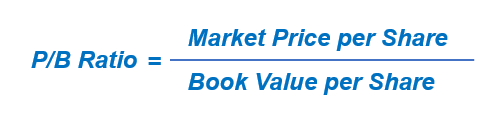
The price-to-book ratio, often known as the P/B ratio, is a metric used by companies to evaluate the relationship between a company's market capitalization and its book value. The formula for calculating it is to divide the stock price per share of the firm by its book value per share (BVPS). Value investors sometimes use the price-to-book ratio in their search for equities that they believe are being sold at prices that are lower than their intrinsic value.
A company's book value for an asset is the same as its carrying value on the balance sheet, which is arrived at by offsetting the asset's accumulated depreciation.
The formula for determining the book value of each share is as follows: (total assets - total liabilities) / the total number of shares currently in circulation. Simply looking at the share price quotation in the market is all that is required to determine the market price of each share.
If the P/B ratio is low, it may indicate that the stock is underpriced. On the other hand, it might indicate something fundamentally wrong with the business. This, like most other ratios, varies from company to company. The price-to-book ratio is another indicator of whether or not you are paying an excessive amount for what would be left over if the firm went bankrupt immediately.
The price-to-book ratio (P/B ratio) indicates the value that players in the market place on a company's stock compared to the firm's book value per share. The market value of a company's shares is a statistic that looks into the future and represents the company's expected future cash flows. The book value per share is a measurement used in accounting that is based on the idea of historical costs. It considers previous stock issuances, adds in profits or losses, and subtracts out dividends and share repurchases.
The price-to-book ratio is a method for comparing the current market value of a firm to its historical book value. The market value of a corporation may be calculated by multiplying the price of each outstanding share by the total number of shares in circulation. The net assets of a firm are what constitute its book value.
To put it another way, if a firm were to sell all of its assets and pay off all of its liabilities, the value that was left over would represent the company's book value. The price-to-book ratio (P/B ratio) is a useful reality check for investors who are looking for growth at a price that is not unreasonable. This ratio is often used with return on equity (ROE), a growth indicator. Companies should often exercise caution if there is a significant gap between their P/B ratio and ROE.
Suppose a company's balance sheet shows $100,000,000 in assets and $75,000,000 in liabilities. An easy calculation would reveal that the firm's book value is $25 million ($100 million less $75 million).
In a company with 10 million shares in circulation, the book value of each share would be $2.50. Assuming that the share price is $5, the price-to-book ratio would be 2x ($5 divided by $2.50).
This demonstrates that the asset's book value is valued at double what it is now trading at on the market, which may or may not imply that the asset is overpriced. This would be contingent on how the P/B ratio compares to other firms operating in the same industry and size.
The price-to-book ratio is essential because it provides shareholders with a tool to determine whether or not a firm's current market price seems justified when seen in conjunction with a company's balance sheet. For instance, if a firm has a high price-to-book ratio, shareholders could look at it through the lens of other metrics, such as its historical return on asset (ROA) or increase in profits per share, to determine whether or not the value is appropriate given those other metrics (EPS). The price-to-book ratio is another common metric that is used in the process of vetting possible investment possibilities.
The book value of stock offers investors a generally steady and user-friendly indicator that can be readily compared to the market rate, which is one of the reasons why the price-to-book ratio is valuable to shareholders. Since negative earnings make price-to-earnings ratios meaningless, and there are fewer businesses with negative book values than with negative profits, the P/B ratio may be employed for corporations with positive book values and negative earnings.
P/B ratios, on the other hand, may not be comparable when companies use different accounting standards, which is particularly true when comparing businesses based in different countries. Furthermore, P/B ratios may not be as helpful for service and information technology firms since these types of businesses often have few physical assets that can be seen on their balance sheets. Lastly, the valuation might go below zero if the company has had numerous losses in recent years, rendering the P/B ratio meaningless for comparative valuation purposes.
The book value figure in the calculation may also be skewed by various events, such as a recent purchase, a recent write-off, or a share buyback, which can lead to an inaccurate P/B ratio. In addition to the price-to-book ratio, investors should analyze other valuation metrics when looking for companies that are trading at a discount to their fair value.
The price-to-book ratio, often known as the P/B ratio, is a valuation metric that compares the current market price of a stock to the "book value" of the company's assets. If the P/B ratio is less than one, it is believed that the market is underpricing the stock. This is because the accounting value of the company's assets, should they be sold, would be more than the current price of the company's shares. Hence, professional investors often concentrate their attention on firms that, among other criteria, have a low price-to-book ratio. A high P/B ratio is another indicator that might help investors spot overpriced firms and steer clear of them.
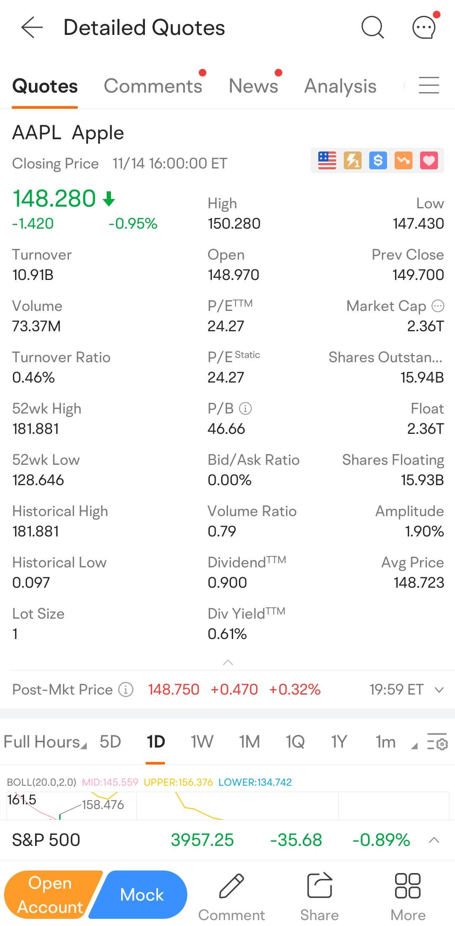
Moomoo trading app will provide investors with a comprehensive overview of individual stocks, like quote price, volume, price-to-earnings (P/E), price-to-book (P/B), market cap, and more. Sign up and download the moomoo app today to get free access to the latest stock market quotes.
Images provided are not current and any securities are shown for illustrative purposes only.
This presentation is for informational and educational use only and is not a recommendation or endorsement of any particular investment or investment strategy. Investment information provided in this content is general in nature, strictly for illustrative purposes, and may not be appropriate for all investors. Read more
Recommend
How to Trade Volatility: Strategies & Tips for Success
How to File Taxes: 6 Steps for Beginners

Best AI Stock Trading Tools on moomoo Trading App

What is Algorithmic Trading | Benefits, Strategies & Future Trends
How to Diversify Your Portfolio: 6 Strategies to Consider
How to Invest in Dividend Stocks for Beginners
How to Invest in DeepSeek Stock: Easy Steps to Follow
How to Invest in Silver for Beginners
Meme Stocks: Definition, Examples, and Impact on the Market
What is an ACH Transfer: Definition, Types & Benefits
Stop-Limit Order: What it is in Stocks
How to Invest In OpenAI Stock in 2026
Fractional Shares: Definition & How to Buy
Cash Accounts: What Are They and How Do They Work
What Are International Stocks & American Stocks?
Margin Account vs Cash Account: Which is Right for You?
Volatility: Definition in Finance and How to Calculate
What is a Brokerage Account: Definition and How to Open
What Are Bitcoin ETFs and How to Trade
How to Transfer Stocks From One Broker to Another
New "T+1" Settlement Cycle | What You Need to Know
SEC Form 13F: Definition, Filling Requirements, and Examples
How to Choose a Good Online Brokerage for Stock Trading
Bitcoin Futures: What Are They and How to Invest
What Is 403(b) Plan? How Does It Work
Price Action Trading: A Guide to Understanding the Basics
Margin Trading: Strategies, Benefits, and Risks
How to Invest in Index Funds for Beginners
Pre-Market and After-Hours Trading: Definition & How It Works
What is the Stock Market: Key Concepts and Functions
Common Stock: Definition, Benefits, and vs. Preferred Stock
Stock Dividends vs. Capital Gains: What You Need to Know
What Is a Stock Split - Definitions, How It Works, & Examples
Institutional Investors: Definitions & How They Invest
How to Invest in the S&P 500 for Beginners
The Impacts of ChatGPT on the Stock Market
ETFs vs. Mutual Funds
How to Practice Trading Stocks with a Free Demo Account?
The Basics of Financial Literacy: Why You Should Care
Stocks vs. Bonds
Choosing the Best Trading Platform for You — moomoo vs. Webull vs. Robinhood
The Consumer Price Index (CPI) Explained For Investors
How to Use moomoo Paper Trading Online?
What Is the Price-to-Sales (P/S) Ratio?
What Is a Quarterly Report?
What Is the Price-to-Book (P/B) Ratio?
Margin Account Explained: Definition, Benefits, and How to Use It
What Is A 10-K?
What Is SEC Form 10-Q?
What Is Ethical Investing
What Is Earnings Season
What Is Socially Responsible Investment (SRI)?
What Is a Stop Order?
Reading the Annual Report
What Is Open Trade Equity (OTE)?
What Is Impact Investing
How to Use moomoo Paper Trading
What Is a Limit Order?
Margin Trading: How It Works, Risks and Benefits
What Is Initial Margin?
How to Invest in Stocks: From Basic to Advanced
Stock Market Courses that Seek to Empower Investment Goals
How Can You Calculate Margin Interest?
What is Intraday?
Retail Investors vs. Institutional Investors: What You Need to Know
What are Cyclical stocks?
How to Buy Stocks Online without A Broker
How to Trade Volatility: Strategies & Tips for Success
How to File Taxes: 6 Steps for Beginners
Best AI Stock Trading Tools on moomoo Trading App
What is Algorithmic Trading | Benefits, Strategies & Future Trends
How to Diversify Your Portfolio: 6 Strategies to Consider
How to Invest in Dividend Stocks for Beginners
How to Invest in DeepSeek Stock: Easy Steps to Follow
How to Invest in Silver for Beginners
Meme Stocks: Definition, Examples, and Impact on the Market
What is an ACH Transfer: Definition, Types & Benefits
Stop-Limit Order: What it is in Stocks
How to Invest In OpenAI Stock in 2026
Fractional Shares: Definition & How to Buy
Cash Accounts: What Are They and How Do They Work
What Are International Stocks & American Stocks?
Margin Account vs Cash Account: Which is Right for You?
Volatility: Definition in Finance and How to Calculate
What is a Brokerage Account: Definition and How to Open
What Are Bitcoin ETFs and How to Trade
How to Transfer Stocks From One Broker to Another
New "T+1" Settlement Cycle | What You Need to Know
SEC Form 13F: Definition, Filling Requirements, and Examples
How to Choose a Good Online Brokerage for Stock Trading
Bitcoin Futures: What Are They and How to Invest
What Is 403(b) Plan? How Does It Work
Price Action Trading: A Guide to Understanding the Basics
Margin Trading: Strategies, Benefits, and Risks
How to Invest in Index Funds for Beginners
Pre-Market and After-Hours Trading: Definition & How It Works
What is the Stock Market: Key Concepts and Functions
Common Stock: Definition, Benefits, and vs. Preferred Stock
Stock Dividends vs. Capital Gains: What You Need to Know
What Is a Stock Split - Definitions, How It Works, & Examples
Institutional Investors: Definitions & How They Invest
How to Invest in the S&P 500 for Beginners
The Impacts of ChatGPT on the Stock Market
ETFs vs. Mutual Funds
How to Practice Trading Stocks with a Free Demo Account?
The Basics of Financial Literacy: Why You Should Care
Stocks vs. Bonds
Choosing the Best Trading Platform for You — moomoo vs. Webull vs. Robinhood
The Consumer Price Index (CPI) Explained For Investors
How to Use moomoo Paper Trading Online?
What Is the Price-to-Sales (P/S) Ratio?
What Is a Quarterly Report?
What Is the Price-to-Book (P/B) Ratio?
Margin Account Explained: Definition, Benefits, and How to Use It
What Is A 10-K?
What Is SEC Form 10-Q?
What Is Ethical Investing
What Is Earnings Season
What Is Socially Responsible Investment (SRI)?
What Is a Stop Order?
Reading the Annual Report
What Is Open Trade Equity (OTE)?
What Is Impact Investing
How to Use moomoo Paper Trading
What Is a Limit Order?
Margin Trading: How It Works, Risks and Benefits
What Is Initial Margin?
How to Invest in Stocks: From Basic to Advanced
Stock Market Courses that Seek to Empower Investment Goals
How Can You Calculate Margin Interest?
What is Intraday?
Retail Investors vs. Institutional Investors: What You Need to Know
What are Cyclical stocks?
How to Buy Stocks Online without A Broker

