

Moomoo Insights
Jul 16 15:38
TSMC Earnings: AI Demand Is Stronger Than the Chip Selloff Suggests
Moomoo Insights
Sep 30 05:04
Live Take | Anthropic’s $518B Compute Bet: Who Wins From the AI Buildout?
Moomoo makes it easy for users to use paper trading to grow their understanding of the stock market. With a key focus on paper trading features that help new and sophisticated investors alike, moomoo's paper trading system is free to use for all.
Paper trading is a simulated trade where no real money is exchanged, but paper traders are able to test investment strategies with real-world market data and outcomes. Paper trading is utilised by many investors as a way to develop and hone their knowledge base and skill in a risk-free environment.
Moomoo's paper trading tool has been developed for desktop and mobile users alike to easily access paper trading functionality. This guide will give you all the insights you need to begin paper trading on the device of your choice within minutes.
In order to use moomoo's paper trading tool, you'll need to access it via either a desktop or mobile device. If you'd like to use it on a desktop, the first thing you need to do is to download the moomoo desktop platform. A full account isn't necessary to open the desktop app and take a look at it, but you will need to open an account in order to unlock the desktop app's trading features.
Once this is launched, you'll be taken to a login screen, where you can set up your paper trading account. moomoo makes it easy to sign in via social networking credentials including Facebook, or a Google account can be used as account verification. Moomoo's desktop app is functional across both Windows and Macintosh computers alike.
Looking to access paper trading on your mobile? Moomoo's mobile app offers a true simulated trading service that enables the placing of trades with a practice currency.
Once you've downloaded the mobile app to your phone, you can log in with the same account you've set up on a desktop system, or create a new account. The ‘trade' icon at the bottom of the screen will take you to the paper trading option, where you can choose to paper trade across either stocks or options.
There are a number of paper trading rules that create parameters within moomoo's paper trading experience. The first rule refers to the buying and selling order, stating that the transaction can be matched when the entrusted buying price is greater than the placing selling price and the entrusted selling price is lower than the placing buying order. Paper traders can also try to modify the order, working to achieve a better price to increase the probability of transaction.
Secondly, moomoo has a rule around competition, which refers to the bid and ask price of the live trading. If the commission price is appropriate, the transaction will still not be completed without transaction volume: if the transaction volume of the live trading is smaller than the commission value, the transaction will only be partially completed, with only the amount in the live trading matched. Any orders that remain in the matching queue are then waiting for transactions. It's important to pay attention to changes in the live trading market in order to modify the order to a better price, resulting in an increase of the probability of the transaction.
Moomoo's paper trading can take place within intraday trading.
Moomoo offers a variety of types that are available for paper trading, allowing for the simulation of genuine market conditions.
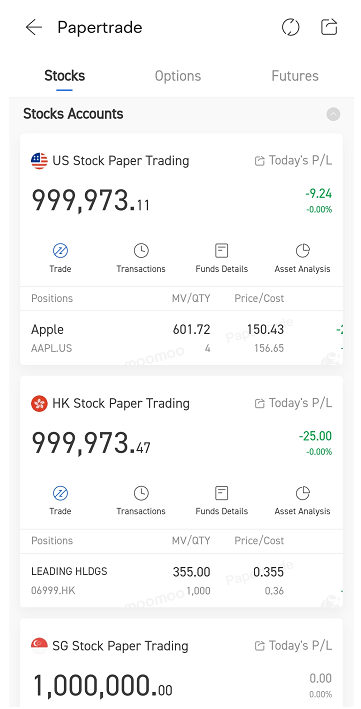
In the Hong Kong market, trading types are limited to underlying stocks, warrants, CBBCs and other products listed on the HK Stock Exchange. In the US market, trading type is constrained to underlying stocks listed on US exchanges. The Singapore market has a trading type limited to underlying stocks listed on the Singapore Exchange (SGX), and the China A-shares market trading type is limited to underlying stocks listed on Shenzhen Stock Exchange and Shanghai Stock Exchange.
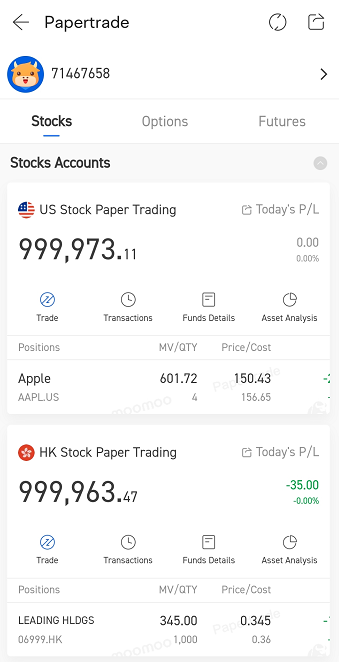
Moomoo gives paper stock traders $1m virtual currency to practice stock trading across relevant markets with.
Images provided are not current and any securities are shown for illustrative purposes only.
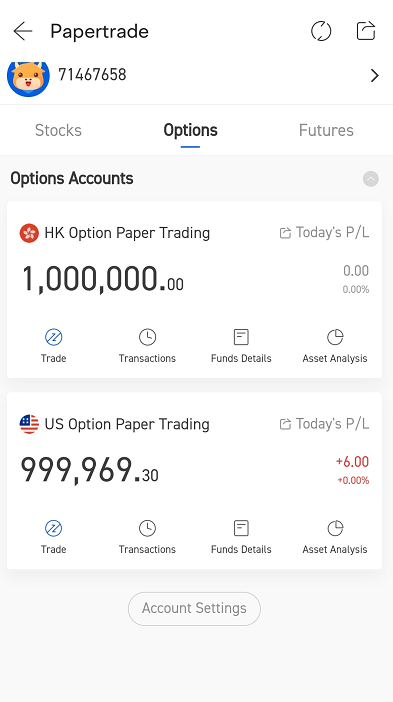
For those looking to paper trade across options, they have access to $1m virtual cash to do so.
Images provided are not current and any securities are shown for illustrative purposes only.
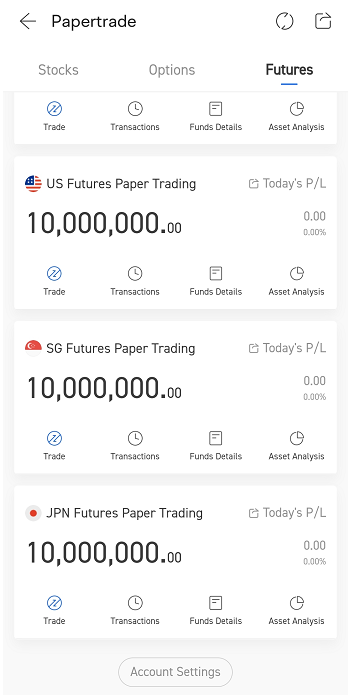
If you're looking to carry out futures paper training, moomoo's $10,000,000 virtual cash will allow you to do so across the futures market.
Images provided are not current and any securities are shown for illustrative purposes only.
In moomoo's paper trading platform, limit orders and odd lot orders are available. Short selling isn't available for stocks, but it is for options and futures.
There are a number of rules to keep in mind when using moomoo's paper trading card.
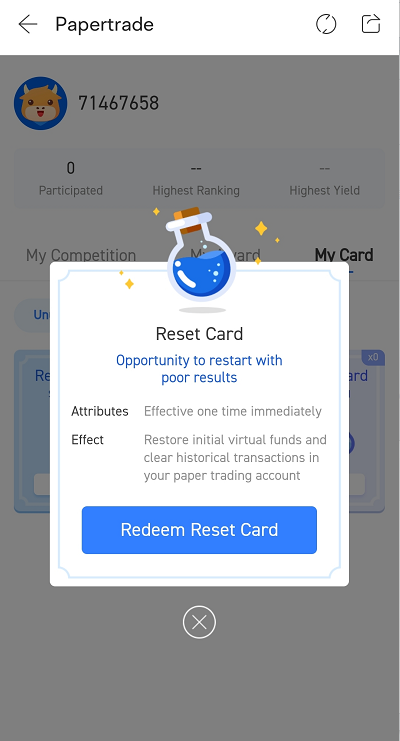
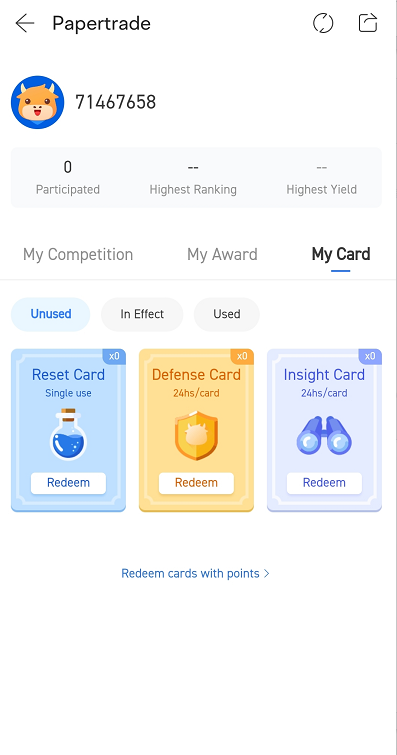
A reset card is effective one time immediately to restore initial virtual funds and clear the historical transactions in your paper trading account.
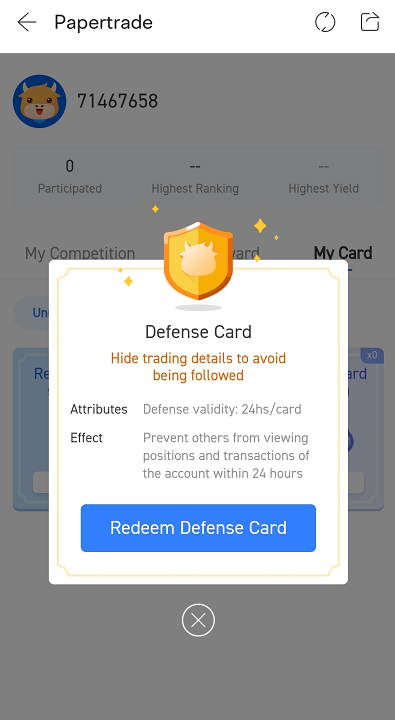
A defense card is a 24 hour card that can be stacked in order to prevent others from viewing the positions and transactions of the account across that time period.
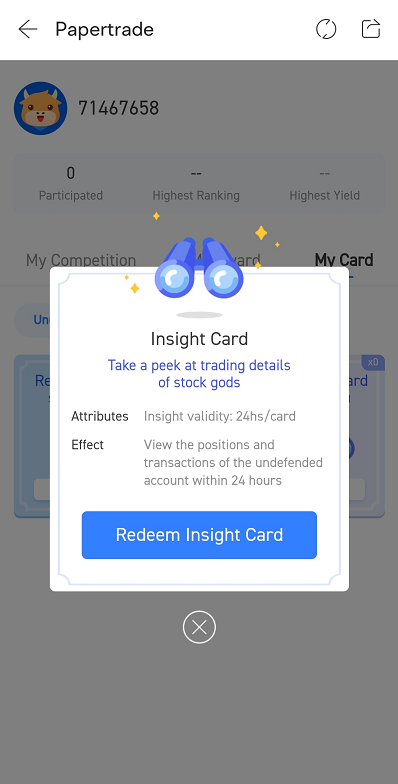
An insight card is a 24 hour card that can't be stacked, enabling the viewing of positions and transactions of the undefended account across 24 hours.
Cards can be redeemed via the path: Rewards Club> Paper Trading. Cards can also be earned by participating in paper trading.
To use a card, tap the profile photo on the homepage of the paper trading app. Tap ‘my card', select the reset card or defense card, and choose an account to use it on.
On the paper trading page, choose ‘use card' on the right side of ‘net assets'. Then, choose the reset card or defense card in the pop-up window to use it.
In the weekly top traders, enter your homepage by selecting your profile photo. Choose ‘view account' on the positions or transactions to make use of the insight card.
Ready to start paper trading in moomoo? Here's every step you need to take.
In order to paper trade, begin by downloading the moomoo app. You'll also need a moomoo app to access paper trading. Scan the QR code below to access the app.
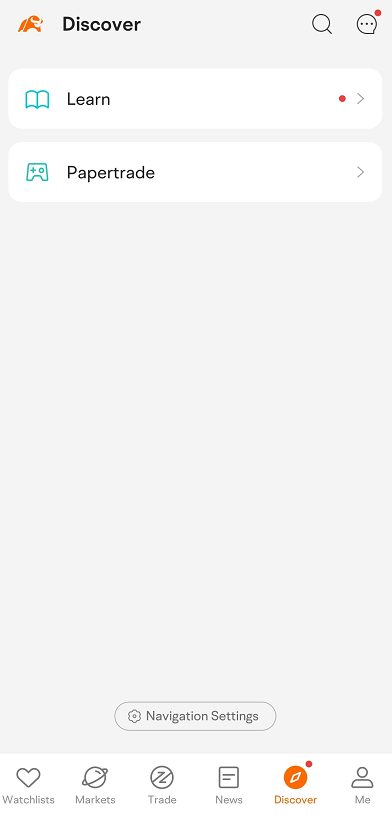
Choose Discover> PaperTrade in order to go into the paper trading environment. Once activated, you'll be granted $1m virtual cash for each account.
Choose the asset of your preference to commence paper trading within the market of your choice, , and don't forget to do thorough research before you start stock-pick.
Images provided are not current and any securities are shown for illustrative purposes only.
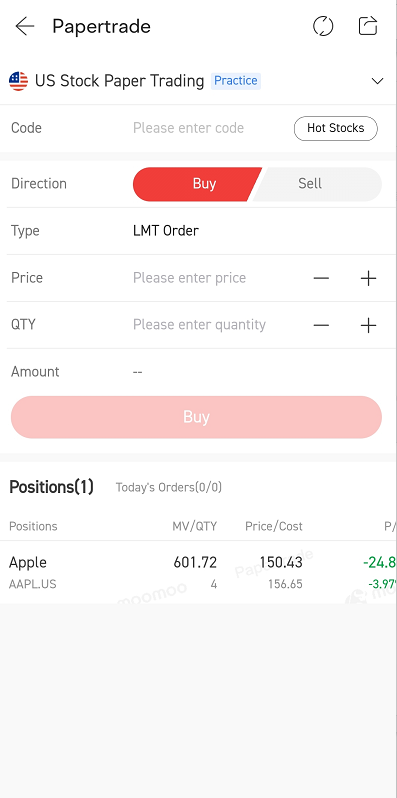
Enter the code of your asset, the direction of your trade, the price, quantity, and amount. Once confirmed, tap on the buy or sell button to place the order.
Images provided are not current and any securities are shown for illustrative purposes only.
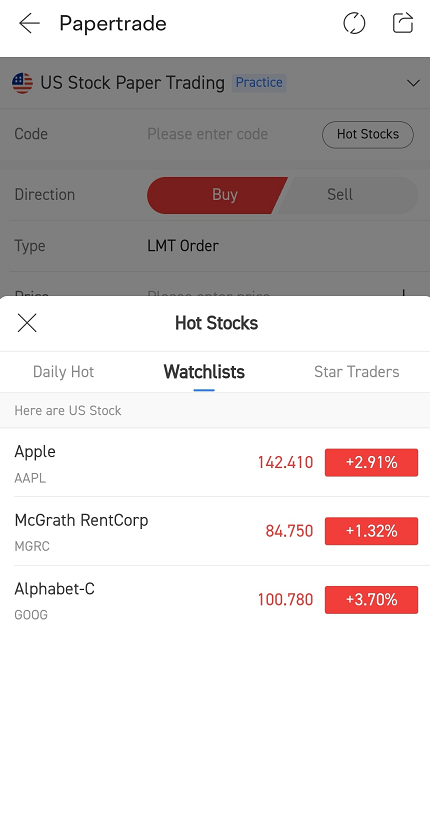
Under Hot Stocks, you're able to see the Daily Hot, Watchlists and Star Traders, pointing to identified trends in the market.
Images provided are not current and any securities are shown for illustrative purposes only.
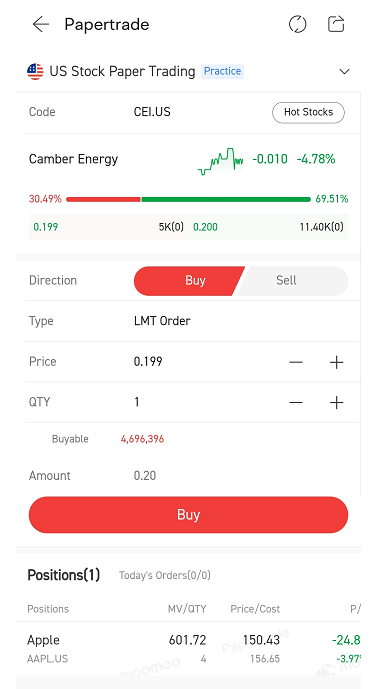
Choose a stock under Positions, adjust your positions, and place your order.
Images provided are not current and any securities are shown for illustrative purposes only.
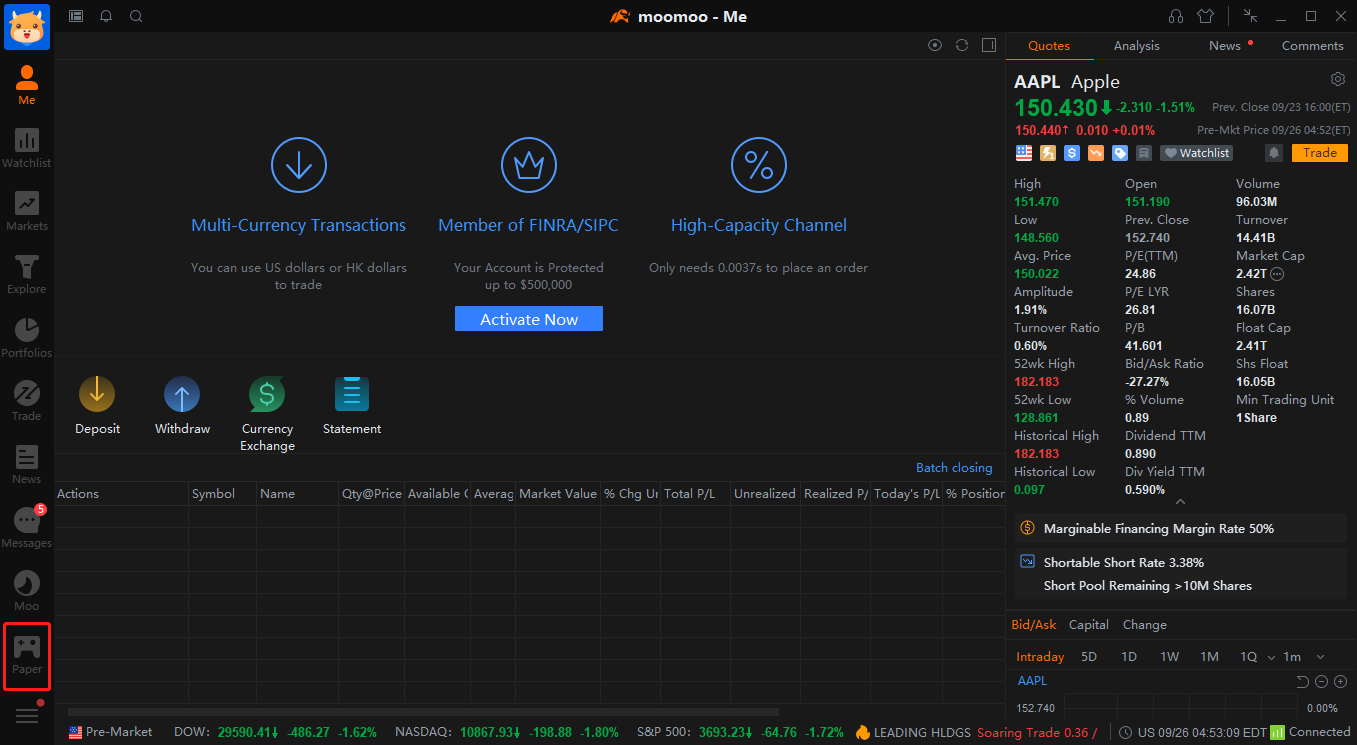
Once you've logged into the desktop app, choose ‘Paper' from the bottom left-hand corner.
Images provided are not current and any securities are shown for illustrative purposes only.
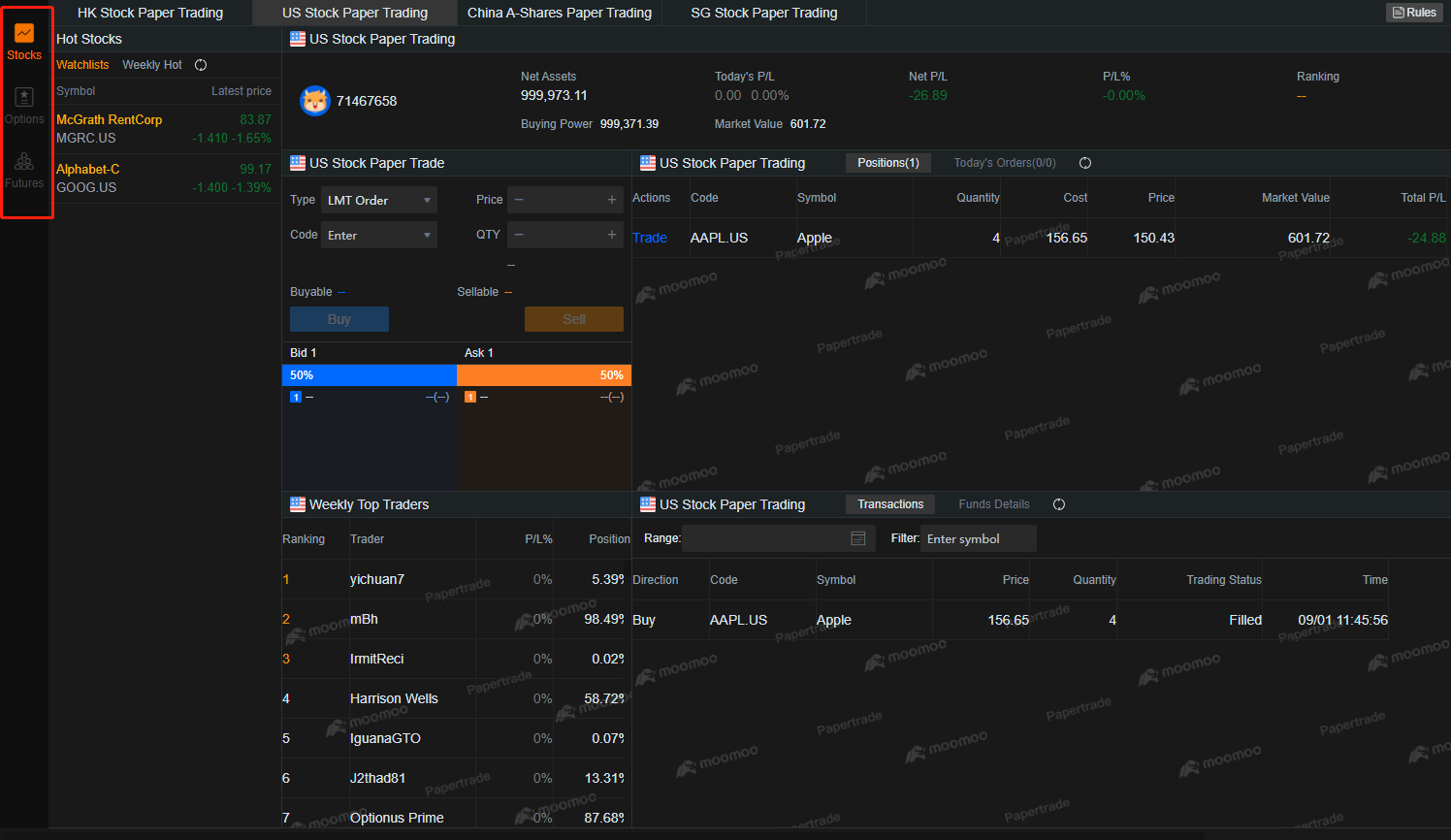
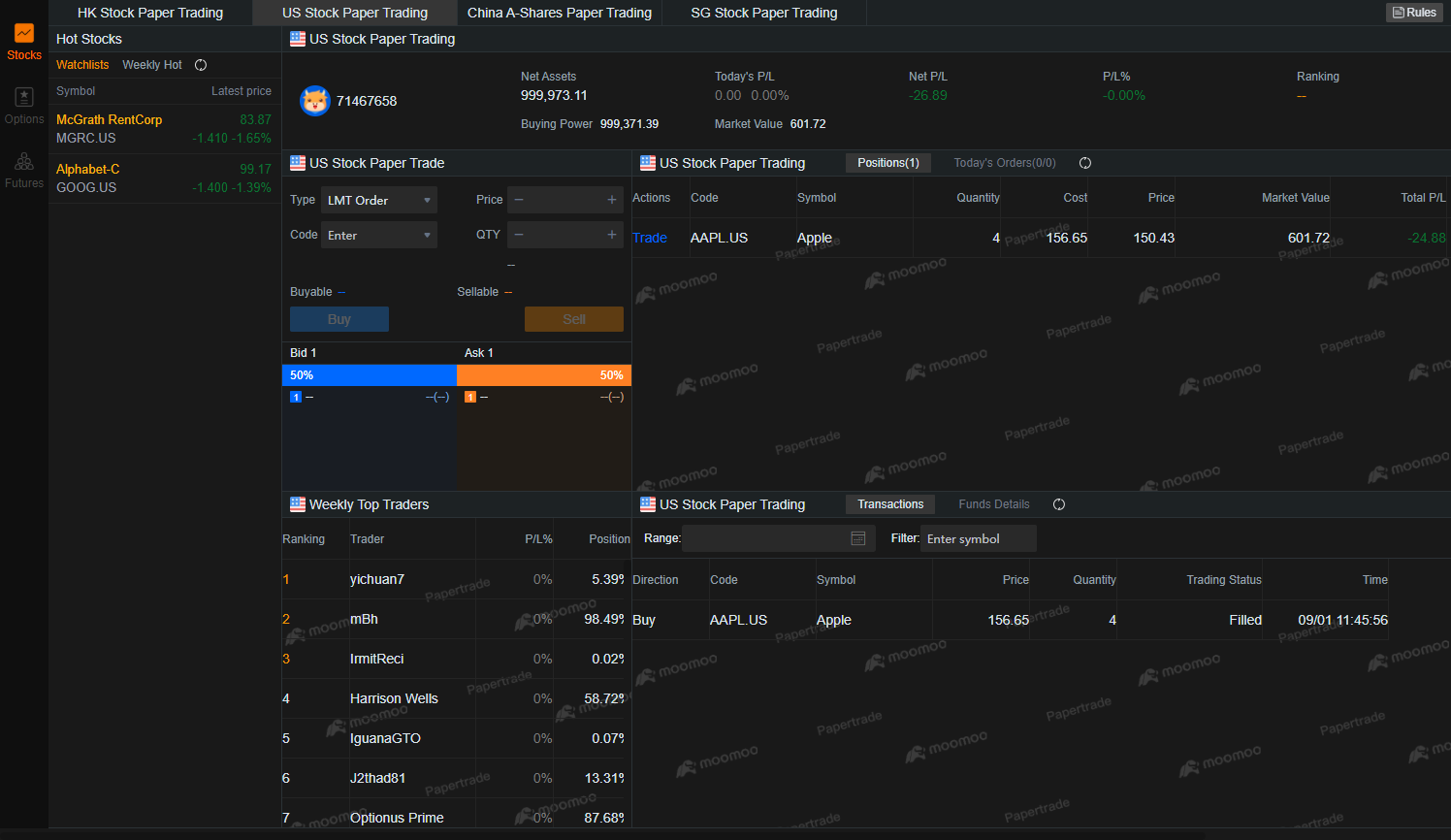
You'll then be prompted to open a paper trading stocks account. Accept this, and you'll be able to choose from HK Stock Paper Trading, US Stock Paper Trading, China A-Shares Paper Trading and SG Stock Paper Trading.
Images provided are not current and any securities are shown for illustrative purposes only.
You can then choose your Order Type, Price, Code and Quantity, placing a buy or sell order and commencing your paper trading.
Images provided are not current and any securities are shown for illustrative purposes only.
Build your investment skills and practice your trading without any risk with moomoo's paper trading app. Download it to your desktop or mobile device and you'll have everything you need to start paper trading within minutes.
This presentation is for informational and educational use only and is not a recommendation or endorsement of any particular investment or investment strategy. Investment information provided in this content is general in nature, strictly for illustrative purposes, and may not be appropriate for all investors. Read more
Recommend
How to Trade Volatility: Strategies & Tips for Success
How to File Taxes: 6 Steps for Beginners

Best AI Stock Trading Tools on moomoo Trading App

What is Algorithmic Trading | Benefits, Strategies & Future Trends
How to Diversify Your Portfolio: 6 Strategies to Consider
How to Invest in Dividend Stocks for Beginners
How to Invest in DeepSeek Stock: Easy Steps to Follow
How to Invest in Silver for Beginners
Meme Stocks: Definition, Examples, and Impact on the Market
What is an ACH Transfer: Definition, Types & Benefits
Stop-Limit Order: What it is in Stocks
How to Invest In OpenAI Stock in 2026
Fractional Shares: Definition & How to Buy
Cash Accounts: What Are They and How Do They Work
What Are International Stocks & American Stocks?
Margin Account vs Cash Account: Which is Right for You?
Volatility: Definition in Finance and How to Calculate
What is a Brokerage Account: Definition and How to Open
What Are Bitcoin ETFs and How to Trade
How to Transfer Stocks From One Broker to Another
New "T+1" Settlement Cycle | What You Need to Know
SEC Form 13F: Definition, Filling Requirements, and Examples
How to Choose a Good Online Brokerage for Stock Trading
Bitcoin Futures: What Are They and How to Invest
What Is 403(b) Plan? How Does It Work
Price Action Trading: A Guide to Understanding the Basics
Margin Trading: Strategies, Benefits, and Risks
How to Invest in Index Funds for Beginners
Pre-Market and After-Hours Trading: Definition & How It Works
What is the Stock Market: Key Concepts and Functions
Common Stock: Definition, Benefits, and vs. Preferred Stock
Stock Dividends vs. Capital Gains: What You Need to Know
What Is a Stock Split - Definitions, How It Works, & Examples
Institutional Investors: Definitions & How They Invest
How to Invest in the S&P 500 for Beginners
The Impacts of ChatGPT on the Stock Market
ETFs vs. Mutual Funds
How to Practice Trading Stocks with a Free Demo Account?
The Basics of Financial Literacy: Why You Should Care
Stocks vs. Bonds
Choosing the Best Trading Platform for You — moomoo vs. Webull vs. Robinhood
The Consumer Price Index (CPI) Explained For Investors
How to Use moomoo Paper Trading Online?
What Is the Price-to-Sales (P/S) Ratio?
What Is a Quarterly Report?
What Is the Price-to-Book (P/B) Ratio?
Margin Account Explained: Definition, Benefits, and How to Use It
What Is A 10-K?
What Is SEC Form 10-Q?
What Is Ethical Investing
What Is Earnings Season
What Is Socially Responsible Investment (SRI)?
What Is a Stop Order?
Reading the Annual Report
What Is Open Trade Equity (OTE)?
What Is Impact Investing
How to Use moomoo Paper Trading
What Is a Limit Order?
Margin Trading: How It Works, Risks and Benefits
What Is Initial Margin?
How to Invest in Stocks: From Basic to Advanced
Stock Market Courses that Seek to Empower Investment Goals
How Can You Calculate Margin Interest?
What is Intraday?
Retail Investors vs. Institutional Investors: What You Need to Know
What are Cyclical stocks?
How to Buy Stocks Online without A Broker
How to Trade Volatility: Strategies & Tips for Success
How to File Taxes: 6 Steps for Beginners
Best AI Stock Trading Tools on moomoo Trading App
What is Algorithmic Trading | Benefits, Strategies & Future Trends
How to Diversify Your Portfolio: 6 Strategies to Consider
How to Invest in Dividend Stocks for Beginners
How to Invest in DeepSeek Stock: Easy Steps to Follow
How to Invest in Silver for Beginners
Meme Stocks: Definition, Examples, and Impact on the Market
What is an ACH Transfer: Definition, Types & Benefits
Stop-Limit Order: What it is in Stocks
How to Invest In OpenAI Stock in 2026
Fractional Shares: Definition & How to Buy
Cash Accounts: What Are They and How Do They Work
What Are International Stocks & American Stocks?
Margin Account vs Cash Account: Which is Right for You?
Volatility: Definition in Finance and How to Calculate
What is a Brokerage Account: Definition and How to Open
What Are Bitcoin ETFs and How to Trade
How to Transfer Stocks From One Broker to Another
New "T+1" Settlement Cycle | What You Need to Know
SEC Form 13F: Definition, Filling Requirements, and Examples
How to Choose a Good Online Brokerage for Stock Trading
Bitcoin Futures: What Are They and How to Invest
What Is 403(b) Plan? How Does It Work
Price Action Trading: A Guide to Understanding the Basics
Margin Trading: Strategies, Benefits, and Risks
How to Invest in Index Funds for Beginners
Pre-Market and After-Hours Trading: Definition & How It Works
What is the Stock Market: Key Concepts and Functions
Common Stock: Definition, Benefits, and vs. Preferred Stock
Stock Dividends vs. Capital Gains: What You Need to Know
What Is a Stock Split - Definitions, How It Works, & Examples
Institutional Investors: Definitions & How They Invest
How to Invest in the S&P 500 for Beginners
The Impacts of ChatGPT on the Stock Market
ETFs vs. Mutual Funds
How to Practice Trading Stocks with a Free Demo Account?
The Basics of Financial Literacy: Why You Should Care
Stocks vs. Bonds
Choosing the Best Trading Platform for You — moomoo vs. Webull vs. Robinhood
The Consumer Price Index (CPI) Explained For Investors
How to Use moomoo Paper Trading Online?
What Is the Price-to-Sales (P/S) Ratio?
What Is a Quarterly Report?
What Is the Price-to-Book (P/B) Ratio?
Margin Account Explained: Definition, Benefits, and How to Use It
What Is A 10-K?
What Is SEC Form 10-Q?
What Is Ethical Investing
What Is Earnings Season
What Is Socially Responsible Investment (SRI)?
What Is a Stop Order?
Reading the Annual Report
What Is Open Trade Equity (OTE)?
What Is Impact Investing
How to Use moomoo Paper Trading
What Is a Limit Order?
Margin Trading: How It Works, Risks and Benefits
What Is Initial Margin?
How to Invest in Stocks: From Basic to Advanced
Stock Market Courses that Seek to Empower Investment Goals
How Can You Calculate Margin Interest?
What is Intraday?
Retail Investors vs. Institutional Investors: What You Need to Know
What are Cyclical stocks?
How to Buy Stocks Online without A Broker

