
Moomoo Insights
Jul 16 15:38
TSMC Earnings: AI Demand Is Stronger Than the Chip Selloff Suggests
Moomoo Insights
Sep 30 05:04
Live Take | Anthropic’s $518B Compute Bet: Who Wins From the AI Buildout?
Margin trading is a common but risky strategy being used in the financial world. Margin refers to the amount investors borrow from a broker to buy or short an asset. Traders pay a specific percentage of the asset's value for margin. Interest is also incurred in the margin.
Trading on margin opens the doors of opportunities for investors. It's a useful strategy for investors because the cash to acquire an asset is no more a problem.
Margin interest refers to due interest on the loan you got from your broker on your assets. Let's understand it with an example. Suppose you short-sell a stock. The first thing you have to do is to borrow it on margin and then sell it to the buyer. Purchasing the stocks on margin allows you to use your money to buy more shares.
For instance, you can buy shares of $1000 on a margin of 10% by putting in $100. Here you get $900 extra. This extra money is the margin loan. You have to pay interest on these $900.
A margin account is not easy to manage. You need to understand how to calculate this margin interest. Moreover, you may also need to know how to compute the margin interest manually.
So, you have decided to do calculations. You first need to identify the interest rate broker-dealers in your local market are offering. You can get this information directly from the broker or the company's website. The website contains information about the margin rates, costs and disclosures of fees.
The margin interest rate depends on the assets you have with the broker. The more the value of the assets, the lower the margin interest rate will be.
First of all, identify the margin interest rate. Then, take a pencil and calculator and calculate the margin interest rate. Here's a hypothetical example to help you understand how to calculate the margin interest:
Suppose the amount you've borrowed is $50,000 at the 10% interest rate. You want to buy a stock and hold it for 10 days with this amount.
To calculate the borrowing cost, multiply the borrowed amount by the interest rate.
First of all, identify the margin interest rate. Then, take a pencil and calculator and calculate the margin interest rate. Here's a hypothetical example to explain how to calculate the margin interest:
Suppose the amount you've borrowed is $50,000 at the 10% interest rate. You want to buy a stock and hold it for 10 days with this amount.
To calculate the borrowing cost, multiply the borrowed amount by the interest rate.
To calculate the cost of borrowing, firstly take the amount of money being borrowed and multiply it by the rate being charged:
$50,000 x 0.1 (10%) = $5,000
In the next step, divide the number obtained by the number of days in a year. Note: You should use 360 days for a year in the brokerage industry instead of 365 days.
$5,000 / 360 = 13.8
Now, multiply this number by the days for which you have borrowed.
13.8x 10 = $130
So, you will pay a margin interest of $130 if you borrow $50,000 for 10 days. Margin can act in two ways. It can boost the profit amount when the stock prices rise. Likewise, it can also increase the losses when the stock price decrease. An increase in losses leads to the margin call, requiring you to add more cash to your account.
However, the margin interest will remain the same whether you gain or lose on a trade.
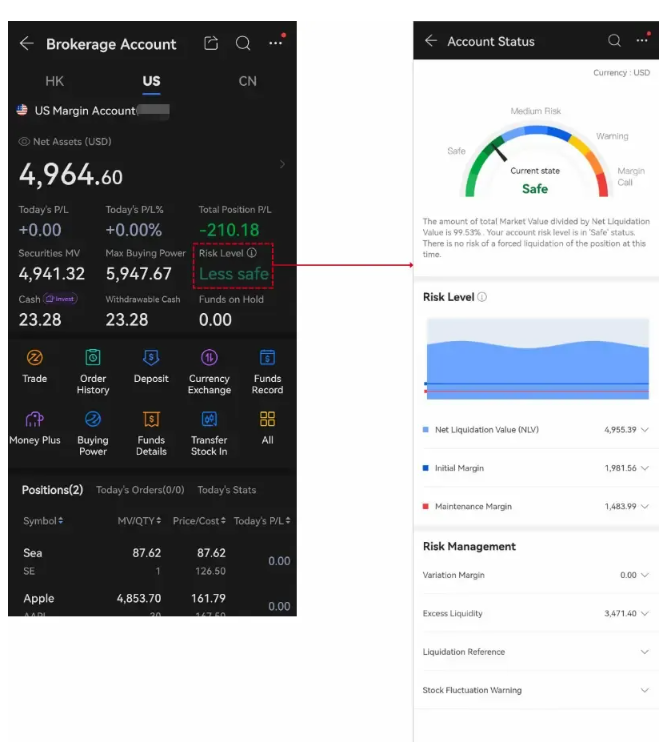
In moomoo trading platform, the margin rate varies according to the daily market supply. You can find it on your statements for actual margin rates. Specific rates are available on the 「Margin Trade」page.
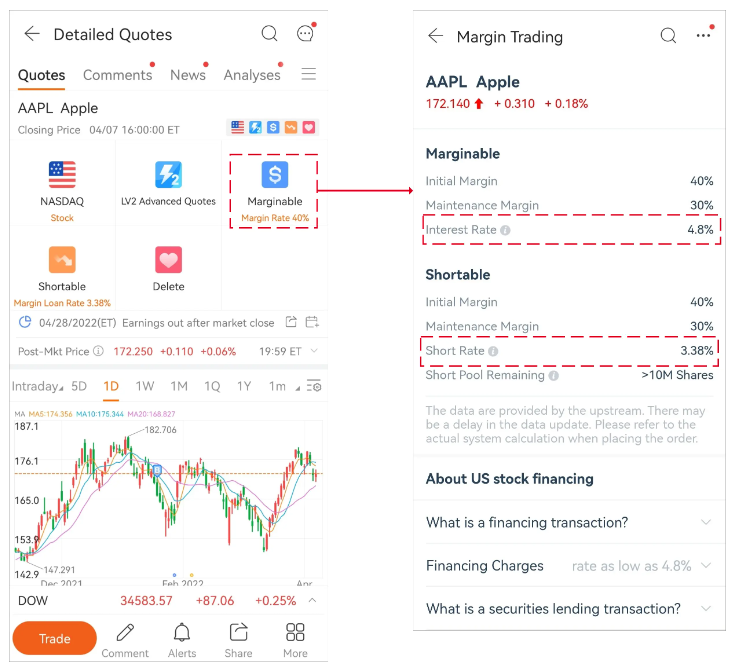
moomoo app also discloses the risks on the user's account risk details page. It contains descriptions of your account risks, disposal suggestions, and early warning information on fluctuations of individual stocks. You could easily find out the risk level of the stock when you do margin trading and be better informed of the dangers in the early stage.
Trading on margin is a risky but profitable business. However, you need to be careful while employing this strategy. It also helps in the easy assessment of asset values. Moreover, trading on margin doesn't require traders to put the total cost of an asset. Before you enter a trade on margin, it's better to know how to calculate the true cost of the trade. Determining the true cost will help you depict the profit or loss.
This presentation is for informational and educational use only and is not a recommendation or endorsement of any particular investment or investment strategy. Investment information provided in this content is general in nature, strictly for illustrative purposes, and may not be appropriate for all investors. Read more
Recommend
How to Trade Volatility: Strategies & Tips for Success
How to File Taxes: 6 Steps for Beginners

Best AI Stock Trading Tools on moomoo Trading App

What is Algorithmic Trading | Benefits, Strategies & Future Trends
How to Diversify Your Portfolio: 6 Strategies to Consider
How to Invest in Dividend Stocks for Beginners
How to Invest in DeepSeek Stock: Easy Steps to Follow
How to Invest in Silver for Beginners
Meme Stocks: Definition, Examples, and Impact on the Market
What is an ACH Transfer: Definition, Types & Benefits
Stop-Limit Order: What it is in Stocks
How to Invest In OpenAI Stock in 2026
Fractional Shares: Definition & How to Buy
Cash Accounts: What Are They and How Do They Work
What Are International Stocks & American Stocks?
Margin Account vs Cash Account: Which is Right for You?
Volatility: Definition in Finance and How to Calculate
What is a Brokerage Account: Definition and How to Open
What Are Bitcoin ETFs and How to Trade
How to Transfer Stocks From One Broker to Another
New "T+1" Settlement Cycle | What You Need to Know
SEC Form 13F: Definition, Filling Requirements, and Examples
How to Choose a Good Online Brokerage for Stock Trading
Bitcoin Futures: What Are They and How to Invest
What Is 403(b) Plan? How Does It Work
Price Action Trading: A Guide to Understanding the Basics
Margin Trading: Strategies, Benefits, and Risks
How to Invest in Index Funds for Beginners
Pre-Market and After-Hours Trading: Definition & How It Works
What is the Stock Market: Key Concepts and Functions
Common Stock: Definition, Benefits, and vs. Preferred Stock
Stock Dividends vs. Capital Gains: What You Need to Know
What Is a Stock Split - Definitions, How It Works, & Examples
Institutional Investors: Definitions & How They Invest
How to Invest in the S&P 500 for Beginners
The Impacts of ChatGPT on the Stock Market
ETFs vs. Mutual Funds
How to Practice Trading Stocks with a Free Demo Account?
The Basics of Financial Literacy: Why You Should Care
Stocks vs. Bonds
Choosing the Best Trading Platform for You — moomoo vs. Webull vs. Robinhood
The Consumer Price Index (CPI) Explained For Investors
How to Use moomoo Paper Trading Online?
What Is the Price-to-Sales (P/S) Ratio?
What Is a Quarterly Report?
What Is the Price-to-Book (P/B) Ratio?
Margin Account Explained: Definition, Benefits, and How to Use It
What Is A 10-K?
What Is SEC Form 10-Q?
What Is Ethical Investing
What Is Earnings Season
What Is Socially Responsible Investment (SRI)?
What Is a Stop Order?
Reading the Annual Report
What Is Open Trade Equity (OTE)?
What Is Impact Investing
How to Use moomoo Paper Trading
What Is a Limit Order?
Margin Trading: How It Works, Risks and Benefits
What Is Initial Margin?
How to Invest in Stocks: From Basic to Advanced
Stock Market Courses that Seek to Empower Investment Goals
How Can You Calculate Margin Interest?
What is Intraday?
Retail Investors vs. Institutional Investors: What You Need to Know
What are Cyclical stocks?
How to Buy Stocks Online without A Broker
How to Trade Volatility: Strategies & Tips for Success
How to File Taxes: 6 Steps for Beginners
Best AI Stock Trading Tools on moomoo Trading App
What is Algorithmic Trading | Benefits, Strategies & Future Trends
How to Diversify Your Portfolio: 6 Strategies to Consider
How to Invest in Dividend Stocks for Beginners
How to Invest in DeepSeek Stock: Easy Steps to Follow
How to Invest in Silver for Beginners
Meme Stocks: Definition, Examples, and Impact on the Market
What is an ACH Transfer: Definition, Types & Benefits
Stop-Limit Order: What it is in Stocks
How to Invest In OpenAI Stock in 2026
Fractional Shares: Definition & How to Buy
Cash Accounts: What Are They and How Do They Work
What Are International Stocks & American Stocks?
Margin Account vs Cash Account: Which is Right for You?
Volatility: Definition in Finance and How to Calculate
What is a Brokerage Account: Definition and How to Open
What Are Bitcoin ETFs and How to Trade
How to Transfer Stocks From One Broker to Another
New "T+1" Settlement Cycle | What You Need to Know
SEC Form 13F: Definition, Filling Requirements, and Examples
How to Choose a Good Online Brokerage for Stock Trading
Bitcoin Futures: What Are They and How to Invest
What Is 403(b) Plan? How Does It Work
Price Action Trading: A Guide to Understanding the Basics
Margin Trading: Strategies, Benefits, and Risks
How to Invest in Index Funds for Beginners
Pre-Market and After-Hours Trading: Definition & How It Works
What is the Stock Market: Key Concepts and Functions
Common Stock: Definition, Benefits, and vs. Preferred Stock
Stock Dividends vs. Capital Gains: What You Need to Know
What Is a Stock Split - Definitions, How It Works, & Examples
Institutional Investors: Definitions & How They Invest
How to Invest in the S&P 500 for Beginners
The Impacts of ChatGPT on the Stock Market
ETFs vs. Mutual Funds
How to Practice Trading Stocks with a Free Demo Account?
The Basics of Financial Literacy: Why You Should Care
Stocks vs. Bonds
Choosing the Best Trading Platform for You — moomoo vs. Webull vs. Robinhood
The Consumer Price Index (CPI) Explained For Investors
How to Use moomoo Paper Trading Online?
What Is the Price-to-Sales (P/S) Ratio?
What Is a Quarterly Report?
What Is the Price-to-Book (P/B) Ratio?
Margin Account Explained: Definition, Benefits, and How to Use It
What Is A 10-K?
What Is SEC Form 10-Q?
What Is Ethical Investing
What Is Earnings Season
What Is Socially Responsible Investment (SRI)?
What Is a Stop Order?
Reading the Annual Report
What Is Open Trade Equity (OTE)?
What Is Impact Investing
How to Use moomoo Paper Trading
What Is a Limit Order?
Margin Trading: How It Works, Risks and Benefits
What Is Initial Margin?
How to Invest in Stocks: From Basic to Advanced
Stock Market Courses that Seek to Empower Investment Goals
How Can You Calculate Margin Interest?
What is Intraday?
Retail Investors vs. Institutional Investors: What You Need to Know
What are Cyclical stocks?
How to Buy Stocks Online without A Broker

