

Moomoo Insights
Jul 16 15:38
TSMC Earnings: AI Demand Is Stronger Than the Chip Selloff Suggests
Moomoo Insights
Sep 30 05:04
Live Take | Anthropic’s $518B Compute Bet: Who Wins From the AI Buildout?
Ever heard the term 'stock split' and wondered what it's all about?
Picture this: your favorite pizza joint suddenly decides to cut each slice in half, doubling the number of slices but maintaining the total size of the pie. That's essentially what happens in a stock split!
Read on to find out how a stock split works, why companies choose to split stock and learn about Nvidia's June 2024 recent stock split.
A stock split is a corporate action where a company divides its existing shares into multiple new shares to boost liquidity and accessibility.
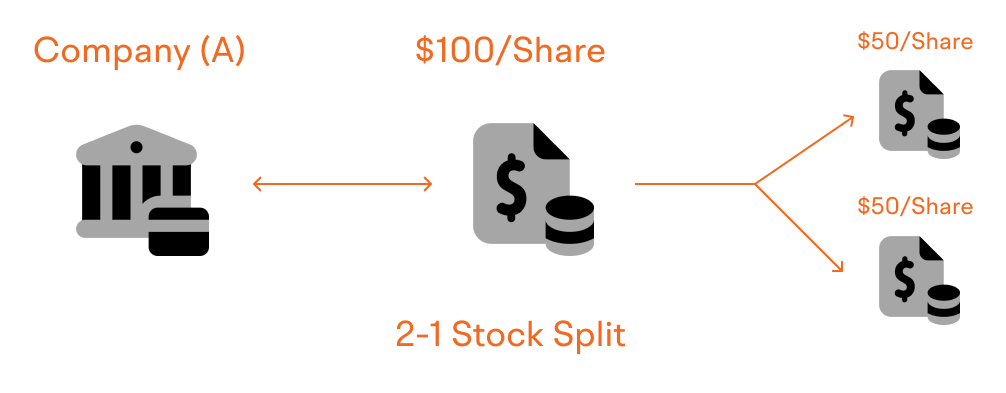
For example, in a 2-for-1 split, each existing share is split into two, halving the price per share but doubling the number of shares held by each shareholder. The overall value of the investment remains unchanged, but the reduced share price makes the stock more affordable and attractive to small investors. Companies often perform splits to maintain an optimal trading range and enhance marketability.
In May 2024, NVIDIA (NVDA) reported its quarterly earnings and announced a 10-for-1 stock split of NVIDIA's issued common stock. The company said this was to make stock ownership more accessible to employees and investors. This split resulted in lowering Nvidia's share price but it didn't affect investors' total value of their Nvidia holdings.
Every individual holding common stock at the market's close on Thursday, June 6, 2024, was entitled to receive nine extra shares of common stock. Distribution took place after the market closed on Friday, June 7, 2024, and trading recommenced on a split-adjusted basis the following Monday, June 10, 2024.
In the years leading up to the split, NVIDIA experienced strong growth and market performance, which the company largely attributed to innovative technology and strategic partnerships. This stock split, Nvidia's second one in its history, signaled a positive outlook, increased liquidity, and strong market demand, making its shares more accessible to a broader range of investors.

A stock split works by increasing the number of shares outstanding while reducing the price per share proportionally, ensuring the company's market capitalization remains the same.
This process enhances share liquidity and accessibility, making the stock more appealing to a broader range of investors without altering the company's overall value.
In the example of Nvidia, there's also a psychological component with the stock split. Under its 10-for-1 split, each existing Nvidia share is divided into 10 shares. If Nvidia's stock was priced at $1,000 before the split, it would be $100 after.
Shareholders see their number of shares increase, but the total value of their holdings remains unchanged. The shares may now appear more attractive. An investor may likely prefer to buy 10 shares Nvidia at $100 vs. 1 share at $1,000.
A 2-for-1 share split is where a company decides to issue a stock split where every share it has is divided into two. This means that each share is now worth half of its previous price, and there is now double the number of shares of this company.
Investors who already hold the stock within their portfolio will see the price of each of their shares halved, but the number of shares they own will double. In other words, this means that the worth of their total share holdings in the company remains unchanged.
Companies split shares to enhance liquidity, making their stock more accessible and attractive to a broader range of investors. By lowering the share price through a split, the stock becomes more affordable for small investors, potentially increasing trading volume.
This increased liquidity can lead to narrower bid-ask spreads and more efficient pricing. Companies may use splits to signal confidence in future growth, positively influencing investor perception.
Additionally, a stock split can indirectly impact a stock's inclusion in an index, such as Dow Jones Industrial Average (DJIA) or an exchange by potentially meeting eligibility criteria. In the case of Nvidia, its $1,000 share price, it automatically excludes them from the price-weighted DJIA as high-priced shares alter the index. Its new lower price may provide a future opportunity for inclusion. Just ask Amazon.
Overall, share splits help maintain an optimal trading range, fostering greater marketability and broadening the shareholder base.
A stock split affects investors by increasing the number of shares they own while reducing the price per share proportionally, leaving the total value of their holdings unchanged.
For example, in a 2-for-1 split, an investor with 100 shares priced at $50 each will end up with 200 shares priced at $25 each. This can make the stock more affordable and potentially more attractive to new investors, enhancing market liquidity.
While the value of an investor's investment within their portfolio doesn't change, the perceived affordability from the price of shares being halved and their holdings doubled, can lead to increased demand and trading activity.
Increased liquidity: More shares at a lower price can make the stock more affordable and attractive to a broader range of investors, potentially increasing trading volume.
Positive market perception: A stock split can signal confidence from the company’s management in its future growth, often leading to a positive market response.
Improved accessibility: Lower per-share prices can make the stock more accessible to small investors who might have been deterred by higher prices.
No fundamental change: A stock split does not alter the company’s fundamentals, market value, or shareholders' equity, which means it doesn’t provide any real economic benefit.
Temporary price volatility: The split can cause short-term price volatility as the market adjusts to the new share price.
Increased administrative costs: Implementing a stock split involves administrative tasks and costs, including updating records and communicating with shareholders.
A stock split increases the number of shares while reducing the price per share proportionally, maintaining the same overall market value. For example, in Nvidia's 10-for-1 split, an investor owning 1 share at $1,000 each becomes 10 shares at $100 each, enhancing liquidity and accessibility.
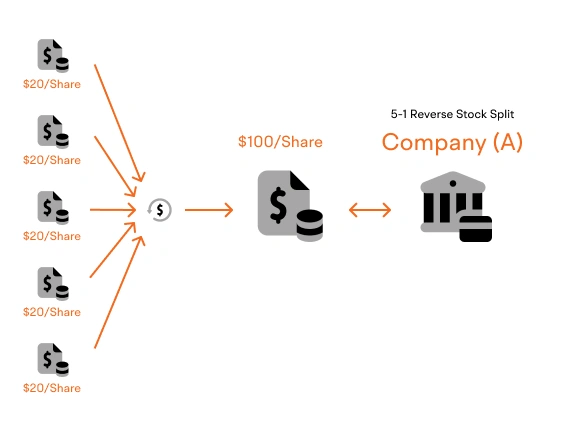
Conversely, a reverse stock split consolidates shares, increasing the price per share proportionally while reducing the number of shares. For example, in a 1-for-2 reverse split, 200 shares at $25 each become 100 shares at $50 each. Companies do a reverse stock split to increase the stock price, which can help maintain exchange listing requirements, improve the stock's marketability, and attract institutional investors who may have minimum price criteria for investments.
You may be wondering — what happens to my fractional shares in this situation?
As we know, when a stock undergoes a stock split, you receive more shares while the price per share decreases proportionally. This remains the same when we are dealing with fractional share trading. For example, if you own 3.5 shares of Stock Y priced at $15 each, and Stock Y has a 2 for 1 (2:1) split, you'll now own 7 shares at $7.50 each.
Conversely, in a reverse stock split, your shares decrease and any fractional shares are usually compensated with cash. For instance, if you own 5.5 shares of Stock Z valued at $10 each, and Stock Z undergoes a 1 for 2 (1:2) reverse split, you'll end up with 2.5 shares. Typically, you'd receive cash for the 0.5 fractional share, equivalent to $5.
Is a stock split good or bad for investors?
A stock split is generally good for investors as it increases share liquidity and affordability, potentially attracting more buyers and boosting demand. It doesn’t alter the investment's overall value but can signal company confidence and growth potential. However, it doesn't affect the company's fundamentals, so its impact depends on the investor's perspective and the company's future performance.
Do I need to buy stocks before or after a stock split?
You don't need to time your purchase specifically before or after a stock split, as the overall value of the investment remains unchanged. Ultimately, your decision should be based on the company's fundamentals and your investment strategy and personal financial situation.
Will a stock split affect my taxes?
A stock split does not directly affect your taxes, as it doesn't change the total value of your holdings or generate immediate taxable events. Your cost basis per share is adjusted proportionally, but overall remains the same. Taxes are only impacted when you sell the shares, at which point capital gains or losses are calculated based on the adjusted cost basis.
What happens when a company that pays dividends splits its stock?
The payment of the dividend will be divided by the split-adjusted share count. For example, if the company pays out $1.00 per share, then splits its stock two-for-one, each share will now pay out $0.50 per share. Granted, the shareholder would have two times more shares after the split, meaning they'd receive the same total dividend payments.
Does the valuation of a stock change after a split?
No, the stock will keep the same valuation but have a split-adjusted share price. The market capitalization doesn't change either.
How do shareholders receive their split-adjusted shares?
A stock split is automatic and requires zero input from the shareholder. The correct amount of shares will be displayed in the brokerage account shortly after finalization.
This presentation is for informational and educational use only and is not a recommendation or endorsement of any particular investment or investment strategy. Investment information provided in this content is general in nature, strictly for illustrative purposes, and may not be appropriate for all investors. Read more
Recommend

How to Trade Volatility: Strategies & Tips for Success

How to File Taxes: 6 Steps for Beginners

Best AI Stock Trading Tools on moomoo Trading App

What is Algorithmic Trading | Benefits, Strategies & Future Trends
How to Diversify Your Portfolio: 6 Strategies to Consider
How to Invest in Dividend Stocks for Beginners
How to Invest in DeepSeek Stock: Easy Steps to Follow
How to Invest in Silver for Beginners
Meme Stocks: Definition, Examples, and Impact on the Market
What is an ACH Transfer: Definition, Types & Benefits
Stop-Limit Order: What it is in Stocks
How to Invest In OpenAI Stock in 2026
Fractional Shares: Definition & How to Buy
Cash Accounts: What Are They and How Do They Work
What Are International Stocks & American Stocks?
Margin Account vs Cash Account: Which is Right for You?
Volatility: Definition in Finance and How to Calculate
What is a Brokerage Account: Definition and How to Open
What Are Bitcoin ETFs and How to Trade
How to Transfer Stocks From One Broker to Another
New "T+1" Settlement Cycle | What You Need to Know
SEC Form 13F: Definition, Filling Requirements, and Examples
How to Choose a Good Online Brokerage for Stock Trading
Bitcoin Futures: What Are They and How to Invest
What Is 403(b) Plan? How Does It Work
Price Action Trading: A Guide to Understanding the Basics
Margin Trading: Strategies, Benefits, and Risks
How to Invest in Index Funds for Beginners
Pre-Market and After-Hours Trading: Definition & How It Works
What is the Stock Market: Key Concepts and Functions
Common Stock: Definition, Benefits, and vs. Preferred Stock
Stock Dividends vs. Capital Gains: What You Need to Know
What Is a Stock Split - Definitions, How It Works, & Examples
Institutional Investors: Definitions & How They Invest
How to Invest in the S&P 500 for Beginners
The Impacts of ChatGPT on the Stock Market
ETFs vs. Mutual Funds
How to Practice Trading Stocks with a Free Demo Account?
The Basics of Financial Literacy: Why You Should Care
Stocks vs. Bonds
Choosing the Best Trading Platform for You — moomoo vs. Webull vs. Robinhood
The Consumer Price Index (CPI) Explained For Investors
How to Use moomoo Paper Trading Online?
What Is the Price-to-Sales (P/S) Ratio?
What Is a Quarterly Report?
What Is the Price-to-Book (P/B) Ratio?
Margin Account Explained: Definition, Benefits, and How to Use It
What Is A 10-K?
What Is SEC Form 10-Q?
What Is Ethical Investing
What Is Earnings Season
What Is Socially Responsible Investment (SRI)?
What Is a Stop Order?
Reading the Annual Report
What Is Open Trade Equity (OTE)?
What Is Impact Investing
How to Use moomoo Paper Trading
What Is a Limit Order?
Margin Trading: How It Works, Risks and Benefits
What Is Initial Margin?
How to Invest in Stocks: From Basic to Advanced
Stock Market Courses that Seek to Empower Investment Goals
How Can You Calculate Margin Interest?
What is Intraday?
Retail Investors vs. Institutional Investors: What You Need to Know
What are Cyclical stocks?
How to Buy Stocks Online without A Broker
How to Trade Volatility: Strategies & Tips for Success
How to File Taxes: 6 Steps for Beginners
Best AI Stock Trading Tools on moomoo Trading App
What is Algorithmic Trading | Benefits, Strategies & Future Trends
How to Diversify Your Portfolio: 6 Strategies to Consider
How to Invest in Dividend Stocks for Beginners
How to Invest in DeepSeek Stock: Easy Steps to Follow
How to Invest in Silver for Beginners
Meme Stocks: Definition, Examples, and Impact on the Market
What is an ACH Transfer: Definition, Types & Benefits
Stop-Limit Order: What it is in Stocks
How to Invest In OpenAI Stock in 2026
Fractional Shares: Definition & How to Buy
Cash Accounts: What Are They and How Do They Work
What Are International Stocks & American Stocks?
Margin Account vs Cash Account: Which is Right for You?
Volatility: Definition in Finance and How to Calculate
What is a Brokerage Account: Definition and How to Open
What Are Bitcoin ETFs and How to Trade
How to Transfer Stocks From One Broker to Another
New "T+1" Settlement Cycle | What You Need to Know
SEC Form 13F: Definition, Filling Requirements, and Examples
How to Choose a Good Online Brokerage for Stock Trading
Bitcoin Futures: What Are They and How to Invest
What Is 403(b) Plan? How Does It Work
Price Action Trading: A Guide to Understanding the Basics
Margin Trading: Strategies, Benefits, and Risks
How to Invest in Index Funds for Beginners
Pre-Market and After-Hours Trading: Definition & How It Works
What is the Stock Market: Key Concepts and Functions
Common Stock: Definition, Benefits, and vs. Preferred Stock
Stock Dividends vs. Capital Gains: What You Need to Know
What Is a Stock Split - Definitions, How It Works, & Examples
Institutional Investors: Definitions & How They Invest
How to Invest in the S&P 500 for Beginners
The Impacts of ChatGPT on the Stock Market
ETFs vs. Mutual Funds
How to Practice Trading Stocks with a Free Demo Account?
The Basics of Financial Literacy: Why You Should Care
Stocks vs. Bonds
Choosing the Best Trading Platform for You — moomoo vs. Webull vs. Robinhood
The Consumer Price Index (CPI) Explained For Investors
How to Use moomoo Paper Trading Online?
What Is the Price-to-Sales (P/S) Ratio?
What Is a Quarterly Report?
What Is the Price-to-Book (P/B) Ratio?
Margin Account Explained: Definition, Benefits, and How to Use It
What Is A 10-K?
What Is SEC Form 10-Q?
What Is Ethical Investing
What Is Earnings Season
What Is Socially Responsible Investment (SRI)?
What Is a Stop Order?
Reading the Annual Report
What Is Open Trade Equity (OTE)?
What Is Impact Investing
How to Use moomoo Paper Trading
What Is a Limit Order?
Margin Trading: How It Works, Risks and Benefits
What Is Initial Margin?
How to Invest in Stocks: From Basic to Advanced
Stock Market Courses that Seek to Empower Investment Goals
How Can You Calculate Margin Interest?
What is Intraday?
Retail Investors vs. Institutional Investors: What You Need to Know
What are Cyclical stocks?
How to Buy Stocks Online without A Broker

