
Moomoo Insights
Jul 16 15:38
TSMC Earnings: AI Demand Is Stronger Than the Chip Selloff Suggests
Moomoo Insights
Sep 30 05:04
Live Take | Anthropic’s $518B Compute Bet: Who Wins From the AI Buildout?
Form 10-Q of the Securities and Exchange Commission is a detailed report of financial performance that is required to be presented to the SEC quarterly by all publicly traded corporations (SEC). As a result of running their businesses, companies are obligated to provide pertinent information about their finances that is included in the 10-Q form. In most cases, the 10-Q is not audited as part of the reporting process.
The corporation is required to submit a Form 10-Q for each of the first three quarters that make up the fiscal year.
Key Points
The SEC Form 10-Q is a thorough report on the company's financial performance filed quarterly to the Securities and Exchange Commission by all publicly traded corporations.
The most recent quarter's financial statements and management's discussion and analysis of those statements, disclosure, and internal control systems, are included in Form 10-Q.
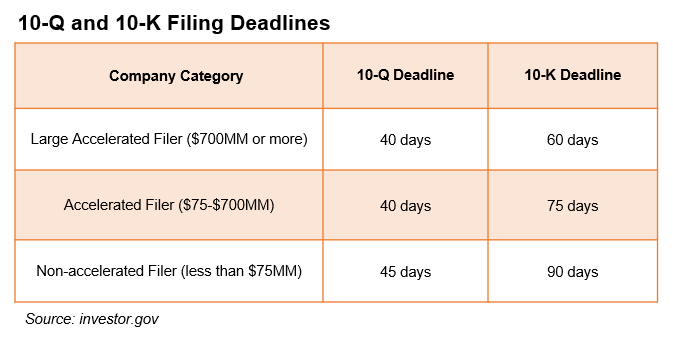
The 10-Q forms are due 40 or 45 days after the end of each quarter for publicly traded companies, based on the size of their public float.
Form 10-Q gives investors a picture of the company's financial status, which can be compared to prior quarters and used to gauge the stock's future performance prospects.
Unlike the yearly Form 10-K that businesses are required to submit, the quarterly Form 10-Q is not an audited statement.
Under federal securities rules, publicly listed corporations must disclose certain information to their shareholders and the broader public. These disclosures could occur regularly or just when certain events have occurred. Form 10-Q is one of the numerous forms required by the SEC. Following the conclusion of each quarter, a business will use it to disclose unaudited financial statements and provide a summary of the firm's current financial condition.
It is necessary to submit three 10-Q reports annually; however, the specific filing dates will differ depending on the organization's fiscal year.
The 10-Q is unnecessary for the fourth and final quarter of the year: Rather than filing its quarterly reports after the fourth quarter, a corporation will instead submit its annual report using Form 10-K. In contrast to the 10-Q, this report is audited and tends to include more information than that report. [1]
The date by which a firm is required to submit a Form 10-Q varies and is determined by the total number of shares that are still outstanding.
Any business that files a 10-Q will be placed into one of three groups. The proportion of the company's outstanding stock owned by members of the general public, as opposed to officials, owners, or the government, is known as the public float, which is used to classify the company. In its basic form, the float comprises all of a corporation's freely traded common stock shares.
Large accelerated filers are often reserved for the world's largest corporations. To fulfill this condition, the organizations need to have a public float of at least 700 million dollars. If the corporation can fulfill this criterion, it will have forty days from the end of the quarter before it is required to submit its 10-Q.
Businesses with a public float of at least $75 million but less than $700 million qualify for accelerated processing. The 10-Q must also be submitted within 40 days for accelerated filers.
Companies with a market capitalization of less than $75 million are considered non-accelerated filers. These businesses have a deadline of 45 calendar days after the end of each quarter to submit their 10-Q reports.
A corporation must utilize a non-timely (NT) filing when it cannot submit its 10-Q by the deadline for submission. An NT filing must include an explanation as to why the deadline was not met, and it provides the corporation with a further five days to complete the filing. Businesses must file an NT 10-Q to make a request for an extension and provide an explanation for the delay.
The Securities and Exchange Commission (SEC) will accept companies' late filings if they can justify their actions within a certain amount of time. Companies sometimes miss their filing deadlines for various reasons, including mergers and acquisitions (M&A), corporate litigation, a continuing assessment by corporate auditors, or the lasting impact of a previous bankruptcy filing.
If a 10-Q filing is submitted within the specified time frame, it will be considered submitted on time. If this newly extended deadline is not adhered to, there will be consequences, some of which include the possible cancellation of the SEC registration, exclusion from stock exchanges, and legal repercussions.
A 10-Q filing is comprised of two separate components. The report's first section covers all the pertinent financial information for the period. This comprises disclosures addressing market risk and internal controls, condensed financial statements, management discussion, and analysis of the financial status of the business.
The second section includes anything else that is relevant to the topic. This comprises legal procedures, unregistered sales of equity securities, the utilization of profits from the sale of registration sales of equity, and failures upon senior securities. Also included in this category is the use of funds from the sale of unregistered sales of equity. In this area, the corporation will provide any further information, including the use of exhibits, if applicable. [2]
The 10-Q gives investors an overview of the company's current financial situation. Shareholders could use the form to better understand the company's quarterly profits and other aspects of its operations and compare these aspects to those of earlier quarters, allowing them to follow the company's success.
Investors usually find out about changes to cash flow and/or accounts receivable, variables impacting a company's inventory, share buybacks, and legal risks in the 10-Q.
You can evaluate a firm's performance in which you already have investments or are contemplating investing by comparing it to the information included in the 10-Q of a close rival. This will give you an understanding of whether or not it is a good option, the areas in which it is lacking, and how it has room for improvement.
A report known as a 10-Q filing is something that the Securities and Exchange Commission (SEC) requires all publicly traded corporations to produce after the conclusion of each of their first three fiscal quarters (hence the "Q"). Form 10-Q must be filled out to make the filing submission.
The number of details included on Forms 10-K and 10-Q, as well as the regularity with which they must be filed, are the primary factors that differentiate the two. A company's annual report, known as a Form 10-K, needs to submit after the close of its fiscal year. This report, which is only submitted once, compiles a summary of all of the year's information, including the fourth quarter's information. In contrast, a corporation needs to submit a Form 10-Q after each fiscal quarter, which occurs three times every year. It provides information on finances for the given quarter. Additionally, Form 10-K is a report that has been audited. Form 10-Q is not often required.
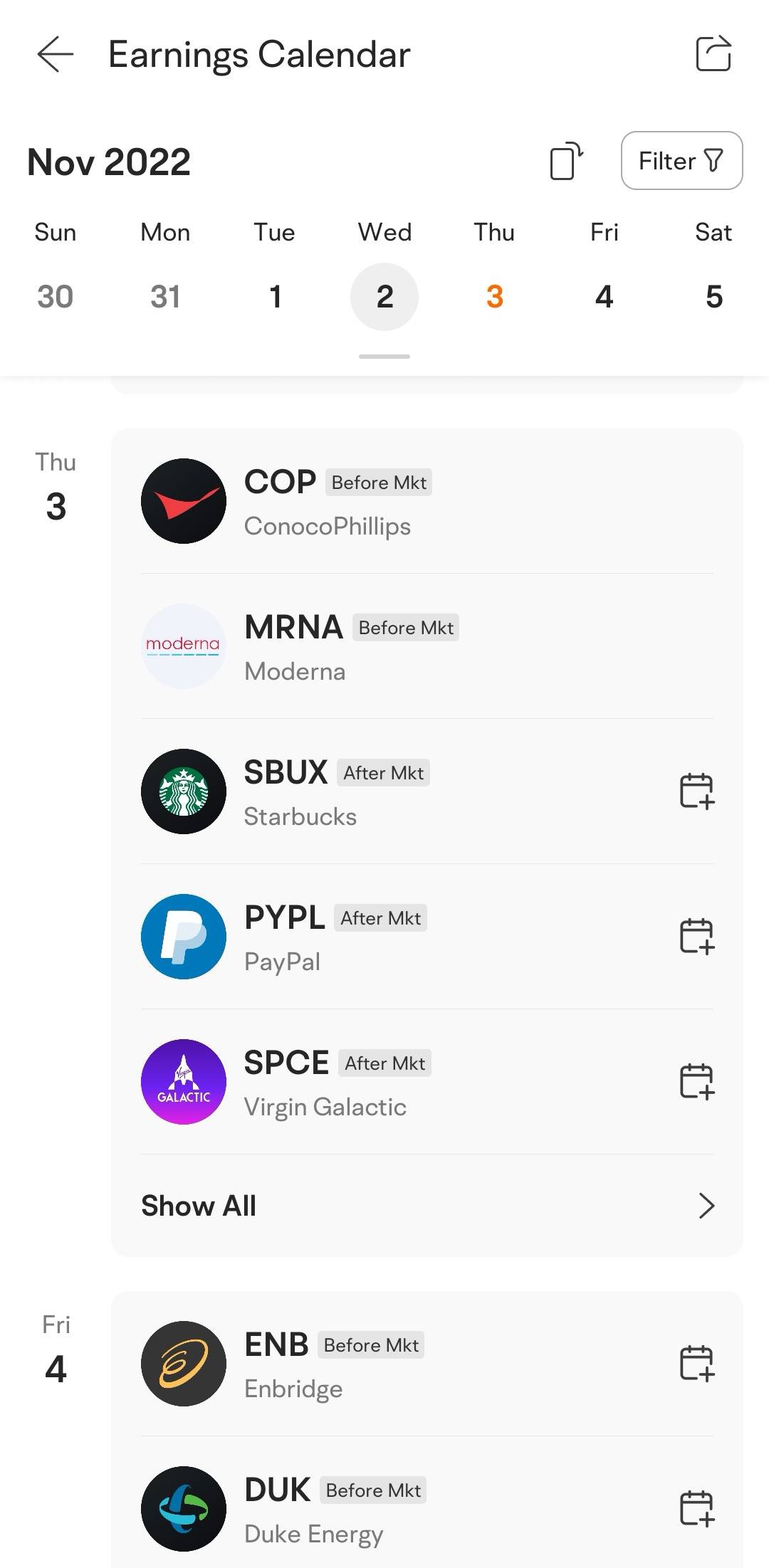
Moomoo trading app will provide the earnings report calendar feature, so traders and investors can track the earnings report schedule more quickly with convenience. Sign up and download the moomoo app today to access the clear and customizable earnings calendar!
Images provided are not current and any securities are shown for illustrative purposes only.
[1] https://www.investor.gov/introduction-investing/investing-basics/glossary/form-10-q
[2] https://www.sec.gov/files/form10-q.pdf
This presentation is for informational and educational use only and is not a recommendation or endorsement of any particular investment or investment strategy. Investment information provided in this content is general in nature, strictly for illustrative purposes, and may not be appropriate for all investors. Read more
Recommend

How to Trade Volatility: Strategies & Tips for Success

How to File Taxes: 6 Steps for Beginners

Best AI Stock Trading Tools on moomoo Trading App

What is Algorithmic Trading | Benefits, Strategies & Future Trends
How to Diversify Your Portfolio: 6 Strategies to Consider
How to Invest in Dividend Stocks for Beginners
How to Invest in DeepSeek Stock: Easy Steps to Follow
How to Invest in Silver for Beginners
Meme Stocks: Definition, Examples, and Impact on the Market
What is an ACH Transfer: Definition, Types & Benefits
Stop-Limit Order: What it is in Stocks
How to Invest In OpenAI Stock in 2026
Fractional Shares: Definition & How to Buy
Cash Accounts: What Are They and How Do They Work
What Are International Stocks & American Stocks?
Margin Account vs Cash Account: Which is Right for You?
Volatility: Definition in Finance and How to Calculate
What is a Brokerage Account: Definition and How to Open
What Are Bitcoin ETFs and How to Trade
How to Transfer Stocks From One Broker to Another
New "T+1" Settlement Cycle | What You Need to Know
SEC Form 13F: Definition, Filling Requirements, and Examples
How to Choose a Good Online Brokerage for Stock Trading
Bitcoin Futures: What Are They and How to Invest
What Is 403(b) Plan? How Does It Work
Price Action Trading: A Guide to Understanding the Basics
Margin Trading: Strategies, Benefits, and Risks
How to Invest in Index Funds for Beginners
Pre-Market and After-Hours Trading: Definition & How It Works
What is the Stock Market: Key Concepts and Functions
Common Stock: Definition, Benefits, and vs. Preferred Stock
Stock Dividends vs. Capital Gains: What You Need to Know
What Is a Stock Split - Definitions, How It Works, & Examples
Institutional Investors: Definitions & How They Invest
How to Invest in the S&P 500 for Beginners
The Impacts of ChatGPT on the Stock Market
ETFs vs. Mutual Funds
How to Practice Trading Stocks with a Free Demo Account?
The Basics of Financial Literacy: Why You Should Care
Stocks vs. Bonds
Choosing the Best Trading Platform for You — moomoo vs. Webull vs. Robinhood
The Consumer Price Index (CPI) Explained For Investors
How to Use moomoo Paper Trading Online?
What Is the Price-to-Sales (P/S) Ratio?
What Is a Quarterly Report?
What Is the Price-to-Book (P/B) Ratio?
Margin Account Explained: Definition, Benefits, and How to Use It
What Is A 10-K?
What Is SEC Form 10-Q?
What Is Ethical Investing
What Is Earnings Season
What Is Socially Responsible Investment (SRI)?
What Is a Stop Order?
Reading the Annual Report
What Is Open Trade Equity (OTE)?
What Is Impact Investing
How to Use moomoo Paper Trading
What Is a Limit Order?
Margin Trading: How It Works, Risks and Benefits
What Is Initial Margin?
How to Invest in Stocks: From Basic to Advanced
Stock Market Courses that Seek to Empower Investment Goals
How Can You Calculate Margin Interest?
What is Intraday?
Retail Investors vs. Institutional Investors: What You Need to Know
What are Cyclical stocks?
How to Buy Stocks Online without A Broker
How to Trade Volatility: Strategies & Tips for Success
How to File Taxes: 6 Steps for Beginners
Best AI Stock Trading Tools on moomoo Trading App
What is Algorithmic Trading | Benefits, Strategies & Future Trends
How to Diversify Your Portfolio: 6 Strategies to Consider
How to Invest in Dividend Stocks for Beginners
How to Invest in DeepSeek Stock: Easy Steps to Follow
How to Invest in Silver for Beginners
Meme Stocks: Definition, Examples, and Impact on the Market
What is an ACH Transfer: Definition, Types & Benefits
Stop-Limit Order: What it is in Stocks
How to Invest In OpenAI Stock in 2026
Fractional Shares: Definition & How to Buy
Cash Accounts: What Are They and How Do They Work
What Are International Stocks & American Stocks?
Margin Account vs Cash Account: Which is Right for You?
Volatility: Definition in Finance and How to Calculate
What is a Brokerage Account: Definition and How to Open
What Are Bitcoin ETFs and How to Trade
How to Transfer Stocks From One Broker to Another
New "T+1" Settlement Cycle | What You Need to Know
SEC Form 13F: Definition, Filling Requirements, and Examples
How to Choose a Good Online Brokerage for Stock Trading
Bitcoin Futures: What Are They and How to Invest
What Is 403(b) Plan? How Does It Work
Price Action Trading: A Guide to Understanding the Basics
Margin Trading: Strategies, Benefits, and Risks
How to Invest in Index Funds for Beginners
Pre-Market and After-Hours Trading: Definition & How It Works
What is the Stock Market: Key Concepts and Functions
Common Stock: Definition, Benefits, and vs. Preferred Stock
Stock Dividends vs. Capital Gains: What You Need to Know
What Is a Stock Split - Definitions, How It Works, & Examples
Institutional Investors: Definitions & How They Invest
How to Invest in the S&P 500 for Beginners
The Impacts of ChatGPT on the Stock Market
ETFs vs. Mutual Funds
How to Practice Trading Stocks with a Free Demo Account?
The Basics of Financial Literacy: Why You Should Care
Stocks vs. Bonds
Choosing the Best Trading Platform for You — moomoo vs. Webull vs. Robinhood
The Consumer Price Index (CPI) Explained For Investors
How to Use moomoo Paper Trading Online?
What Is the Price-to-Sales (P/S) Ratio?
What Is a Quarterly Report?
What Is the Price-to-Book (P/B) Ratio?
Margin Account Explained: Definition, Benefits, and How to Use It
What Is A 10-K?
What Is SEC Form 10-Q?
What Is Ethical Investing
What Is Earnings Season
What Is Socially Responsible Investment (SRI)?
What Is a Stop Order?
Reading the Annual Report
What Is Open Trade Equity (OTE)?
What Is Impact Investing
How to Use moomoo Paper Trading
What Is a Limit Order?
Margin Trading: How It Works, Risks and Benefits
What Is Initial Margin?
How to Invest in Stocks: From Basic to Advanced
Stock Market Courses that Seek to Empower Investment Goals
How Can You Calculate Margin Interest?
What is Intraday?
Retail Investors vs. Institutional Investors: What You Need to Know
What are Cyclical stocks?
How to Buy Stocks Online without A Broker

